James Gucwa
Biography
James was born in Jersey City as James Cragg Jr. His father passed away when he was ten, leaving his mother to support the family. After a few years his mother married Stanley Gucwa who legally adopted him and his brother giving them his surname, Gucwa.
Jim’s biological father was also artistically inclined winning awards as a young boy, but he never pursued art as a career. At a very young age, Jimmy Jr. showed he, too, had a natural artistic talent. He might sit at the kitchen table and draw for hours while the rest of the family was in the living room watching television. From the start, his goal had always been to perfect his draftsmanship. He strived to make every detail perfect. Still does.

'Berry Go Round', acrylic on canvas, 2013
Jim’s mother recognized her son’s talent early on and encouraged him to develop it. When he was twelve, she gave him an oil painting set for this birthday. At fifteen, with her help, he enrolled in a home art correspondence course. Every few weeks, a different instructional book with drawing and design assignments would arrive in the mailbox. Besides his academic homework, there was his saxophone practice, and his art assignments. He spent his time after high school classes in either the art or band room. There was never any doubt he was destined to live a creative life.
After graduating from high school, a year younger than most, he enrolled in the Newark School of Fine and Industrial Arts. His first year focused on foundational development. From there he studied advertising art at The School of Visual Arts in Manhattan. He quickly realized, however, that working as an advertising artist he’d inevitably be promoting products he may not approve of. It was at that point he realized a professional fine art painter would be the only satisfying path for him. One way or another, he was determined to live his life as a gallery painter. Majoring in painting at the Memphis Academy of Art he graduated with a BFA. The painting classes were on the top floor of the three-story building and after hours the doors to the college were locked. The problem was that James didn’t turn his clock off at any designated time. He often needed to paint during the night. To solve the problem, like Spiderman, he devised a way to scale the building up to the third floor where he would often paint until dawn. After a month or so of late-night visits, he was called down to the Dean’s office where he was given a key to the building.

'Star Noodle', oil on canvas, 1994
The priority of fine art galleries is the quality of an artist’s work, not necessarily the number of degrees they held, so he decided not to seek an MFA degree, but like the Old Masters who brought in young apprentices into their studios, James would have rather have had that opportunity beyond the academic environment.
At his senior exhibition at the Memphis College, a wealthy entrepreneur who owned the famous National Historic Landmark, the Peabody Hotel, purchased his painting in the exhibition. When speaking with the man, he was asked, “Well son, since you’re graduating, what do you plan to do now?” Thinking fast, knowing that owner of a famous hotel was standing before him, he answered, “I want to paint murals.” James had never painted a mural but would if given the opportunity. On the same evening, Mr. Belz commissioned Jim to paint a large mural for the hotel. The History of Memphis mural would hang at the entrance of its grand ballroom. Once completed, the owner of the hotel was delighted with the mural, so much so that he became a patron of the young graduate sending him a check in the mail every week. In exchange Jim would paint a series of original watercolor paintings and drawings depicting the elegance and special features of the Peabody. Mr. Beltz planned to publish a quality coffee table art book filled with the James’ illustrations.
For a young artist, he was off to a good start. Good fortune seemed to follow him ever since.
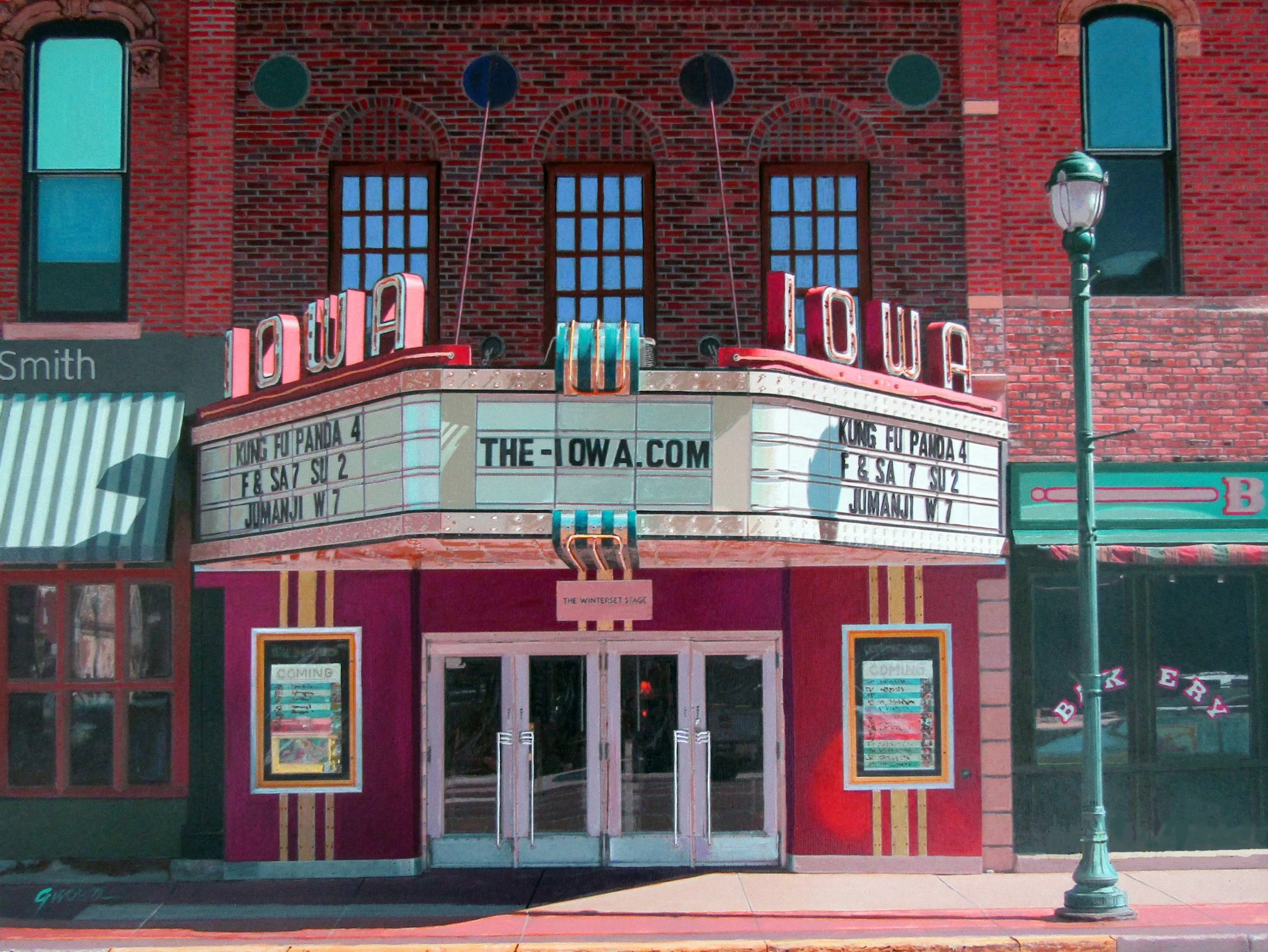
'Iowa Theater', acrylic on canvas, 2025
It should be mentioned that Gucwa understood that before a gallery would represent an artist, they would have to exhibit maturity as an artist—a series of paintings having a recognizable ‘signature style’ would become his focus. But to develop that level of maturity, however, it would take dedication and disciplined time in the studio. There was, however, always a huge distraction: bills had to be paid with money earned to pay them. He knew his largest monthly expense would be rent or mortgage. To eliminate that pesky obligation, at the age of 26, James purchased five acres back in the woods of the Arkansas Ozark Mountains and single-handedly built a home and studio. It took him a year to construct the two-story cabinlike structures, but it eliminated a major monthly expense (not to mention the reward of confidence such a task gave him).
Even at as a young man, he knew less debt = more studio time.

'Flamingo', acrylics and oil on canvas, 2012
Always striving to improve his painting skills, he aspired to paint like the pioneers of the Photorealistic movement. Painters like Richard Estes, Chuck Close, Ralph Goings, Audrey Flack, and the others motivated him to take the next step. One of his painting professors in Memphis suggested he contacted a few contemporary painters he admired and proposed studying with them in their studios. Before long, Dan Welden from the Dan Welden Lithographic Studio in Deer Park, Long Island, NY accepted his proposal. James had to make a difficult decision; study with Welden or continue to illustrate the book for the Peabody. He opted to study in Deer Park. As much as he was eternally grateful to Jack Beltz, his primary goal had always been to learn as much as possible and to find his full potential as a photoreal fine art painter. He spent long hours throughout the summer learning everything he could at Dan’s studio with 24-hour access to the studio. He even pitched a tent next to the studio where he grabbed a few hours of sleep here and there.
He had also sent examples of his work along with a proposal letter to the late contemporary fine art painter, Gregory Gillespie, in Belchertown, MA. Gillespie was awarded a Fullbright-Hays Grant to study in Italy for two years. He was in the permanent collection at the Whitney and the Hirshhorn Museums, the Metropolitan Museum of Art, the National Museum of Art in Washington, D.C., the Smithsonian Museum of Art, and the Museum of Fine Art in Boston, MA. and was represented by the Forum Gallery in NYC. Gillespie was reluctant at first. Being a very private person, he had never shared his studio, but was impressed by James’ paintings and took him on. Gucwa worked side-by-side with the master. He said he learned more in the short time he spent with Gillespie than in his four years in college.
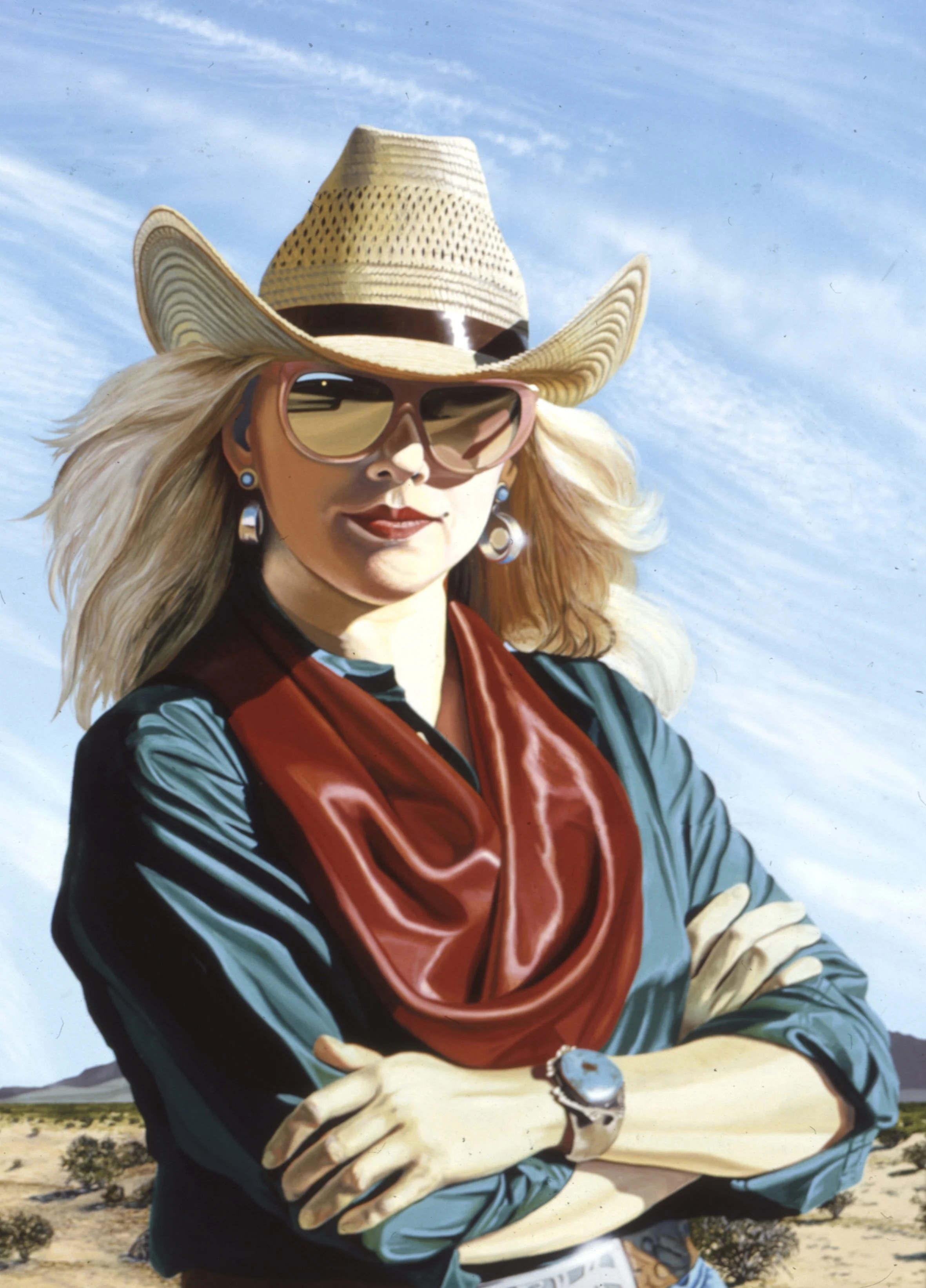
'Rose', acrylics on canvas, 2021
Paul Gauguin left Paris and sailed to Tahiti to spend the rest of his life painting in paradise. That sounded very appealing to Gucwa, but he couldn’t afford Tahiti. Being the romantic he is, instead, with his easel, paints and brushes, he headed for the island of Jamacia. Away from the tourist areas he rented a house in Port Antonio and began painting the people and landscape of the island. After a few months he was running out of cash when a Jamaican entrepreneur planning to open a lobster house restaurant asked him to paint a sign for his new business.
“But I never painted a sign before,” he told the businessman.
“Ya mon, I see you paintin’ ‘n you be betta den anyone round here,” the man replied.
Jim accepted the offer. It was the first sign he ever painted. Finally, after several months he flew to Miami and rented a house in Coconut Grove, Florida, a small village composed of mom-and-pop shops. These were the days before computerized vinyl lettering. Many of the signs in town were faded and peeling. James hand painted a new sign for each of those businesses in need. One sign would take him a week to complete, earning him enough money to pay his bills and paint canvases in his studio for the rest of the month. When the University of Miami discovered his art, they offered him his first solo exhibition.
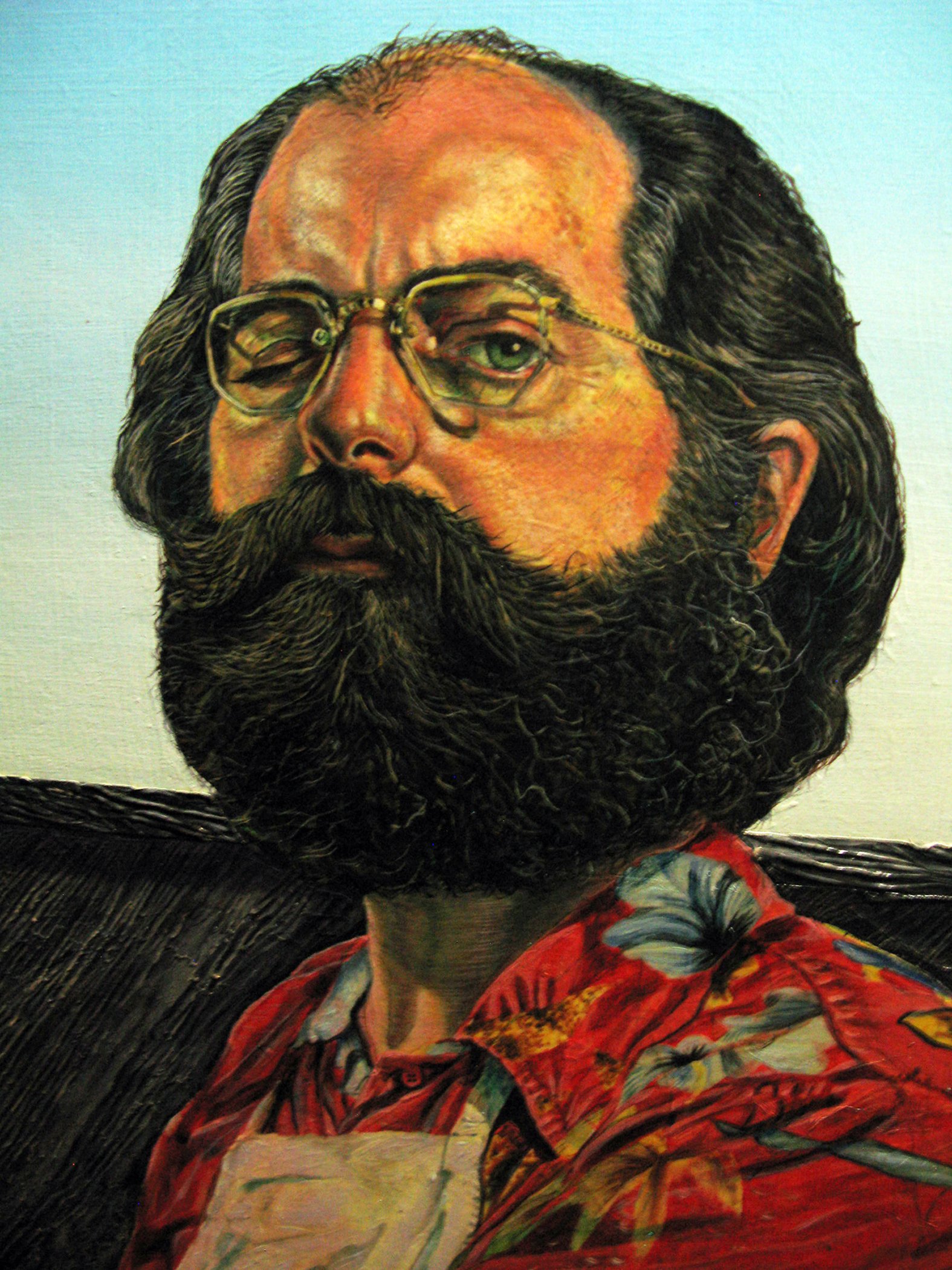
'Self Portrait', oil on panel, 1983
From Miami he moved to LA and found an opportunity to caretake the actor, Linda Gilbert’s property just outside Malibu. The land was in the San Bernadino Mountains overlooking the Pacific where he converted a small barn into his studio. Also keeping his ears and eyes open for representation in quality California galleries he sent Modernism (a highly respected art gallery in San Francisco) a few transparencies. It wasn’t long after the gallery’s owner, Martin Mueller, drove down to Jim’s beachfront studio and after seeing Gucwa’s paintings Mueller offered him a solo exhibition.
As mentioned above, art galleries want their artists to have found their niche, recognizable style or subject matter. Because James had hand-painted commercial signs, one day he had an epiphany. Instead of painting signs for businesses, he would paint vintage roadside neon signs as fine art on canvas. He recognized the sterile, commercial signs of the day lacked creativity, but the older neon signage of the ‘50s- 70s was works of art in his eyes. It was this decision that had galleries from Scottsdale to Santa Monica, San Francisco to New York City wanting to hang his photoreal paintings. From then on, James became very busy and was living his dream.

'Starlite', acrylics on canvas, 2025
In 1998 he was made an “Officially Licensed” fine artist for Harley Davidson, Chevrolet/Corvette, and Mattel Toys/Hot Wheels Division. Harley-Davidson imposed one condition: keep painting his vintage roadside fine art neon sign paintings but include a Harley somewhere in the composition. Since CEOs, lawyers, judges, actors, and even politicians were becoming weekend warriors, Harley wanted to take art from the calendars of the garage into the fine art world of galleries and museums. He’s included a few examples of those paintings in this magazine. Readers should be aware that James gladly accepts commissions and will paint any subject of their choosing from a Harley in front of a great neon road sign, to group portraits, landscapes or any vision their imagination could concoct.

'Pleasure Ride', acrylics and oils on canvas, 2002
James paints every day. He’s played his saxophone in rock and jazz bands throughout his life. Playing music on stage was his extroverted outlet. Since his time in studio is meditative, and secluded, playing music gave him a creative balance. Never one to pass up any creative expression, in the ‘90s he tried his hand in creative writing. Thus far he has written six art books filled with his paintings, two published novels, and one non-fiction book. His latest novels, The Coming: A Message Whose Time Has Come, and Chasing Satan, Chasing Love, using the pseudonym, J. G. Cragg are available on Amazon and Barnes & Noble. He is represented by Xanadu Gallery in Scottsdale, and the K. Newby Gallery and Sculpture Garden in Tubac, AZ. James invites any quality gallery who might want to represent his paintings to contact him through his website at kingneonfineart.com. His books can be found at jgcraggauthor.com.
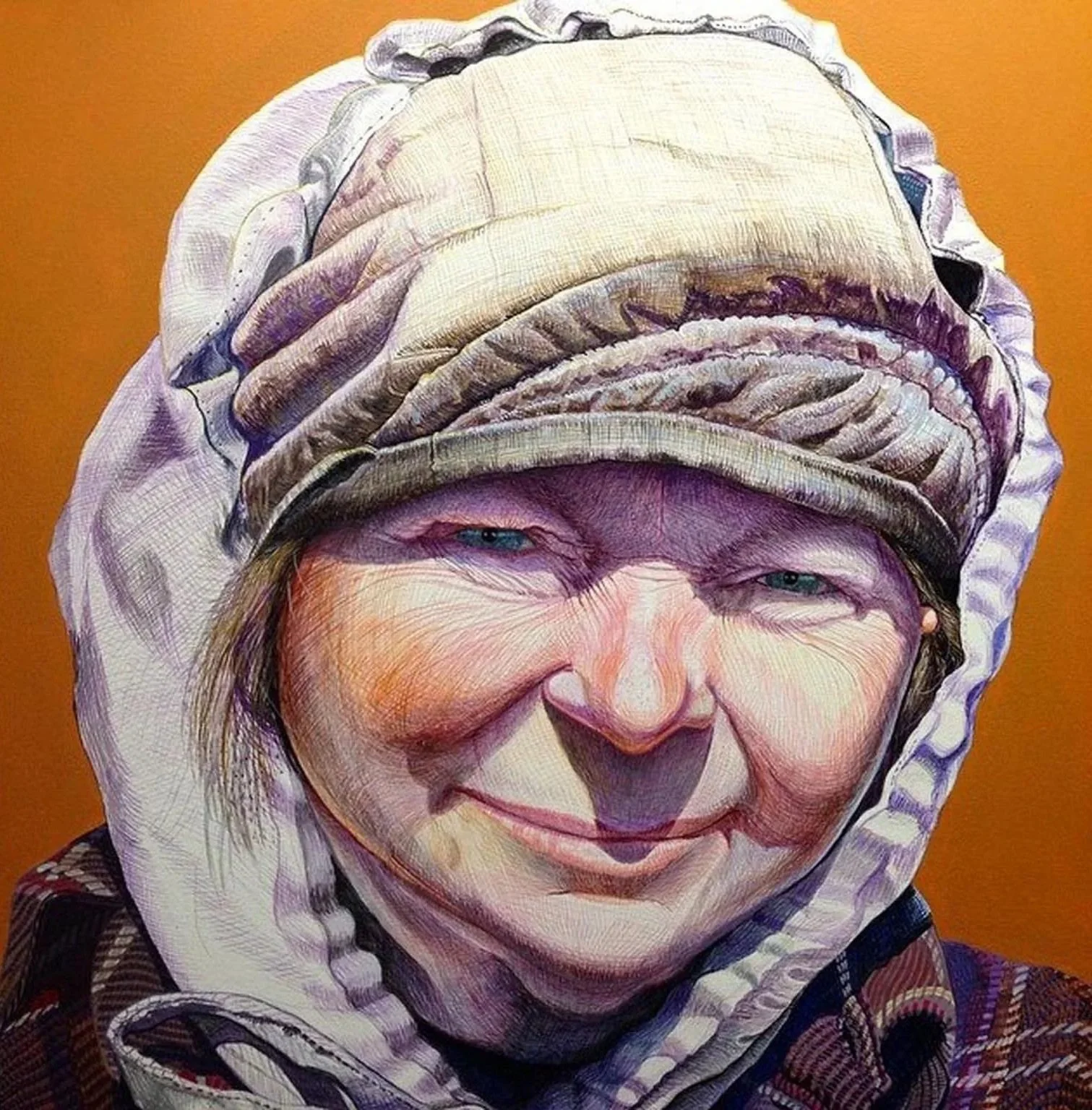
'Debra', acrylic on canvas, 2022
Gucwa is happily married to Katie, his Rocky Mountain sweetheart. They live away from the hustle of big cities in their cozy cabin in a small town in the White Mountains of NE Arizona at 7200ft. elevation. His greatest wish was that there were more hours in a day.
“Creativity takes courage” – Henri Matisse
Once James single-handedly built his 2-story home back in the woods, not knowing much about such a huge undertaking, and at the tender age of twenty-six, it provided him with a lifetime of courage. Accepting the challenge convinced James that he could do anything. We’ve been told to follow our dreams. Do it!

'Sedona Red Rock', acrylic on canvas, 2022