Discipline, Distinction, and the Market for Originality: The Hard-Edge Abstraction of Brad Lakin

Discipline, Distinction, and the Market for Originality: The Hard-Edge Abstraction of Brad Lakin
In a contemporary art market crowded with rapidly circulating images, visual distinction has become both an artistic objective and a practical necessity. Collectors and curators encounter an immense volume of work across galleries, fairs, online exhibitions, social media, and digital viewing platforms. Within this environment, an artist’s ability to establish a recognizable visual language can be as important as technical accomplishment. The paintings of Brad Lakin, formerly known professionally as Jo Paff, respond to this condition through geometric precision, emphatic color, and compositions designed to resist immediate explanation.
Now based in New Mexico, Lakin creates contemporary hard-edge abstractions informed by an unusual combination of experiences. Before undertaking 20 years of service as a United States Marine Corps combat veteran, he studied Fine Arts and Art History at the University of Nebraska Omaha from 1976 to 1980. His subsequent education in business and marketing, followed by a decade of college-level teaching, added another dimension to a practice already shaped by artistic instruction, military discipline, athletic endurance, and critical analysis.
These different areas of experience do not appear in his paintings as literal narratives. There are no direct depictions of military life, identifiable landscapes, or autobiographical scenes. Instead, their influence is embedded in Lakin’s method: preliminary planning, careful execution, exact boundaries, sustained concentration, and a determination to continue working until a composition has achieved its intended resolution.
The work is therefore best understood not as an illustration of biography, but as a translation of discipline into form.
Lakin’s earliest formal artistic development took place at the University of Nebraska Omaha, where he studied art and art history and trained with teachers and mentors Peter Hill and Sidney “Buzz” Buchanan. Their influence continues to define both his aesthetic direction and his understanding of artistic purpose.
Hill and Buchanan encouraged their students to move beyond familiar subjects and create images that had not previously been seen. For Lakin, this principle distinguished original artistic inquiry from the repetition of recognizable motifs. Portraits and landscapes, however accomplished, represented subjects already encountered in daily life. Abstraction offered another possibility: the construction of an image without a preexisting model.
That lesson remains fundamental to his current practice. Lakin does not begin with the objective of reproducing the visible world. He begins with the challenge of inventing a visual event.
Peter Hill also introduced him to contemporary hard-edge painting and the use of commercial-grade latex paint. The material remains part of Lakin’s practice, connecting his current work to the technical and conceptual foundations established during his university years. Yet this continuity should not be mistaken for stylistic nostalgia. His recent paintings emerge from the accumulation of decades of experience and from a renewed commitment to ideas first encountered as an art student.
The significance of mentorship became especially vivid when Jonathan “Rob” Hill shared a book documenting the complete works of his father, Peter Hill. For Lakin, the publication provided more than a record of a former teacher’s career. It reconnected him with the intellectual and creative energy of his student years and renewed his motivation to paint. This return to an early artistic dialogue reveals how mentorship can continue to shape a practice long after formal education has ended.
Painting has consequently become an act of creative exploration, gratitude, and continuity. Each canvas carries forward the expectation that art should introduce something unfamiliar into the world.
Following his art studies, Lakin enlisted in the Marine Corps and served for 20 years. He did not paint during his military career. The separation between his early artistic education and his eventual return to the studio was therefore substantial. Nevertheless, the habits developed through military service became integral to his later working process.
Lakin identifies perfection, attention to detail, discipline, and perseverance as central lessons of the Marine Corps. The principle of continuing until a task is completed correctly now informs how he evaluates and resolves a painting. This relationship between military discipline and artistic production is not represented symbolically through recognizable imagery. It operates through the structure of his practice.
Each composition begins with a preliminary sketch. Forms are considered before they are transferred to the canvas, and color relationships are examined as part of the planning process. The finished paintings may communicate spontaneity through energetic contrasts, splattered passages, and unexpected formal interactions, but they are not casual or impulsive constructions. Their apparent freedom is supported by preparation.
This distinction is important. Hard-edge abstraction can sometimes appear effortless because its surfaces conceal correction, hesitation, and physical labor. Clean boundaries and flat areas of color may give the impression of immediate resolution. In reality, their effectiveness depends upon exacting decisions concerning scale, proportion, placement, adjacency, and visual weight.
Lakin’s process emphasizes this methodical character. Rather than working on a conventional easel, he places the canvas horizontally and moves around it. This approach allows him to view the composition from multiple directions and assess its balance without becoming dependent upon a single fixed orientation. The painting becomes a field that can be approached from all sides.
This method introduces a physical dimension that corresponds with his history of endurance. During his university years, Lakin achieved All-American status in NCAA Division II track and field in the 10-kilometer distance and completed three marathons. Athletic training, military service, and painting are distinct pursuits, but each demands concentration, repetition, stamina, and the ability to continue beyond an initial threshold of difficulty.
His artistic authority emerges from this accumulated discipline.
Lakin’s paintings are organized through bold geometric shapes, sharply defined boundaries, and forceful color relationships. These elements provide order, but the compositions do not become rigid. Organic splatters, layered forms, and unexpected visual encounters complicate their underlying geometry, creating tension between control and disruption.
This relationship between order and chaos is one of the practice’s most compelling characteristics. Crisp edges suggest calculation, stability, and containment. More irregular interventions introduce movement and uncertainty. Neither element completely dominates the other. Instead, the paintings remain suspended between planned structure and visual surprise.
Such ambiguity is intentional. Lakin wants collectors and viewers to leave a painting asking, “What was he thinking?” The question is not an invitation to discover a single hidden answer. It reflects his belief that the work should remain open enough to provoke individual interpretation.
The paintings do not supply narratives that can be summarized in a sentence. Their meaning develops through visual relationships. A geometric form may appear to advance or retreat depending on the colors around it. A sharp diagonal can introduce speed, while a dense block of color may function as an anchor. A splattered passage can interrupt an otherwise controlled arrangement, drawing attention to the boundary between calculation and accident.
This openness gives the work accessibility without reducing its complexity. Viewers can respond immediately to the energy of the palette, but sustained attention reveals the decisions governing the composition. The paintings offer visual pleasure while retaining conceptual resistance.
Lakin describes his objective succinctly: he paints to inspire, never to impress. That distinction separates the pursuit of meaningful engagement from the pursuit of approval. The work seeks attention, but it does not rely upon biography, sentimentality, or spectacle to secure it.
Color is central to Lakin’s visual language. It is used to attract the eye, organize the composition, generate depth, and create movement. Bold combinations establish emotional intensity without referring to a specific event or narrative.
His palette is not fixed. He notes that the colors he chooses can change from month to month in relation to his feelings. Emotion therefore enters the work indirectly. Rather than illustrating an emotional experience, Lakin converts shifting internal states into chromatic decisions.
This approach complicates the apparent rationality of hard-edge painting. At first glance, the works may appear governed primarily by geometry and control. Yet the selection and interaction of colors introduce a more personal register. Precision provides the framework, while color carries the emotional force.
Lakin has described his choices as courageous, particularly in his willingness to bring unexpected or assertive colors into close proximity. The effectiveness of these combinations depends not merely on intensity but on balance. Saturated hues must be calibrated against one another so that the painting remains animated without becoming visually incoherent.
Although Lakin states that he uses his heart and mind rather than emotion alone when composing a painting, this does not eliminate feeling from the work. Instead, feeling is subjected to reflection. Emotional energy is transformed into structure.
This balance may be one reason the paintings translate effectively into digital environments while retaining the potential for a strong physical presence. Geometric configurations and contrasting colors can register quickly on a screen, an increasingly important consideration in the contemporary art market. Yet layering, surface treatment, scale, and material boundaries can only be fully assessed in person. The work occupies a useful position between immediate visual recognition and slower formal examination.
In 2007, Lakin earned a master’s degree in business and marketing from the University of Phoenix. He later taught marketing, financial planning, management, and critical thinking at the college level for ten years. This experience gives him a practical understanding of how artistic work circulates beyond the studio.
He identifies three broad audiences within the art market: private collectors, corporate buyers acquiring work for professional spaces, and curators responsible for museum collections. Each group approaches art with different priorities. A private collector may be guided by personal connection and the long-term development of an artist’s practice. A corporate buyer may consider scale, placement, visual impact, and the relationship between a work and an architectural environment. A museum curator may focus on artistic context, provenance, conceptual significance, and institutional relevance.
Recognizing these distinctions does not require an artist to compromise the work. On the contrary, it can clarify how a coherent practice reaches different audiences. Lakin’s central position remains firm: the work must begin with originality rather than an attempt to satisfy existing demand.
This is where his business education and artistic philosophy converge. He understands the necessity of finding a distinctive position within the market, but he does not equate market awareness with commercial conformity. He describes himself as a private rather than commercial artist, emphasizing that his primary purpose is to create work that inspires the public.
For collectors, this distinction matters. A credible practice is not defined by market detachment, nor is it strengthened by chasing every visible trend. It develops through sustained production, recognizable authorship, documented exhibitions, critical reception, and consistency between the artist’s stated principles and the work itself.
Lakin’s hard-edge paintings possess identifiable formal characteristics, but they also allow variation. Geometry, bold color, crisp lines, layered forms, and controlled disruptions provide continuity across the practice. Within that framework, individual works can develop without becoming interchangeable.
His recent exhibition history and awards indicate growing international visibility. In 2025, Lakin received the International Prize: The New Great Masters New York/Dubai, sponsored by Italy’s Effetto Arte Foundation, as well as the Leonardo da Vinci Universalist Artist Award in Milan. He was also given Persona Art Honors by Contemporary Art Station in Madrid in 2025 and received the Premier Artist Prize in 2026.
His work earned Juror’s Choice in CEV Art Gallery’s July 2025 exhibition, “Viral Visuals: Art That Pops in the Feed,” and Best in Show in the gallery’s “Square Exhibition.” He was also named a finalist in Ten Moir Gallery’s “Lucid Dreams” exhibition and received an honorable mention from the same online gallery.
Lakin’s work appeared in the 2025 Effetto Arte Foundation publication Master Artists to Collect: Artbook, Issue 2. Additionally, one of Brad’s paintings was selected for the back cover of London’s ARTLO Magazine, Issue 7, June/July 2026. Earlier exhibition records under his former artistic name, Jo Paff, include presentations at the University of Nebraska Omaha Art Gallery, the Joslyn Art Museum in Omaha, and Boys Town Institute Hospital in the 1970s. More recent activity includes online and virtual presentations associated with New York, Paris, Amsterdam, Seoul, Los Angeles, and London.
The adoption of the name Brad Lakin marks a new phase in the public presentation of the practice, while the works, exhibitions, awards, and publications associated with Jo Paff remain part of the artist’s professional history. Maintaining a clear connection between the two names will be important for collectors, galleries, and researchers as his exhibition record continues to develop.
Awards provide encouragement, but they do not determine Lakin’s creative direction. He is explicit that he does not paint for prizes. External recognition functions as confirmation that the work is connecting with jurors and exhibition audiences, while the fundamental motivation remains internal: to continue exploring color, structure, originality, and viewer response.
From a market perspective, this distinction is valuable. Awards can contribute to an artist’s professional record, but they are most meaningful when they support an already coherent body of work. They cannot substitute for sustained development. In Lakin’s case, recognition accompanies a practice grounded in formal training, renewed production, and a clearly articulated artistic philosophy.
Among his recent works, Passage to Santa Fe occupies a particularly important position. The painting received Juror’s Choice recognition in “Viral Visuals: Art That Pops in the Feed” and Best in Show in CEV Art Gallery’s “Square Exhibition.”
Its significance lies not only in the awards themselves but in what they represent within Lakin’s return to painting. After decades devoted to military service, advanced education, and teaching, the recognition affirmed the continuing relevance of an artistic language first developed during his university years and subsequently transformed through experience.
The title may suggest movement or transition, but Lakin has stated that New Mexico’s dominant Southwestern aesthetic has not directly influenced his work. He remains more closely drawn to the contemporary art associated with Chicago and New York’s Museum of Modern Art than to the regional motifs commonly connected with his present surroundings.
This independence from local expectations strengthens the clarity of his position. Living in New Mexico does not obligate him to adopt Southwestern imagery. His practice remains aligned with the history and continuing possibilities of modern and contemporary abstraction.
Lakin’s future ambitions include working on substantially larger canvases and participating in more physical exhibitions. Both directions are logical extensions of his current practice.
Increased scale would allow his geometric forms and chromatic relationships to operate more directly within architectural space. On a larger surface, a sharp diagonal becomes more physically commanding, a color field more immersive, and the act of moving around the horizontally positioned canvas more integral to the work’s construction.
Physical exhibitions would also allow viewers to encounter the paintings beyond the compressed conditions of online presentation. Digital platforms have expanded access to contemporary art and remain important to Lakin’s visibility, but hard-edge abstraction depends on material precision. Edge quality, paint density, surface finish, and the relationship between the canvas and the viewer’s body become fully legible only through direct encounter.
For collectors, Lakin’s practice presents a combination of established formal identity and active development. His paintings are grounded in a recognizable lineage of geometric and hard-edge abstraction, yet they are not presented as exercises in art historical repetition. Their distinguishing character emerges from the conjunction of geometric planning, chromatic confidence, disciplined execution, and controlled unpredictability.
The most persuasive aspect of his current trajectory is not the accumulation of honors, but the sense of renewed purpose behind the work. Painting reconnects Lakin with his early education, honors the mentors who shaped his thinking, and provides a field in which discipline and curiosity can coexist.
His canvases do not directly recount 20 years of military service, a career in education, or years of athletic training. They carry those experiences in another form. Persistence becomes process. Discipline becomes precision. Curiosity becomes composition. Feeling becomes color.
In an art market frequently preoccupied with novelty, Brad Lakin offers something more durable: originality pursued through sustained attention. His work asks viewers to look closely, remain with uncertainty, and consider how order can contain surprise. The question he hopes they carry away, “What was he thinking?”, is ultimately evidence that the painting has continued beyond the limits of its surface.
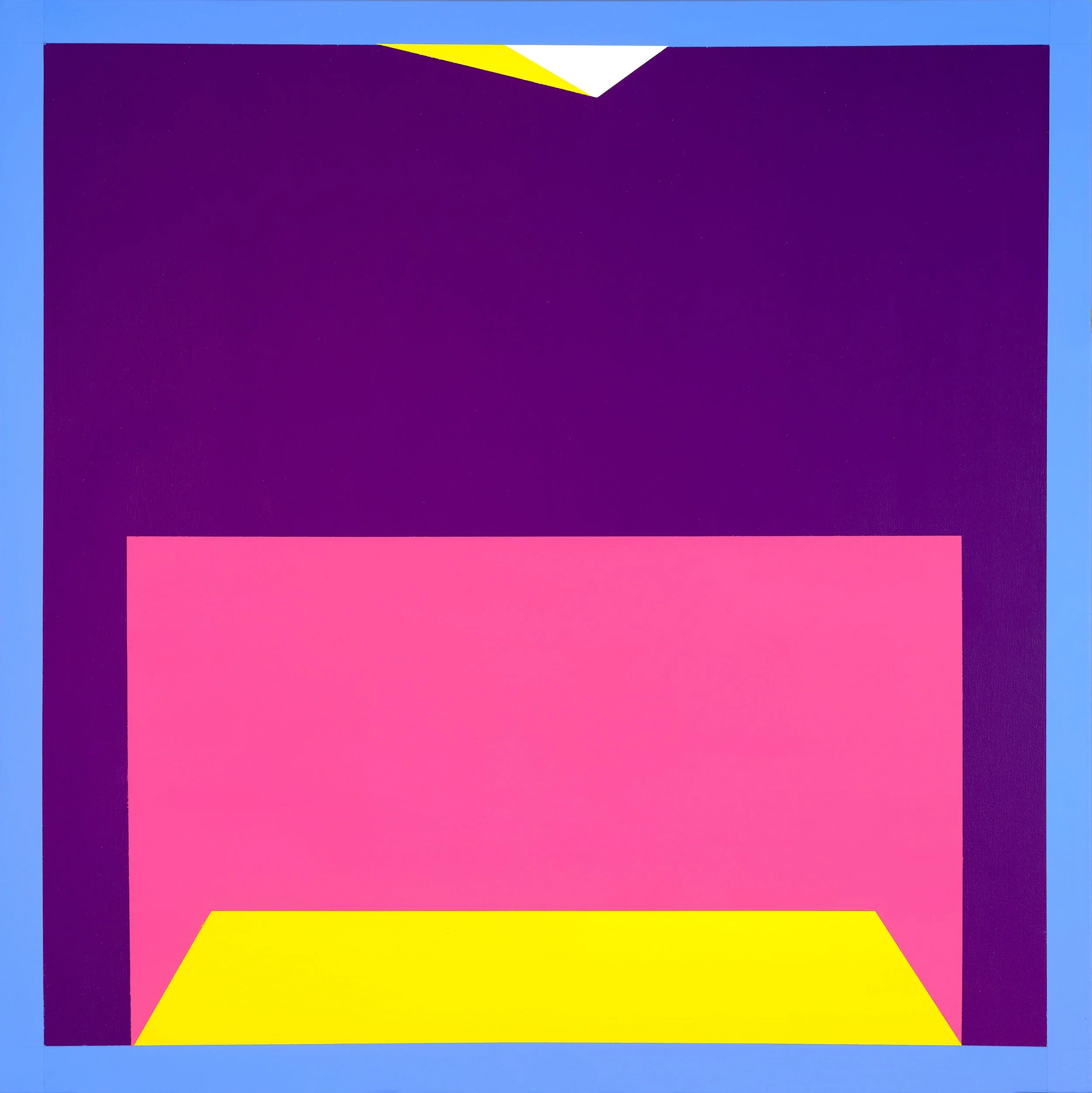
SERIES 9 # 10. INVERTED PYRAMID, 2025, LATEX ON CANVAS WITH PROTECTIVE CLEAR COAT, 91.4CM X 91.4CM
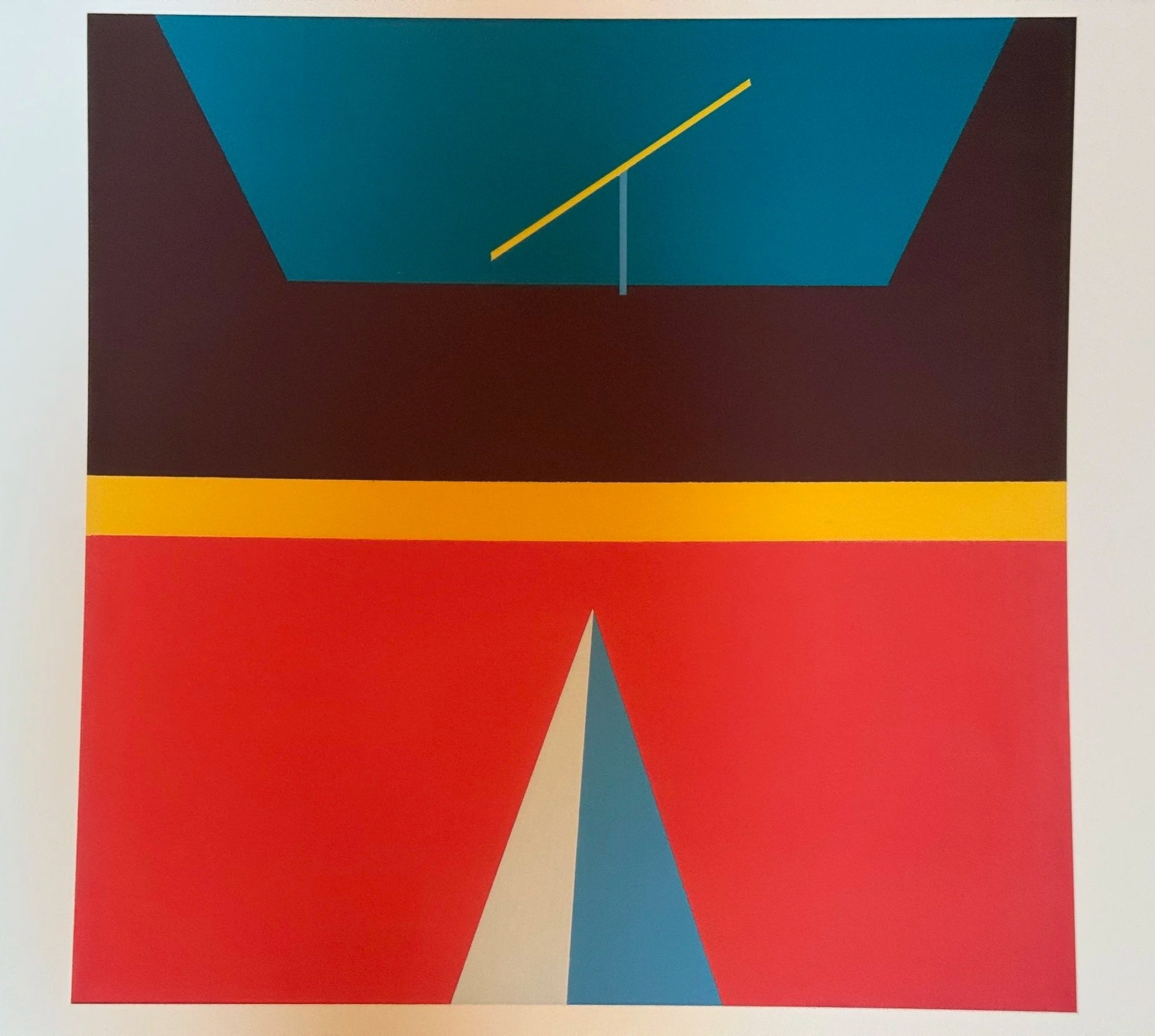
SERIES 8 # 8 PASSAGE TO SANTA FE, 2025, LATEX ON CANVAS WITH PROTECTIVE CLEAR COAT, 60.9CM X 60.9CM
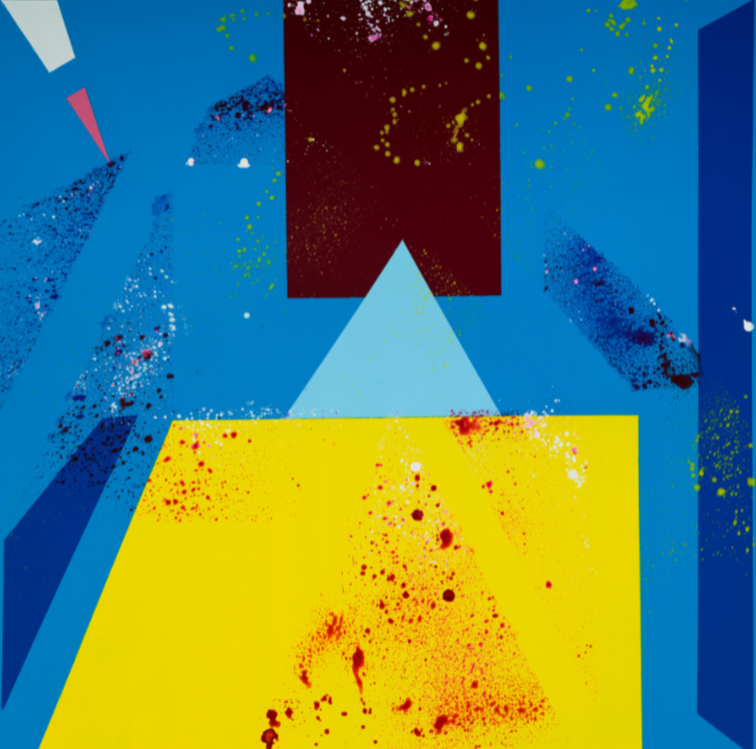
SERIES 6 # 3 MAXIMALIST, 2023, LATEX ON CANVAS WITH PROTECTIVE CLEAR COAT, 91.4 CM X 91.4 CM
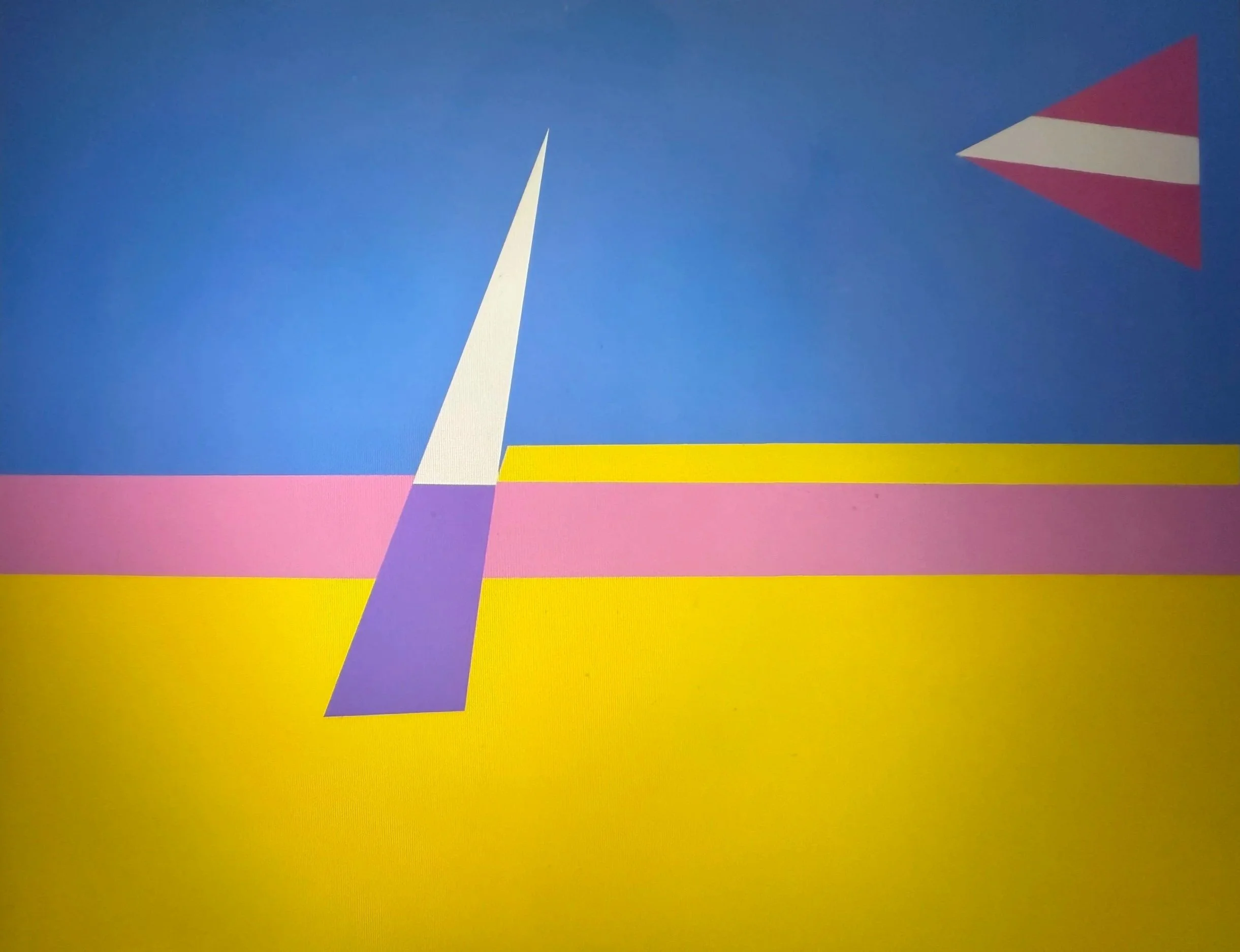
SERIES 11 # 1 LIGHTNING ON THE PYRAMID, 2025, LATEX ON CANVAS WITH PROTECTIVE CLEAR COAT, 91.4 CM X 91.4 CM
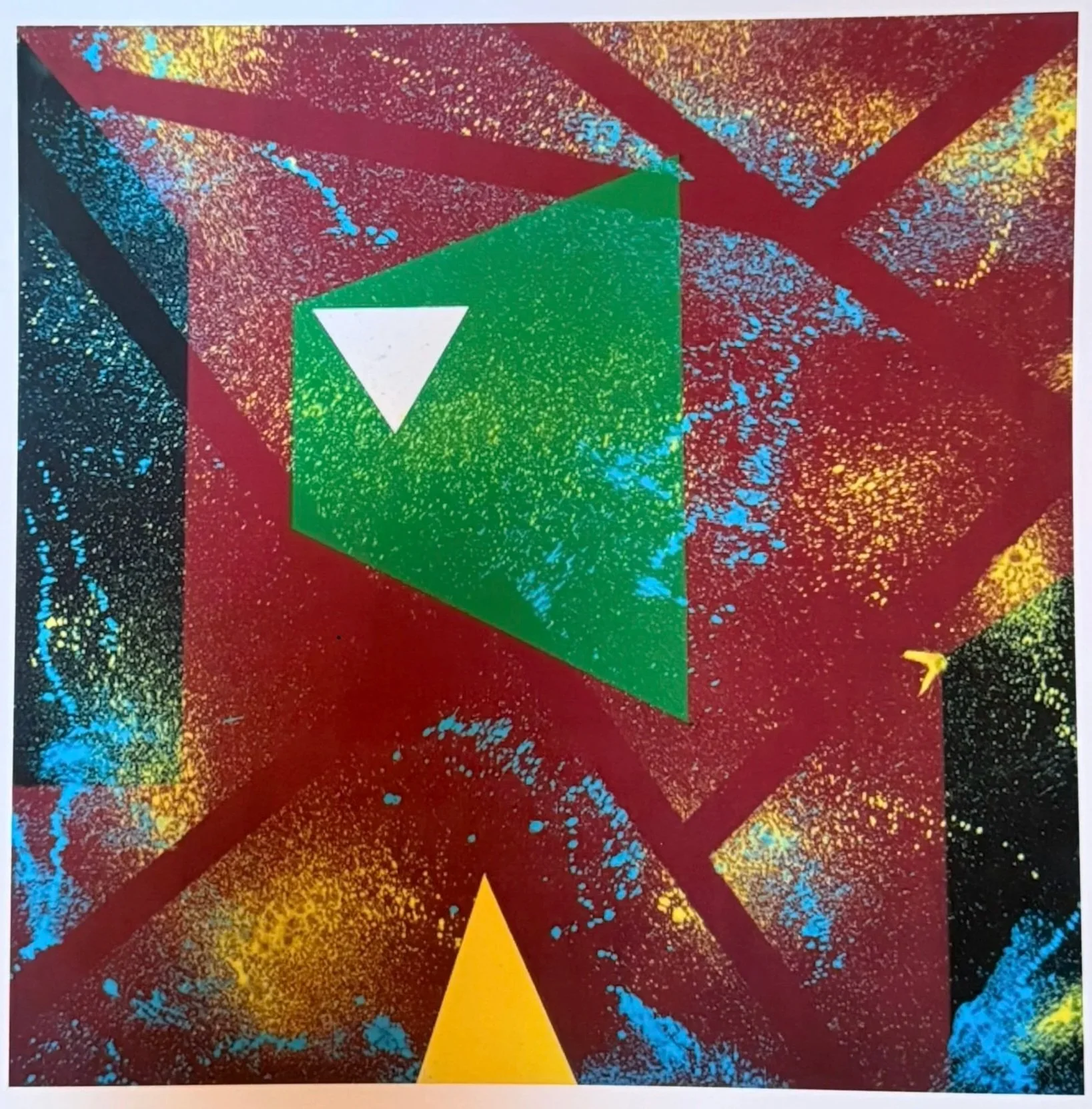
SERIES 5 # 4 UNTITLED, 2023, LATEX ON CANVAS WITH PROTECTIVE CLEAR COAT, 91.4 CM X 91.4 CM
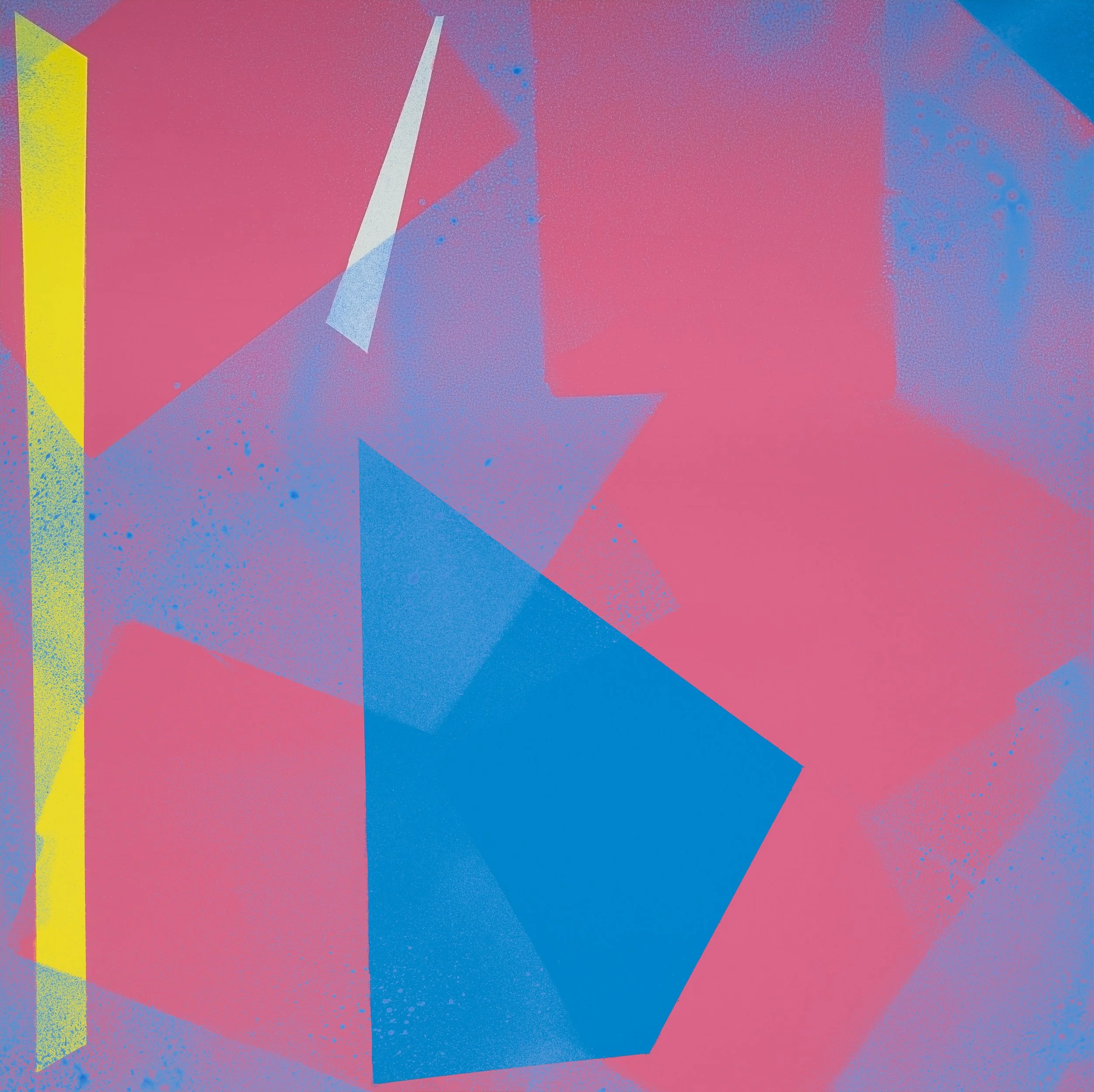
SERIES 7 # 1, SHAPES AND COLORS OF THE SOUL, 2025, LATEX ON CANVAS WITH PROTECTIVE CLEAR COAT, 91.4 CM X 91.4 CM
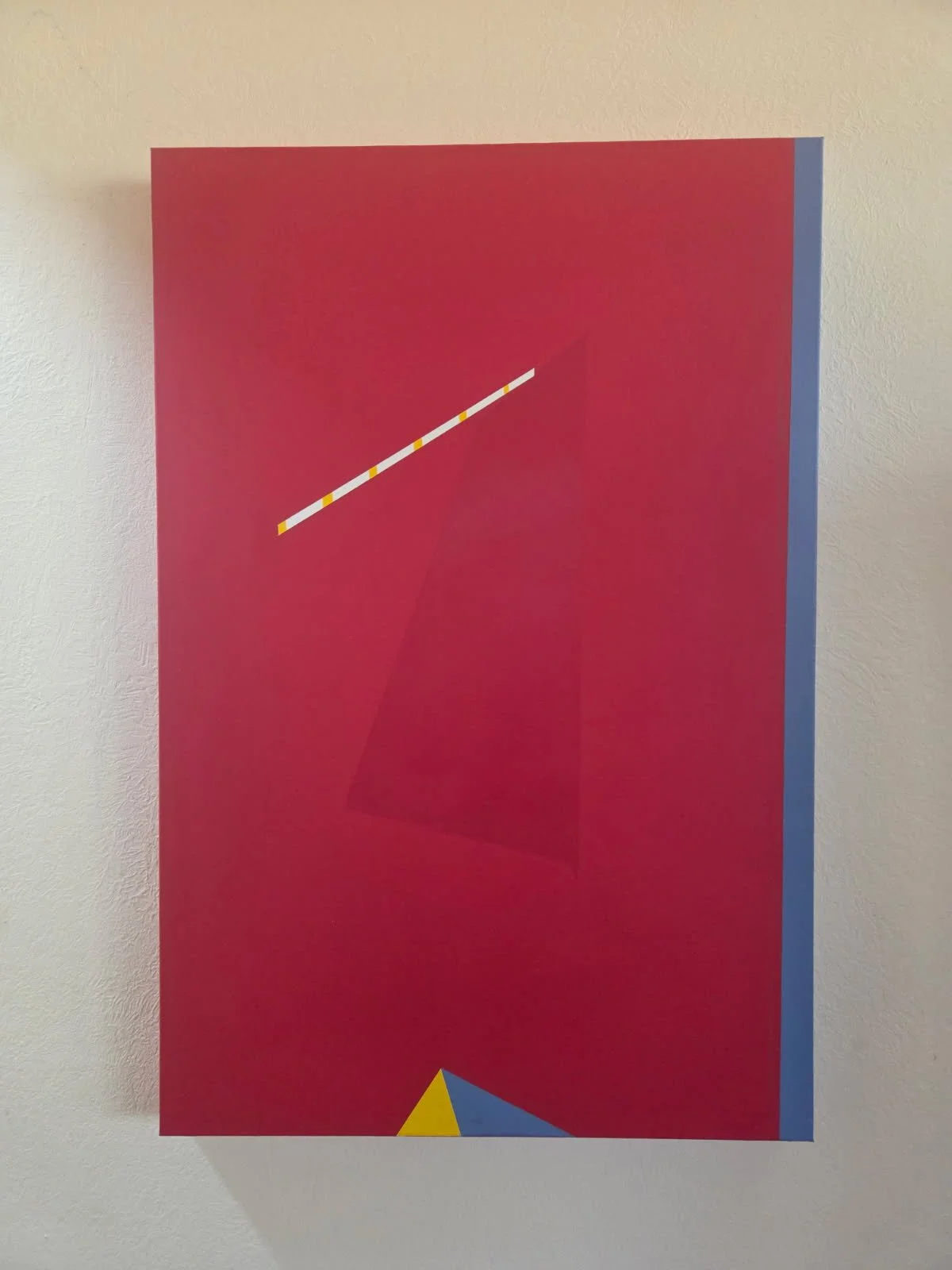
SERIES 1 # 5, RED WINDOW LEAK, 2026, LATEX ON CANVAS WITH PROTECTIVE CLEAR COAT, 60.9 CM X 91.4 CM
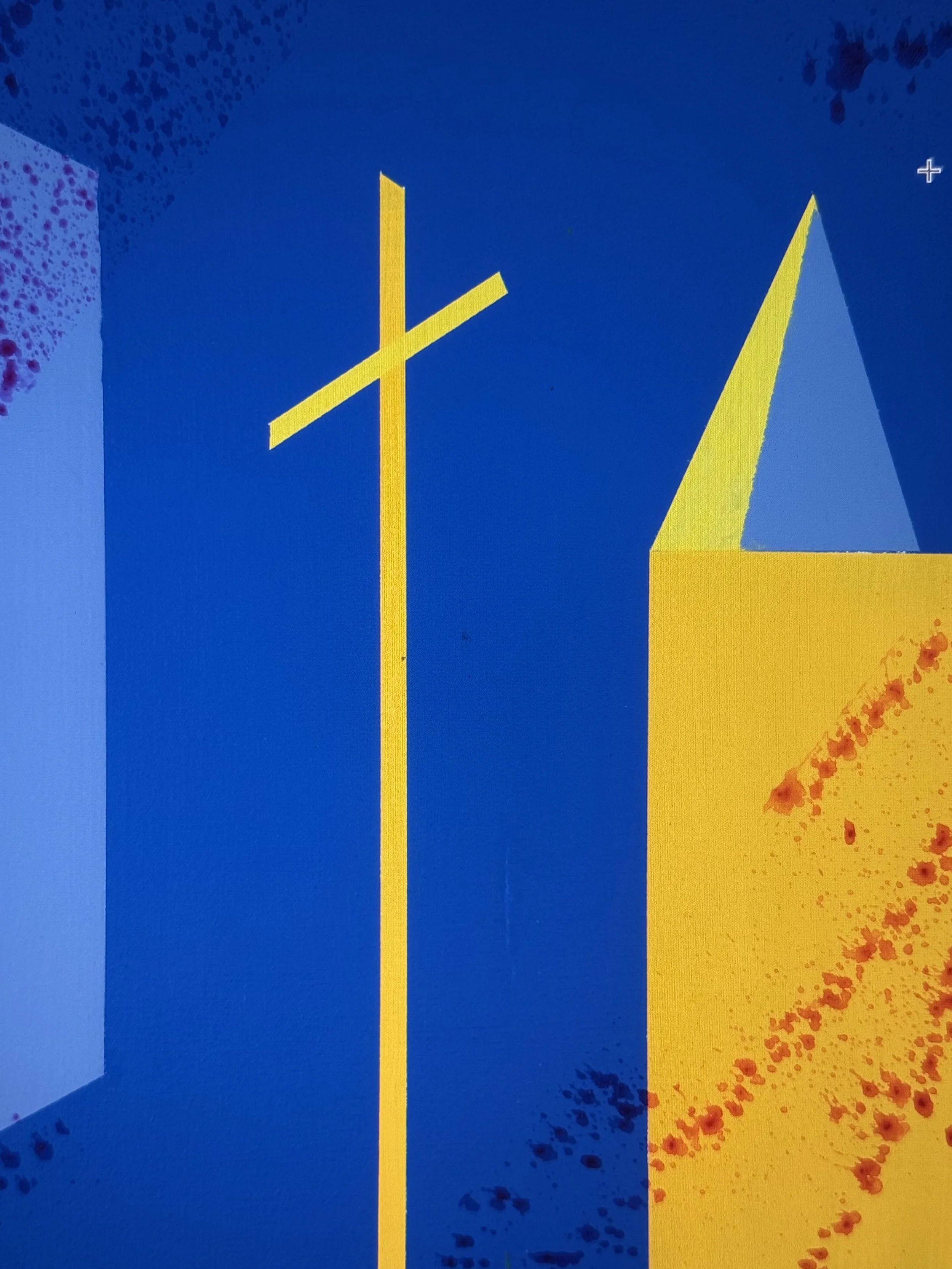
SERIES 9 # 6, PASSAGE THROUGH THE RED MIST, 2025, LATEX ON CANVAS WITH PROTECTIVE CLEAR COAT, 50.8CM X 50.8 CM
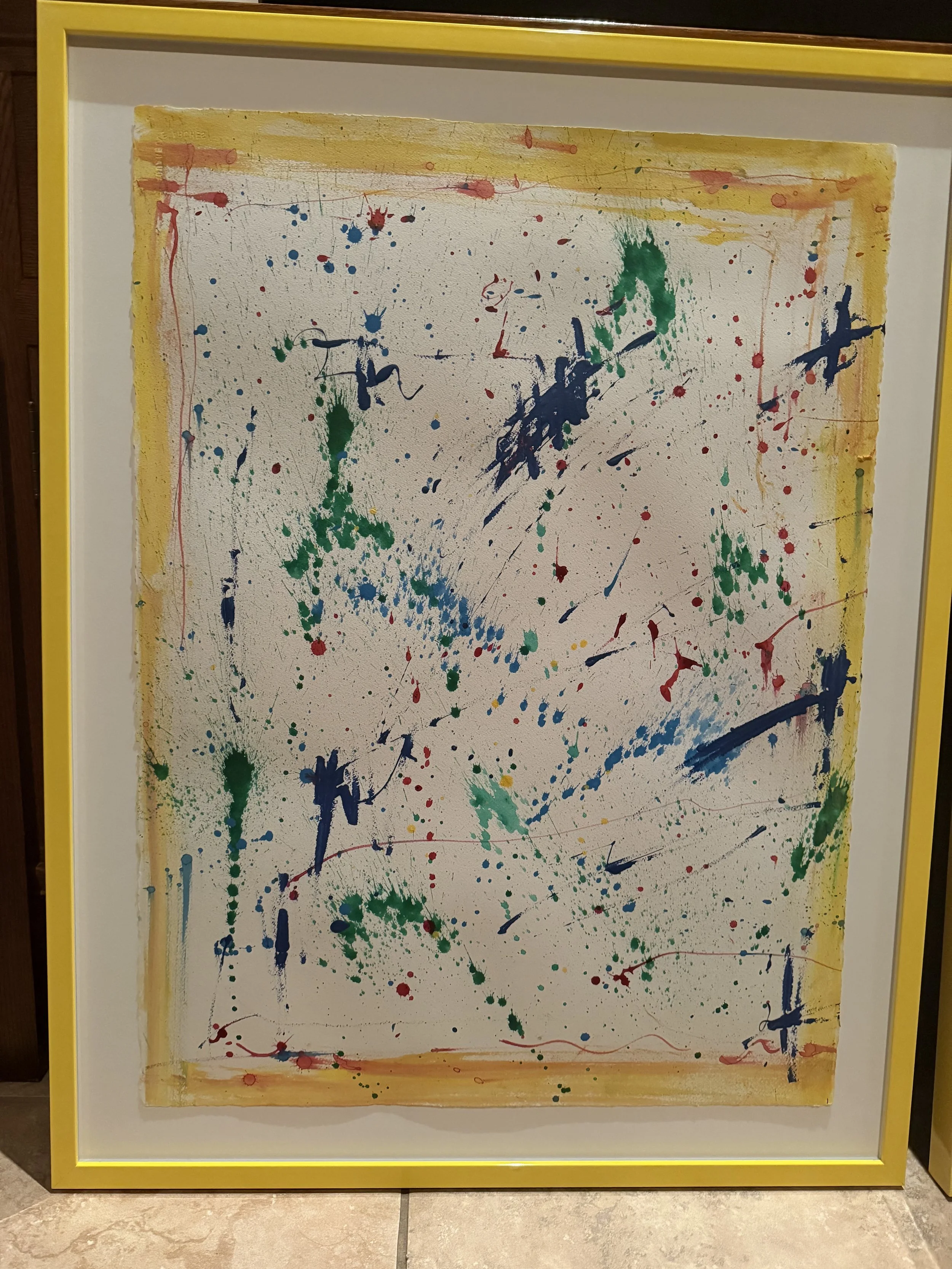
RYTHM & ECSTASY, 2024, LATEX ON PRINT PAPER, 69.8CM X 90.1 CM
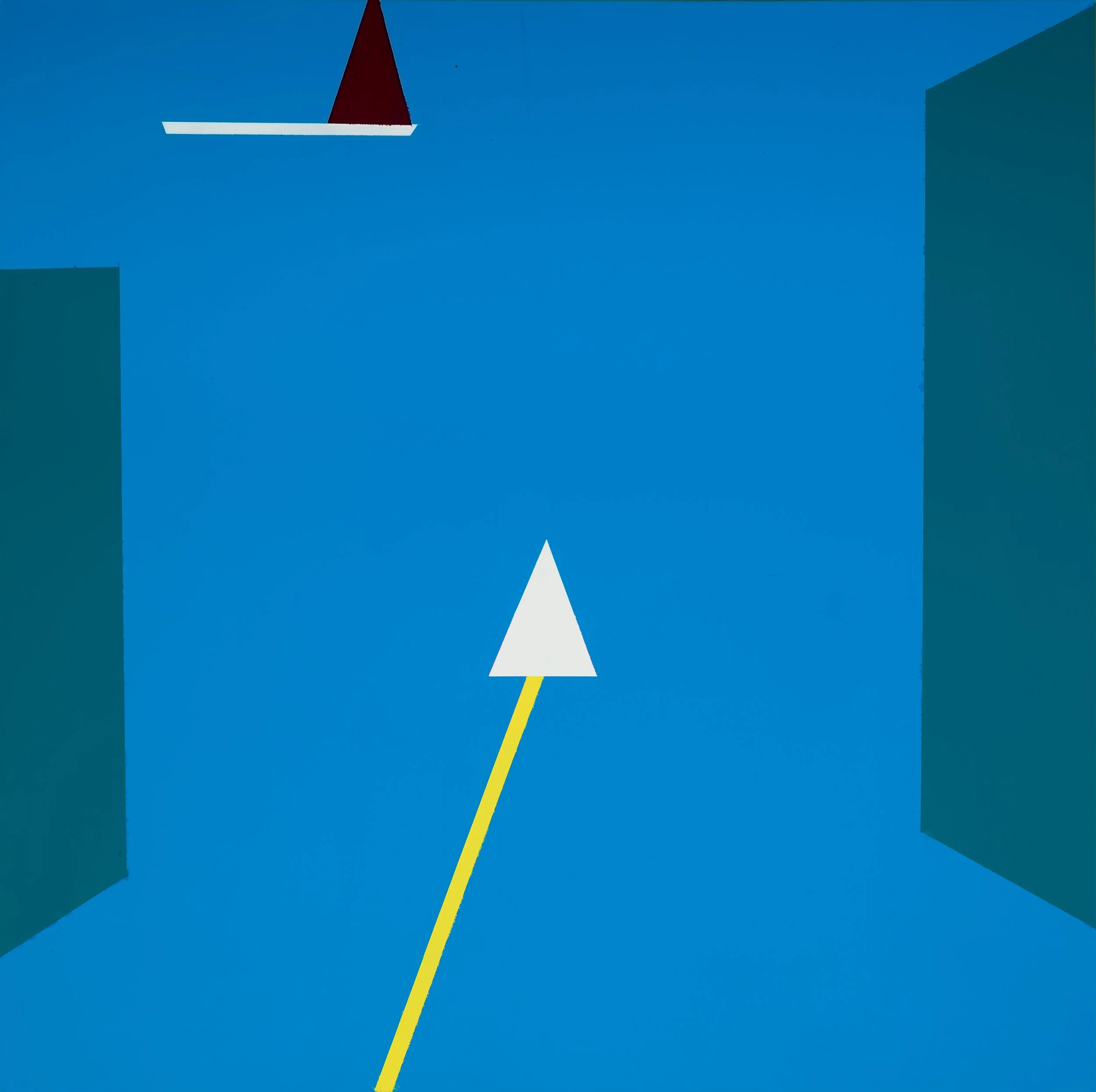
SERIES 7 # 5 UNTITLED, 2025, LATEX ON CANVAS WITH PROTECTIVE CLEAR COAT, 2025, 91.4 CM X 91.4 CM