Jed Smalley: Reclaiming Abstraction Through Medicine, Mathematics, and Landscape
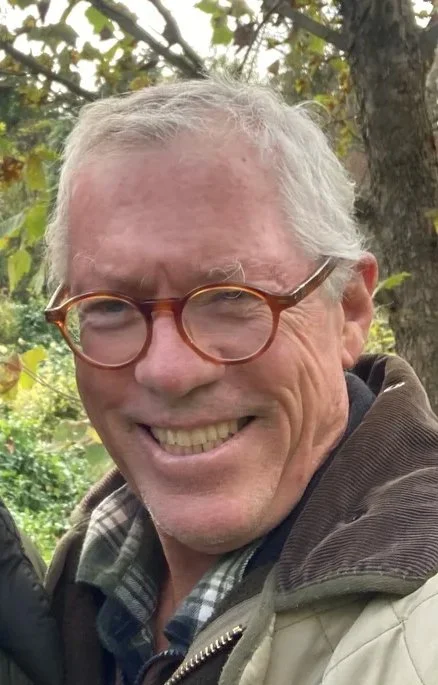
Jed Smalley: Reclaiming Abstraction Through Medicine, Mathematics, and Landscape
Few artistic careers follow a trajectory as unconventional as that of Jed Smalley. Moving between the worlds of contemporary sculpture, academic medicine, and abstract painting, Smalley's practice reflects a rare convergence of intellectual inquiry and visual intuition. His return to the public art world after decades devoted to medicine has positioned him as an artist whose work carries both historical depth and renewed relevance, offering collectors a distinctive perspective rooted in process, geometry, and the enduring language of landscape.
Smalley's artistic journey began with an almost paradoxical relationship to education. Despite what he describes as an early disregard for formal learning, he pursued a Bachelor of Fine Arts at Parsons School of Design before earning a Master of Fine Arts from Yale University. His artistic development was shaped by influential figures including Ron Bladen and Clement Meadmore at Parsons, followed by David von Schlegell and Richard Serra at Yale, whose rigorous approach to sculpture left a lasting impression on his understanding of form, material, and spatial relationships.
Following Yale, Smalley entered New York's vibrant art scene as a large-scale sculptor and secured representation with Fourcade-Droll Gallery, one of the period's respected contemporary galleries. Yet at a moment when his artistic career appeared poised for expansion, he experienced a profound loss of confidence in the significance of art itself. Rather than continuing along an established trajectory, he made an extraordinary decision to leave the professional art world and pursue a medical degree at the State University of New York.
For decades, medicine became his profession while art remained a deeply private pursuit. Although removed from public exhibition, Smalley continued to paint consistently, developing ideas without the pressures of the commercial market. This extended period of independent practice allowed his visual language to mature outside prevailing trends, resulting in a body of work distinguished by patience, experimentation, and intellectual consistency.
Over the past fourteen years, following his retirement from medical practice, Smalley has returned fully to artistic production and public exhibition. His current work centers on large-scale paintings and sculpture that investigate the intersection of landscape, abstraction, and mathematical order. Rather than depicting landscape as subject matter, he employs it as a structural framework through which broader formal questions can be explored.
Central to Smalley's practice is the mathematical principle of Phi, commonly known as the Golden Ratio, together with the Fibonacci sequence. These proportional systems, found throughout nature, the human body, planetary relationships, and countless works of art, serve as conceptual foundations rather than rigid formulas. The artist seeks to build compositions that echo these universal relationships while remaining open to spontaneity and material response.
His process is equally distinctive. Working on wooden panels or canvases placed directly on the studio floor, Smalley thins his paints to encourage gravity to become an active collaborator. Pigment drips, pools, and flows across the surface, creating layered compositions in which intentional structure coexists with chance. Although many paintings begin with a specific landscape reference, they gradually evolve through an ongoing dialogue between observation, abstraction, rhythm, color, and accident.
This embrace of controlled unpredictability extends to his sculpture. Whether working in wood or clay, Smalley allows the inherent qualities of each material to guide the emerging form while subtly aligning curves and proportions with Fibonacci relationships. Rather than imposing complete control, he views the creative process as a negotiation between conscious intention and unconscious discovery. The resulting works possess an organic vitality that resists purely geometric precision while remaining deeply informed by mathematical order.
The artist himself acknowledges the tension between these seemingly opposing forces. While he often describes landscape as a scaffold for abstract investigation, he also accepts that his enduring fascination with the natural world may be inseparable from the work itself. This self-awareness contributes to the authenticity of a practice that never feels constrained by theory, even as it draws upon sophisticated conceptual foundations.
Since returning to exhibition activity, Smalley has steadily rebuilt his public presence. He has exhibited extensively with the Maryland Federation of Art, Catalyst Contemporary Gallery in Baltimore, Zenith Gallery in Washington, D.C., and previously with Yoiks Gallery. His recent exhibitions have been accompanied by increasing institutional recognition, including multiple exhibition awards and the Juror's Choice Award at the Maryland Federation of Art's 2024 Fall Show.
His career combines historical credibility with contemporary momentum. Early distinctions include the Rebecca Taylor Porter Prize, the Ford Foundation Grant, the Fanny B. Pardu Prize, and the Bernard and Sophie B. Gotlieb Award for Artistic Achievement. More recently, his growing visibility has culminated in a significant permanent public commission for the Truesdell School in Washington, D.C., comprising seven large-scale painted panels spanning twenty-eight feet, completed between 2025 and 2026.
From an art market perspective, Smalley's practice occupies an increasingly compelling position. His early association with influential postwar sculptors, combined with decades of uninterrupted studio practice outside commercial pressures, distinguishes his work from more conventional career trajectories. Collectors are increasingly attentive to artists whose bodies of work demonstrate long-term intellectual development rather than rapid market production, and Smalley's career exemplifies this sustained commitment.
His paintings offer multiple points of engagement. They appeal to collectors interested in contemporary abstraction, process-based painting, geometry, and the enduring dialogue between science and art. Equally significant is the coherence of his practice across painting and sculpture, where material experimentation, mathematical proportion, and landscape remain interconnected aspects of a unified artistic vision.
In an era increasingly defined by interdisciplinary thinking, Jed Smalley's career illustrates how scientific discipline and artistic intuition can coexist without diminishing one another. His work does not seek to illustrate mathematics or imitate nature. Instead, it explores the shared structures that underlie both, inviting viewers to experience order and uncertainty as complementary forces. The result is a body of work that is intellectually rigorous, visually engaging, and increasingly relevant within today's contemporary art landscape.
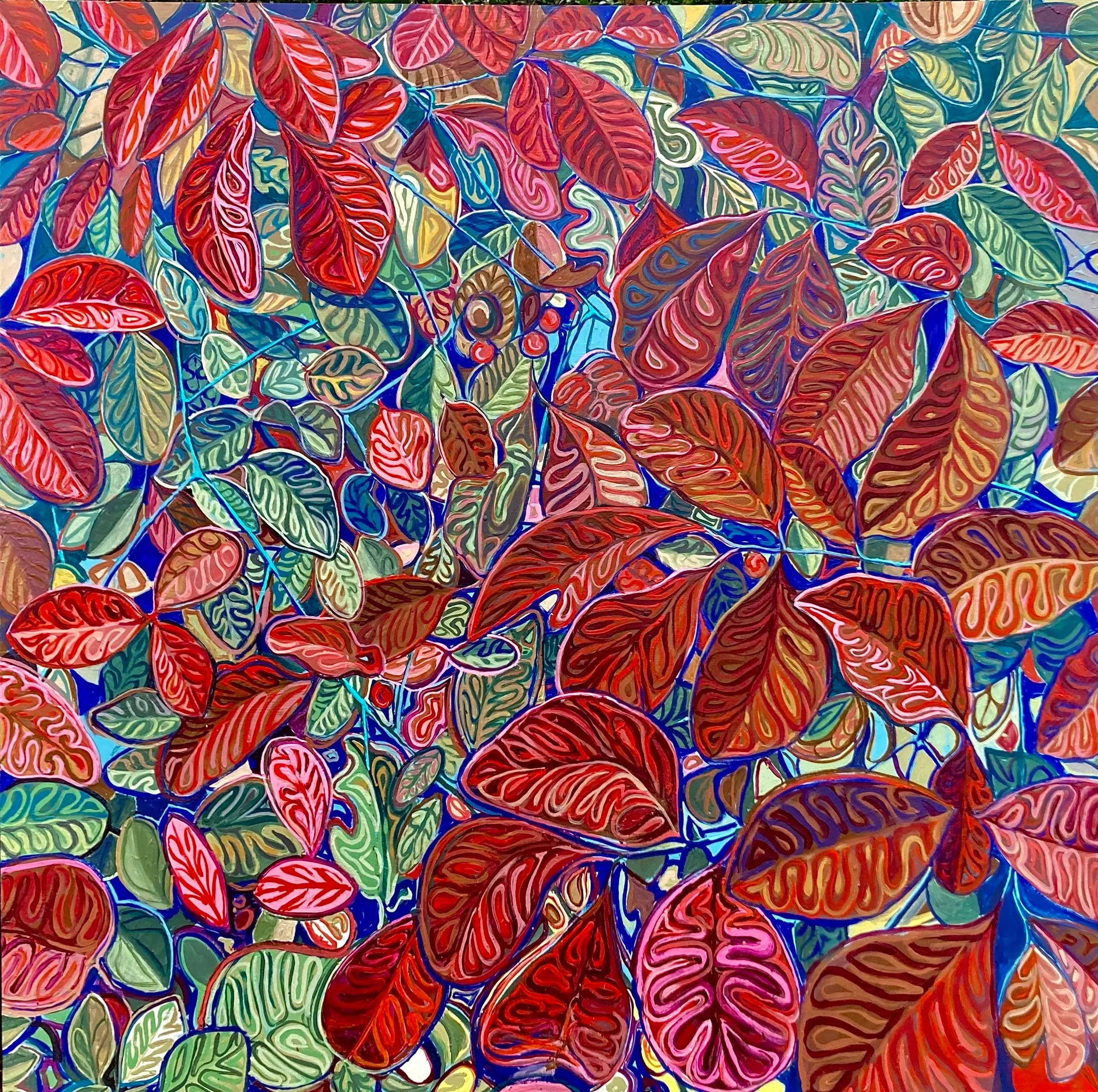
12B. Foliage with Linear Articulation. acrylic paint on wooden board. Painted 2024. Dimensions, 46” x 45”.
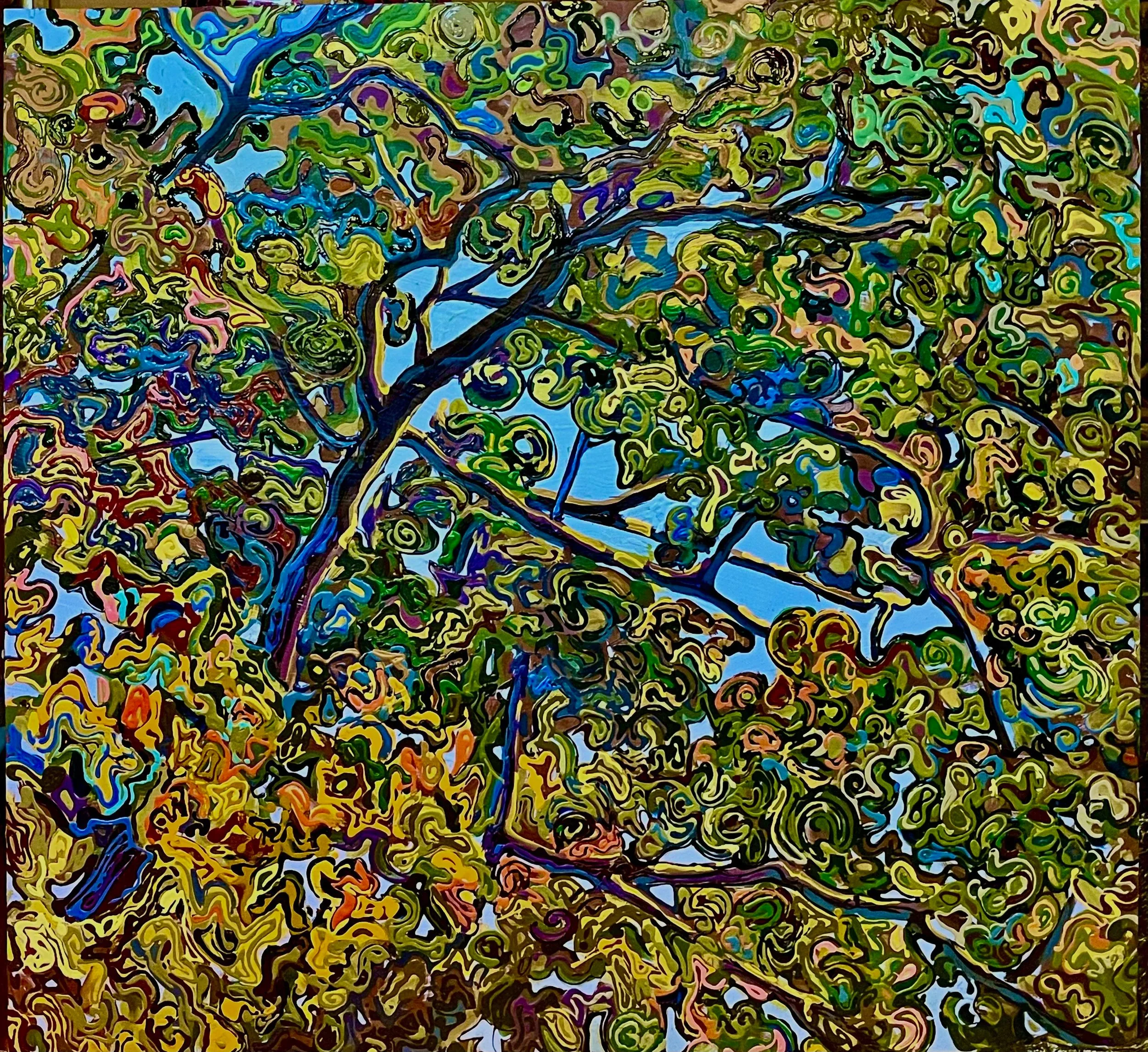
6B. Integrated Landscape #12 Acrylic paint on wooden board. Painted 2026. Dimensions, 34” x 36”.
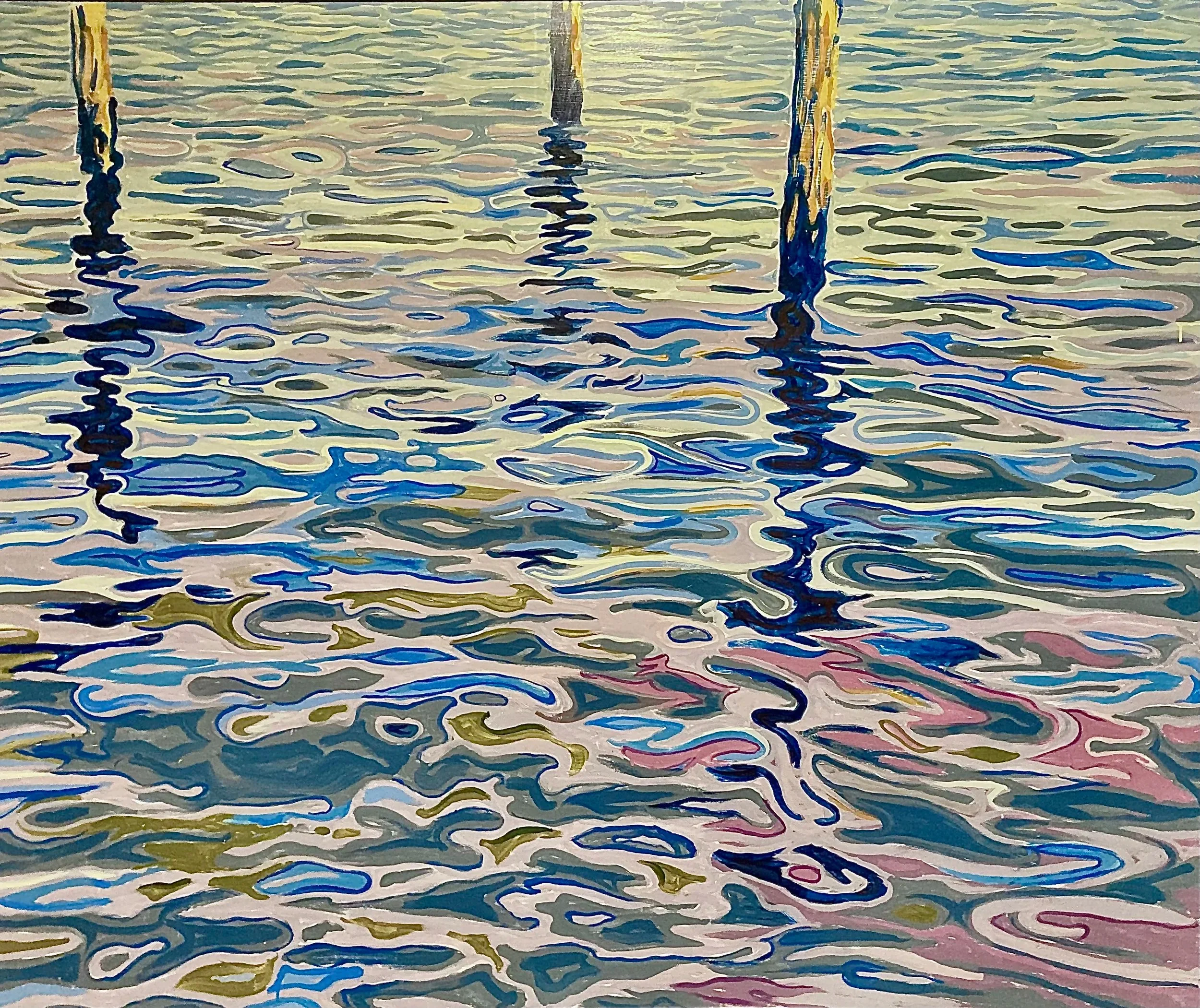
18B. Bay Water II Painted 2022 with Latex paint on wooden board. Dimensions 58” x 48”.
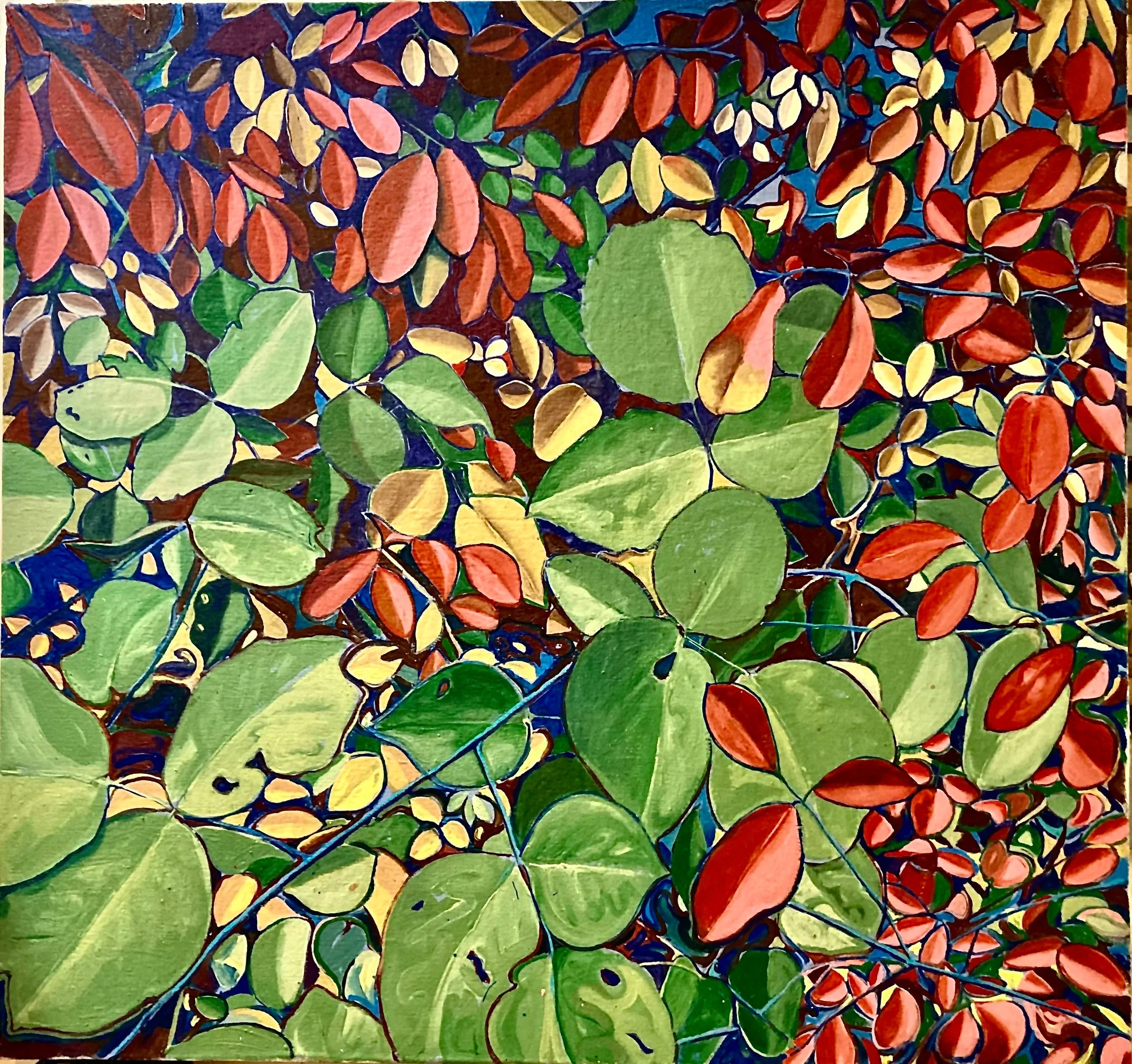
117B. Composition with Complimentaries. Acryllic paint on canvas. Painted 2023 - 2024. Dimensions, 45” x 47”.
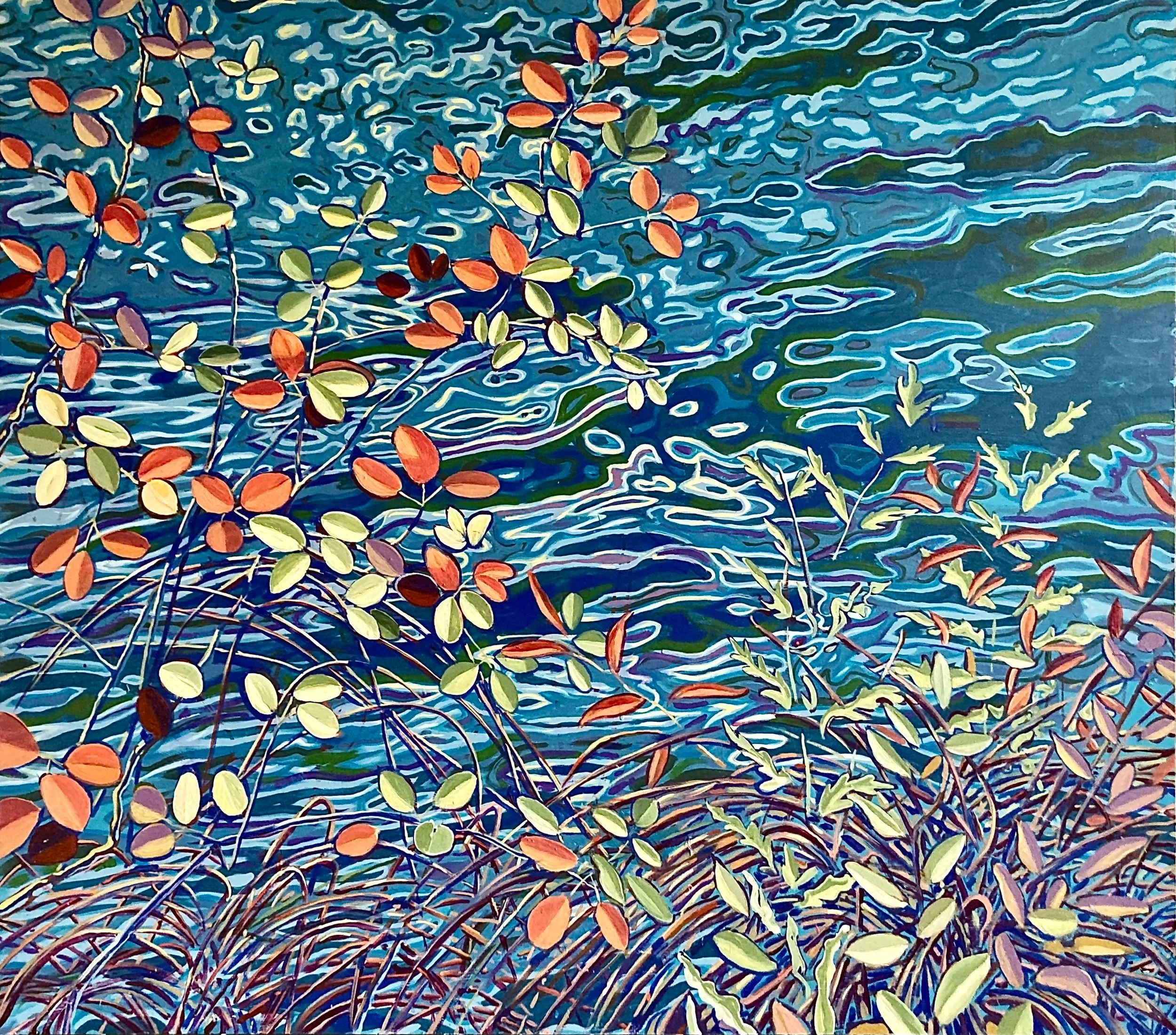
100. Branches and water. Acryllic and Latex paint on wooden board. Painted 2021. Dimensions, 44” x 46”.
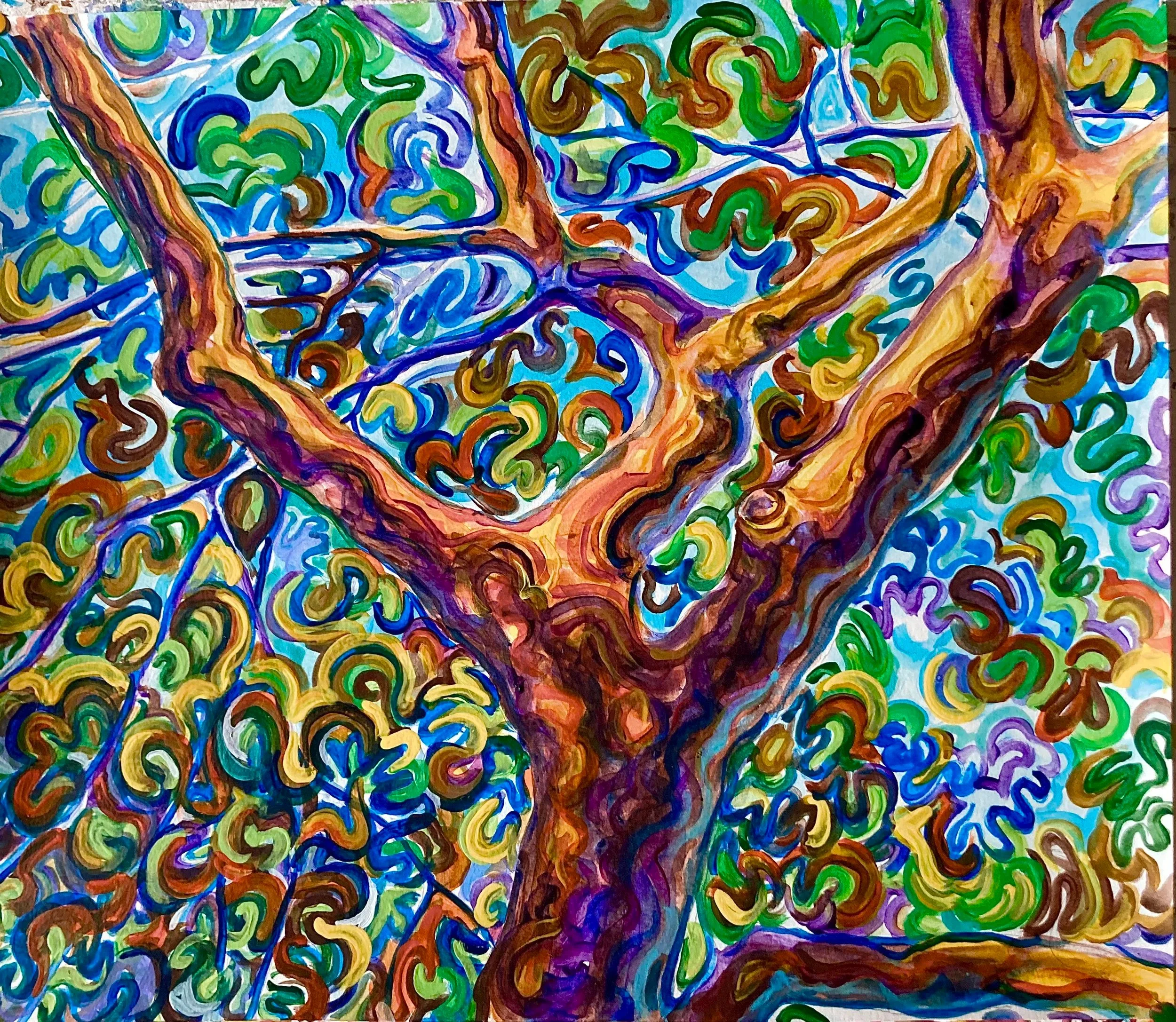
Tree in Woods #2. Watercolor on paper. Painted 2022. Dimensions, 10” x 12”.
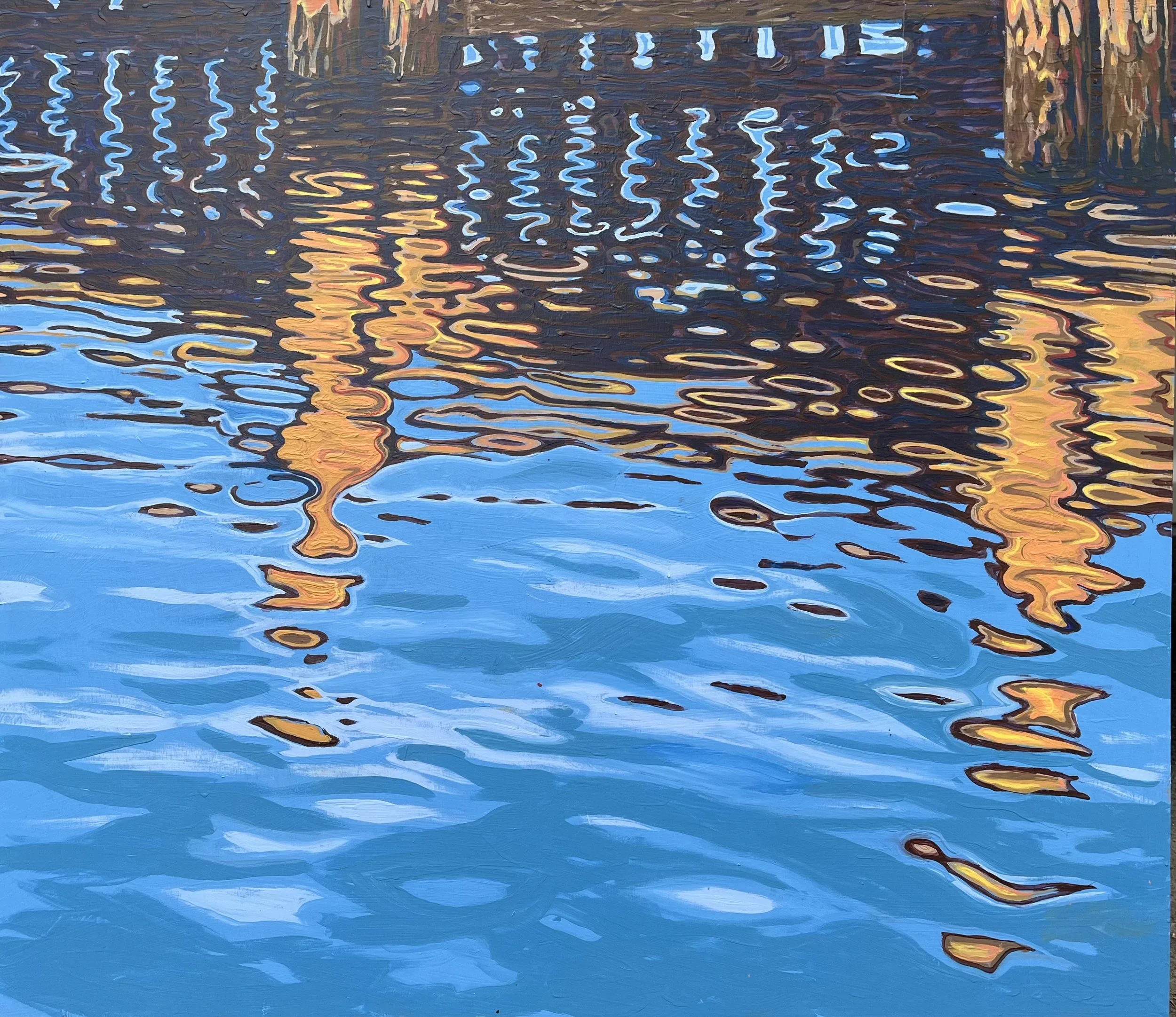
31B. Light and shadow under Docks #3 Acrylic paint on wooden board. Painted 2025. Dimensions, 46”x 40”.
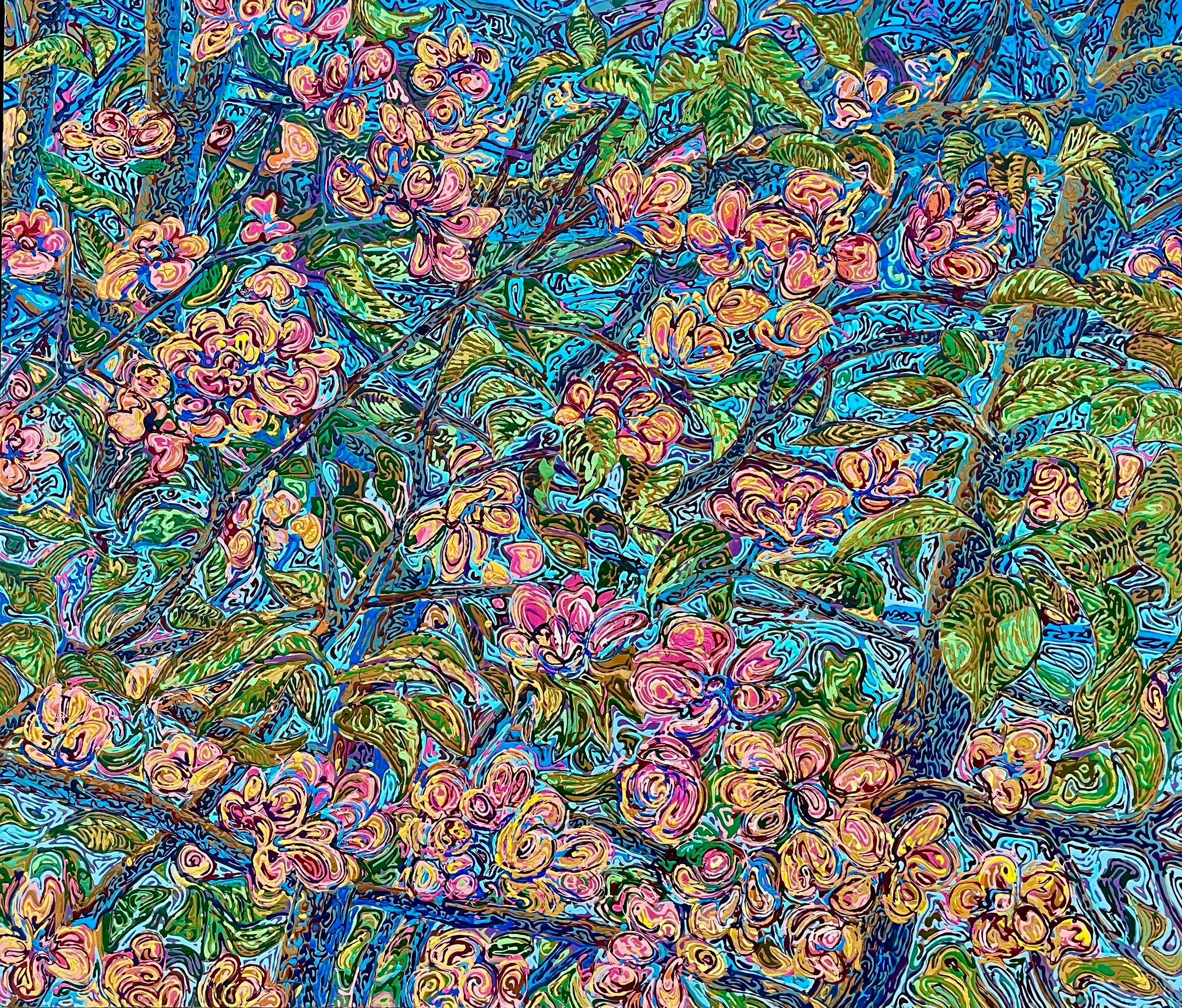
21B. Pink, Green and Blue Acrylic paint on wooden board. Painted 2024. Dimensions, 44” x 42”.
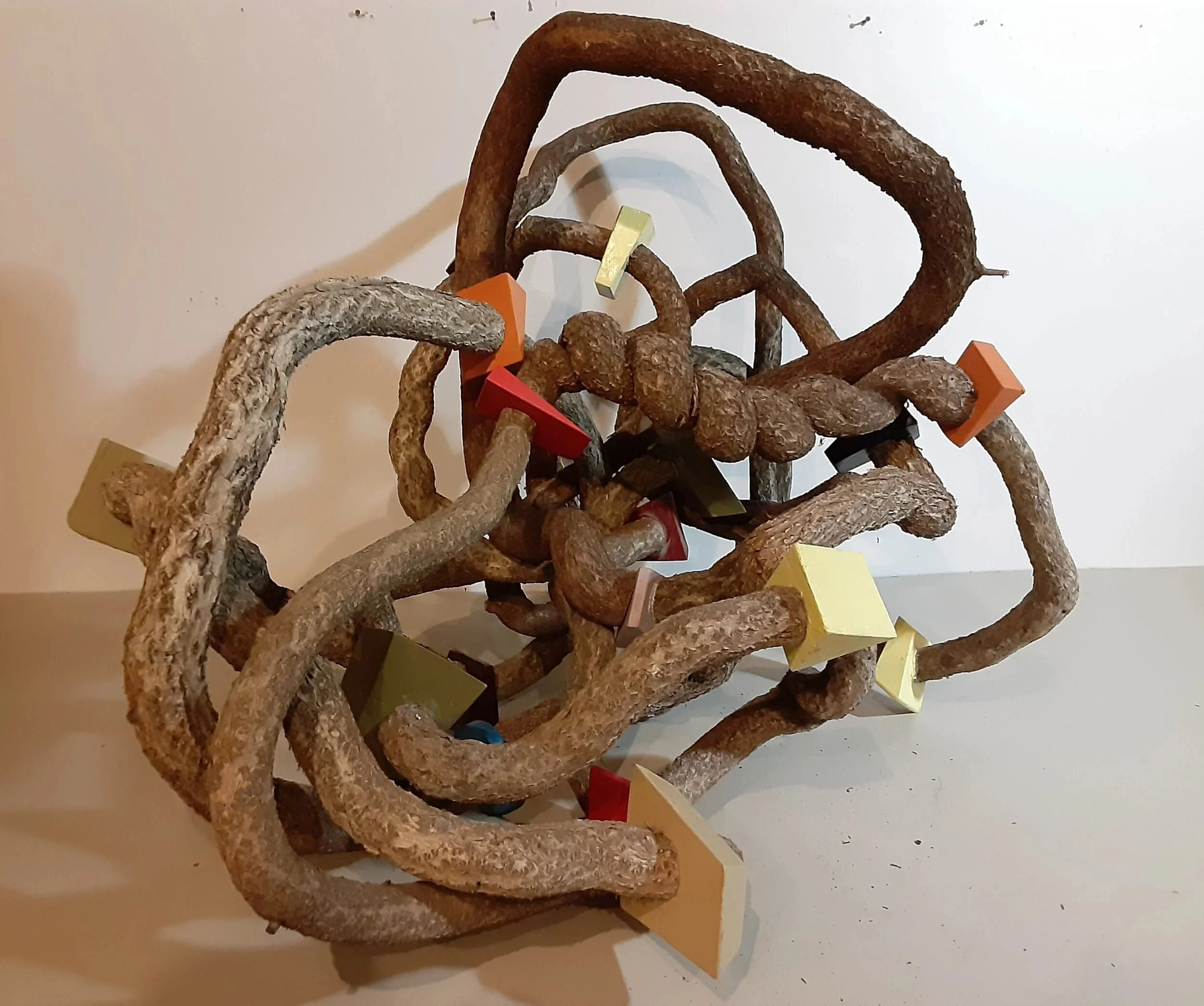
3. Interrupted, Continuous, Three Dimensional Line.
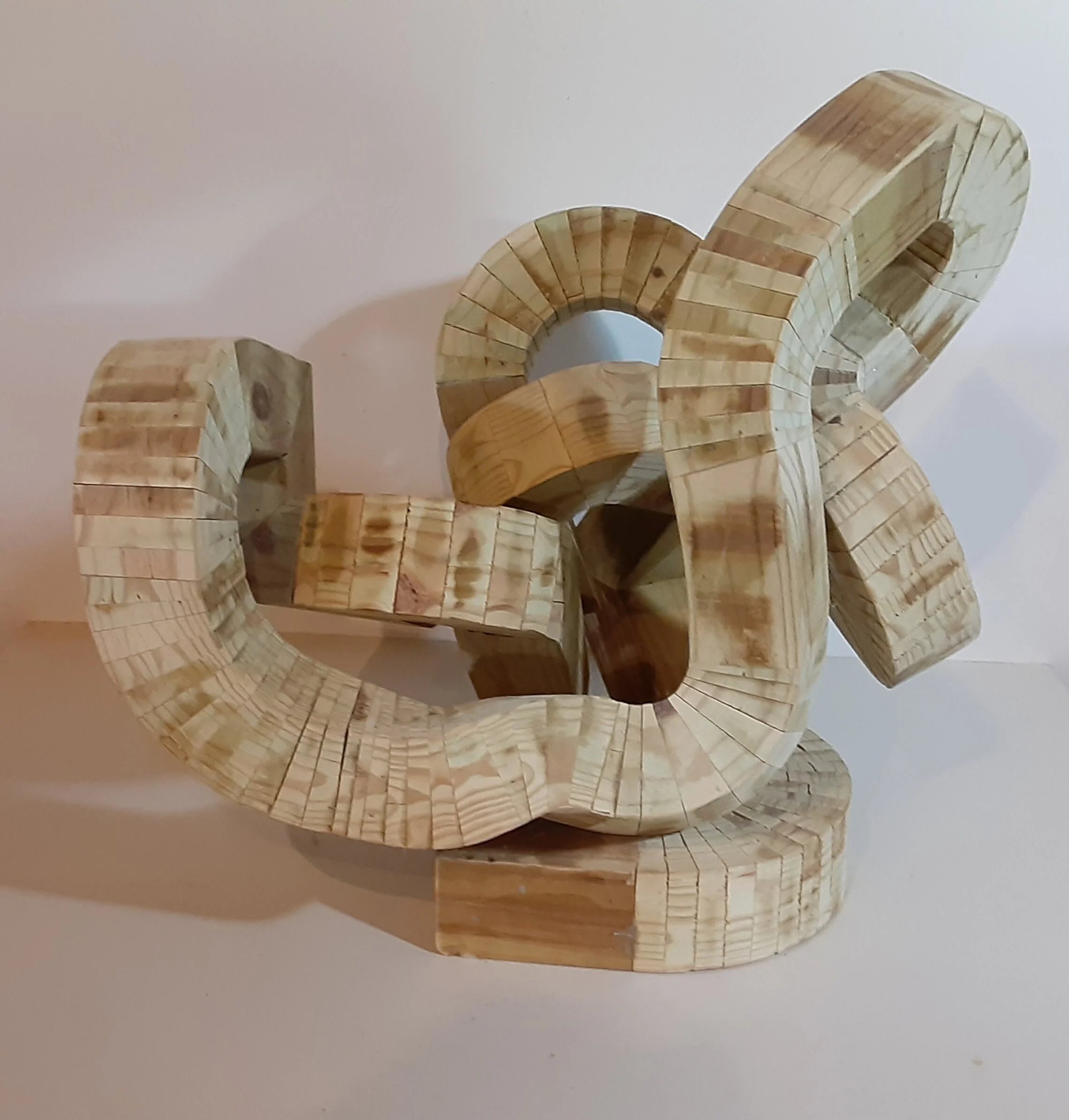
5. Continuous Geometric Four by Four.