Michael Kaphengst and the Architecture of Linearity

Michael Kaphengst and the Architecture of Linearity
In an era when contemporary painting often oscillates between spectacle and conceptual detachment, Michael Kaphengst has developed a visual language that insists on process as both method and subject. Describing himself as a “Linearist,” the German artist has built a distinctive practice around the primacy of the line, positioning it not merely as a compositional device, but as the structural force from which the image itself emerges.
Kaphengst’s trajectory into the international art world reflects an unusually interdisciplinary foundation. His early education in graphic design at the Kollegschule Minden was followed by professional experiences that traversed theatre, film, media production, acting, and vocational education. Internships in stage design at the Wilhelmshaven City Theatre and at Studio Hamburg introduced him to the mechanics of visual staging and cinematic composition, while formal training in acting at the Bühnenstudio der Darstellenden Künste in Hamburg deepened his understanding of gesture, rhythm, and spatial presence.
This convergence of disciplines remains visible throughout his artistic practice. His paintings possess a performative quality, often appearing less “composed” than enacted. The physicality of mark-making is central to the work, particularly in the series he defines as “Fencing Pictures – Absolute Linearism,” in which lines are executed using a brush mounted onto a rapier. Developed in 2009, the technique transforms painting into an act of choreographed movement, collapsing distinctions between drawing, performance, and conceptual action.
Kaphengst’s broader philosophy of “Linearism” emerges from his observation that contemporary existence is fundamentally governed by processes. Rather than interpreting consumer culture through the visual codes of Pop Art, he frames it as a sequence of linear systems and repetitive actions that shape individual experience. Daily routines, labour, movement, and consumption become interconnected structures that define modern life.
“I see the line as the primary force,” the artist states, “with the image emerging almost as a consequence.”
This conceptual hierarchy distinguishes Kaphengst’s work from purely formal abstraction. His lines are not decorative gestures. They function as traces of behavioural systems, psychological movement, and societal acceleration. The resulting compositions often oscillate between figuration and dissolution, creating visual fields in which imagery appears to condense from continuous motion.
The artist has developed several distinct modes within this framework. In “Consumptive Surrealism,” (1995) consumer objects are displaced from their conventional context and reorganised into surreal visual environments. Here, mass-produced imagery becomes unstable and psychologically charged, resisting passive consumption and acquiring renewed symbolic agency.
By contrast, “Extreme Linearism,” developed around 2012, pushes the artist’s process toward near-total immersion in motion and repetition. Beginning with revolving circular gestures across the paper surface, Kaphengst allows the motif to emerge gradually through accumulation and density. The resulting images possess an energetic instability that reflects both control and surrender to process. These works represent the most radical articulation of his linear philosophy, where the image is generated through sustained kinetic engagement rather than predetermined composition.
The artist’s biography further informs the conceptual depth of his practice. To finance his education and artistic development, Kaphengst worked across a wide range of professions, including bartender, actor, nursing assistant, tiler, postman, and public transport driver. Far from incidental, these experiences appear embedded within his understanding of repetitive systems and the choreography of everyday labour. His work repeatedly returns to the notion that modern existence is structured through sequences, routines, and mechanical continuities.
Over the past decade, Kaphengst has established a steadily expanding international exhibition presence. His works have been presented in galleries, biennials, and public institutions across Germany, France, Italy, Spain, Austria, Singapore, and the United States, including appearances in Paris, Barcelona, New York, Vienna, Miami, Milan, Monte Carlo, and at the Fine Art Cannes Biennale. Participation in platforms such as Artexpo Ingolstadt and Artexpo Sanremo has further positioned his practice within the growing international market for contemporary conceptual painting.
Institutional and editorial recognition has followed. The artist has been featured in publications including Atlante dell’Arte Contemporanea 2026 Speciale MOMA, Art Celebrity Magazin 2025, Art Investment and Collectors Guide 2025, and Art Leaders of Tomorrow: Defining the Future of Art. His inclusion in these publications reflects increasing critical attention toward artists whose practices bridge conceptual rigor with immediately recognisable visual identities.
From a market perspective, Kaphengst occupies a compelling position within contemporary European painting. Collectors are increasingly drawn to practices that combine technical distinctiveness with coherent theoretical frameworks, particularly in a market saturated by stylistic repetition. Kaphengst’s “Linearism” offers both recognisable authorship and conceptual continuity, qualities that remain essential for long-term market sustainability.
What ultimately distinguishes his work is its insistence that process itself can become image. In Kaphengst’s paintings, the line is not simply a means of representation. It becomes evidence of movement, duration, and lived experience. The viewer encounters not only a finished composition, but the visible residue of an action unfolding in time.
At a moment when contemporary art continues to negotiate the relationship between materiality and acceleration, Michael Kaphengst’s practice proposes an alternative reading of modern existence: one in which the structures governing everyday life are neither concealed nor resisted, but rendered visible through the disciplined persistence of the line.
Website: https://michaelkaphengst5.wixsite.com/linearismus
Instagram: michaelkaphengstlinearist
Facebook: michael.kaphengst
City Gallery Vienna: https://publicartists.online/artists/michaelkaphengst/
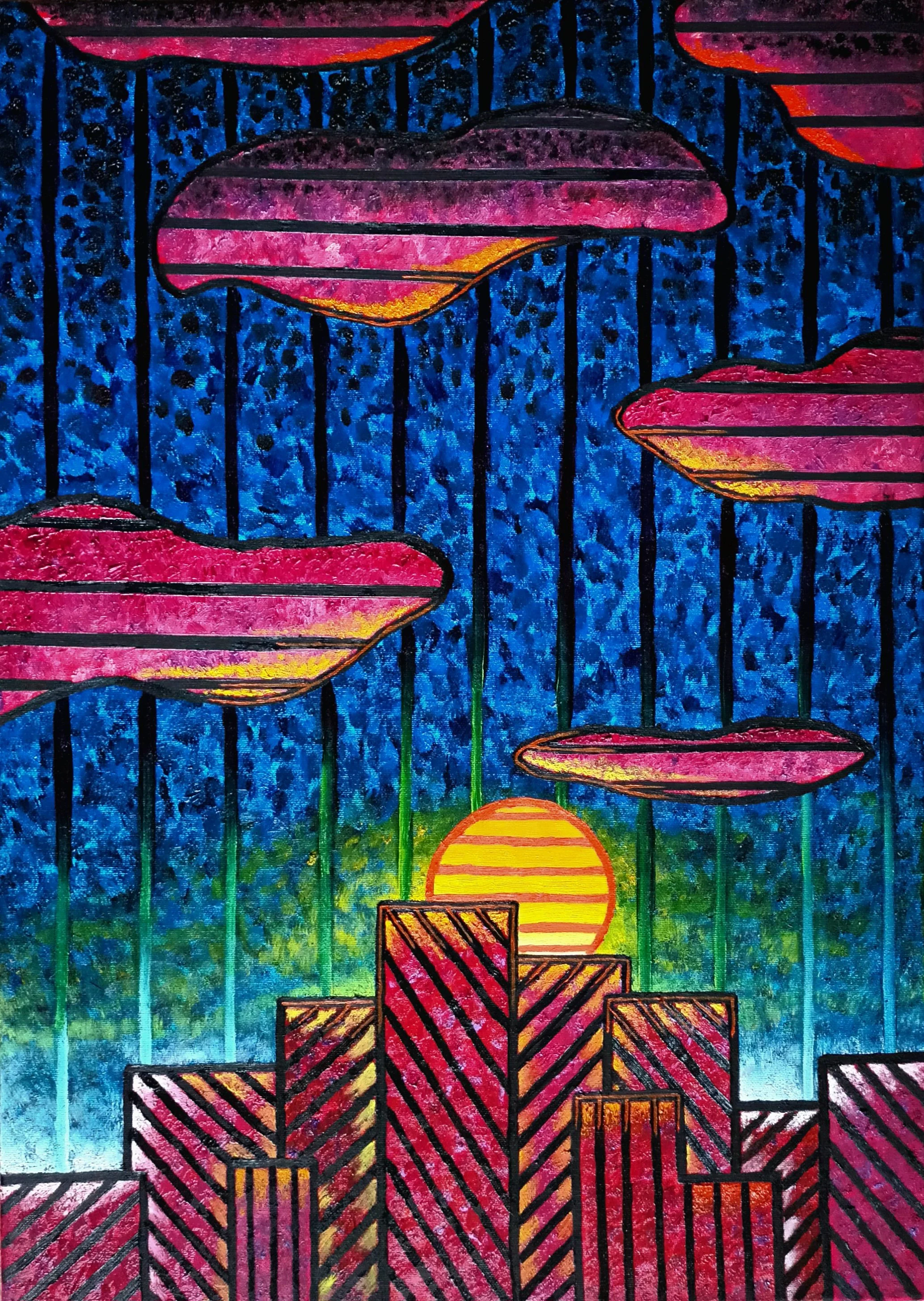
Skyline, 2025
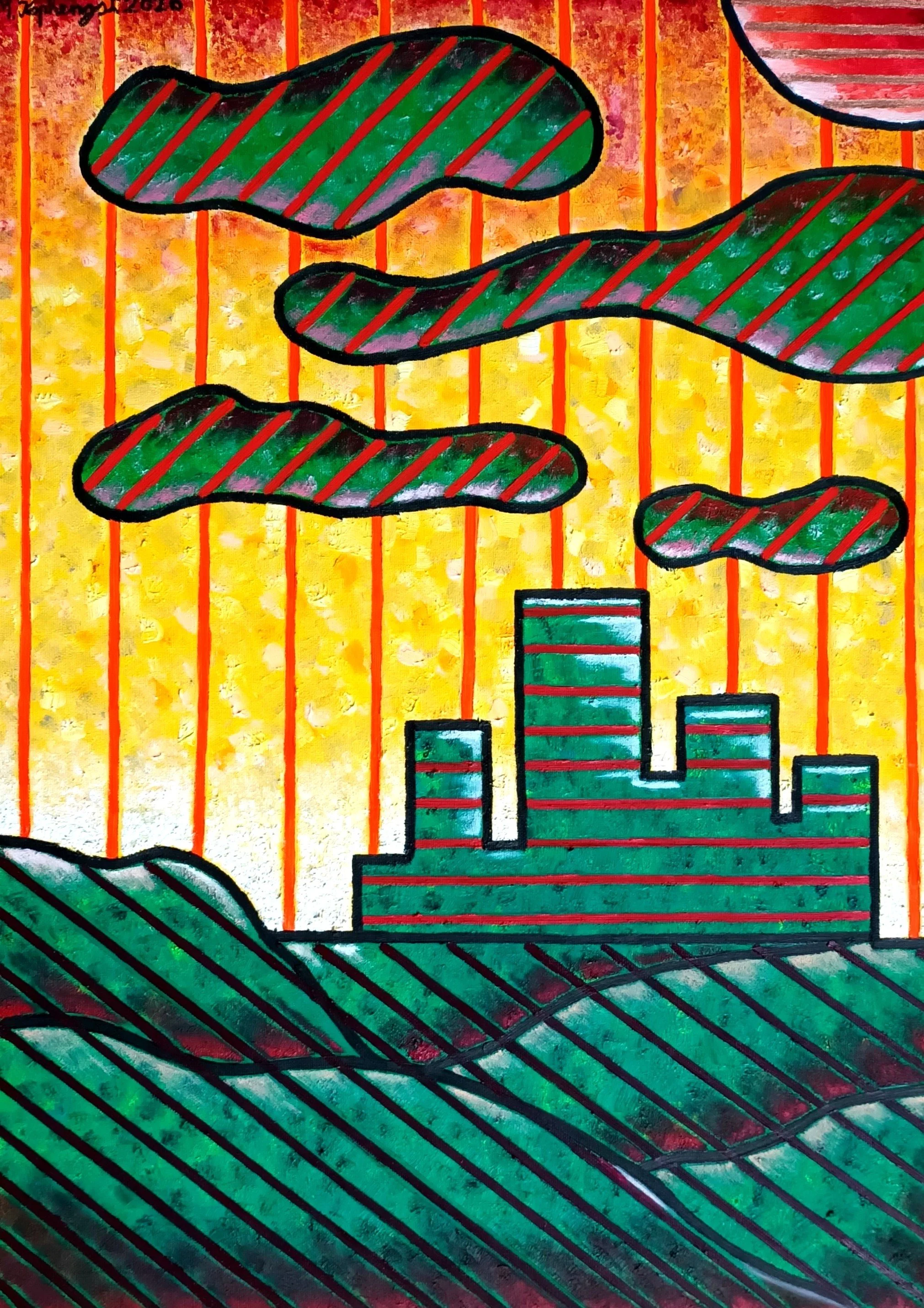
bloodmoon, 2026
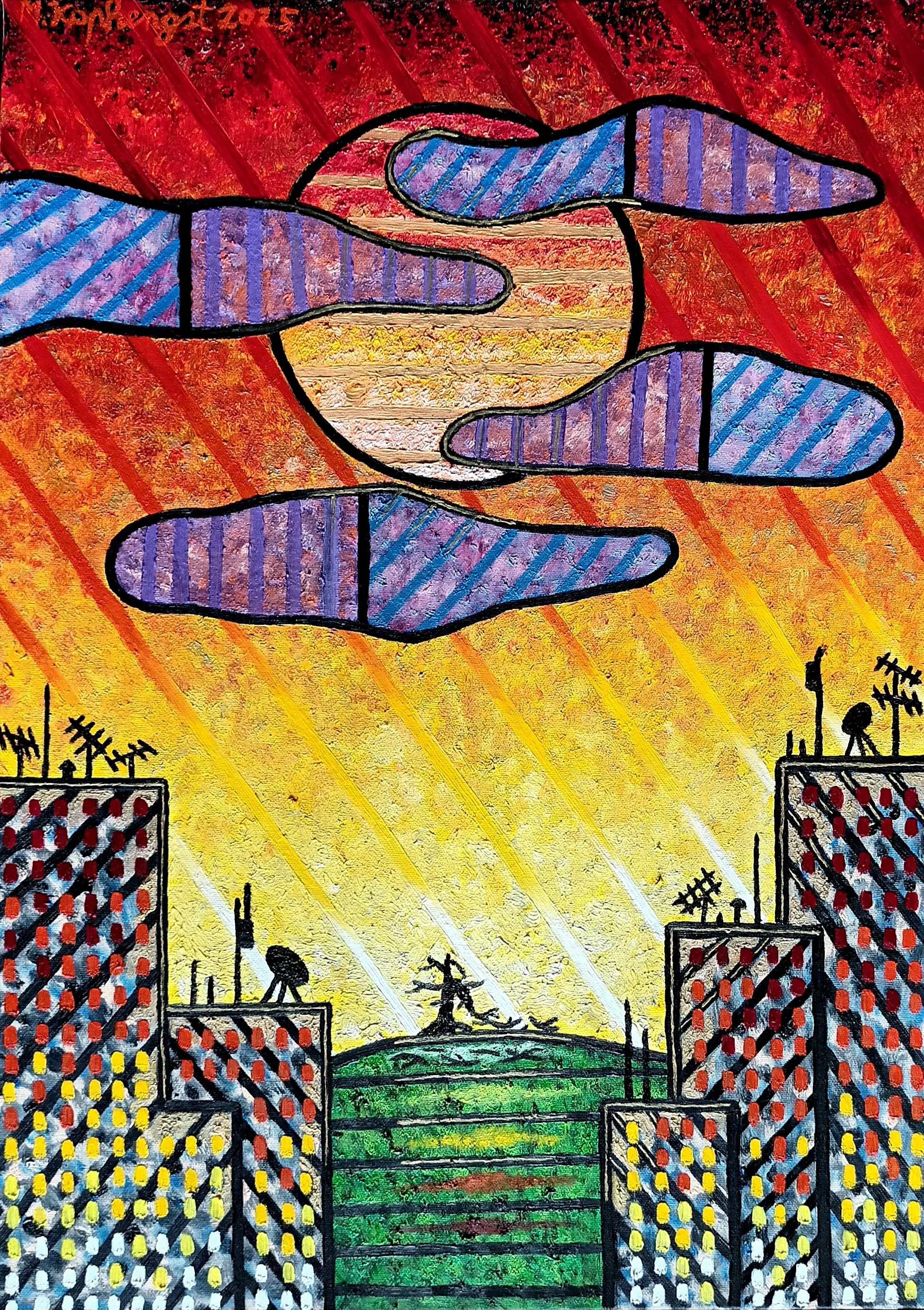
down, 2025

Foresight, 2026
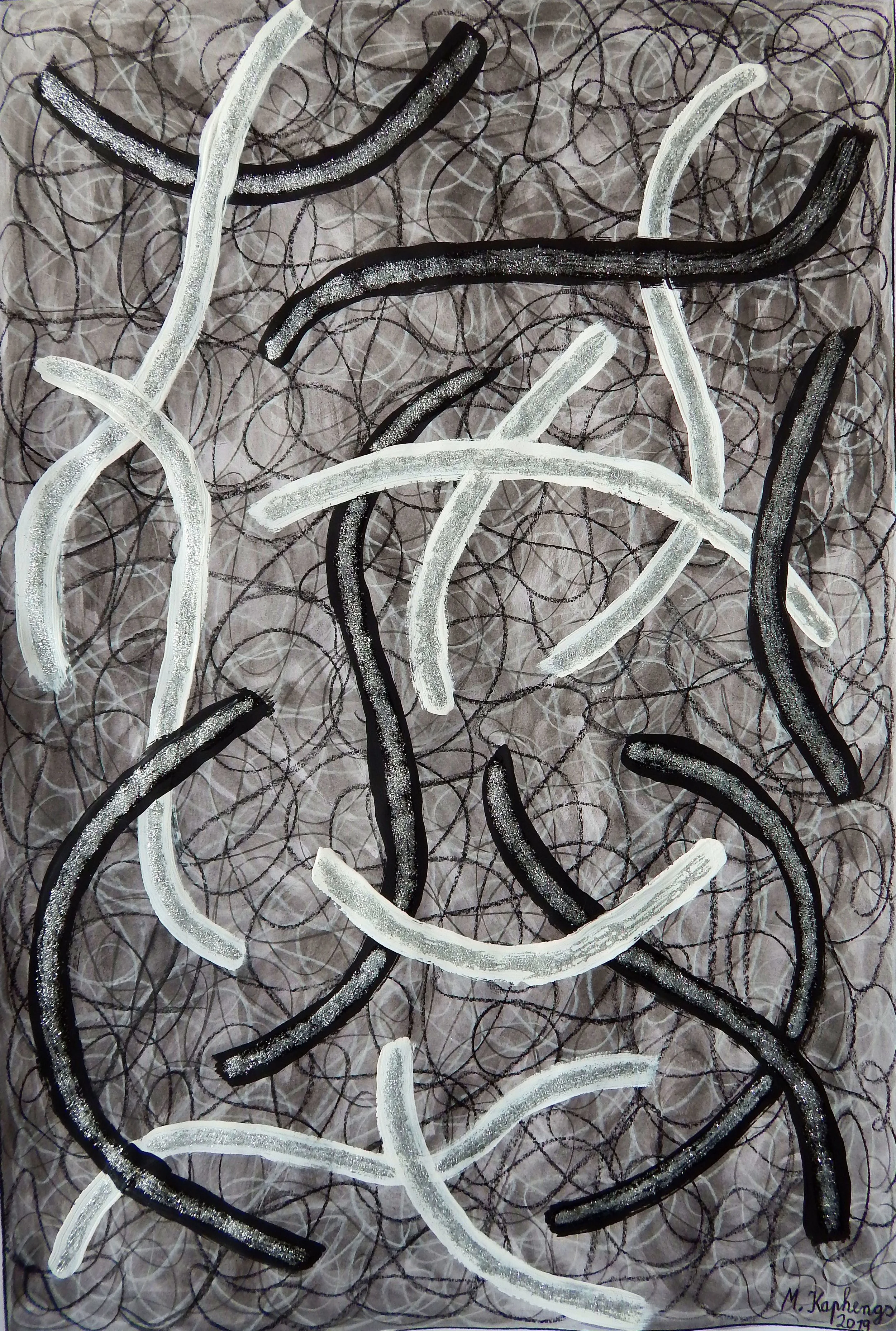
greyrush, 2019
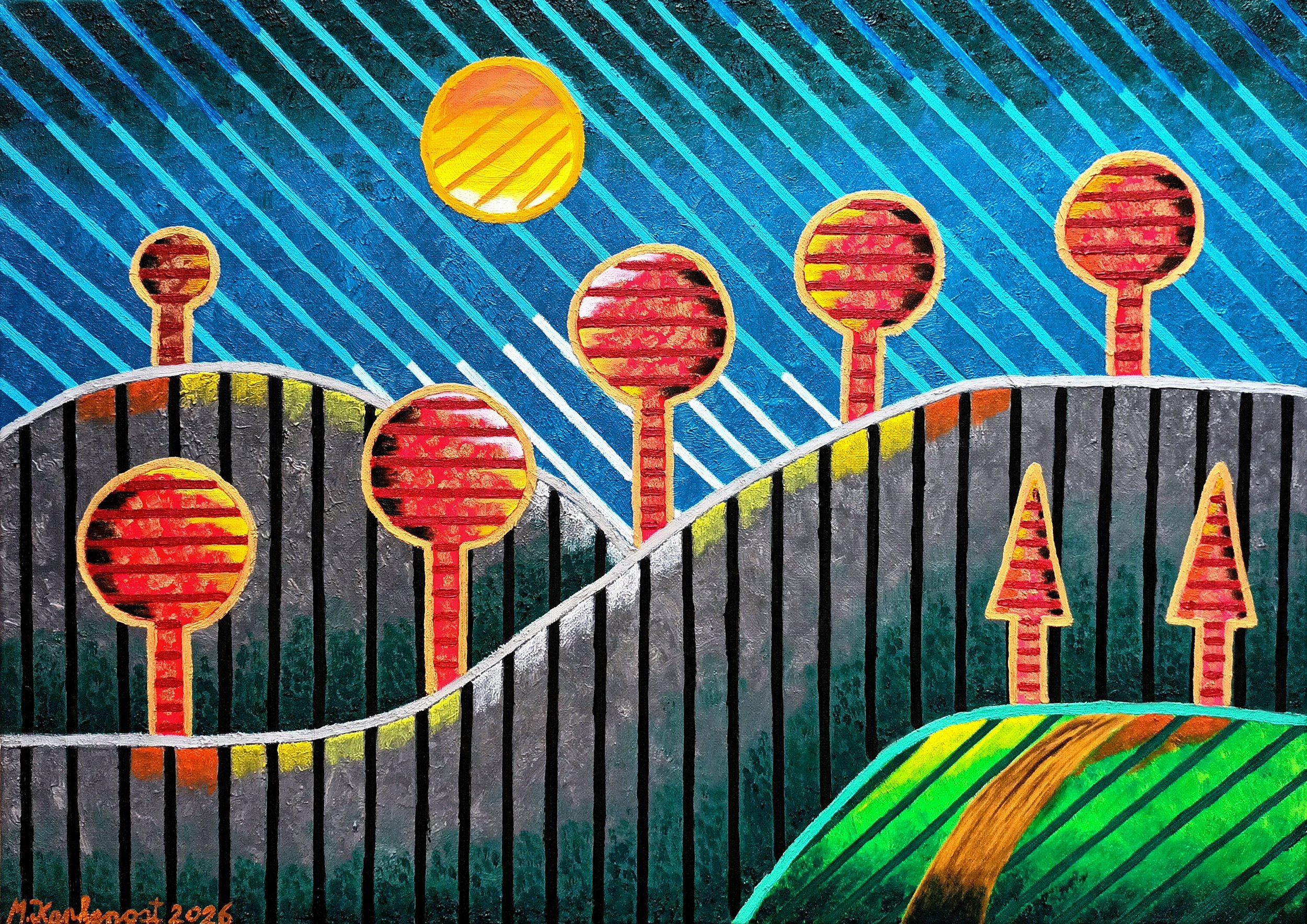
Red Allee, 2026
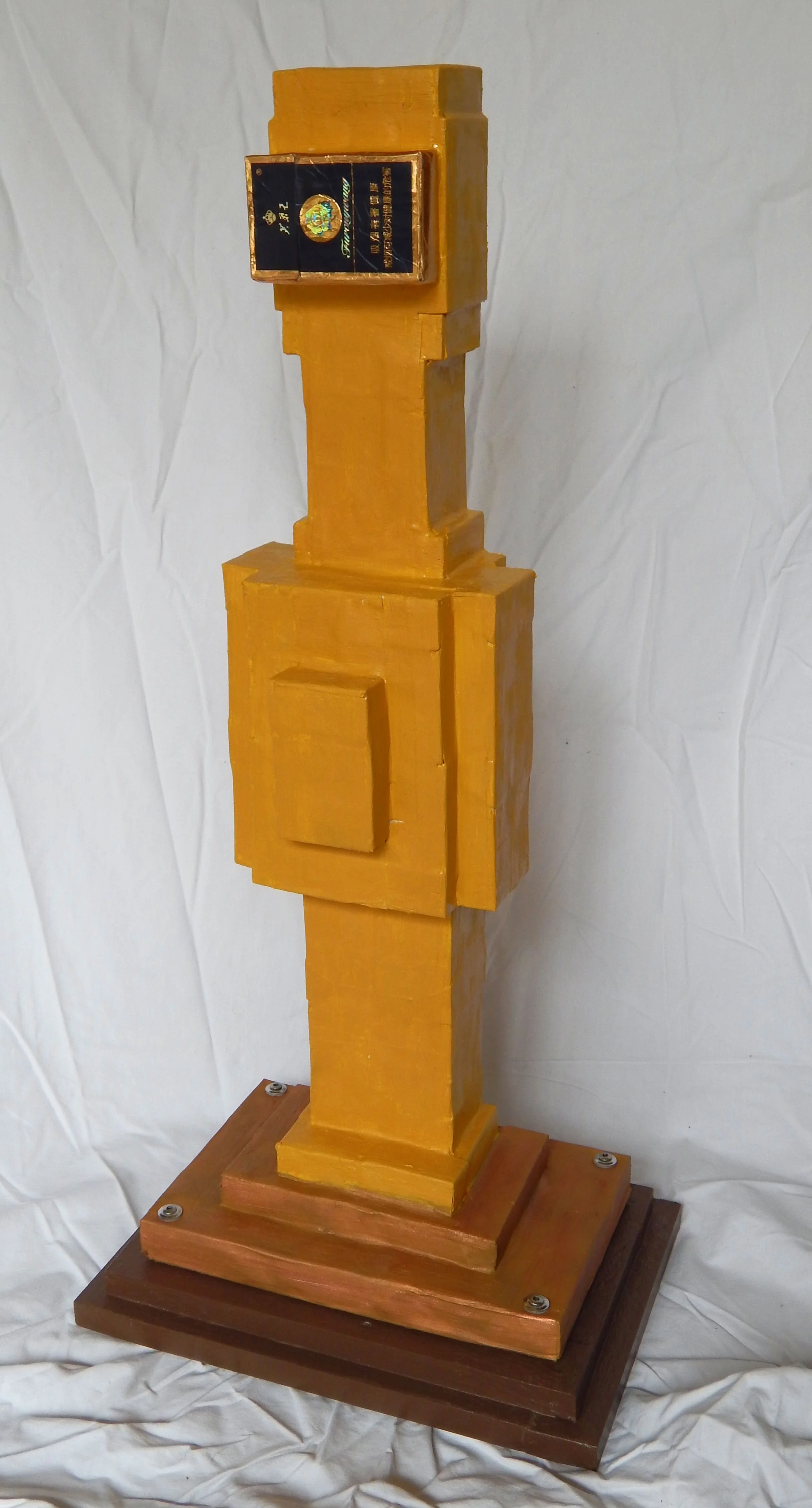
Chinese, 2016 / sculpture made of cigarette boxes
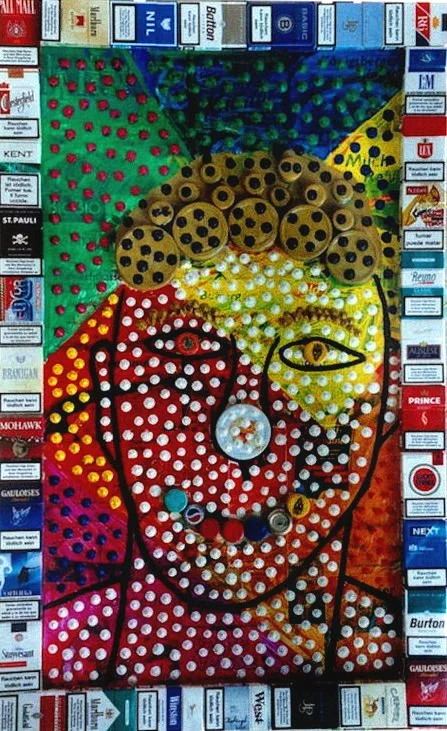
The Clown, 2007
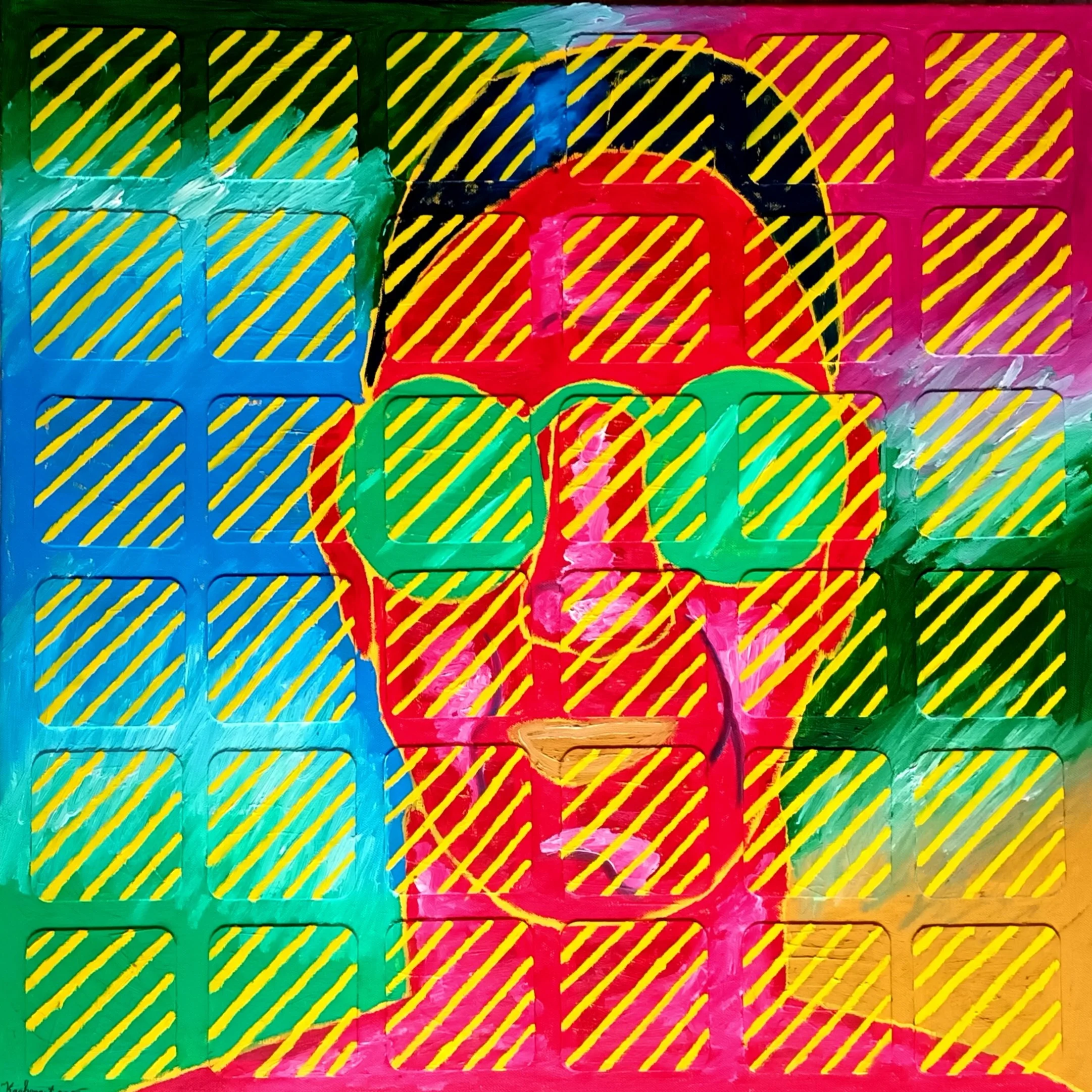
Man with glasses, 2009
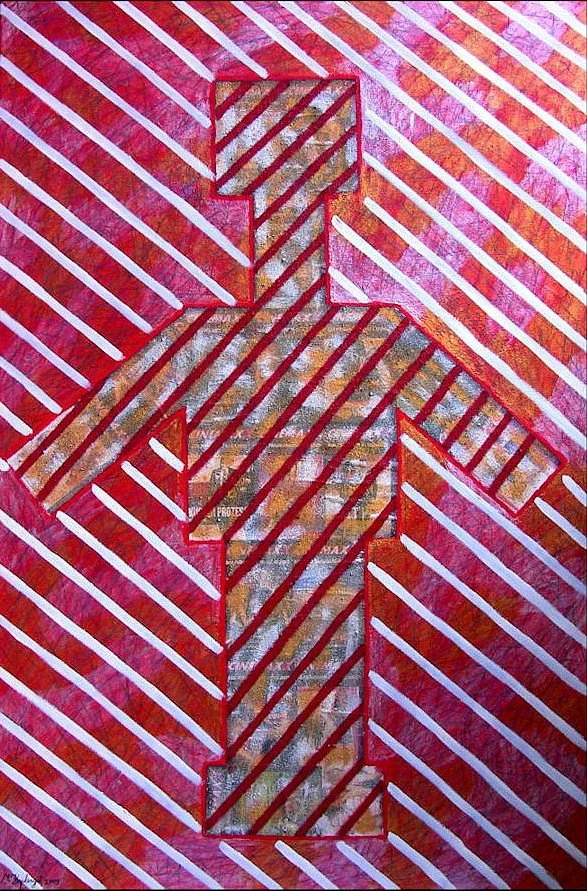
red robot, 2009