As artificial intelligence makes sophisticated imagery increasingly easy to produce, the art market faces a fundamental question about originality, authorship and value. Could the proliferation of machine-generated content strengthen demand for human craftsmanship, distinctive artistic identities and artworks with verifiable histories? Or will the relationship between technology and creativity produce an entirely different understanding of authenticity?
The ability to produce an image has never been more widely accessible. Generative artificial intelligence can now transform written instructions into elaborate visual compositions, simulate an extraordinary range of aesthetic styles and produce variations in quantities that would have been unimaginable only a few years ago.
What previously required specialist technical knowledge, substantial resources or extended periods of manual production can increasingly be accomplished through automated systems.
For the international art market, the implications extend beyond the immediate question of whether AI-generated images qualify as art.
The more consequential issue concerns the relationship between abundance and value.
If sophisticated visual content becomes inexpensive and virtually unlimited, could artworks that demonstrate identifiable human authorship become more desirable precisely because they cannot be replicated through automated production?
The proposition is economically plausible. Scarcity has long influenced collecting behaviour, while provenance, originality and the reputation of an artist remain important determinants of market confidence.
Yet technological change does not necessarily produce a straightforward increase in the value of traditional media.
Artificial intelligence may strengthen appreciation for certain forms of craftsmanship while simultaneously establishing new categories of collectable digital art. It may also make the distinction between human and machine-assisted production increasingly difficult to establish.
The emerging market is therefore unlikely to divide neatly between authentic human creativity and inauthentic artificial production.
Instead, the value of authorship itself may become more closely examined.
The Economics of Creative Abundance
Traditional art markets have developed around objects that possess varying degrees of material scarcity.
A unique painting exists as a specific physical work. A sculpture may be produced as a singular object or within a documented edition. A photographic print can command different prices according to its edition size, provenance, condition and the artist's reputation.
Such distinctions allow collectors to understand what is being acquired.
Generative AI complicates these relationships because the marginal cost of producing additional images can be extremely low.
An individual can create numerous compositions without requiring comparable increases in studio labour, materials or production time.
This abundance does not eliminate artistic value, but it can reduce the scarcity associated with the production of visually appealing imagery.
The economic distinction is between an image that can be generated repeatedly and an artwork whose significance depends on a particular artistic process, conceptual framework or history.
A painting may remain valuable not because its visual appearance is impossible to imitate, but because it represents a specific object produced through an identifiable artistic practice.
The marks, decisions, materials and physical history of that object become part of its identity.
Yet scarcity alone cannot create lasting value.
An original artwork by an unknown practitioner is not automatically more desirable than a carefully developed digital work by an internationally recognised artist.
The influence of artistic reputation, critical scholarship and collector demand remains substantial.
The more persuasive argument is that AI-generated abundance could increase the importance of qualities that distinguish one work from countless visually similar alternatives.
In this environment, verifiable authorship may become an increasingly important component of artistic value.
What Collectors Actually Value
Recent collecting research provides some evidence that uniqueness remains important, although it does not establish an emerging financial premium for human-made art.
The Art Basel and UBS Survey of Global Collecting 2026 found that uniqueness or rarity was the leading consideration associated with art ownership among surveyed high-net-worth collectors.
Some 43% identified it as their most important ownership priority, compared with 23% who prioritised works respected by experts.
The preference was particularly pronounced among younger collectors, with 48% of Generation Z respondents emphasising uniqueness or rarity, compared with 38% of baby boomers.
The findings are significant because younger buyers are often assumed to favour digital experiences over physical objects.
In practice, their collecting preferences appear more complex.
Painting was the most common entry point into fine art collecting, cited among the first three acquisitions by 43% of respondents. Sculpture followed at 25%, while digital art was cited by 15%.
These figures do not demonstrate that collectors are abandoning digital art.
They do, however, suggest that traditional artistic media continue to possess considerable appeal even among digitally engaged generations.
The same survey revealed that 65% of respondents viewed AI positively as a potential tool for provenance and authenticity verification.
Collectors therefore appear increasingly willing to use artificial intelligence in the research and assessment of art, even while maintaining an interest in unique physical objects.
The distinction matters.
An individual may value human craftsmanship while embracing AI-assisted research, authentication or collection management.
Technology and authenticity are not necessarily opposing priorities.
The Return of the Artist's Hand
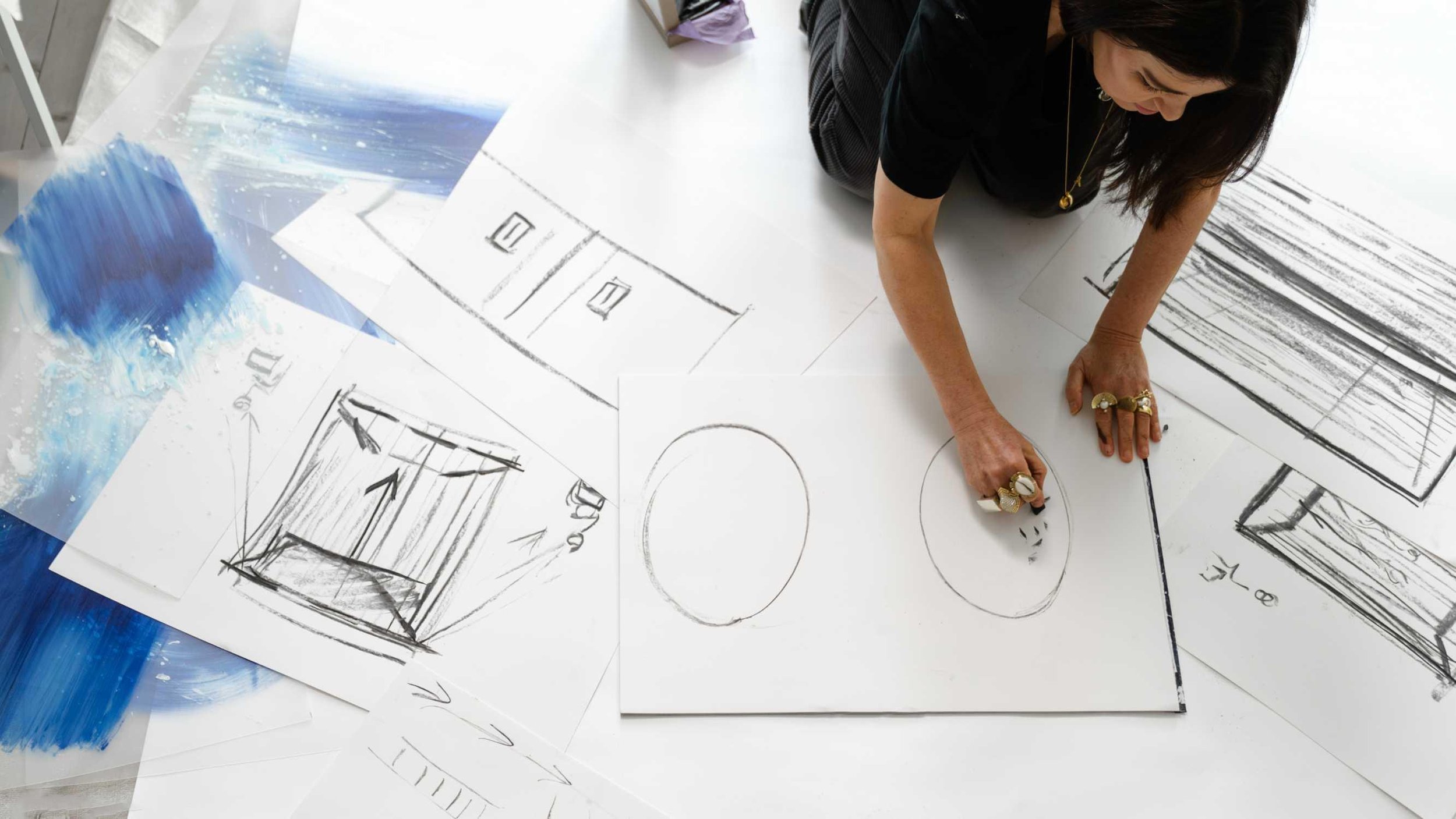
If automated image production becomes increasingly commonplace, the physical evidence of an artist's working process may acquire renewed cultural importance.
Brushwork, material experimentation, surface texture and the physical construction of an artwork communicate information that cannot be fully reproduced through a digital image.
A photograph can record the appearance of a painting, but it cannot entirely convey the experience of its scale, material density or surface.
Likewise, the significance of ceramics, textiles, carving and other labour-intensive artistic practices frequently depends on the relationship between material, technique and individual decision-making.
This does not mean that manual production is inherently more creative than digital production.
Such a claim would overlook decades of important artistic experimentation involving photography, video, software and computational systems.
Rather, human craftsmanship may become more commercially distinctive in an environment saturated with rapidly generated visual content.
The economic principle resembles developments in other luxury and collecting markets.
Objects associated with specialist skills, limited production and identifiable makers can command premiums even when cheaper alternatives offer comparable practical functions.
Fine art differs from ordinary luxury goods because its value depends on intellectual and cultural significance, not craftsmanship alone.
Nevertheless, evidence of an artist's direct engagement with materials can become part of the narrative through which a work is understood.
Collectors may increasingly seek studio documentation, process photographs and detailed information about production methods.
Such records do more than establish that a human participated in the work.
They provide insight into why particular decisions were made and how an artistic idea developed into its final form.
The resulting value is cultural before it is financial.
Whether it produces higher prices will depend on the artist, the quality of the work and the strength of sustained demand.
The Artist's Identity as a Source of Value
Artificial intelligence can imitate visual characteristics, but reproducing an artistic style is not the same as reproducing an artistic career.
An artist's identity is formed through accumulated decisions, experiences, intellectual commitments and relationships with a wider cultural environment.
These dimensions cannot be reduced to the surface characteristics of an individual image.
The distinction is especially relevant to artists whose work develops through sustained investigation.
A recurring visual language may possess meaning because of its relationship to previous artworks, personal experience, historical research or an evolving conceptual practice.
An AI-generated image can resemble that language without participating in the same artistic history.
This difference may strengthen the importance of established artistic identities.
Collectors frequently acquire works not merely because of their appearance, but because they represent a particular moment in an artist's development.
A sketch, early painting or experimental work can possess considerable significance when understood in relation to an artist's wider career.
The associated documentation and provenance allow collectors to distinguish a meaningful artistic object from a superficial imitation.
However, artistic identity must not be confused with branding alone.
A recognisable aesthetic can be commercially successful without necessarily possessing substantial intellectual depth.
In an environment where visual styles can be imitated with increasing sophistication, the long-term strength of a reputation may depend even more heavily on the ideas, decisions and achievements that give the work its significance.
AI Art Is Developing Its Own Market
The possibility of renewed demand for human craftsmanship does not imply that AI-assisted art will be commercially unsuccessful.
Christie's provided an important demonstration of emerging collector interest through Augmented Intelligence, an auction devoted to works involving artificial intelligence, held from 20 February to 5 March 2025.
The sale achieved $728,784, exceeding its presale expectations.
According to Christie's, 37% of registered participants were new to the auction house, while millennials and Generation Z represented 48% of bidders.
Refik Anadol's Machine Hallucinations - ISS Dreams - A realised $277,200.
The results demonstrated that a segment of collectors was prepared to acquire works involving machine intelligence through an established international auction platform.
They did not, however, establish that AI-generated art had achieved the market depth or long-term stability of established collecting categories.
The distinction between an artist employing AI as part of a developed practice and a user generating images through ordinary prompts is also important.
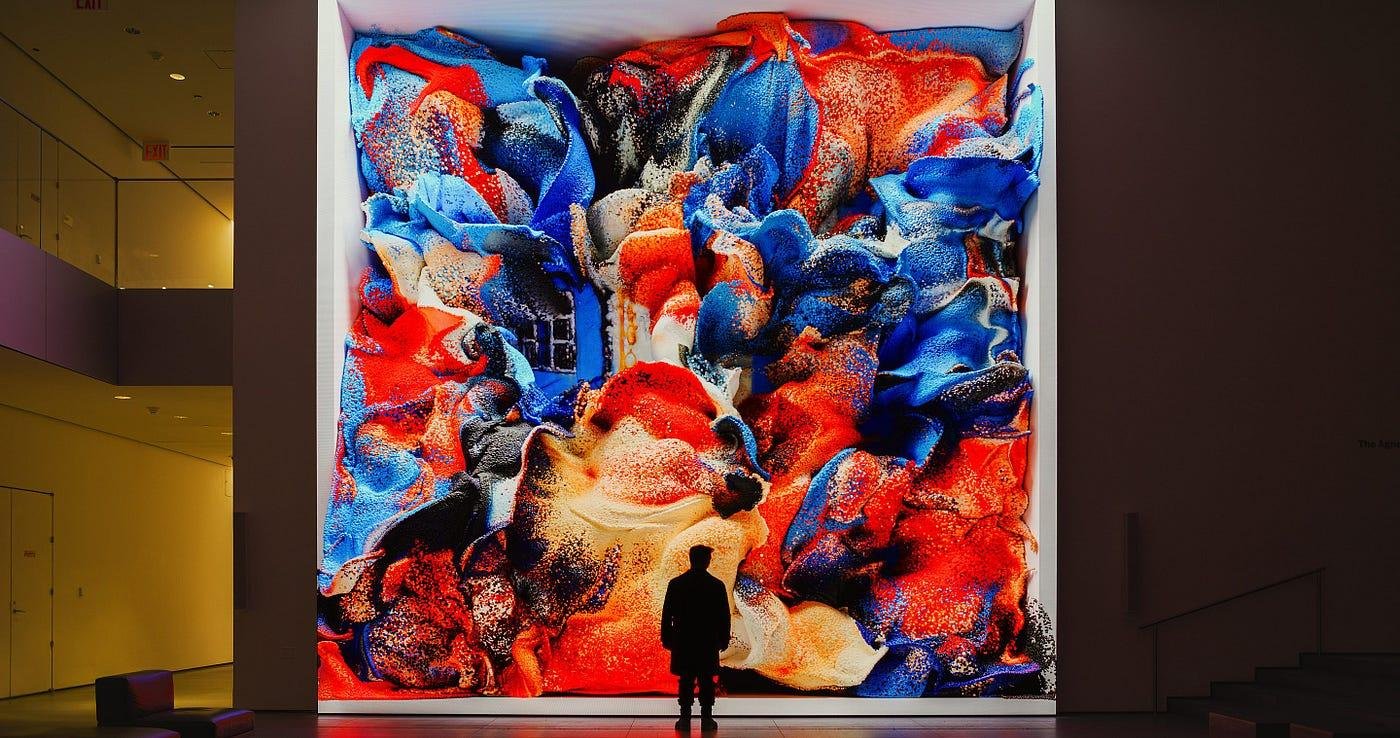
Refik Anadol's Unsupervised, presented at the Museum of Modern Art in New York from November 2022 to October 2023, involved extensive research, custom systems and the transformation of data associated with the museum's collection.
The installation demonstrated how machine learning could become part of a sustained artistic investigation rather than simply a mechanism for producing images.
Such practices challenge the assumption that human creativity and artificial intelligence must be mutually exclusive.
The more meaningful distinction may concern the depth of human artistic direction, the originality of the underlying concept and the relationship between technological processes and creative intention.
A Market Still Divided Over AI Authorship
Despite the visibility of prominent AI-related exhibitions and auction sales, the wider commercial gallery sector remains cautious.
Artsy's 2026 survey of galleries found that only 9% of responding professionals considered AI-generated art a legitimate new artistic medium.
A further 28% described it as an evolving category whose market value remained unclear, while 25% regarded it as a destabilising influence on authorship and value.
The survey also found limited evidence of substantial collector demand within conventional gallery relationships.
Forty-one per cent of galleries reported that AI rarely arose in conversations with collectors, while 16% said collectors actively avoided works created with AI assistance.
Another 15% reported curiosity-driven interest that did not necessarily result in purchases.
These findings require qualification. Gallery professionals' perceptions are not a direct measurement of demand, and AI-related art may circulate through specialist digital platforms rather than established galleries.
Nevertheless, the results indicate that institutional visibility and technological novelty have not yet translated into broad commercial acceptance.
They also expose a conceptual problem.
There is no universally accepted definition separating AI-generated art from AI-assisted art.
An artist may employ generative systems to develop preliminary compositions before creating a painting manually.
Another may use machine learning as an essential part of a complex installation, while a third may present an unmodified image generated from a short prompt.
Treating these practices as equivalent obscures substantial differences in artistic authorship and production.
For collectors, the relevant question is increasingly not whether artificial intelligence was involved, but how it was used and what the artist contributed.
Copyright and the Changing Definition of Authorship
Legal developments are adding urgency to this distinction.
In January 2025, the United States Copyright Office published the second part of its report on copyright and artificial intelligence, addressing the protection available to AI-generated material.
The Office concluded that existing copyright principles could accommodate AI-assisted creation where a human author determines sufficient expressive elements.
It also reaffirmed that purely AI-generated material, or material lacking sufficient human creative control, does not qualify for copyright protection under United States law.
The provision of prompts alone was not considered sufficient to establish authorship under the functioning of then-current generally available technologies.
These conclusions do not mean that every AI-assisted artwork lacks copyright protection.
Human selection, arrangement, modification and other original expressive contributions may qualify, depending on the circumstances.
Nor should the American position be assumed to apply identically across jurisdictions.
Copyright frameworks differ internationally, and legal interpretations continue to develop.
For the art market, the economic consequences could be substantial.
Intellectual property rights influence licensing, reproduction, commercial collaboration and the management of artistic estates.
Uncertainty surrounding authorship may complicate transactions involving artworks with significant AI-generated components.
Collectors may therefore seek clearer contractual assurances concerning the nature of the artist's contribution and the rights transferred with a work.
The legal status of an artwork is not a measure of its aesthetic quality.
Nevertheless, reliable information about authorship and copyright can influence its commercial attractiveness, particularly when the purchaser expects to reproduce, exhibit or license the work.
Provenance Becomes a Competitive Advantage
As visual imitation becomes more sophisticated, provenance may acquire greater importance within the art market.
Traditionally, provenance has concerned an artwork's ownership history, helping establish its authenticity, legal title and relationship to significant collections.
The proliferation of AI-generated imagery introduces additional questions about creation.
Who produced the work? Which technologies were involved? What elements were generated by software? What decisions were made by the artist? Can the recorded history be independently verified?
These questions are particularly significant for digital artworks, where files can be copied, modified and distributed with relative ease.
The Coalition for Content Provenance and Authenticity has developed the C2PA technical standard to support verifiable records concerning the origin and modification of digital content.
Content Credentials can carry cryptographically signed information about an asset's creation and editing history.
Such systems could help artists, publishers and collectors establish more reliable documentation of digital production.
However, they are not complete solutions to art authentication.
Metadata can be removed or lost, and a valid record does not independently prove that every statement about an artwork is true.
A signed photograph of a painting, for example, does not establish that the painting itself is authentic.
Nor does a blockchain record automatically verify that the person who registered an artwork was its legitimate creator.
Technological provenance should therefore complement rather than replace established procedures involving documentation, expert examination, conservation research and ownership records.
The future of authenticity is likely to depend on combining these approaches.
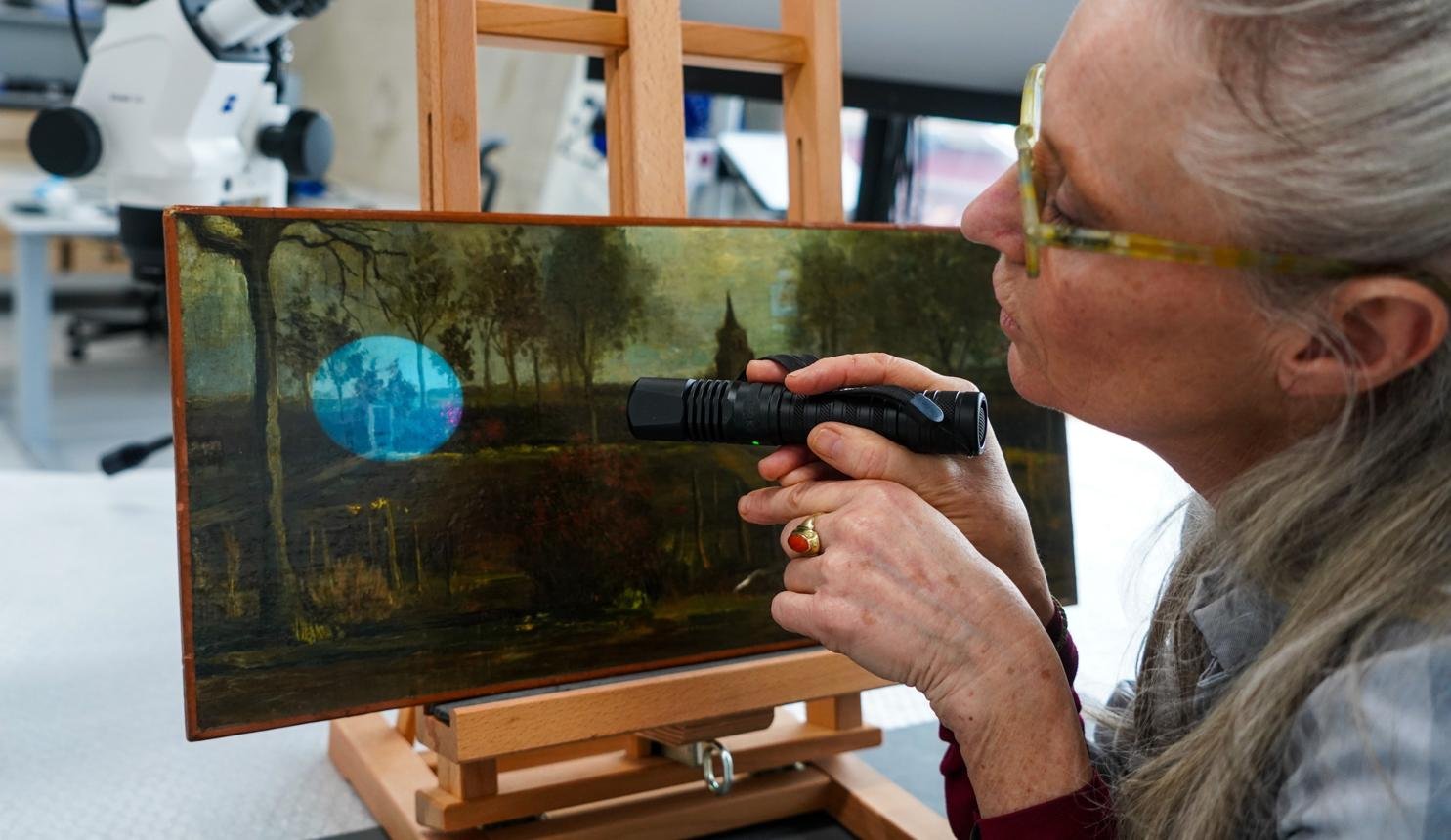
A credible record of artistic production may include studio documentation, digital creation histories, material analysis, exhibition records and independently verifiable certificates.
For collectors, this information can reduce uncertainty while strengthening the relationship between the artwork and its identifiable creator.
Could Human-Made Art Command a Premium?
The central commercial question remains whether greater availability of AI-generated imagery will increase prices for human-made artworks.
Several mechanisms could support such an outcome.
First, automated abundance may make original physical objects more distinctive.
Second, collectors may increasingly value evidence of specialised craftsmanship and sustained artistic commitment.
Third, reliable documentation of human authorship could reduce uncertainty in a market where visual imitation becomes easier.
Finally, artists with established intellectual identities may benefit from stronger distinctions between their original work and derivative imagery.
Yet none of these mechanisms establishes that a general premium already exists.
Higher prices require actual collector demand, not simply a theoretical argument about scarcity.
They also depend on broader economic conditions, institutional recognition, artistic quality and the availability of desirable works.
An original painting is not automatically a superior investment because it was created without artificial intelligence.
Likewise, an AI-assisted artwork is not necessarily less significant because software contributed to its production.
The market may instead become more differentiated.
Original paintings and sculptures could retain or strengthen their position among collectors seeking material uniqueness.
Artist-led computational works may develop distinct markets supported by institutional recognition and technological innovation.
Meanwhile, generic AI-generated imagery may become increasingly commoditised because similar visual results can be produced at minimal cost.
Such segmentation appears more plausible than a universal rejection of machine-generated art.
Conclusion: Authenticity as the New Scarcity
The expansion of artificial intelligence is changing the economic conditions under which visual culture is produced.
Images that once required considerable technical resources can now be generated rapidly and at scale.
This development challenges assumptions about originality, scarcity and the relationship between artistic production and financial value.
Yet it does not eliminate the importance of human creativity.
On the contrary, the increasing availability of sophisticated imagery may encourage collectors to examine artistic authorship with greater care.
The history of an artwork, the decisions behind its creation and the intellectual identity of its maker may become more important as visual appearance alone becomes less reliable evidence of originality.
For artists, this presents an opportunity to communicate the depth and distinctiveness of their practices.
For galleries and auction houses, it creates a responsibility to provide more precise information about authorship, production methods and provenance.
For collectors, it reinforces the importance of distinguishing visual attraction from the broader significance of an artistic work.
The central question is not whether machines can produce compelling images. They already can.
It is whether an artwork's value derives primarily from its appearance or from the human intentions, relationships and cultural history that give that appearance meaning.
Artificial intelligence may expand the possibilities of artistic creation while simultaneously increasing appreciation for forms of creativity that resist effortless reproduction.
In an era of potentially unlimited images, authenticity could become a particularly important form of scarcity.
But the premium, where it emerges, will belong not simply to objects labelled human-made. It will belong to works whose authorship, artistic substance and cultural significance remain convincing long after technological novelty has faded.