
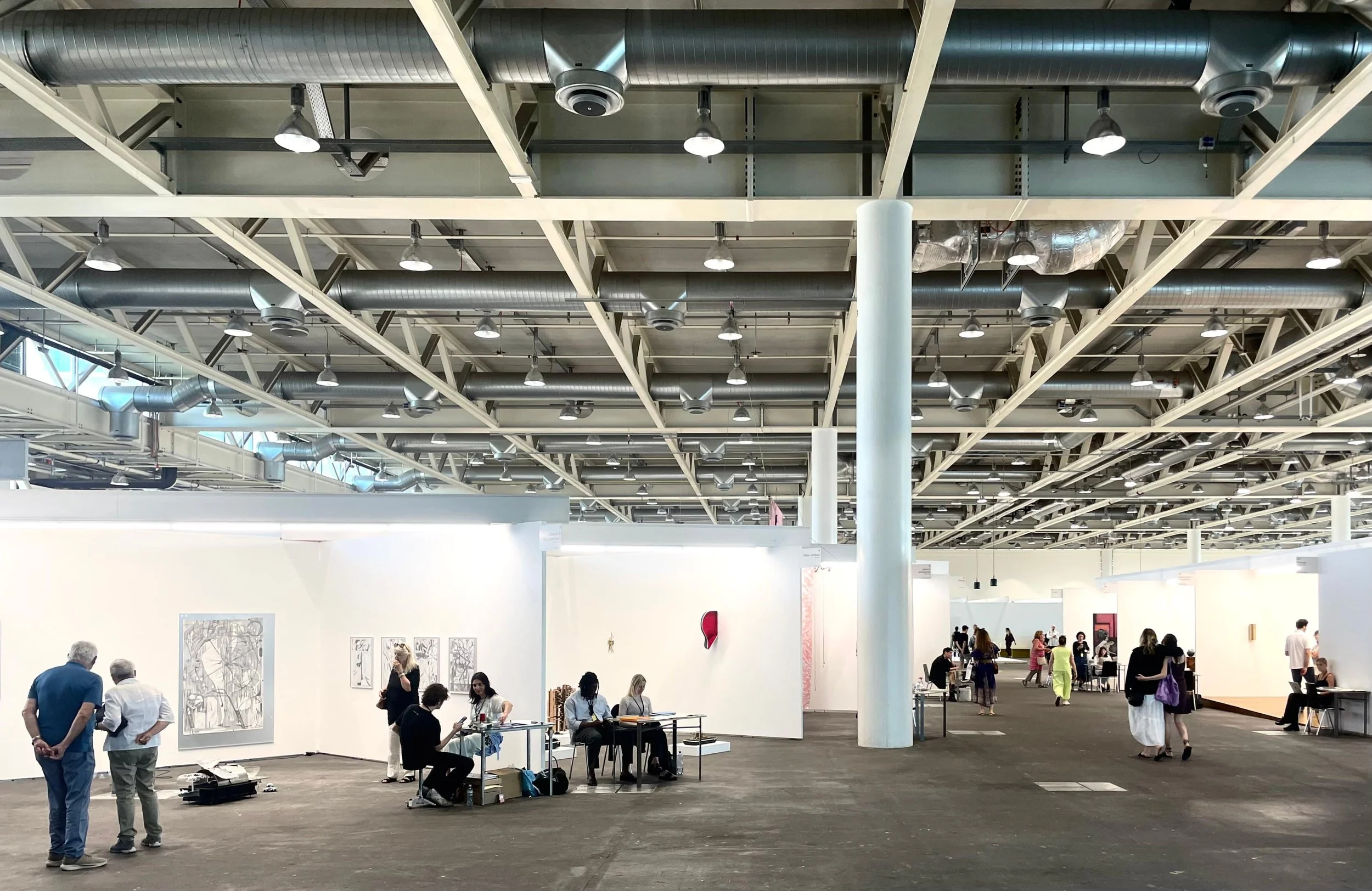
Behind the sophisticated galleries, international collectors and headline-making transactions lies a complex financial system built on exhibition fees, logistics, sponsorship and access to wealth. As participation costs rise and galleries face growing pressure on profitability, the international art fair is becoming a revealing study in how money, visibility and influence are distributed across the contemporary art market.
Every major art fair presents two different realities.
The first is visible to collectors and visitors: carefully designed exhibition stands, significant artworks, private viewings and the concentration of international galleries within a single cultural destination. Transactions may be negotiated over several days, while professional relationships that would otherwise require months of travel can develop within hours.
The second reality is less apparent.
Before the first collector enters the exhibition hall, participating galleries have committed substantial sums to stand rental, artwork transportation, insurance, installation, accommodation and staffing. Many have also invested in dinners, private events and marketing intended to establish relationships beyond the fair itself.
For organisers, the commercial structure is different. They operate a platform through which galleries gain access to collectors, sponsors reach affluent audiences and visitors experience a concentrated presentation of the international art market.
The financial interests of these participants overlap, but they are not identical.
The latest figures demonstrate why the distinction matters. According to the Art Basel and UBS Global Art Market Report 2026, art fair sales accounted for 35% of dealer turnover in 2025, an increase of four percentage points from the previous year and the highest proportion since 2022.
At the same time, dealers reported that art fair costs increased by an average of 9%, while overall operating expenses rose by approximately 5%, exceeding aggregate dealer sales growth of 2%.
The result is a market in which international fairs remain essential sources of revenue and professional visibility, even as the expense of participating places increasing pressure on gallery profitability.
Understanding this contradiction requires examining not only what art fairs sell, but also how their financial systems distribute costs, opportunities and commercial power.
The Art Fair as a Commercial Platform
The international art fair is often discussed as though it were an extension of the gallery system. Economically, however, it operates according to a distinct model.
A gallery purchases access to a temporary marketplace. The organiser provides exhibition infrastructure, visitor management, marketing, programming and a framework through which collectors can encounter participating dealers.
Unlike a conventional gallery, the fair organiser generally does not own or sell the artworks presented on the stands.
Its income is generated through several channels, principally exhibitor fees, sponsorship agreements, admissions and associated commercial arrangements.
This creates an important difference in financial exposure.
An organiser may generate contracted revenue from participating galleries before the event opens. The gallery, meanwhile, must recover its expenditure through sales or through relationships that eventually produce commercial returns.
Organisers nevertheless face substantial risks of their own, including venue rental, staffing, construction, security, marketing, insurance and the possibility that an event fails to attract sufficient exhibitors or visitors.
The business depends on maintaining a credible balance between prestigious galleries, serious collectors and desirable commercial partners.
Art Basel's 2025 edition in Switzerland brought together 289 galleries from 42 countries and territories and attracted approximately 88,000 visitors across its preview and public days.
Such scale is commercially valuable because a large, internationally recognised gathering can generate substantial demand for exhibition space.
But the economic strength of a fair cannot be assessed simply by multiplying the number of galleries by an assumed stand fee.
Exhibition prices vary according to size, location and sector, while sponsorship agreements and operational costs are not necessarily disclosed publicly.
The revenues and profitability of individual events therefore remain difficult to establish independently.
What is clear is that the organiser and participating dealer operate with very different financial incentives.
The Real Cost of a Stand
The published price of exhibition space provides only the starting point for calculating participation costs.
In October 2025, The Art Newspaper reported that Frieze London had introduced a differentiated pricing structure intended to distribute costs more equitably between exhibitors.
Main-section stand rates ranged from £582 to £658 per square metre, depending on the size category. A 30-square-metre stand in the Focus section was priced at £8,280, while certain 25-square-metre Focus presentations cost £6,750.
Frieze Masters applied a uniform rate of £732 per square metre.
These figures illustrate the substantial financial commitment required before a gallery considers transport, installation or staff accommodation.
They also reveal why special sectors for younger galleries can matter. A lower entry price may make the difference between participating in an influential fair and remaining outside its commercial network.
Yet even relatively modest stand fees can conceal considerable additional expenditure.
Paintings and sculptures may require specialist packing, climate-controlled transportation, customs documentation and insurance. International shipping can be particularly expensive when works are large, fragile or subject to complex cross-border arrangements.
Galleries must also account for flights, hotels, local transportation, staffing, temporary installations, lighting, storage and client hospitality.
A 2025 report by art-industry platform First Thursday, drawing on interviews with mid-sized galleries across several continents, found that nearly half of respondents spent more than £30,000 to participate in a single fair.
Almost one in five reported spending between £50,000 and £100,000.
Although these figures reflect the report's particular sample rather than the entire global gallery population, they demonstrate how participation can become a major operating expense.
The commercial challenge is intensified by the fact that these costs are largely committed before sales outcomes become known.
A gallery can reduce certain discretionary expenses, but it cannot easily reverse the financial obligations involved in preparing and transporting an exhibition.
The Break-Even Problem
One of the most misunderstood aspects of art fair economics is the distinction between gross sales and actual profit.
A gallery announcing £200,000 in transactions has not necessarily earned £200,000.
In the primary market, proceeds are commonly divided between the gallery and the artist according to their contractual arrangement. The gallery must then account for its participation expenses and any other costs attributable to those sales.
Consider an illustrative gallery with total fair-related expenditure of £40,000.
If its contractual share of net artwork sales is 50%, and there are no other deductions, the gallery must generate approximately £80,000 in sales merely to cover the £40,000 participation cost.
The break-even figure rises when discounts, production expenses or additional transaction costs reduce the gallery's retained revenue.
A £100,000 sales announcement might therefore produce a comparatively modest contribution to profit.
The example is deliberately simplified. Actual gallery agreements vary, and some dealers own artworks outright rather than selling them on behalf of artists.
Nevertheless, the principle explains why strong sales figures do not necessarily establish that a fair was commercially successful for an exhibitor.
The same principle applies to reported market totals.
When a fair announces that participating galleries have achieved significant sales, those figures indicate transaction activity. They do not reveal the profitability of individual stands, the proportion of revenue retained by dealers or the financial position of participating artists.
This distinction is especially important for smaller galleries, whose lower-priced programmes may require numerous transactions to recover relatively fixed participation costs.
A major international gallery may cover its expenditure through a single high-value sale.
A young gallery presenting artists at substantially lower prices may need to sell much of its exhibition simply to reach a comparable financial position.
The same fair can therefore produce dramatically different economic outcomes for exhibitors occupying neighbouring stands.
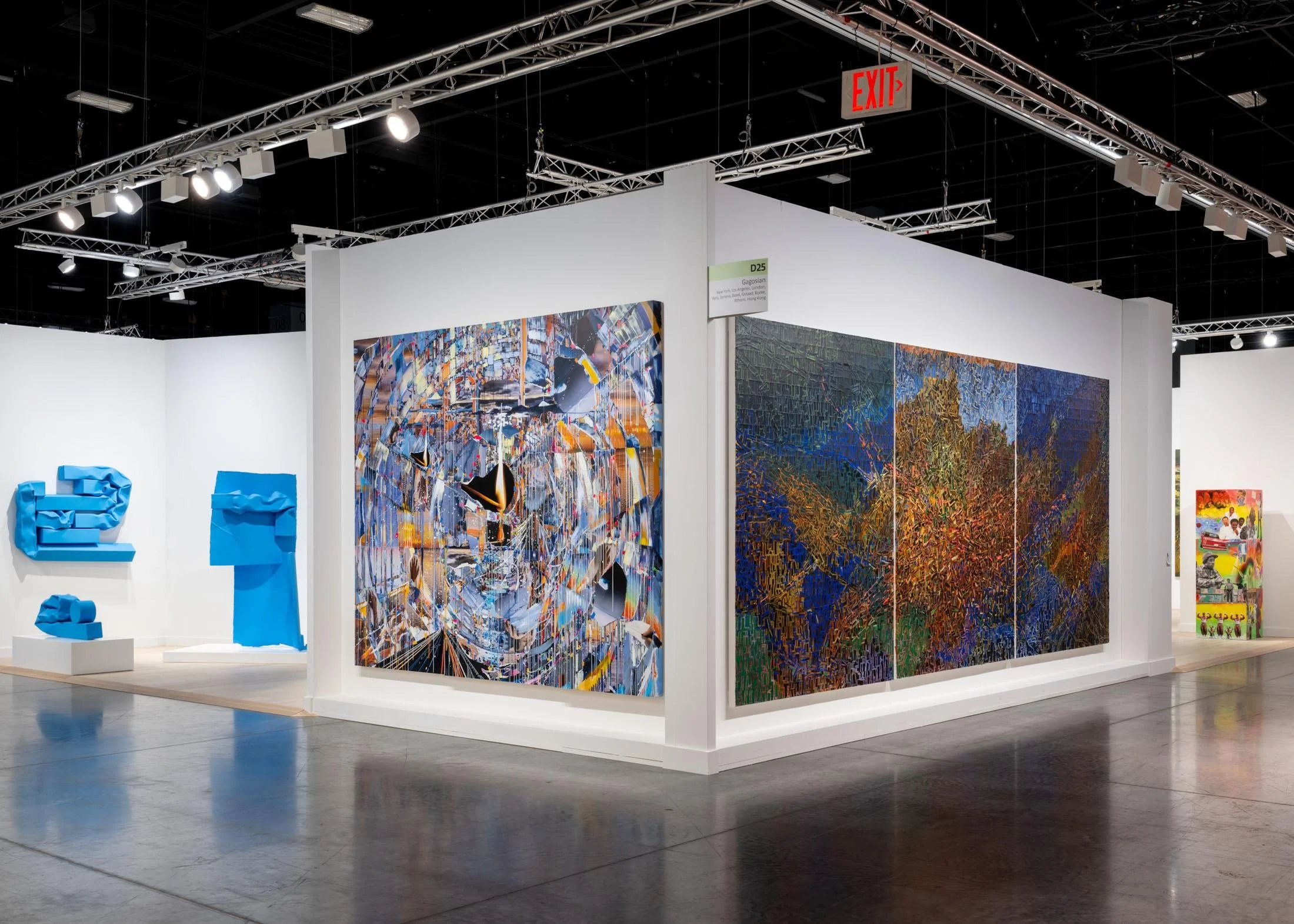
Gagosian's exhibition stand at Art Basel 2025, illustrating the importance of gallery presentation and international visibility within the commercial art fair system.
Why Galleries Continue to Participate
If art fairs are expensive and returns uncertain, why do galleries continue to invest in them?
The answer lies partly in the unusual concentration of commercial opportunities.
A successful fair brings together established collectors, museum representatives, curators, advisers and prospective buyers from different markets.
For a gallery entering a new region, access to this network can be difficult to reproduce through its permanent exhibition space.
The 2026 Art Basel and UBS report found that international fairs accounted for 63% of reported art fair sales in 2025, compared with 37% at local events.
Dealers with annual turnover between $1 million and $10 million reported that fairs generated 36% of their sales, up from 29% in 2024.
These figures suggest that fairs remain particularly important to the international commercial strategies of mid-sized galleries.
However, participation is not solely about immediate transactions.
A gallery may introduce an artist to a museum curator, begin discussions with a collector who purchases several months later or establish contacts that create opportunities for future exhibitions.
The economic value of these outcomes is difficult to measure.
They do not always appear in the sales figures reported at the end of an event.
This creates a distinctive form of investment in which galleries pay for both a sales opportunity and the possibility of future professional advancement.
The problem is determining when prospective benefits justify actual expenditure.
A fair that repeatedly produces promising conversations but few meaningful transactions can become difficult to sustain financially, particularly when rising costs reduce a gallery's capacity to undertake other exhibitions and projects.
Sponsorship and the Business of Cultural Prestige
Corporate sponsorship provides another important source of economic value within the international fair system.
For banks, luxury companies and other commercial partners, an art fair offers access to an audience associated with cultural engagement, international mobility and substantial purchasing power.
The value of sponsorship extends beyond conventional advertising.
Art Basel identifies privileged access, dedicated collectors' lounge space, client experiences and participation in selected VIP activities among the benefits offered through its partnership programme.
UBS, the fair's Global Lead Partner, has maintained a relationship with Art Basel for more than three decades.
The two organisations also collaborate on art market research, including the annual Global Art Market Report.
Such arrangements illustrate how cultural sponsorship can support several business objectives simultaneously.
For an international bank, association with a prestigious fair can strengthen relationships with private clients while reinforcing its position within the cultural and wealth-management sectors.
For the fair organiser, corporate partnerships can provide financial support and help fund programming, commissions and visitor experiences.
For artists and galleries, sponsorship may create opportunities that would otherwise be difficult to finance.
At Frieze London, support from Stone Island and Tiffany & Co. has been used to subsidise participation in selected emerging-gallery sectors.
The arrangement demonstrates how sponsorship can directly influence which exhibitors are able to participate.
Nevertheless, corporate partnerships introduce questions about the distribution of influence.
Sponsors are not necessarily involved in curatorial selection or gallery sales, and commercial partnerships should not be presumed to compromise artistic independence.
However, the relationship between financial support, access to privileged spaces and institutional visibility deserves examination.
When sponsorship becomes integrated into the cultural infrastructure, it can shape which experiences are funded, which audiences receive special attention and how prestige is distributed.
The question is not whether commercial sponsorship belongs within the art world. It is how transparently cultural organisations manage the relationship between financial support and independent artistic judgement.
The Economics of VIP Access
One of the most valuable resources an international art fair provides is access to collectors.
The structure of major fairs reflects this priority.
Private previews typically precede general public admission, giving invited collectors and other selected guests an opportunity to view works before the broader audience arrives.
This system serves several commercial purposes.
It allows galleries to focus on established relationships, reduces the uncertainty associated with important transactions and gives collectors access to works that may be unavailable by the time the public opening begins.
VIP programmes can also include private museum visits, collection tours and events that connect commercial activity with the wider cultural life of the host city.
These experiences contribute to the prestige associated with participation.
However, access is not distributed equally.
Established collectors may receive invitations through galleries, advisers, sponsors or direct relationships with organisers. Less-connected buyers can find themselves entering a market in which desirable works have already been reserved or sold.
The concentration of privileged access reinforces the significance of personal networks.
For galleries, this can be commercially advantageous because serious buyers are present during a limited period.
For new collectors, it can also make the market appear difficult to enter.
The wider economic question concerns whether the VIP model primarily expands collecting or concentrates opportunities among individuals who already possess substantial influence.
Both effects can occur.
Major fairs may introduce collectors to unfamiliar artists while simultaneously reinforcing established hierarchies of access, reputation and purchasing power.
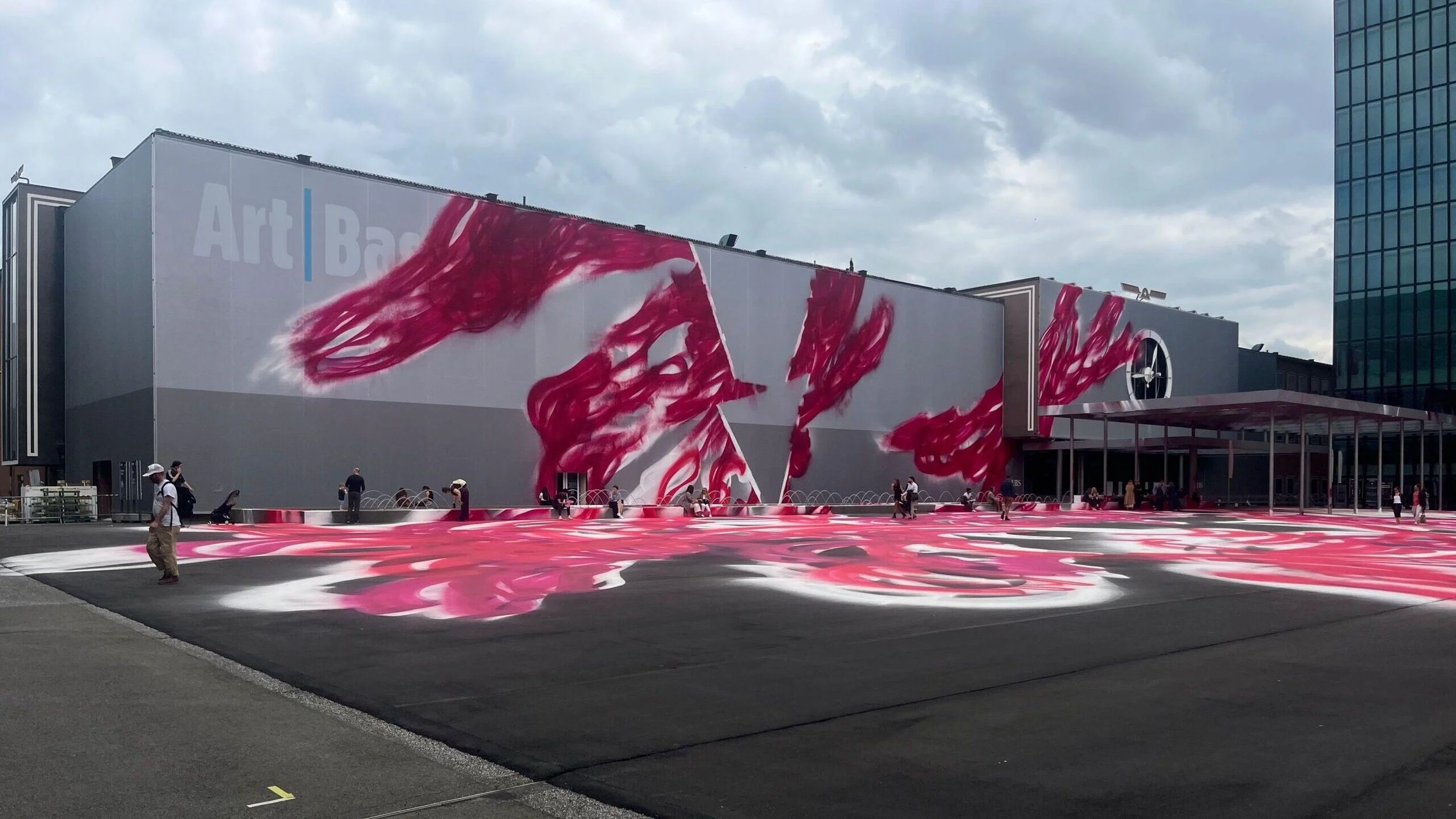
Katharina Grosse, CHOIR, 2025, Messeplatz, Basel. Large-scale artistic installations contribute to the visibility and cultural identity of international art fairs.
Who Gains Influence from the Fair System?
The economic importance of art fairs extends beyond the transactions they facilitate.
Participation itself can function as a signal of professional standing.
Selection by a recognised international fair may increase a gallery's visibility among collectors, curators and other dealers.
Repeated participation can also reinforce the perception that a gallery belongs within an influential commercial network.
This creates a cumulative advantage.
Galleries with established international reputations may possess greater financial resources, deeper collector relationships and stronger negotiating positions when committing to fairs.
Smaller galleries often approach the same events with less capital and fewer opportunities to absorb disappointing results.
The effects can extend to artists.
An artist presented at several prestigious fairs may attract international attention, but this visibility is mediated by the gallery's ability to finance participation and secure appropriate presentation opportunities.
Art fair selection therefore influences the circulation of artistic reputations.
It can help determine which artists become visible to international collectors and which remain primarily within local or regional markets.
Yet selection is not equivalent to an independent judgement of long-term artistic significance.
Fairs are commercial and cultural institutions operating within finite spaces, competitive application processes and economic constraints.
Their decisions reflect a combination of curatorial priorities, programme quality, market positioning and organisational considerations.
The prestige associated with participation should therefore be understood as one component of professional recognition rather than a definitive measure of artistic merit.
The Host City and the Wider Economic Impact
The financial influence of major art fairs extends into the cities that host them.
International visitors spend money on accommodation, restaurants, transportation, cultural experiences and associated services.
Satellite exhibitions, auctions, private collection visits and gallery events frequently develop around the main fair.
In this respect, a major art fair can operate as a temporary cultural and commercial ecosystem.
Hotels, logistics companies, hospitality businesses and event organisers may benefit independently of whether participating galleries make a profit.
This creates an important distinction between the economic impact of an event and the financial returns earned by its exhibitors.
A fair may contribute substantial spending to its host city while individual galleries struggle to recover participation costs.
Similarly, a successful hospitality season does not necessarily establish a strong art market.
The relationship between fairs and their host cities is therefore partly strategic.
An internationally recognised event can reinforce a city's cultural identity, attract affluent visitors and strengthen its position within international tourism and business networks.
However, claims about economic impact require careful interpretation.
Studies may measure gross visitor spending rather than the additional economic activity directly attributable to the event.
Some expenditure might have occurred in the city regardless, while a proportion of revenue may flow to businesses headquartered elsewhere.
A credible assessment should distinguish local economic benefits from total visitor expenditure and examine the costs of hosting alongside the financial gains.
Can Smaller Galleries Afford to Remain Visible?
The growing expense of participation raises a question with consequences beyond gallery profitability.
If international art fairs become increasingly difficult for smaller businesses to afford, the range of artistic practices presented may narrow.
Participation costs can influence not only whether a gallery attends, but also which artworks it chooses to bring.
High-value, commercially established works may appear more financially attractive when the gallery faces substantial fixed expenditure.
Emerging artists, experimental practices and works that require expensive installation may become more difficult to present.
This does not mean that fairs invariably favour conservative programming.
Dedicated emerging-gallery sections, subsidised booths and special projects can encourage ambitious presentations.
Nevertheless, the underlying financial pressure remains.
A gallery working with artists whose practices involve performance, installation or other less readily saleable forms may struggle to justify the same costs as a dealer specialising in high-value paintings.
The challenge for organisers is therefore not simply maintaining exhibitor numbers.
It is ensuring that participation remains commercially viable for galleries with different business models and artistic programmes.
The risk is that fairs may become increasingly effective at facilitating transactions while becoming less representative of the full diversity of contemporary art.
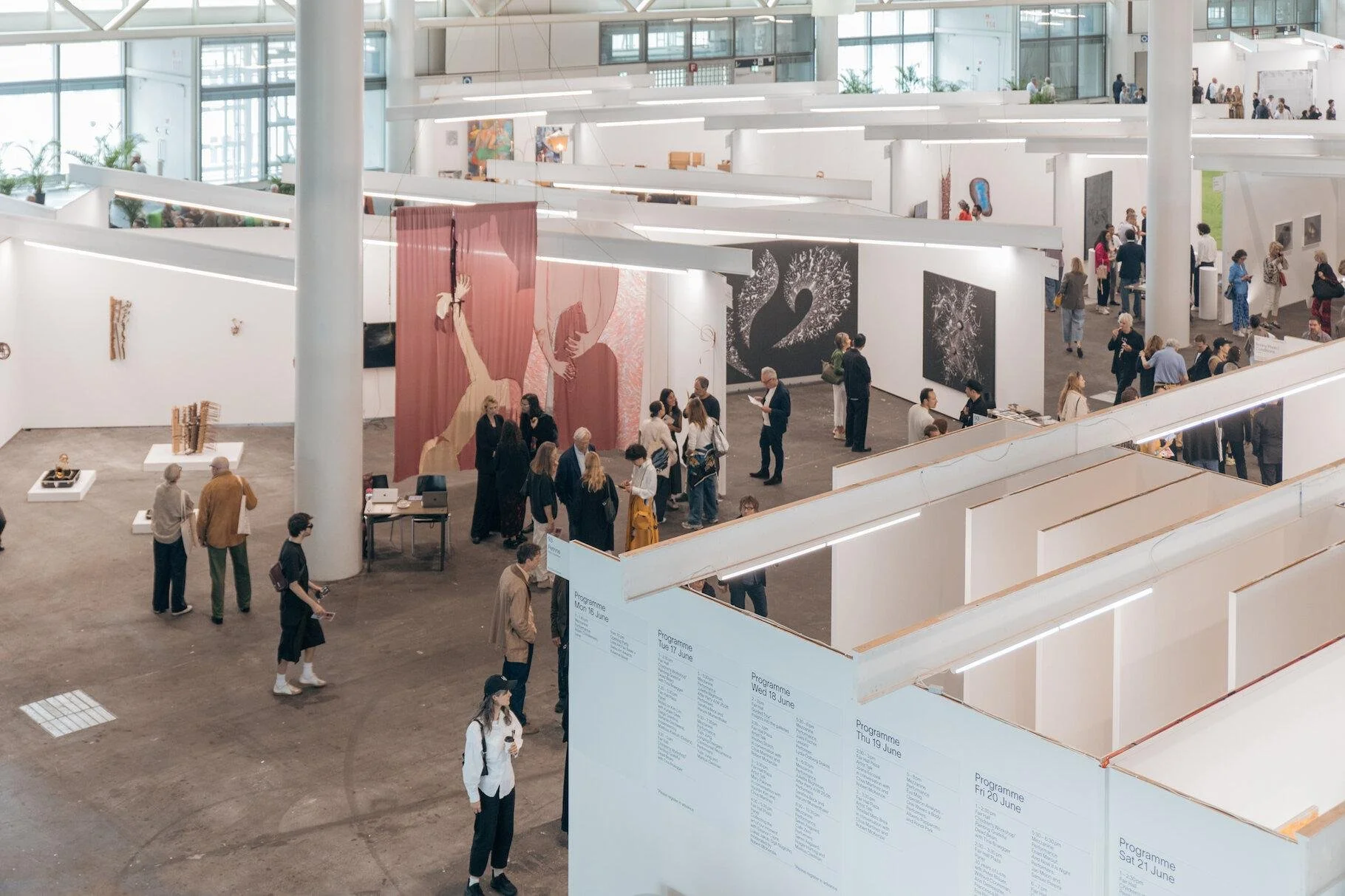
Liste Art Fair Basel 2025. Fairs specialising in emerging galleries play an important role in connecting younger artistic programmes with international collectors and institutions.
A More Selective Future for International Fairs
The financial pressures facing galleries are encouraging a more selective approach to participation.
Dealers are increasingly required to evaluate individual fairs according to their collector audiences, sales history, costs and strategic relevance.
A prestigious international event may offer exceptional opportunities, but prestige alone cannot justify unlimited expenditure.
The Art Basel and UBS Global Art Market Report 2026 found that 38% of dealers experienced declining profitability in 2025, while 33% reported improved profitability and 29% remained broadly unchanged.
Although these outcomes cannot be attributed exclusively to fairs, they demonstrate the difficult operating environment in which participation decisions are made.
The future is unlikely to involve a straightforward replacement of physical fairs with digital platforms.
Online sales accounted for 15% of global art market value in 2025, down from the previous year, while the share of dealer turnover generated through fairs increased.
The figures suggest that collectors continue to value physical encounters, particularly for significant acquisitions.
However, the industry may increasingly differentiate between events that generate meaningful returns and those whose costs are justified mainly through expectations of future visibility.
Regional fairs may become more attractive when they offer access to relevant collectors at lower logistical expense.
Major international fairs may continue to dominate the upper end of the market, where a limited number of substantial transactions can cover significant participation costs.
For organisers, maintaining relevance will require more than attracting celebrated galleries.
It will involve demonstrating that participation creates measurable commercial opportunities while supporting the artistic diversity on which cultural credibility ultimately depends.
Conclusion: The Price of Being Seen
International art fairs occupy a powerful position within the contemporary art economy because they bring together resources that are otherwise dispersed across countries, institutions and private networks.
Their commercial value lies not only in the artworks sold, but also in the concentration of collectors, professional relationships and cultural influence that participation makes possible.
Yet the benefits are distributed unevenly.
Organisers sell access to a marketplace and assume the risks of staging an event. Sponsors gain opportunities for client engagement and cultural association. Host cities receive visitors and commercial activity. Collectors benefit from concentrated access to galleries and artworks.
Galleries, meanwhile, bear substantial upfront costs while facing uncertain sales outcomes.
Artists may gain international visibility, but the extent of that benefit depends on representation, presentation and the financial decisions of their dealers.
The central economic contradiction is that galleries often pay significant sums to participate in events where they may not recover their investment, yet remaining absent can carry its own professional costs.
In an industry where reputation and relationships influence commercial opportunities, visibility possesses a value that is difficult to measure and equally difficult to abandon.
The sustainability of the art fair system will increasingly depend on how effectively organisers balance these competing interests.
A successful fair cannot be judged solely by attendance, reported sales or the prestige of its exhibitors.
Its deeper economic significance lies in whether it creates a viable environment in which galleries can build sustainable businesses, artists can gain meaningful recognition and collectors can encounter work beyond familiar market hierarchies.
Ultimately, the question is not simply who profits from an international art fair.
It is who can afford to participate, who gains access to its opportunities and who acquires the influence to shape the art market that emerges afterwards.