
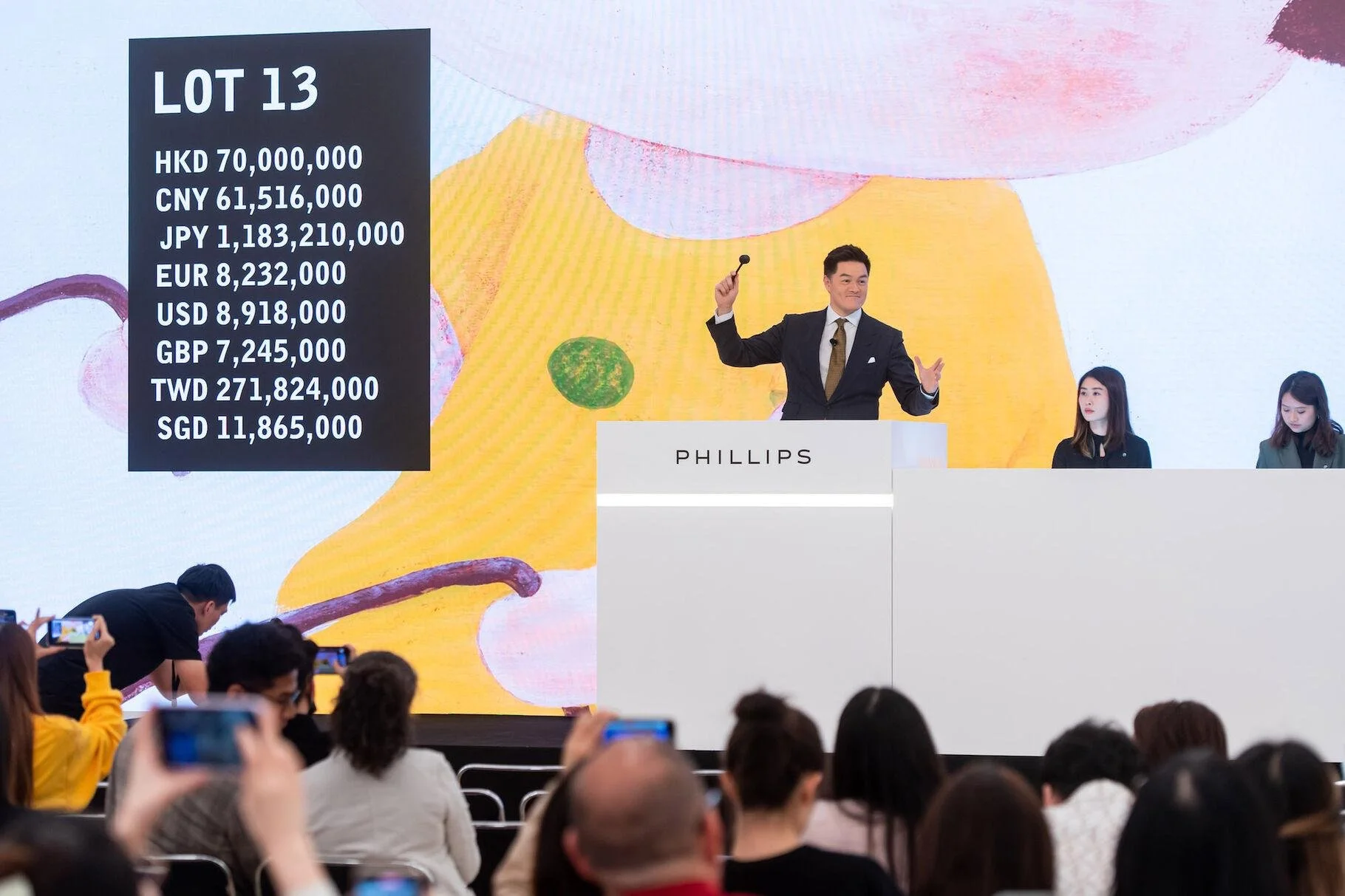
As trillions of dollars move between generations, the international art market faces a profound question: what happens when the artworks accumulated over a lifetime pass into the hands of heirs with different tastes, financial priorities and ideas about cultural legacy? The answer may redefine how collections are preserved, valued and eventually brought to market.
One of the most consequential forces shaping the future of the international art market is unfolding largely beyond auction rooms and commercial galleries. Across the world's wealthiest families, significant collections of paintings, sculptures and other cultural assets are approaching a generational transition that could influence both the supply of important artworks and the priorities of future collectors.
Cerulli Associates estimates that approximately $123.7 trillion in American household wealth will be transferred to heirs and charities between 2024 and 2048. Of that amount, roughly $105 trillion is expected to pass to heirs. These figures encompass all forms of wealth, not artworks specifically, but their implications for a market heavily dependent on private wealth are substantial.
The immediate assumption is that younger beneficiaries will sell inherited collections to finance different lifestyles or pursue alternative investments. Yet emerging evidence challenges this narrative. The Art Basel and UBS Survey of Global Collecting 2026 found that almost 90% of Generation Z collectors who had inherited artworks retained them.
The coming transition may therefore be more complicated than a straightforward transfer of masterpieces from one generation to another. It raises fundamental questions about ownership, responsibility, cultural identity and the changing meaning of collecting itself.
The Scale of the Transfer and the Art Market's Exposure
The transfer of wealth between generations is not a future event awaiting a specific starting point. It is already influencing family financial planning, philanthropic decisions and the ownership of valuable assets.
Cerulli's projections identify Millennials as eventual recipients of approximately $46 trillion and Generation X of $39 trillion in transferred wealth through 2048. Importantly, Generation X is expected to receive the largest share over the nearer term, with approximately $14 trillion projected over the decade covered by the study, compared with $8 trillion for Millennials.
This distinction matters. Discussion of the Great Wealth Transfer frequently concentrates on the tastes of the youngest collectors, when much of the immediate decision-making power will pass to middle-aged heirs with established careers, families and investment priorities.
For the art market, the central issue is not simply how much wealth changes hands, but how much of that wealth is represented by artworks and what proportion of those works eventually becomes available for sale.
Unlike listed securities, art is an illiquid asset whose ownership can remain unchanged for decades. Significant private collections may contain works that have not appeared publicly since their original acquisition, creating substantial uncertainty about both their present financial value and potential market reception.
The latest market figures provide a useful context. The Art Basel and UBS Global Art Market Report 2026 estimated worldwide art sales at $59.6 billion in 2025, an increase of 4% over the preceding year following two years of contraction.
Against this annual market, even a relatively small proportion of inherited collections entering commercial circulation could become significant, especially at the highest price levels.
However, the transfer of ownership should not be confused with an increase in market supply. A painting inherited by a daughter who intends to retain it remains outside the market. Its transfer may have substantial legal and financial consequences without creating a single commercial transaction.
This distinction will be central to understanding the market's development in 2027.

The preservation of significant art collections remains central to cultural heritage, as new generations consider the responsibilities of ownership and the future of inherited artworks.
The Inheritance Paradox: Why Younger Collectors Are Keeping Art
The assumption that younger generations will automatically reject the collecting habits of their parents is increasingly difficult to reconcile with available evidence.
The 2026 Art Basel and UBS survey, covering 3,100 high-net-worth collectors across ten markets, found that 72% had already inherited artworks. Family influence was the most common introduction to collecting, cited by 28% of all respondents and 40% of Generation Z.
Perhaps most revealingly, almost nine in ten Generation Z collectors who had inherited artworks had chosen to retain them.
These findings suggest that inheritance can create a durable relationship with art rather than simply an opportunity to realise financial value.
For many heirs, individual artworks function as tangible connections to family history. Their significance may derive from personal memories, the intentions of previous owners or the cultural environment in which a collection was assembled.
Such associations cannot be captured through market valuations alone.
Paul Donovan, Chief Economist at UBS Global Wealth Management, observed in October 2026 that inheritors often feel an emotional connection with artworks and a responsibility towards the wishes of previous generations. He also cautioned against assuming that art would be the first asset sold when families face inheritance-related financial obligations.
The implications are considerable.
If younger collectors retain substantial portions of inherited collections, the anticipated increase in auction supply may be slower and more selective than some market participants expect.
Indeed, the 2026 survey found that 77% of respondents were reluctant to sell artworks over the following twelve months, although this finding describes collectors generally rather than heirs exclusively.
Such evidence does not guarantee that inherited collections will remain intact indefinitely. Emotional attachment can change, financial circumstances can deteriorate and beneficiaries may eventually reconsider their priorities.
Nevertheless, it suggests that predictions of an imminent wave of forced selling should be treated with caution.
When Collections Return to Market: The Power of Estate Sales
Although many heirs retain inherited artworks, major estate and single-owner sales demonstrate the considerable influence that established private collections can exert when they return to the market.
In November 2025, Sotheby's offered works from the collection of the late philanthropist Leonard A. Lauder, achieving $527.5 million in a single evening. The sale was led by Gustav Klimt's Portrait of Elisabeth Lederer, which realised $236.4 million, setting an auction record for the artist and becoming the most valuable artwork ever sold at Sotheby's at that time.
The result illustrated the concentration of financial value within exceptional private holdings. When works of significant historical importance emerge after decades of private ownership, their availability can generate intense competition among international collectors.
A comparable example emerged at Christie's in November 2025, when the collection of Robert F. and Patricia G. Ross Weis achieved approximately $218.1 million. The sale included Mark Rothko's No. 31 (Yellow Stripe), which realised $62.16 million, and Picasso's La Lecture (Marie-Thérèse), which achieved $45.49 million.
These transactions demonstrate how established collections can contribute to market confidence even during periods of uneven broader demand.
Yet there is an important distinction between the commercial appeal of exceptional estate collections and the likely reception of less historically significant holdings.
A carefully assembled collection containing museum-quality works by internationally recognised artists may attract competitive bidding and premium valuations. An inherited collection concentrated in artists whose reputations have weakened may encounter a considerably less receptive market.
The financial outcome depends not merely on the former owner's wealth or reputation, but on the quality, rarity, provenance and contemporary relevance of the individual artworks.
Estate sales also offer auction houses an opportunity to develop coherent narratives around collecting histories. The provenance of an important collection can reinforce confidence and distinguish artworks from comparable examples already circulating in the market.
As inheritance becomes a more prominent source of consignments, competition among major auction houses for prestigious family collections could intensify.
However, the public nature of exceptional auction results should not obscure the considerable number of inherited artworks that change ownership privately or remain within families.
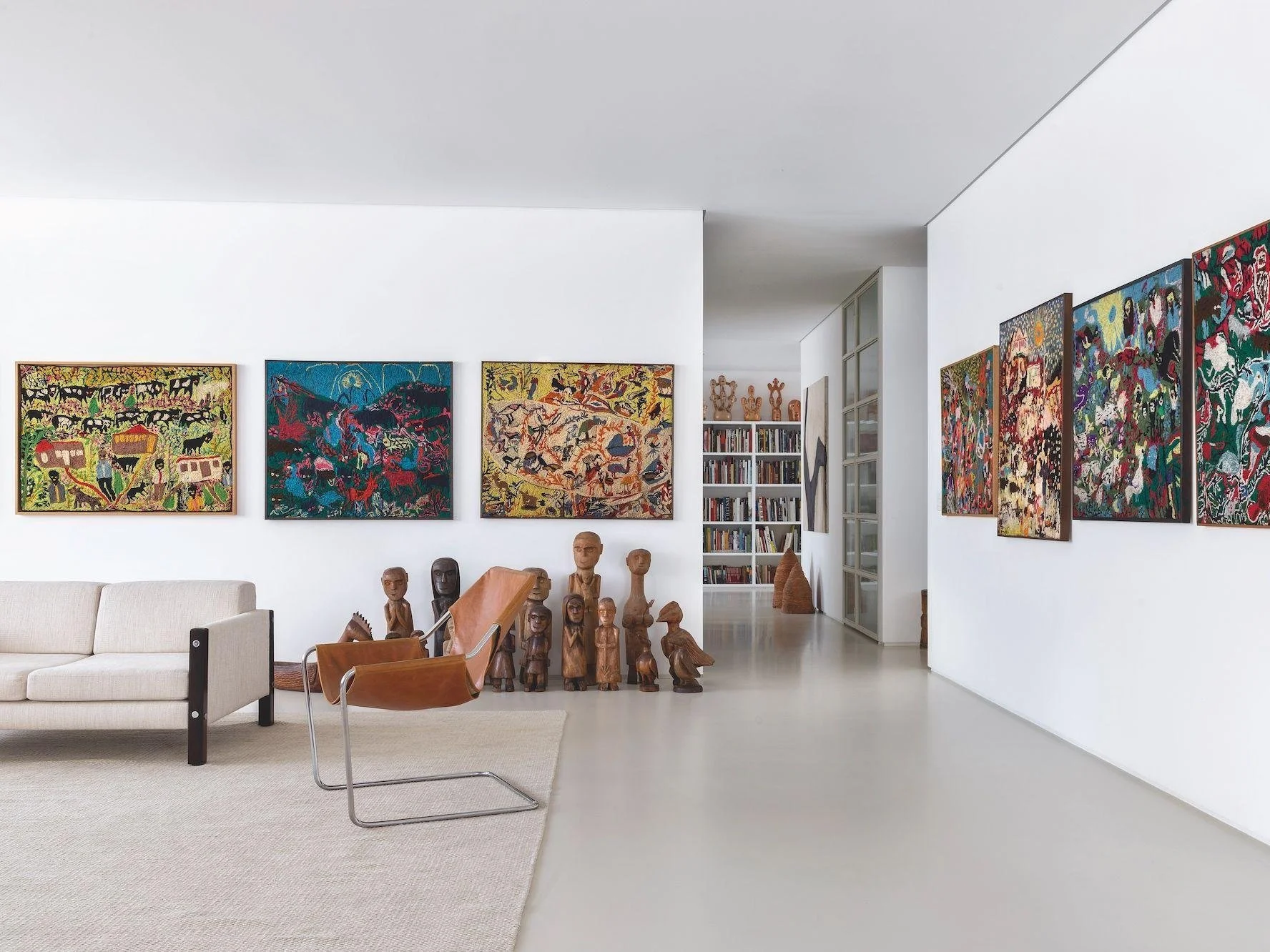
Important private collections often represent generations of cultural investment, leaving heirs to balance personal attachment, financial considerations and artistic legacy.
Changing Tastes and the Reassessment of Established Collections
The Great Wealth Transfer may influence demand as significantly as supply.
Younger collectors are increasingly entering the market with substantial financial resources, but their preferences cannot be reduced to a simple rejection of traditional collecting categories.
According to the 2026 Art Basel and UBS survey, Generation Z collectors reported average fine art expenditure of $347,460 in 2025, more than twice that of any older generation within the study.
They also demonstrated considerable interest in established media, including painting and sculpture, challenging the assumption that younger wealth necessarily favours digital art or unconventional collectibles.
Nevertheless, differences in collecting behaviour are emerging.
Generation Z collectors were more willing to explore unfamiliar artists, with 56% reporting purchases of newly discovered artists, compared with 36% of Baby Boomers.
Their research habits were also more independent. Eighty per cent of Generation Z respondents undertook moderate or significant research before purchasing, compared with 72% across the overall sample.
These developments could influence how inherited collections are evaluated.
An heir may appreciate the historical importance of works assembled by previous generations while choosing to acquire contemporary artists whose practices address different social, geographical or conceptual concerns.
This does not necessarily imply that established artists will lose value. Rather, the relationship between inherited assets and new acquisitions may become increasingly selective.
Some families may preserve historically important works while selling less significant examples to finance acquisitions that better reflect the interests of their successors.
Others may retain entire collections while developing parallel holdings in photography, contemporary painting, design or other collecting categories.
For galleries, this introduces a strategic opportunity. Relationships with heirs could become as important as relationships with the collectors who originally assembled major holdings.
Understanding the artistic priorities of beneficiaries, rather than assuming continuity with previous generations, may become essential to sustaining long-term collector relationships.
Preservation, Philanthropy and the Future of Cultural Legacy
The decision to retain or sell an inherited collection is not exclusively financial. It frequently involves questions about the social responsibility of ownership and the cultural significance of making artworks accessible to wider audiences.
Museum donations, long-term loans, family foundations and private exhibition spaces offer alternatives to commercial disposal.
The 2026 Art Basel and UBS survey found that 23% of high-net-worth collectors planned to donate works to museums in the coming year, while 26% intended to make gifts to family members or friends.
Among Millennial respondents, 29% expressed intentions relating to establishing a museum or foundation for their collections.
These preferences suggest that a meaningful proportion of transferred art wealth may remain within cultural institutions or philanthropic structures rather than entering the commercial market.
However, philanthropic ambitions encounter practical limitations.
Museums do not automatically accept donated collections. Acquisition decisions depend on curatorial relevance, conservation requirements, storage capacity, institutional resources and, in certain cases, the restrictions attached to gifts.
A collection assembled around one individual's aesthetic preferences may not align with the long-term priorities of a public institution.
Nor does establishing a private foundation necessarily resolve the financial demands associated with maintaining an important collection.
Insurance, conservation, climate-controlled storage, transportation and professional management can create substantial recurring expenses.
For heirs, the choice between preservation and sale may therefore involve balancing cultural responsibility against the practical costs of stewardship.
The most sophisticated succession strategies are likely to begin before ownership changes, allowing collectors and their families to identify significant works, establish documentation, consider potential institutional partners and clarify the intended future of the collection.
Such preparation can protect both financial value and cultural significance.

Museums and cultural institutions provide an enduring framework for preserving artistic heritage, offering alternatives to the commercial sale of significant private collections.
The Financial Reality Behind Inherited Art
Even where beneficiaries wish to preserve collections, financial considerations may influence their decisions.
Inherited artworks can create substantial valuation, estate administration and tax obligations, depending on the jurisdiction, ownership arrangements and the wider composition of the estate.
The complexity is particularly apparent in the United States, where the Internal Revenue Service requires detailed documentation of artworks included in taxable estates. Its 2026 estate-tax instructions specify appraisal requirements for individual artworks or collections of similar items valued above $3,000.
At higher values, specialist assessment becomes increasingly important. The IRS Art Appraisal Services division reviews valuations submitted for estate, gift and charitable contribution purposes, generally referring artworks valued above $150,000 to its Art Advisory Panel, subject to discretion.
The difficulties extend beyond taxation.
Where several beneficiaries inherit a collection, disagreements may arise over the distribution of artworks with substantially different financial values. One heir may wish to retain a particular painting for sentimental reasons, while another may prefer financial compensation.
A collection valued at several million dollars does not necessarily provide the liquidity needed to settle such obligations.
Selling a significant artwork may be necessary even when the family would otherwise prefer to preserve the collection.
Alternatively, beneficiaries may explore private sales, financing arrangements or phased disposals, depending on their circumstances.
The decision is rarely as straightforward as comparing an auction estimate with the original purchase price.
For the art market, these circumstances may create a gradual flow of consignments rather than a sudden concentration of supply. Professional advisers, trustees and family offices could therefore play an increasingly influential role in determining when and how inherited artworks become commercially available.
What 2027 Could Mean for the International Art Market
The most plausible consequence of the Great Wealth Transfer is not an indiscriminate increase in artworks available for purchase, but a gradual redistribution of decision-making power.
Three developments deserve particular attention.
First, the availability of exceptional works may remain highly unpredictable. Major estates can generate substantial individual sales, but the timing and composition of those transactions depend on private family decisions that cannot reliably be forecast.
Second, the growing influence of heirs could produce more selective collecting strategies. Established masterpieces may retain strong demand, while lesser works by previously fashionable artists encounter greater scrutiny.
Third, the commercial importance of succession planning is likely to increase. Auction houses, galleries, advisers and financial institutions that establish relationships across generations may be better positioned to participate in future transactions.
These are plausible directions rather than confirmed outcomes for 2027.
There remains no sufficiently comprehensive public dataset identifying the precise value of art that will be inherited globally during that year, much less the proportion beneficiaries will sell.
The evidence instead points towards a market in which inherited ownership, family sentiment, economic pressures and changing cultural interests interact in different ways.
The largest opportunities may emerge not simply from the redistribution of existing collections, but from the purchasing decisions of heirs who combine inherited artistic knowledge with newly independent financial resources.
Conclusion: Who Will Shape the Next Generation of Collecting?
The Great Wealth Transfer will influence the international art market, but its effects are unlikely to follow the straightforward narrative of younger heirs selling the collections of their parents.
Evidence from recent collector surveys indicates that inheritance often strengthens engagement with art, rather than diminishing it. Younger collectors may retain important works, reassess others, develop new acquisitions or redirect family holdings towards cultural and philanthropic purposes.
For the market, this creates a complicated balance between preservation and redistribution. Major estate sales can introduce exceptional works into circulation, while family loyalty and long-term stewardship can remove other artworks from commercial availability for decades.
The decisive change may therefore concern authority as much as ownership.
As financial and cultural responsibilities pass between generations, new collectors will increasingly determine which artworks deserve preservation, which artists warrant further support and which collections should become part of the public cultural record.
By 2027, the consequences may already be visible in the strategies of auction houses, galleries and private collectors. Yet the most significant impact will develop over a much longer period.
The future art market will be shaped not only by what one generation leaves behind, but by what the next generation chooses to value.