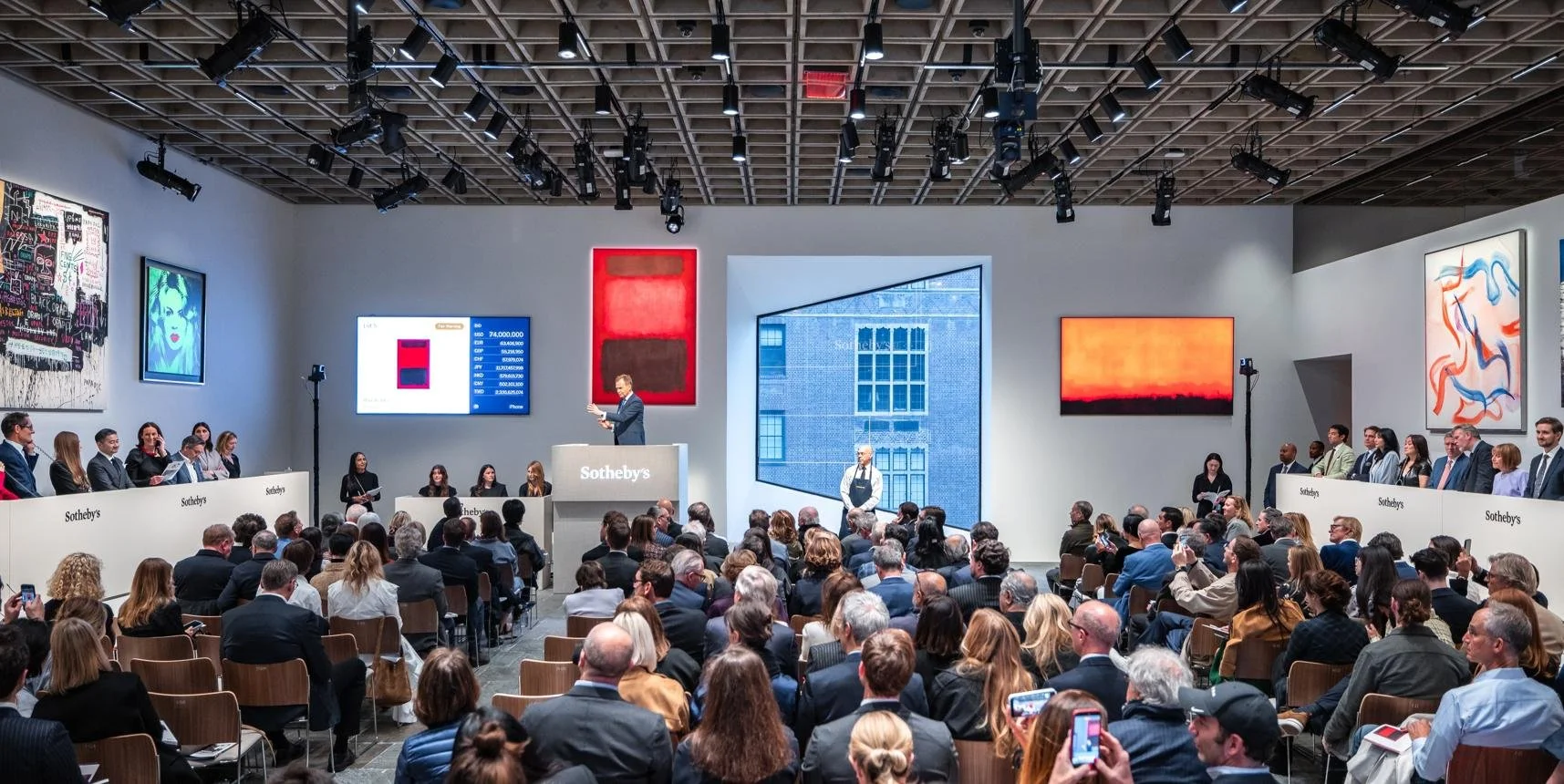
As the international art trade becomes increasingly selective, major auction houses are strengthening their position in a business traditionally associated with galleries and independent dealers. Private transactions offer confidentiality, pricing control and access to exceptional works beyond the public saleroom. Yet the latest figures reveal a more complicated shift, raising questions about competition, market transparency and the future of the auction model.
The most valuable transaction at an auction house may never involve an auction.
In 2025, Christie's reported that its three highest-value transactions had been concluded privately, outside the public saleroom. Its private sales business generated approximately $1.5 billion, representing almost a quarter of the company's annual sales. Seventeen works changed hands privately for more than $15 million each, compared with thirteen the previous year.
The figures illustrate a fundamental commercial development. Institutions historically associated with competitive public bidding are increasingly operating as international intermediaries, connecting collectors, negotiating confidential acquisitions and providing services once more closely identified with specialist dealers.
Yet the broader market offers an important qualification. According to the Art Basel and UBS Art Market Report 2026, private sales conducted through auction houses declined by 5% in 2025, while public auctions rebounded by 9%.
The apparent contradiction is revealing. Private transactions are becoming strategically important without necessarily increasing their share of the market every year.
As the industry approaches 2027, the central question is not whether private sales will replace auctions. It is whether the auction house of the future will be defined less by its public events than by its ability to manage relationships, information and transactions throughout the year.
A Market Moving Between Public and Private Channels
The relationship between auctions and private sales has become an important indicator of collector confidence.
In 2024, public auction sales fell by 25%, while private transactions conducted through auction houses increased by 14% to approximately $4.4 billion. The figures suggested that sellers were increasingly seeking alternatives to public exposure during a period of weaker demand and uncertain valuations.
The following year produced a different outcome.
Global art market sales increased by 4% to an estimated $59.6 billion in 2025. Public auction sales recovered to $20.7 billion, while auction-house private sales declined to just under $4.2 billion.
The dealer sector, which is predominantly organised around privately negotiated sales, recorded an estimated $34.8 billion in transactions.
These developments challenge the assumption that the rise of private sales represents a straightforward transfer of business away from auctions.
Instead, the figures suggest that collectors and sellers move between transaction channels according to market conditions, the characteristics of particular artworks and their individual financial objectives.
When demand is uncertain, a private transaction can reduce the risk of an unsuccessful public offering. When confidence strengthens and exceptional collections become available, auctions can generate competition that negotiated transactions may struggle to reproduce.
The distinction matters because a private sale does not necessarily represent a loss of business for an auction house. Increasingly, it represents another service offered to the same clients.
Why Sellers Are Choosing Confidentiality
The appeal of private transactions rests on a combination of financial control and commercial discretion.
At auction, a seller benefits from the possibility that competitive bidding will produce a price substantially above expectations. That opportunity is accompanied by uncertainty.
Even carefully estimated artworks can attract insufficient demand. A work that fails to sell becomes part of the public record, potentially affecting its future marketability.
Private sales offer a different balance of risks.
The seller can negotiate a price directly, assess prospective purchasers and determine whether the proposed terms justify proceeding.
A transaction can be arranged without exposing the artwork to a public estimate or disclosing an unsuccessful negotiation.
Such advantages are particularly significant for collectors managing major assets or responding to changes in personal circumstances.
Private transactions may also accommodate arrangements that are difficult to replicate at auction, including staged payments, exchanges involving other artworks and negotiations over delivery or conservation responsibilities.
However, the security of a negotiated sale should not be confused with certainty about obtaining the highest possible price.
Without an open competitive process, a seller may not discover whether another collector would have paid substantially more.
The outcome depends heavily on the intermediary's understanding of available demand and ability to identify interested buyers.
This creates an important distinction between price certainty and price optimisation.
A collector accepting a private offer may be purchasing certainty at the expense of potential upside. Another may achieve a better financial result because a discreet transaction reaches precisely the buyer most interested in the work.
Neither conclusion can be generalised across the market.
Christie's and the Expansion of the Private Sales Business
Christie's provides one of the clearest examples of how private transactions have become integrated into the business model of a major auction house.
Its December 2025 results projected total annual sales of $6.2 billion, including $4.7 billion from auctions and $1.5 billion from private transactions.
Private sales were broadly unchanged from 2024, yet their contribution remained significant.
Christie's also reported that half of its private-sale buyers were new to that transaction channel, indicating that the business was reaching clients beyond its established private-sales clientele.
The commercial infrastructure supporting this activity is substantial.
In March 2026, Christie's described an international private-sales operation involving approximately 500 specialists across 40 departments, offering access to artworks and collectible objects through confidential negotiation.
This scale illustrates a competitive advantage that independent dealers may find difficult to replicate.
A major auction house can draw upon relationships developed through estates, collection management, valuation services and decades of auction consignments.
It may know which collectors are considering selling particular works and which prospective buyers have expressed interest in comparable objects.
The ability to connect these groups without launching a public sale creates opportunities for continuous commercial activity.
Christie's private-sales history also demonstrates that the practice is not new. The company traces its involvement in privately negotiated transactions to the eighteenth century, including James Christie's role in the sale of paintings from Sir Robert Walpole's collection to Catherine the Great in 1779.
What has changed is the institutional scale and strategic visibility of this business.
Private selling is no longer simply an occasional alternative to auction. It has become an established service supported by specialist departments, international client networks and dedicated commercial leadership.
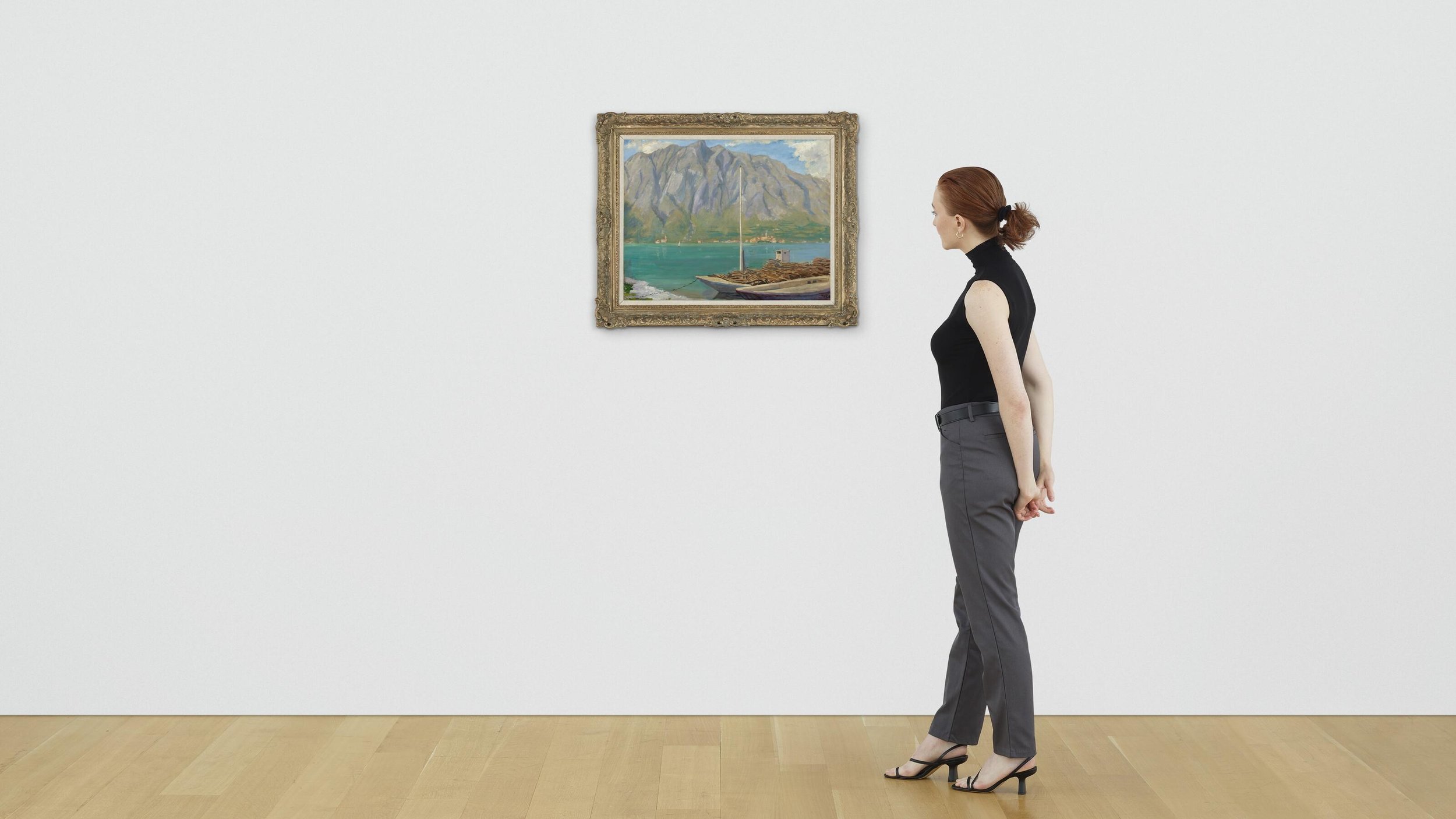
A Christie's specialist presents Winston Churchill's By Lake Lugano in London, October 2025. Specialist expertise and relationships with collectors remain central to the expanding business of international auction houses.
Sotheby's, Phillips and the Competition for Private Wealth
The expansion of private selling is not confined to Christie's.
Sotheby's maintains a year-round private-sales platform covering fine art, design, jewellery, watches and other collectible categories. Its model combines discreet sourcing, specialist advice and negotiated transactions with a wider international infrastructure that includes exhibitions and client services.
The strategic value lies in the relationship between different services.
An auction client may subsequently seek assistance acquiring a work privately. A collector who purchases privately may later consign an artwork to auction. Valuations, estate planning and collection management can strengthen both relationships.
This approach allows auction houses to maintain contact with wealthy clients between major sales seasons.
Phillips has pursued a related strategy, with particularly strong results in 2025.
The company reported $927 million in global sales, including $202 million in private transactions, a 66% increase from 2024.
Private sales accounted for approximately 22% of its total annual business. Phillips also organised seventeen private-sales exhibitions across eight countries, illustrating the increasing importance of curated presentations outside conventional auctions.
These figures should not be interpreted as evidence of identical strategies or financial performance across the major houses.
Christie's maintained substantially greater absolute private-sales volume, while Phillips recorded faster annual growth from a smaller base.
Nevertheless, their results reveal a shared commercial objective: reducing dependence on the unpredictable timing of major consignments.
The economic attraction is understandable.
Public auctions require marketing campaigns, cataloguing, specialist resources, exhibitions and extensive operational coordination. Their success often depends on securing exceptional property and generating sufficient competitive demand within a narrow period.
Private selling can distribute transactions more evenly across the year.
It does not necessarily eliminate costs, but it offers additional opportunities to generate commissions and maintain relationships independently of the auction calendar.
For institutions operating in an increasingly competitive market, this flexibility may become strategically valuable.
The Challenge to International Dealers and Art Advisers
Auction houses entering private transactions more aggressively are competing in territory historically dominated by galleries, dealers and independent advisers.
The competitive implications are significant.
Established dealers often possess extensive knowledge of individual artists, discreet ownership networks and long-term relationships with collectors. Their ability to source important works can derive from decades of specialisation.
Auction houses, by contrast, can combine international brand recognition with large client databases, specialist departments and substantial marketing resources.
For a collector seeking an important twentieth-century painting, both channels may offer access to comparable opportunities.
The difference increasingly concerns the quality of advice, transaction terms and confidence in the intermediary.
Independent dealers may enjoy advantages where specialist expertise, discretion and personal continuity are especially important.
A trusted adviser can assess acquisitions within the context of an entire collection, identify overlooked opportunities and negotiate across different sectors without necessarily promoting inventory associated with one institution.
However, the boundaries between adviser, broker and dealer can become commercially ambiguous.
A professional who introduces a collector to an artwork may receive compensation from the buyer, the seller or another intermediary. Without appropriate disclosure, such arrangements can create conflicts of interest.
As auction houses develop their private-sales businesses, competitive pressure may encourage greater professionalisation, particularly around written mandates, commission structures and due diligence.
For galleries representing living artists, the implications are different.
Primary-market galleries often undertake responsibilities extending far beyond sales, including exhibition development, career management, institutional introductions and the long-term positioning of artists.
Auction houses cannot automatically reproduce those functions simply by negotiating private transactions.
The distinction between selling existing artworks and supporting artistic production remains fundamental.
Nevertheless, competition for established collectors may intensify, particularly in secondary-market transactions involving internationally recognised artists.

Gallery presentations at Art Basel 2025, Switzerland. International dealers and galleries remain central to the privately negotiated art market as auction houses expand their competing services.
The Price of Privacy: What Happens to Market Visibility?
Private sales create a fundamental problem for market analysis.
Public auction results provide widely accessible reference points, even though reported prices do not always reveal the complete economic terms of a transaction.
Private transactions generally produce much less public information.
The buyer and seller may agree on a price that remains confidential, while subsequent valuations rely on auction records and information circulated through professional networks.
This creates an uneven distribution of knowledge.
Well-connected intermediaries may be familiar with recent private transactions involving a particular artist. Less experienced collectors may have access only to published auction results.
Such information asymmetry can influence negotiations and complicate assessments of market value.
The problem becomes more pronounced when important works are sold privately at prices that differ substantially from publicly recorded comparables.
A successful private sale may demonstrate strong demand without establishing a visible benchmark.
Conversely, a negotiated discount may reflect a seller's preference for speed or discretion rather than a broader deterioration in the market.
The increasing sophistication of digital valuation tools does not necessarily resolve these difficulties.
Algorithms can analyse extensive auction databases, but they cannot reliably incorporate transactions whose prices and circumstances remain undisclosed.
This raises an important question for 2027: could the expansion of private selling weaken the transparency on which valuations and market confidence depend?
The answer is not straightforward.
A public auction price is not necessarily an objective measure of fundamental value. Guarantees, reserve prices, buyer premiums and the presence of unusually motivated bidders can influence the outcome.
Private transactions may provide equally meaningful evidence of demand, but that evidence is less accessible.
The challenge is therefore not to establish public auctions as universally superior. It is to recognise the limitations of both pricing mechanisms.
Greater disclosure of intermediary interests and transaction terms to the parties involved could strengthen confidence without requiring publication of confidential prices.
Will Private Sales Replace the Public Auction?
Despite the expansion of private-sales operations, the public auction retains advantages that privately negotiated transactions cannot easily reproduce.
Competitive bidding can expose artworks to multiple interested buyers simultaneously, creating opportunities for exceptional results.
It also provides a mechanism for transforming privately held property into publicly recognised market records.
The recovery of high-value auctions in 2025 illustrates the continuing strength of this model.
According to Art Basel and UBS, the value of fine art lots sold for more than $10 million increased by 30%, while the number of transactions in that segment rose by 9%. The value of lots sold above $1 million increased by 21%.
These figures demonstrate that public competition remains commercially significant when exceptional works attract sufficient demand.
Major collection sales can also generate cultural attention, attract new bidders and reinforce an auction house's international position.
Private selling, by comparison, offers limited public visibility and fewer opportunities to establish widely recognised price records.
For sellers of exceptional masterpieces, the possibility of competitive bidding may remain decisive.
The more plausible future is therefore a hybrid business model.
Auction houses can use public sales to establish market authority, generate attention and expand their client networks, while private transactions provide continuity, discretion and individually negotiated opportunities.
Each channel supports the other.
The public auction becomes one component of a broader commercial platform rather than the sole defining activity of the institution.

Richard Parkes Bonington's The Rialto, Venice on display at Christie's London, June 2024. The presentation of significant artworks and the cultivation of collector relationships remain essential to the expanding activities of major auction houses.
The Outlook for 2027: A More Personalised Art Market
The increasing importance of private transactions suggests that competition among auction houses, galleries and advisers may become more closely associated with access to collectors than with the number of auctions conducted.
The Art Basel and UBS Survey of Global Collecting 2026, based on 3,100 high-net-worth individuals across ten markets, found that dealers remained the largest channel for spending among respondents. Direct purchases from artists also represented an important share of expenditure, ahead of auctions.
The findings reinforce an essential point: collectors do not operate through a single commercial channel.
They move between galleries, dealers, auction houses, advisers and artists according to their collecting objectives.
For 2027, this flexibility could favour businesses capable of offering a broader range of services.
Private-sales departments may develop stronger relationships with wealth advisers, family offices and collection managers. Independent dealers may respond by emphasising specialist knowledge, discretion and advisory independence.
At the same time, greater competition could place additional pressure on commissions and expose differences in how intermediaries manage conflicts of interest.
These developments are plausible consequences of existing commercial strategies, not established outcomes.
The most significant change may concern how auction houses define their role. Their commercial value could increasingly depend on their ability to source artworks and facilitate transactions continuously, rather than concentrating activity around a limited number of major sales.
Conclusion: The Auction House Beyond the Auction Room
The rise of private sales reflects a deeper change in how the international art market organises relationships between artworks, capital and collectors.
Auction houses are no longer defined exclusively by their ability to conduct public sales. Their private-sales departments connect international buyers and sellers, manage confidential negotiations and provide access to artworks outside the traditional auction calendar.
Yet the evidence does not support predictions that private transactions will make public auctions obsolete. The 2025 recovery demonstrated that competitive bidding retains considerable commercial strength, particularly for exceptional works capable of attracting international demand.
The more significant development is the integration of public and private selling within increasingly diversified businesses.
This evolution presents opportunities for collectors seeking flexibility and discretion, but it also raises questions about market visibility, the independence of professional advice and the concentration of commercial information within major institutions.
By 2027, the distinction between auction house, dealer and art adviser may become less pronounced in some segments of the market.
What is unlikely to disappear is the fundamental importance of trust, expertise and access.
The future of the auction house may depend not on choosing between public competition and private negotiation, but on understanding when each provides the strongest outcome for the collector, the seller and the artwork itself.