Interview with Ashley Gray
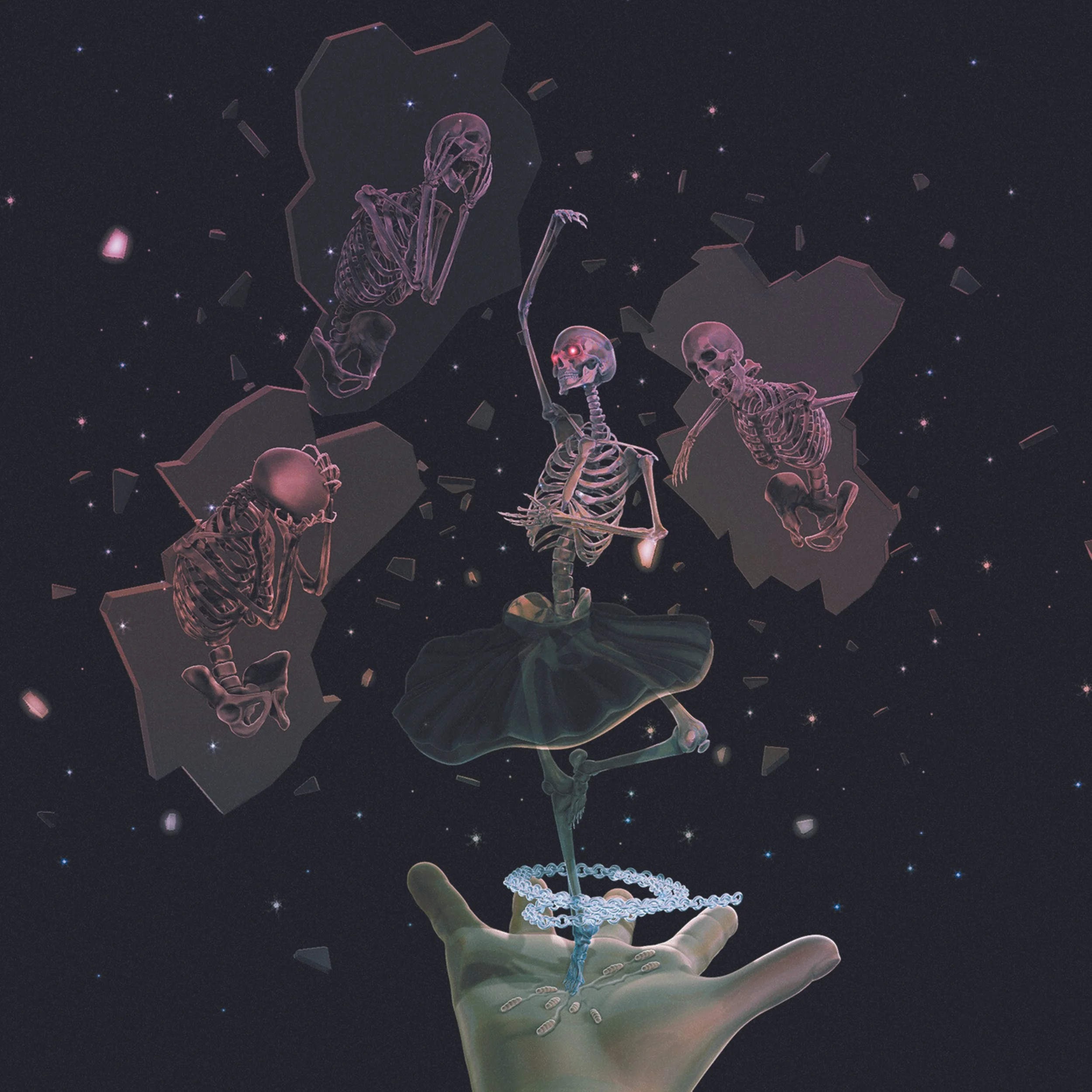
Artist Statement
I am a London-based digital artist working primarily in 3D to create images around the things I notice, reflect on and find difficult to put into words. I have a Master's in Computer Games Art, but my practice has moved away from the technical requirements of conventional 3D production towards what I think of as an artist that uses 3D digital space to draw.
My work explores things such as grief, isolation, suffering, resilience and the quieter spaces between them. I am less interested in telling a fixed story than in creating a moment and allowing the viewer to find something of their own within it.
I work mainly in ZBrush and Photoshop using constructed forms, light, colour and space to build a single image. My work has received recognition through both digital art and contemporary art.
Your work seeks to make the invisible emotional world visible through sculpted bodies, symbolic light, and atmospheric space. How do you translate an experience such as grief or isolation into a visual composition without reducing it to a fixed narrative?
For me, these are more observations expressed through images. That means I am not limited to my own experience. My own experience is obviously there somewhere, filtered through my own lens, but I don't think the exact nuance of my personal emotion is particularly important to the work.
Like most people, I have my own story, but I don't want everything I make to be about me or about what happened to me. My focus is a little broader. Isolation, for example, can mean suffering to one person, longing to another, and to someone else it can be a sentence they have to carry. I don't necessarily want to show all of those finer levels. I want to show the idea of grief, or isolation, or whatever has caught my attention, in a way that matters to me, without making the image dependent on my personal story.
There are certainly more personal images that I could make, and I tend not to show those. I am more interested in the shared emotional space around these things, and in allowing the viewer to find their own experience within the image rather than giving them a fixed narrative.
ArtFix London described your images as moments in which an event has either just ended or has yet to occur. How do you construct this sense of suspended time, and what role does the viewer’s anticipation play in completing the work?
The viewer is central to the image. The work is often constructed around their perspective, around what they see and where they are positioned within the composition. At times they are almost the centre of the image. There are a few works where something within the image appears to be giving or showing something directly to the viewer, while in others the viewer is simply observing a moment.
This is where the suspension of time comes in. I don't really focus on a linear timeline or on time as a subject within the image. I see the works more as reflections or moments. A reflection can come from something that resonated with me yesterday or six years ago. What matters to me is the essence of what I noticed, rather than when it happened.
This is also where I think the viewer's anticipation comes in. A lot of people have said that my images feel as though something has just happened or is about to happen. That may be true, but I don't necessarily place the moment there myself. I am more interested in giving the viewer the moment and allowing them to place it wherever they like within the timeline of their own imagination.
You distinguish your practice from technically driven 3D production by describing it as “artist 3D.” How has moving away from concerns such as polygon counts and technical perfection allowed you to develop a more personal visual language?
For me it is mostly about freedom and experimentation. Creating a 3D image has its own rules around things like detail, distance and colour control, but it is very different from the technical requirements of constructing a 3D object. Texture maps and polygon counts still exist, and some things still matter for example: a strong topology will always be important, but my work has a much more vivid and less polished look.
I have a lot more freedom to experiment with colour, light and perspective because I am not creating grounded 3D objects that have to work from every angle. I can have floating pieces as long as they work from the perspective of the final image. For example, a large stack of boxes might only actually be two layers of boxes facing the camera. If I were making a real 3D object, it would need to exist properly in three-dimensional space and be viewed from many angles. For me, the camera is the important thing.
One thing that is quite strong in my style is the use of colour layers. In a traditional 3D workflow, adding a lot of painted colour directly to the final image can raise questions about why the 3D materials were constructed that way. I don't really have that concern. The image only has to work as the image.
That freedom is a big part of what I mean by artist 3D rather than 3D artist.
Your formal education in computer games art initially prepared you for a technical career, yet your path eventually led toward contemporary art. What did you have to unlearn from the conventions of games and commercial CGI in order to treat digital space as a psychological and sculptural medium?
Mostly the technicalities and some of the structural thinking that comes with making 3D for a functional purpose.
In 3D everything normally has to fit together because it has to simulate something. For example, the wheels of a car need to be made as objects because they need to rotate. There are many things that simply aren't done because they don't need to be done, or because they would break the intended 3D system. I am free from a lot of that. I can extract as many masked areas as I like, and things don't have to be animated or even exist as complete, solid objects.
Many things still matter to me. Clean topology will always matter, and composition, lighting and positioning still matter enormously because they affect how the image is visually read. I can always paint more or less light, for example, but the way that light is read still matters.
I also still respect the relationships between the different parts of 3D. Modelling feeds into texturing, rigging feeds into skinning and animation, and so on. There is a lot of connecting theory in 3D that I still value. The difference is that I am only concerned with a single image.
Because of that, my main concern becomes the camera. The camera represents the viewer, and the 3D space is built around that position in relation to the final shot. I haven't really abandoned 3D; I have just removed the requirements that don't serve the image.
Although your imagery often appears dark and addresses grief, despair, and suffering, you describe its underlying message as one of love and understanding. How do you use light, colour, gesture, and spatial relationships to hold darkness and compassion within the same image?
For me there is always both. Light and dark, good and evil, chaos and order. I find that in different situations one can be very loud while the other is quiet but undeniably present. It can show up in something as subtle as a gesture. A dark night can be a good thing or a bad thing, and in both cases the other element is still there in danger or kindness, depending on how the moment is presented.
I use this dynamic with colour as well. It isn't simply that one colour means something good and another means something bad. Green, for example, can suggest something toxic or something natural. Yellow can suggest chaos. It depends on where and how the colour is placed.
The same applies to space and framing. I tend to see a single focal point and then everything around it in relation to that thing or moment. The surrounding elements support the main focus, but they can also introduce another feeling. I think this is how the darker and more compassionate parts of an image can exist together. One doesn't have to cancel out the other.
You have spoken about experiences of exhausting work, professional rejection, financial uncertainty, and a profound sense of isolation. In what ways have these experiences shaped your representations of the human body, and how do you prevent autobiography from limiting the universal resonance you seek?
I think it has a lot to do with how I see art, or what I am doing when I make it. For me, being an artist isn't really about focusing on myself. It is more about making something of value or something worthwhile. That doesn't mean I sit and think deeply about everything I make and decide it has to be some kind of high-level serious artwork. It is more that I don't want to waste people's time. I don't want to spend weeks making something that feels flat.
With autobiography, I think there is a strange balance. I have my own experiences, of course, but it seems a little pointless to me to only make images about myself. At the same time, I can only ever make things that I notice or think about, so I can never completely escape my own perspective.
I think this is where my personal experiences come in. They have strengthened my connection to my style and my perspective. They have given certain things more value through a kind of contrast. But I don't think the work needs to explain my experiences in order for someone else to recognise something of their own within it.
I am only a few steps removed from myself, but I try not to make myself the subject.
The human figure appears in your work as both an individual presence and a vessel for shared experiences that transcend race, gender, and identity. How do you balance the specificity of a figure with your desire to address collective experiences such as loss, resilience, and emotional withdrawal?
In showing people, this is very difficult. Showing meaning is a little easier because it comes more down to gesture, composition and setting.
With people, I don't think there is a way to show every type of person at every stage of life. Having an androgynous-looking figure can create a certain universality, but as soon as you look at the clothing, for example, it usually starts to build a more stereotypical image of that person. You are then stuck in a dilemma of removing more to show universality, or adding more and slowly taking away the ambiguity of the person. I find it is a balance, and for each image I tend to lean towards a kind of less-is-more approach.
Expression is a little easier because so much can be interpreted through expression and gesture. In that way, you are more free to have any type of being inhabit that gesture. You could, for example, make a cat weep. It would be harder to read immediately, but then you would lean more heavily on things like lighting or composition.
You are really using gesture and composition first, and then lighting and framing to support the ambiguity of the subject. Take Ethereal Blue, for example. You have a being of light, but you can still see clothing, and you can see things that reference age. All of these things have to do more lifting, but they are there to be used.
Recognition has repeatedly entered your career alongside doubt, from early CGSociety Editors’ Choice awards to the Creativepool People’s Choice Award and later international honors. How does the tension between imposter syndrome and external recognition affect your creative decisions, ambitions, and understanding of artistic success?
I find it a little confusing. I can't quite tell where I am.
The digital awards I understand. I know what they mean and the weight they carry, but with the art awards I have less understanding of where they sit and what they mean for me. Because of that, I am still trying to place my artistic success. It feels like it is forming slowly in front of me rather than something I have already inhabited and is now growing.
My ambitions are still materialising to me. I am not always aware of the possibilities being presented to me because I don't really know where I am positioning myself. It is a bit like floating through a dark room. You are sure you are moving, but that is about all you know. You have this sense that you should know many things, but you don't.
As for my creative decisions, recognition doesn't have a huge effect. If anything, it has given more weight to the idea that I have to make something of worth. I can't just make lazy or meaningless art. At the same time, my level of acceptance of myself has gone up.
I think I was taking a break before I stepped into the art world. I had a lot of doubts, and then suddenly I got a boost. I made some things that were well received, but that then became the new expected artistic level in my head. In a strange way, that froze me a little. The recognition helped, but it also raised the bar I felt I had to reach every time.
Your process involves 3ds Max, ZBrush, Photoshop, and After Effects, yet you emphasize ideas and questions over software. Could you describe how a work develops from its initial emotional or conceptual impulse into a finished digital image, including the limitations you deliberately impose on yourself?
I find it a little confusing. I can't quite tell where I am.
The digital awards I understand. I know what they mean and the weight they carry, but with the art awards I have less understanding of where they sit and what they mean for me. Because of that, I am still trying to place my artistic success. It feels like it is forming slowly in front of me rather than something I have already inhabited and is now growing.
My ambitions are still materialising to me. I am not always aware of the possibilities being presented to me because I don't really know where I am positioning myself. It is a bit like floating through a dark room. You are sure you are moving, but that is about all you know. You have this sense that you should know many things, but you don't.
As for my creative decisions, recognition doesn't have a huge effect. If anything, it has given more weight to the idea that I have to make something of worth. I can't just make lazy or meaningless art. At the same time, my level of acceptance of myself has gone up.
I think I was taking a break before I stepped into the art world. I had a lot of doubts, and then suddenly I got a boost. I made some things that were well received, but that then became the new expected artistic level in my head. In a strange way, that froze me a little. The recognition helped, but it also raised the bar I felt I had to reach every time.
You have said that your goal is to create “milestone works” capable of capturing more of what you see and feel. At this stage of your practice, what would constitute such a milestone, and which emotional, conceptual, or formal territories do you now feel compelled to explore?
Most things start as a feeling or a point of interest around something I have noticed or reflected on. These things often just happen in the background.
The conceptual impulse usually arrives as a scene or a shot. It already has a general perspective built into it, along with many elements that have been formed through these connections and through my artistic understanding and choices.
For example, with Distress Signals, why aren't the hands reaching towards the viewer? Because the image, as it came to me, wasn't leaning into desperation. That reflection didn't belong to the image. It had a completely different setting. The impulse was more distant and quiet, something tragic, but not desperate.
As I build the forms of the scene, I refine the formal elements of the image. Gesture and positioning carry a lot of the meaning in each work. There is a lot of trial and error here in the 3D space, and this is also where I push most against traditional 3D thinking. The objects don't have to look right any more. They have to feel right for what I am looking for in the final shot.
Then, in the painting stage, the emotional tone of the impulse reconnects with the technical side of the work. My goal is to infuse the gravity of the reflection or experience that started the image into the final piece.

The Luminous Stage, Digital, 2025
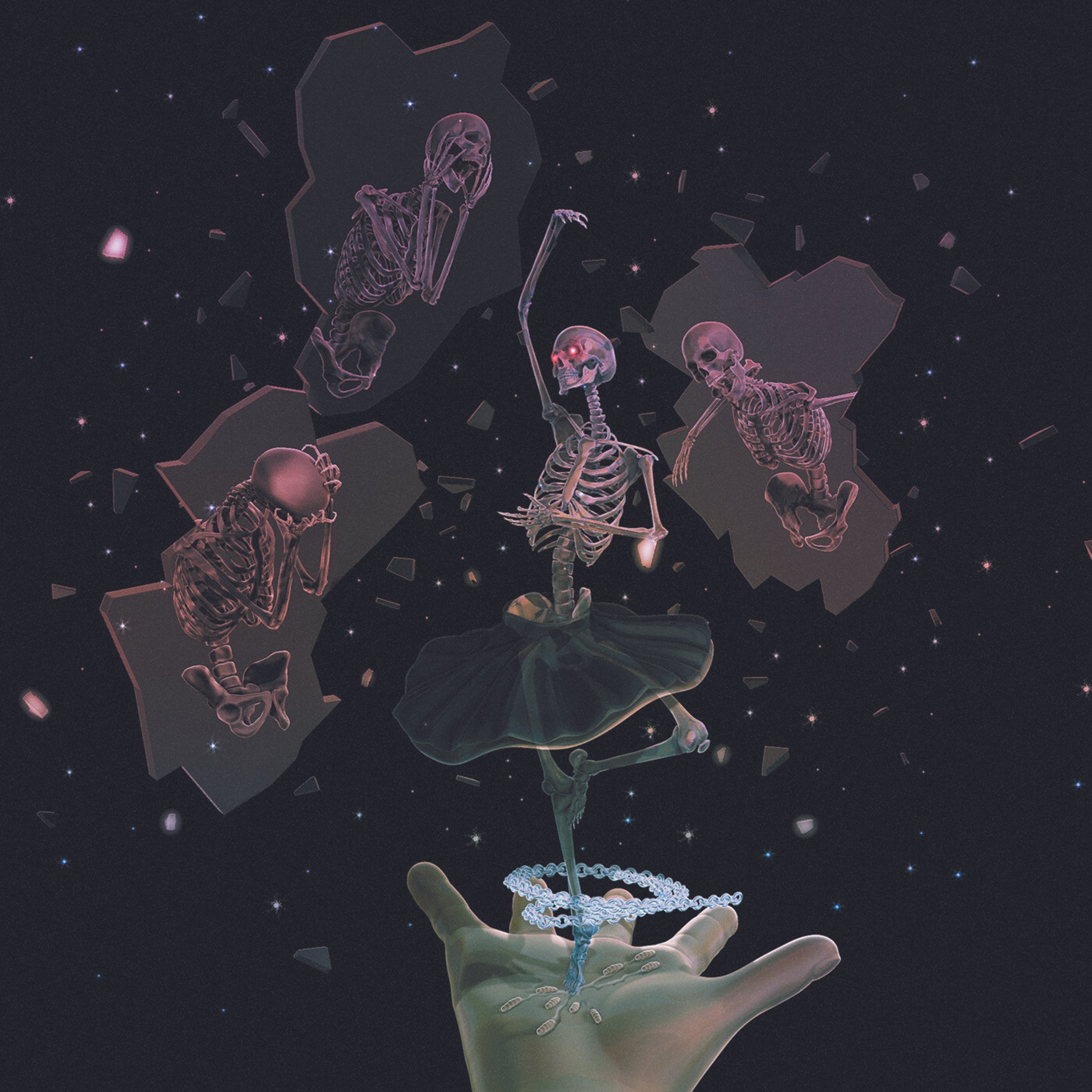
Lives of Broken Glass, Digital, 2021
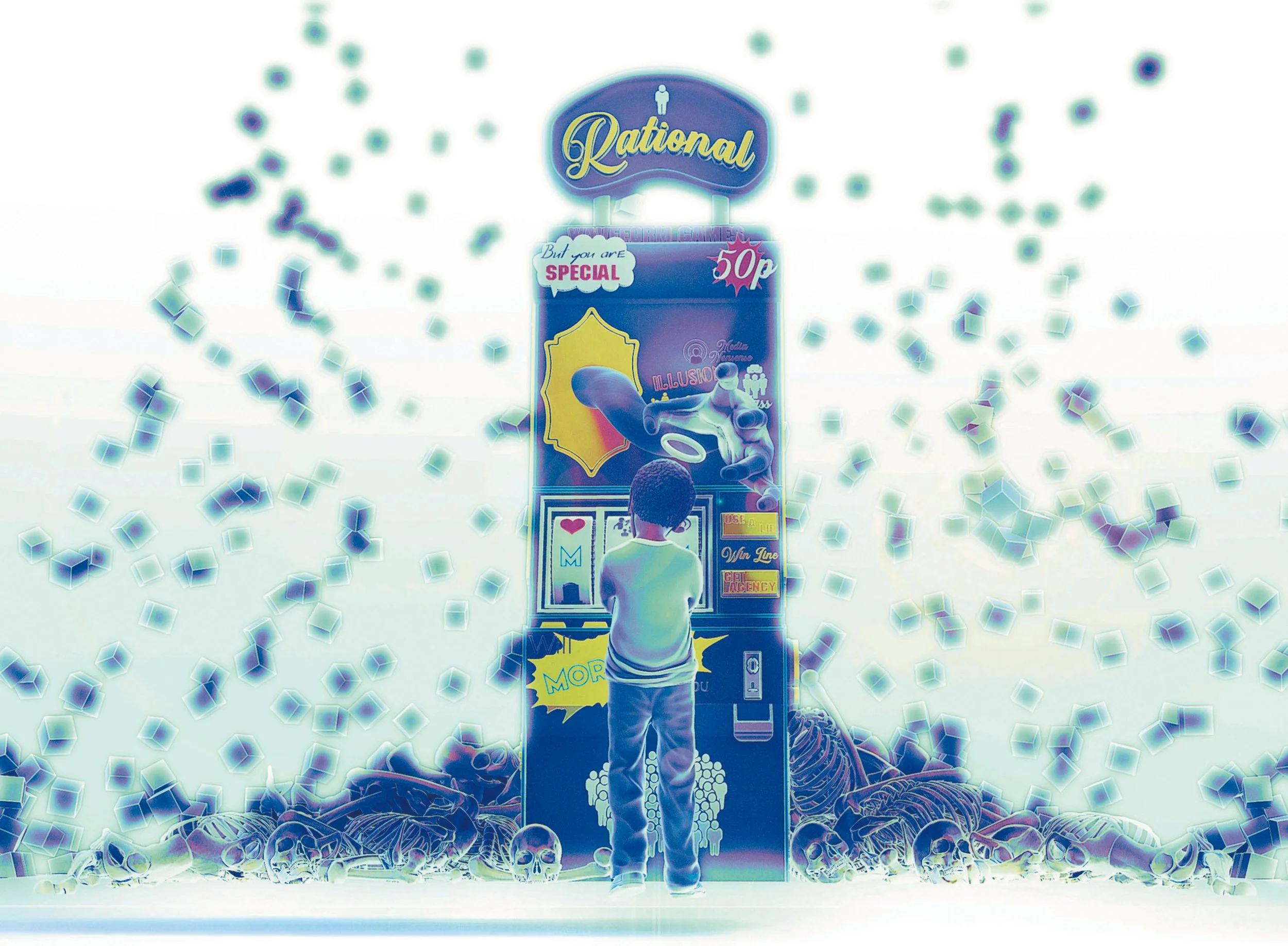
Dangerous Games, Digital, 2025
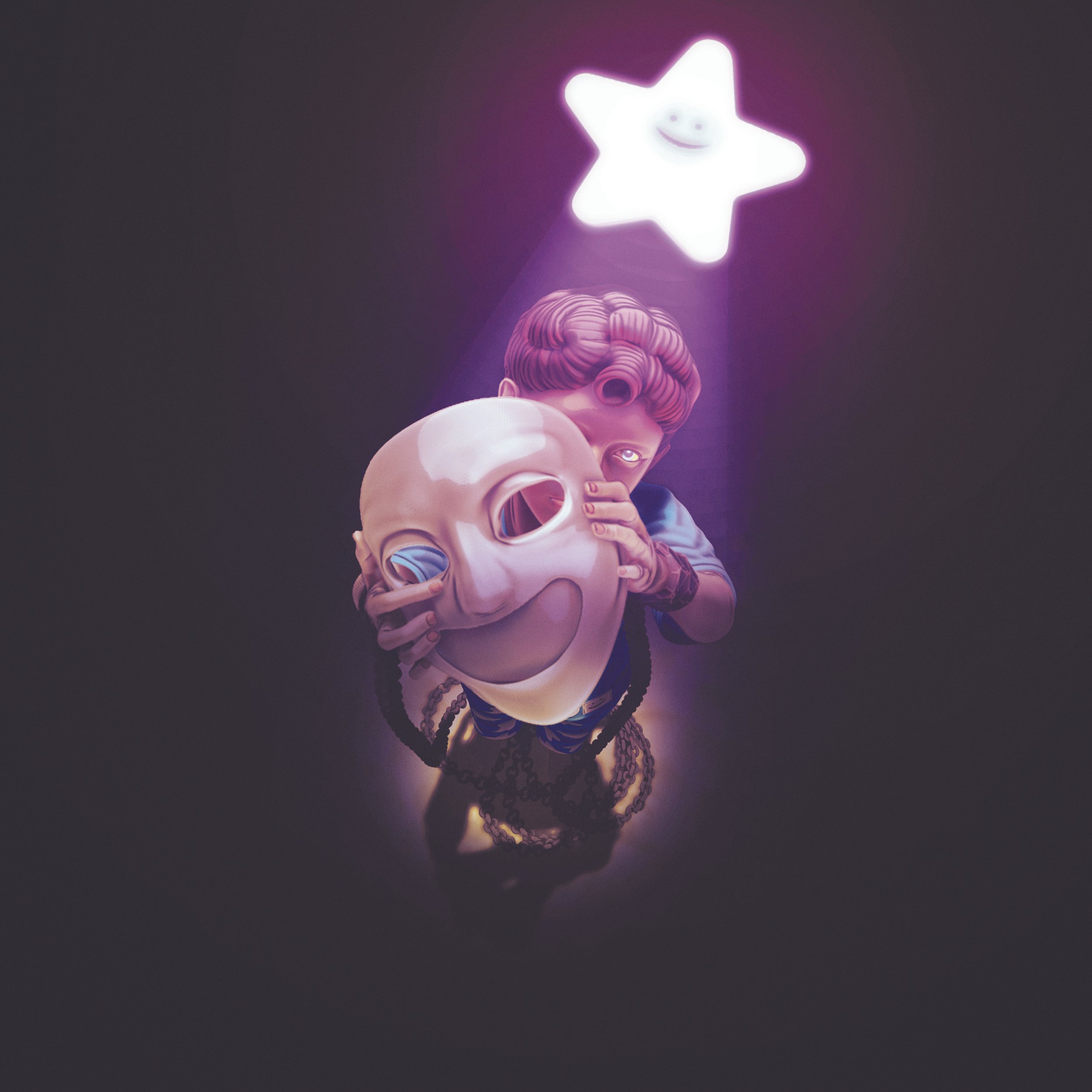
Are you Sure, Digital, 2025
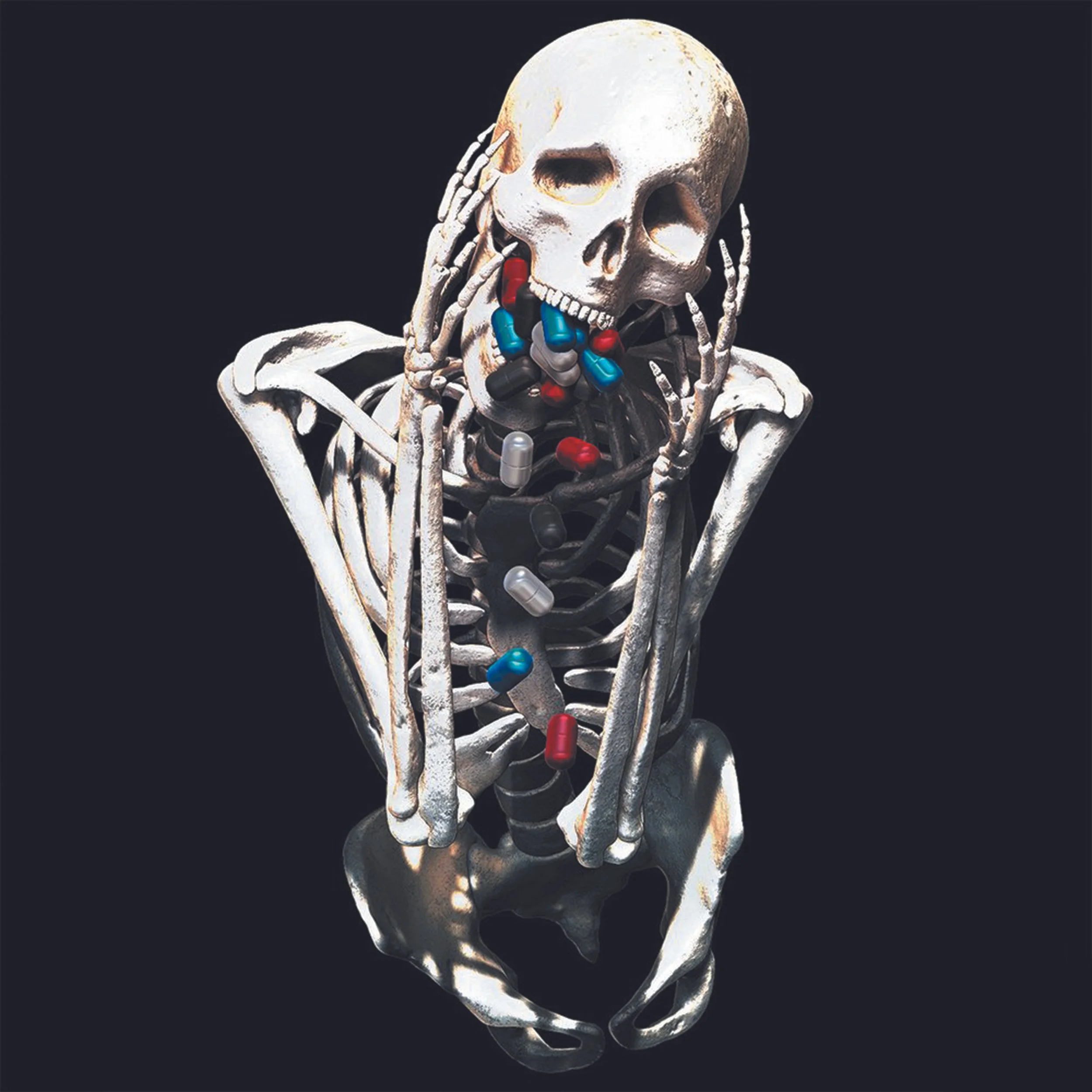
Medicine, Digital, 2020
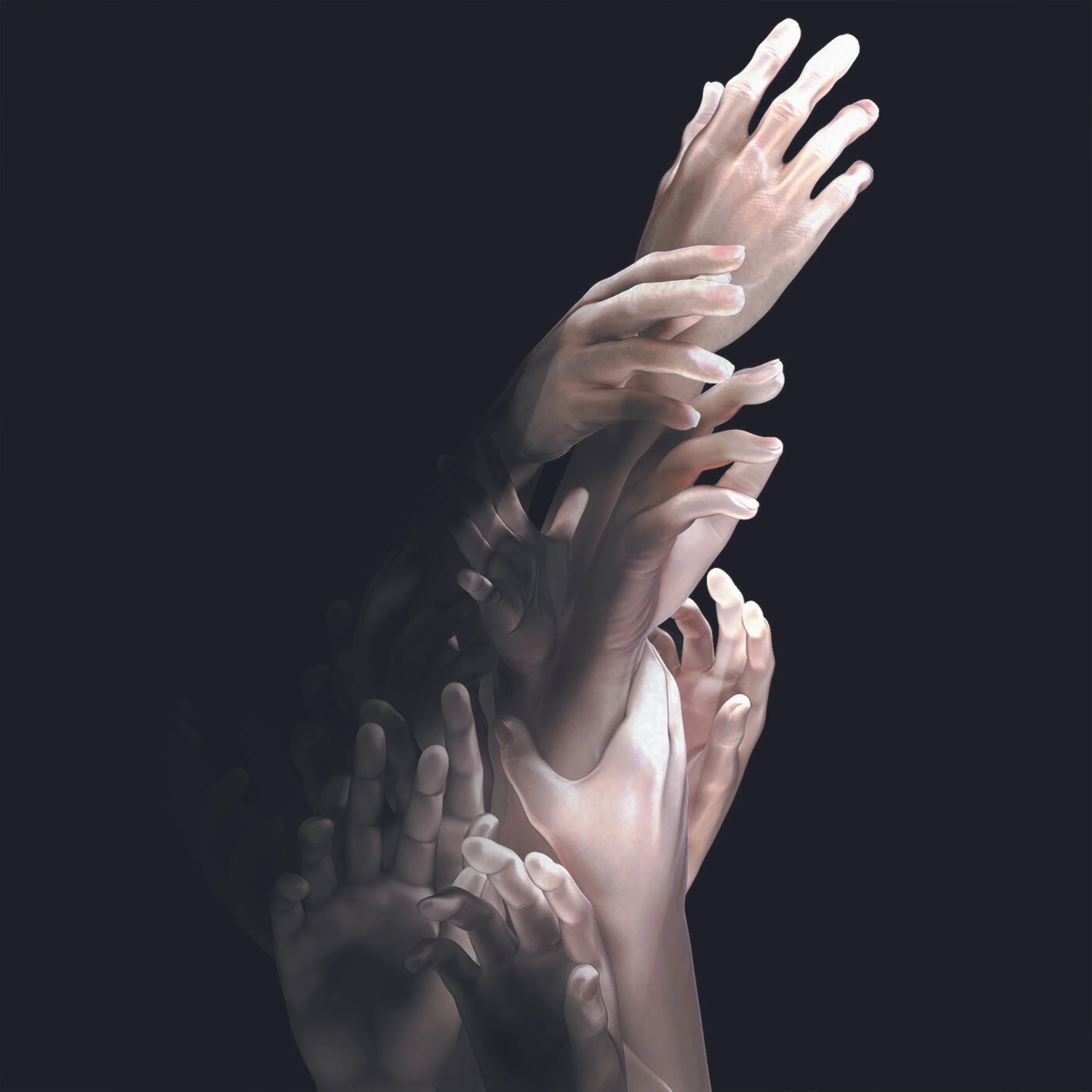
distress signals, Digital, 2020