Interview with Jeong-Ah Zhang

Your artistic journey has been shaped by philosophy, literature, theater, extensive travel, and painting. How have these diverse experiences come together to form the visual language that defines your work today?
Looking back on my own life, my artistic journey began to take shape when I was very young. I grew up frequently hearing from those around me, including my parents, that I was a child of few words and very quiet. And as if inherited from my mother's genetic traits, I started drawing on my own without formal art education from the age of six or seven due to my innate artistic talent, and during my middle school years, I was selected as a school representative to participate in the ‘National Middle and High School Art Competition’ and won a major award. Also, during my high school years, students from other classes would come up to me and ask me to draw anything for them, and sometimes they would even line up in the hallway to wait.
However, from my early teens, I preferred reading books and thinking alone rather than socializing with my peers, and I was more interested in literature and philosophy than art. This interest led me to win first prize in the Play Literature Category of the University Literature Award for the third consecutive years, separate from my major, while I was majoring in fine arts at Ewha Womans University in Korea. My writing was a kind of challenge and adventure undertaken without having received any separate literature classes. This was because I was deeply impressed by the plays of absurdist playwrights such as Eugène Ionesco and Samuel Beckett that I encountered in books, and I tried writing plays in my own way, distinct from them.
And later, upon the recommendation of the university literary award judging panel, I worked as a principal assistant director for several years at a famous theater company in Seoul starting in my mid-20s after graduating from university. Perception within a limited and enclosed “space” served as an opportunity for me to further deepen existential and philosophical questions regarding life and death, and this led me to concretely re-recognize the gap between the visible and invisible worlds from the perspective of “time”. Of course, this understanding of mine was established more systematically during over the following years of traveling alone around the world.
As I decided to end my career as a principal assistant director, driven by my deepening curiosity about the finite human condition and a profound desire for philosophical inquiry, I briefly contemplated between pursuing graduate studies to secure a university professorship that would guarantee a stable life or becoming a monk living in a temple. Ultimately, I chose to travel the world as an adventurous ordeal spanning several years.
For me, travel is about contemplating the meaning of time and space, and at the same time, the big question about human existence. It was a time when I was thinking about the meaning of time and space, emptiness, and human existence, and this was before I became a full-time artist. For me, it was a courageous journey filled with very intense and profound philosophical contemplation about my life. It was an existential consciousness that
transcended nihilism by coming face-to-face with death, which could have remained merely a vague and abstract thought. In addition, Martin Heidegger’s 『Being and Time (Sein und Zeit)』 which I read during my travels, helped me recall the magical realism I had experienced firsthand as a child. Furthermore, through the arduous solo journey, I naturally engaged in the meditation of "self-reflection" in Buddhist philosophy, which allowed me to strengthen my ability to objectify myself. Yes, My intense journey was my life itself, enabling me to contemplate more deeply the essence of human existence as an autonomous being and to allow the flow of my consciousness to proceed more smoothly.
You have written that your surrealism differs from conventional surrealism because it is rooted not in the unconscious alone, but in philosophy and the search for truth. How do you translate these abstract philosophical inquiries into visual forms without allowing the ideas to become merely illustrative?
Above all, when faced with the fundamental premise of the finite human condition, the driving force that propels me toward fundamental philosophical contemplation and the ceaseless pursuit of spiritual values is precisely my own will. It is based on the philosophical questions I have naturally harbored since my early teens, as I have constantly thoughts about existential questions such as who am I, what happens when I die, and where people come from and where they go.
My life and art are based on my own philosophical thoughts and experiences. I am interested in the philosophy of immanence and transcendence on all beings, And this means that I try to focus on the essence of life by establishing core values, and at the same time, sublimate it into my works. Therefore, my Surrealism is not merely an exploration of the unconscious. It is a question of will and philosophy, and at the same time, intrepid introspection. This is because one cannot reach the inner essence of things through senses or unconscious images alone. We can only know what is true when we realize what is importance to us beyond what our senses perceive. This is my most important starting point for my art.
The self is not a fixed reality that is eternal. Everything is an interpreted phenomena and experiential structures of the ego or self-consciousness projected from consciousness, but why do we think of them as reality? The universe is not outside of us, but a flow within our consciousness, however, why do we think of it as a separate object from ourselves? This is the reason we need to realize pure consciousness as the fundamental awareness. Pure consciousness is not objective knowledge or experience of the five senses, but bare consciousness that encompasses all of these and already knows itself. When I recall the memory of seeing the interconnected nature of all things, I cannot help but feel the greater pattern. And this is because philosophical reflection is interconnected beyond visible images. I value awakening and balance, and try to embody the meaning of existence and non-existence (or both) and the nature of things in an implicit and artistic way. My surrealism is the paradox of revealing the invisible through the visible.
The concepts of creation and extinction, life and death, and the visible and invisible worlds appear repeatedly throughout your biography and artist statement. What first drew you to these dualities, and how has your understanding of them evolved over the course of your career?
Along with a first-hand experience of magical realism when I was eight years old, from a very young age before I turned ten, I would read books alone, draw pictures with my with crayons, quietly gaze at the changing colors of the sky, feel the texture of the earth and soil with my bare feet and hands, watch small creatures moving on the surface of the ground with wonder, and look up at tall trees, happily and gently touching their bark and hugging them. And I also have memories of my parents always quietly watching these spontaneous actions of mine with warm smiles, without imposing any restrictions on me.
My father, who passed away from a chronic illness when I was in my third year of university, ran his own business, he had an IQ of over 160 and had majored in law at a prestigious foreign university. He met my mother, who was wise and kind-hearted with a rich artistic sensibility, and fell deeply in love with her, subsequently, I was born. However, when I was about 10 years old, my father fell seriously ill, and since then,
he underwent continuous medical treatment alongside my mother's devoted care. Despite his prolonged illness, my father, who had a lively and cheerful personality, was a man of strong responsibility as the head of the family who always strived to provide for the family's finances, and he was also someone who always brought laughter to the family through his humor. Then one day, just by chance, I saw the silent tears of my father, who had always seemed strong and vibrant. I quickly and quietly stepped away so that he wouldn't notice, I began to think about many things after that. Behind my father's usual brightness, there was a darkness I was unaware of, and behind my mother's devotion, which seemed only positive and beautiful, there was her own pain and suffering caused by the hardships of life.
And, in fact, from a very young age and even after becoming an adult, I have occasionally had mysterious personal experiences that are difficult to explain scientifically. and I will tell you about one of those experiences from my early to mid-teens. When I was 14 years old, in my second year of middle school, I had a strange experience during a school class where my teacher and all the students in my class suddenly disappeared right before my eyes. and at that moment, I saw myself lying alone in a coffin deep underground while still conscious. However, I was not scared at all, instead, gripped by intense doubt, I repeated to myself questions like, ‘Is this death? I have my eyes open like this—is this what death is? Is dying just being this silent? Just like this forever? Is this really what dying is...’ when I suddenly came back to my senses. But to my surprise, as if I had traveled through time and space alone, the teacher was still diligently writing and explaining the lesson content on the blackboard, and the students were sitting in their respective seats, either listening to the teacher's lecture or chatting lightly with the student next to them. And I, too, remained seated at the desk, staring straight ahead with my hand -still holding a writing instrument- resting on the notebook. I had not fallen asleep, and my eyes were open.
I believe that my innate affinity for nature -nurtured by my parents' deep love- combined with the unique personal experiences I naturally encountered while growing up, served as the driving force that enabled me to move beyond the surface of human existence and engage in fundamental philosophical reflection on the essence of birth, old age, sickness, and death- experiences that are an inevitable part of the human condition.
And as I grew older, through various experiences, reading, and increasingly deepening philosophical thinking, I came to realize that everything in life is ultimately an illusion. However, my consciousness is grounded in the inclusiveness of perception. I value objective self-awareness and balance, striving to embody the essential meaning of existence and objects in a way that is both metaphorically and artistic. It signifies the realization that life and death, creation and extinction, time and space, and the visible and the invisible, are ultimately not separate, but one.
Your work frequently explores the idea of emptiness through the lens of Eastern philosophy, where it signifies possibility, clarity, and the true nature of existence rather than absence. How do you approach the challenge of expressing such an intangible concept through painting?
I think the important thing is not how to look at it, but what to look at. And I think there is a series of sort of underlying, other sort of visual realities that have come into play in the modern world. In generally, the objects of awareness are split between the intelligible world and the visible world. There may be a lot of answers but I think the importance is that the reality of the invisible world over the visible. This is a rediscovery of the stream of consciousness based on ancient Oriental philosophy, and the idea of recognizing the truth is linked to being beyond the material world with all the visual appeal.
As I mentioned in my artist statement, I believe that people need to have a deeper and broader perspective on emptiness. Emptiness has been a word with many meanings, aspects and feelings from different viewpoints, in various cultures. Cambridge vocabulary uses “sad feeling”, “not sincere”, and “a state with no emotion or purpose” for emptiness, while in Buddhism it is called “the true nature of things and events.” While a western view of emptiness often seems to be negative, in some eastern philosophies, it represents a state of stillness and placidity to see through the illusion, which represents the “mirror of the universe” and the “pure mind”. Lao Tzu in Tao Te Ching artistically quotes: “We mold clay into a pot, but it is the emptiness inside that makes the vessel useful.”
It also implies that the visible world and the invisible world are not separate, but constitute a whole. The important meaning that constitutes the essence must not be merely seen with the eyes, but realized. Therefore, as an artist, I strive to maintain an attitude of deep reflection that transcends the superficial perception of objects and events, rather than remaining at that level. And to me, It is a soul resonance beyond the time frame. I try to listen to all the conceptions of all things, have an open mind and remember what resonates, and this is how I work.
You describe childhood experiences of perceiving the interconnected nature of all things as a defining moment in your life. Looking back, how has that early experience continued to inform your artistic vision, and has its meaning changed as your practice has matured?
A multi-dimensional virtual world where the boundary between reality and the virtual disappears holds great significance for me. And it was also an extension of the magical realism I experienced as a child. Clearly, It was one of the most important moments of my life, and that beginning, a first-hand experience of magical realism when I was a kid about eight years old. A voyage in time and space, Space is a wondrous thing that has no boundaries, And at the same time eliminate the meaning of time and space. It was a magical scenes, startling clarity, breathtaking subtlety, and a transcendental experience for me. Looking back now on that period of my history, I see plainly enough that it was a foreshadowing of my own identity. And, my inner voice often reminds me of this, and it still has a significant effect on my life. My work ‘A Nap’ (2010) is one of the pieces in which I visualized and embodies, after becoming an adult, my first-hand experience with magical realism I encountered at the age of eight.
Since I was a child and even after becoming an adult, I have occasionally had mysterious personal experiences. However, rather than being recalled only in connection with a specific time or event, these experiences have always remained a part of my consciousness. this is because they were the fundamental factors that naturally gave rise to the philosophical thoughts at the core of my life. Through the deepening of my thoughts process over time, the concept of "breath" has come to play an increasingly significant role in my work.
When I recall the memory of seeing the interconnected nature of all things, I cannot help but feel the greater pattern. And this is because philosophical reflection is interconnected beyond visible images. At the same time, it is also a reminder that the material world is not all there is. And therefore, I look at the relationship between humans and mother nature and the universe from a very broader perspective. I reach this point and become aware of breath. I think all thoughts and consciousness are breath. That is the consciousness, unconsciousness, the borderland of consciousness, the five senses, awareness and the transubconscious state of mind. The breath is the switch between the conscious and the subconscious mind, It is a connected cycle of creation and extinction. I believe that life and death, creation and extinction, are not dualistic opposites, but rather different forms of the same meaning derived from the One. It also implies that the visible world and the invisible world are not separate, but constitute a whole.
Although your paintings engage with profound metaphysical questions, they remain visually accessible and emotionally resonant. How do you balance intellectual inquiry with the intuitive and sensory experience of looking, allowing viewers to enter the work through multiple perspectives?
I feel the need to explain by first focusing on my early works. As my early works, they served as a very important foundation for the production of my new Surrealist works that began in earnest after this period. This is because the process proceeded alongside my contemplation on how to first realize the concepts of three-dimensional space in two-dimensional painting; it was a fundamental experimental process aimed at producing visual art from the philosophical perceptions that originated from the multidimensional magical realism I experienced firsthand in my childhood. At that time, as I rediscovered pixels in photographs and computers, I
conceived the concept of pixels -which are not easily discernible to the human eye- as the idea for my work. This was an approach to reflecting on the fundamental contemplation themes of my inquiry, such as creation and extinction, time and space, and the visible and the invisible. Pixels are the smallest elemental units that form an image, consisting of square shapes. I felt that this shares a context similar to the molecular structure of living organisms, so I composed this in my own unique way and expressed it through a painting that is both geometric and abstract. These works are part of a series, and the overall title “One is All, All is One” embodies through compositional painting, the meaning that time and space, the visible and the invisible, are not separate but one.
I would also like to mention my sculptures. As early works predating the paintings mentioned above, consisting of sculpture and photography “The Visible World and The Invisible World” (2001). (Of course, I started with painting when I officially debuted in the art world in 1999.) At the time of their creation, I spent several months in my studio covered head to toe in plaster powder, producing 15 human figures with an average height of 190 cm, while simultaneously earnestly and seriously I asked myself these questions, “Why do you do art? What is art to you?” This became the thematic significance of my sculptural work, and at the same time, it was projected as a philosophical belief that permeates my entire artistic practice.
“Does this exist or does it not? / Like being whose existence defined its own nonexistence. / This is and is not at the same time, and partakes both of existence and of nonexistence. / The existence of a thing... and interacts with the thing-don't-know. / The work takes on an existence of its own.”
Throughout your statement, you emphasize that art should encourage viewers to listen to their own inner voice rather than communicate a fixed message. What role do ambiguity and personal interpretation play in your work, and how do you know when a painting is open enough to invite that dialogue?
But first, may I ask just one slightly different question? What do you think is the essence of communication? I believe that memory is one of the most important parts of human life, this is because memory is evidence proving existence as an integration of consciousness and the unconscious. Furthermore, memory is the result and the entire process of all forms of communication. Let me add to that communication is a complex and sophisticated essay on memory, time, space and the meaning of action within the conflict between reason and emotion. I think art appreciation is no different, In some cases, it may be more direct and subtle. My art is not careless or flippant, but serious and open. This is because I understand that the general way people looking at things may not be how they really are, and anything essential is invisible to the eyes.
My surrealism is based on implicit metaphors and symbols, and because it reveals the truth in a hidden form, it may be relatively difficult for the viewers to define in general. And also because it involves the different perspectives, experiences, beliefs, motivations, biases, tastes and interpretations of the viewers. That is why I like to leave them open in that way. And sometimes, silence is one of the great arts of conversation. A work of art belongs to the person who appreciates it. Because my surrealism contains meaning beyond what is visible on the surface.
Art is born anew at a point where language and the written word cannot reach. And, the true artist face the timeless truth. In that sense, my art is intended to make the viewers feel and think, but my delivery is intended to make the viewers listen to their own inner voice. When viewers consider the unexpected on their own, the scope of possibilities expands, enabling them to come up with their own unique and special interpretations. And whatever it is, I hope it comes from the viewers' open minds and sets them free. It makes people, including myself, think beyond reality and into the essence of reality. As an artist, I think there is a positive role for it. I believe that mature works of art that never ceases to experimental contemplate prepares the soul to recognize messages of all heights of truth, all the expanse of goodness and depth of beauty.
After more than two decades of sustained artistic practice and significant international recognition, your work continues to revolve around timeless philosophical questions rather than contemporary trends. As your understanding of reality, consciousness, and existence continues to evolve, what new directions or unanswered questions do you hope your future work will explore?
The past, present, and future are big words and concepts created by humans. This also serves as a starting point that defines the direction of my art, and reflecting my awareness of the fixed notions of time and space created by humans. What I mean is that modernity or contemporaneity is indivisible, we can have all of it or none. It ultimately refers to the present moment (-even in any era) and it means eternity. That is why my eyes are not simply looking ahead, but are looking at myself. Seeing oneself means seeing people, nature, and the universe, and seeing people, nature, and the universe means having a perspective that goes beyond the perspective limited to the ego.
Change can take various forms, and a complex interplay of factors is always at work. However, based on my experience of over 25 years of art work, I have always found that when I look hard and with reality-based symbolism at how these processes work, I can do them more efficiently. Alongside my philosophical thoughts as an artist, the reality of this perception will continuously evolve through my experiences and my work. And time will read more meaning from my works than I intended. Because the manifestation of all phenomena (all things) is ultimately an invitation to rediscover oneself.
As I look back on that afternoon so long ago that presented my life, and as ever, when remembering the experience of seeing the interconnected nature of all things.. The flash point of all creation in the present moment is immortality.
My Website
www.jeongahzhang.com
Professional Artist Biography
https://www.contemporaryartcuratormagazine.com/home-2/jeong-ah-zhang-biography
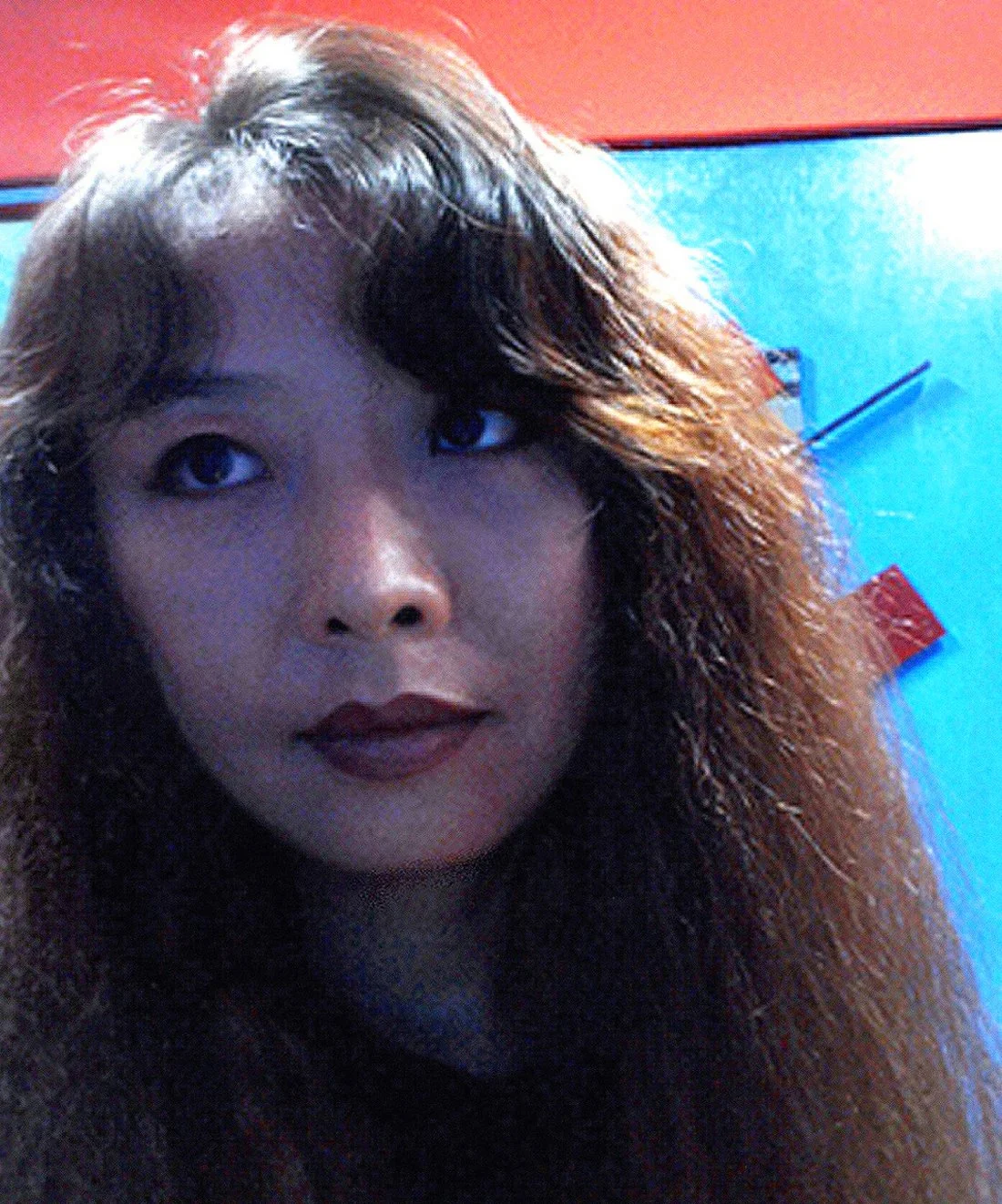

Jeong-Ah Zhang (A Layer – Phenomenal World. 2013. Oil and Acrylic on Canvas. 53 X 73 cm)
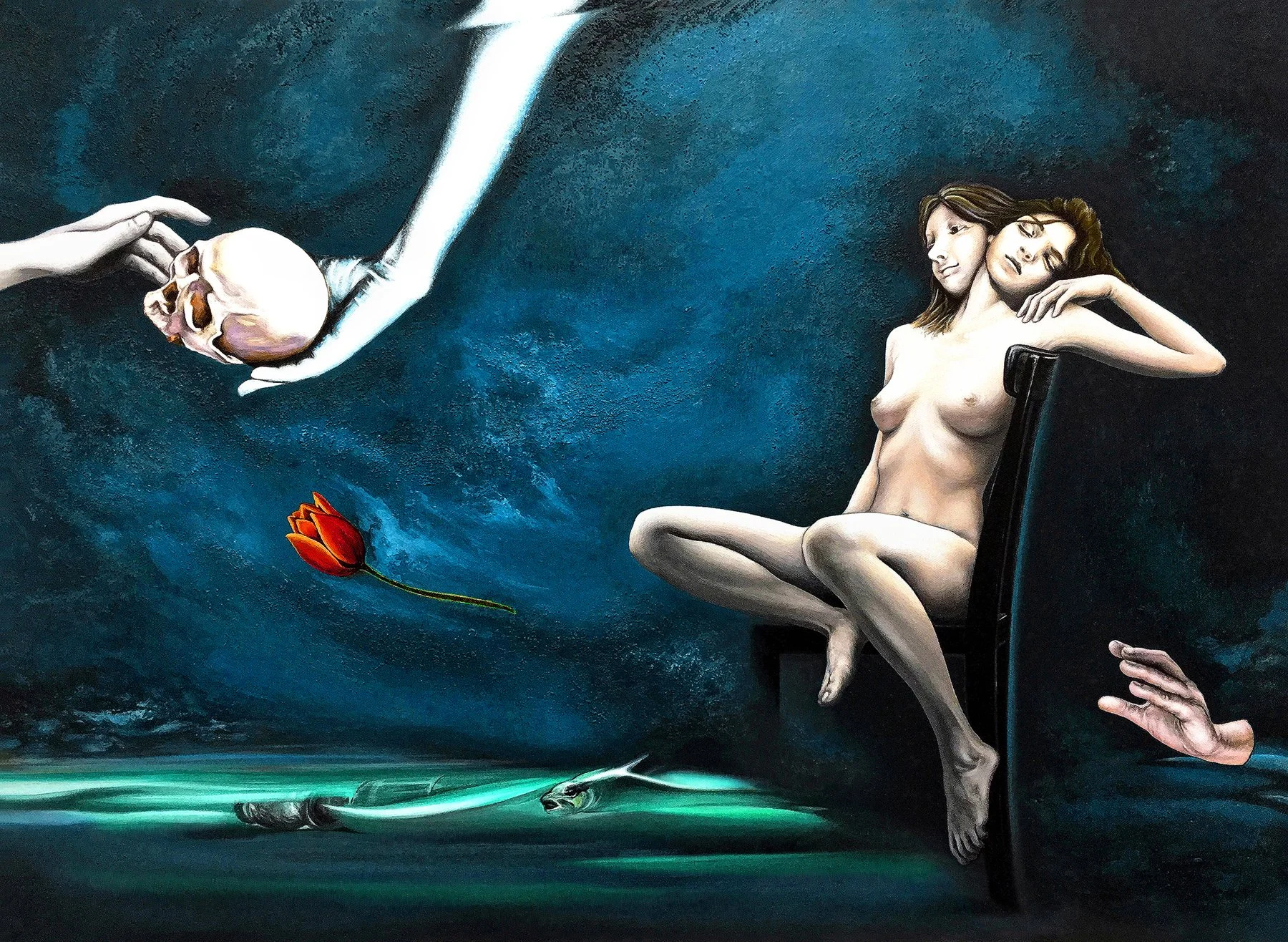
Jeong-Ah Zhang (A Low Voice. 2018. Acrylic on Canvas. 53 X 73 cm)

Jeong-Ah Zhang (A Nap In The Mirror. 2017. Acrylic on Canvas. 61 X 81 cm)

Jeong-Ah Zhang (A Quiet Meal. 2016. Acrylic on Canvas. 65 X 91 cm)

Jeong-Ah Zhang (One is All All is One, No01. 2003. Acrylic on Canvas. 97 X 95 cm)

Jeong-Ah Zhang (One is All All is One, No15. 2005. Acrylic on Wood panel. 160 X 130 X 3 cm)

Jeong-Ah Zhang (One is All All is One, No22. 2005. Acrylic on Wood Panel. 128 X 160 X 6 cm)
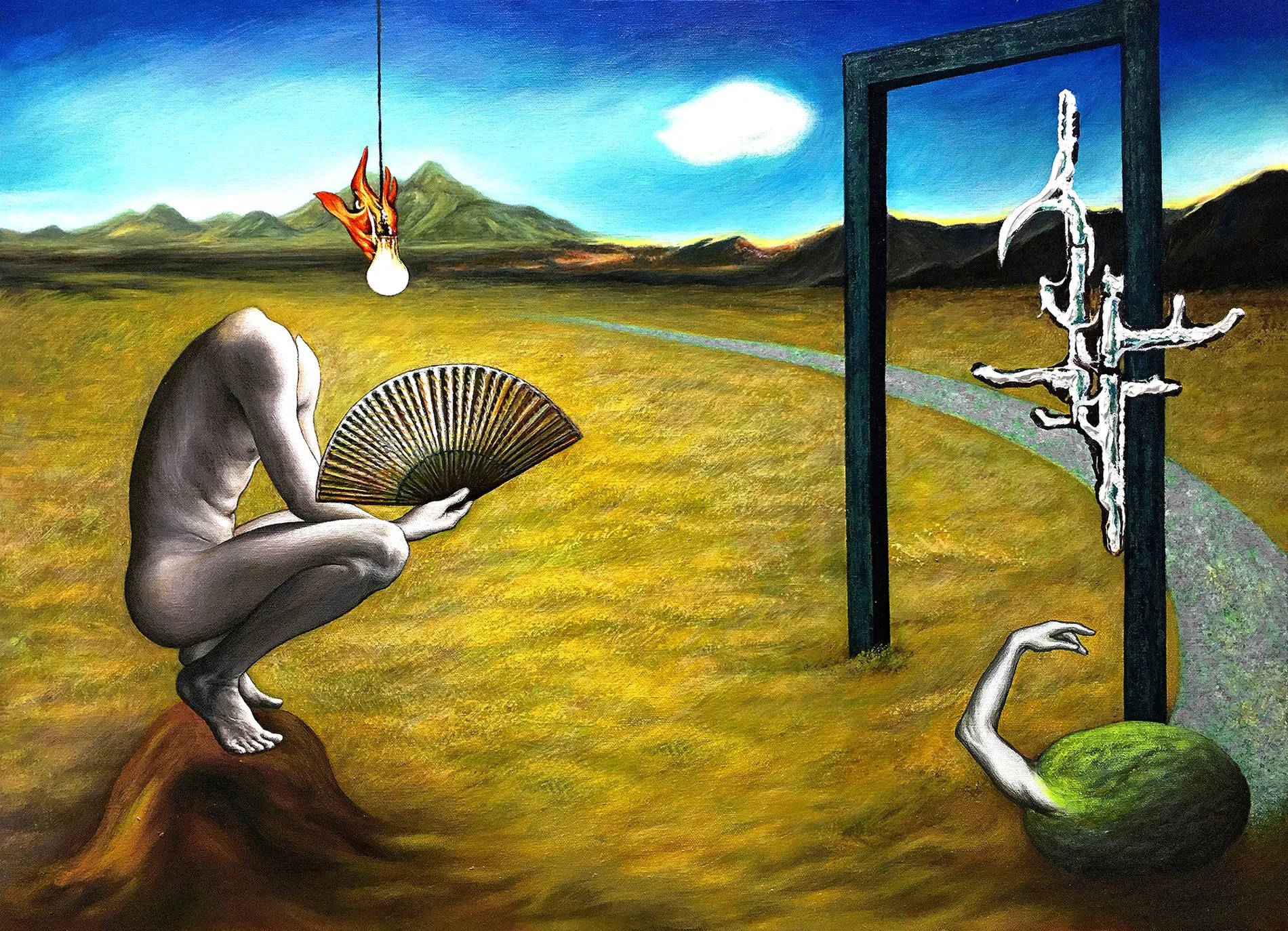
Jeong-Ah Zhang (The No-Boundary Moment. 2021. Acrylic on Canvas. 53 X 73 cm)
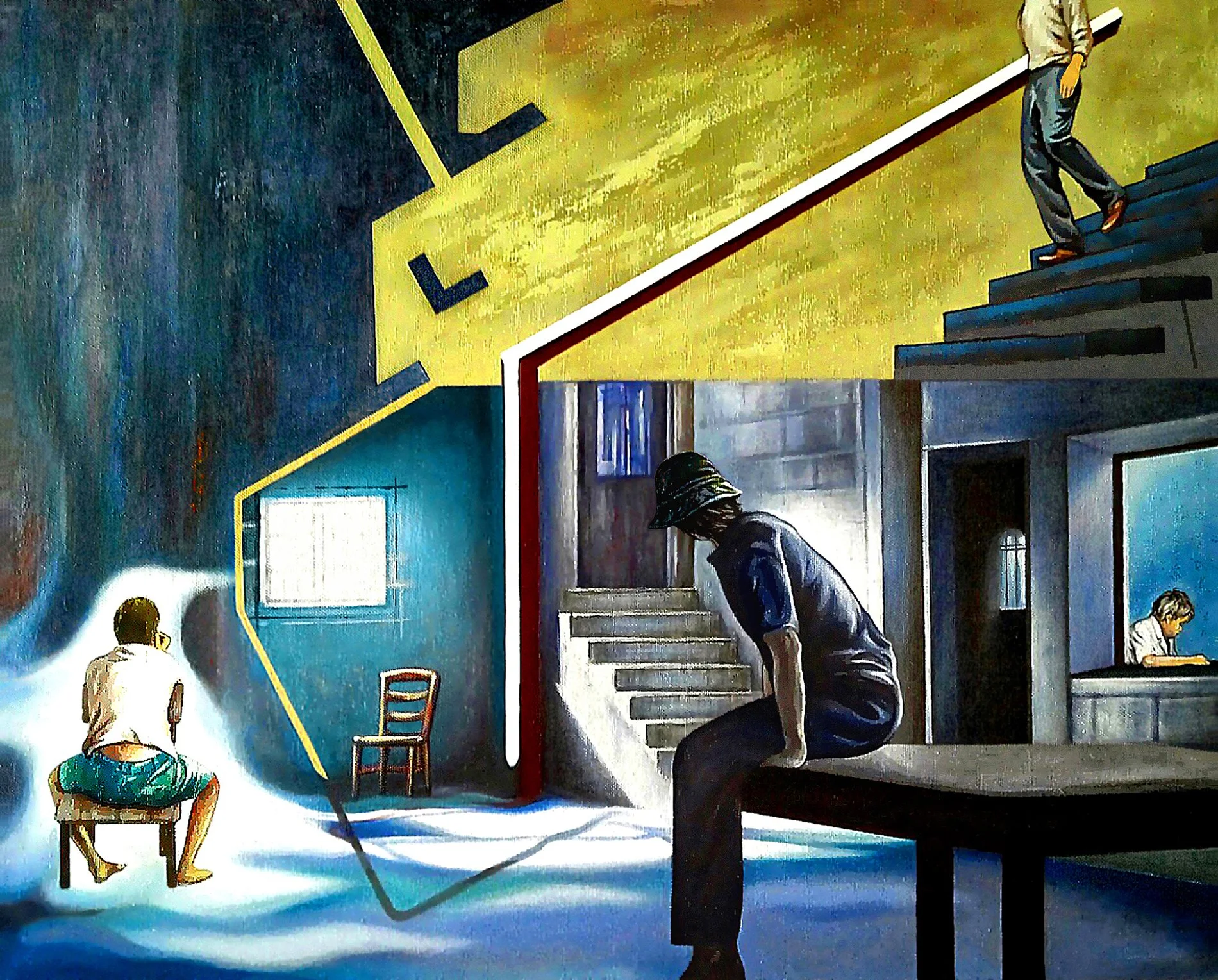
Jeong-Ah Zhang (The Sound Hears The Sound. 2015. Acrylic on Canvas. 53 X 66 cm)

Jeong-Ah Zhang (The Visible World and The Invisible World, No04. 2001. Sculpture and Photography)