Biography
He likes travelling, this has always been my passion, diving into other worlds, smelling scents, colours of lights in the different moments of the day, this is something really special. An important stop was when he enrolled at the Academy of Fine Arts in Bologna, in 1992.
For the first time, he stopped. It happened because of boredom, by chance or for pleasure; he does not know the reason. In the long time of six years, he grew up to achieve a personal style, which is the independence of thought, it is the man, projected in the world, who has made him inert, unable to dream, where the objects are in the foreground, and he is at their disposal. As Nietzsche writes - I dream knowing I am dreaming, in which the intensification of the information about reality, about its aspects, makes less and less conceivable the same one, a world that in the end becomes fabulous.
He discussed my thesis, titled: “CLIPBOARD OF A PICTORIAL RESEARCH IN BECOMING", in 1999.
This thesis is dedicated to all those who have lost the way home, who have made the world a dream, and life an adventure.
Having experienced life and art in Dublin and then in Hungary, he carries on my research about the quantum painting, with even more combinations through the analysis of different forms, such as the cultural ones.
Artist Statement
Painting is life, curiously observing what is around, to understand an ever-continuing research of events, to paint new spaces on the canvas by way of colours and of rhythm, just to make up new nuances by rebuilding a soul's feeling, so becoming a probability of existence about a sensation to live as a reflection of living.
Playing with the colours, daily life becomes a vent to the imagination as a research up to the soul's truth, like the world vision surrounding me, and the one and only way that I understand is painting.
Only painting can read up the world and human nature, and through my daily experiences I can pass down life on the canvas with colours as the only truth of the reality.
I live for painting, a lifelong analysis. It's up to you to read that into yourselves.
Therefore, painting is passion, to put yourself at stake, to understand yourself casting it again into the world, by a language as complex as painting, meaning art in this digital world losing the soul’s meaning.
Throughout your career, you have described your practice as the development of "quantum painting." Rather than borrowing scientific language metaphorically, what does the term quantum allow you to articulate about painting that traditional aesthetic vocabulary cannot, and how has this concept evolved since your 1999 thesis, clipboard of a pictorial research in becoming?
Clipboard of a pictorial research in becoming comes into being gradually on the pictorial way during the academy, which I wove up giving life to the different realities in the various, multiple and multi-shaped perspective of the daily life through a vision given by one's denotative as well as connotative reality to guess messages, texts and different contexts.
Observing and note-taking about new sparks of reality, to get to the quantum meant as the minimum energy source in space over the space-time concept, to come into Heisenberg’s indeterminacy principle, which permeated every attempt to simultaneously determine the position of the particle and its momentum; so that the conclusion is that destiny corresponds to other infinite destinies, as solutions born flowing through intersections, so it follows that: the objective reality is the universe, a quantum dimension of space-time, and, alongside that, the subjective reality is an infinitely small particle, fluctuating on its own universe.
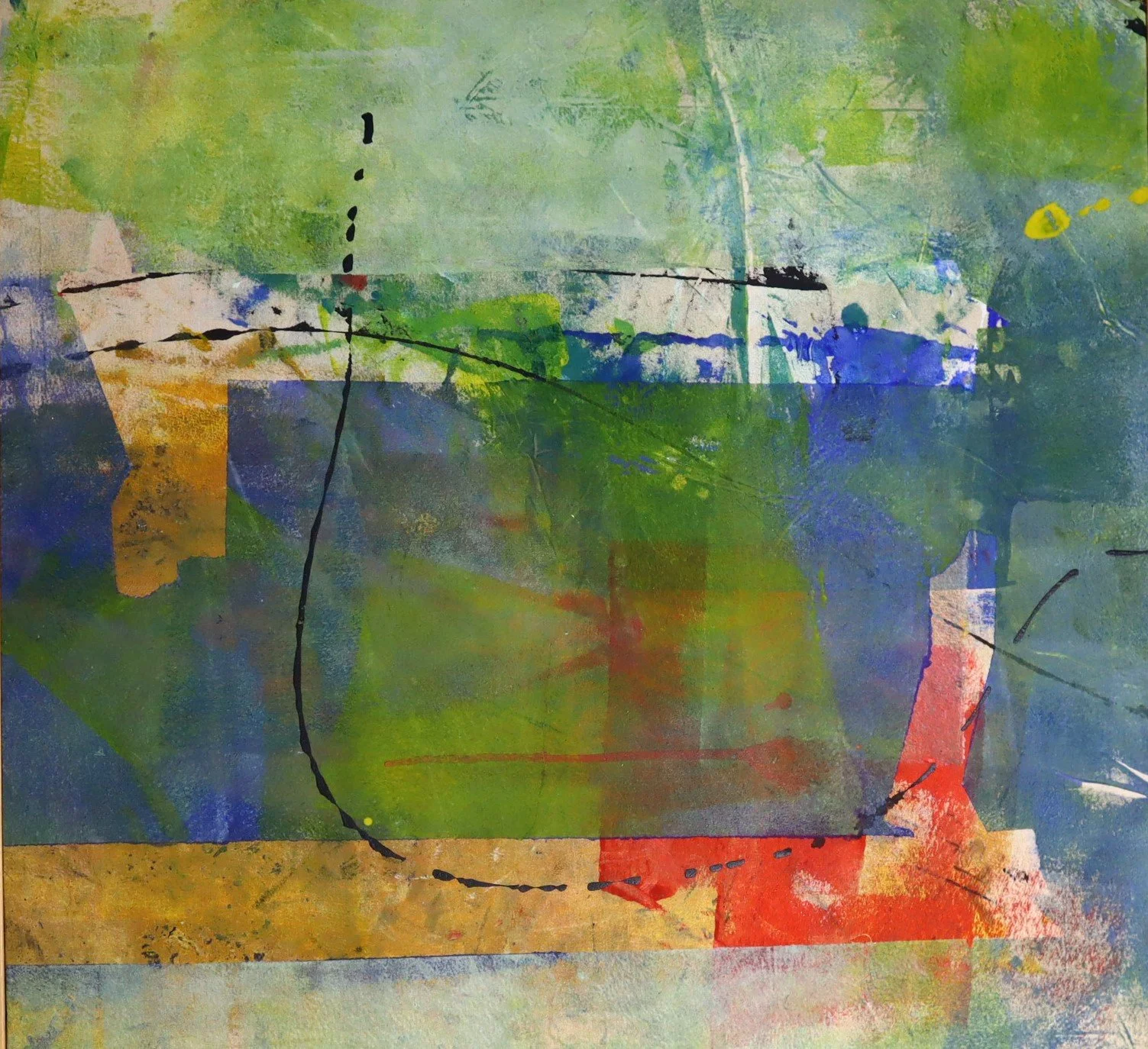
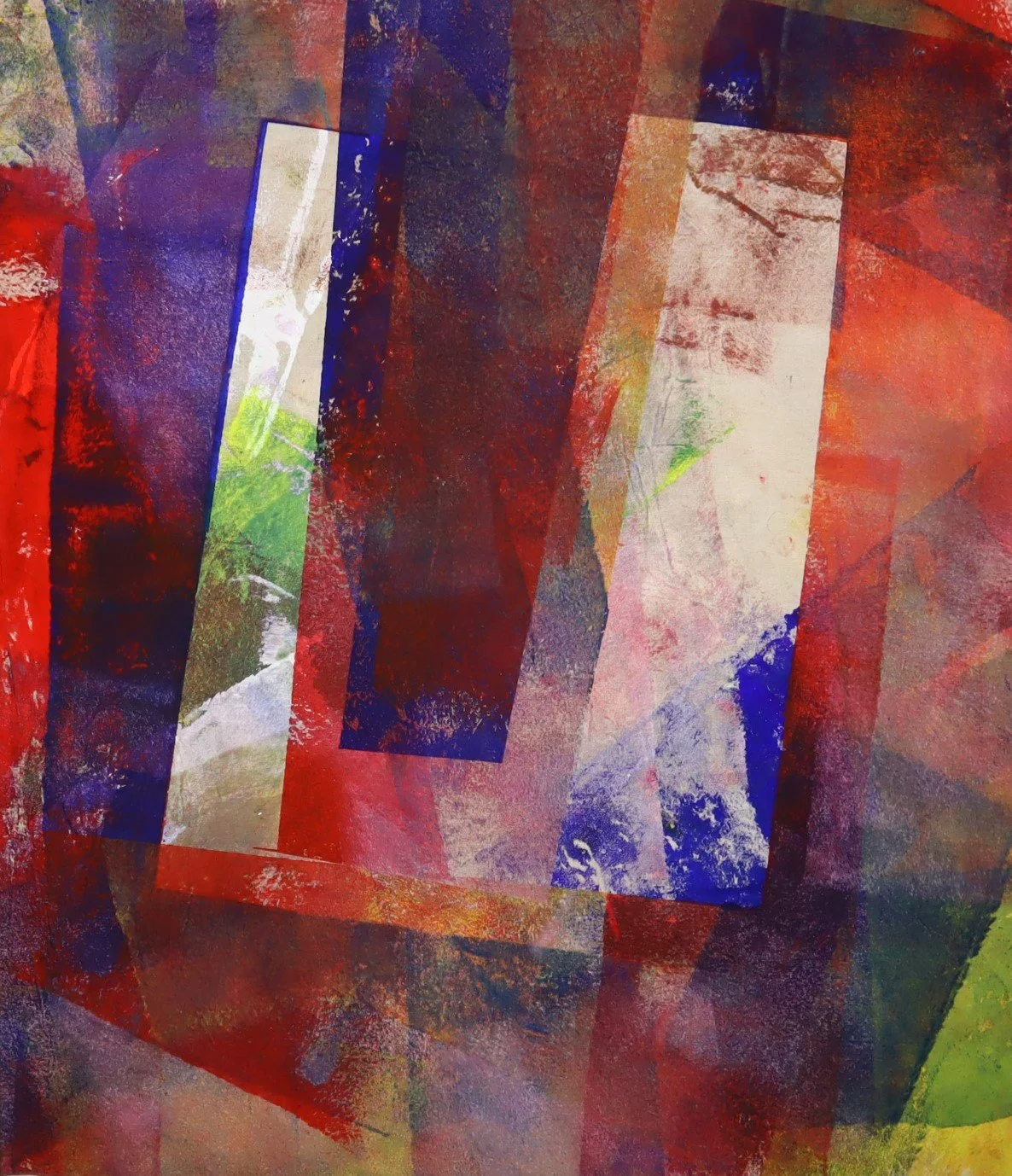
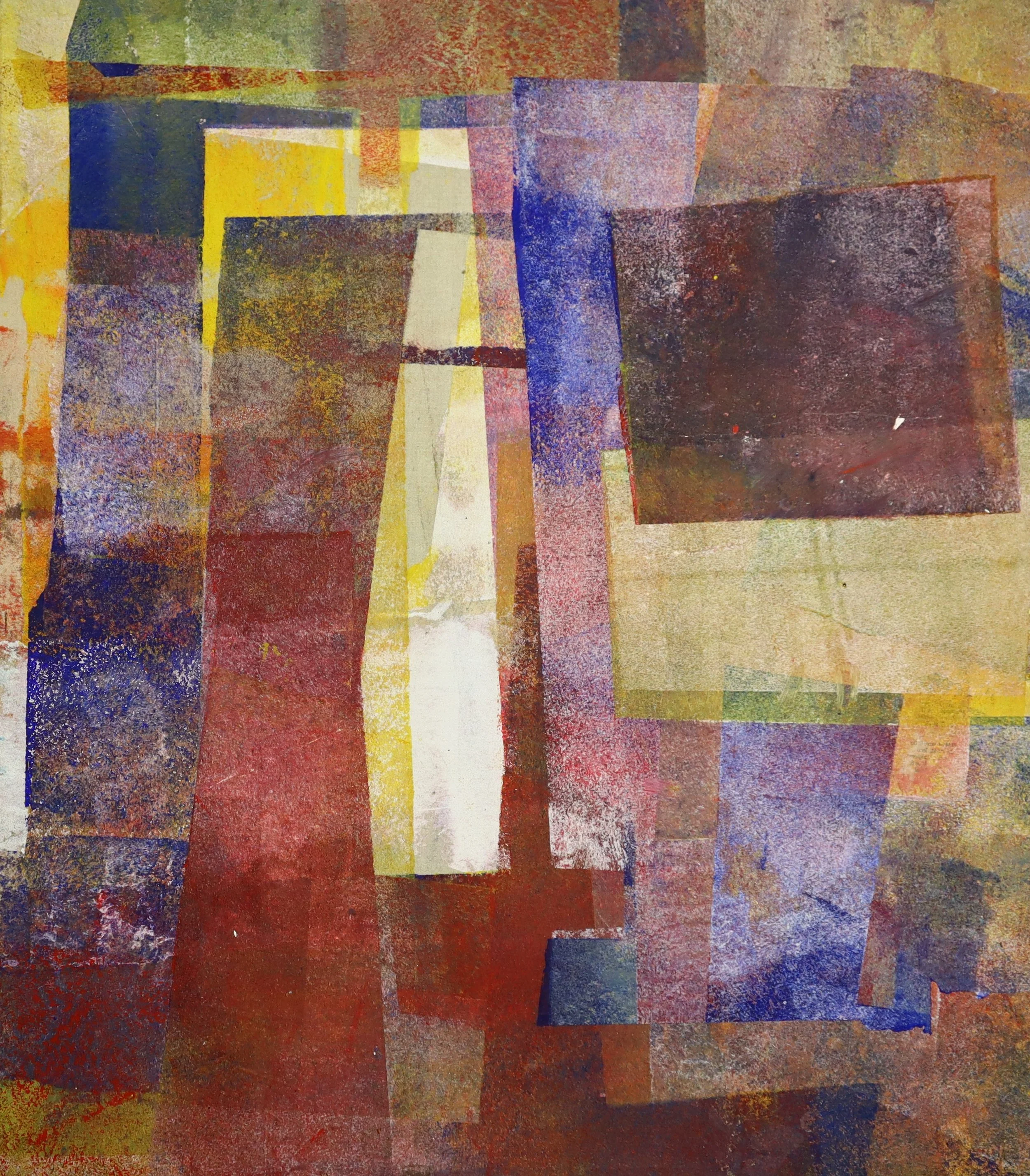
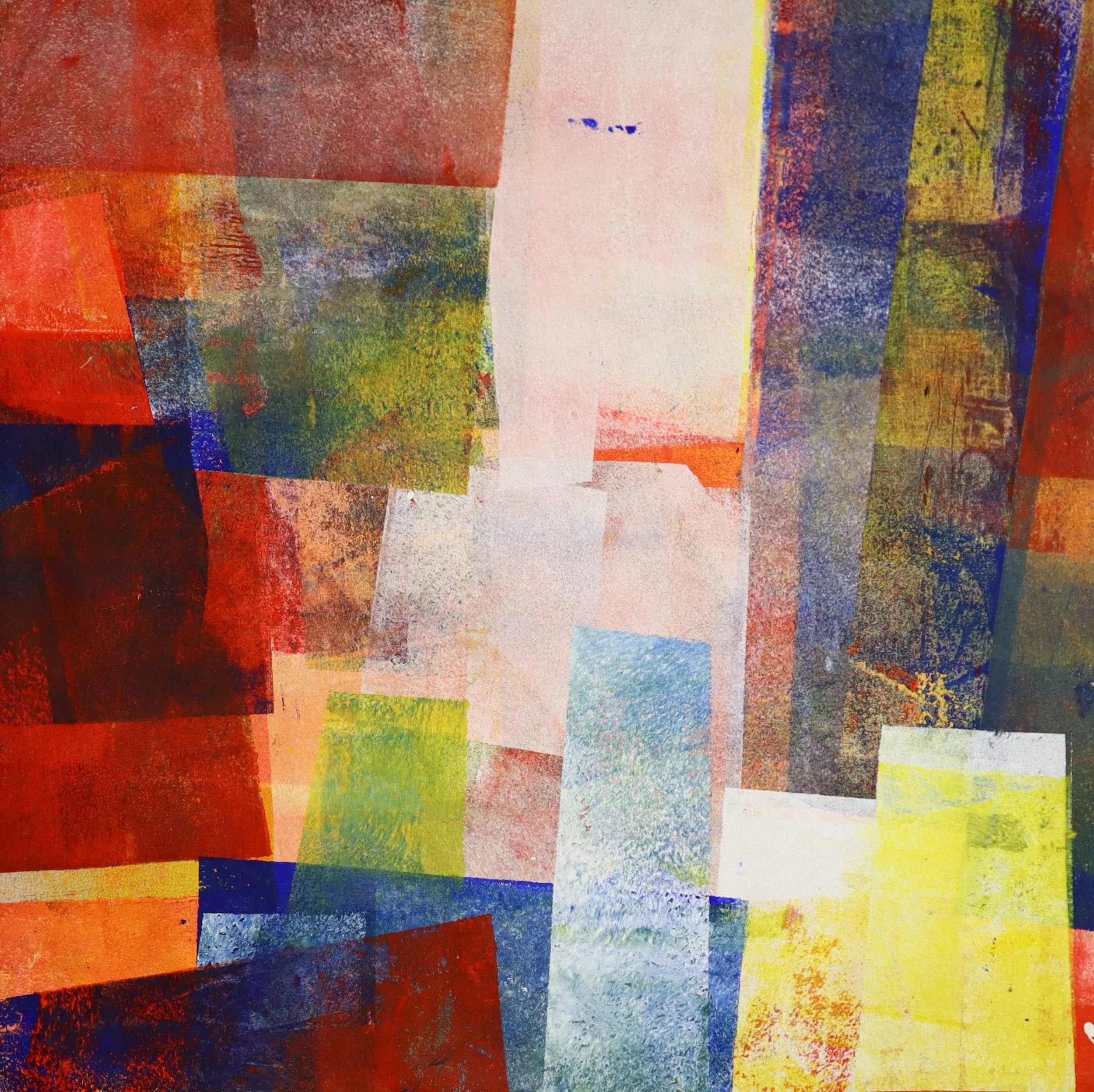
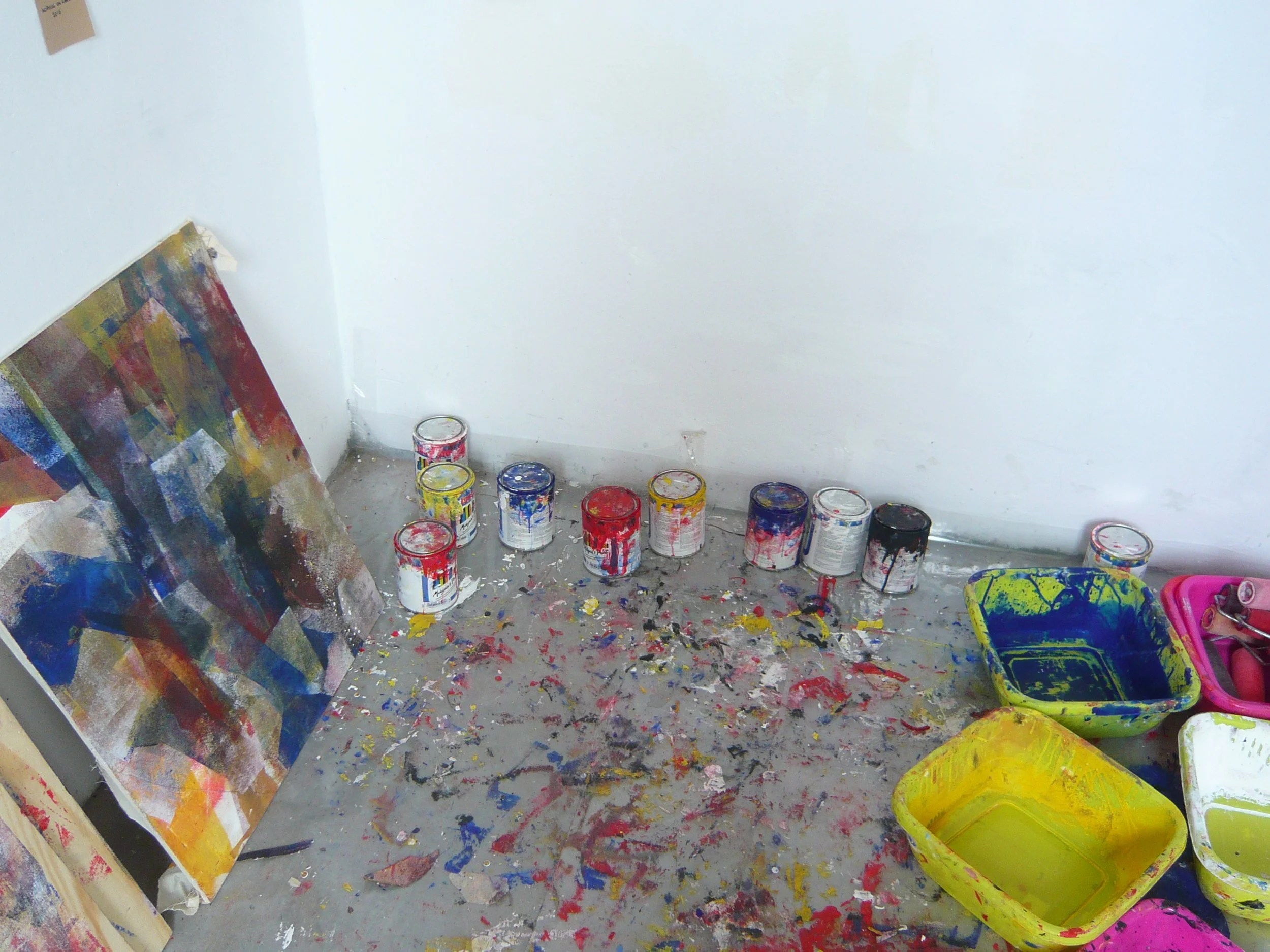
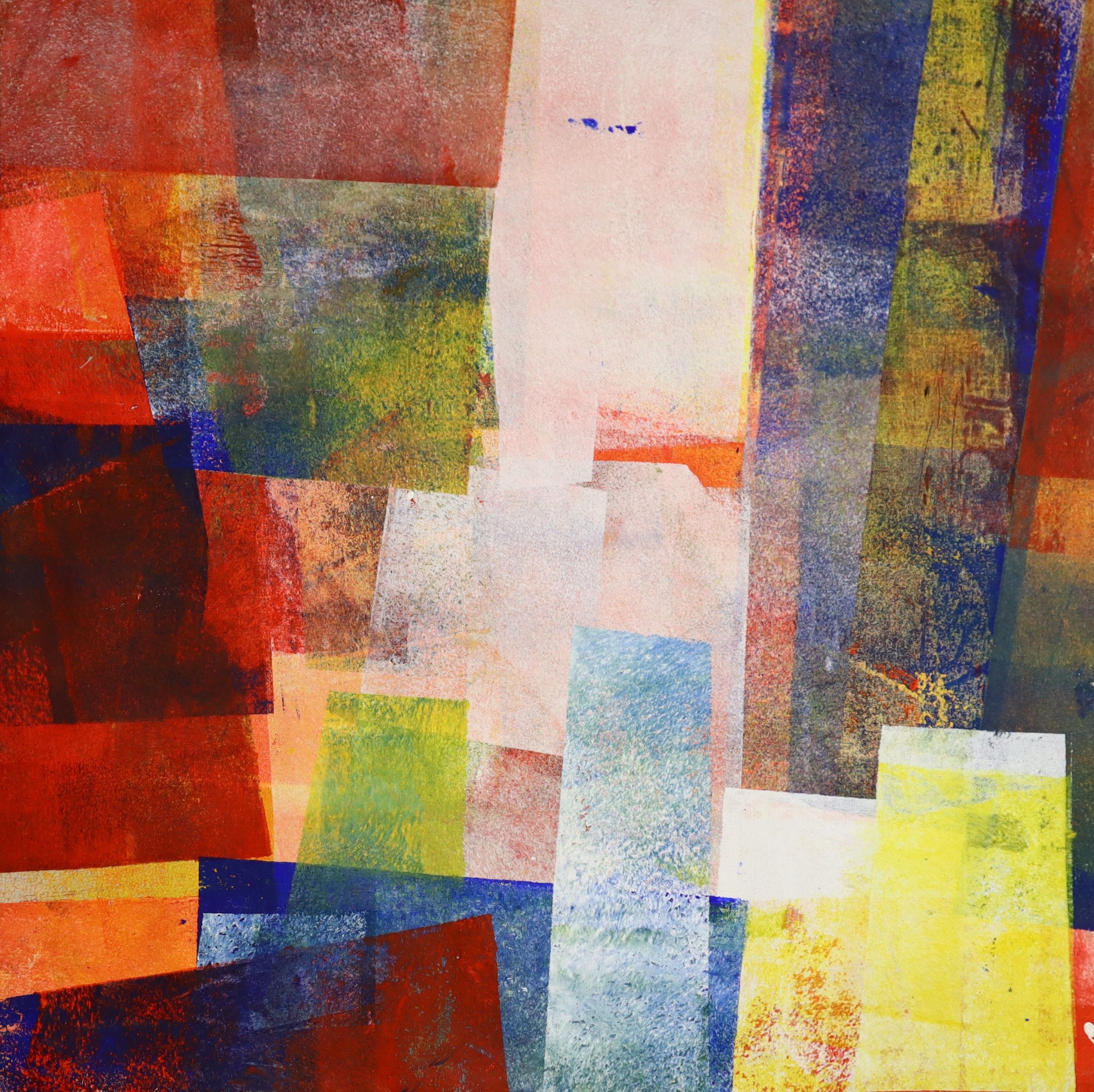
The title will become the probability, the year of execution of the artwork will become the time, the format of the artwork will become the space, by way of the technique that will become the acrylic on canvas using the paint rollers.
Your writings repeatedly return to the ideas of "becoming," probability, and multiple interpretations, suggesting that a painting is never a fixed object but an evolving field of possibilities. How do you translate these philosophical ideas into concrete decisions about composition, colour, rhythm, and spatial structure on the canvas?
The probability in the amount of the varied multiplicity and multi-shaped interpretations shut around the one and only subject: the artwork.
An objective reality takes over the space-time linking to the quantum mechanics as sea of objectivity, standing out for the macrocosm and microcosm, the big mirror and the subjective reality to settle down to space-time soul, the short-lived thinking energy: I dream knowing it is to dream.”
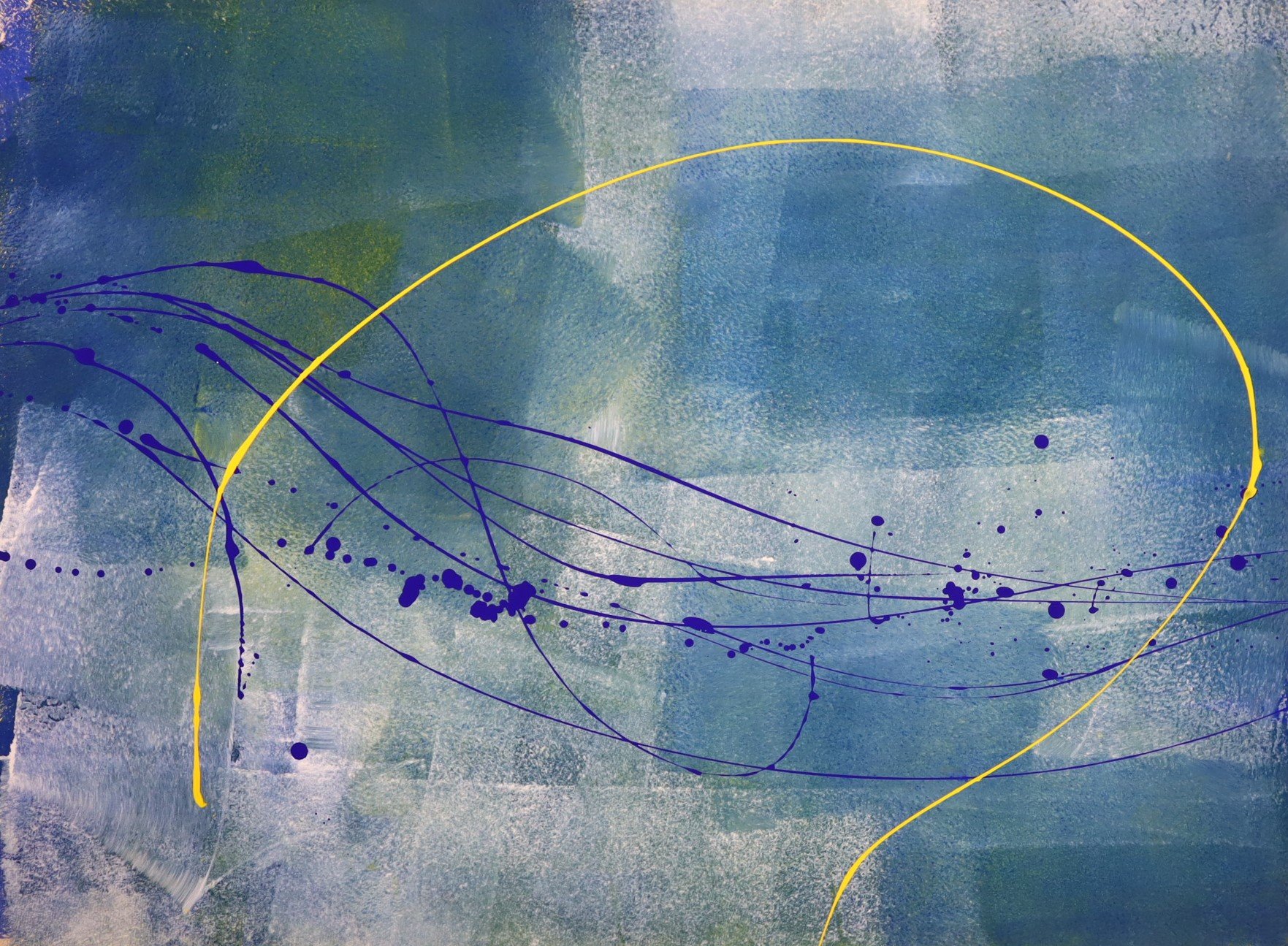
About the meaning, a quantum soul is the subjective reality, the microcosm. Macrocosm and microcosm mix up keeping their distance, each with its own knowing: through the main colours, blue, yellow, red, white and black, space fathomed by the nuances' rhythm on the canvas, to make a mood to fix in time where everyone can find themselves running along a story or a vision in the artwork, as object made alive only by the gazing person.
Travel appears not simply as biography but as methodology in your practice. Having lived and worked in places such as Bologna, Dublin, Hungary, and other countries, how have different cultural environments altered your visual language, and what kinds of discoveries become possible only through displacement?
I like travelling because there is always the possibility to bump into as well as to know new situations, places and people, and to paint one's own art in an unknown place drenched in another space. It gives me new encouragement to take on new roads along the painting, by new landscapes and clipboards to write down, adding new worth to my painting.
Bologna was to me the place of artistic intuition, not only academically but also as an extra-artistic experience, a continuous succession of new ideas and new languages that began to shape my pictorial style: this was the start of my path as an artist.
Dublin was a great cutting-edge source to me, working the matter on the canvas with a different approach to organise the space, by giving me endless possibilities to use the colours; thus, at the same way, it was the Hungarian experience defined both as pictorial and sensorial, indeed there was a chapter about that experience named silence and noises in Magyarország, meanwhile the Dublin experience was named the incessant now of travelling through the time and space.
The new places mean new spaces to understand local living, and to soak up new stories to evoke them in a feeling on the canvas, using the colours giving rhythm to the space shortly fathomed by the observer's gaze.
Of course, I am always happy to receive an invitation to paint anywhere in the world, to involve my painting and myself in the local background.
You describe yourself equally as a painter, poet, traveler, and "life lover," and your publications reveal that writing has accompanied your visual practice for many years. How do poetry and painting inform one another in your work? Are they parallel forms of inquiry, or do they answer questions that the other medium cannot?
I live for my painting, as the one and only knowledge I got to convey what I hear, see, smell and taste of the reality surrounding me daily, and the clipboards turn into thoughts, reflections and poems, reflections of an ongoing becoming towards new horizons, words weaving up on the way by painting a mood in a short instant so that it becomes space and time on the canvas, by way of the subjective living in all of its facets.
You often describe your practice as rethinking the established language of painting while remaining in dialogue with its traditions. How do you approach this balance between innovation and continuity, and what do you hope viewers discover when familiar visual conventions are transformed into something new?
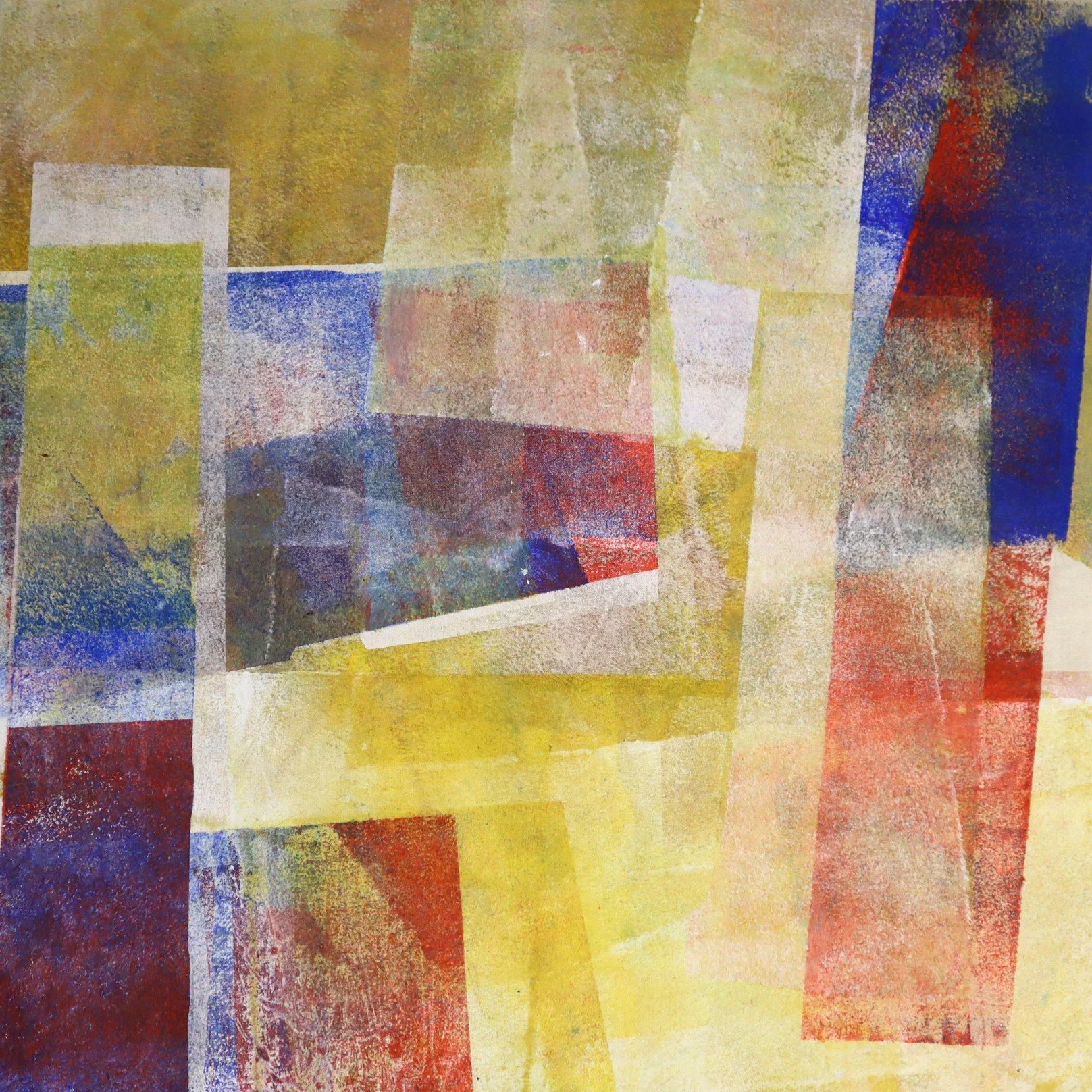
The painting language stays traditional, colours on the canvas, simply a colour-filled space, and here's the artist comes into play to give rhythm an unreleased space-time using the 5 main colours with paint rollers just to make fragments around unreleased spaces as nuanced layers of a single vision, to evoke a feeling lived and thrown into the world with my experiences as painting itself. So giving the artwork a cutting-edge reading through a nebulous reflection of ourselves onto the world.
I can only hope for the viewers to discover new art concepts, and for art itself to keep on going forward on its way, because art is hope to overcome this reality and to cast a new dice, spotting the walking pace along the way.
Your notion of the artwork as "an only body and universe" proposes a remarkably expansive understanding of painting. When you begin a new work, how do you negotiate the relationship between the physical materiality of paint and canvas and the larger philosophical universe you hope the work can contain?
The artwork becomes a new reading-source with one's own intellectual tools, meaning, the simpler the shape, the more complex the reading.
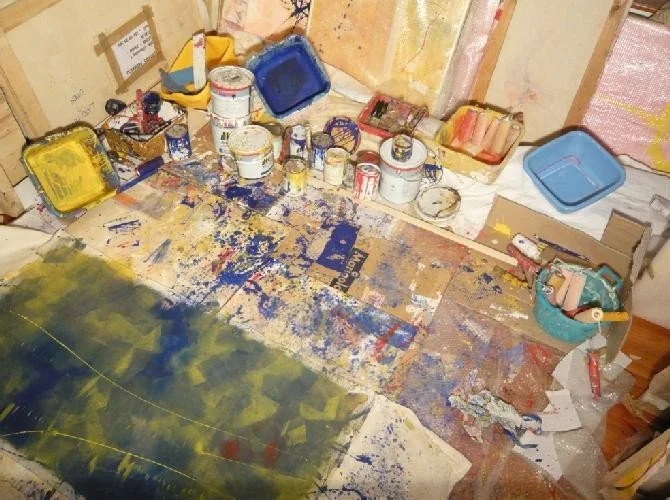
To paint a new artwork, I start putting the five acrylic colours on the canvas by paint rollers, then to weave into more and more other colours and so on, till the first nuances surface up, as it is done, I create the spaces and depths, always keeping in mind the view of world to paint, here springs up the rhythm as a limbo, the space-time, the cosmic universe where the human being is thrown into the world.
A rhythm-and-gesture coloured architecture to create a logical thread around experiences enclosed in the artwork, just to give the observer the possibility of finding out anew something about themselves in that universe woven into matter and energy, fixed up in a single instant across the senses' universe, becoming a unique-fluctuating body within ourselves.
Your work brings together philosophical ideas about time, space, rhythm, and probability with a deeply personal perspective on the world. How do your own experiences and reflections shape these broader ideas, and how do you hope viewers move between the personal and the universal when engaging with your paintings?
Daily life gives you the chance to range over new intuitions that can pass through studying, reading and matter-play intuitions from the real world, as colour nuances on the wall, rusted iron, nature’s colours, synthesizing all of this on the canvas with five colours by way of the subconscious of knowledge incubated in time.
As an artist I place myself as an ignorant world-facing person; one that wants know about new fields, knowledge, curiosity, reading and interpretation of new extra-artistic facts, to expand my painting into the deep art soul, till comparing my experience with the audience. Art means to live reality then to create it anew on the canvas, a probability of soul existence, hoping to shake down a feeling, to live a new idea facing a new aesthetic view in a new artwork user.
The personal and the universal become an only thing on the artwork, starting out in the idea of the human being thrown into the world, and looking at one is just to understand ourselves: I have lived an experience and right now I am returning it to them, it's up to them to choose.
Your career demonstrates a sustained commitment to exhibiting internationally while simultaneously developing an independent theoretical framework outside mainstream artistic movements. How has presenting your work to audiences across different countries challenged or refined your understanding of quantum painting?
Exhibiting internationally gives you the chance to relate to other artists and audience too, ending up with a result of curiosity regarding about the shiny colours technique and the harmony over the artwork, as well as the quantum-themed painting in contemporary art, invested with the overflow of new views of the modern world by bringing me to face the fact that the subject of my painting is not never got fully into the core of its topic, so that signs become vectors as a set of pictorial language.
Many artists formulate a theory only after their visual language has matured, yet in your practice theory and painting appear to develop simultaneously. Does the concept lead the painting, or do the paintings continually revise the theory? Can you describe a moment when a finished work fundamentally changed your own thinking?
All came into being from my need to draw on a theory, or better, a set of clipboards on what I was doing for an overview on my own painting, as research memorandum during 2014: my own painting style breakthrough year.
The artwork that set the new tone was The Senses' Universe, a new stylistic approach to work on the acrylic matter on the canvas, by layered intervals, by way of sheets to giving depth to the space into the nuances and volumes’ rhythm. Here 's the painting in continuous becoming influencing the theory a second time around as reflection.
The best artwork will be the next one, creating one further level up, to ever refine and develop the aesthetic level, ending up with the theoretical one.
When the artwork is finished, observing it new clipboards may come up, later to turn into thoughts in further becoming, because - as I have already said – it regards a pictorial research in becoming.
Looking ahead, you have written that your goal is to continue enriching your palette through new colors, new communication channels, and new places of thought. As quantum painting continues to develop, what questions remain unresolved for you, and what directions do you hope this lifelong research will take over the next decade?
To paint is to live one's own life, which brings one to ask themselves questions seeking answers which will never run out, to search around other aesthetic outlets coming out in the painting, as new colour plays, new links between the emptiness and fullness on the canvas, and the research's direction is to gather up painting and theory blossoming up into Ulysses’ cycle (from Homer), all of that will be the subject of the next painting cycle, ending with up an account of new impulses to the theory on the quantum painting of the human being thrown into the world, in so far as a quantum-sized probability of existence of one’s destiny in a bite-sized universe.