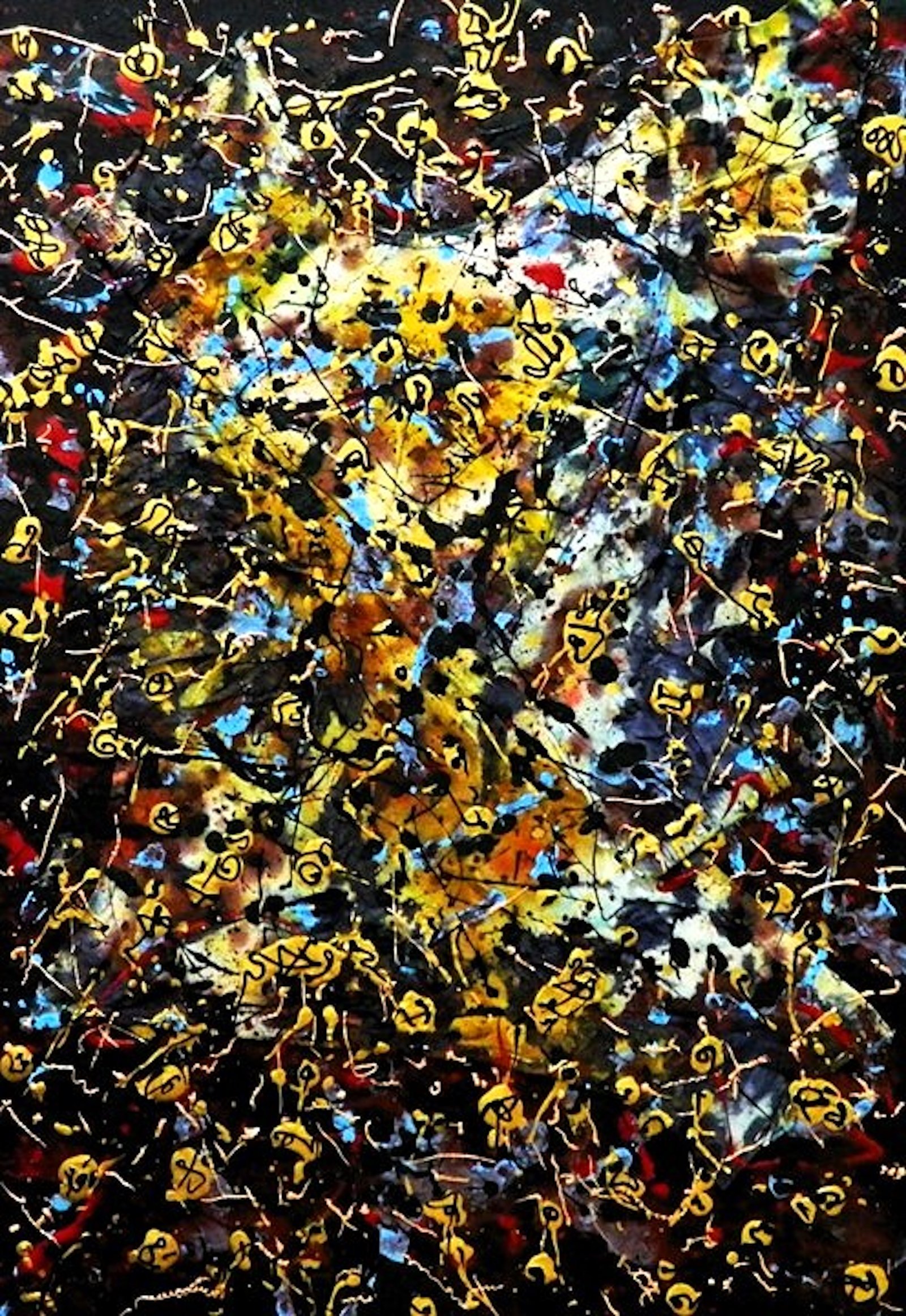
When, without knowing quite when or how, you move from making images to gathering memories, hope can still go on existing somewhere—as it does in Nâzım Hikmet’s lines:
“You will take living so seriously
that even at seventy, say, you will plant olive trees—
and not because you expect them to be left to your children…”
Perhaps, at times, your interest in art can be your own olive tree.
You began painting in 2006 after establishing much of your life outside the professional art world. Looking back, how has beginning your artistic career at that stage influenced the way you approach painting, creativity, and your sense of purpose as an artist?
What follows is not offered as a definitive account of art, or of painting in particular. There are many extraordinary artists—past, present and future—and countless experts in art and its various fields. This is a personal sharing of experience, offered with profound and heartfelt respect for them. Since these subjective reflections may contain as many errors as truths—perhaps more—it may be best to read them as a brief, open-to-criticism story of an inward journey.
When you decide to paint as a hobby in retirement, as a pleasant-looking way to keep busy, you cannot know that it will become a long artistic journey. When your professional life comes to an end, perhaps under the influence of desires that never had their chance, the child inside you—quietly waiting in a corner for its own time—may emerge, calm and silent, yet full of joy and excitement. During this journey, and especially while painting, you can walk hand in hand with this child, whose presence may have gone largely unnoticed by the outside world, and spend happy hours together.
You need not take account of norms, formats, boundaries or the outside world. You can do whatever comes from within, in whatever way it comes. In short, while you paint, your whole self is present: the child, the excitement and the exuberance of feeling are brought into the room in all their innocence, while your experienced side draws on an established view of the world to manage the philosophical and technical dimensions of the subject—and, as far as it can, the craft.
Moving from looking at painting to making it is like the difference between “knowing what water is and stepping into it”.
One day, you finish a book called How to Paint in Oils, and arrive at your teacher’s studio feeling confident. Then your teacher (Hızır Teppeev) kindly places a pencil in your hand and asks you to draw the composition prepared in a corner for you onto a 40 × 60 cm canvas on an easel. “Draw!” He says. For the first ten or fifteen minutes, you may find yourself wavering between slipping out through the half-open door beside you and figuring out how to begin.
Perhaps you cannot bring yourself to walk away, to have given up before you have even started, and then carry that burden for the rest of your life. So, the pencil begins, laying down the first pebble on the path. What follows feels like a piece of knitting, stitch by stitch, slowly taking shape. Sometimes you follow old traces; when you lose your way, you can consult your inner compass.
By the time you reach your fifties, you may have acquired knowledge and experience across many different fields. At the beginning, perhaps because the distinction between ego and self is not yet clear, your ego also wants to succeed in this unfamiliar field. Over time, you come to realize that the measures of success in painting occupy a very grey area. What is success? The number of sales? Popularity and clicks on social media? Acceptance into important galleries and museums? Fame? Or some combination of all of these?
Perhaps it is because you have been relatively unsuccessful by some of these measures that you begin to see “success” as a questionable point of reference. You find yourself facing a complex world in which marketing, advertising and public relations are intertwined—or made to seem intertwined—with the making of art.
This may lead you away from success and towards a search for value, and towards the deeper questions: What is art? What determines the value of a work of art? Whether or not the conclusions are right, wrong, real or idealized, you may come to feel that the search for truth is what matters. In that sense, seeking truth can become a form of honesty, and sincerity can follow from honesty.
Your research into “What is art?” may begin with a substantial book that starts at the very beginning, at art’s ABC. It touches on almost every subject related to art, yet you find that it does not answer—or cannot answer—the central question. As you continue, you may notice a broad agreement that “art is a process of creation”, alongside grey areas and gaps in almost every other aspect of the discussion.
You may encounter a spectrum between two extremes: the viewer who says, “Is this art? I could do that!” and the artist who says, “Whatever I do is art!” The first can be met with a relatively simple response: “Then go ahead and do it.” The second is not so easily answered.
Many of the parameters are institutionalized, yet still contested. There may be broad agreement about what is and is not considered art, but the criteria are not definitive—and may not be enough to resolve the question. Perhaps this uncertainty also arises from painting’s rhizomatic, non-hierarchical and multi-layered nature, and from the way it changes over time. You may come to accept the uncertainty inwardly, yet the questions continue.
The expertise and criticism of people with a deep literacy in art are indispensable when considering whether a painting is art. At the same time, the influence of other decision-makers—and their power to shape perception—cannot be ignored. Nor can we forget that many avant-garde artists (without considering yourself as avant-garde) struggled to be accepted in their own time, and that their true value was often recognized only after they had died. From this perspective, it may seem reasonable to conclude that time itself could be the most important member of the jury.
You may realize that acceptance, both in the short and long term, matters to the reception of your work. Yet the forces that shape it often develop beyond your control. Eventually, you may set aside the problem of artistic value—not because you have resolved it, but because it is difficult, perhaps impossible, to resolve.
Looking back at the history of painting, which is generally understood to have begun with cave paintings, you may notice how art itself and the perception of art have become entangled. The discussion of artistic work can sometimes proceed through its reception rather than through the work itself. Craft and art may be confused. Art may be said to be “brought to the people” while being turned into a consumer commodity, and in the process made shallower through forms of mass production. Under the terminology of “Art Industry,” original and singular works may be overshadowed by the suggestion of an industrial mode of production. The popularity of creating difference through the use of unusual materials can also give rise to illusions of art. The issues overlap, and the whole subject grows increasingly complex.
You might think of the automatic sieves used in quarries and orchards to sort products by size. But a sieve for painting would have to sort not by size, but by value; on that basis, the analogy does not seem especially useful.
Though, these reflections may sound pessimistic, the pleasure and value of making art are more than enough to cover them with a cloud of optimism. You can set aside success, the value of your work and similar measures, and continue—with delight—on your inward journey, a process of making that involves trial and error and sustained effort. And every now and then, if you look carefully, a desire to leave a trace in the future may glimmer in one corner of that nonexistent sieve.
When you begin painting at this age—in your fifties—you are, in a sense, not yet shaped or formatted in technical terms. That can mean freedom: a creative capacity without limits, or at least a refusal to impose limits on it. At the same time, your general outlook on the world, your understanding and your approach to yourself are already broadly formed. You may be glad to discover that painting can give you a way to reflect that outlook.
Yet, if you have not studied a subject—in this case, painting and art more broadly—academically or systematically, you may feel gaps in your knowledge, skill and craft, much as you might when learning a foreign language. There may be empty cells in the honeycomb, places where the bee has not yet filled the comb with honey. Even matters that seem simple can expose gaps. You try to bridge them by gathering information, training yourself and, above all, learning through trial and error.
The child within you takes care of creativity. As you gain experience, your capacity to observe and your creativity grow. As your creativity grows, so does the richness of what you can make. While working, you learn not to confuse thought with intuition: sometimes you proceed through thought and understanding, sometimes through intuition; at other times, you put on the glasses of technique and craft.
Guided by your motto, “Art comes from life and is for life,” your life’s purpose and your artistic purpose may run in parallel. When you first begin painting, one of the first things you learn in the studio, alongside basic techniques, may be to respect your brushes. Over time, that attitude can grow into a respect for everything and everyone, living or inanimate—and, above all, for life, nature and art. Given the many well-known problems in the world, both large and small, your purpose in art may take shape around a general commitment to “doing good, or contributing to goodness, on a foundation of love and respect.”
Your artist statement describes life as "an illusion" and art as "a higher level of illusion" capable of expanding consciousness. Could you elaborate on what you mean by this philosophical distinction, and how you seek to translate such abstract ideas into the visual language of painting?
Illusion, in brief, means “a misperception.” It may not sound especially pleasant, but the beauty of life and the vitality of living sit alongside the fact that life ends in death. Even if you love life and see death as a natural continuation of the process of living, you may choose the word illusion because you have not found a better term for this dilemma. Paradox, perhaps? But that word carries its own negative associations.
When it comes to art, the concept of illusion changes in content, while also drawing closer to its dictionary meaning. First, however, it is important to distinguish optical illusion as an art form from the illusion of art itself. Life—our arrival in it and our departure from it—unfolds according to its own codes. In artistic production, by contrast, human intelligence, knowledge, culture—in short, consciousness—also enters the process. This makes it possible to contribute something that goes beyond what is already coded.
At first, you may want to choose a subject or work within a broad theme. Later, you may come to understand that a painting has a path of its own, and that sometimes, even years later, it continues along that path through you. By then, you no longer begin a painting by deciding in advance what you want to put into it. You make the painting, and afterwards ask what it has to say.
The process may even work in reverse: you make the painting first, then dress it, so to speak, in your own interpretation. Naturally, the interpretive garment you make for each painting has a different cut and fit. Some fit perfectly; others sit awkwardly.
Especially with abstract painting, the effect of pareidolia—along with your own way of seeing, the effect of light and other factors—can lead to perceptions that differ from the painting’s physical reality. When you engage with a painting through your senses and feelings, you may also encounter different kinds of triggers and a mirror effect. It is not quite like looking directly into a mirror. What is stirred in you, what you feel—and perhaps, in a more mysterious way, the private inner dialogues shaped by your desires, unheard and unknown to anyone else—may form the mirror’s silvered backing.
Perhaps this is where the illusion of art lies: in the variability of what a work triggers, makes us think, makes us feel, and leads us to perceive.
The subject of consciousness can take you into more complicated territory. We can observe that all living systems and creatures have, in their own ways, an awareness connected with the impulse to continue their existence. Human beings seem to be the only living species able to become aware of their own awareness. Of course, the degree of awareness among people also varies under the influence of many natural, sociological, psychological, economic and other factors.
Awareness may be the foundation of consciousness, but it may not be enough, on its own, to explain consciousness. We may also need to speak of the capacity to grasp meaning. Meaning points towards knowledge; understanding, towards intelligence; and, more broadly, towards the mind. Here, too, your way of thinking comes into play: open or closed thought, orthodoxy or heterodoxy; your mode of perception and logic; where you stand on the spectrum between rationality and dogmatism; and the way you approach subjects—subjectively or objectively, communicatively or reactively, conciliatorily or confrontationally.
Painting stands at a crossroads of looking and perception—not alone, of course, but in part because it can express meaning and feeling on a single surface. Its vulnerability may lie in whether the viewer wishes to engage with it at all, and in the limited access created by the singularity of each work. Photographs, prints and digital versions make the image more widely available, but they may not create the same effect as the original painting, with its distinctive texture of energy and its way of communicating. We may also need to distinguish between a painting’s artistic qualities and the way it is perceived as art, particularly when that perception is shaped by the management of public response.
Ideas and opinions, too, may not always be transmitted directly. At times, we might speak instead of a process of becoming that arises from the painting’s own structural dynamics. A painting may convey a story, but there may also be stories within the painting itself.
The concept of "Constructive Freedom" lies at the heart of your practice, positioned as a response to the destructive forces you perceive in the contemporary world. How do your formal decisions - color, texture, composition, and material - embody this philosophy rather than merely illustrate it?
The vitality of freedom—and the ways it may be practiced and bounded, which remain open to debate—can lead you to argue that approaches that harm, destroy, burn or lay waste cannot be considered expressions of freedom. You may want to clarify the practice of freedom by proposing a concept: Constructive Freedom.
When freedom takes form in painting—when we consider the question of energy—what matters may be the state of mind in which you work. Whatever is passing through your mind, are you working with positive, elevated energy, with kindness and exhilaration, or in the opposite state? The artist’s mood, if you like, may be reflected in the “spirit” of the painting, even though the two terms do not mean the same thing. It can feel as though the work stores this energy for a time, and releases it again when it is exhibited or when someone engages with it. At this stage, unfortunately, I do not see how I could prove this scientifically, given the resources available to me.
It is also a matter of curiosity whether the transmission or carrying of this shifting energy can help share a positive effect—like the birth of a child, the birth of an animal, or a seed beginning to sprout—or lead to other forms of positive expansion. The reason for all this work and effort, its underlying purpose, is the desire to contribute, in some measure, to life and to all living beings on the basis of “constructive freedom.”
Alongside the limiting effects of external conditions, we can speak of inner freedom, both for the artist and the viewer, and of the limits we impose—or create—for ourselves.
Carpe diem means “seize the day,” a familiar Latin expression. Easy to say, perhaps, but not always easy to practice. The past may try to pull us back through mistakes we cannot change and experiences we have lived; the future may create groundless anxiety through its unknown possibilities.
When you encounter works from the Carpe Diem series, they may remind you to savor the present. If you are not “in the moment,” or if you want to experience it more fully, perhaps they can whisper: “Come into this moment.” In that sense, they may be understood as an invitation to inner freedom. The subject itself may not be freedom, yet the work may have a liberating effect. When it comes to “constructive freedom,” perhaps the decisive factor is not where you are going, but how you are getting there.
Your paintings combine oil, acrylic, and enamel on both canvas and cardboard, often resulting in richly textured surfaces. What role does experimentation with materials play in your search for what you describe as the "harmony of means and ends," and how do technical discoveries influence conceptual development?
Every change in technique, style or material can take you to a new beginning. The experiences you gain in unfamiliar areas may take time and demand extra effort at first, but they can enrich your work and, indirectly, make the next work easier. You move forward one step at a time, patiently—like a house-built brick by brick, or a plant growing from seed towards fruit.
Each new material requires a period of learning, but it also keeps your desire to create—and therefore your soul—alive. Sometimes a change in material brings a change in style and language; sometimes the change also brings its own concept.
It was during the Covid period. I came across a video showing how to make a hand cast using alginate, a material used in dentistry. I tried it first with my hands. Then I wondered whether it might also be used for a face cast.
I prepared the alginate mixture in a container wide enough for my face and submerged my face in it, up to my ears. The mixture needed at least three or four minutes to set and become ready for the mold. As I approached the end of second minute, I needed to breathe, and tried to lift my face slightly to take a quick breath. The alginate filled my mouth, but within seconds I realized it had not gone down my throat. I overcame the feeling of suffocation and kept my face in the mixture.
Afterwards, I made a plaster cast. I filled the gap between it and a second layer of cling film with epoxy, and a mask of suffocation emerged. In the final stages, I filled the mask with polyurethane, attached it to a pre-painted plywood board and completed the work with distressed paint. The harmony came from carrying the reality of suffocation into the work through a technique I could not have achieved in another way. The fact that this coincided with a period when Covid was having a profound impact on individuals and societies also gave the work a stronger symbolic charge. Later, I solved the breathing problem using a straw and made a series of masks using similar techniques.
Important note: For your own health and safety, I do not recommend trying this technique in any way. Please do not attempt it.
Another example: my mother gave me some plastic beads she no longer used, saying, “You can use these, son.” Sometime later, I decided to put them to use, and Bead Gamer emerged—not quite the same as described in Hermann Hesse’s book “The Glass Bead Game”. Later, while buying art supplies, I discovered that there was a paint specifically for beads. I began using it too, opening up new possibilities for texture and dot-based work. Before long, a different style had entered the picture.
Some of the works are multi-layered in the way they are perceived. The more closely you attend to them, the more they may reveal. After I began using bead paint, the combination of acrylic and bead paint, laid down in separate layers, gave the work two distinct layers from the outset. What you perceive can shift according to the layer on which you focus.
At another time, I found a branch on the shore, weathered by the sea, and began collecting similar materials. Later, I discovered that driftwood is an art form in its own right. The discovery brought a new excitement and a different kind of naturalness.
You speak of intuition as the doorway through which your work emerges, yet your paintings also suggest deliberate compositional structure. How do intuition and conscious decision-making interact during your creative process, and at what point do you recognize that a work has reached completion?
The entire process unfolds within a flow that develops over time, through patience and experience, and with a certain degree of awareness. By its nature, that flow is continuous and whole, though there are naturally pauses and interruptions along the way. Intuition and technique move like companions on the same road: one after the other, connected, neither bringing the journey to a halt. Or you might think of them as different doors opening onto the same garden.
While you work, intuition takes the lead. If the doors to your inner voice are open, intuition may bring new experiences into the process; your existing experience, in turn, may give the flow of intuition a different direction. One of the main things is not to interfere with intuition’s flow when inspiration arrives—not until it has completed its own phase, after the initial steps, such as the surface color and the first layers of paint, are in place.
As the process continues, you step back as often as you can to look closely and from a distance: from afar, to assess the overall appearance; up close, often to examine texture and the interaction of colors. You pay attention to technique and the demands of the hand. Emotionally, it can feel as though you are moving into a small world of fantasy, or entering a kind of trance in which the emotional and mechanical aspects of the work come together harmoniously. When intuition and technique proceed in this way—not interfering with or obstructing each other, but strengthening one another—relatively better works may emerge.
Knowing When a Work Is Finished: In 2006, Hızır, my painting teacher, disliked one of my works and promptly washed it down partly, so to speak, with the appropriate material. Then he kindly handed me a brush and told me to choose colors from the palette and paint as I wished.
I made brushstroke after brushstroke on the canvas, until I reached a point where a voice from outside seemed to speak to me from within, on behalf of the painting. It said: “I’m finished. No more strokes!” I silently answered in my mind: “I’ll make that decision—not you!” And I made one last stroke.
When Hızır returned, he pointed to that final stroke and said, “Apart from this one, the others are very good.”
I have to admit that the experience sent a shiver through me. It also took me some time to get used to it.
From that day on, whenever I felt a work was finished, I stopped. Until I learned how to stop, there were more than a few occasions when the whole work was unintentionally spoiled—even by very small details.
In an interview in 2024, I said, in essence: “Perhaps the crucial point is the silent inner dialogue you establish with the work, or with whatever—or whoever—lies behind its emergence. Above all, the idea of being in contact with external energies feels to me like a wonderful form of communication…”
After I said this, something strange happened. The external voices and energies grew very faint, and became difficult to hear. It was as though they had withdrawn. Perhaps I should never have spoken about them; at the time, I did not know that different worlds might have their own rules. Or perhaps they had completed their mission. I don’t know.
Over the past two years, I have continued working mostly with the experience I have gained myself. But with my latest work, I reached an impasse—or perhaps I was left in a kind of limbo. The painting looked finished, yet it was clearly not finished. In the past, I would have tried different materials and techniques on the same painting and continued until it was done. This time, I could not bring myself to do that. The aesthetic balance felt right, and I could not risk working over it, especially because I knew I might never be able to recreate it.
So, I put the work aside and left it to time. A week or ten days later, while trying out a different color, I had the feeling that it might work well over black. That was how I completed the painting I had been unable to finish. Sometimes, leaving a problem to time allows its own solution to emerge.
Your statement suggests that each finished artwork becomes an independent entity with its own relationship to the viewer. How has this belief changed the way you think about authorship, interpretation, and your own role once a painting leaves the studio?
At first, you may think that the painting is entirely under your control, and that it will remain so until it is finished. But as you work, you may find that you have run out of paint, accidentally spilled some onto the canvas, or discovered that a cat or snail has wandered across the wet surface during the night. Incidents like these can change the direction the painting takes. As they accumulate, they may lead you to think that the painting has—or may have—a path of its own. Once it is finished, with its energy, vibrations, frequencies, layers and stories, the painting acquires an identity of its own.
You may also come to realise that art gives you the opportunity to touch the lives of people you have never met, and who have never met you—if they choose to engage with your work. This can be a profound, personal and motivating feeling in itself.
First and foremost, you need to feel satisfied with what you have made. Once the work leaves the studio, the arrow has left the bow: the opportunity to revise or change the work is gone. This understanding deepens your sense of responsibility towards the viewer.
Sometimes friends or viewers ask: “What are you saying here? What did you want to express?” You may offer some interpretations, but ultimately you can also say that it depends on the communication between them and the work. As a more general truth, you cannot be present with every painting to explain it; the question inevitably comes back to direct communication between the viewer and the painting. If a work has a particular story behind it, I try to put that story into words seperately.
Your restored 1926 house in Edremit functions not only as a workspace but also as an environment with its own history and atmosphere. How has working within this particular place influenced your artistic practice, and what dialogue exists between the physical space of the atelier and the inner landscapes you explore in your paintings?
We are talking about a peaceful house, a hundred years old this year, where you can be alone with yourself. It has a tiny garden, and a grapevine in the back. The moment you enter, you can feel the positive, elevated energy that surrounds you. Visitors often say the same.
Like a “microclimate,” the house seems to have the feel of an “ecological art environment.” Though it is in the city center, it is very quiet. That quiet allows you to be alone with yourself. The house’s overall structure resembles the homes where you spent your childhood, allowing the child within you to wander freely and sometimes to play. At times, simply looking up at the ceiling can stir different feelings and make it possible to express them. You do not have to worry about splashing paint here or staining something there; you can work freely, physically as well as inwardly.
The subject keeps returning to the freedom to work. I believe the energy and freedom of this environment make an important, if indirect, contribution to the work.
Note: For the past few years, practical constraints on time and space at the studio have meant that I now work at home.
References to the "quantum era," vibration, and energy transfer introduce scientific language into what is otherwise a deeply intuitive and philosophical practice. What attracts you to these concepts, and how do you navigate the relationship between metaphor, spirituality, and scientific thought in your work?
I do not know what first drew me to these concepts. One of the difficult aspects of knowledge—perhaps the most difficult—is that the unknown may be unknowable. It can be fascinating to discover that the more you learn, you realize the less you know. So, it may matter, in itself, what you look at, where you look from, how and why you look, and which hat or pair of glasses you are wearing.
One reason for this attraction may be curiosity, perhaps even curiosity with genetic roots. There are also claims that it can make you happy to find a parallel between the reason you came into the world and the way you live. But knowing why you came into the world is a difficult matter in itself. Perhaps, if you are happy in your life, you can reason backwards and conclude that you are living in keeping with your purpose.
We can approach the relationship between metaphor, spirituality and scientific thought through the image of railway tracks and a train. One track is reason; the other is science. At this point, your general approach to life may become either problem-making or problem-solving. Do you approach subjects inductively or deductively? Or do you use both, depending on the subject? Are you exclusionary or inclusive? If you are exclusionary, it is natural to find it difficult to move between fields.
Are you narrow-minded or broad-minded? Do you see things rigidly or flexibly? Do you use a single logic or multiple logics—Aristotelian, dialectical, fuzzy, paradoxical? And can you choose which one to use, and when? Many questions could be asked. If you are rational, broad-minded, flexible and open to new ideas, the flow may come more easily.
You can also think of metaphor, spirituality and scientific thought as separate compartments in a train whose locomotive is energy. You can keep them in their own compartments and take care when moving between them. They travel on the same train; sometimes, when they meet in the corridors or the bistro, they may have rich and enjoyable conversations.
Although your paintings aspire to communicate universal ideas about consciousness and humanity, your biography also emphasizes your connection to your Turkish heritage and environment. How do these local cultural experiences inform a practice that seeks to address such expansive, universal questions?
Belonging can, in itself, offer the possibility of putting down roots. Rootedness can point to a sense of settlement that nourishes you, and indirectly to sense of security. What may matter is not belonging in relation to other people—or even other beings—but approaching the idea through a broader paradigm, and considering the consequences of doing so.
For myself: “I built a world in my heart filled with love for everyone and everything” (2020).
If you live at a cultural crossroads, or along the routes between cultures, you may have the opportunity to encounter and learn about different cultures, and sometimes to make them part of yourself. This can be a significant source of richness and a kind of good fortune.
The way local culture nourishes universal practice can also be considered through the resemblance between micro-worlds and macro-worlds, or the reverse.
Today, everyone uses nappies for babies. But imagine that fifty or sixty years ago in Anatolia, sifted, warmed earth—höllük—was placed beneath babies and used to swaddle them.
As one of the babies wrapped in höllük, you may have had a direct connection with the earth, and this practice may have warmed you in infancy. You can bring that memory onto a canvas using earth or powdered material and acrylic binder, techniques you learned from Özdemir Yemenicioğlu. Your own memory may be personal, but the memory of being an infant warmed by the earth may have a universal quality.
From another angle, independently of the local, if you have developed an intentional abstraction and an objective way of seeing, themes may connect and gather into clusters. They may involve alienation, other problems in the world, or the relationship between geometry and life.
Looking back from your beginnings in Hızır Teppeev's atelier to your recent recognition within contemporary art circles, what do you see as the most significant evolution in your artistic language, and which questions or directions do you feel remain unresolved as you continue developing your practice?
To be honest, I had never really thought about the question of artistic language—what my own artistic language might be. Now that you have asked, I can look back and observe certain areas of change, even if they have not been marked by sharp breaks.
The grammar of the work seems to include its changing appearance under different light; its mystery; its focused or multi-centered, sometimes centerless and radiating quality; its layers and depth; and the use of contrasting colors that sometimes, in places, come together.
Beneath that, there seems to be a ground of vibrating, dynamic communication. We might suppose that, especially in the 2020s, the use of multiple materials and different paints—oil, powdered paint, acrylic, spray paint, bead paint, powdered earth and more—has made it easier to express what you want to express.
In terms of the transmission of energy, there is a personal energy-world working on its own scale, taking concrete form through the works. More important, perhaps, is the language of the person receiving that communication: whether the viewer speaks your language, or uses it at all. The communication seems to arise less from the language used than from an exchange of energy.
There are a few things I pay particular attention to. One is not repeating myself. Repeating yourself, in one way or another, may suggest that your creativity has become static. The desire not to repeat yourself leads you towards new searches. First, I try to work in series, and to complete a series within a particular area. Working in a series gives you the chance to develop the technical experience you have gained within that area, and then to use it in others.
As for what remains unresolved: in general, when I look at figurative work, I cannot say that I feel entirely adequate beside those very accomplished artists whose craft has become second nature, whose hands have reached what might be called full memory. Of course, I can make figurative work if I apply myself. I am now thinking of trying pastel. I imagine it may be easier to control, but since I have not worked with it, I cannot really say.
After learning pastel, I hope to bring figurative and abstract approaches together with real materials. I had kept some of the fur of my dear friend—my dog, whom I lost last year and miss deeply. I am thinking of making the first work in this combination in her memory. We will see what life brings.
With love.
Kenan K. (Koçak)
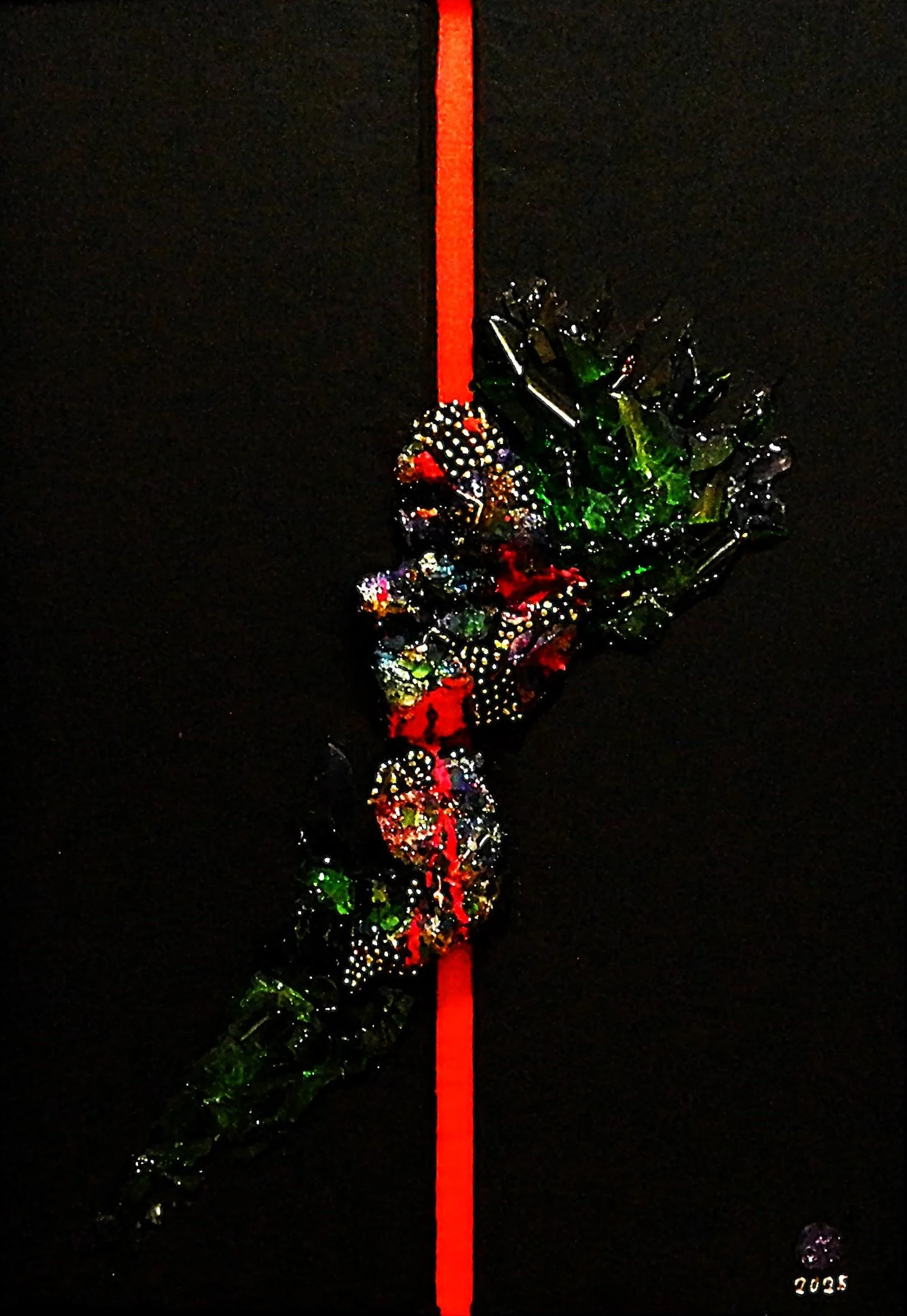
Carpe Diem II, Mixed media on wood board, 41x60 cm, 2025
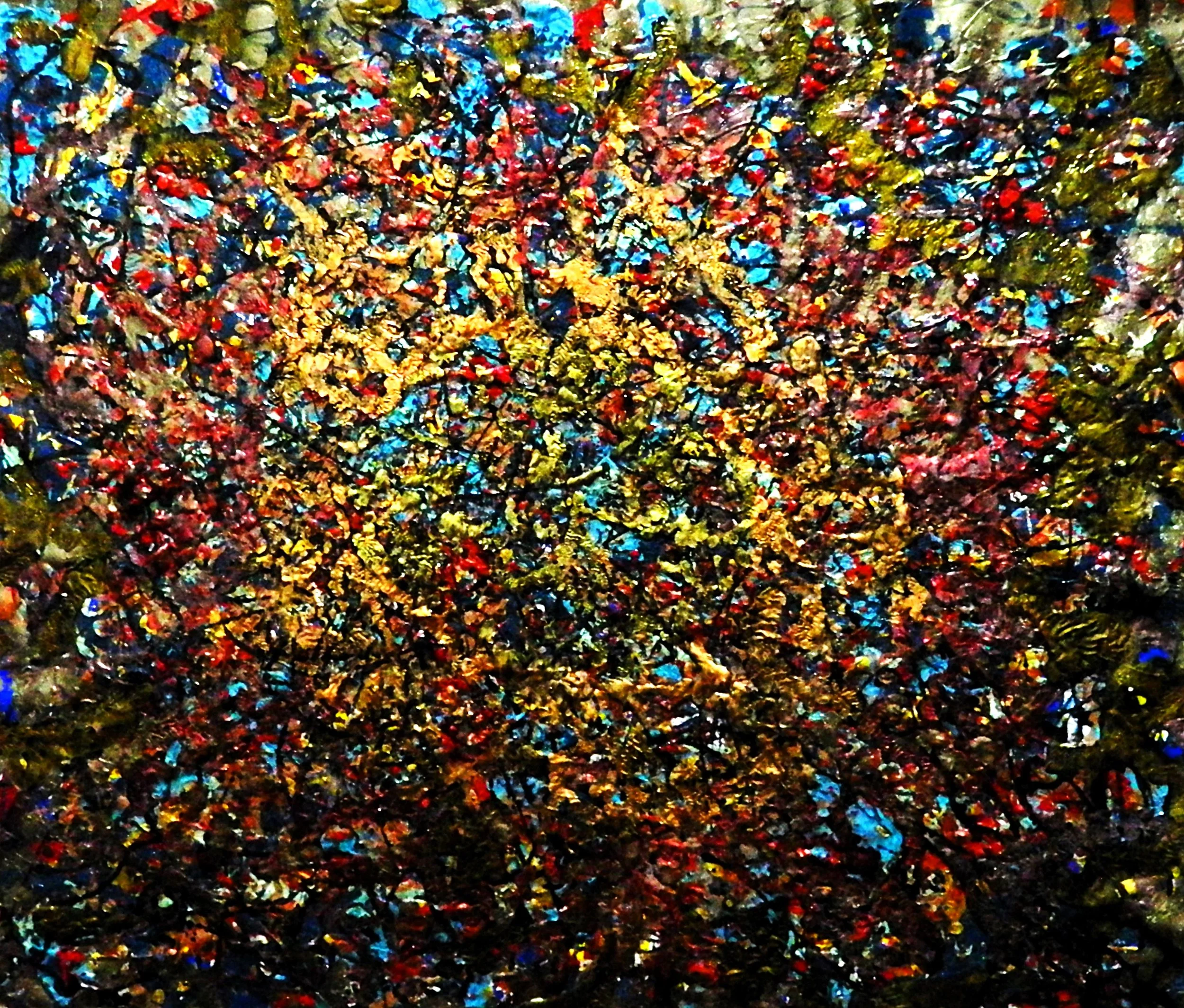
Hope Forest, Mixed media on canvas, 85x70 cm, 2025
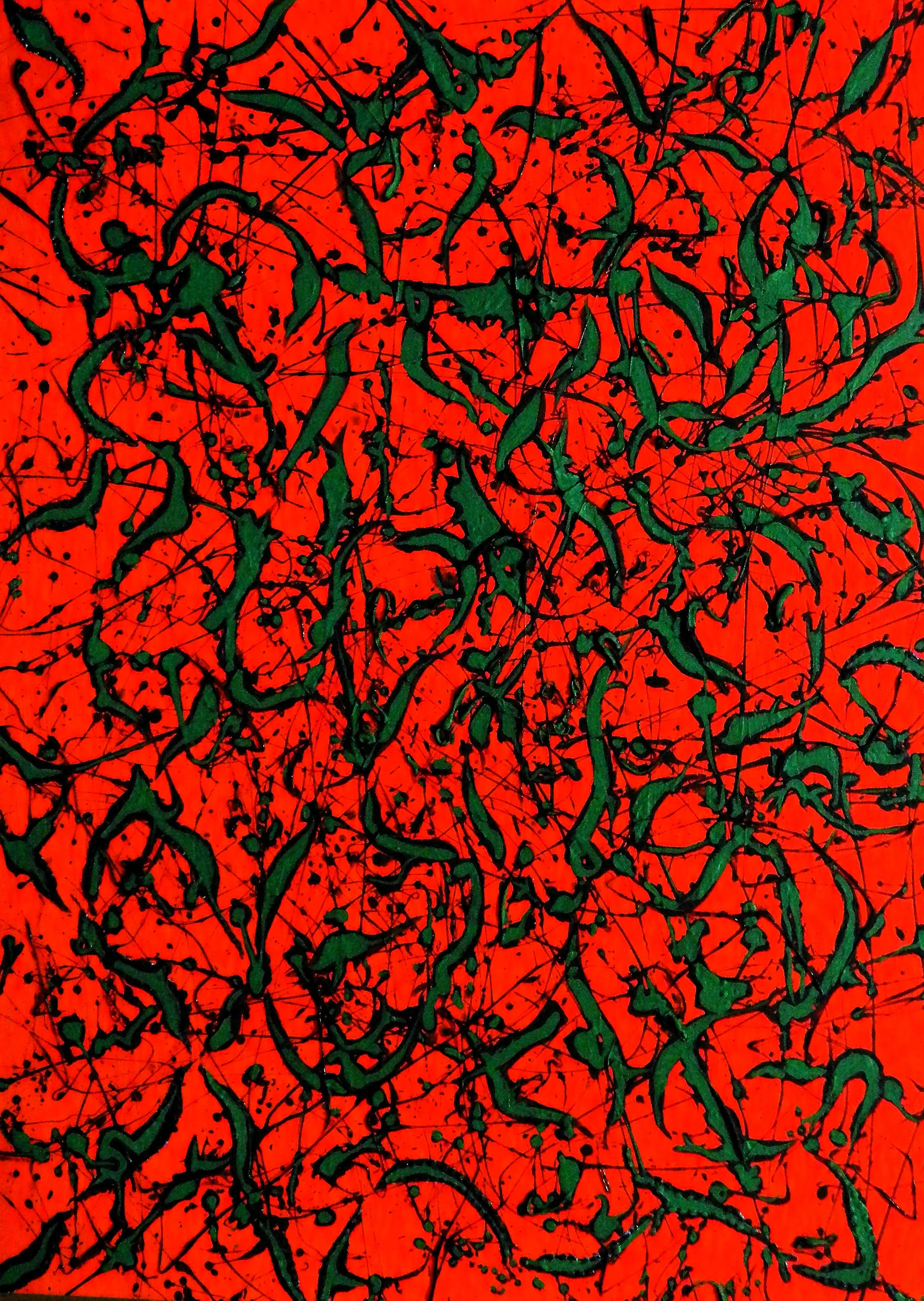
Network, Mixed media on plywood, 50x70 cm, 2026
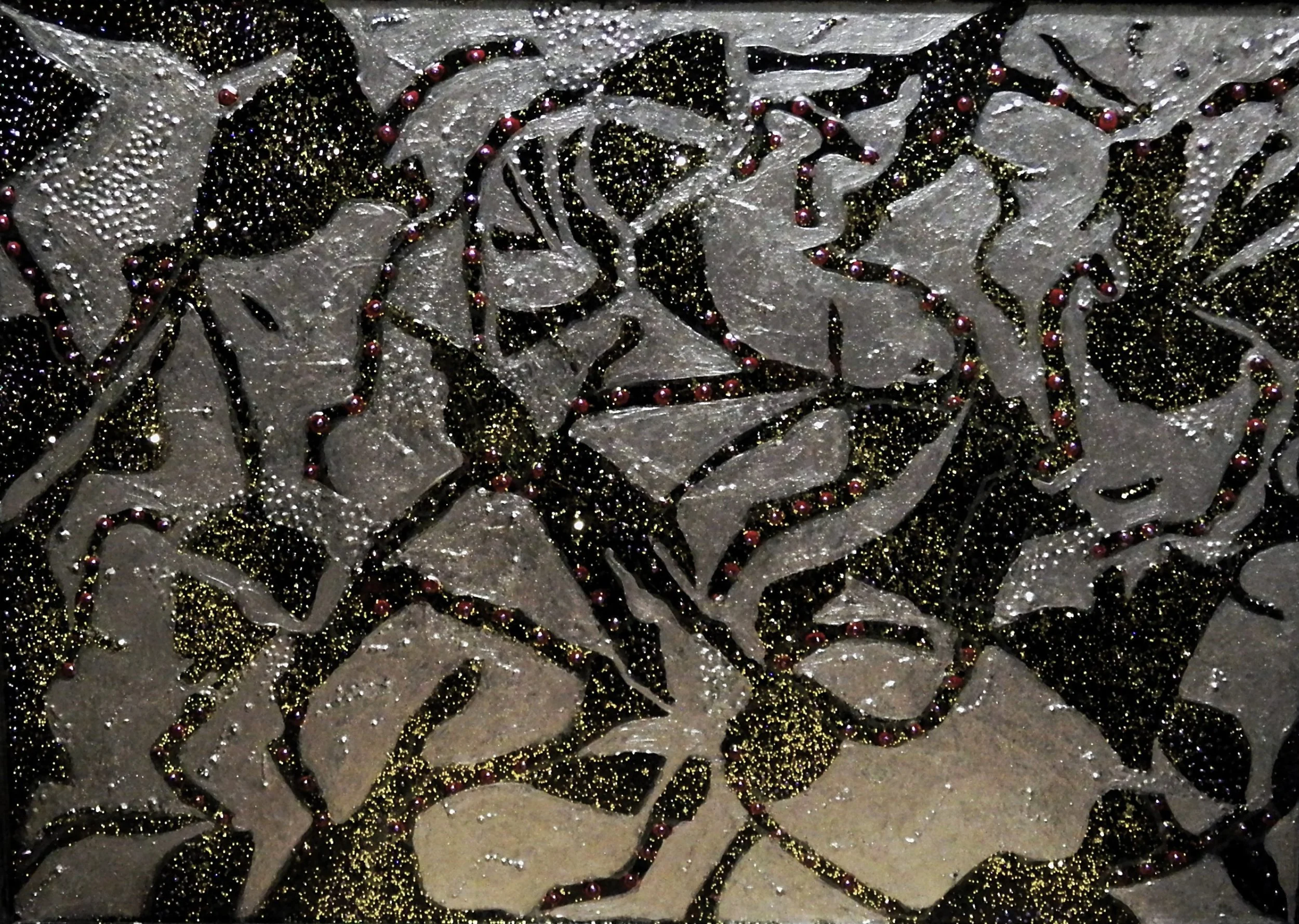
Night Chats, Mixed media on canvas, 50x70 cm, 2026
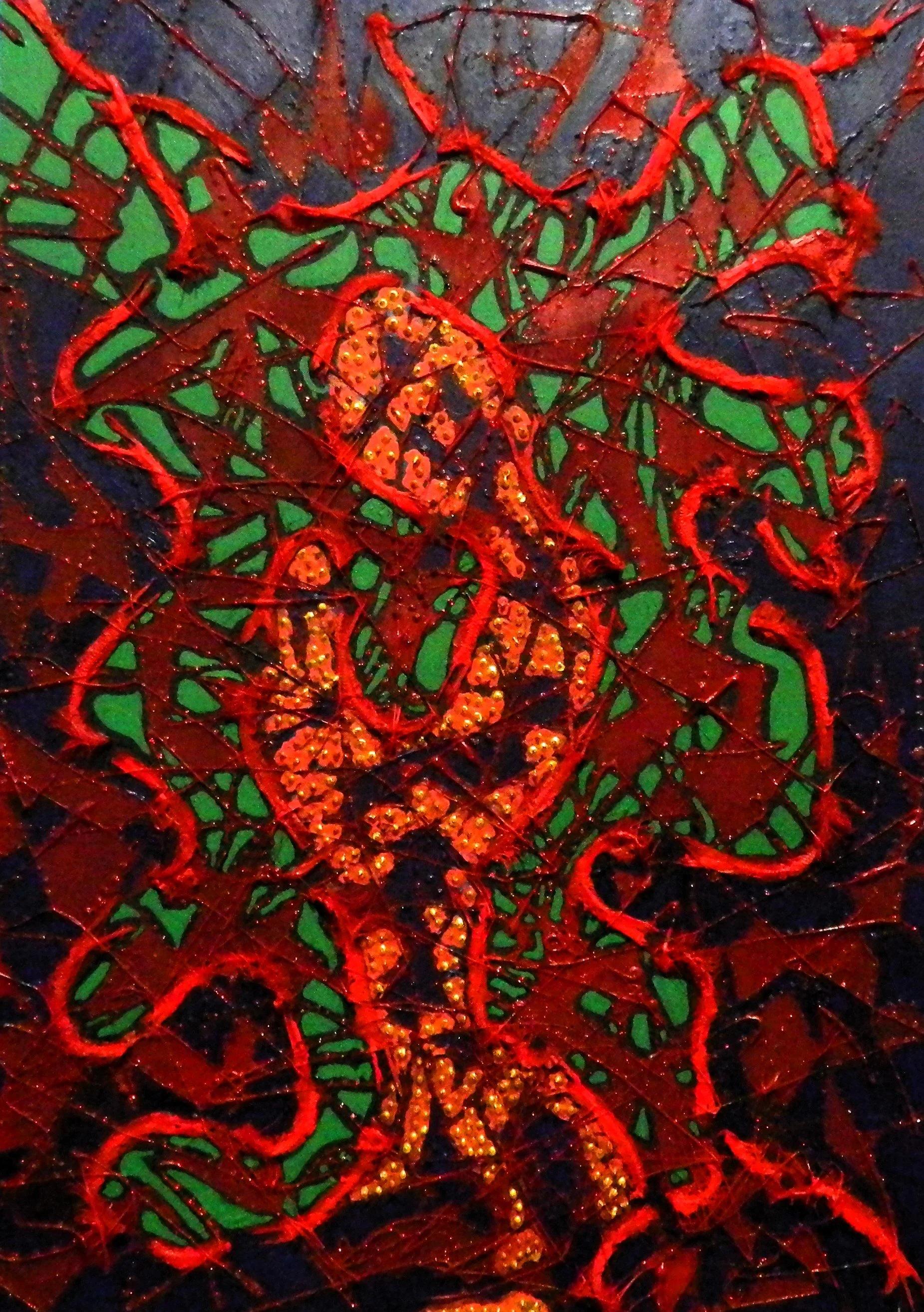
Obsession, Mixed media on plywood,50x70 cm, 2026
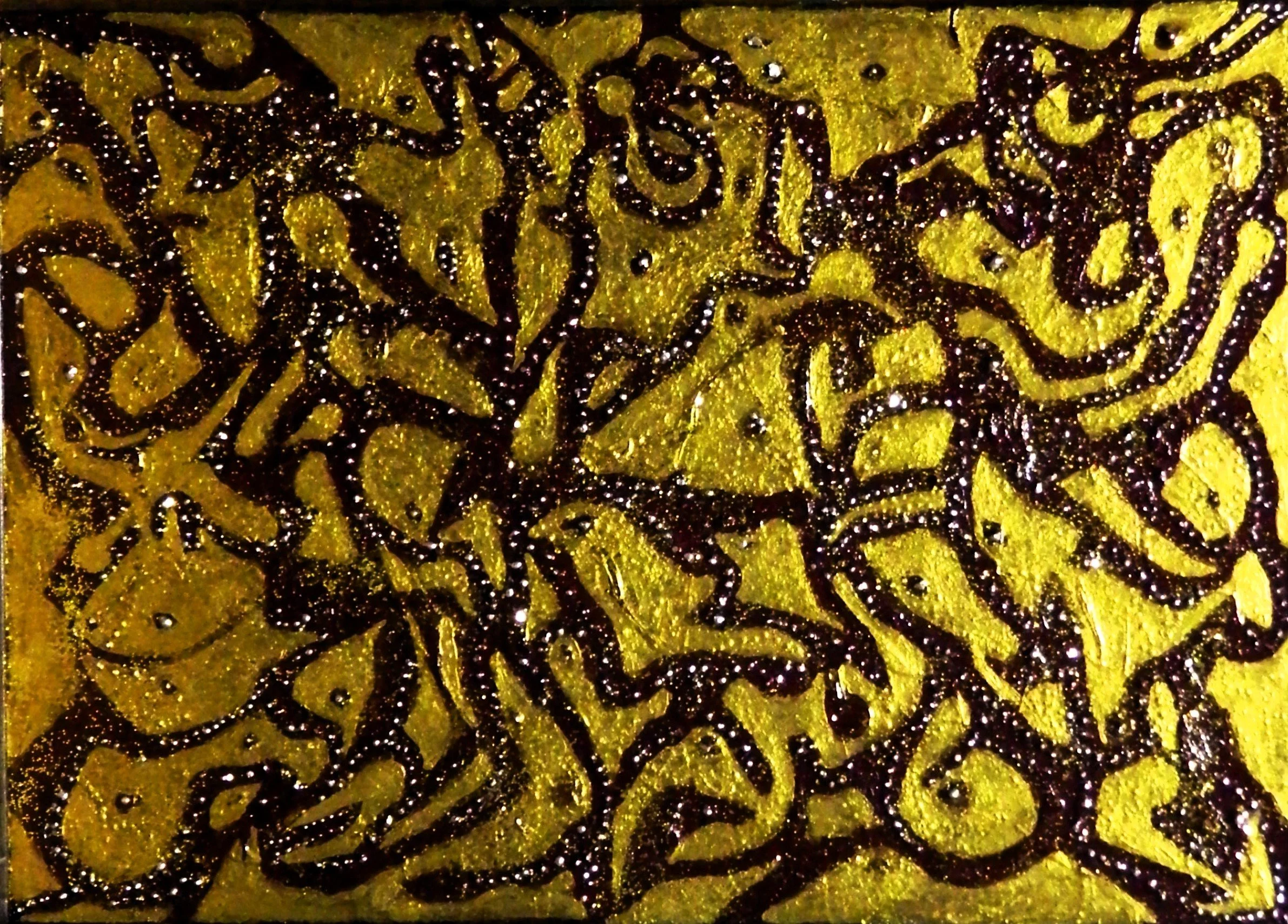
The Secrets behind the Veils, Mixed media on canvas, 50x70 cm, 2026
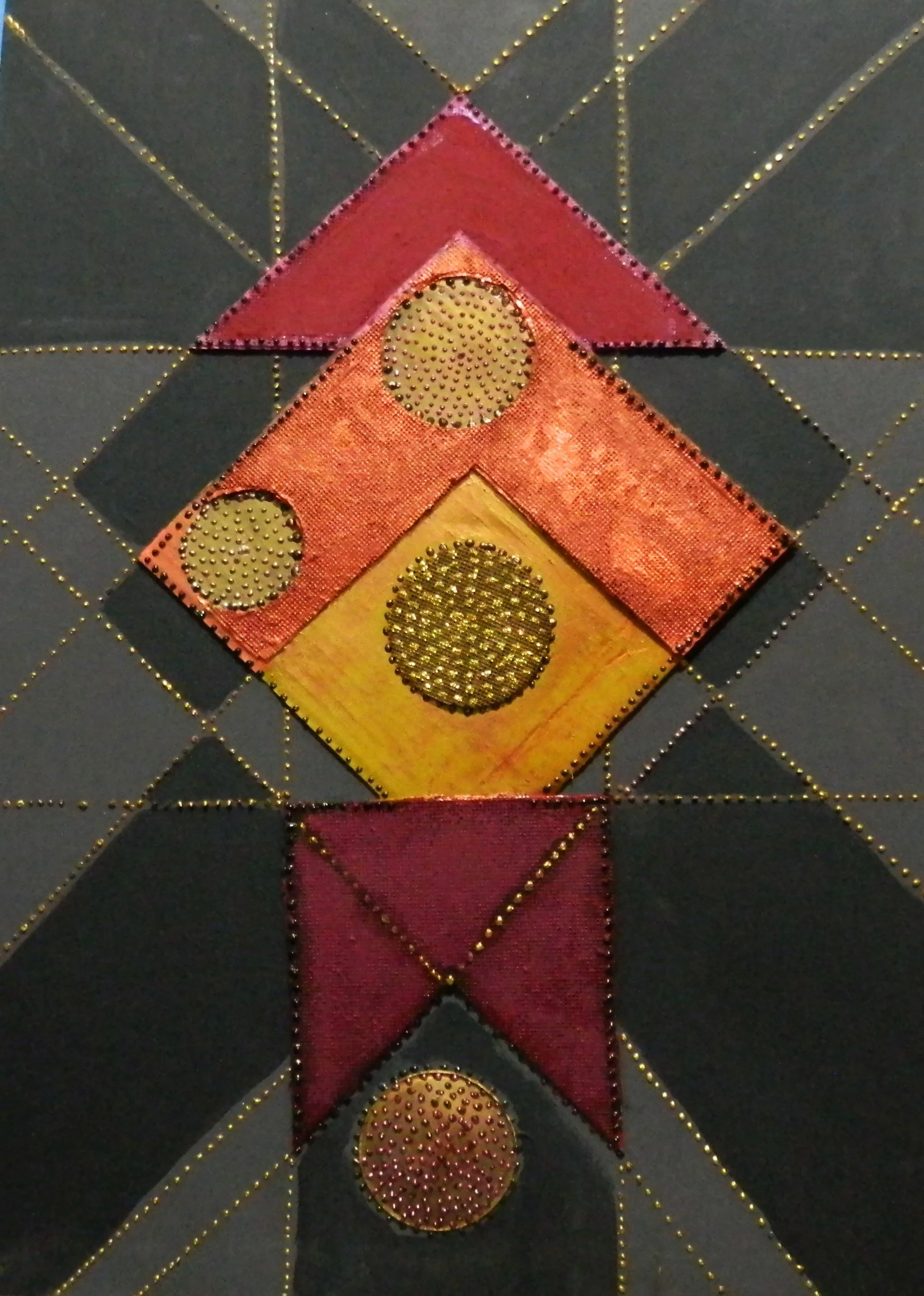
Geometry IV (Invisible Connectivity), Mixed media on plywood, 50x70 cm, 2025
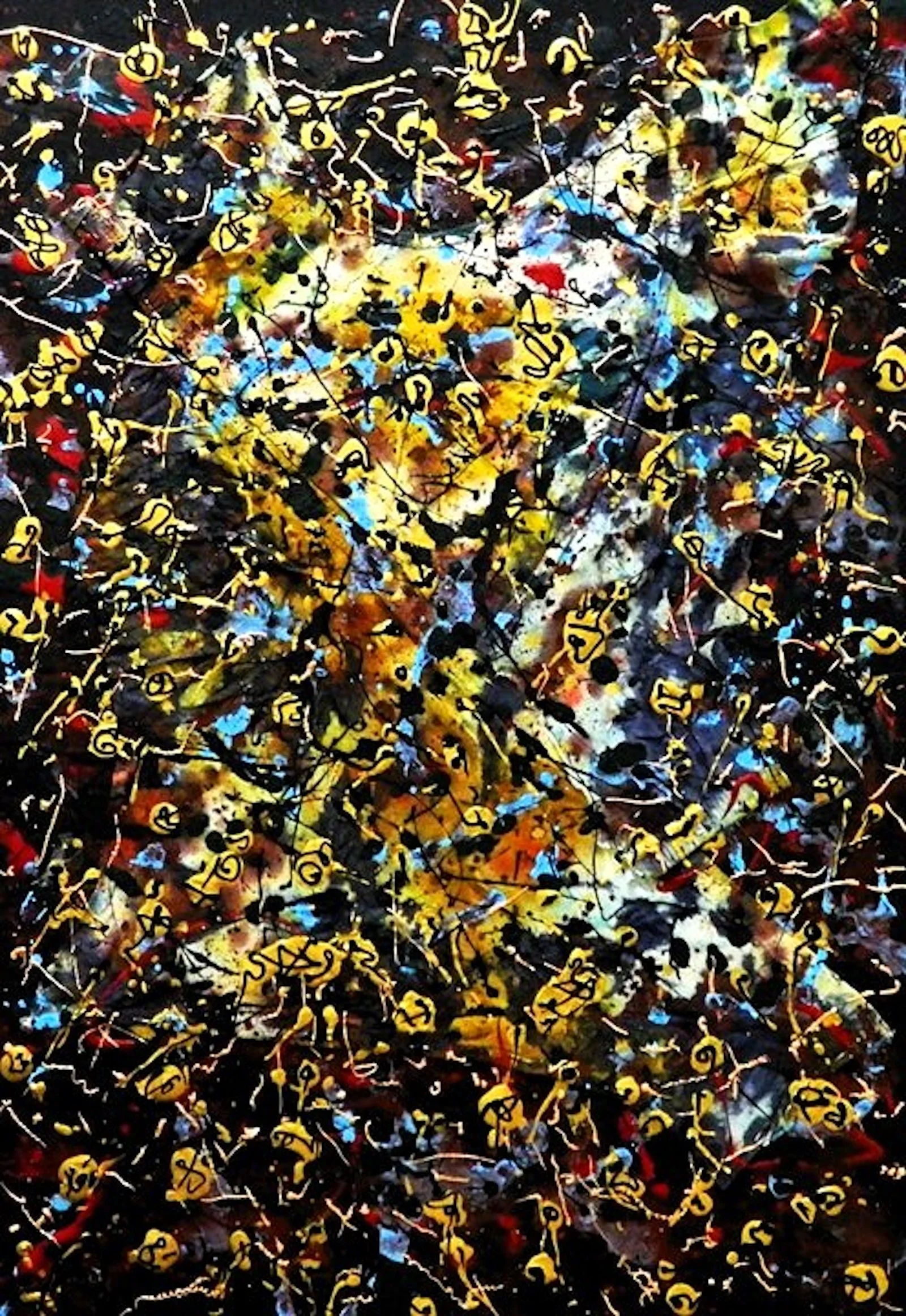
Two in One II (The Dog and the People on the Street), Mixed media on plywood, 50x70 cm, 2025
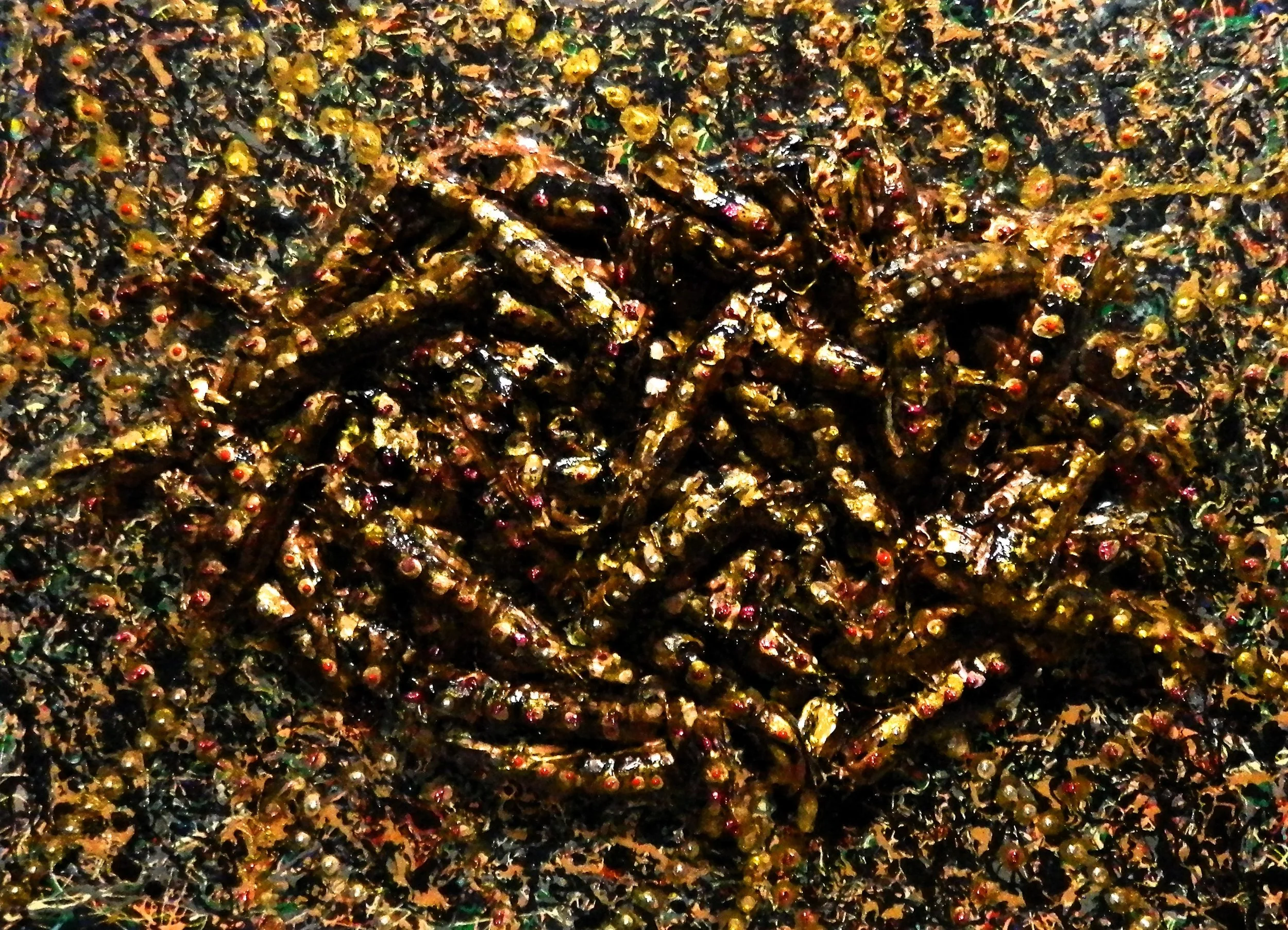
Crime and Escape, Mixed media on plywood, 50x70 cm, 2025 (re-visited)
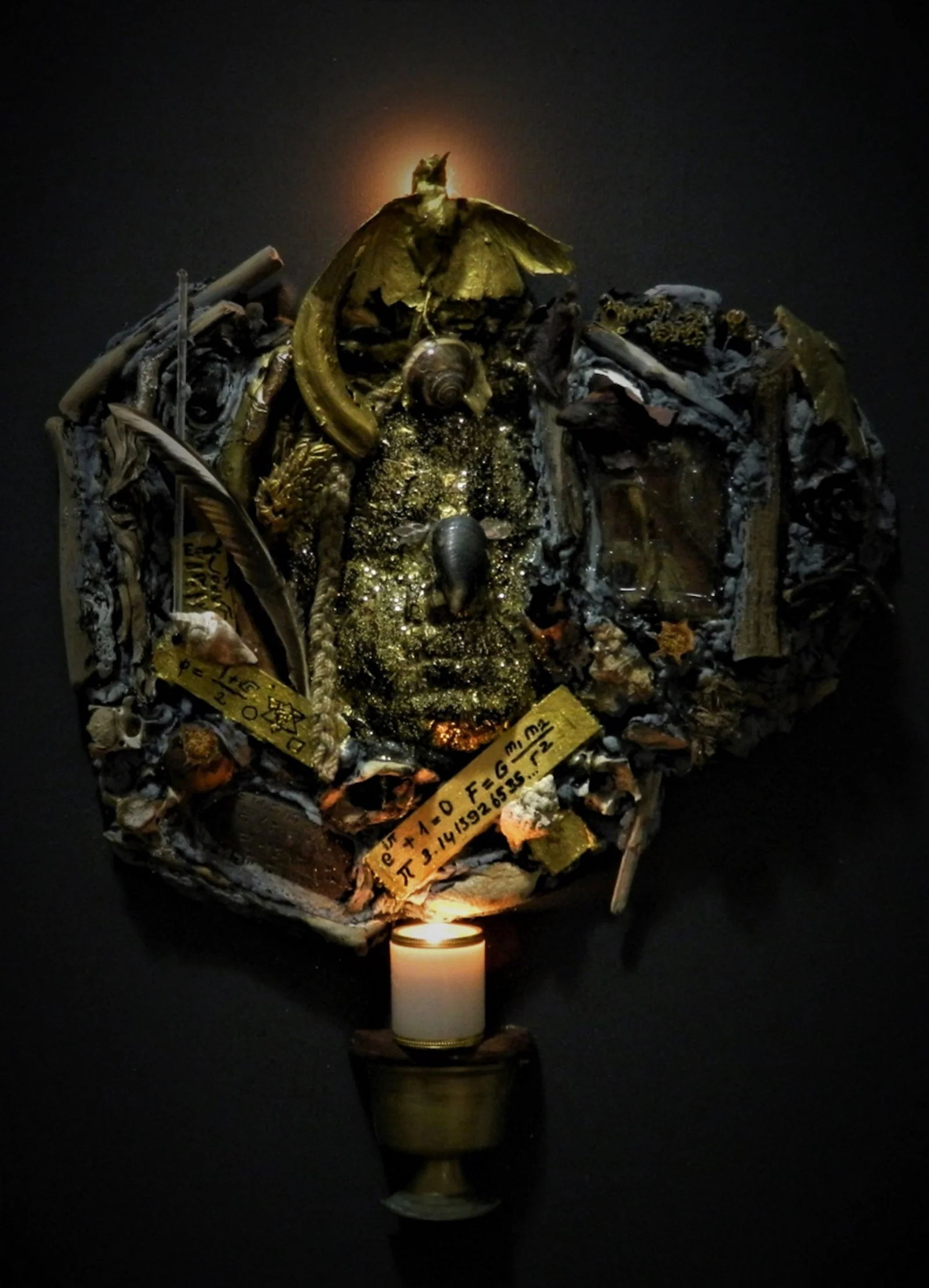
Scientist, Mixed media on plywood, 40x60 cm, 2022