Interview with Symona Colina
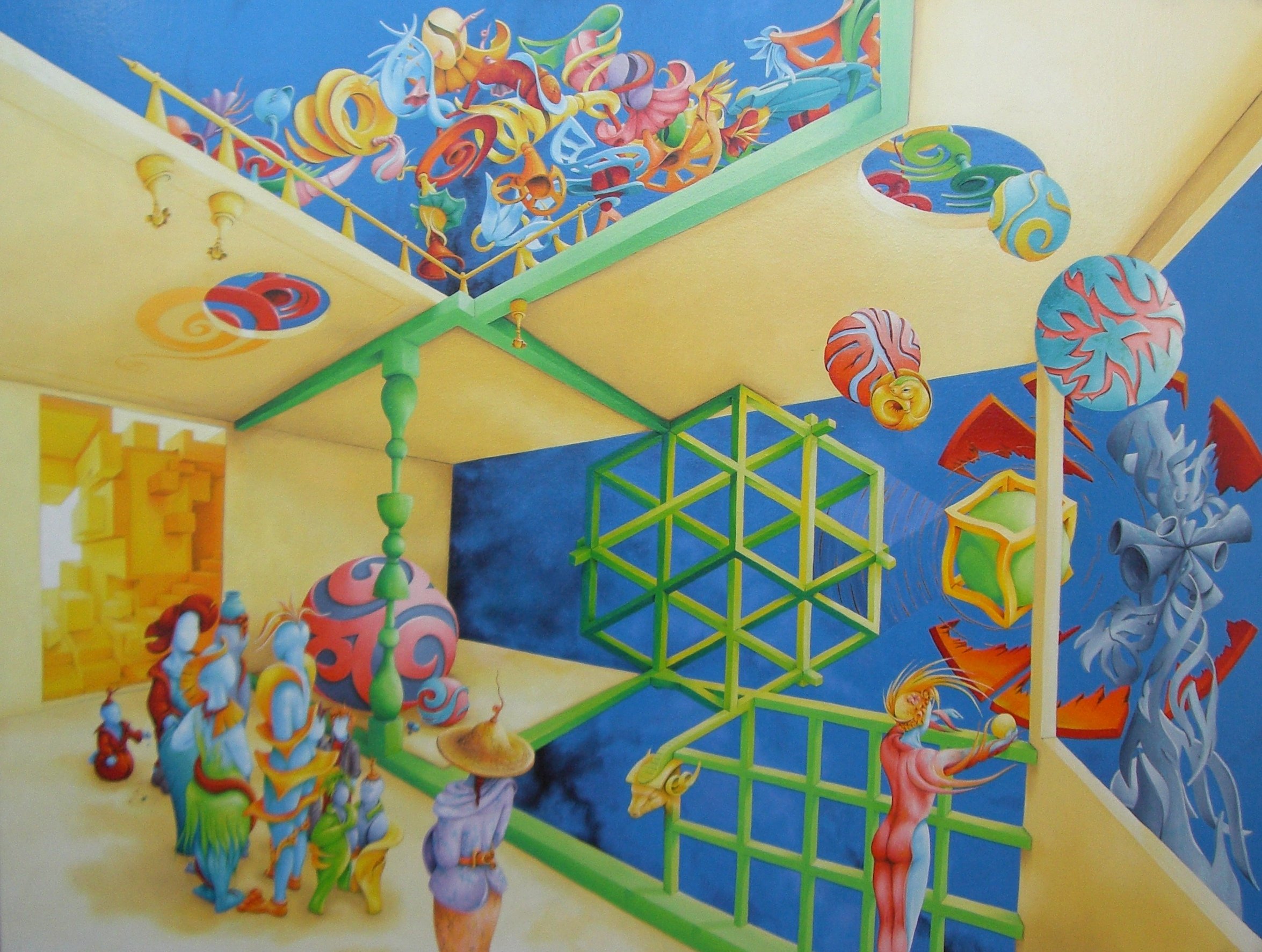
Symona Colina (born 1954, Ridderkerk, The Netherlands) is a Dutchborn visual artist living and working in Italy. Her practice centers on drawing and painting, exploring spatial paradox, organic transformation, and the perceptual instability between matter and imagination. Colina’s work emerges through attunement rather than imposition, allowing form to develop from an internal logic that balances geometric tension with fluid, metamorphic structures.
Her graphite compositions are recognized for their synthesis of precise draftsmanship and contemplative depth, inviting viewers into layered fields that can be entered from many sides. Light, line, and rhythm function as conceptual materials in her work: light reveals inner geometry, line establishes a temporal flow, and compositional rhythm creates a sense of duration akin to a visual score.
Colina has exhibited internationally across Europe and the United States. Her work is noted for its technical precision, meditative atmosphere, and a phenomenological approach to visual experience that foregrounds perception as a lived condition.
Across decades of practice she has maintained a coherent visual vocabulary while continually deepening her inquiry into how space opens and how inner resonance can remain steady amid external change.
She lives and works in Italy.
Throughout your career, you have described the beginning of a work as "a first note," where a single point gradually unfolds into a line guided by what you call a "comprehensive wind." Could you describe how this poetic metaphor operates in your studio practice, and how intuition and structure coexist as a work develops?
For me, a ‘first note’ is literal. A single point — an opening to the untouched surface, a door of perception. Like entering an untouched, unknown space, a single point finds its way into growth, into becoming a line. Sensing the space ahead feels like embracing and scanning an unknown, untouched space. Like the wind embraces all solids, sensing everything, moving gently through the unknown. The pencils and brushes leave nothing untouched — light, scale, the way a mark drags or a colour settles.
As the work begins to breathe, the marks themselves start suggesting where to go next.
I let intuition make quick proposals, and I let structure emerge from those proposals. Simple constraints that hold the work without smothering it. It’s an iterative dance: try, listen, choose, repeat. That tension between freedom and rule is where the work finds its voice — unfolding into a song to see.
Perspective appears in your work not simply as a technical device but as a metaphysical condition, something that can be perceived, inhabited, and even felt. How has your understanding of perspective evolved from your early academic training at the Minerva Academy to your current body of work, and what does it allow you to express that conventional representation cannot?
My presence at the Academy Minerva was not an unmixed blessing; I was only able to remain briefly. Sadly enough, I was never able to satisfy my curiosity, even though I truly wanted to understand. The first year’s end term was a bend‑or‑break situation. The reed bends but does not break… so in the second half term, I cut the rope.
Perspective was simply part of how I sensed the world — not a technique, but a natural orientation. At the time of the Academy, I did not realize that, nor was I able to hold on to such a birthday gift. But life teaches, and over time, I came to understand that this state of mind is a matter of concentration that resonates with my essence. I learned to handle it and to behold it.
Even birthday gifts have to be understood and underbuilt in order to be held. For me, sensing space - perspective - is like how a fish swims through water or a bird drift on the wind: an element you move through naturally, without realizing it at first.
Perspective is usually presented as a system of rules, grids, solids, and vanishing points. Over time, I understood that perspective, for me, is not just a technical device but a metaphysical condition — something that can be entered, sensed, even lived. On the surface, the steady drumbeat of the pencils resonates.
Music is a recurring conceptual framework in your language, from references to rhythm and rhapsody to the idea of creating "a song to see." How do musical structures influence the composition of your paintings and drawings, and do you think of your visual works as possessing a temporal dimension similar to listening to music?
Music enters my work through balance — the concentration that resonates from my essence. I am not able to maintain this kind of concentration continuously; I learned to slip in and out, which is quite an effort in itself — but when I shift into a higher gear, a flow opens, a door of perception opens. In that state, rhythm is not a beat but a way of being.
I am not very aware of time when I paint. Fortunately, or unfortunately, I simply paint. Hunger or tired hands remind me of our human limitations, but inside the work, time dissolves. What remains is existence. That is the closest I can come to describing the temporal dimension of my work.
Musical structures influence my compositions because they share this same condition: they unfold without needing to be counted. A line can be a phrase, a mark can carry duration, a surface can breathe like a held note. The work becomes a song to see — not because I imitate music, but because the act of painting suspends me inside a moment that moves and stands still at once.
In that suspended moment, the visual becomes temporal — a quiet continuity that the viewer can enter and behold.
So yes, my visual works possess a temporal dimension, but not in the sense of narrative time. It is the time of existence — the rhythm of perception itself.
Your imagery often balances abstraction with echoes of organic, biomorphic forms, luminous orbs, and vortex-like structures that suggest both microscopic and cosmic worlds. How do you navigate the boundary between observation, imagination, and symbolism without allowing one to dominate the others?
My imagery arises from sensing — touching transparencies with my mind. Light falls like water, and I can behold it, capture it in front of me. From there, I drift onward. Perspective becomes malleable, like chewing gum or spaghetti; I sculpt it and move on.
Solids guide me. A sphere keeps its center; an egg shifts its center; a cube holds six fields. Instinctively, I sense the solids and integrate the technical device of perspective. A horizon curves slightly because that is how the human eye perceives it. Straight lines belong to representation, not to perception. The world changes while in movement — I remember being astonished as a child when my father told me that he came out of the tiny airplane door in the so-called distance in front of us. At the time, it seemed impossible for me since he was so tall. Perception of perspective and the so-called distance on a surface don’t move or change — they are stable and can be captured.
I see and think, and I think and see; experiences like these made me aware and able to shape my forms. Observation, imagination, and symbolism do not stand apart. Observation becomes sensing; imagination becomes unfolding; symbolism becomes resonance. None dominates because none is separate. They are different vibrations of the same perceptual field.
I navigate their boundary by listening with my essence — by sensing. That is where the biomorphic forms, the orbs, the vortices arise: in the space where perception touches transparency and becomes visible. In that touch, the image finds its balance...
Early in your career, you maintained a fantastic realist approach despite prevailing academic expectations, yet your work has gradually moved toward increasingly conceptual and abstract spatial fields. Looking back, what elements of your earliest artistic convictions have remained constant beneath these stylistic transformations?
I don’t know if, early in my career, I worked in a fantastic realist approach. I happily did what I do now, without questioning it. The salads, the dollhouses, the bedtime stories in my mind were still present then — they eased over time as I grew older and became more aware of what surrounds me. The world has never been an easy place, and it seems to grow heavier in time. I did live through rough weather; if I were to go down, I would lose the resonance of my essence. Rising is not easily done, but I have no other choice but to bend or break… I bend for these harsh winds.
Looking back, what remained constant beneath all stylistic changes is my way of sensing. Even in my earliest works, I sensed the world rather than copied it. I trusted the resonance inside me — the same resonance that guides me now. My realism was already a way of entering space, of listening with my essence. As my work moved toward conceptual and abstract spatial fields, that inner listening did not change; it simply deepened.
So, the conviction that stayed is to remain in resonance with my essence — to sense rather than imitate — and to grow outward from my deepest essence, no matter how the outer world shifts.
Light, colour, and line are repeatedly described in your work as interfaces between different dimensions of experience. Rather than depicting light, your paintings often seem to construct it. What role does light play as a conceptual material, and how does it shape the emotional and philosophical space of your compositions?
Light, colour, and line in my work are not decorative elements; they are interfaces between different dimensions of experience. I do not construct light. Light falls like water onto the solids I hold in my mind, and in falling it reveals them. It shows their transparency, their inner geometry, their presence. Colour and lines highlight the perception of perspective. My paintings and drawings are the space where this revealing becomes visible.
Light is a conceptual material because it is a condition of perception. It is not something I add; it is something I receive. When light touches a solid — a sphere, an egg, a curve — it opens it. It reveals what is already sensed. It creates a field in which the viewer can enter, not through depiction but through resonance.
Emotionally, light creates calm, clarity, and openness. Philosophically, it creates a space where inner and outer worlds meet. Light reveals the dimension between perception and imagination, between the visible and the sensed. It is the bridge that allows the painting to breathe. I capture a different horizon in that deep sound I hear when I read intensely between the lines — the lines of perspective — so that maybe our horizons can meet.
Having lived and worked in both the Netherlands and Italy, while exhibiting extensively across Europe and the United States, you have experienced diverse artistic traditions and cultural contexts. In what ways has this geographical journey influenced your visual language, particularly your relationship to space, architecture, landscape, and the history of painting?
So, my visual language has been shaped not by geography itself, but by atmosphere: ultramarine and indigo, chaos and order, depth and horizon. These places changed the conditions in which my essence listens, and through that listening, my relationship to space continues to grow.
My geographical journey has influenced my visual language through the atmospheres of the places I have lived in. Italy is chaos, disorder and beauty — an essence of Ultramarine. The Netherlands is different, more structured, more orderly, like Indigo. France feels Cobalt, Germany Prussian, the United States mainly Ice Blue — just to keep it in the ‘Blues’. These atmospheres shaped how I relate to space, architecture, landscape, and the history of painting.
The Netherlands bears the footprints of my youth. The Northern Sea and sky carved Indigo into my memory — the sense of order and balance. I am profoundly Indigo.
Italy, il Bel Paese, where beauty and chaos coexist, is surrounded by the Mediterranean, in the heart of Ultramarine. Light behaves differently here; it falls like water onto stone, ruins, and ancient walls. Italy opened my sense of transparency, of layered space, of the emotional weather inside architecture and landscape. It made me aware of how history breathes through materials.
Exhibiting across Europe and the United States added another dimension: encounters. Meeting different people, seeing how others read space, sharpening a rooted awareness — like the ability to distinguish apples from pears — these experiences supplemented my understanding of how perception differs across cultures. They gave me distance from my own work, allowing me to see it through other eyes.
So, my visual language has been shaped not by geography itself, but by atmosphere: ultramarine and indigo, chaos and order, depth and horizon. These places changed the conditions in which my essence listens, and through that listening, my relationship to space continues to grow.
Although your paintings initially evoke dreamlike or fantastical worlds, you have said that their underlying motivation is ultimately "much more earthly," reflecting the continuation of life. How do you understand this apparent tension between transcendence and material existence, and why is it important for your work to sustain both readings simultaneously?
Although my paintings may evoke dreamlike or fantastical worlds, their motivation is much earthlier. I paint from the continuation of life — from bending rather than breaking, from staying in resonance with my essence even when the world grows heavier. The dreamlike quality is not an escape; it is simply the way my sensing opens space.
I do not experience a tension between transcendence and material existence. For me, they are two sides of the same movement. The earthly world gives me the solids as mental chewinggum I hold on to in my mind — spheres, curves, horizons — as light falls onto them like water. In that falling, something opens. It reveals a transparency, a deeper touch of perspective, a more profound perception of the two sides of a coin — transcendence and material existence. Reaching a different horizon feels transcendent, but it is rooted in the most concrete experiences of living.
It is important for my work to sustain both readings because life itself sustains both. We live in matter, but we sense in resonance. We walk through architecture and landscape, but we also move through inner weather, memory, and the quiet sound between the lines. My paintings hold these layers together. They allow the viewer to enter a space that is earthly in its origin and open in its feeling — a space were material existence and transcendence meet without contradiction, offering a different horizon.
Your practice extends beyond drawing and painting into marble and bronze sculpture. How does translating your exploration of rhythm, perspective, and organic growth into three-dimensional form challenge or expand the central ideas that have long occupied your work?
Marble and bronze confronted me with the physical resistance of matter. I only made one marble, and the other block still waits. Now and again, I give it a quick look, but I do not have the physical force. My elbows have hurt for months, and I do not want to use pneumatic tools. They do not feel right for me; I would miss out on the rhythm of the fulfilling sound of the chisel. Bronze requires collaboration — I am not a caster. I moved around with resins and fiberglass quite a bit, but they are rather poisonous. Now and again, I find myself modelling something, but rarely. Different materials demand a different kind of commitment.
Working in three dimensions does not differ so much from the surfaces of canvas and paper, but the easel is occupied with canvas calling out to me as well. Choices. The brushes, the pencils, the canvas and the paper. And in a way, I sculpt on paper. Shifting from 2D to 3D gives me the possibility to touch the impossible - to combine realities, to create visual possibilities impossible to realize in modelling clay, papier-mâché, or any other material that can be shaped. The brushes and the pencils allow me to capture a different horizon in that deep sound I hear when I read intensely between the lines - the lines of perspective.
In drawing and painting, I shift between dimensions. The choices between perception and matter — or what matters — expand my work. They show me that how we perceive is sometimes more important than what we perceive.
Across decades of exhibitions, publications, and international recognition, your artistic vocabulary has remained remarkably coherent while continually evolving. As you look toward the future, what questions or territories remain unresolved for you, and where do you see your investigation of perception, spatial consciousness, and "infinite interfaces" leading next?
So, what remains unresolved is simply life itself - how to stay in resonance, how to keep listening, how to keep growing outward from my deepest essence. That is where my work will lead next.
It is quite a compliment to say that my artistic vocabulary has remained coherent. I do not know if I am coherent; I am just being me, not very aware of time when I paint, but time passes. And international recognition… I am grateful to those who gave me credit - the more credit, the better. But I do keep my feet on the ground, on our dear mother earth, who suffers so much from our ignorance. Sometimes it seems she is almost done with us, being exploited, abused, and mercilessly bombarded with harsh hammer blows.
So, the unresolved questions ahead of me are not about style or technique. They are about balance - how to remain upright within the turmoil surrounding us. These harsh times coming down upon us… I try not to bend to one side or another. I try to stand tall until I fall and reach my horizon. I’ll grow into my own essence, and one day, when I wear my blue wings, I hope to leave a smile behind - a soothing melody.
My investigation of perception, spatial consciousness, and infinite interfaces will continue to move in that direction - inward, toward essence. The future is not a new territory but a deeper one. I will keep exploring how we perceive, how space opens, how horizons shift, and how inner resonance can remain steady even when the outer world grows heavier.
So, what remains unresolved is simply life itself - how to stay in resonance, how to keep listening, how to keep growing into my deepest essence. That is where my work will lead next.
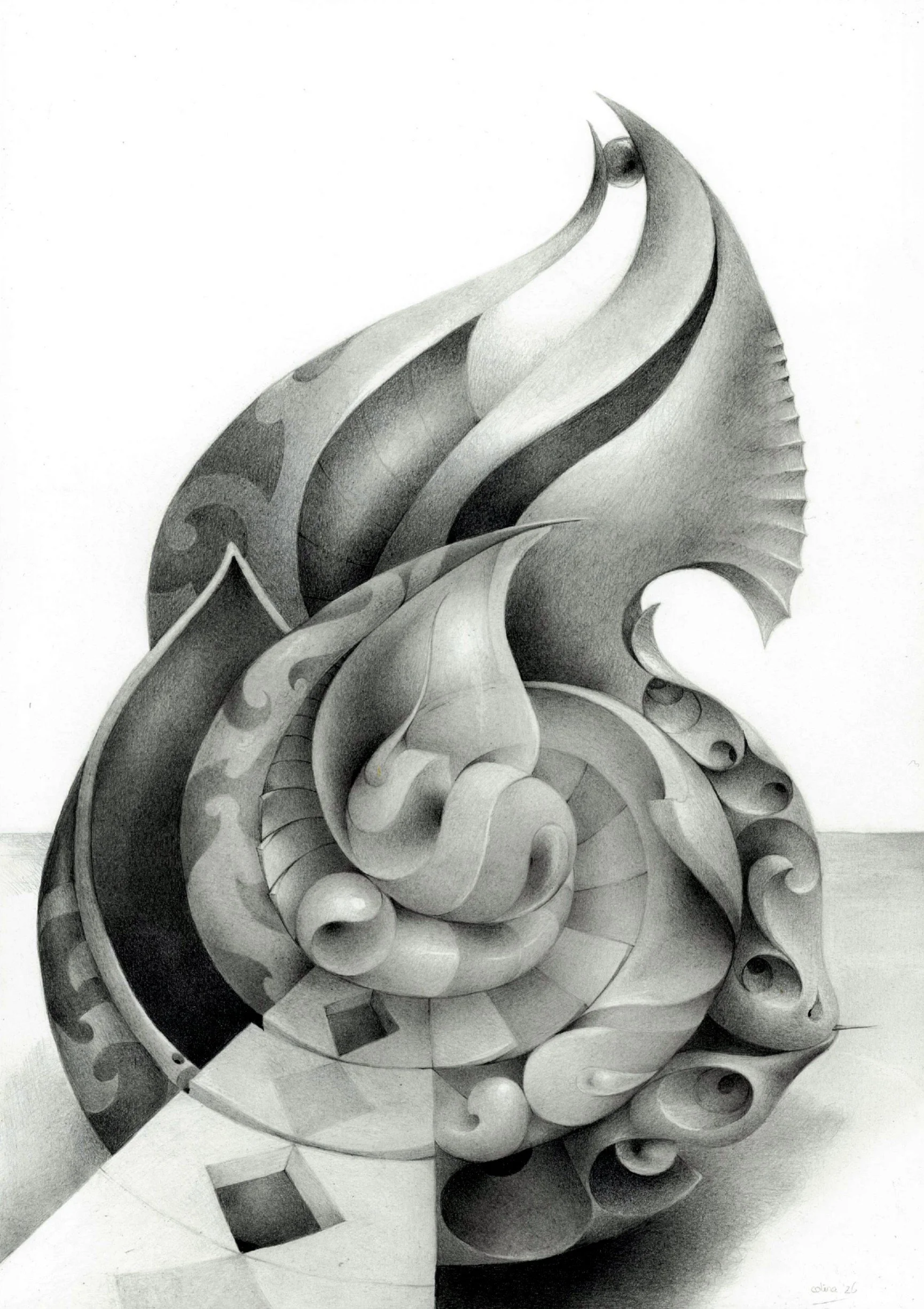
The Other Side of Grey Pencil on Paper A3
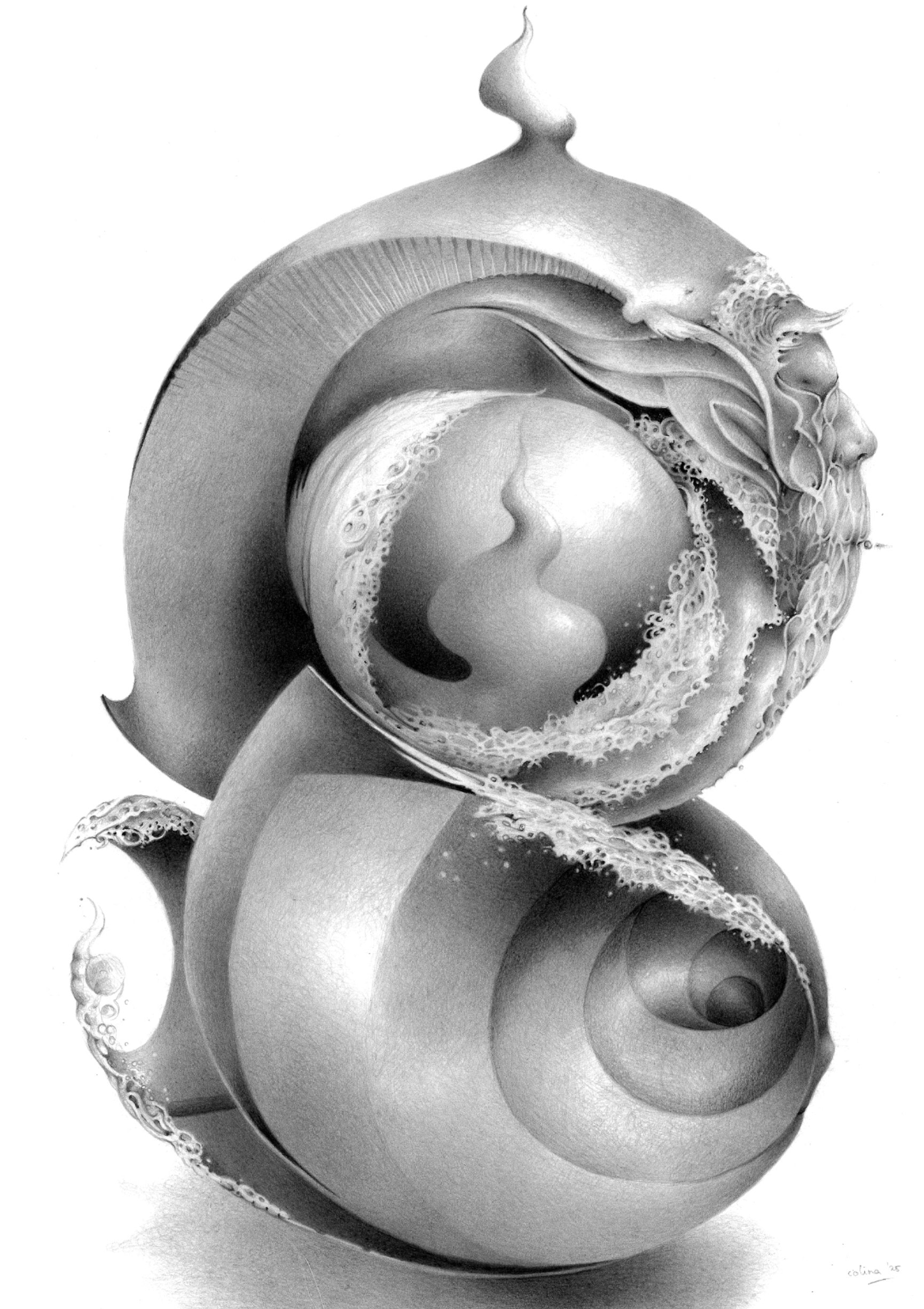
H8 (Motorized) Pencil on Paper A3
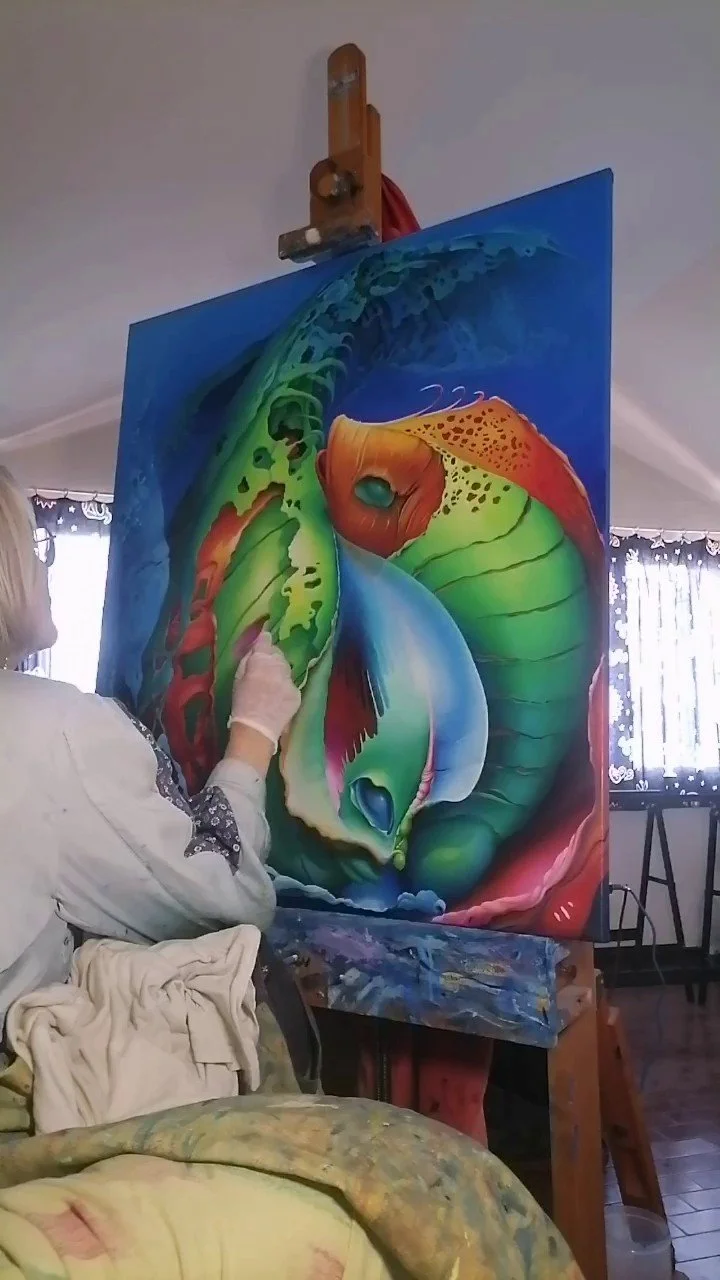
Symona Colina working on Deep Waters 90x80 cm
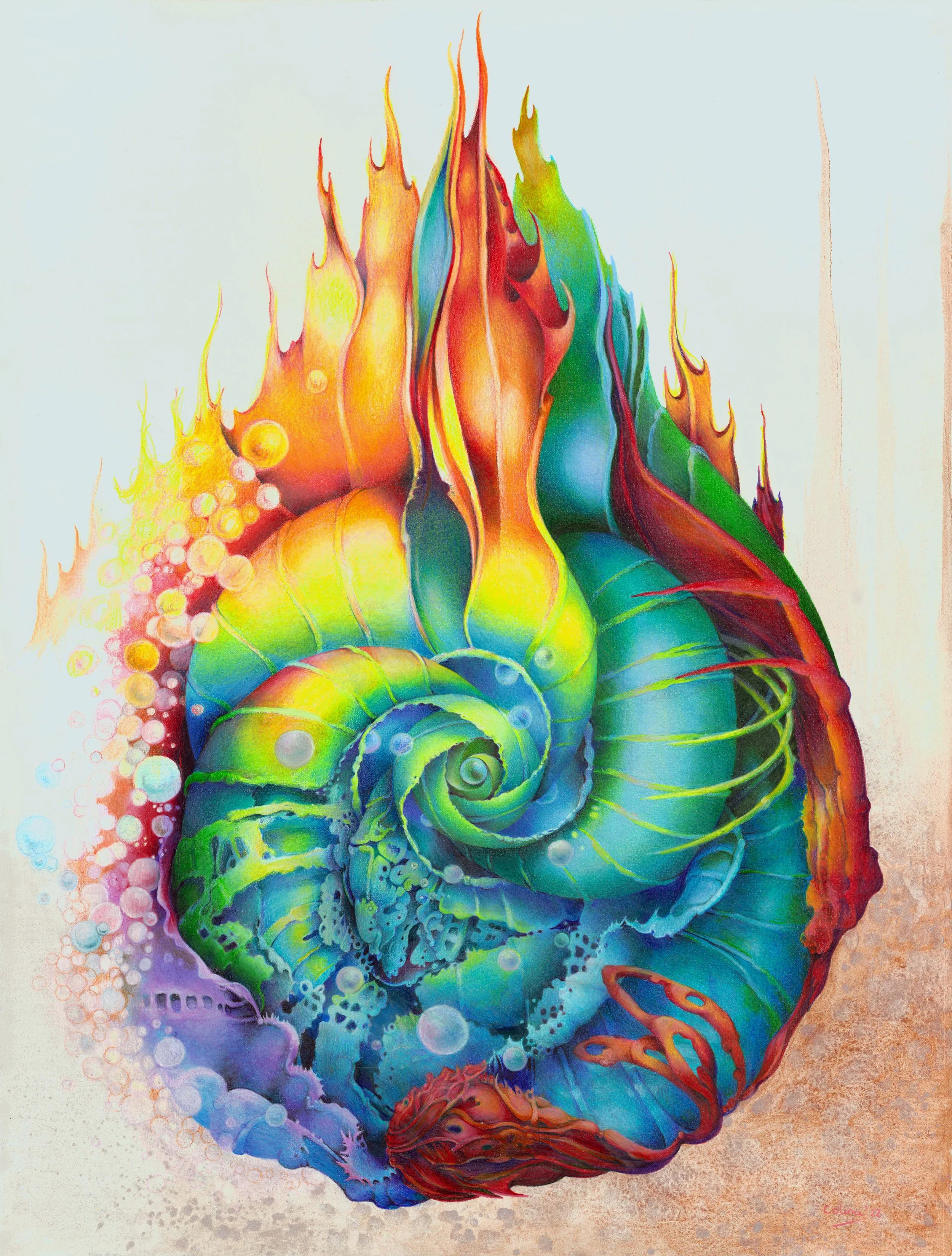
Fusion Mixed Media 56x76 cm
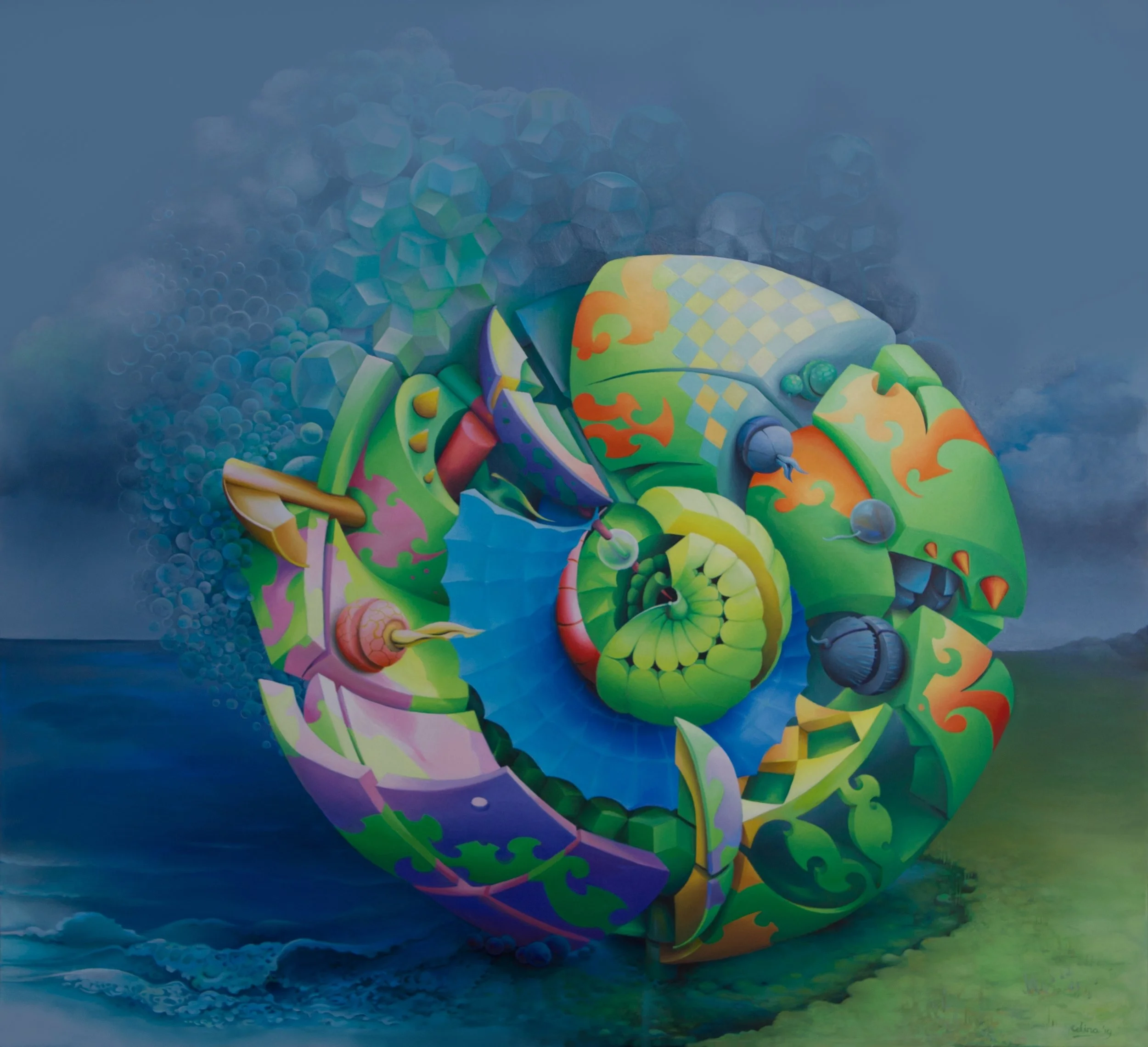
Connexion Oil on Canvas 90x100 cm
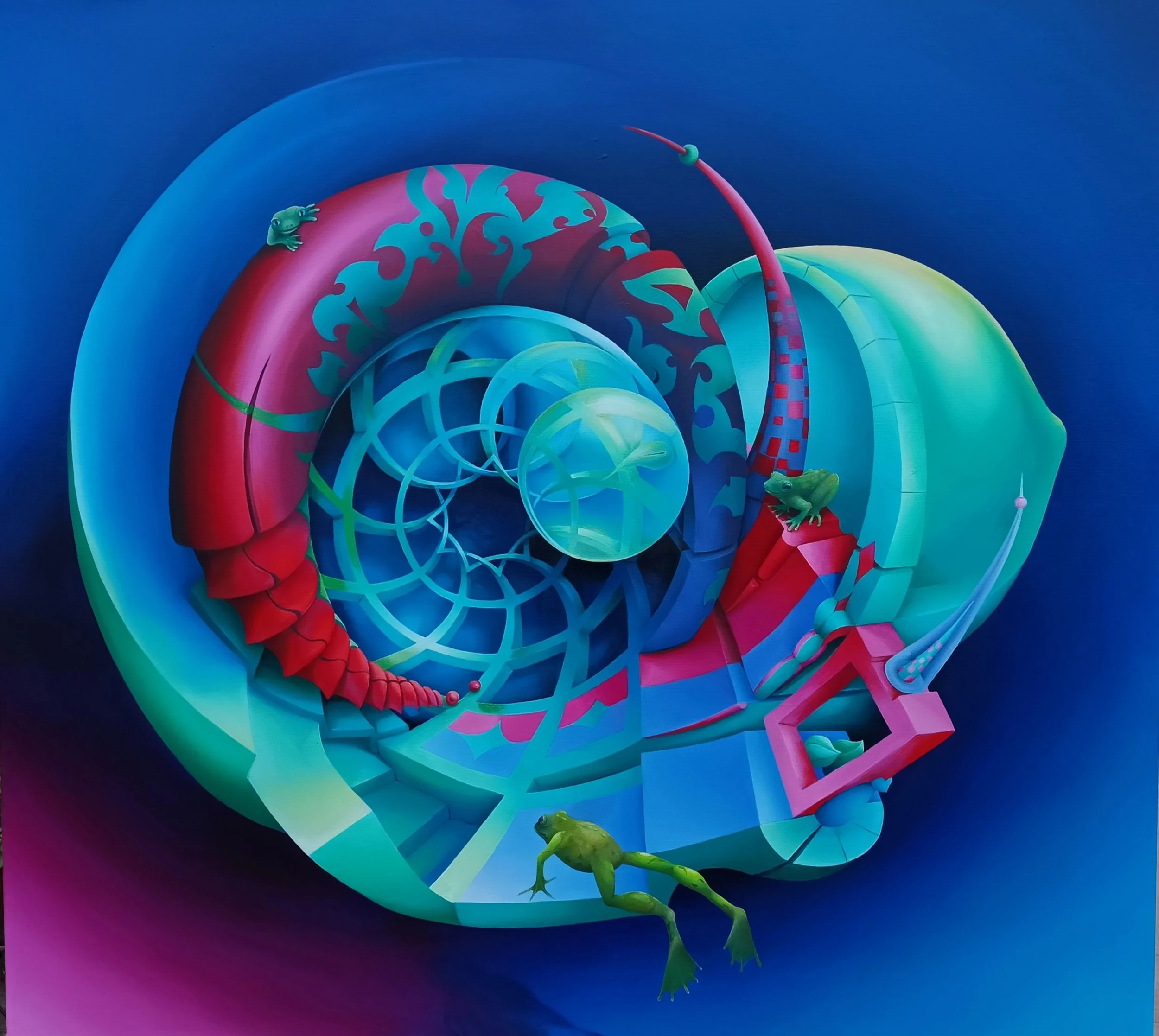
Jumpers Oil on Canvas 80x90 cm
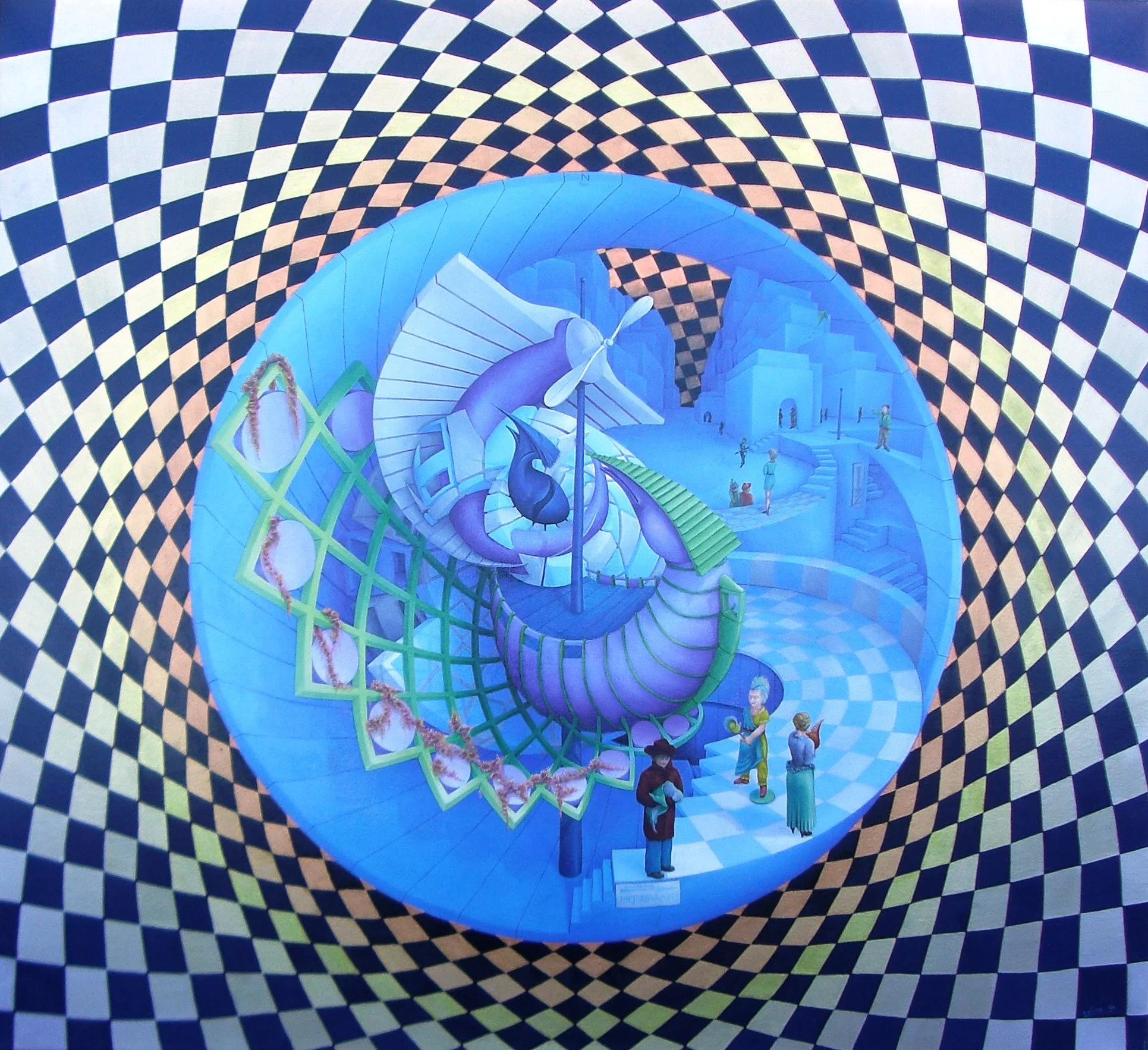
Blue Sfere Oil on Canvas 120x120 cm
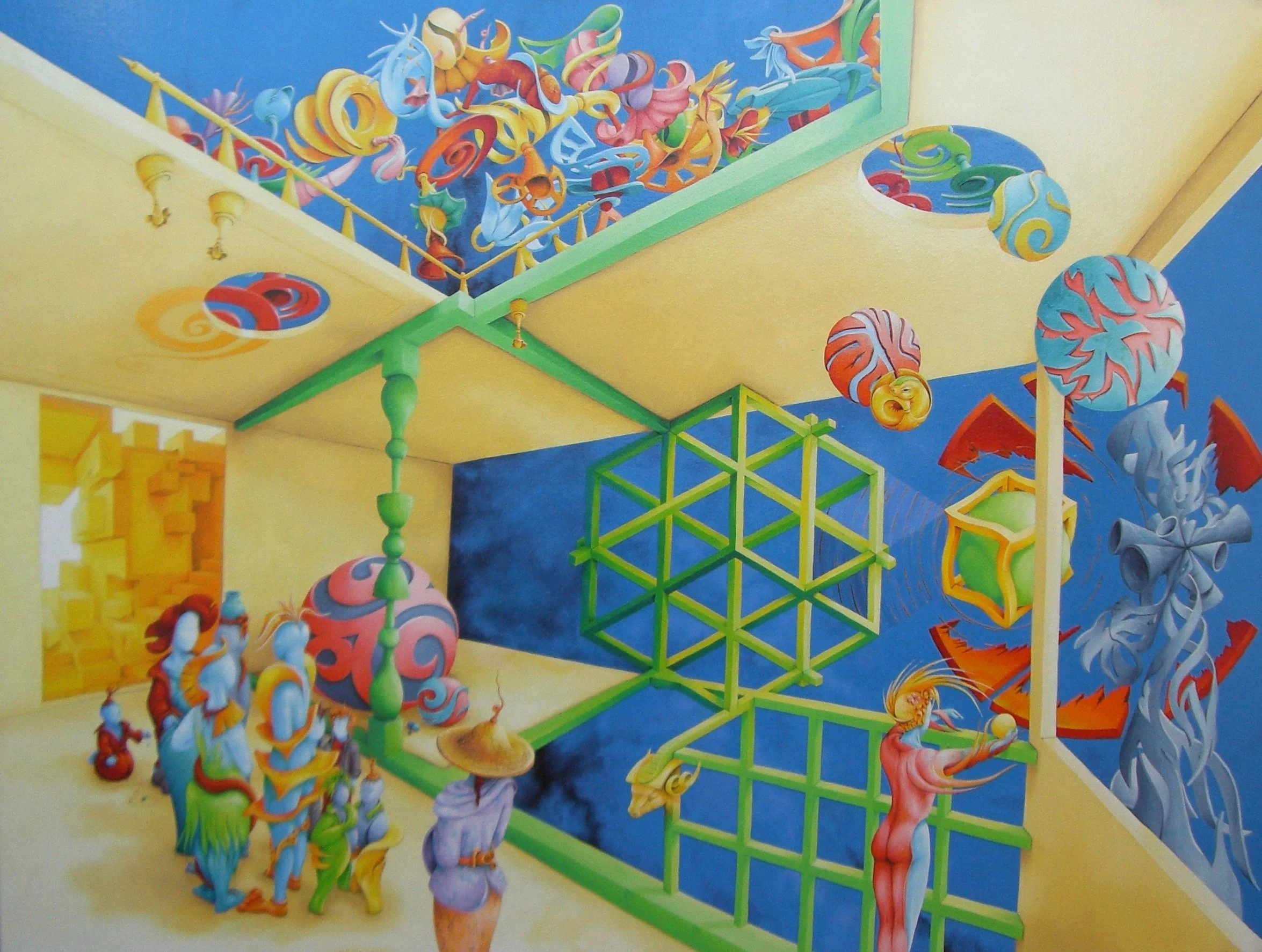
Schilderij Oil on Canvas 80x105 cm
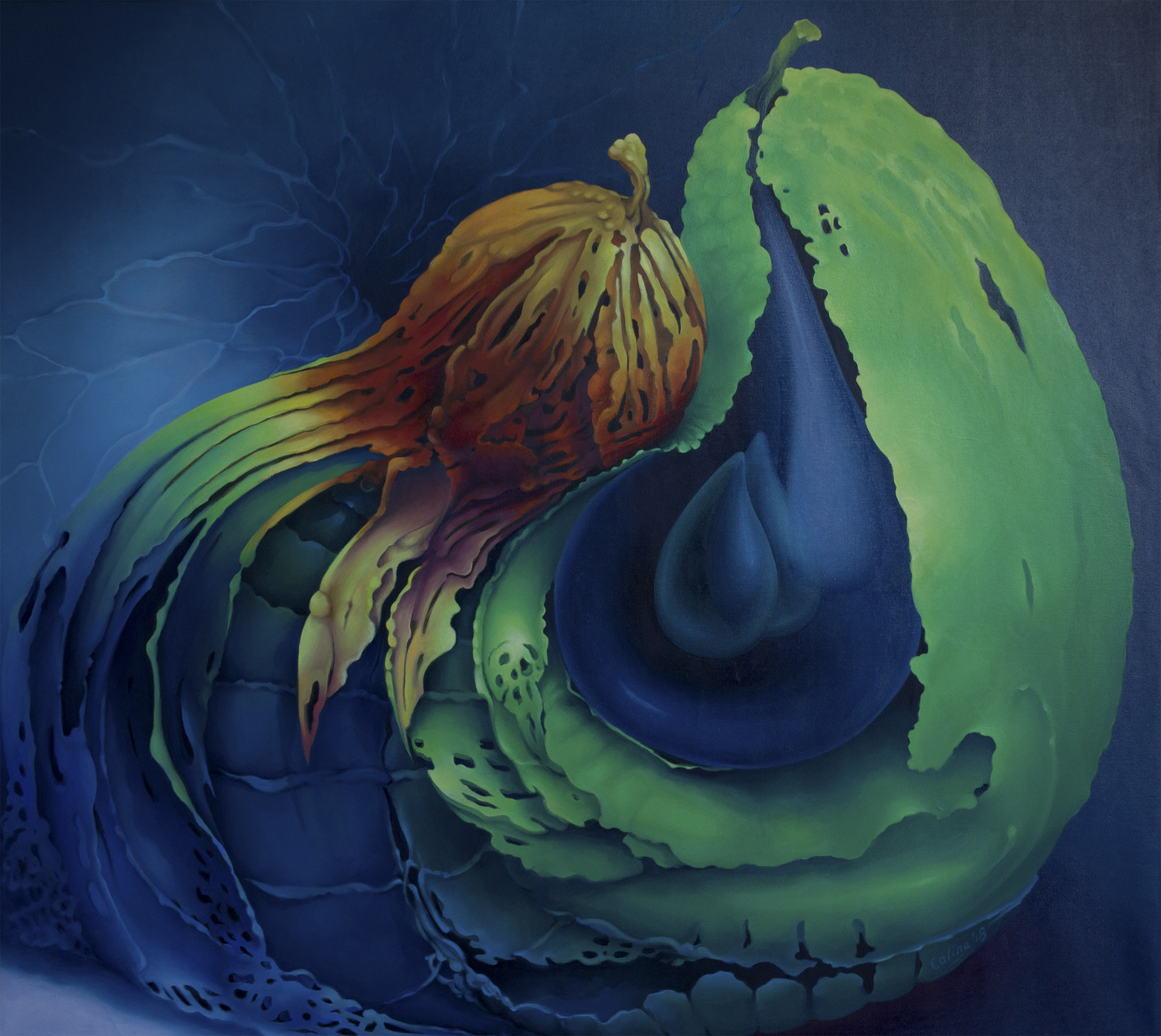
Close Harmoney Oil on Canvas 90x100 cm
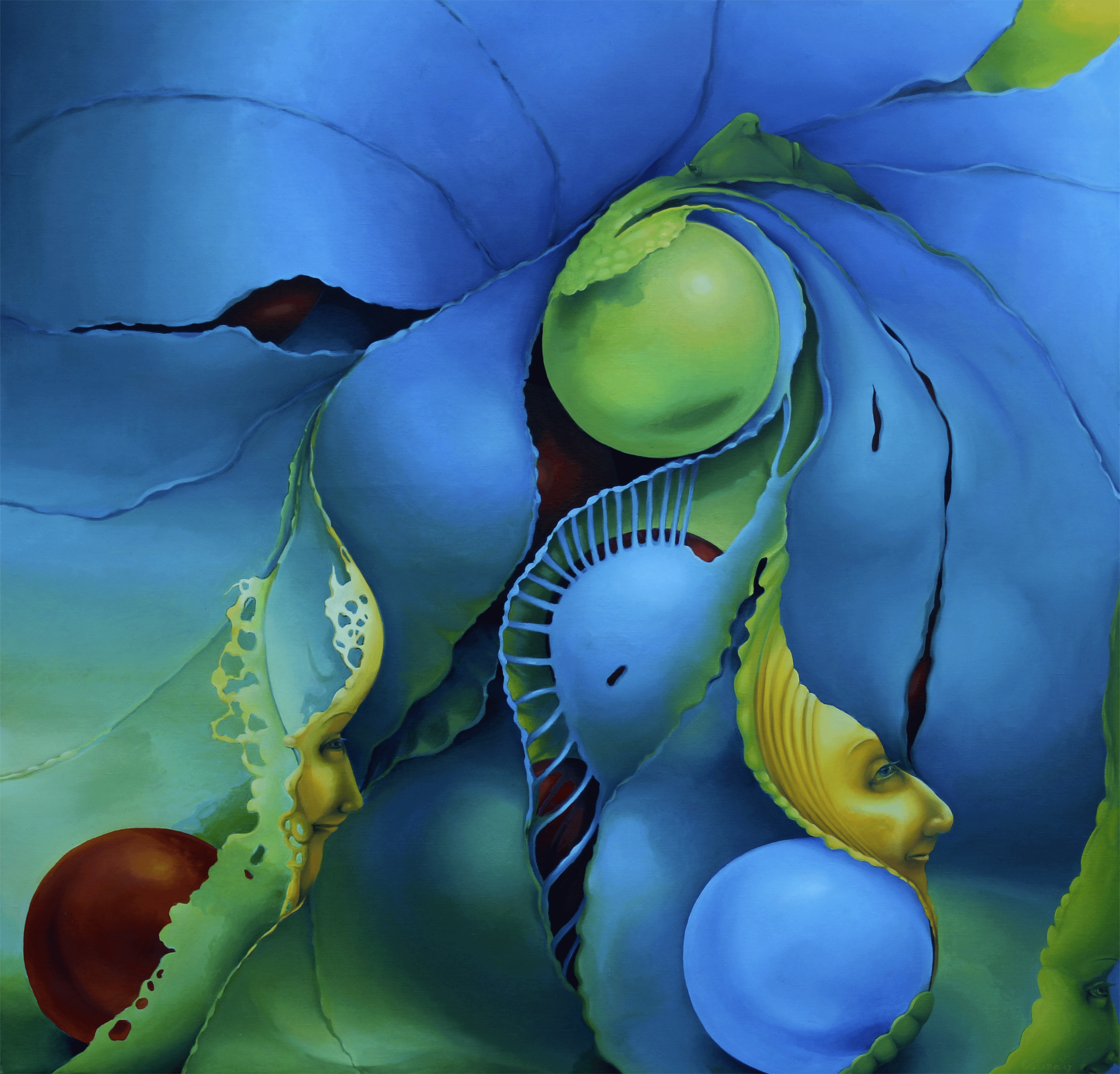
Jugglers Oil on Canvas 100x100 cm
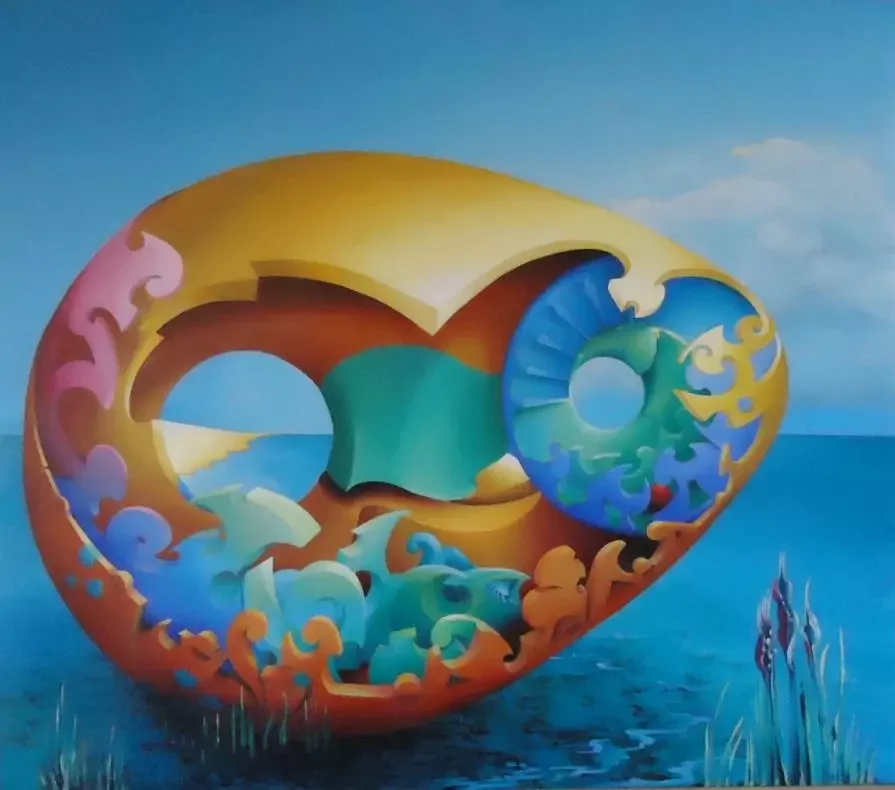
A Narrow EggScape Oil on Canvas 70x80 cm