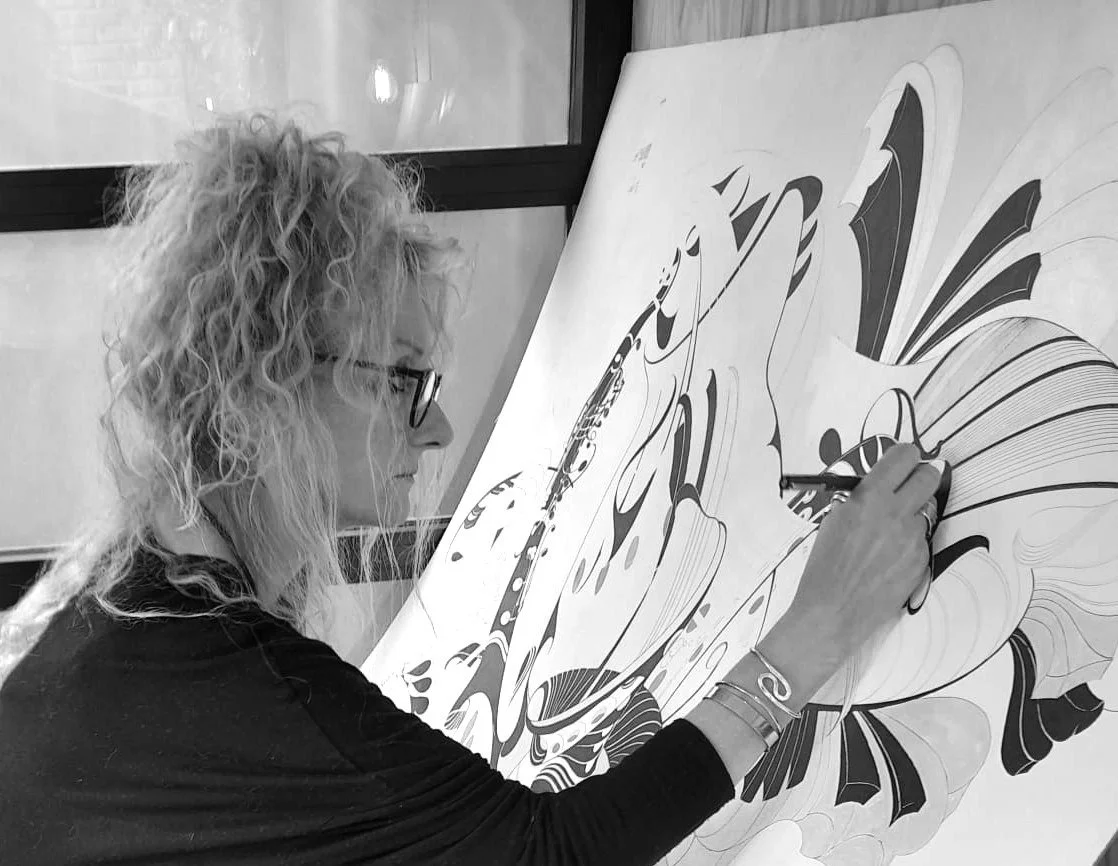
Interview with Joanna Levesley
Joanna Levesley is a self-taught, award-winning contemporary artist based in the UK, known for her intricate pen and ink works that explore the expressive potential of line. Drawing inspiration from nature, music, and the imaginative possibilities of surrealism, she creates detailed compositions that balance precision with mystery. Her work reflects themes of transformation, duality, femininity, and the complexity of the human spirit, inviting viewers into layered visual worlds that reveal new meanings over time. Through her distinctive use of monochrome linework, Joanna seeks to create art that is both visually intricate and emotionally resonant, encouraging dialogue, reflection, and a deeper way of seeing.
Your practice repeatedly returns to the expressive potential of line, and you describe the French curves your father gave you at the age of eleven as collaborators rather than simply tools. How has that enduring relationship with a single instrument shaped not only your visual language, but also the way you think about drawing as an act of discovery?
Line has always been the foundation of my work, and the French curves became a way of extending thought into form. They gave me a language that felt both precise and open-ended — a structure I could trust, but never fully control. Over time, they became more than tools; they became a kind of dialogue. Drawing with them taught me that discovery often happens through repetition, patience, and the willingness to follow where a line wants to go. That relationship has shaped the way I work today: I rarely begin with a fixed destination. Instead, I allow the drawing to unfold, revealing its own logic as I go.
Although your work is rooted in imagination and fantasy, you also speak about revealing the beauty and complexity of the human spirit. How do your surreal, abstract worlds become vehicles for communicating deeply human emotional and psychological experiences rather than functioning as escapist spaces?
For me, fantasy is not an escape from reality but another way of approaching it. Surreal imagery allows me to speak about inner states that are often difficult to express directly — vulnerability, contradiction, resilience, transformation. The forms I create may seem otherworldly, but they are grounded in human experience. I think of them as symbolic spaces where emotion can be explored more freely, without needing to be literal. In that sense, the work becomes a reflection of the inner life rather than a retreat from it.
You frequently work in monochrome despite acknowledging a strong attraction to colour. What is it about black and white that allows you to express ideas with greater clarity or emotional intensity, and when do you feel colour becomes necessary within your practice?
Black and white offers a particular clarity that I find very compelling. It removes distraction and brings attention to structure, rhythm, contrast, and detail. In monochrome, every line feels more deliberate, and the emotional tone can become more concentrated. I’m drawn to that intensity. Colour, on the other hand, comes into the work when I want to shift the atmosphere or introduce another layer of feeling. It can add warmth, tension, or vibration in a way that monochrome cannot. So for me, colour is never decorative — it has to serve the emotional or conceptual direction of the piece.
Music occupies an unusually important role in your artistic process because you experience it as a three-dimensional form rather than simply as sound. Could you describe how this perception translates into composition, rhythm, and movement on the page, and whether particular pieces emerge from specific musical experiences?
Music gives me a sense of spatial structure. I don’t experience it only as sound, but as something with shape, movement, and dimensional presence. That translates very naturally into drawing, where I’m always thinking about rhythm, pause, density, and flow. Certain passages in music can suggest repetition, layering, or sudden shifts, and those qualities often appear in the composition of my work. At times, a piece may emerge directly from the atmosphere of a particular song or performance, but more often it is the emotional architecture of music — its tension, pacing, and movement — that influences how I build the drawing.
Your work invites viewers to return repeatedly, discovering hidden structures and meanings over time. How consciously do you design these layers of revelation, and what role does ambiguity play in encouraging a prolonged relationship between the artwork and its audience?
I do think quite consciously about layers, though I try not to over-determine them. Part of the pleasure of making this work lies in creating images that reveal themselves gradually. I want the viewer to notice something new each time they return — a shift in structure, a hidden form, an unexpected connection. Ambiguity is essential to that process. If everything is resolved too quickly, the work can lose its energy. By leaving certain elements open, I allow space for interpretation and curiosity, which can create a more lasting relationship between the artwork and the viewer.
As a self-taught artist, you have developed an unmistakably personal visual vocabulary while drawing inspiration from figures such as Salvador Dalí and M.C. Escher. How have you negotiated the influence of these iconic artists without allowing their visual identities to eclipse your own?
I’ve always been aware of the influence of artists I admire, but I’ve never wanted to imitate them. Dalí and Escher opened doors for me in terms of imagination, structure, and the possibilities of visual paradox, but my own work comes from a very different place. Being self-taught has given me a certain freedom to develop intuitively, through experimentation rather than prescription. That has helped me remain close to my own instincts. Influence is inevitable, but I think it becomes valuable only when it leads you toward your own language rather than away from it.
There is an intriguing tension in your work between precision and mystery: your compositions are meticulously constructed through controlled line work, yet they deliberately withhold complete structure and certainty. What interests you about maintaining this balance between order and the unknown?
That balance is where the work feels most alive to me. Precision gives the drawing its discipline and internal coherence, but mystery gives it emotional depth and openness. I’m interested in the point where something becomes just structured enough to feel intentional, but not so resolved that it loses its sense of discovery. Life is rarely fully ordered, and I think art can reflect that complexity more truthfully when it holds both control and uncertainty at once. The unknown is not something I want to eliminate — it is often the place where meaning begins.
Across your recent body of work, themes such as femininity, duality, transformation, and the natural world recur alongside fantastical imagery and abstract forms. How do these themes intersect within your practice, and do you see them as separate subjects or as different expressions of a single underlying idea?
I see them as deeply connected rather than separate. Femininity, duality, transformation, and nature all speak to change, resilience, and the constant movement between states. The natural world has always felt symbolic to me — not just as subject matter, but as a way of thinking about cycles, adaptation, and hidden complexity. Fantastical and abstract forms allow me to bring these ideas together without fixing them too narrowly. So while the themes may appear distinct, I think they are all expressions of a broader concern with identity, metamorphosis, and the quiet forces that shape how we experience the world.
Over the past few years your work has gained remarkable international visibility through exhibitions, awards, publications, and digital presentations across Europe, Asia, and North America. Has this expanding global audience changed the way you think about communication, interpretation, or the universality of the visual language you create?
Yes, I think it has made me even more aware of the fact that visual language can travel in powerful ways. Different audiences inevitably bring different perspectives, but the emotional core of the work often seems to resonate across boundaries. That has encouraged me to trust the imagery more and to think carefully about how much needs to be explained versus what can be felt intuitively. I’m interested in communication that begins beyond words. The broader the audience, the more I recognise that ambiguity, symbolism, and feeling can create a shared point of connection even when interpretation varies.
Looking ahead, your practice seems to be continually evolving while remaining deeply committed to the expressive power of line. What artistic questions are you most eager to explore next, and where do you see your work moving as you continue to push the boundaries between abstraction, surrealism, and perception?
I’m interested in pushing line into even more expansive territory — finding ways for it to suggest not only form, but atmosphere, motion, and psychological space. I want to continue exploring the boundary between what is seen and what is sensed. At the moment, I feel drawn to deeper levels of abstraction alongside the surreal imagery, allowing the work to become increasingly open while still retaining precision. The questions that interest me most are those around perception, transformation, and how much can be communicated through structure alone. I don’t think of the work as moving in one fixed direction; rather, I see it as an ongoing process of uncovering new possibilities within a language I have been developing for years.
Website: https://joannanouveaustudio.com
Instagram: @joannanouveaustudio
Facebook: joannanouveaustudio
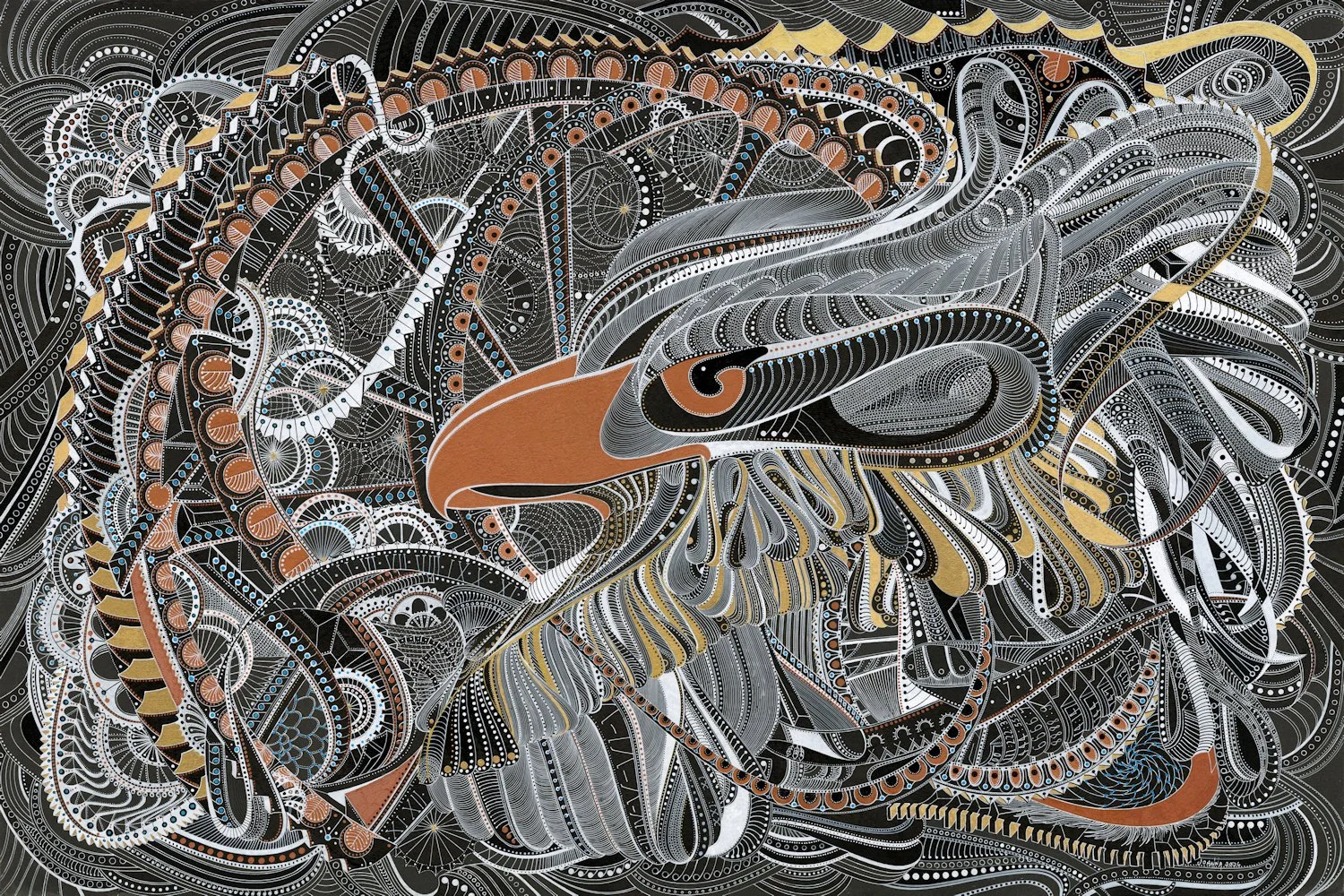
Eagle Of Nationssm
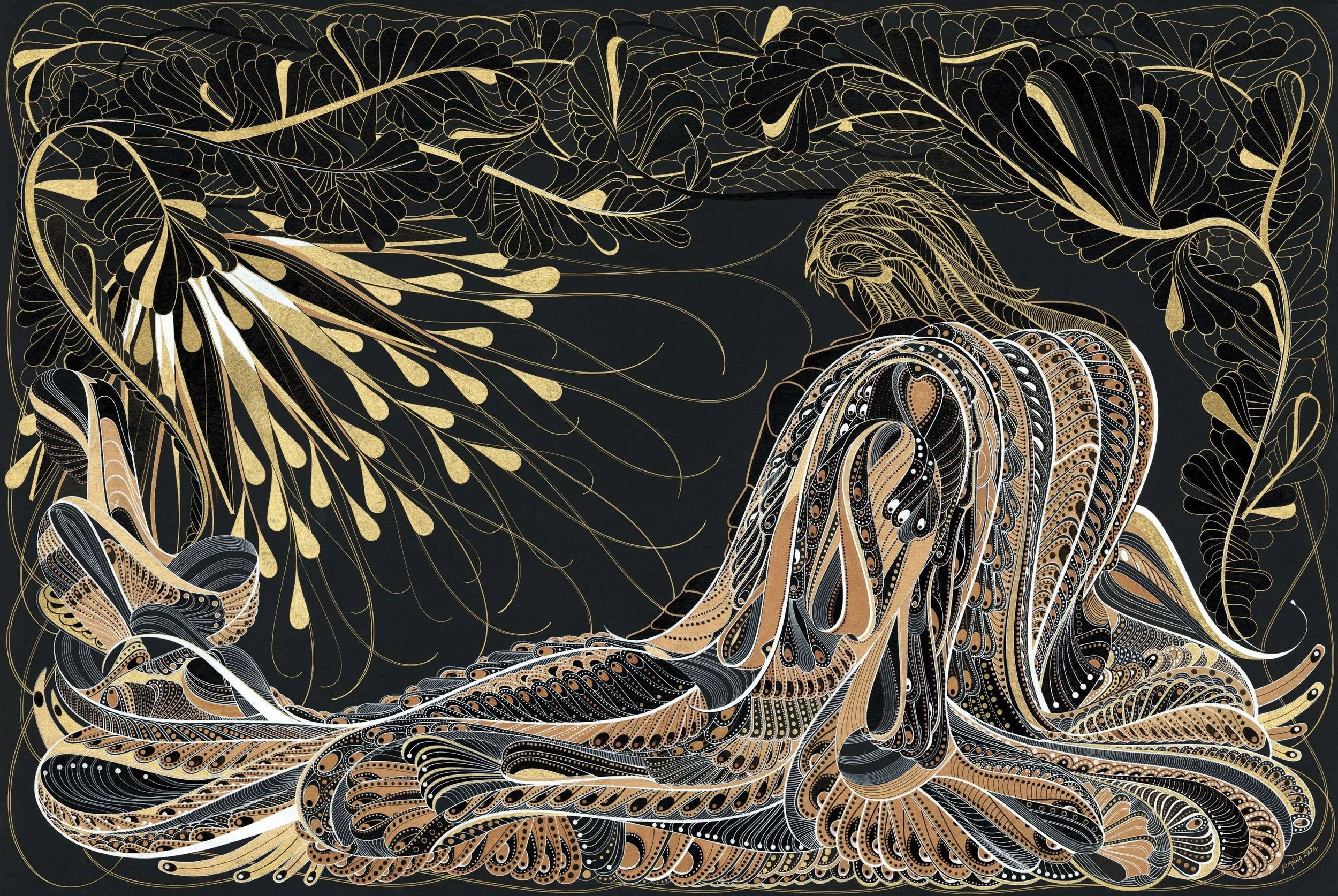
The Guardian At Sunrise
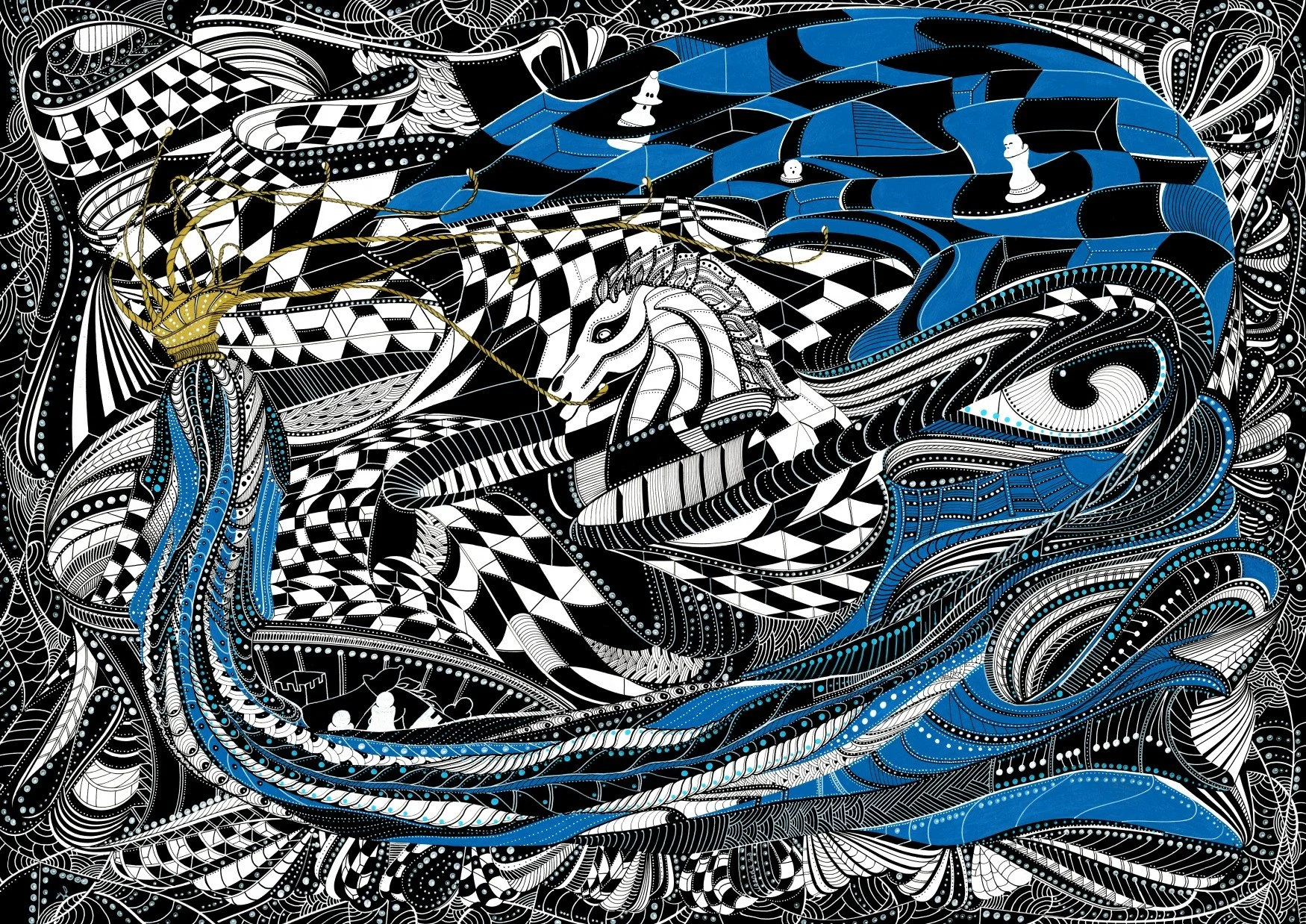
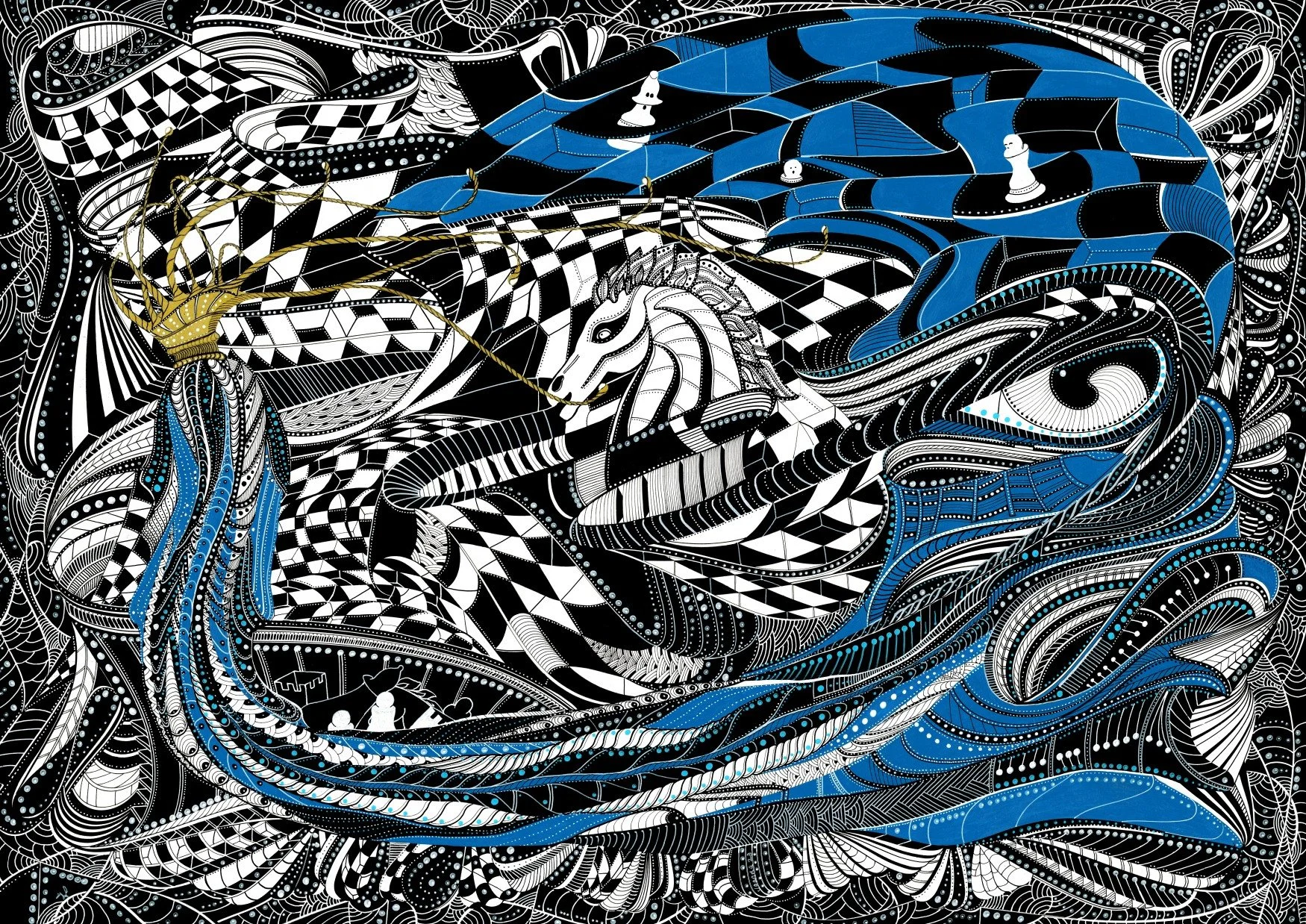
Queens Gambit
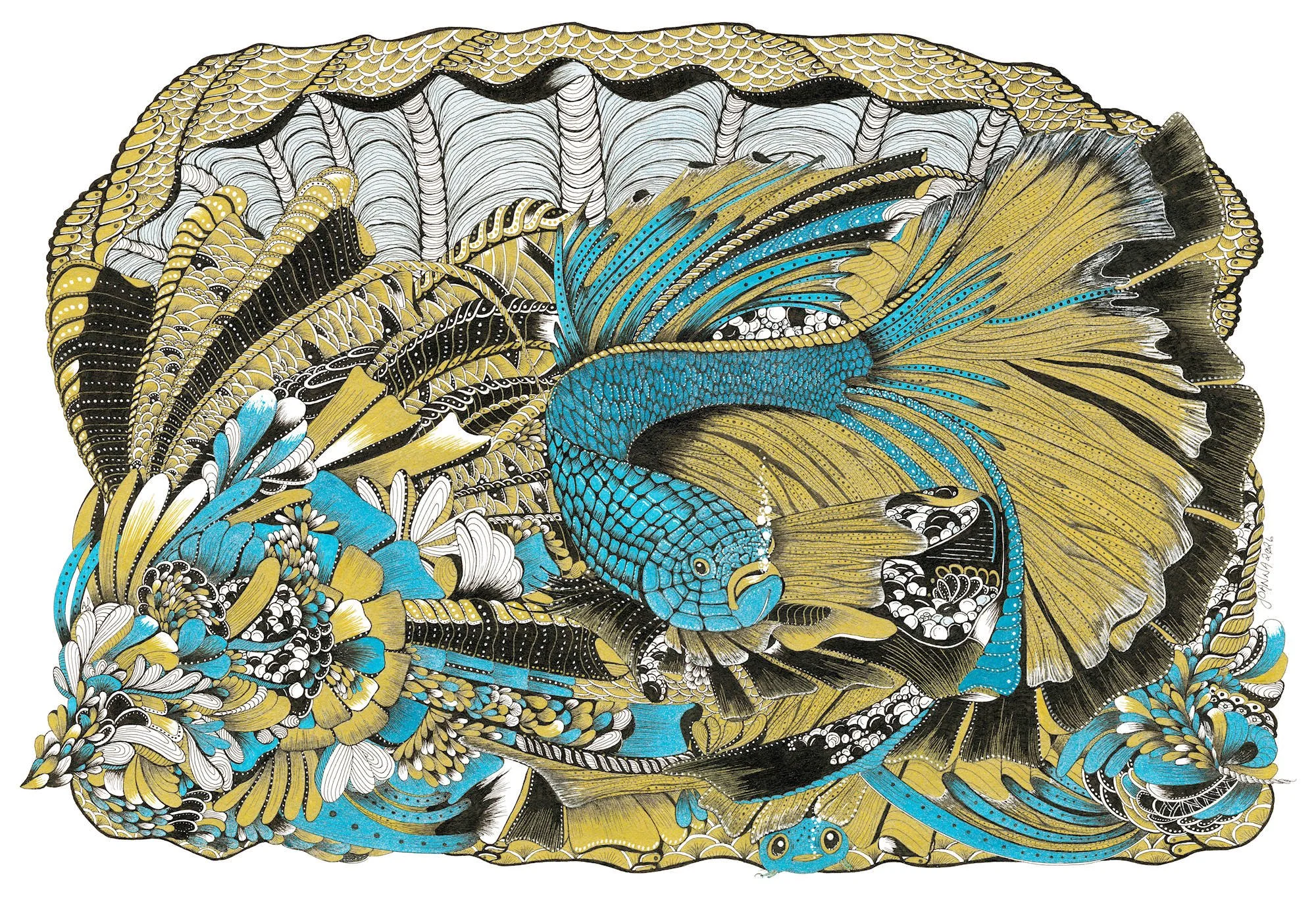
Inside the Shell
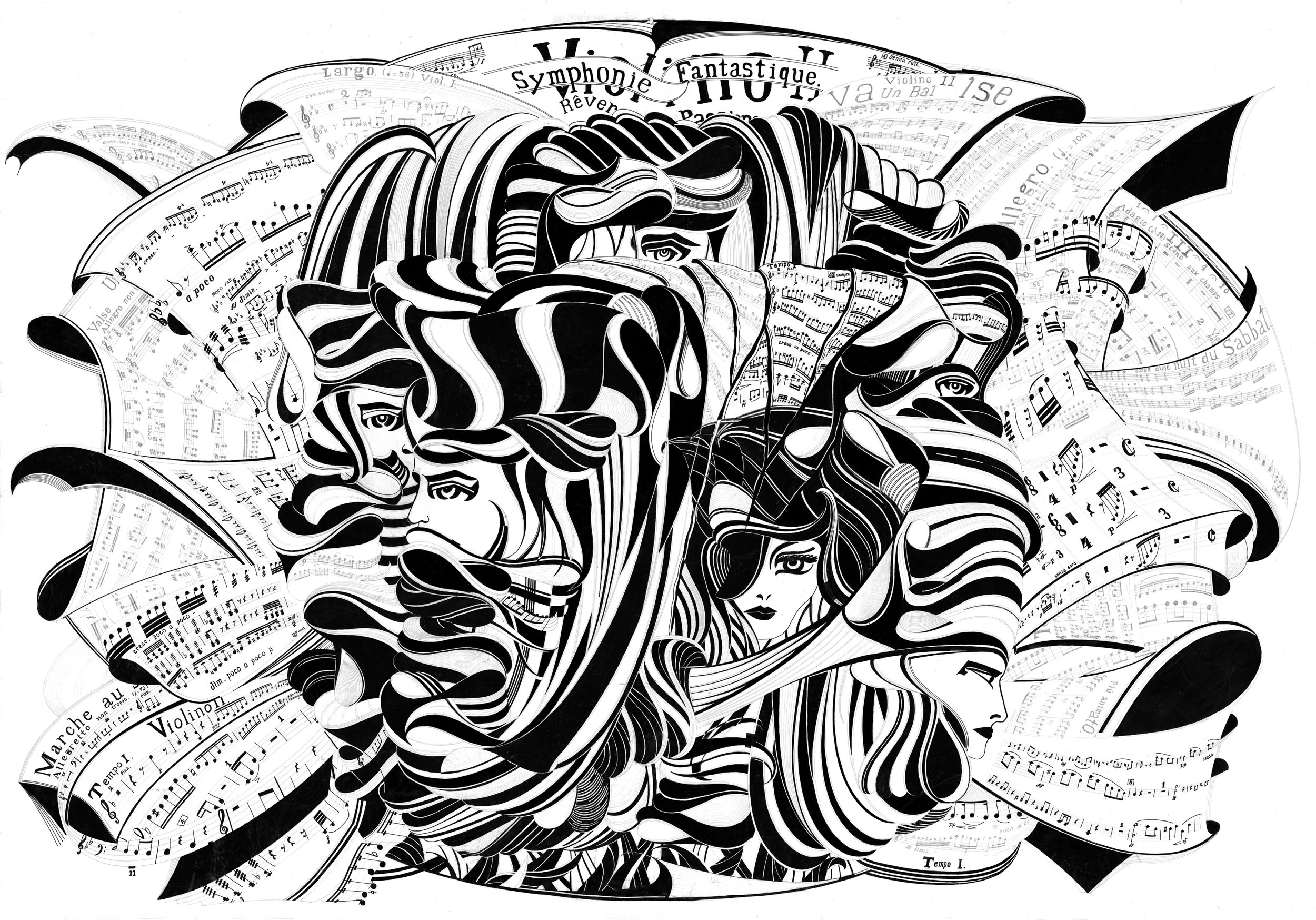
The Rhythm of Life 5
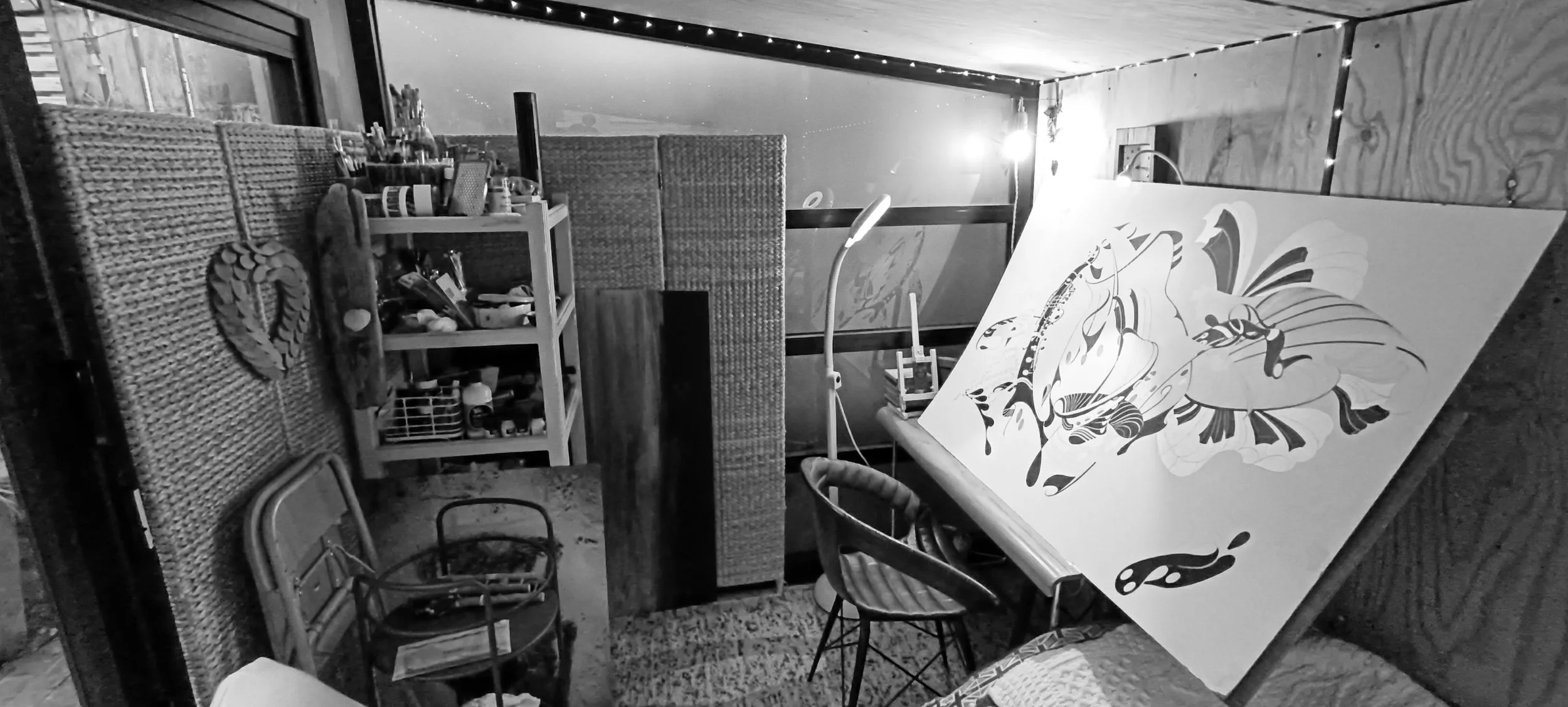
Joanna Levesley Studio
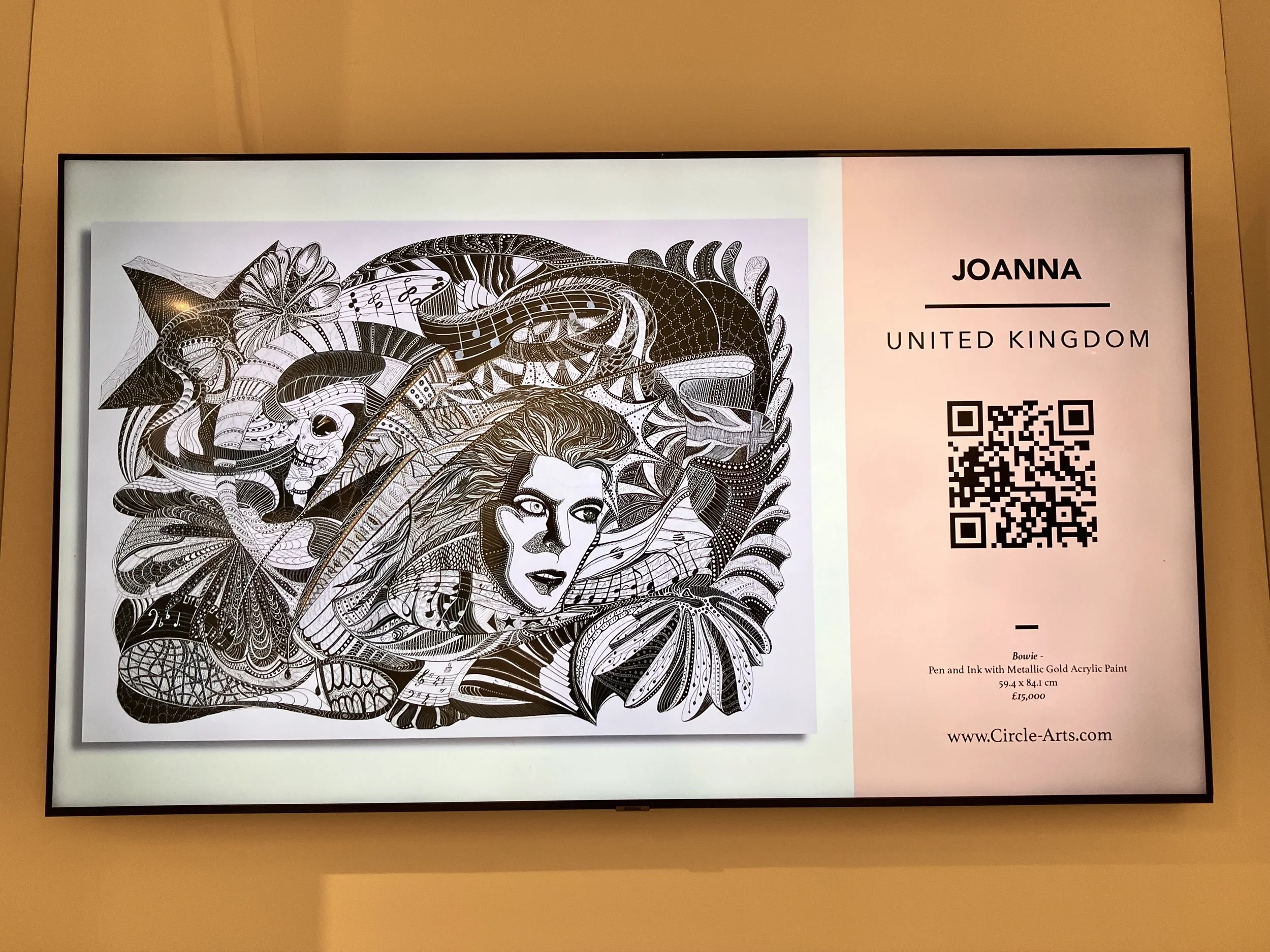
Circle Arts Red Dot 2024
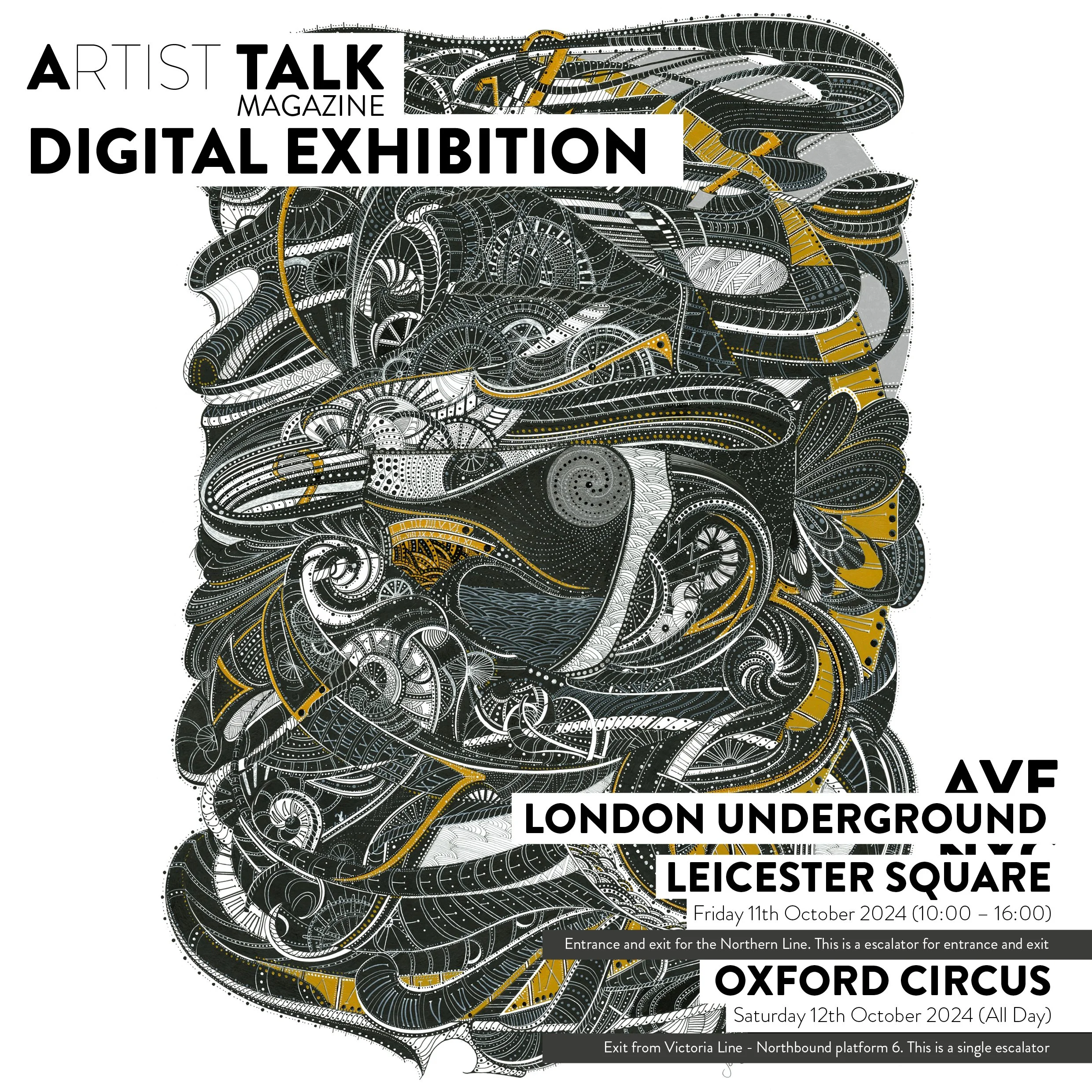
Promotion Square
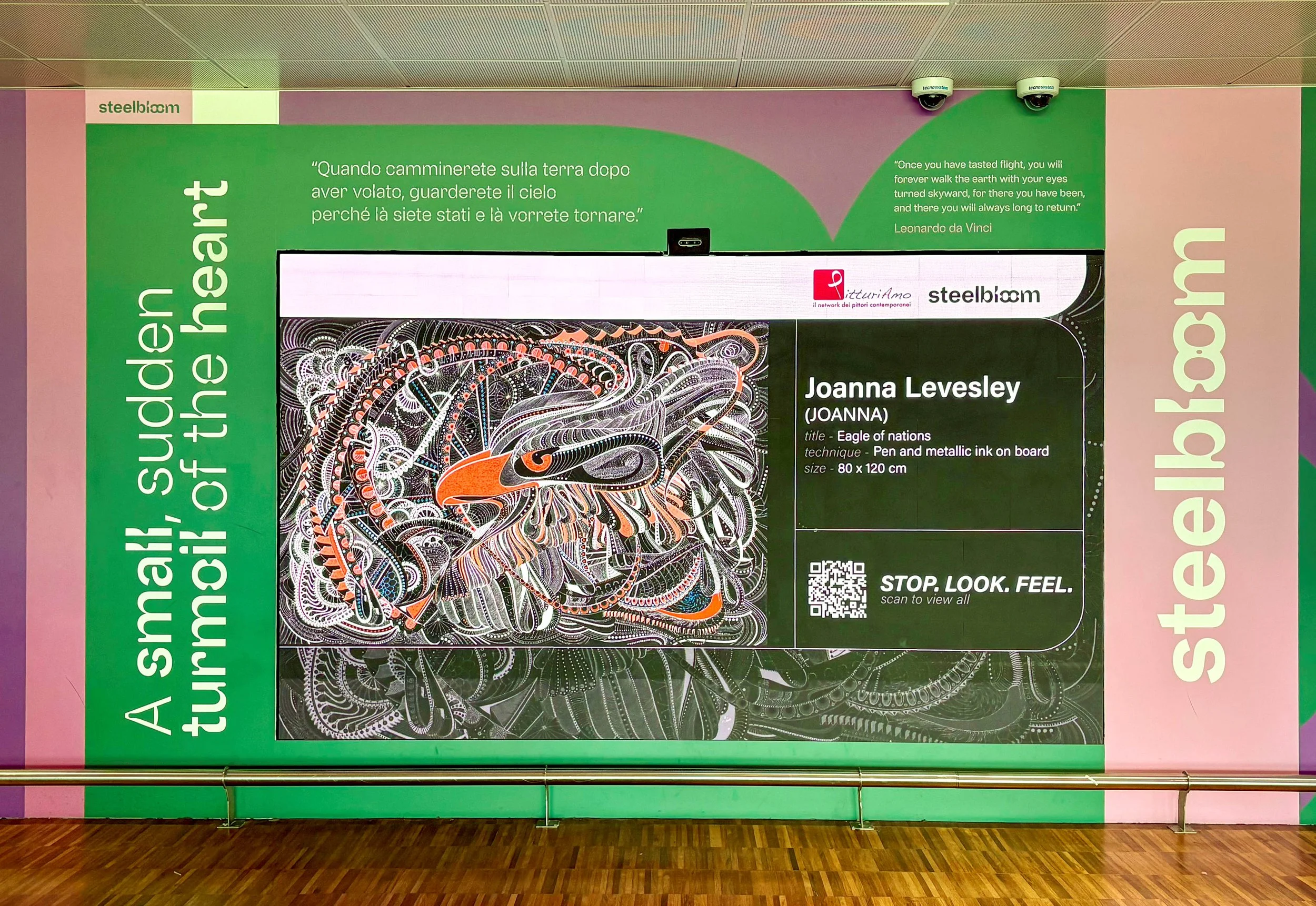
Steel Bloom Exhibit