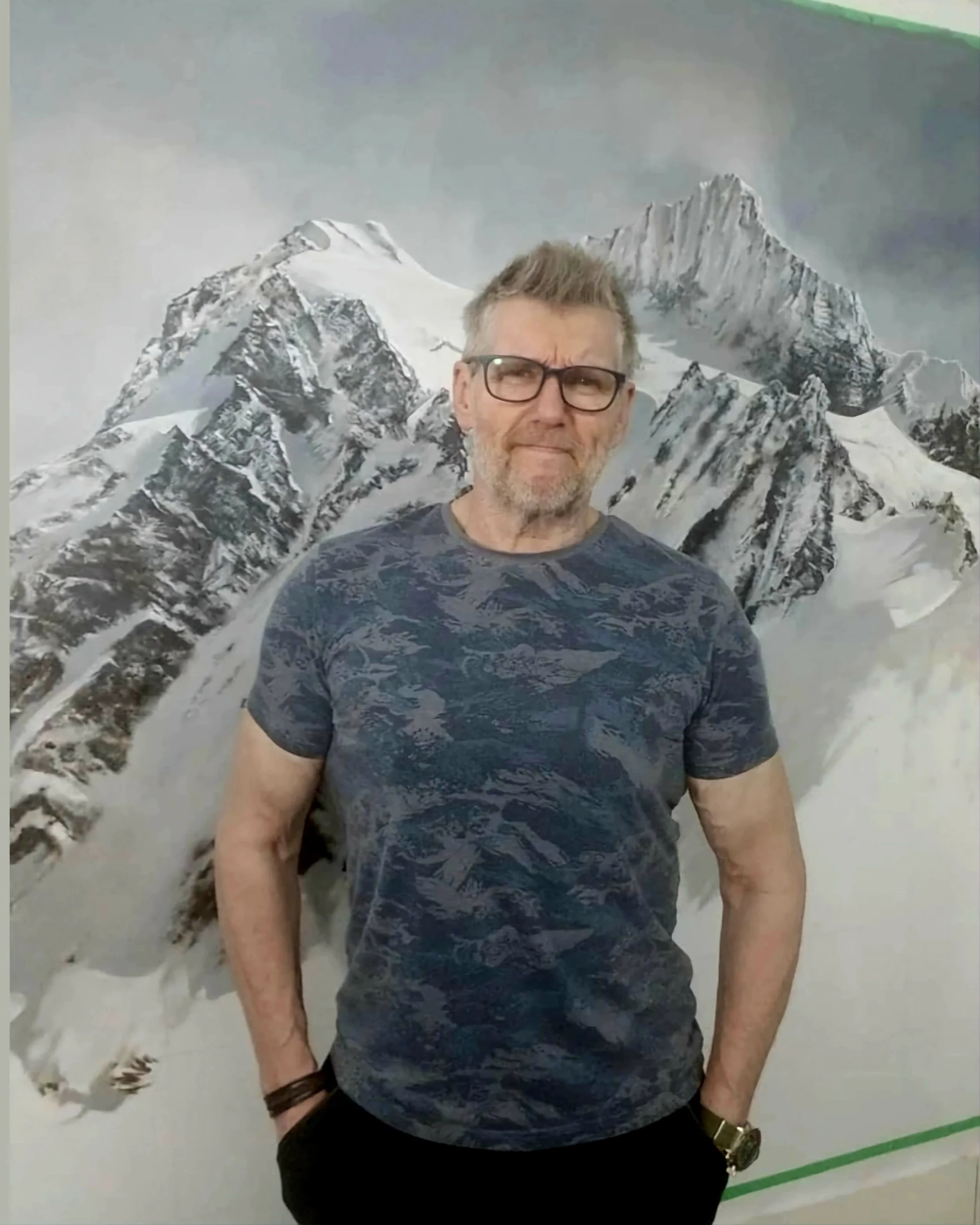
Detlef Gotzens "Dego"
-
→ Article April 30, 2025 Excavations of the Self: Artrewards Gallery, Oslo
Detlef Gotzens' Art Explore the profound works of Detlef Gotzens, where themes of identity, memory, and transformation converge. Immerse yourself in his evocative creations and uncover the stories they tell.
Introduction Detlef Gotzens is an artist whose work embodies the profound relationship between identity, memory, and transformation. His artistic practice is steeped in a fusion of abstraction, symbolism, and a unique interplay of materials, showcasing an exploration of the self that resonates deeply with art students, collectors, and enthusiasts alike. This article examines Gotzens’ artistic evolution and his contribution to contemporary art, offering insights into his creative processes, influences, and enduring themes.
Early Influences and Artistic Development
Gotzens' fascination with art began at an early age, fueled by a natural inclination to draw and create with his hands. His grandmother, recognizing this passion, gifted him his first set of oil paints, unknowingly laying the groundwork for his future in art.
At just 15, Gotzens became an apprentice at one of Cologne's oldest stained glass studios. This experience nurtured his creative instincts and gave him a glimpse into professional artistry, working on commissions alongside established artists. The collaborative environment planted the seed for his eventual commitment to the arts.
By 1975, Gotzens’ passion for creativity took a formal direction when he received a scholarship to study at the Academy for Glass Technology and Design in Rheinbach. This period was pivotal in honing his technical skills. It was also the beginning of a long, often turbulent artistic journey enriched by his training in glass craftsmanship, a discipline that continues to inform his work.
The Cologne Art Scene and Surrealist Inspirations
The dynamic art scene of Cologne in the 1980s left an indelible mark on Gotzens. The city was a cultural epicenter, bustling with young, groundbreaking artists and significant galleries, such as Michael Werner and David Zwirner. Movements such as "The Young Wild" provided fertile ground for creativity, and Gotzens immersed himself in this vibrant environment, rubbing shoulders with influential figures like Walter Dahn, Sigmar Polke, Albert Oehlen, and Martin Kippenberger.
Beyond the burgeoning local scene, Gotzens drew inspiration from the works of Surrealist masters like Salvador Dalí and Max Ernst. Their exploration of dream-like imagery and their experimentation with new forms sparked his early experiments in surrealism, which he applied not only to his paintings but also to the glass panels he created during this time. This merging of diverse influences became a hallmark of Gotzens’ art, bridging mediums and styles in unconventional ways.
Artistic Style and Themes
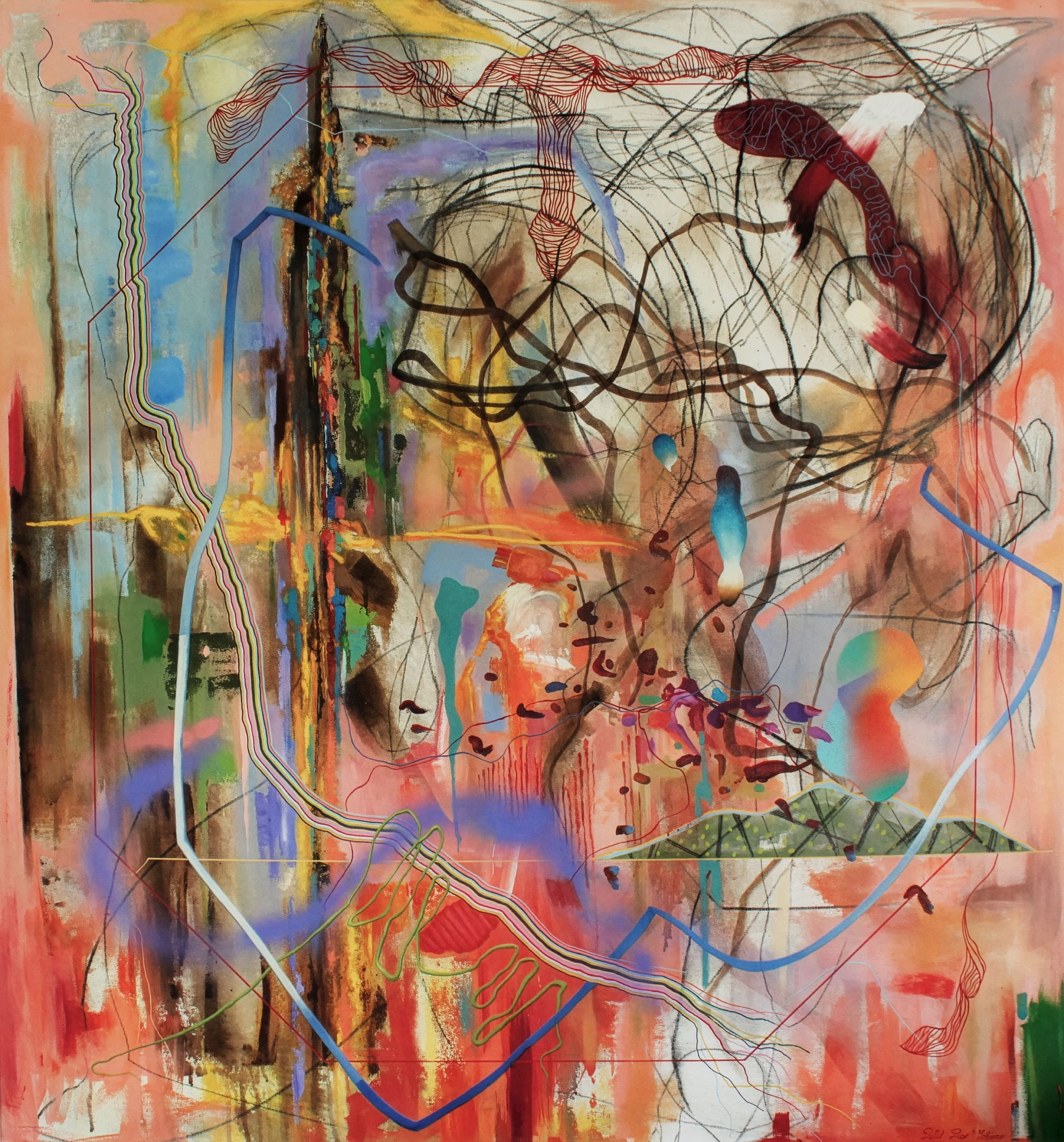
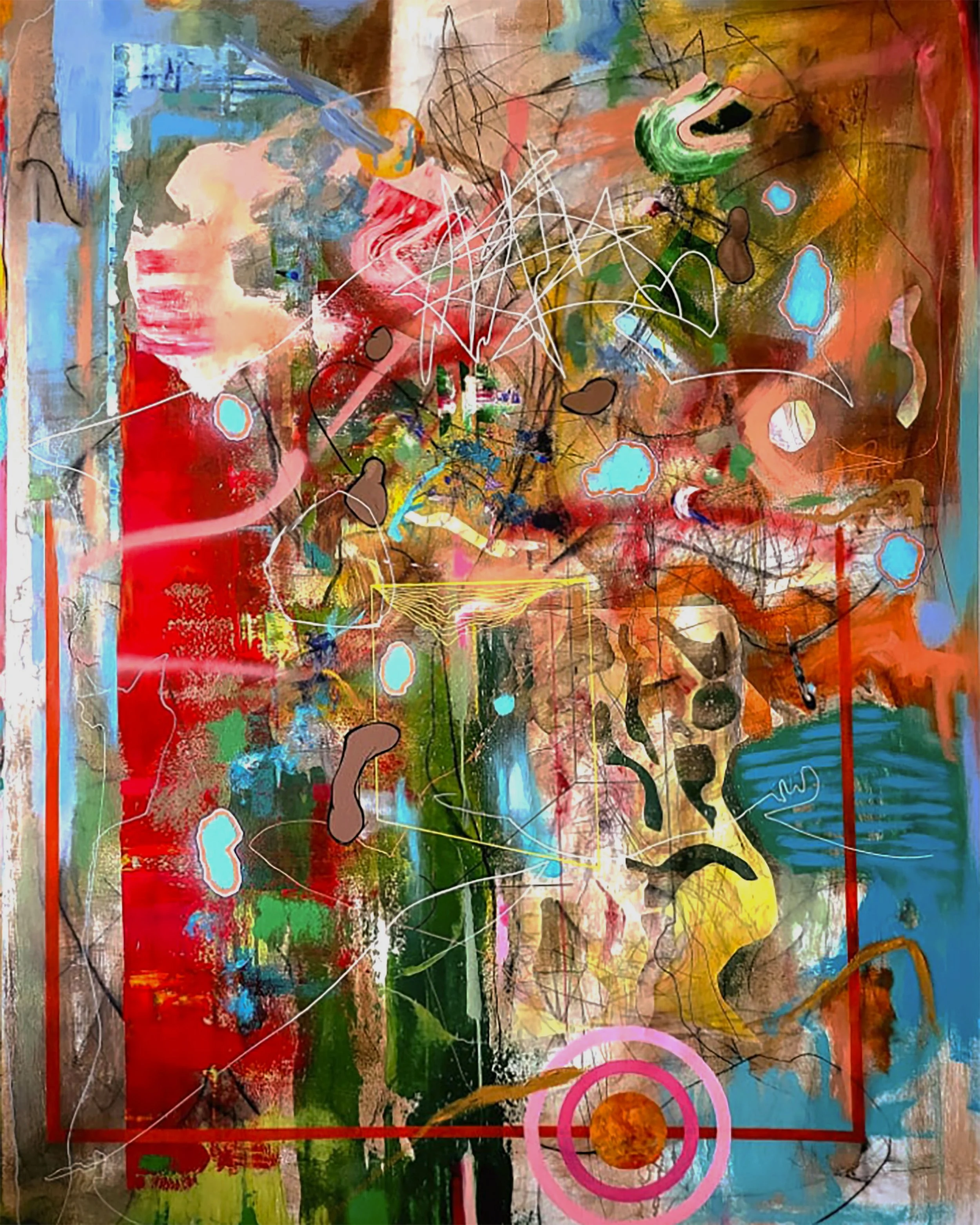
At its core, Gotzens’ work defies strict classification. While he describes himself as an abstract artist, he often integrates figurative elements into his compositions. His art is distinguished by its fluidity, constantly evolving in response to his experiences and environment. Those familiar with his work frequently note its distinctiveness, reflecting the depth of his creative vision.
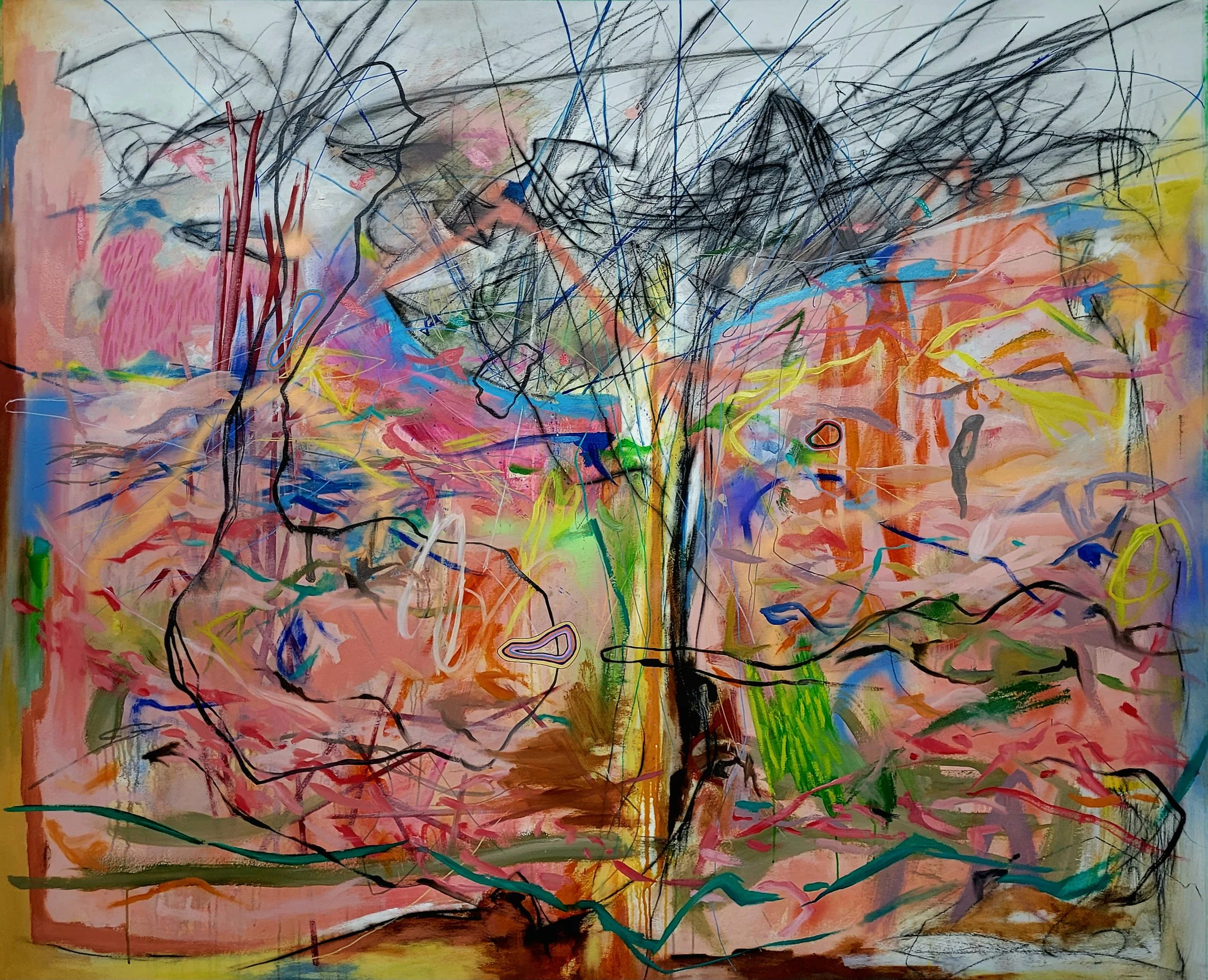
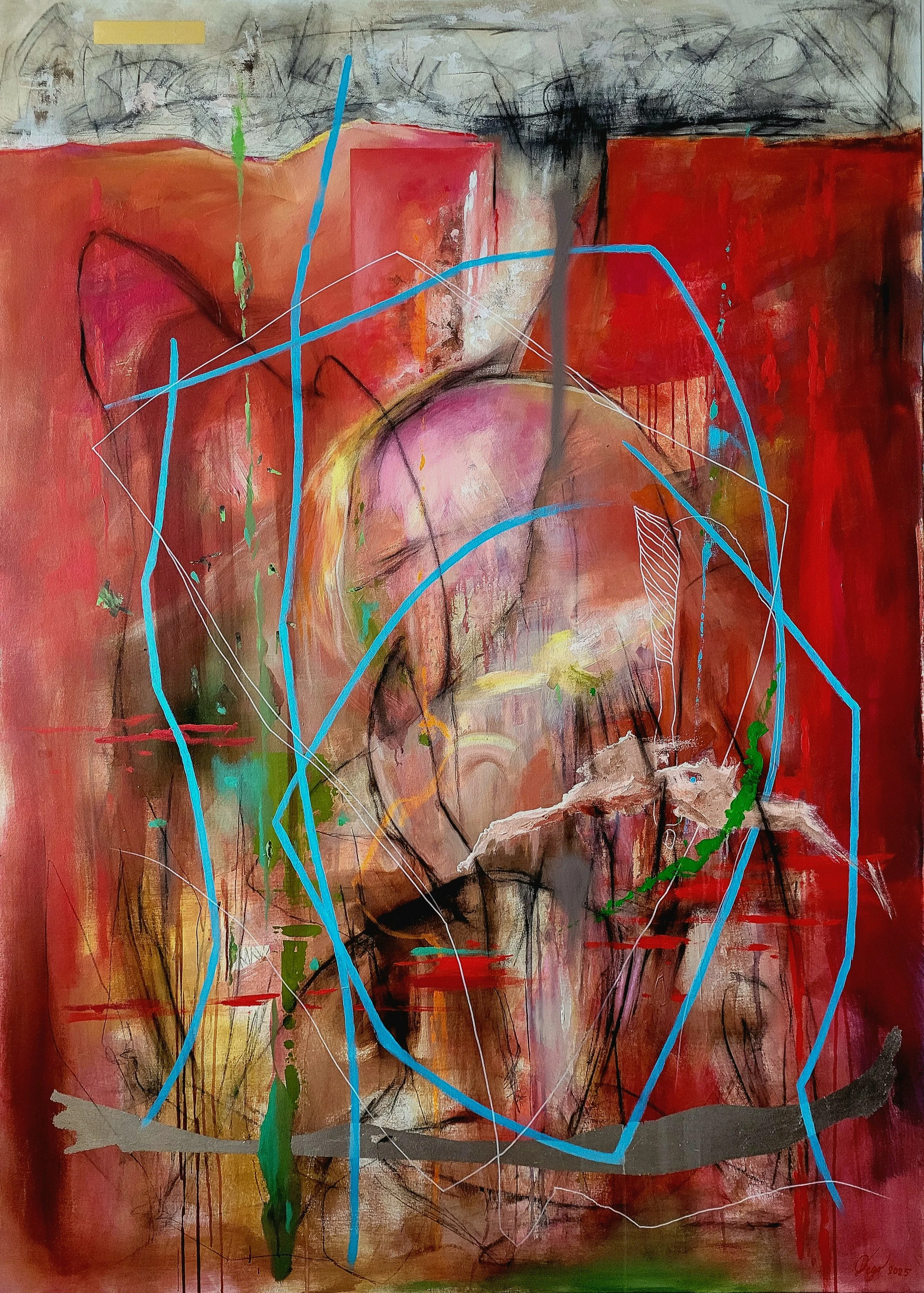
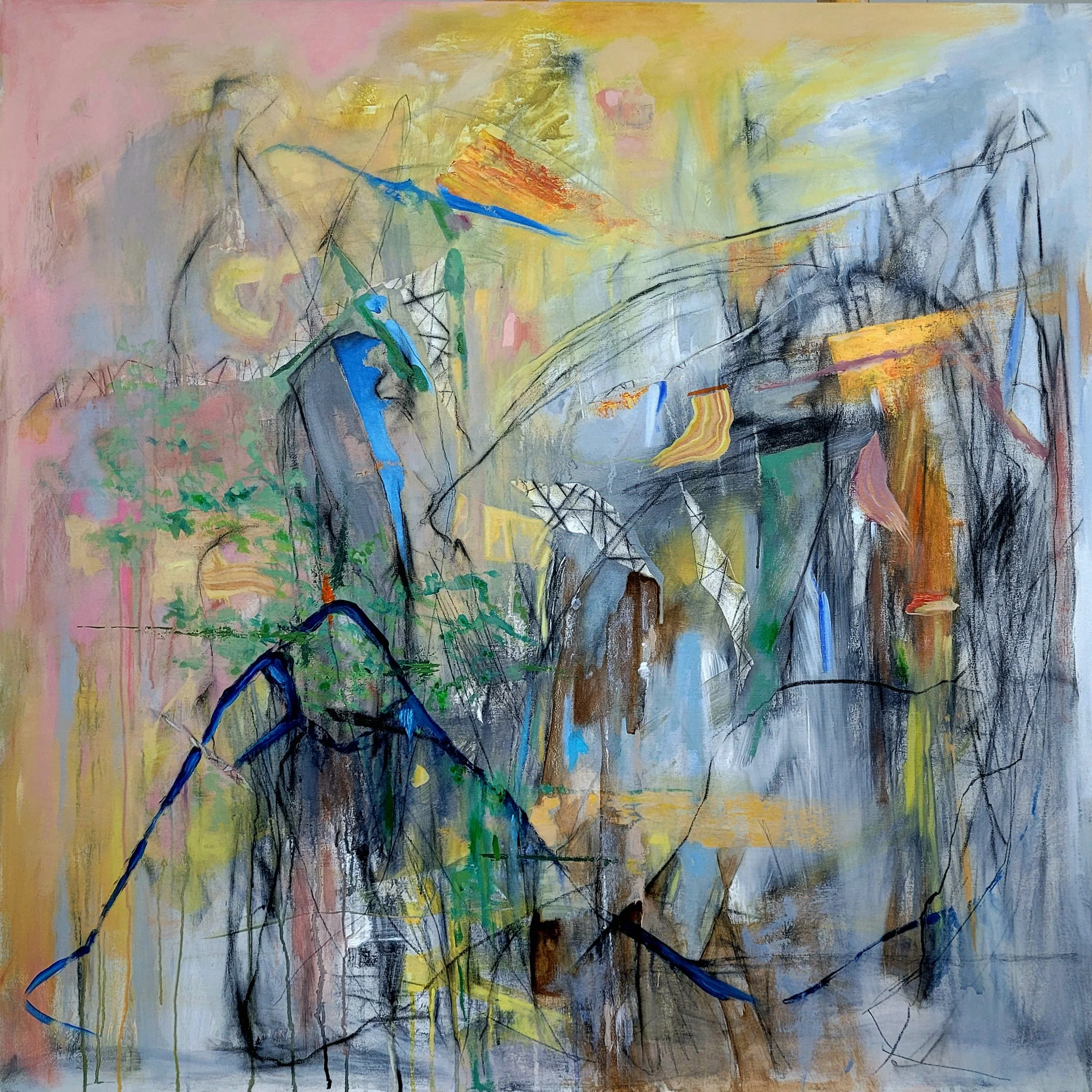
Key themes underpinning Gotzen’s artistic exploration include identity, memory, and the continuous excavation of the self. His creative process involves an ongoing dialogue with his materials; marks made in charcoal evolve into layered compositions, each stage inviting further contemplation and refinement.
The influence of his education in glass artistry persists in his practice, adding a unique architectural and textural element to his pieces. Gotzens skillfully integrates different materials, from oils and acrylics to paper and fabric, creating rich, multidimensional works that invite viewers to uncover their layered meanings.
Entangled Excavations (2025)
The "Excavations" Series
The "Excavations" series represents Gotzens' current artistic focus, a culmination of his lifelong exploration of form, texture, and meaning. This body of work is a metaphorical unearthing of his visual language, developed over decades of artistic practice.
The series embraces complexity and ambiguity, with each piece acting as a visual representation of the intellectual and emotional processes involved in their creation. The layered compositions challenge viewers to engage deeply, offering new discoveries upon each viewing.
One notable piece from the series demonstrates Gotzens' ability to weave personal narratives into universal themes of transformation. The combination of stark architectural lines with painterly abstraction creates a tension that mirrors the dualities inherent in human experience.
Conclusion
Detlef Gotzens’ artistic evolution is a testament to the resilience and adaptability required of any artist. From his formative years in Cologne to his ongoing exploration of identity and memory, Gotzens has consistently pushed the boundaries of creativity, blending traditional techniques with modern sensibilities.
His work invites us to explore our own sense of self, challenging us to contemplate the layers of our experiences and understanding. For aspiring artists, collectors, and enthusiasts, engaging with Gotzens’ art offers a rare opportunity to witness the intimate relationship between an artist and their evolving body of work.
Dego’s Massacre of the Innocents
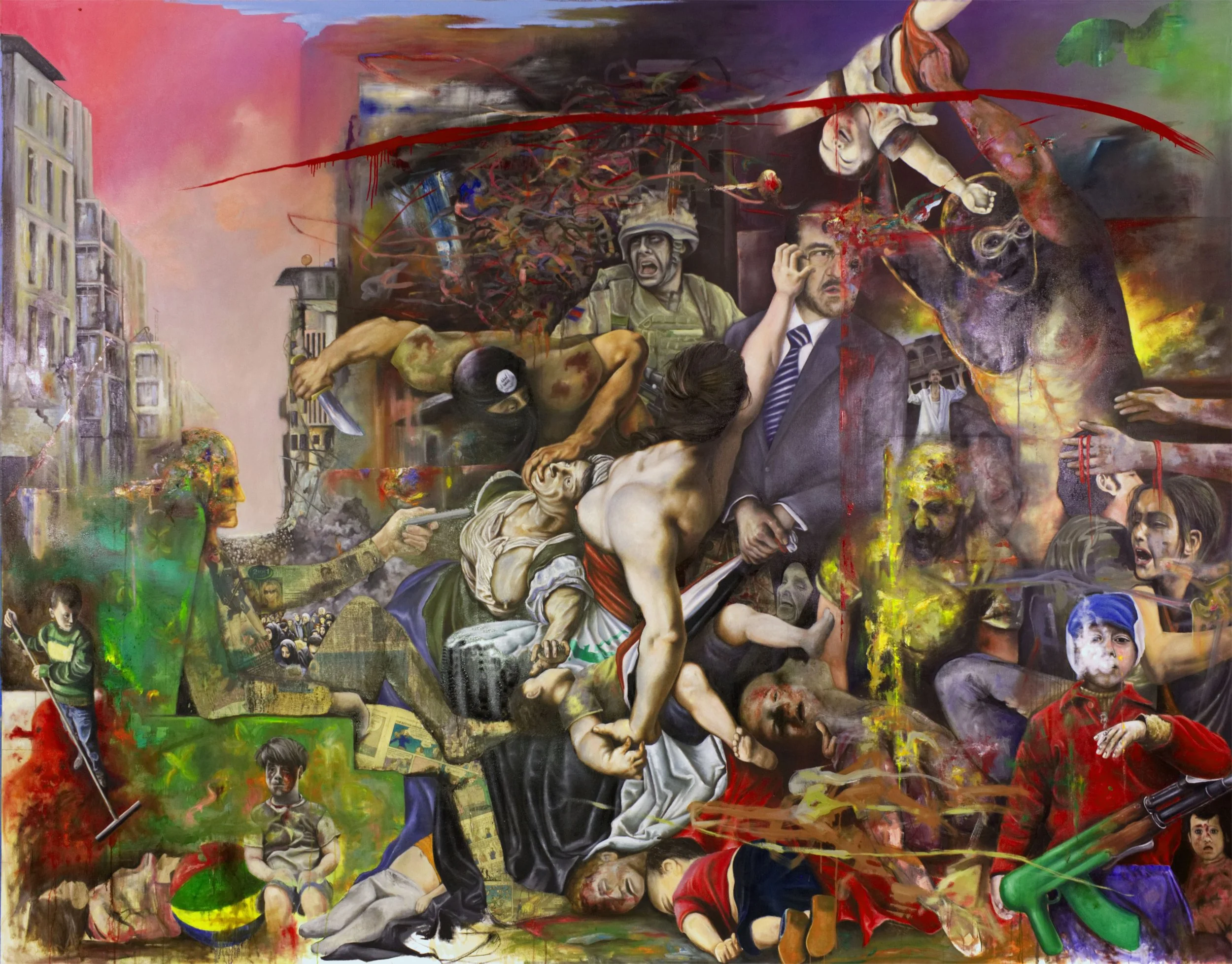
Introduction by Leonard BeaulneIn the tradition of Western painting, the Massacre of the Innocents has been one of the preferred themes of artists to depict the brutality of war and savagery in humankind. Not surprisingly, painters were drawn to it during periods of rising conflict and violence, and to its dreadful impact on vulnerable populations. This was particularly the case among masters of the 16th and 17th centuries in Europe, like Rubens, whose art flourished when the new modern age emerged. With this subject matter, they could display the power of their artistic innovations while simultaneously condemning the barbarism and depravity of their time. They worked on developing a visual system of representation that focused on movement, action, dynamics, sharp contrasts, and tension. Rubens is considered to have brought this system to its highest degree. When looking at his Massacre of the Innocents, one is struck by the dark energy pulsating throughout the scene, the realism in the portrayal of the human bodies, some of them quasi-sculpture-like, reflecting his intention of provoking strong emotions of awe, fear, horror, and sadness.
In presenting his Massacre of the Innocents, Detlef Gotzens (Dego) is taking upon himself a challenging task that he accomplishes with outstanding success. His work captures with as much vivacity the bewilderment, confusion, repulsion, and sheer frightfulness of victims senselessly slaughtered in our contemporary setting. The challenges faced by a painter intending to render in our context a classical theme with as much impact are various. Dego proposes skillful solutions that make his work a remarkable achievement.
First, there is the challenge of establishing a relationship with his illustrious predecessor while avoiding the pitfalls of repetition, pastiche, or kitsch. While the theme remains the same and the intention similar, Dego has to forge a pictorial language that is attuned to the expectations of a different audience. Rubens could rely on the biblical narrative as an external foil to give unity and coherence to his work. The credibility of the narrative was undoubted among his contemporaries and supported the acceptability of his painting. Within that given framework he could deploy all the resources of his talent and the innovations of baroque art to achieve a maximum impact.
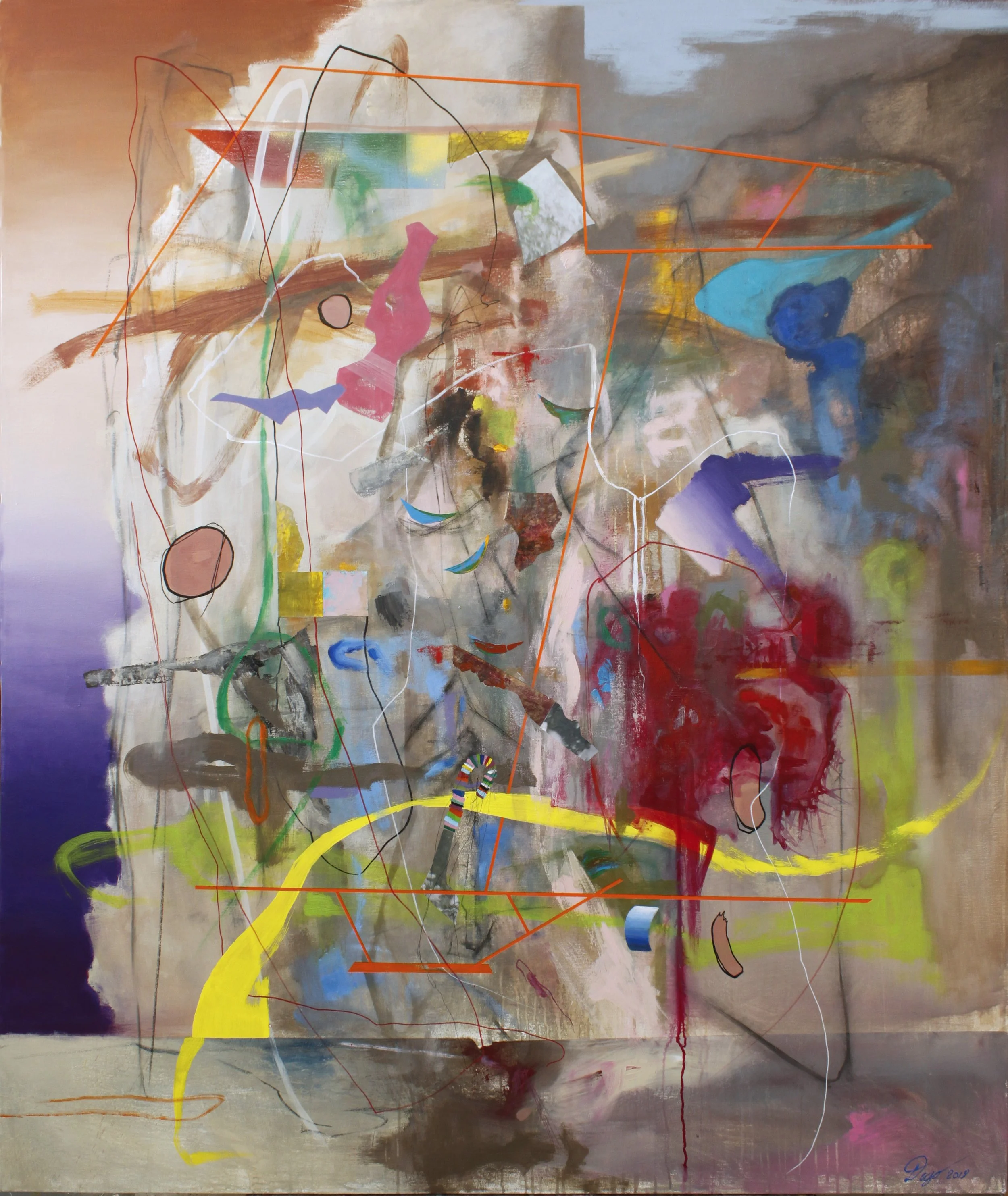
For Dego, the situation is different. While he maintains some of the structural elements of Ruben's composition, notably the central compact mass of twisting and buckling human bodies where the tragedy unfolds, he has to reconstruct within the painting itself the context that will give meaning to the scene. The off-balance masses of Rubens and their curvilinear interconnectedness are now compressed, truncated, and set in a mostly vertically segmented plane. Some of the characters remain well-defined with a painterly texture while many others hover above or around with a phantasmagorical presence. Indices pegged to these characters or strewn about the composition, like the child soldier in the foreground holding an ill-defined weapon, provide some clues to what is going on and the agencies at work. The traditional narrative unity of the scene is broken, however. The viewing experience is constantly interrupted by the switching and overlapping of segmented planes accentuating the feeling of dissonance and discordance. While some figures are well delineated, giving strength to the image, others have little contour, fusing at times with the background. The illusion of space is very limited as aerial and linear perspectives are barely present.
Perhaps the most striking feature of the painting, at first glance, is the brilliance, high luminosity, and intensity of the colors. Pure colors shape forms, creating an impression of crispness and presence. It is as if figures were seen through high-definition digital media. Through the power of mimetic representation, the overall picture becomes an image of images, sharing with them the capacity to construct a self-referential world whose grammar is provided by their structural juxtaposition. This captures well the basic experience of a contemporary audience whose access to the world is shaped and mediated by the extended network of the media. The illusion thus created is that the world is always ‘in front of us’ and not ‘around us’.
In presenting a reinterpretation of such seminal work as that of the Rubens painting, Dego is also compelled to meet a second challenge pertaining to the new conditions of visual credibility of painting in the present context. As a minimum, the advent of a modernist sensibility does away with the often criticized ‘theatricality’ or ‘stage-setting’ features of Rubens’ art. Once the ‘stage-setting’ effects of a painting are seen through, the painting loses its capacity to mesmerize and transfix the beholder. The risk of ‘theatricality’ is however always present in any painting, as the fundamental convention of paintings is to be seen by a beholder who always stands ‘in front of it’. Artists employ many strategies to neutralize ‘theatricality’ and thus enhance credibility. In his Massacre of the Innocents, Dego proposes a remarkable solution to increase believability and strengthen the impact of the work. He inserts a beholder within the structure of the painting itself, creating an alter ego to the viewer. This alter ego is fittingly made up of a collage of newsprint. He is as disembodied as can be and seems to exist only to function as a point of view for observing the cascading and ghastly images making up the scene. We are absorbed unwittingly by our identification with this alter ego, while remaining in reality outside of his purview. A space is thus opened, allowing for the possibility of self-awareness.
The system of representation that underpins this brilliant work allows us, as the real beholders, to experience the full ambiguity of being mere spectators while at the same time, through the unfolding of the spectacle, to still be deeply moved by the sight of human suffering.
-
Solo Exhibitions
→ “Art in Time”, 2023, Le MUSO, Museum in Valleyfield, Quebec
→ “Excavations”, 2019, Alpha Gallery, Ottawa, ON.
→ “Rational spaces”, 2017, Alpha Gallery, Ottawa, ON.
→ Tremors, E.K. Voland Gallery, Montreal — 2015
→ Galerie Elena Lee, Montreal — 2011
→ Salle Alfred-Langevin Cultural Centre, Huntingdon, QC — 2005
→ Galerie Port-Maurice, QC — 1987
→ City of Dorval Cultural Centre — 1986
→ Galerie Van Remmen, Solingen, Germany — 1984
→ Siemens Headquarters, Cologne, Germany — 1981
→ Goodyear Germany, Cologne — 1981
Group Exhibitions & Fairs (Selected)
→ ARTA Gallery, Toronto — 2014–2015
→ SOFA Chicago — 2010, 2011, 2012
→ Saatchi Gallery, London — 2012 (2nd Prize, Showdown Competition)
→ Montreal Museum of Fine Arts — 2013 (during Dale Chihuly exhibition)
→ ARTEXPO Toronto — 2012
→ Marzia Frozen Gallery, Berlin — Apocalypse Now, 2011–2012
→ Amsterdam Whitney Gallery, New York — 2011
→ Museum of Fine Arts, Montreal — 1992 (during René Magritte exhibition)
-
→ Saatchi “Showdown” Competition — 2nd Place, London, 2012
→ ArtSlant Showcase — Juried Winner, 2013–2015
-
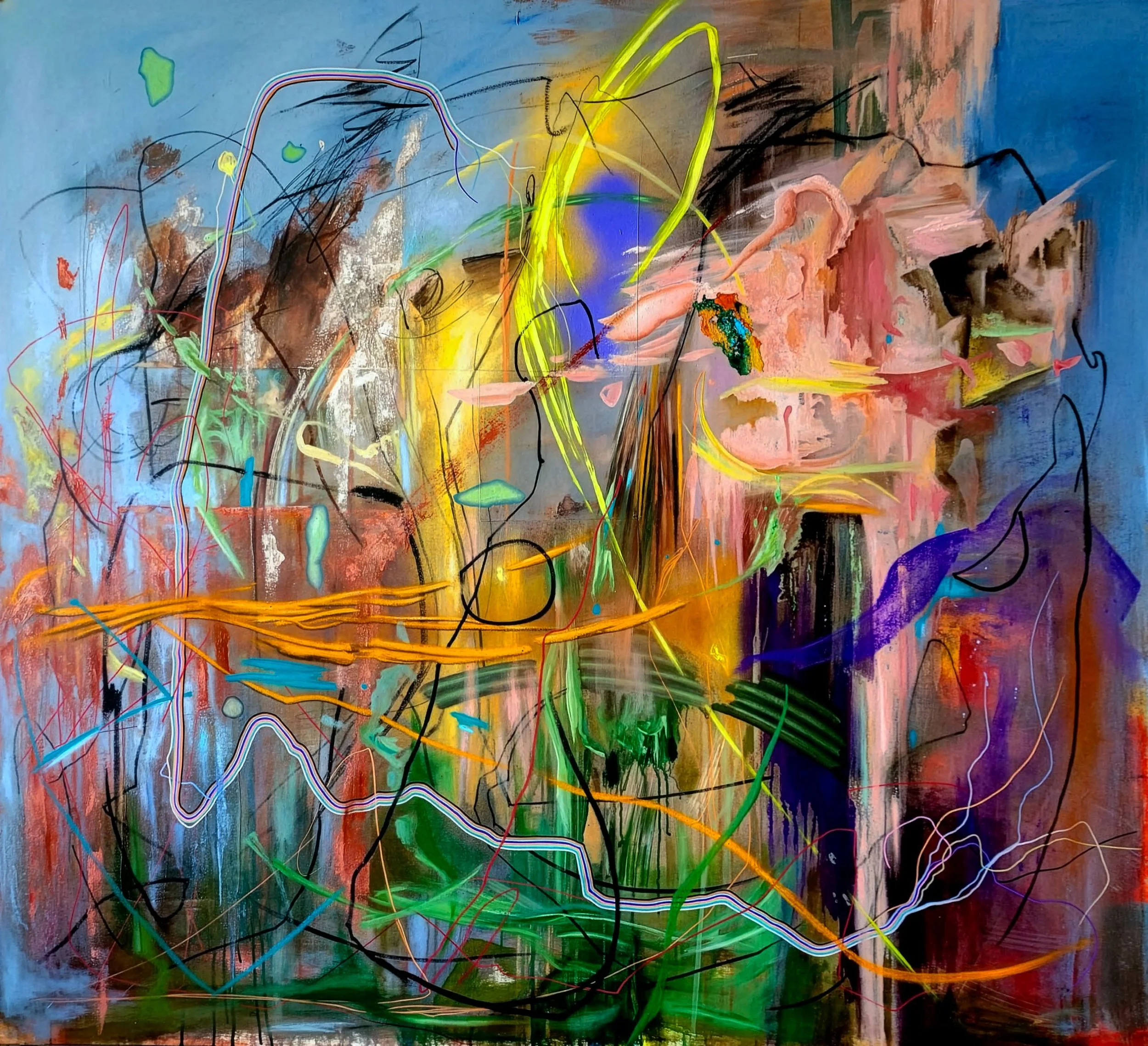
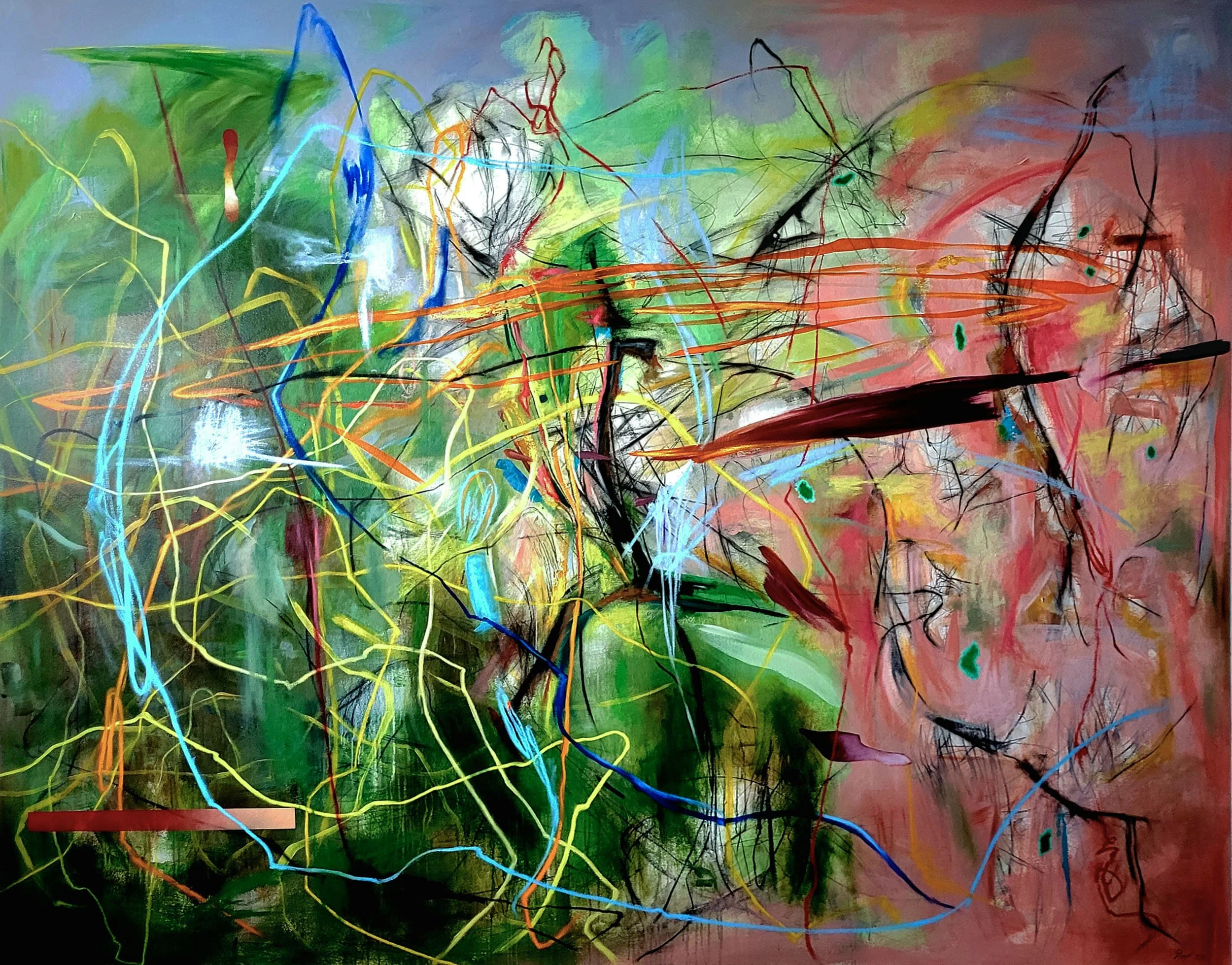
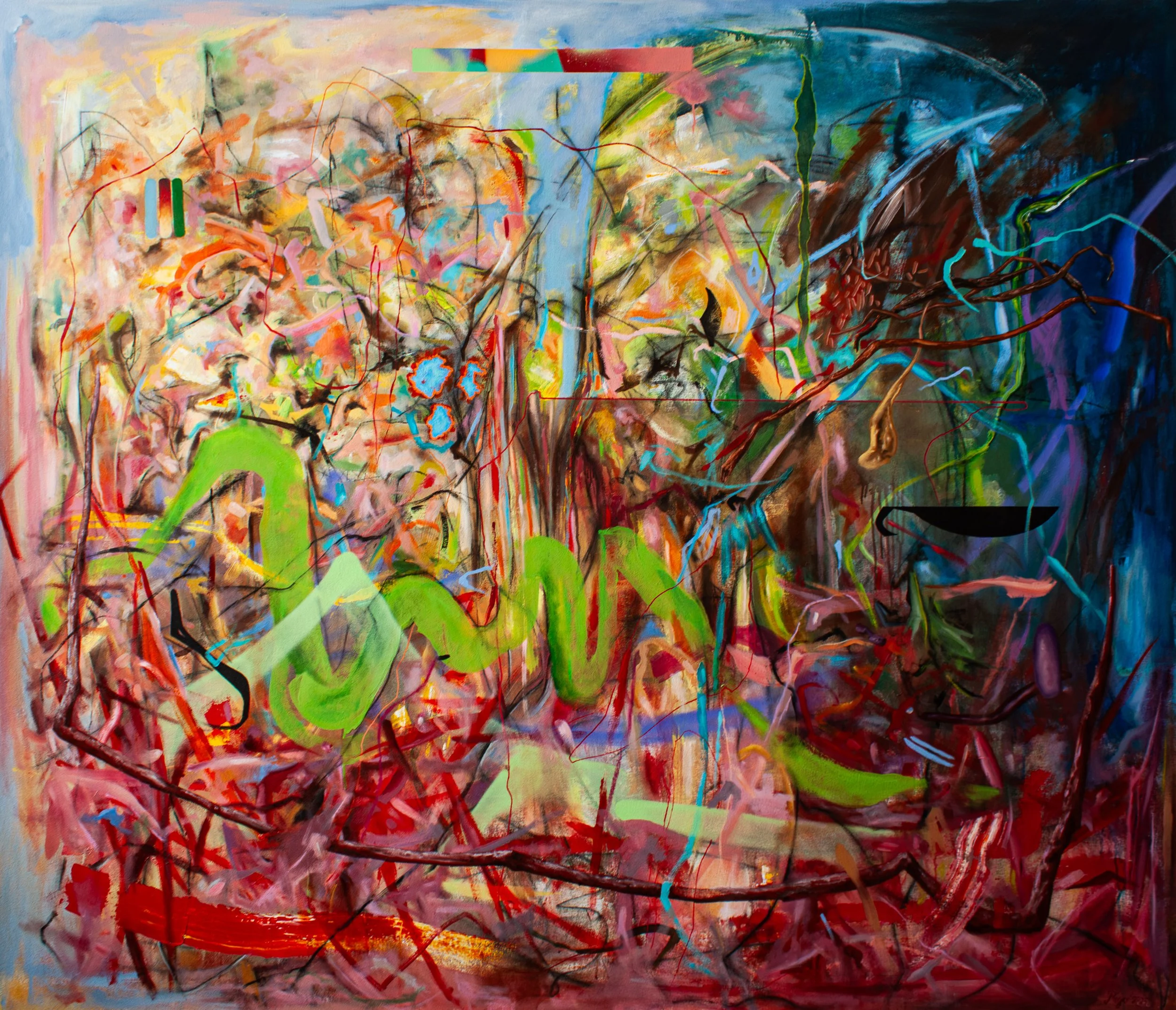
Is a contemporary artist whose work operates at the intersection of material mastery and painterly inquiry. Trained in the historic discipline of stained glass, became one of the youngest Masters of the Guild of Cologne in 1977 at the age of 25. This foundation in a centuries-old tradition continues to inform a practice defined by precision, structure, and an enduring engagement with light as both medium and subject.
Working across painting while maintaining a lifelong involvement in stained glass, conservation, and restoration, occupies a unique position between preservation and innovation. This duality underpins a visual language that moves fluidly between abstraction and figuration, resisting fixed categorization while maintaining a strong internal coherence.
Light—understood not only as illumination but as a structural and conceptual force—remains central to the work. Decades of engagement with glass inform a distinctive approach to spatial construction, where surfaces appear layered, permeable, and in constant transition.
A defining example of this approach is the 2018 painting Massacre of the Innocents, in which historical reference is reconfigured through a contemporary sensibility. Here, figuration emerges and dissolves within a charged, unstable field, confronting the viewer with themes of violence and collective memory while resisting narrative closure. The work marks a key moment in ’s ongoing exploration of the tension between image and dissolution.
’s practice is distinguished by its intellectual and material continuity. Drawing equally from tradition and lived experience, the work engages with questions of time, transformation, and the persistence of image. As such, it has garnered increasing attention from collectors and curators attuned to practices that combine technical authority with conceptual depth.
Positioned between historical lineage and contemporary discourse, ’s work asserts a singular and sustained contribution to the language of painting.
My work emerges from a sustained engagement with glass and painting, shaped by an understanding of light as both material and structure. Trained in stained glass, I have approached image-making through the construction of space, where luminosity is not applied but embedded.
In painting, I work within a field of instability. Forms appear, shift, and dissolve, moving between abstraction and figuration without fixed resolution. This movement is central to the work, allowing images to remain open rather than defined.
My experience in conservation and restoration has informed a sensitivity to time and transformation. Encounters with historical works have reinforced an awareness of the image as something contingent—subject to change, erosion, and reinterpretation. This condition carries into my own practice, where surfaces retain traces of their making and unmaking.
The painting Massacre of the Innocents (2018) marks a point of concentration within this approach. Drawing on a historical subject, the work resists narrative clarity, instead presenting a shifting field in which figuration emerges and recedes. The image remains unresolved, reflecting the persistence of its underlying condition rather than its depiction.
Across the work, I am engaged with the tension between structure and dissolution, presence and absence. Each painting operates as a site where these forces remain in active negotiation.