As the international art market moves towards 2027, the investment case for fine art is being reassessed. A selective recovery in auction sales, changing collector priorities and greater scrutiny of contemporary valuations are challenging the assumption that artistic prestige guarantees financial appreciation. For collectors and investors, understanding the relationship between cultural significance, market liquidity and long-term value has become increasingly important.
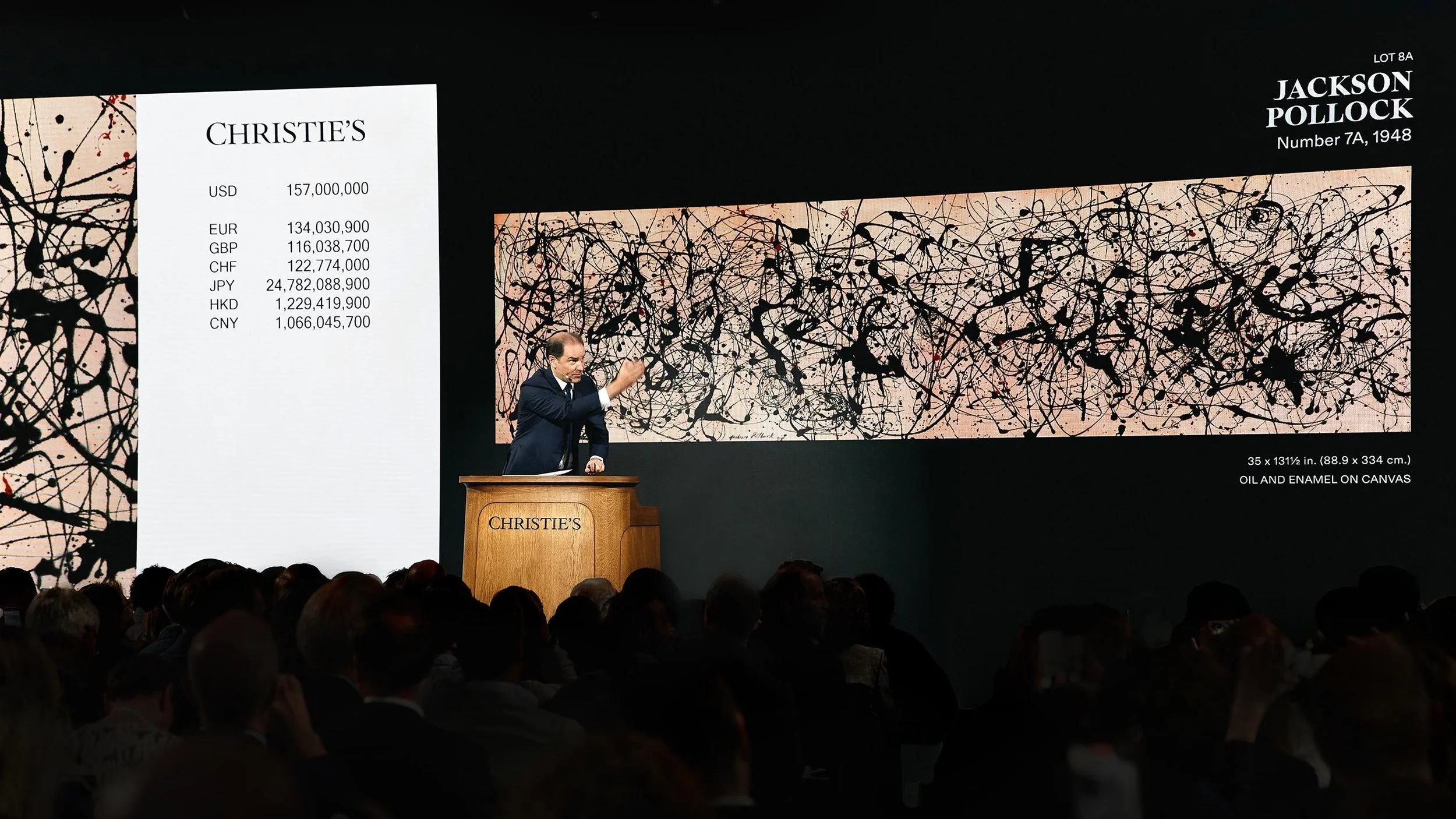
The sale of a Jackson Pollock painting for $181.2 million at Christie's in May 2026 demonstrated the extraordinary financial value that the international market can assign to an exceptional artwork. Yet the transaction also revealed something less reassuring for investors: spectacular auction prices can coexist with declining valuations, weak liquidity and considerable uncertainty across other areas of the market.
After two consecutive years of contraction, global art sales increased by 4% in 2025 to an estimated $59.6 billion, according to the Art Basel and UBS Art Market Report 2026. The recovery was concentrated among high-value works, while substantial parts of the contemporary sector continued to experience pressure.
This divergence raises a fundamental question for 2027. Can art still be considered a credible alternative investment, or has the industry's recent correction exposed the limitations of treating cultural objects as conventional financial assets?
The answer requires looking beyond auction records towards the economics of ownership, the mechanisms through which artistic reputations acquire commercial value and the risks that distinguish artworks from more liquid investments.
The Investment Case After the Market Correction
Art's financial appeal has traditionally rested on several characteristics: scarcity, historical significance, limited direct dependence on corporate earnings and the possibility that exceptional works will appreciate as cultural reputations strengthen.
For wealthy collectors, these characteristics can make art an attractive component of a broader portfolio. Unlike financial securities, artworks also provide aesthetic enjoyment, intellectual engagement and opportunities for cultural patronage.
However, the performance of the international market between 2023 and 2025 exposed the limitations of assuming that these advantages necessarily translate into attractive investment returns.
According to Art Basel and UBS, public auction sales increased by 9% to $20.7 billion in 2025, while dealer sales rose by 2% to $34.8 billion. Reported private sales through auction houses declined by 5% to just under $4.2 billion. Although aggregate turnover recovered, the market remained below its 2022 peak.
The uneven recovery is particularly revealing when examined by price level.
Fine art auction sales above $10 million increased by 30% in value during 2025, whereas sales below $50,000 declined by 2%. The combined Postwar and Contemporary auction category recorded approximately $4.5 billion, representing a fourth consecutive year of declining values.
These figures suggest that art's investment characteristics vary considerably across market segments.
An exceptional museum-quality painting by an established artist may attract international bidding even during periods of uncertainty. A recently produced work by an artist with limited secondary-market history may face substantially different conditions.
The distinction is not simply between expensive and inexpensive artworks. It concerns the depth of demand, historical recognition, scarcity and the degree to which collectors perceive a particular work as irreplaceable.
Heading into 2027, investors may therefore place greater emphasis on the resilience of individual artworks rather than on broad expectations of market growth.
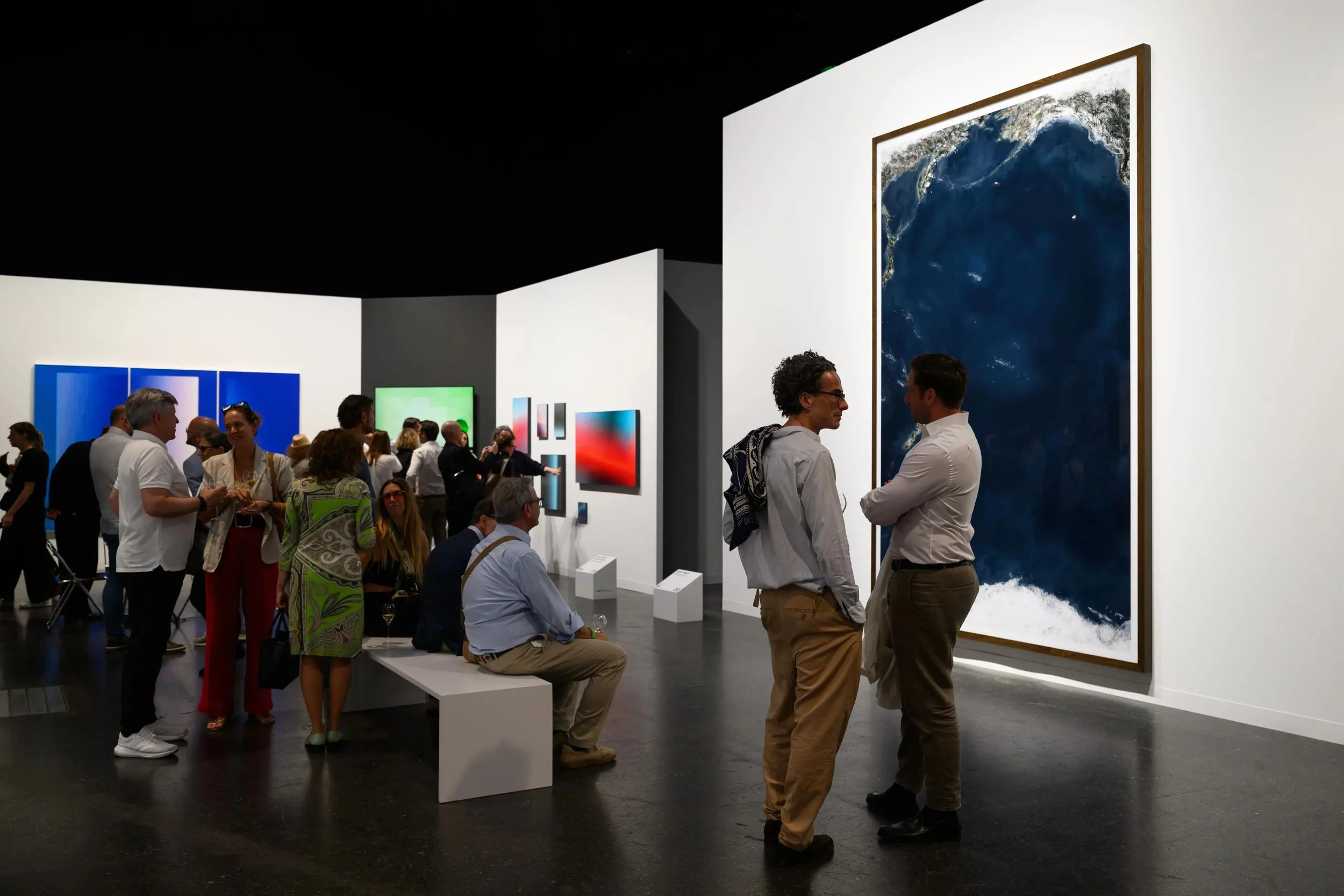
Visitors examine Andreas Gursky's Ocean VI at Art Basel 2026, where international galleries connect artistic significance with the commercial realities of the contemporary art market.
Art Versus Traditional Financial Assets
The classification of art as an alternative asset can create a misleading impression of comparability with equities, bonds, property or private equity.
Although artworks possess financial value and can be bought, sold or used as collateral, their economic characteristics are fundamentally different.
Most artworks produce no recurring income. Their valuation depends on irregular transactions, while acquisition and disposal can involve substantial commissions, insurance, storage, transportation, conservation and taxation expenses.
The difficulty of measuring returns is equally significant.
Research published in The Review of Financial Studies by Arthur Korteweg, Roman Kräussl and Patrick Verwijmeren examined 32,928 paintings sold repeatedly between 1960 and 2013. After correcting for selection bias, the researchers found that estimated annual index returns declined from 8.7% to 6.3%, demonstrating how conventional art price indices can overstate investment performance.
The finding matters because artworks entering the auction market are not selected randomly. Owners may choose to sell successful acquisitions while retaining works whose prices have weakened. Repeat-sales indices consequently risk placing disproportionate weight on artworks that perform sufficiently well to return to market.
More recent research reinforces the need for caution. The Deloitte Private and ArtTactic Art & Finance Report 2025 reported a 20-year compound annual growth rate of 3.2% for Artnet's Fine Art Top 100 index, compared with 10.4% for the S&P 500, using the report's comparison methodology. Such historical figures are sensitive to index construction and exclude some of the individual costs faced by collectors.
Art can contribute to wealth preservation, but its diversification benefits should not be overstated. Lower recorded price volatility may partly reflect infrequent trading rather than genuine stability in underlying market value.
An artwork that does not sell for several years may appear financially stable simply because no transaction has occurred to reveal its current price.
For sophisticated investors, this distinction between observed prices and realisable value is essential.
Contemporary Art and the Fragility of Market Momentum
Contemporary art presents a particularly complex investment proposition because commercial valuations can develop more rapidly than the historical evidence supporting them.
For established artists, decades of exhibitions, scholarship, institutional acquisitions and secondary-market activity provide multiple reference points for assessing significance. For emerging artists, prices may depend more heavily on gallery representation, collector competition and expectations of future recognition.
This distinction became especially apparent following the speculative expansion of the ultra-contemporary market during the early 2020s.
Artprice's Contemporary Art Market Report 2026, covering July 2025 to June 2026, recorded a 6% increase in contemporary auction turnover and 9% growth in transaction volume. However, auction turnover for artists under 40 declined by 26.6%, indicating that the youngest segment remained under considerable pressure despite the broader improvement.
The figures reveal the difference between market activity and investment performance.
An increasing number of artworks changing hands does not necessarily imply that comparable works are appreciating. Rising transaction volumes can coincide with lower average prices, a changing composition of consignments or the liquidation of holdings acquired during stronger market conditions.
For investors, the correction raises questions about the mechanisms that previously supported elevated valuations.
When several collectors compete for limited primary-market allocations, gallery prices may increase rapidly. If works subsequently enter auction without sufficient demand, the resulting price adjustment can undermine confidence in the artist's wider market.
A single disappointing auction result does not necessarily indicate declining artistic quality. It may reflect an unrealistic estimate, weak provenance, an unfavourable selling environment or an oversupply of comparable works.
Nevertheless, repeated secondary-market weakness can influence how collectors perceive an artist's financial prospects.
For 2027, the opportunity may lie less in identifying artists experiencing the fastest price increases than in recognising practices with credible institutional development, coherent bodies of work and commercial support extending beyond short-term demand.
What Determines the Financial Value of an Artwork?
The value of an artwork emerges from an interaction between artistic significance, historical context, scarcity, provenance and the willingness of collectors to compete for ownership.
These factors are interconnected, but none guarantees appreciation.
Institutional recognition can strengthen an artist's reputation by placing the work within a broader scholarly and historical framework. Museum exhibitions, acquisitions by respected collections and serious critical research may contribute to long-term visibility.
Yet institutional success and financial performance are not interchangeable. A critically important artist may have a relatively limited secondary market, while an artist commanding substantial commercial prices may receive comparatively little scholarly attention.
Provenance introduces another dimension. An artwork associated with a distinguished collection can benefit from an established ownership history, documented authenticity and increased collector confidence.
The commercial significance of provenance was demonstrated during Christie's May 2026 New York sales, when Jackson Pollock's Number 7A, 1948 realised $181.185 million from the S.I. Newhouse collection. Constantin Brancusi's Danaïde achieved $107.585 million, while a Mark Rothko painting from the Agnes Gund collection reached $98.385 million.
These results demonstrate the extraordinary premiums that exceptional artworks can command when rarity, historical importance and collection provenance converge.
They do not, however, establish that similarly prominent artists will produce comparable financial returns across all periods.
Within an individual artist's market, works from different periods, subjects, media and levels of historical significance can command dramatically different valuations.
An important early painting may attract substantially greater demand than a later work with weaker critical recognition, even when both carry the same signature.
For collectors evaluating opportunities in 2027, understanding an artist's internal market hierarchy may be as important as examining overall auction performance.
Scarcity also requires careful analysis. Limited availability can support value, but scarcity without sustained demand has little commercial significance. A rare work by an artist with few interested buyers may prove considerably harder to sell than a more widely available work supported by an established international market.

Christie's New York, May 2026. Exceptional artworks presented for auction demonstrate the importance of provenance, scarcity and established artistic reputations in determining market value.
Liquidity, Transaction Costs and the Risks of Ownership
The most persistent weakness in the investment case for art is liquidity.
Unlike publicly traded securities, artworks cannot generally be sold immediately at an observable market price. Their successful disposal may depend on finding an appropriate buyer, selecting the right sales channel and accepting a potentially lengthy marketing period.
Auction houses provide public price discovery, but their services involve commissions and the possibility that a work will fail to sell. Private transactions offer greater discretion, although they may provide less transparent evidence of comparable valuations.
The economics of resale can substantially alter investment outcomes.
An artwork acquired for $100,000 and subsequently sold at a hammer price of $120,000 has not necessarily generated a 20% investment return. The original buyer's premium, any seller's commission, holding expenses and applicable taxes must all be considered before calculating the net result.
Consequently, even apparently successful sales may produce modest financial gains or losses.
Illiquidity also affects borrowing against art. Although specialist lenders can provide financing secured by valuable collections, borrowing capacity depends on the reliability of valuations, enforceability of security interests and the lender's confidence in potential resale.
The growing integration of art into wealth management has not eliminated these risks.
Deloitte and ArtTactic's 2025 report found that interest in art as an investment declined across surveyed stakeholder groups. Among collectors, the proportion expressing such interest fell from 32% in 2023 to 17% in 2025, while the corresponding figure for art professionals declined from 26% to 12%.
These findings suggest a reconsideration of art's financial role rather than a rejection of collecting itself.
Art may remain attractive as a store of cultural and personal value even when expectations of investment performance become more restrained.
For investors approaching 2027, the ability to hold an artwork over an extended period without requiring immediate liquidity may therefore be a critical consideration.
Geographic Diversification and Emerging Opportunities
The internationalisation of collecting has expanded the range of artists and cultural traditions entering global commercial networks.
Nevertheless, the concentration of wealth and auction infrastructure remains substantial. In 2025, the United States accounted for 44% of worldwide art sales by value, followed by the United Kingdom at 18% and China at 14%, according to Art Basel and UBS.
This concentration helps explain why important sales continue to gravitate towards established commercial centres.
However, institutional expansion and growing international visibility in regions including the Middle East, South Asia and parts of Southeast Asia may create opportunities for artists whose historical recognition has not been matched by commercial development.
Artprice's 2026 report identifies increased visibility for artists from the Global South, alongside the growing importance of markets including India, South Korea and Indonesia.
For investors, such developments may broaden opportunities to acquire culturally significant work beyond established Western market categories.
But geographic diversification should not be confused with reduced financial risk. Developing art markets may have limited resale infrastructure, fewer specialist buyers and less consistent price documentation.
The strongest opportunities may emerge where sustained institutional engagement, scholarship and collector interest develop together, rather than where international attention is concentrated around a temporary commercial trend.
The Investment Outlook for 2027
The available evidence supports a selective rather than uniformly optimistic outlook for art investment in 2027.
If global financial conditions become more supportive, improved liquidity among wealthy collectors could strengthen demand for established artists and historically significant works. However, any such improvement would remain vulnerable to geopolitical uncertainty, changing monetary conditions and fluctuations in private wealth.
A more cautious scenario would see the market continuing to expand in transaction volume without a corresponding increase in average prices.
This possibility is particularly relevant to contemporary art, where a growing number of transactions can coexist with weaker valuations in speculative segments.
The development of digital research tools, more accessible auction data and increasingly sophisticated advisory services may improve the quality of investment decisions. Yet information alone cannot eliminate the uncertainties surrounding artistic reputation and future collector demand.
For collectors considering acquisitions in 2027, disciplined valuation, documented provenance, realistic holding periods and an understanding of resale conditions are likely to remain more reliable foundations than attempts to anticipate short-term price movements.
Art's financial potential is genuine, but highly selective. Its investment characteristics arise from the particular work, the acquisition price and the market available at the eventual point of sale, not simply from the prestige associated with owning art.

Art Basel Unlimited 2025, Switzerland. Monumental contemporary artworks attract international audiences, reflecting the importance of major art fairs in shaping artistic visibility and collector demand.
Conclusion: Investment Value Beyond the Auction Price
The approaching year presents an important opportunity to reconsider the financial role of art without reducing its significance to investment performance. The market's recent correction has demonstrated that artistic recognition, commercial visibility and price appreciation do not necessarily develop together.
Exceptional works can command extraordinary prices, supported by scarcity, provenance and established cultural significance. Elsewhere, contemporary valuations remain exposed to changes in collector confidence, speculative demand and limited secondary-market liquidity.
For investors, the principal lesson is that art requires a different analytical framework from conventional financial assets. Historical performance must be examined critically, transaction costs incorporated realistically and the possibility of prolonged holding periods recognised from the outset.
The opportunities in 2027 may favour collectors who combine financial discipline with genuine artistic understanding, particularly where scholarly recognition and commercial valuation have developed at different speeds.
Ultimately, the distinction between an important artwork and a successful financial investment must remain clear. Some acquisitions will achieve both. Others may deliver lasting cultural significance without producing exceptional returns.
The enduring value of collecting lies partly in recognising that these outcomes are related, but never identical. A sophisticated art market depends on understanding the difference.