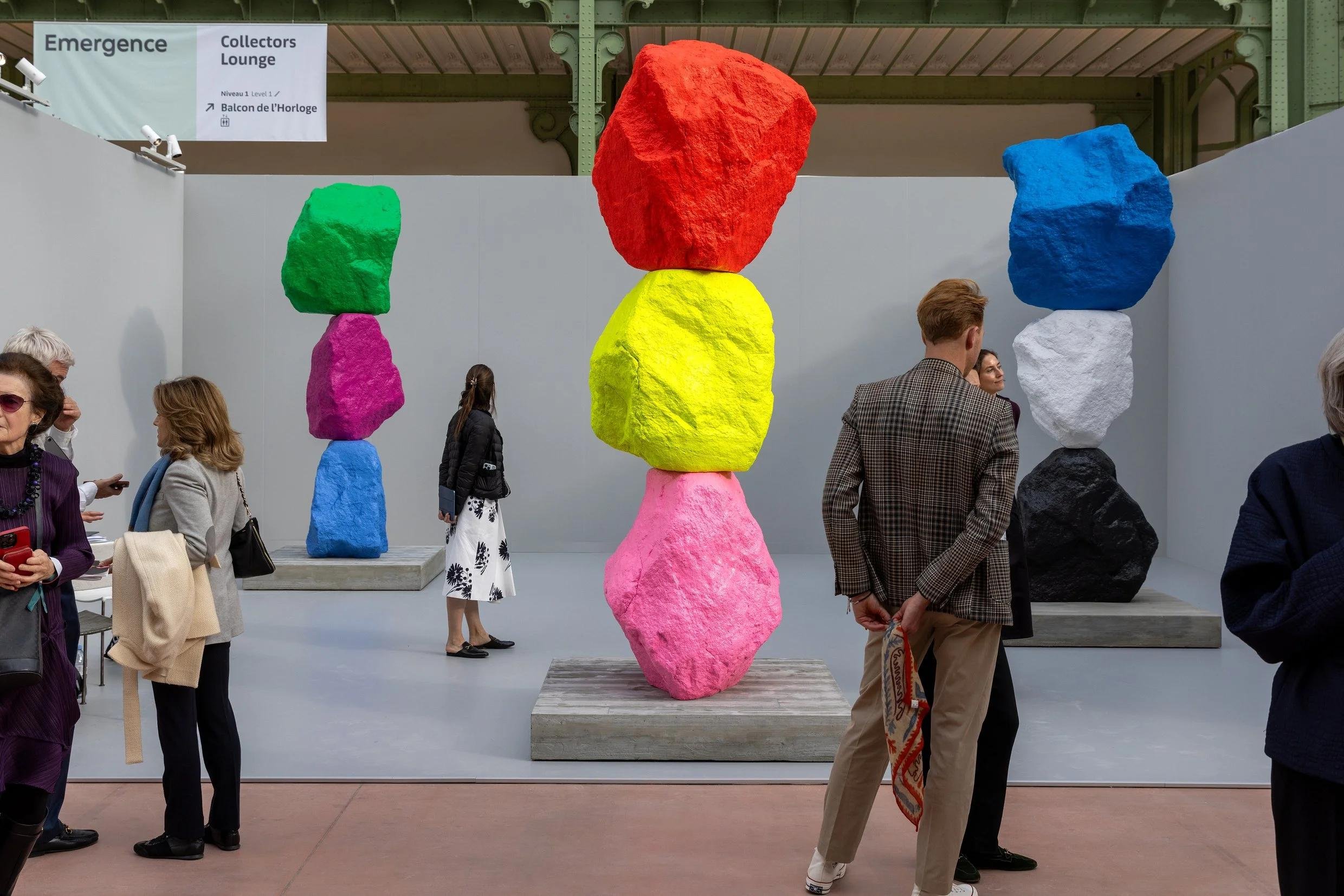
Millennials, Generation Z and a growing class of internationally connected collectors are challenging established assumptions about wealth, taste and cultural influence. As inherited capital intersects with digital intelligence and changing attitudes towards ownership, the art market faces a generational transition that could redefine not only what is collected, but how artistic value is established and sustained.
The most revealing development in the international art market may not be taking place in an auction room, but within the changing financial and cultural priorities of the people acquiring art. For decades, established collectors and inherited fortunes have shaped the commercial hierarchy of artists, galleries and institutions. Today, a younger generation is beginning to exercise considerable purchasing power, bringing different expectations of access, transparency and personal significance.
The evidence is striking. According to the Art Basel and UBS Survey of Global Collecting 2026, Generation Z respondents reported average fine art expenditure of $347,460 in 2025, more than twice that of any older generation surveyed. Yet this apparent generational breakthrough contains a contradiction: younger collectors are increasingly independent in their research while remaining deeply influenced by family collections, established artistic media and traditional commercial relationships.
As the market approaches 2027, the question is no longer whether younger buyers will participate meaningfully in collecting. It is how their growing influence will affect artistic reputations, acquisition strategies, gallery economics and the relationship between cultural significance and financial value.
A Generational Shift in Purchasing Power
The changing composition of the collector base is closely connected to the broader redistribution of private wealth. As assets pass between generations, important decisions about collecting, conservation and philanthropy are increasingly being made by individuals whose financial resources may substantially exceed their experience in the art market.
The 2026 Art Basel and UBS survey, authored by economist Dr Clare McAndrew of Arts Economics, examined 3,100 high-net-worth collectors across ten markets, including the United States, United Kingdom, mainland China, Hong Kong, Japan, Singapore and several major European economies.
Its findings challenge the conventional assumption that serious collecting is principally an activity undertaken later in life. Generation Z respondents, defined in the survey as aged 20 to 29, recorded average spending of $347,460 in 2025, compared with $124,265 across the entire sample. Their spending remained exceptionally high in the first half of 2026, averaging approximately $329,000.
However, these figures must be interpreted within their methodological limits. The survey examines high-net-worth individuals already active in collecting, not a representative sample of all young adults. Its results cannot establish that Generation Z possesses greater aggregate purchasing power than older collectors across the entire international market.
The distinction between average expenditure and the breadth of participation is especially important. Only 1% of surveyed collectors had acquired an individual work priced above $1 million during the periods examined, while 77% spent less than $50,000 on fine art in the first half of 2026.
The emerging market is therefore not simply a story of young millionaires acquiring expensive artworks. It also concerns a broader population of collectors making selective purchases, often below the price thresholds that attract international auction headlines.
Research published in 2026 by Affordable Art Fair and ArtTactic offers a useful counterpoint. Among galleries participating in its study of the market below $50,000, 83% identified Generation X as a dominant buyer group, 58% identified Millennials and only 13% identified Generation Z.
The contrast suggests that extraordinary expenditure among wealthy younger individuals should not be confused with widespread market dominance. Millennials and Generation X remain commercially essential, while Generation Z represents a potentially influential but unevenly distributed source of future demand.
For galleries developing long-term strategies, the most valuable distinction may be between collectors' financial capacity and their stage of engagement with art. A younger collector acquiring a first painting and a wealthy inheritor managing an established collection require fundamentally different forms of expertise, even when they belong to the same generation.
Millennials and the Maturation of Contemporary Collecting
Millennials occupy a particularly important position in this transition. Unlike the youngest collectors, many are now at a stage where professional income, accumulated assets and established cultural interests can support sustained acquisition programmes.
Their influence is not necessarily expressed through headline auction expenditure. Instead, it may be visible in the gradual expansion of collections, engagement with living artists and the development of relationships with galleries and cultural institutions.
The Affordable Art Fair and ArtTactic findings suggest that Millennials already constitute a significant customer group for galleries operating below $50,000. This segment deserves attention because it encompasses the primary market for many living artists and provides an entry point for collectors whose purchasing power may increase over time.
However, generational categories can conceal substantial differences in motivation. A collector buying paintings for a private home may prioritise visual and emotional connection, while another acquiring works for a family foundation may consider scholarly significance, exhibition histories and long-term institutional relevance.
The assumption that Millennials are primarily interested in disruptive contemporary practices is equally questionable. The art market provides opportunities to explore new aesthetic languages, but serious collecting frequently evolves towards greater historical understanding.
The 2026 Art Basel and UBS survey also found that 29% of Millennial respondents intended to establish a museum or foundation for their collection, an above-average proportion.
Such ambitions could have important consequences for the cultural sector. Private foundations can provide exhibition opportunities, support scholarship and preserve works outside the immediate commercial market. Yet they can also concentrate curatorial influence among wealthy individuals, raising questions about institutional independence and the relationship between collecting preferences and public cultural narratives.
By 2027, the significance of Millennial collecting may therefore extend beyond acquisition volumes. Collectors who transition from purchasing artworks to supporting exhibitions, artist commissions and cultural organisations may exert greater influence over artistic reputations than their spending alone would suggest.
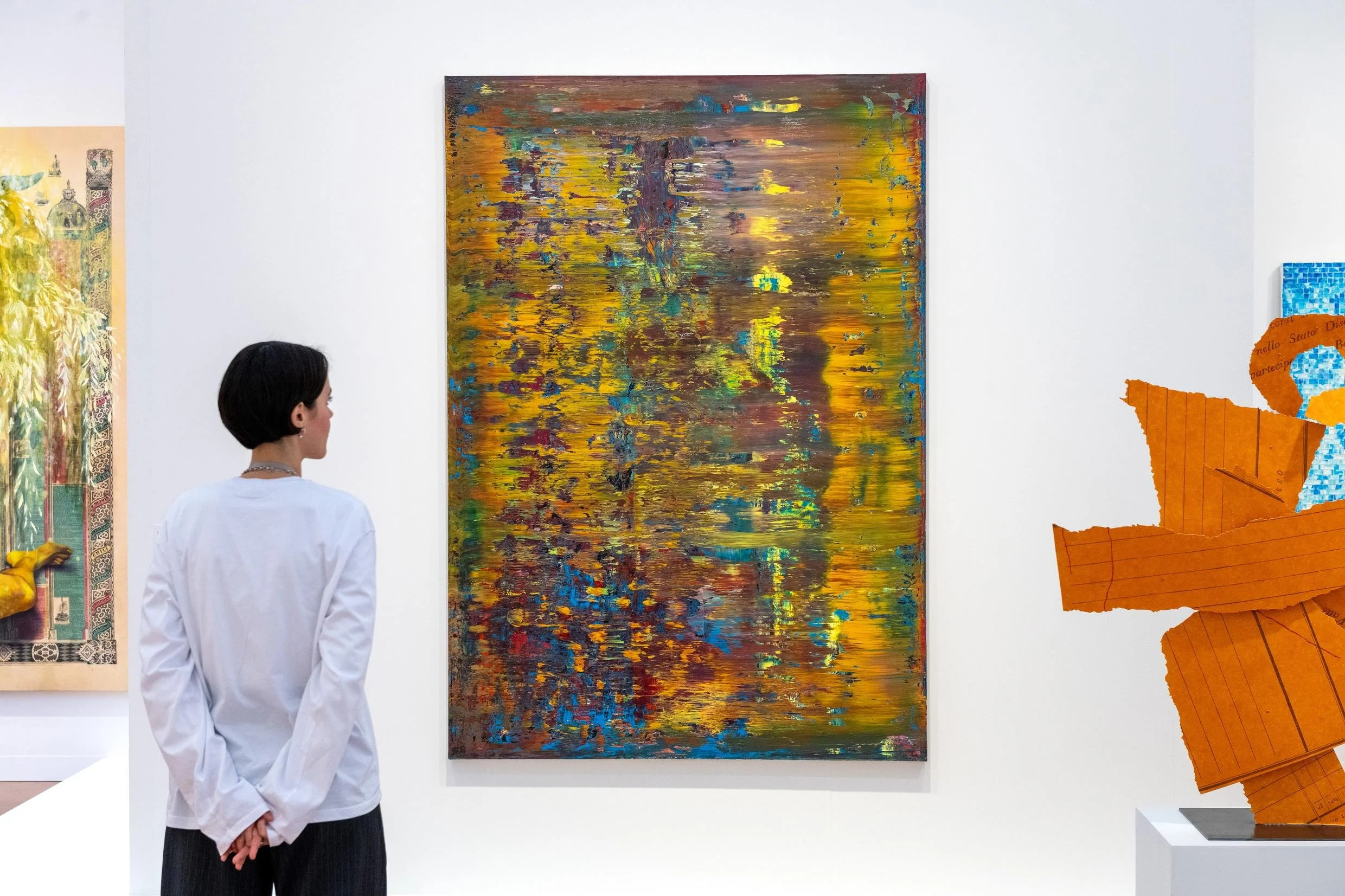
Art Basel Paris 2025. Visitors engage with contemporary painting, reflecting the enduring appeal of traditional artistic media among a new generation of collectors.
Generation Z: Digital Confidence, Traditional Taste
The popular image of Generation Z collecting through social media and prioritising digital artworks offers an incomplete account of its behaviour.
Although younger collectors are comfortable with digital discovery, their purchasing preferences remain closely connected to traditional artistic media. The 2026 Art Basel and UBS survey found that 82% of Generation Z respondents had purchased paintings, exceeding the overall survey average of 76%. Painting was also the most frequently cited starting point for collecting across generations.
This challenges predictions that younger generations will necessarily abandon physical artworks in favour of digitally native formats.
What appears to be changing more substantially is the process preceding acquisition.
Among Generation Z respondents, 80% undertook moderate or substantial independent research before purchasing, compared with 72% across all generations. Digital publications, social platforms, online databases and specialist applications are becoming integrated into how collectors assess artists and artworks.
Greater access to information, however, does not eliminate the importance of professional expertise. Research can establish exhibition histories and previous auction prices, but it cannot independently determine artistic quality or guarantee authenticity.
Indeed, the increasingly informed collector may become more demanding of galleries rather than less dependent on them.
An important contradiction emerges when examining discovery. Although 56% of Generation Z respondents purchased work by an unfamiliar artist, the proportion across all surveyed collectors declined from 66% in the 2025 survey to 45% in 2026.
This suggests that expanding access to artists does not necessarily translate into greater willingness to accept commercial uncertainty.
For emerging contemporary artists, the implications are substantial. Digital visibility may facilitate initial recognition, but collectors increasingly appear to distinguish between encountering an artist and developing sufficient confidence to acquire their work.
The transition from online attention to sustained market demand requires credible exhibitions, coherent artistic development and relationships capable of supporting a career beyond short-term popularity.
The Influence of Inherited Wealth and Family Collections
The redistribution of family wealth represents another important force shaping the market's future.
Discussions of generational change frequently imply that younger inheritors will dispose of traditional collections to acquire works better aligned with their personal identities. Such an outcome is possible, but current evidence offers little support for treating it as inevitable.
The 2026 Art Basel and UBS survey found that 40% of Generation Z collectors identified family influence as their principal route into collecting, compared with 28% across all respondents. Almost 90% of Generation Z collectors who had inherited artworks had retained them.
These findings suggest continuity may be as important as disruption.
Inherited collections carry emotional, historical and financial significance. Decisions about their future are often shaped by family relationships, estate planning, conservation requirements and the cultural importance attached to particular works.
The transfer of ownership can nevertheless prompt renewed examination of a collection's composition. Younger beneficiaries may reconsider the relevance of individual artists, the financial concentration represented by valuable objects and the balance between private enjoyment and public access.
For auction houses, dealers and advisers, succession planning could become an increasingly important source of business. Collection inventories, provenance documentation, tax considerations and institutional donations all require specialist expertise.
The financial implications should not be overlooked. Artwork ownership involves continuing costs, while its relative illiquidity can complicate estate settlements or decisions to diversify family assets.
Yet a generational transfer does not automatically produce a corresponding increase in market supply. Families may retain important works precisely because their cultural and personal significance exceeds the attraction of immediate financial proceeds.
The collectors who shape 2027 may therefore include not only those acquiring new works, but also those deciding what should remain outside the market.
From Instagram to Artificial Intelligence: The Changing Acquisition Process
Digital technology has altered how collectors encounter art, but the evidence increasingly suggests that physical and online engagement are complementary rather than mutually exclusive.
According to the 2026 collecting survey, 58% of respondents used digital resources for advice, while 22% consulted applications or artificial intelligence tools, compared with just 4% in 2024. Social platforms including Instagram and X were cited by 32% of respondents.
This development has implications for the distribution of information within an industry historically associated with private networks and limited price transparency.
Collectors can now examine exhibition histories, compare available works and investigate auction records before contacting a dealer. Artificial intelligence may eventually make parts of this research more efficient, particularly when organising large quantities of catalogue information.
Its limitations remain significant, however. Automated systems can misinterpret attribution, reproduce inaccurate market data or overlook differences in condition, rarity and provenance that materially affect value.
The growing use of digital research should therefore be understood as an expansion of analytical capacity, not as a replacement for specialist judgement.
Equally important is the relationship between discovery and personal engagement. Respondents who began collecting through online channels and social media attended an average of 52 art events, compared with 42 among those introduced through family connections.
Rather than diminishing the relevance of galleries and fairs, digital discovery may encourage collectors to seek direct encounters with artworks and the people associated with them.
This creates a commercial opportunity for galleries capable of connecting online communication with meaningful personal experiences.
The successful gallery of 2027 may not be the one with the largest social media audience, but the one capable of transforming digital interest into informed, enduring collecting relationships.
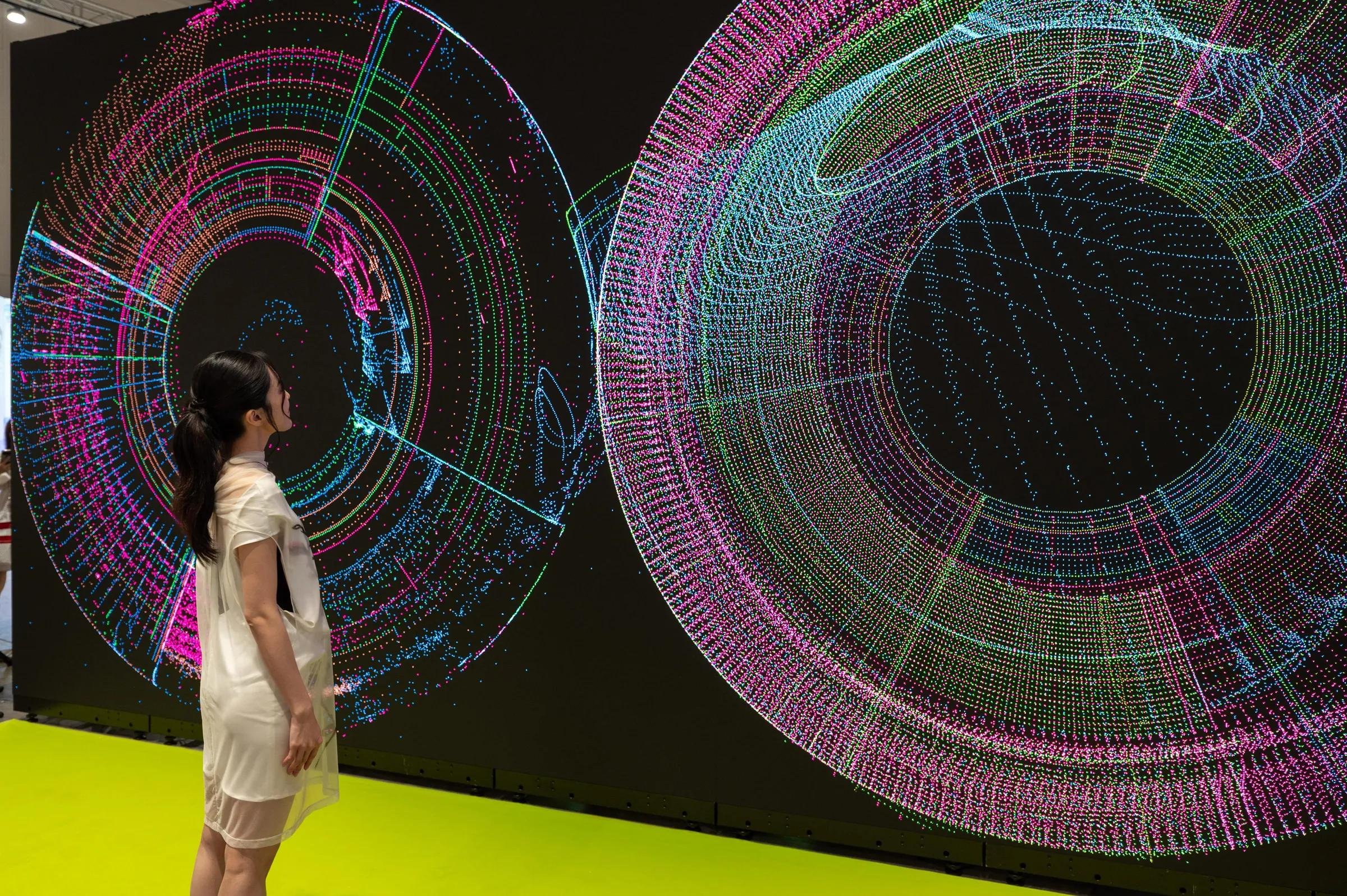
Kim Asendorf's digital art presentation at Art Basel Hong Kong 2026. New technologies are expanding the ways collectors encounter and engage with contemporary artistic practices.
Privacy, Cultural Influence and the Meaning of Ownership
A less expected finding from recent collector research concerns the changing relationship between wealth and public recognition.
Art collecting has historically offered opportunities for social distinction, institutional influence and public visibility. Yet younger collectors are not necessarily seeking the same forms of recognition as their predecessors.
The 2026 Art Basel and UBS survey found that 39% of Generation Z respondents restricted physical access to their collections to households or close personal networks. Among those who lent works to museums, 59% preferred anonymity, while only 6% sought full public credit.
Such preferences complicate the assumption that the social media generation is primarily interested in displaying its possessions publicly.
Privacy can serve different purposes. It may reflect security concerns, personal values or a preference for discreet participation in cultural life. It can also reinforce exclusivity, allowing collectors to exercise influence within relatively small networks.
This presents new challenges for institutions and galleries accustomed to cultivating relationships through public patronage and visible recognition.
At the same time, younger collectors may increasingly seek cultural influence through supporting artists, commissioning work or funding institutional programmes rather than through the public display of personal wealth.
These priorities could broaden the relationship between collecting and cultural philanthropy, although their lasting significance will depend on whether expressed intentions develop into sustained financial commitments.
Art as Investment: A More Selective Approach
The growing financial sophistication of younger collectors should not be mistaken for an exclusively investment-driven approach to art.
Unlike conventional financial assets, artworks generate no predictable income and are subject to substantial transaction costs, uncertain liquidity and potentially significant differences between estimated and realised values.
These characteristics make the distinction between cultural acquisition and financial investment particularly important.
Bank of America's September 2026 art market review found that 42% of surveyed wealthy Generation Z and Millennial respondents owned art collections, compared with 13% of Baby Boomers and Silent Generation respondents. Among younger wealthy non-collectors, 75% expressed interest in collecting in the future.
The findings indicate substantial potential demand, but interest in collecting should not be equated with a commitment to purchase or expectations of investment returns.
For collectors approaching 2027, valuation discipline may become increasingly important. Recent auction prices provide useful evidence, but they represent only the visible portion of a market containing extensive private transactions and works that may rarely be resold.
The importance of institutional recognition also requires careful interpretation. Museum exhibitions and scholarly attention can strengthen an artist's reputation without necessarily producing immediate commercial appreciation.
Conversely, rapid auction price increases may reflect temporary competition rather than lasting artistic significance.
For younger collectors developing long-term strategies, the most persuasive approach may therefore combine informed personal conviction with careful consideration of provenance, condition, market depth and acquisition costs.
The opportunity is not merely to identify artists whose prices might rise, but to construct collections whose cultural and financial foundations can withstand changing market conditions.
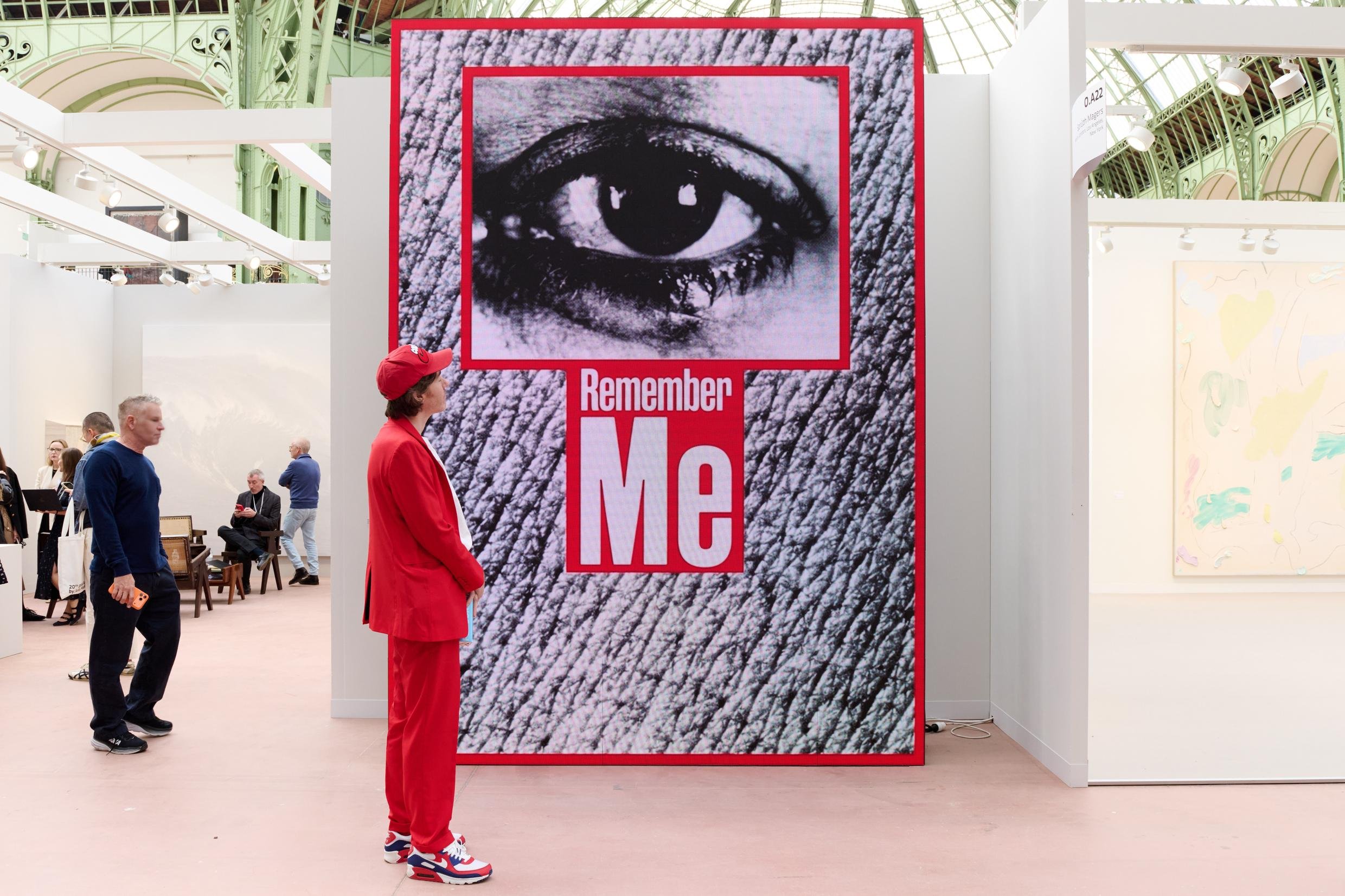
A visitor encounters Barbara Kruger's work at Art Basel Paris 2025, where contemporary artistic expression intersects with questions of identity, cultural influence and public engagement.
Conclusion: Who Will Shape the Market in 2027?
The next generation of art collectors is unlikely to be defined by a single aesthetic preference, purchasing platform or financial strategy. The evidence points instead towards a more complex redistribution of influence in which Millennials consolidate established collecting interests, Generation Z contributes significant purchasing power within wealthy circles, and inherited collections bring new decision-makers into existing cultural relationships.
Digital technology will continue broadening access to information, but the commercial importance of expertise, trust and direct engagement appears unlikely to disappear. Younger collectors may challenge established hierarchies while simultaneously preserving many of the practices that have sustained the market for generations.
For galleries, institutions and artists, the central challenge in 2027 will be understanding collectors as participants in cultural history rather than simply as sources of expenditure. Their decisions will influence which artistic practices receive sustained support, which collections remain intact and which works ultimately enter public institutions.
The most consequential generational change may therefore concern neither age nor wealth alone, but the shifting authority to determine artistic significance. Those who shape the future of collecting will be the individuals and institutions capable of connecting informed acquisition with enduring cultural commitment.