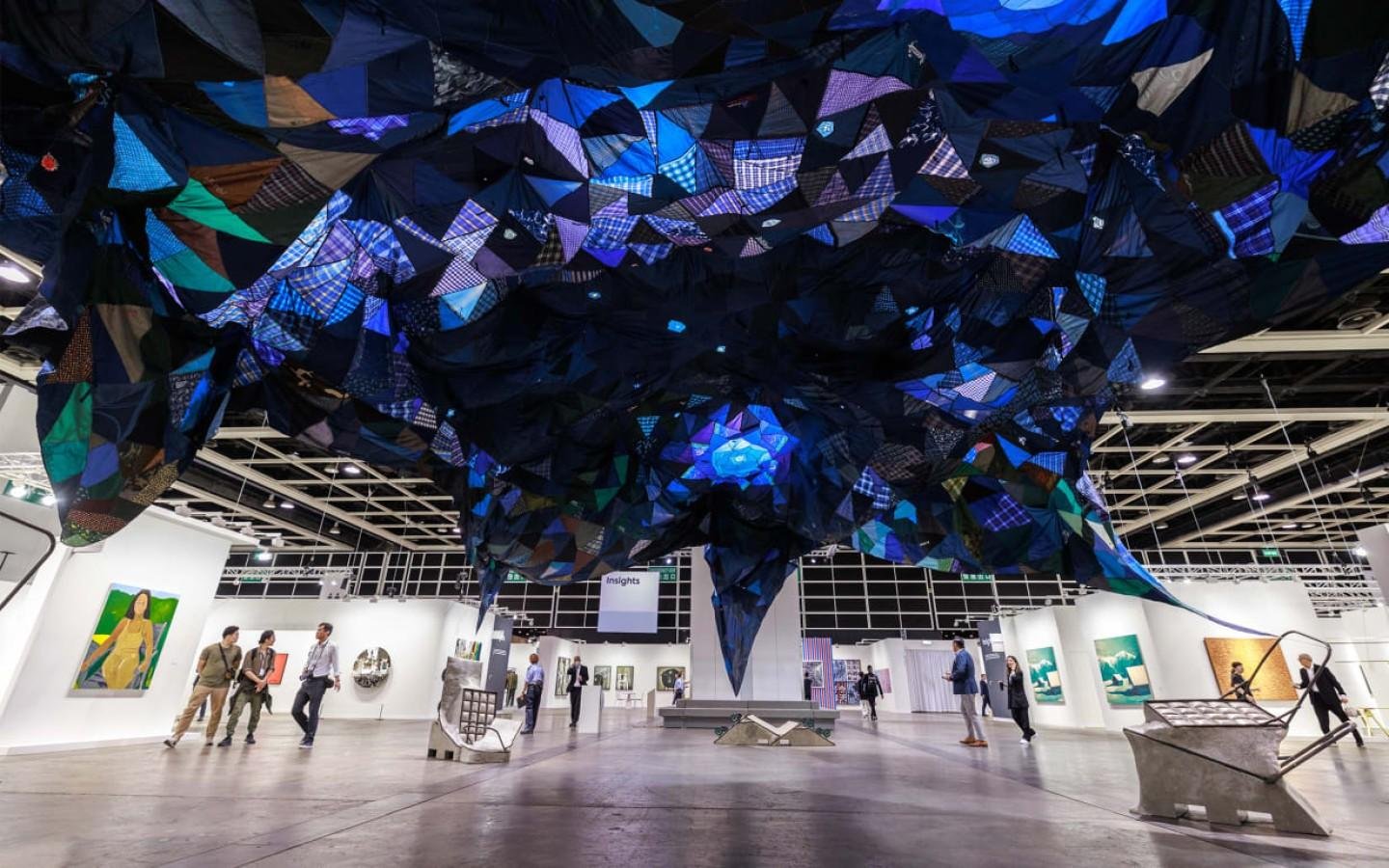
From Doha and Abu Dhabi to Seoul, Mumbai and Lagos, the geography of cultural influence is expanding beyond the art market's established centres. New institutions, international fairs and increasingly sophisticated collectors are reshaping the relationships between artistic production, commercial value and global visibility. Yet the emergence of new cultural capitals raises a more complex question: will these developments redistribute the international art market's economic power, or create additional networks within a system that remains heavily concentrated?
The opening of Art Basel Qatar in February 2026 marked a significant development in the international art market. Bringing together 87 galleries from 31 countries and territories, the inaugural fair attracted more than 17,000 visitors and representatives from over 85 museums and foundations. Its arrival was evidence of a broader shift: cities once positioned primarily as destinations for international exhibitions are increasingly seeking to become centres of collecting, institutional influence and commercial exchange.
Yet the financial geography of the art market remains remarkably concentrated. According to the Art Basel and UBS Art Market Report 2026, the United States, United Kingdom and China accounted for 76% of global art sales by value in 2025. Their dominance persisted even as new cultural infrastructure and collecting networks developed across the Middle East, Asia and other regions.
This tension between cultural expansion and commercial concentration will help define the market in 2027. The question is not simply which cities will attract the next international fair, but whether emerging centres can develop the galleries, collectors, institutions and secondary-market infrastructure necessary to sustain independent artistic ecosystems.
The Changing Geography of Market Power
The international art market has historically developed around concentrations of private wealth, commercial expertise and institutional authority. New York, London, Paris and Hong Kong have benefited from established auction houses, influential galleries, major museums and the legal and financial infrastructure required to facilitate high-value transactions.
These advantages are cumulative. Important collections attract auction specialists and advisers, while internationally recognised institutions reinforce the reputations of artists whose works circulate through the commercial market.
Consequently, the emergence of alternative cultural centres does not automatically diminish established capitals.
In 2025, the United States retained 44% of global art sales, followed by the United Kingdom at 18% and China at 14%. France increased its share to 8%, supported by sales growth of 9%. Beyond these major markets, performance was uneven. South Korea recorded growth of 6%, while Japan experienced a decline of 1%.
The figures reveal an important distinction between artistic influence and financial turnover.
A city may become internationally significant through exhibitions, biennials, museums and the development of local artists without immediately commanding a substantial share of global commercial transactions.
The reverse is also possible. An established auction centre may retain considerable financial importance even when artistic production and cultural experimentation are increasingly concentrated elsewhere.
For 2027, the most consequential developments may therefore occur not in the replacement of traditional capitals, but in the creation of more complex relationships between regional artistic communities and international commercial networks.
An increasingly interconnected market could allow collectors in the Gulf to support South Asian artists, Korean institutions to acquire African contemporary art, and international galleries to develop long-term relationships with collectors whose interests extend beyond established Western categories.
The extent to which these exchanges become sustainable will depend less on the visibility of individual events than on the institutions and professional networks that remain active between them.
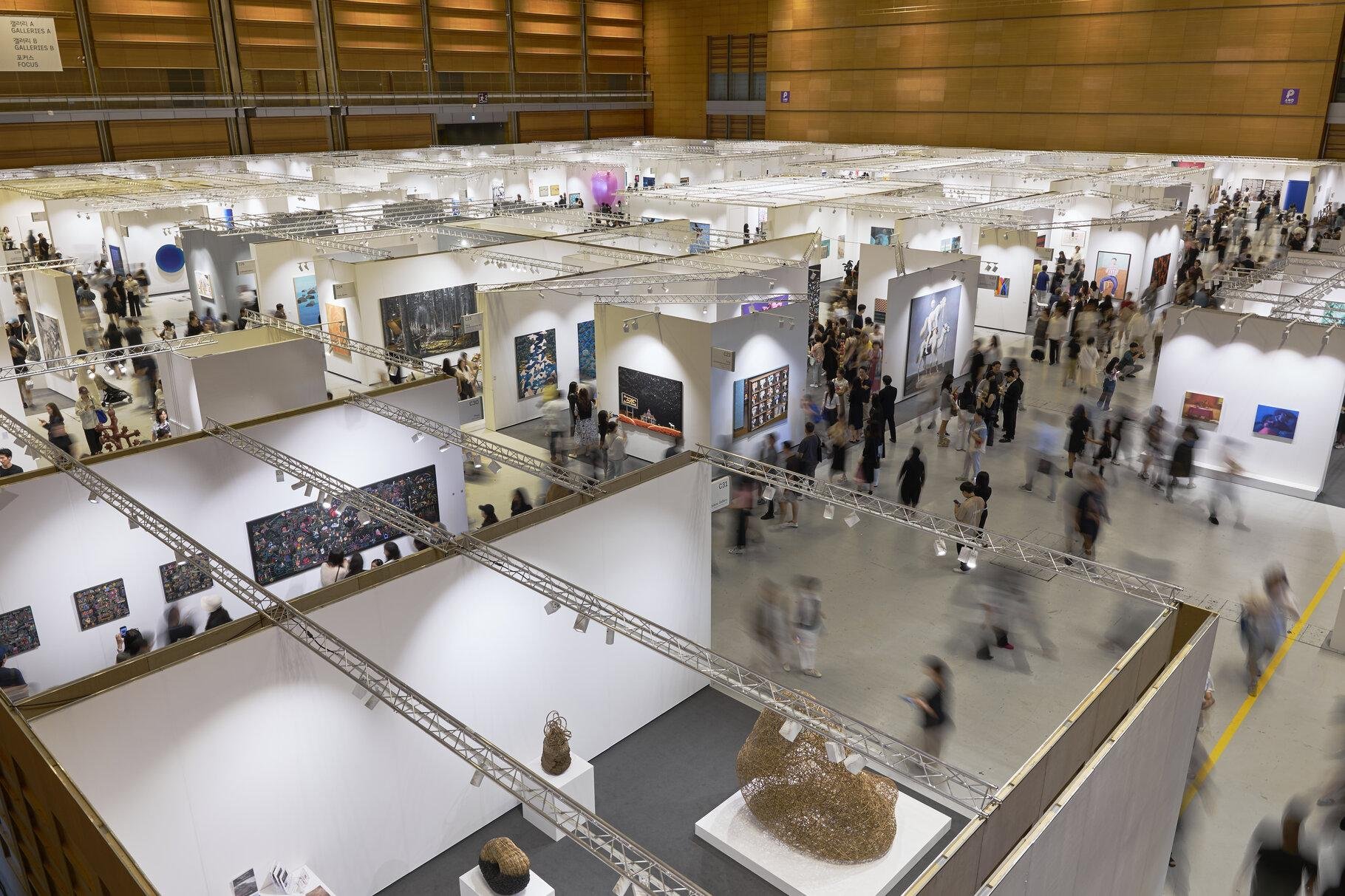
Frieze Seoul 2026, South Korea. International galleries and collectors gather at COEX, reflecting Seoul's growing influence as a centre for contemporary art and international collecting.
The Gulf: From Cultural Investment to Market Infrastructure
The Middle East offers one of the clearest examples of the relationship between cultural ambition and the development of commercial infrastructure.
For more than a decade, governments and cultural organisations across the Gulf have invested in museums, exhibitions and international partnerships. These initiatives increasingly intersect with private collecting and the expansion of international art businesses.
Art Basel Qatar's inaugural edition in February 2026 brought 87 galleries to Doha, presenting the work of 84 artists. More than half of those artists came from the Middle East, North Africa and South Asia, reflecting an effort to establish a regional artistic identity rather than reproduce an exclusively Western fair model.
The organisers reported participation from collectors across the Gulf, Europe and other regions, alongside sales at different price levels. However, comprehensive independently audited transaction figures were not published, limiting conclusions about the fair's immediate economic contribution.
Its longer-term significance may lie in the development of collecting relationships.
The second edition of Art Basel Qatar is scheduled for 28–30 January 2027. The accompanying development of year-round collector programmes suggests an understanding that sustainable market activity requires more than a concentrated week of transactions.
Abu Dhabi is pursuing a related strategy through an expanding institutional landscape.
The Zayed National Museum opened in December 2025, joining Louvre Abu Dhabi within the Saadiyat Cultural District. Guggenheim Abu Dhabi is scheduled to open on 11 December 2026, introducing another major institution dedicated to modern and contemporary art.
Meanwhile, Frieze Abu Dhabi is scheduled to take place from 19–22 November 2026, succeeding Abu Dhabi Art and bringing more than 80 galleries from 37 countries and regions. At the time of writing, the inaugural edition has not yet taken place, and its commercial results cannot be assessed.
These developments represent a substantial institutional commitment, but the emergence of a genuine commercial centre requires additional conditions.
Museums can strengthen scholarship and public engagement. Art fairs can attract collectors and galleries. Neither necessarily guarantees the development of a deep secondary market or a financially sustainable local gallery sector.
The Gulf's prospects are also subject to geopolitical uncertainty. Art Dubai's 2026 edition was postponed and adapted in response to regional conflict, illustrating how political and security developments can disrupt international participation and commercial planning.
For the region, the challenge heading into 2027 will be converting cultural investment into durable professional infrastructure while maintaining confidence among international participants.
South Korea and the Consolidation of an Asian Art Centre
Seoul's development illustrates a different model of market expansion, one supported by established domestic artistic traditions, commercial galleries and increasing international participation.
The fifth edition of Frieze Seoul, held in September 2026, brought together more than 130 galleries from 30 countries and regions. According to the organisers, the fair attracted over 70,000 visitors, with collectors and institutions attending from 54 countries and regions. Representatives from 178 museums and institutions participated, indicating the scale of its international reach.
These figures demonstrate substantial engagement, although attendance should not be confused with the volume or profitability of transactions.
South Korea's commercial position is supported by a domestic collector base, established auction businesses and institutions that have contributed to international recognition of Korean modern and contemporary art.
Its growing influence is therefore not simply a consequence of attracting international galleries.
The visibility of Korean artistic movements, including Dansaekhwa, has helped establish connections between local art history and international collecting. Meanwhile, younger contemporary artists are increasingly participating in exhibitions and commercial programmes beyond Korea.
However, the market remains exposed to economic conditions and fluctuations in collector confidence.
For 2027, Seoul's opportunity may lie in consolidating its role as a regional centre capable of connecting domestic collectors with international artistic production, rather than competing directly with Hong Kong for every segment of the Asian market.
India and the Economic Foundations of a Growing Market
India presents a different investment and collecting environment, shaped by domestic wealth creation, the development of private cultural institutions and increasing international recognition of South Asian art.
The Indian market has experienced substantial growth in auction activity, particularly for established modern artists.
According to research reported by Art Basel in February 2026, Saffronart achieved approximately $40.2 million in a single New Delhi sale in September 2025. International demand was also demonstrated by the sale of M. F. Husain's Gram Yatra for approximately $13.8 million at Christie's New York in March 2025.
These transactions indicate significant purchasing power, but the distribution of demand remains important.
High-value sales are often concentrated among established artists whose historical reputations provide greater confidence than those of emerging practitioners.
The 2026 India Art Fair, held in New Delhi, featured a record 135 exhibitors, including 83 galleries and 16 design studios and galleries. Its expansion reflects the broader development of an ecosystem connecting commercial businesses, collectors, institutions and artistic production.
Nevertheless, the long-term development of the Indian market will depend on the depth of collecting beyond its most recognisable artists.
An expanding domestic buyer base could create opportunities for mid-career and emerging practitioners, particularly where galleries and institutions provide sustained professional support.
There is also a distinction between international recognition of Indian artists and the development of India as a commercial centre.
When major Indian artworks achieve exceptional prices in New York or London, the results demonstrate global demand for the artists but do not necessarily indicate that transaction activity has relocated to India.
For 2027, the most meaningful indicator of market maturity may be whether domestic institutions, collectors and galleries increasingly support major transactions and long-term artistic careers within the country.
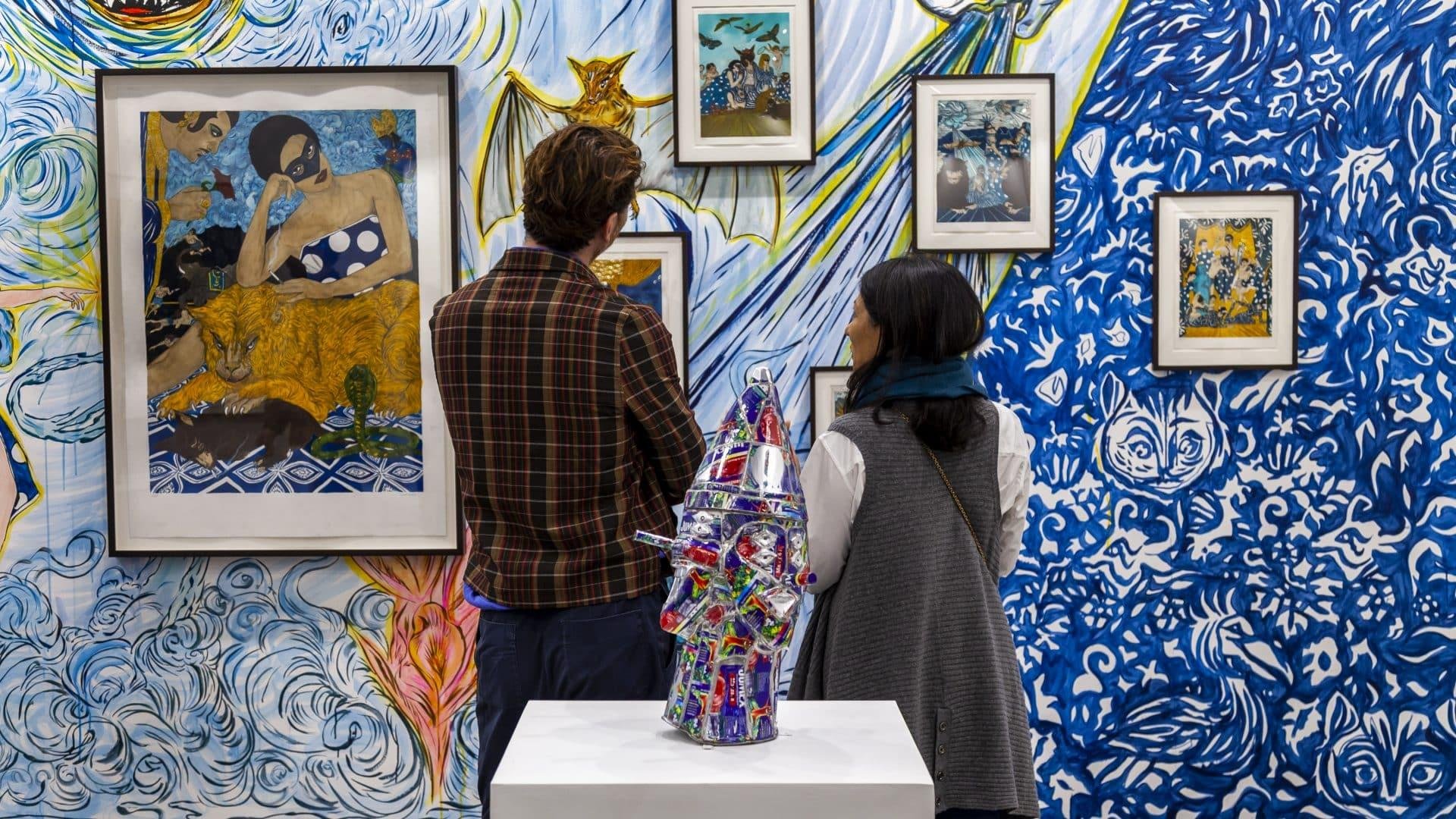
India Art Fair 2026, New Delhi. The fair brings together artists, galleries and collectors, reflecting the increasing importance of South Asia within the international art market.
Hong Kong, Southeast Asia and the Redistribution of Asian Demand
The idea of a single Asian art market has become increasingly difficult to sustain.
China, Japan, South Korea, India and Southeast Asia possess different collecting histories, economic conditions and commercial structures.
In 2025, China's overall art market stabilised at approximately $8.5 billion, growing by just over 1%. Auction activity strengthened in mainland China, while Hong Kong's internationally oriented market faced greater pressure.
This divergence demonstrates why regional growth cannot be measured through a single headline.
Hong Kong nevertheless retains important advantages, including established auction operations, international gallery representation and connections with collectors across Asia.
Art Basel Hong Kong's 2026 edition attracted approximately 91,500 visitors, while reported transactions included a Liu Ye painting sold through David Zwirner for $3.8 million and a Marlene Dumas work for $3.5 million.
The figures suggest continuing commercial relevance despite a more challenging environment.
Elsewhere in Southeast Asia, countries including Indonesia are gaining international visibility through artists, galleries and institutional initiatives. Artprice's Contemporary Art Market Report 2026 identifies Indonesia among markets receiving increased attention within the changing geography of contemporary art.
Yet greater artistic recognition does not necessarily translate into liquid domestic markets.
For collectors, emerging regional markets can provide access to important artistic practices that remain comparatively underrepresented in international commercial institutions.
The principal risks concern limited resale opportunities, uneven price documentation and dependence on relatively small networks of buyers.
These conditions make specialist knowledge and local relationships essential.
Africa and Latin America: Cultural Influence Beyond Market Statistics
The international growth of African contemporary art provides a particularly important example of how cultural recognition can develop across multiple geographic centres.
The 1-54 Contemporary African Art Fair, with editions in Marrakech, London and New York, has contributed to the international visibility of artists from Africa and its diaspora.
Its Marrakech edition in February 2026 brought together more than 20 galleries from 12 countries, while the London edition in October expanded its programme to include a dedicated focus on African modernist artists.
This combination of modernist reassessment and contemporary artistic production is significant because it allows commercial interest to develop within a broader historical framework.
Lagos has also established an increasingly visible position through ART X Lagos, which scheduled its eleventh edition for 5–8 November 2026. The fair's continued development reflects efforts to connect local artists and galleries with international audiences while strengthening regional cultural infrastructure.
However, the commercial development of African art remains uneven. Many important transactions involving African artists take place through galleries and auction houses outside the continent.
Latin America presents related questions. Cities including Mexico City and São Paulo possess established artistic communities, important institutions and international gallery networks, yet their market development cannot be reduced to a single regional trajectory.
For 2027, the central opportunity across these markets lies in strengthening the relationship between local artistic production and sustainable collecting.
International recognition can increase visibility and financial opportunities, but enduring cultural influence requires local institutions, scholarship and commercial systems capable of supporting artists throughout their careers.
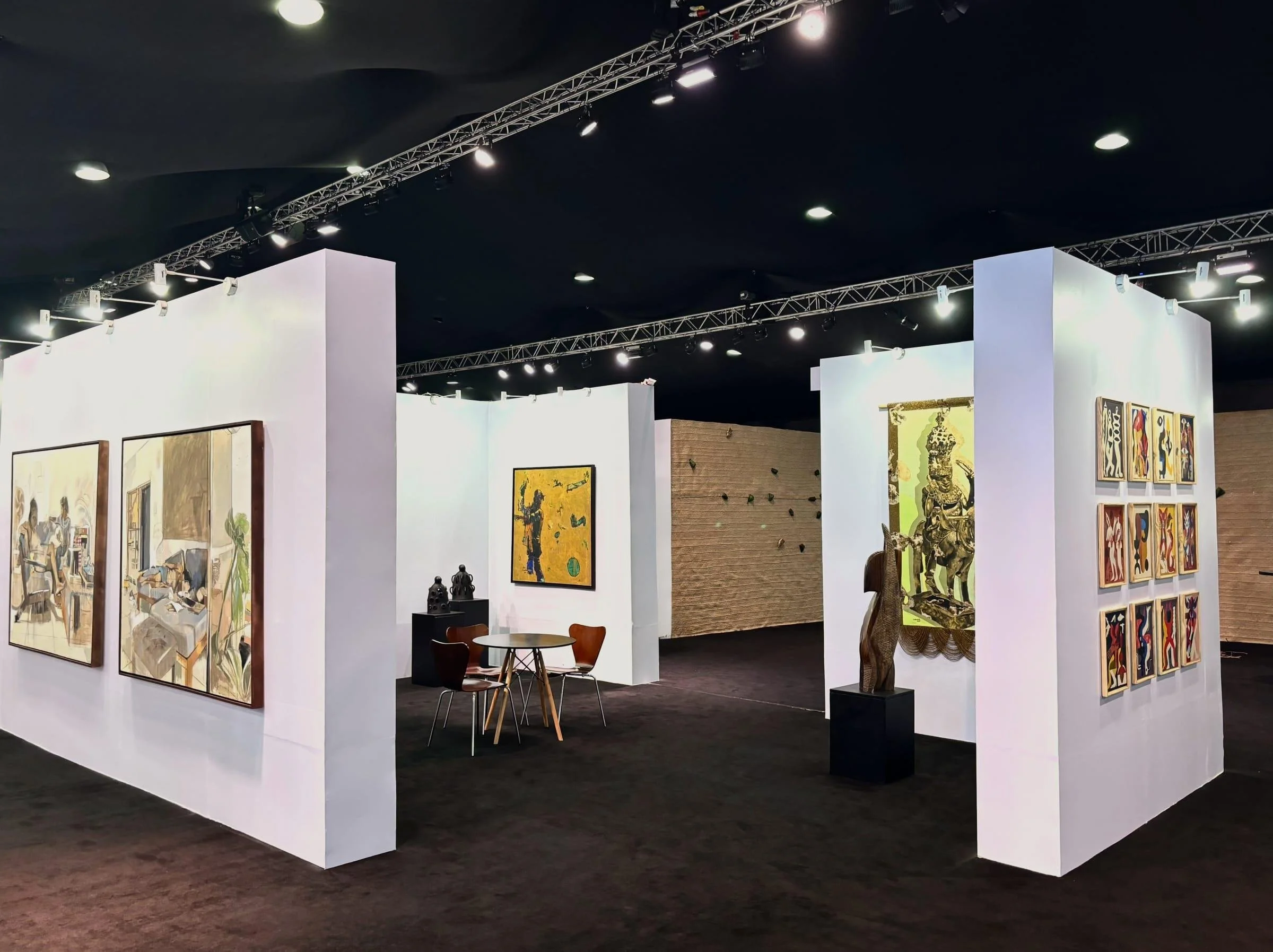
ART X Lagos 2025, Nigeria. Contemporary galleries contribute to the growing international visibility of African artistic practices and regional collecting networks.
What the Emerging Geography Means for Collectors and Galleries
The development of new cultural centres has important implications for the commercial strategies of international galleries.
Art fairs have become an increasingly significant source of revenue. According to Art Basel and UBS, fair sales represented 35% of dealer turnover in 2025, their highest share since 2022. However, rising operating expenses and international transaction costs continued to pressure gallery profitability.
Expanding into new markets therefore presents both opportunity and financial risk.
Participation in regional fairs can provide access to new collectors and institutional relationships, but the costs of shipping, insurance, staffing and international travel may be substantial.
For smaller galleries, developing sustained relationships with local collectors may prove more effective than pursuing international exposure without a clear commercial strategy.
Collectors face different considerations.
Emerging markets can provide access to historically overlooked artistic practices, but limited secondary-market activity may complicate valuation and resale.
Institutional recognition can strengthen an artist's cultural standing without guaranteeing financial appreciation.
The increasing availability of research tools may help collectors evaluate opportunities, but market depth, provenance and professional expertise remain essential.
Ultimately, the most significant change may concern the distribution of cultural authority rather than the immediate redistribution of sales.
New museums, curators, private foundations and collecting networks have the potential to influence which artists receive international recognition and how their work enters broader art-historical narratives.
Conclusion: Towards a More Distributed Art Market
The international art market approaching 2027 is becoming geographically more complex, but not necessarily less concentrated. New fairs in the Gulf, expanding institutions in Asia and increasingly visible artistic communities across Africa and Latin America are broadening the networks through which art is exhibited, discussed and acquired.
Nevertheless, established capitals retain substantial advantages in liquidity, infrastructure and access to major collections. The emergence of alternative cultural centres should therefore be understood as a process of diversification rather than straightforward displacement.
The most important question for 2027 is whether institutional investment and international visibility can support sustainable local markets. New collectors, credible galleries, independent scholarship and enduring professional relationships will be more consequential than the number of fairs added to the international calendar.
For artists, this shift could create opportunities to develop internationally recognised careers without relying exclusively on traditional Western institutions. For collectors, it may broaden access to important artistic histories and practices.
The future geography of the art market will ultimately be determined not simply by where artworks are sold, but by where artistic reputations are established, cultural knowledge is produced and long-term collecting relationships are sustained.