
Rising operating costs, increasingly selective collectors and the growing independence of artists are challenging the economics of commercial galleries. From international dealerships to smaller experimental spaces, the industry is reconsidering how art is represented, exhibited and sold. As 2027 approaches, the question is no longer simply which galleries can withstand a difficult market, but which business models can reconcile financial sustainability with the cultural responsibilities of representing artists.
The decision by Pace Gallery to reduce its artist roster and workforce in June 2026 exposed a fundamental tension within the international art business. After years in which geographic expansion, increasingly ambitious exhibitions and growing artist rosters were widely associated with commercial success, one of the world's most established galleries concluded that its operating structure required substantial revision.
The announcement came against an increasingly difficult financial background. According to the Art Basel and UBS Art Market Report 2026, global dealer sales increased by 2% in 2025 to an estimated $34.8 billion, but operating costs rose by an average of 5%. More than a third of dealers reported declining profitability.
The figures reveal an industry confronting a structural problem: selling more art does not necessarily mean earning more money.
For decades, galleries have combined commercial activity with responsibilities that are difficult to quantify, including developing artistic careers, supporting exhibitions, cultivating collectors and contributing to institutional recognition. As the market approaches 2027, these functions remain essential, but the financial structures supporting them are increasingly under examination.
The future of the gallery may depend less on expanding its physical presence than on redefining the value it provides to artists and collectors.
The Economics of a Gallery Under Pressure
The commercial gallery occupies an unusual position in the cultural economy. It is simultaneously a retail business, an intermediary, a source of financial support for artists and an institution capable of influencing artistic reputations.
Unlike conventional retailers, galleries frequently operate through consignment arrangements rather than purchasing all their inventory outright. Revenues depend on commissions from sales, while substantial expenses can accumulate before an artwork finds a buyer.
Rent, staffing, exhibition production, marketing, transportation, insurance and international fairs must often be financed regardless of transaction volume.
The 2026 Art Basel and UBS report illustrates the growing imbalance between income and expenditure. Dealer operating costs rose by an estimated 5% in 2025, with particularly substantial increases in shipping and logistics, up 10%, art fair expenses, up 9%, and travel and accommodation, up 6%.
Although 42% of dealers reported higher sales, 33% experienced declining revenue and 25% remained stable. Meanwhile, 38% reported lower profitability, compared with 33% whose profitability improved.
These results demonstrate why aggregate market recovery can conceal financial weakness.
A gallery may increase turnover while earning a smaller margin on each transaction. Higher sales can also create additional working-capital requirements through exhibition production, international shipping and staff costs.
The position of mid-sized businesses is particularly revealing.
Dealers with annual turnover between $1 million and $10 million recorded stagnant sales in 2025, while businesses generating more than $10 million experienced growth of 3%. At the lower end, galleries turning over less than $500,000 recorded double-digit increases in average sales.
This uneven performance challenges the assumption that commercial scale necessarily provides security.
Smaller galleries may benefit from lower fixed costs and more flexible operations. Major international businesses can draw upon established collector networks and valuable inventories. Mid-sized galleries, by contrast, can face the financial demands of international participation without possessing the resources available to their largest competitors.
For 2027, the defining commercial issue may therefore be operational efficiency rather than sales growth alone.
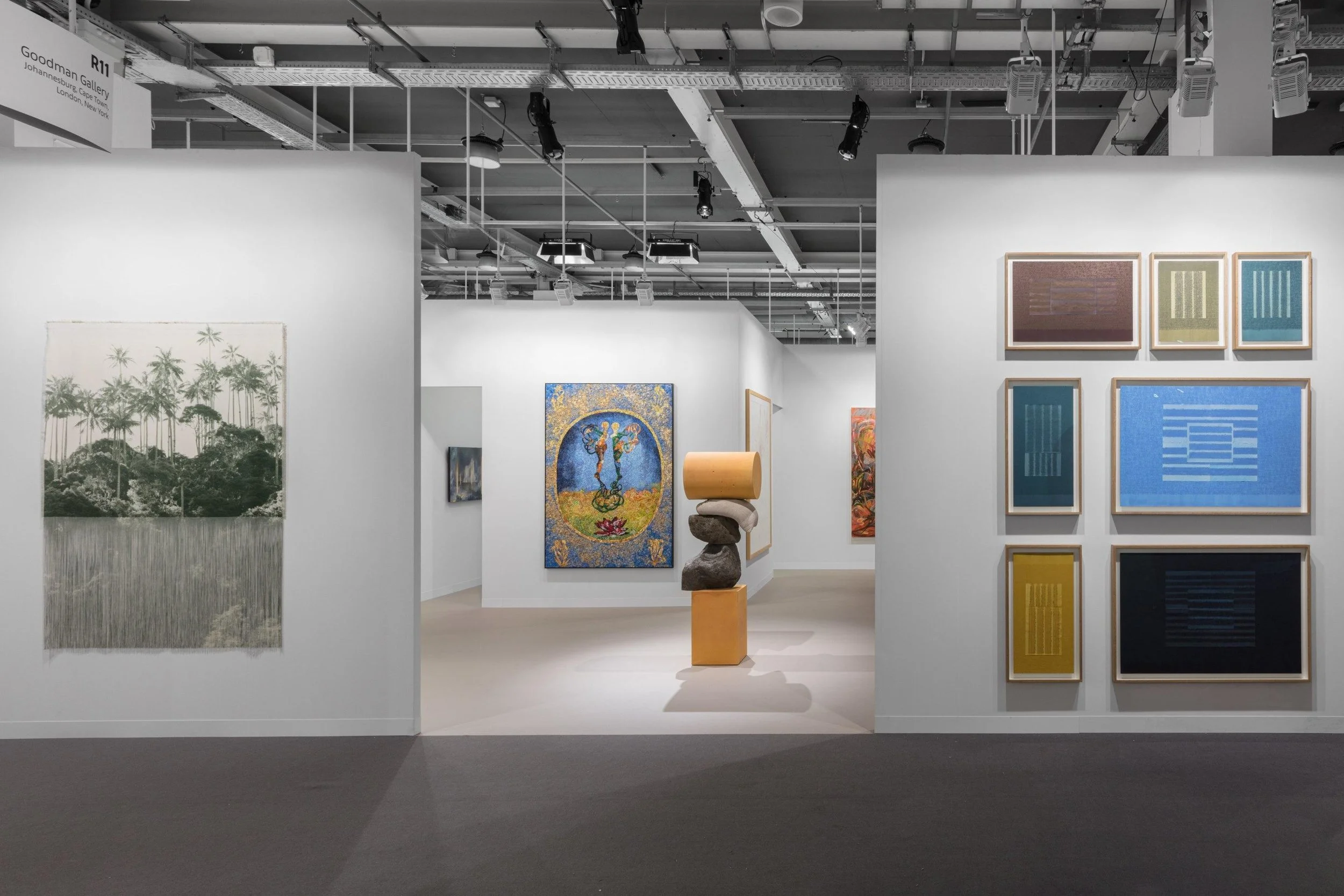
Sean Kelly Gallery at Art Basel 2025. Exhibition production, international participation and artist representation are central to the operational demands facing commercial galleries.
The Mega-Gallery Model Faces Reassessment
Pace Gallery's restructuring provides an unusually visible example of this reassessment.
In June 2026, the gallery announced plans to reduce its roster by approximately 50 artists and estates and cut around 50 positions from a workforce of approximately 250. Its chief executive, Marc Glimcher, argued that a model dependent on continual expansion and increasing primary-market prices was no longer sustainable.
The financial context subsequently became clearer.
According to reporting by The Art Newspaper in October 2026, Pace's British corporate filings documented a reduction in its international operating footprint and exhibition activity, alongside efforts to control overheads. Its restructuring also involved developing secondary-market activities through a partnership with Emmanuel Di Donna and David Schrader.
The example should not be interpreted as evidence that every large gallery faces identical financial conditions. Commercial structures, ownership arrangements and exposure to individual artists differ considerably.
Nevertheless, it challenges an established assumption: that greater visibility, more locations and larger exhibition programmes automatically create stronger businesses.
International expansion increases access to collectors, but it also creates permanent commitments. Prestigious premises can enhance a gallery's identity while imposing substantial costs that become difficult to justify when sales weaken.
The strategic significance extends beyond real estate.
A gallery representing too many artists may struggle to provide the individual attention required to sustain their careers. Exhibition opportunities, institutional relationships and collector development all demand resources that cannot expand indefinitely.
By 2027, some major galleries may increasingly favour concentrated rosters, selective international partnerships and fewer permanent locations.
Such changes would not necessarily represent commercial retreat. They could allow galleries to direct greater resources towards the artists and relationships central to their long-term value.
Art Fairs: Essential Markets or Expensive Obligations?
International art fairs remain among the most important commercial platforms for galleries, offering access to collectors who might otherwise be difficult to reach.
Yet their economics have become increasingly demanding.
In 2025, art fair transactions accounted for 35% of dealer turnover, their highest share since 2022. Among galleries generating between $1 million and $10 million annually, the proportion increased from 29% to 36%.
The figures confirm that fairs continue to generate substantial business. They do not establish that participation is consistently profitable.
Booth fees, transportation, accommodation, installation and staffing can absorb considerable resources. Galleries also face the risk of committing funds months before an event without knowing whether expected transactions will materialise.
An important distinction therefore exists between sales revenue and the net financial return from attending a fair.
For a smaller gallery, one significant sale may justify participation. For another, multiple transactions may be necessary simply to cover expenses.
The commercial calculation is particularly difficult when galleries feel compelled to participate in prestigious events to maintain international visibility.
Recent developments in London suggest that some dealers are reconsidering this dependency.
Reporting by The Art Newspaper in June 2026 described galleries placing renewed emphasis on local exhibitions, more flexible premises and direct relationships with collectors. Pale Horse Gallery, established in Marylebone in 2025, was among the businesses questioning the financial risks associated with frequent international fair participation.
This does not indicate that art fairs are becoming irrelevant.
Rather, their role may become more selective. Major events could remain essential for international visibility and high-value transactions, while regional fairs and gallery weekends provide commercially attractive opportunities at lower cost.
For 2027, the ability to evaluate participation against measurable business objectives may become a competitive advantage.
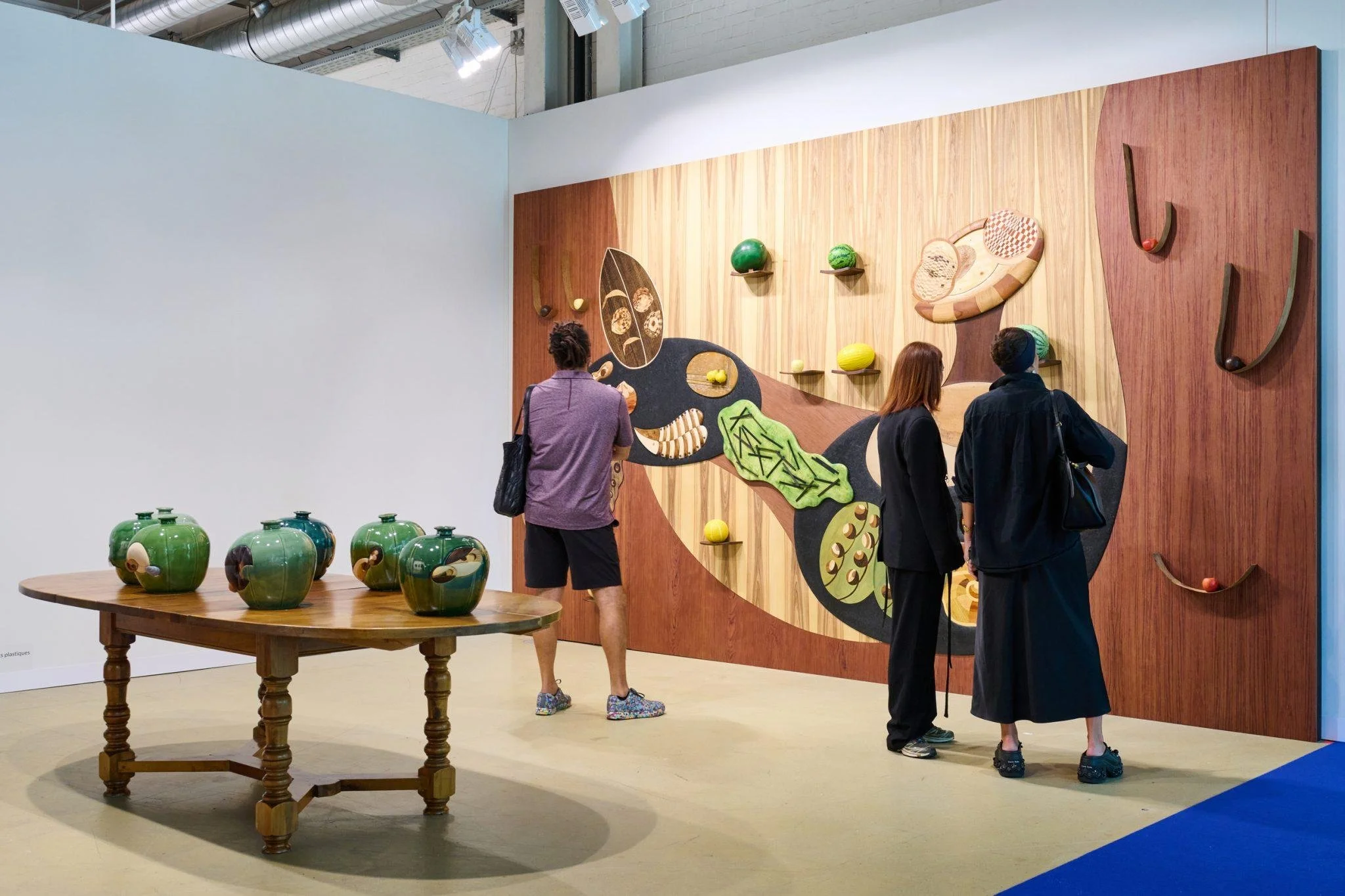
Visitors at Art Basel 2025. International fairs continue to provide important commercial opportunities for galleries, despite rising participation and operating expenses.
Digital Platforms and the Limits of Online Disruption
The expansion of online art sales initially encouraged predictions that digital platforms might substantially reduce the importance of physical galleries.
Recent market evidence presents a more complicated picture.
Online-only art sales declined to approximately $9.2 billion in 2025, representing 15% of global market turnover, compared with 25% at their peak in 2020. Within the dealer sector, online sales accounted for 16% of turnover, down from the previous year.
These figures do not suggest that digital channels have failed. Rather, they indicate that online discovery and purchasing perform different functions within the collecting process.
Collectors increasingly use websites, social media and specialist databases to investigate artists, compare works and initiate conversations. Higher-value acquisitions, however, often continue to involve direct communication and physical inspection.
The Art Basel and UBS Survey of Global Collecting 2026 found that 87% of surveyed high-net-worth collectors had purchased through a dealer in some form during the preceding year. Dealers accounted for 42% of expenditure when art fair transactions were included.
The same survey revealed that approximately two-thirds of respondents who preferred dealers were comfortable conducting transactions remotely through websites, telephone, email or Instagram.
The implication is significant.
Digital technology is changing how galleries communicate and transact, but it is not necessarily eliminating their intermediary role.
For galleries, the priority is increasingly to integrate digital accessibility with professional expertise.
Transparent information about available artworks, accurate documentation, responsive communication and sophisticated online presentation can strengthen collector confidence. Artificial intelligence may also assist with internal research, inventory management and administrative processes, provided its outputs are checked.
Yet technology cannot independently establish authenticity, guarantee future demand or replace the relationships through which artistic reputations develop.
The gallery of 2027 may operate through more digital channels while remaining fundamentally dependent on personal trust.
Direct Artist Sales and the Changing Meaning of Representation
Perhaps the most consequential challenge to traditional gallery relationships comes from the increasing willingness of collectors to purchase directly from artists.
According to the 2026 Art Basel and UBS collecting survey, 69% of respondents had purchased directly from an artist during 2025 or the first half of 2026, an increase of six percentage points from the previous survey.
Artist-direct transactions accounted for 19% of expenditure among respondents, making them the second-largest purchasing channel after dealers when art fairs were included.
The survey covers high-net-worth collectors rather than the entire market, but it identifies a meaningful development.
Artists can now communicate with international audiences through social media, digital exhibitions and personal websites without relying exclusively on traditional representation.
For some, direct sales provide greater control over pricing, relationships and the presentation of their work.
However, the commercial advantages of independence should not obscure its responsibilities.
Managing inquiries, negotiating transactions, coordinating shipping, documenting provenance and maintaining collector relationships require substantial time and expertise.
Gallery representation can provide services that extend far beyond finding buyers. Established dealers may support production, finance exhibitions, introduce works to institutions and help protect artists from premature secondary-market speculation.
The question for 2027 is therefore not whether galleries will remain relevant, but whether the value of representation is sufficiently clear to justify its commercial terms.
Greater flexibility may become increasingly important.
Some artists could maintain exclusive representation with a primary gallery while developing collaborative projects elsewhere. Others may prefer non-exclusive arrangements, temporary exhibitions or specialist partnerships for particular markets.
These models introduce potential conflicts concerning commission structures, pricing consistency and responsibility for long-term career development.
Their success will depend on agreements that balance artistic independence with commercial accountability.
Smaller Galleries and the Economics of Flexibility
The difficulties experienced by large commercial businesses should not be mistaken for evidence that smaller galleries are disappearing.
The Art Basel and UBS report found that gallery openings represented 42% of publicly recorded gallery activity in 2025, compared with 25% for closures. The remaining activity involved relocations, expansions and other structural changes. These figures describe recorded announcements, rather than a comprehensive census of every gallery worldwide.
Alternative operating models are becoming increasingly important.
The Affordable Art Fair and ArtTactic's 2026 research into the market below $50,000 found that 26% of participating galleries operated without permanent premises, relying instead on temporary exhibitions, online activity or nomadic programming. Another 56% maintained a single permanent location.
Such arrangements can reduce fixed expenditure and allow galleries to direct resources towards exhibitions, artists and collector relationships.
In London, Hypha Studios' development of exhibition spaces within temporarily available commercial properties illustrates another approach. Its Hypha Gallery South Bank project, announced in June 2026, combined exhibition space, artist studios and a dedicated sales platform.
The model reflects an attempt to address both the cost of physical space and the need for accessible cultural infrastructure.
Nevertheless, flexibility introduces its own limitations. Temporary spaces can restrict continuity, while smaller teams may struggle to support ambitious exhibitions or manage international demand.
The strongest independent galleries will therefore need to combine financial adaptability with consistent professional standards.
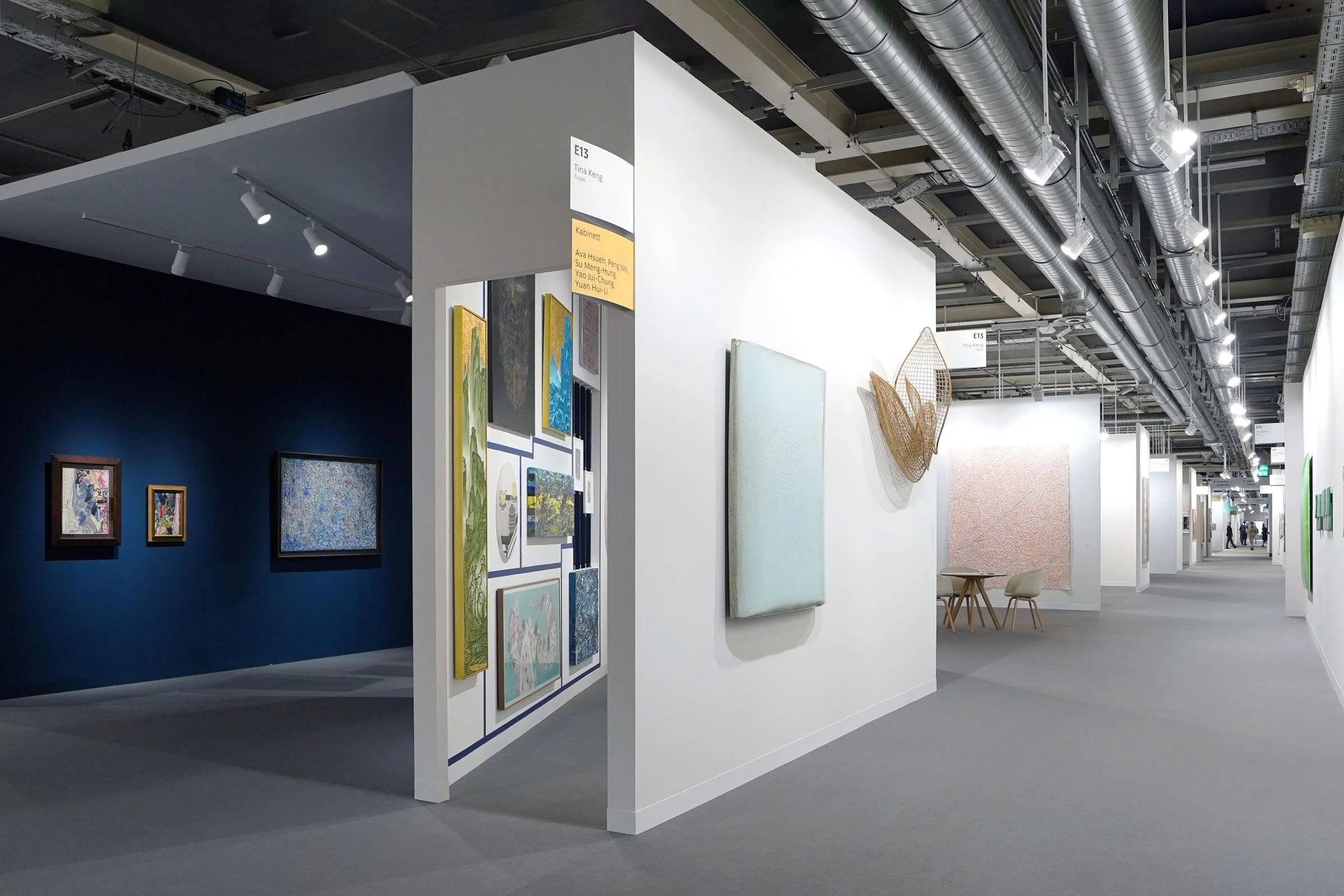
Tina Keng Gallery at Art Basel 2025. Commercial galleries are reassessing exhibition strategies, operating structures and the long-term value of artistic representation.
Artists, Collectors and the Future of Gallery Value
The pressure to improve profitability creates questions extending beyond commercial management.
Galleries influence artistic reputations through exhibition programmes, critical interpretation, institutional introductions and decisions about which artists receive sustained support.
If commercial pressures encourage dealers to concentrate primarily on established names, opportunities for emerging artists may become more limited.
Conversely, smaller and more experimental galleries may benefit from identifying artists whose work has not yet attracted extensive commercial attention.
The relationship between cultural responsibility and financial sustainability is particularly important in the development of underrepresented artists.
In 2025, women represented 45% of artists across surveyed galleries, reaching parity among primary-market galleries. Yet works by female artists accounted for 37% of dealer sales value, demonstrating that increased representation does not automatically produce equivalent commercial outcomes.
The challenge is not simply to expand representation, but to provide the sustained exhibition opportunities, institutional relationships and market development necessary to support artistic careers.
Collector relationships will remain central to this process.
Art Basel and UBS found that established clients accounted for 62% of dealer sales by value in 2025, while the average number of unique buyers per dealer declined to 57, its lowest level since 2021.
These findings reinforce the importance of client retention, but they also reveal the risks of excessive dependence on a limited number of collectors.
A financially resilient gallery requires relationships capable of supporting both immediate transactions and long-term artistic development.
Conclusion: What Will Define a Successful Gallery in 2027?
The commercial gallery entering 2027 faces a difficult but potentially constructive period of reassessment. Rising expenses, more selective collectors and alternative purchasing channels are challenging business structures developed during years of international expansion.
Yet the evidence does not suggest that galleries are becoming obsolete. Dealers remain central to high-value collecting, art fairs continue to generate substantial revenue, and smaller businesses are demonstrating that commercial resilience can emerge from operational flexibility rather than scale alone.
The defining challenge will be reconciling financial discipline with the responsibilities of artistic representation. Galleries must manage costs, evaluate international participation and communicate more effectively across digital channels without reducing their activities to immediate transactions.
Those that achieve this balance may become more sustainable precisely because they are more selective in their commitments.
The future of the gallery is unlikely to depend on a single successful business model. International dealerships, independent spaces, digital platforms and collaborative organisations will continue serving different artists and collectors.
What unites their prospects is the need to demonstrate value beyond access to artworks. In a market where artists can increasingly reach buyers independently, the gallery's lasting importance will rest on its capacity to develop reputations, cultivate informed collecting and sustain artistic careers through changing economic conditions.