
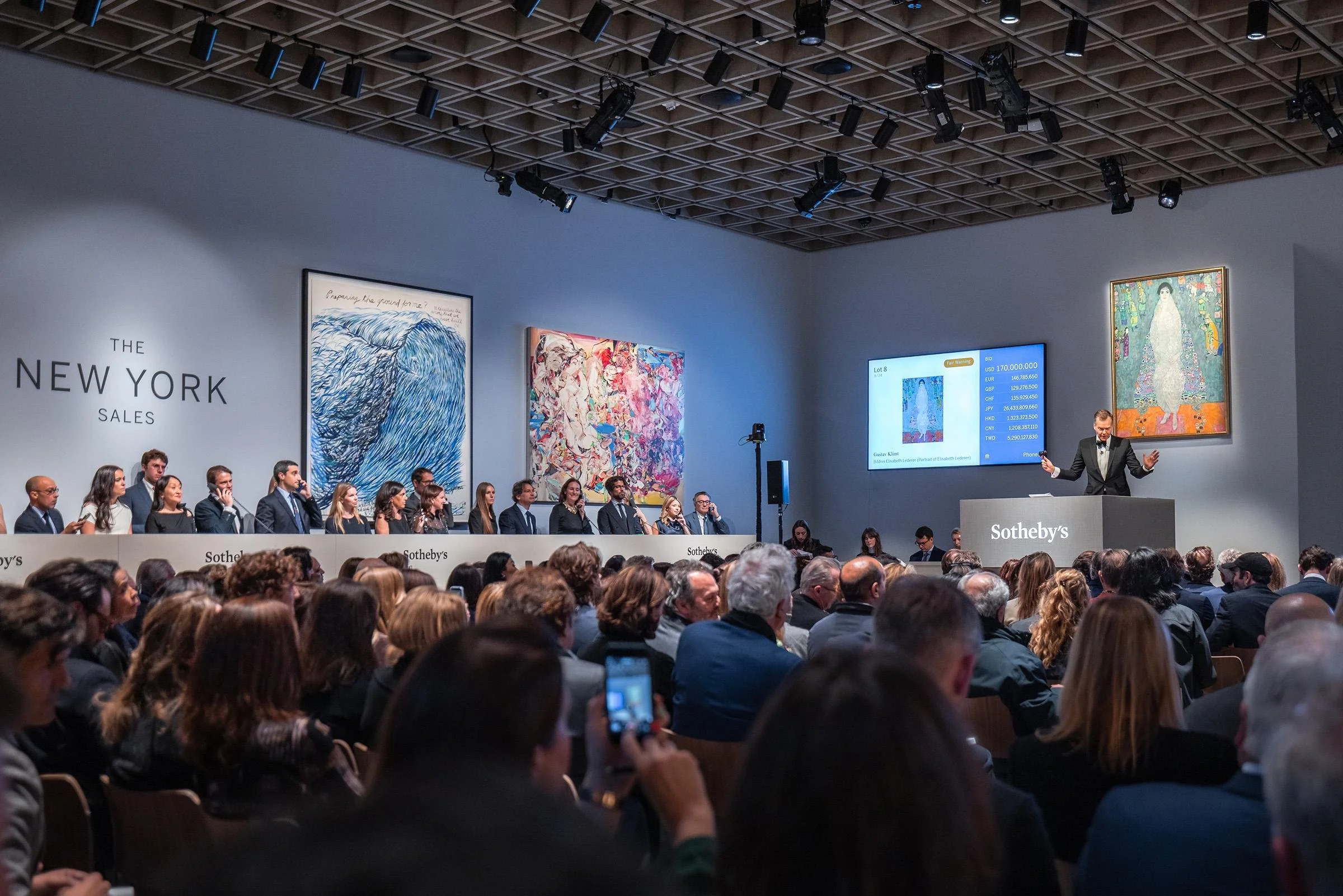
Behind the international art market's extraordinary prices lies a commercial system in which transaction terms, ownership histories and financial incentives are frequently difficult to examine. As collectors demand clearer information and regulatory scrutiny intensifies, the industry's longstanding dependence on confidentiality is facing renewed examination. The challenge for 2027 is whether greater transparency can strengthen market confidence without undermining the discretion and specialist relationships on which the art trade depends.
An artwork can sell for more than $100 million at a public auction while important details of the transaction remain known only to a handful of participants. The bidding may be visible, the final price widely reported and the result recorded in international databases. Yet the financial arrangements supporting the sale, the proceeds received by the consignor and the economic interests of those guaranteeing the transaction may remain confidential.
This distinction between publicly reported prices and the underlying economics of a sale exposes one of the art market's most persistent structural weaknesses.
The issue has acquired greater urgency as collectors become more financially sophisticated. According to the Art Basel and UBS Survey of Global Collecting 2026, transparency was the leading concern among surveyed high-net-worth collectors, encompassing opaque pricing, undisclosed fees and potential conflicts of interest. It ranked first in five of the ten markets examined.
As the international market approaches 2027, the question is no longer whether opacity exists. It is whether a commercial system built around selective disclosure can continue attracting informed capital without developing more consistent standards of accountability.
The Economics of an Opaque Market
The art market differs from most major asset markets because reliable pricing information is fragmented across public and private transactions.
In 2025, global art sales reached an estimated $59.6 billion, according to the Art Basel and UBS Art Market Report 2026. Dealer sales accounted for approximately $34.8 billion, public auction sales for $20.7 billion and reported private sales through auction houses for just under $4.2 billion.
These figures illustrate the importance of privately negotiated transactions.
Although public auction results provide the most visible evidence of market activity, a substantial proportion of artworks are sold through galleries, dealers and confidential arrangements that do not generate publicly accessible transaction records.
The distinction matters because auction databases are frequently used to assess artists' valuations, establish market trends and support investment decisions.
A published auction result may provide a credible reference point, but it represents only one transaction within a potentially much larger and less visible commercial history.
Private sales can occur at prices above or below those suggested by auction results, influenced by factors including condition, provenance, payment terms, the urgency of the seller and the relationship between buyer and intermediary.
Consequently, publicly available prices may provide an incomplete picture of actual market value.
This information gap creates advantages for participants with established commercial networks.
Experienced dealers and advisers may possess knowledge of recent private transactions, collector preferences and available inventory that is inaccessible to less connected buyers.
Such expertise is not inherently problematic. Specialist knowledge is a legitimate source of commercial value. Difficulties arise when unequal access to information prevents clients from understanding the price they are paying or the incentives influencing professional advice.
The consequences extend beyond individual transactions. Inconsistent information can weaken confidence in valuation estimates, complicate financial lending against artworks and create uncertainty about the reliability of market indices.
Transparency is therefore not simply a question of commercial ethics. It is closely connected to the efficiency with which the market establishes and communicates value.
Private Sales: The Advantages and Costs of Confidentiality
Private transactions provide legitimate benefits for collectors and sellers.
Unlike auctions, where unsuccessful offerings can become publicly visible, privately negotiated sales allow participants to control timing, pricing and disclosure.
For owners of particularly valuable works, confidentiality may also address security concerns and protect sensitive financial or personal information.
The relationship between private sales and changing market conditions is revealing.
According to Art Basel and UBS, auction-house private sales increased by 14% in 2024 while public auction sales declined by 25%. In 2025, the pattern reversed: public auction sales increased by 9%, while reported private sales declined by 5%.
This suggests that private transactions can become more attractive when market confidence weakens and sellers seek greater control over outcomes.
However, confidentiality also complicates price discovery.
A privately negotiated acquisition may involve an asking price, a final agreed price, intermediary commissions and additional financial arrangements. These details are rarely available to the wider market.
The resulting opacity can make it difficult to distinguish between genuine changes in demand and differences in transaction circumstances.
For example, a work sold privately at a discount may reflect a seller's need for liquidity rather than a deterioration in the artist's broader market.
Conversely, a premium paid for an exceptional work may reflect particular provenance or personal interest that cannot be replicated in subsequent transactions.
The challenge for 2027 is not necessarily to make every private sale public. Such a requirement could discourage legitimate transactions and undermine client privacy.
A more practical objective would be clearer disclosure between the parties directly involved, particularly where agents, advisers or intermediaries have financial interests that could influence their recommendations.
This distinction between public confidentiality and private accountability is central to any credible reform of the market.
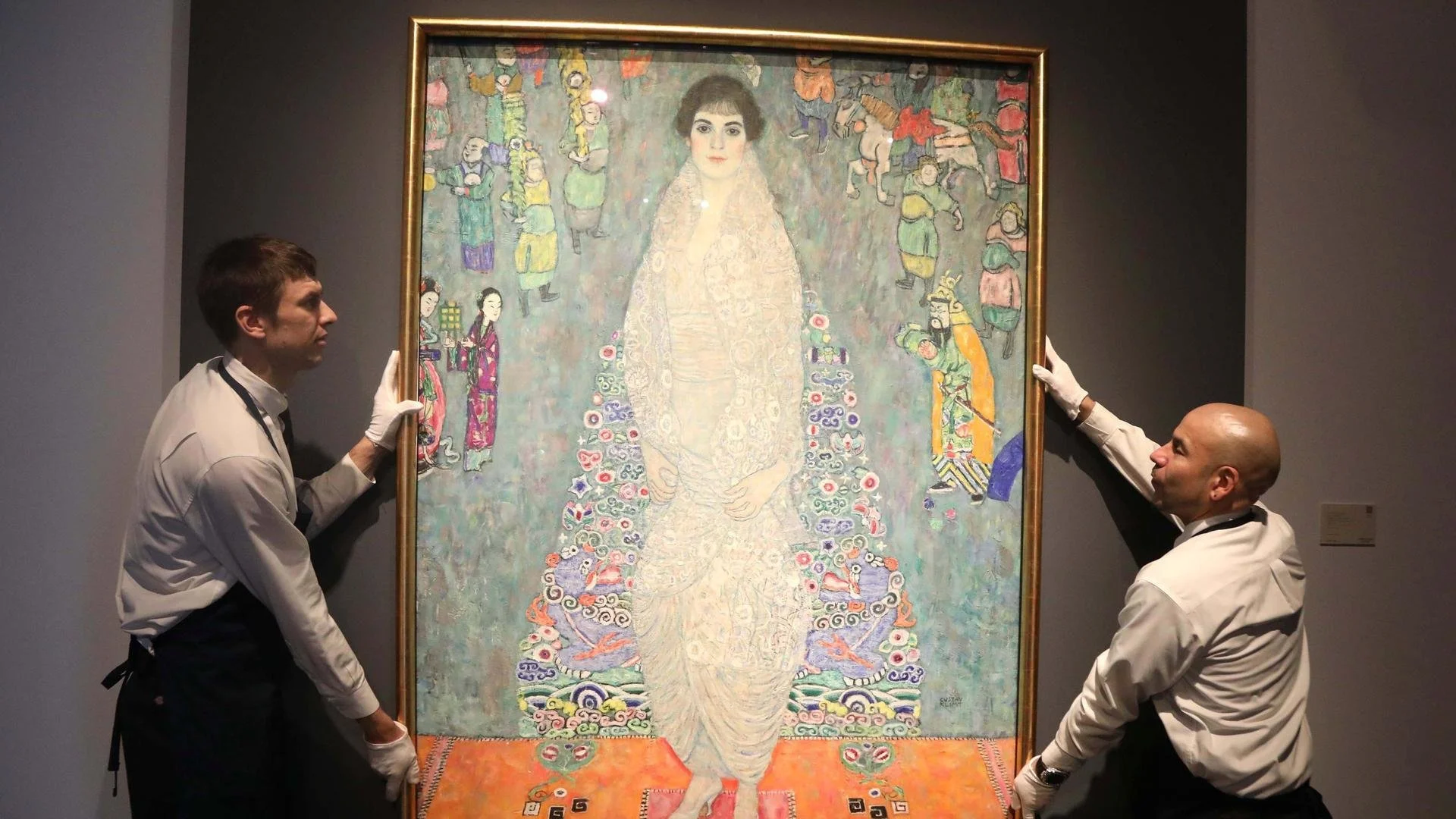
Visitors examine Gustav Klimt's Portrait of Elisabeth Lederer at Sotheby's New York in November 2025. Personal relationships, specialist advice and access to information remain central to high-value art transactions.
Auction Guarantees and the Illusion of Transparent Pricing
Public auctions are often regarded as the art market's most transparent commercial mechanism. Bidding takes place within a defined process, results are published and buyers can compare transactions across artists and periods.
Yet modern auction finance complicates this apparent clarity.
To secure important consignments, auction houses may guarantee sellers a minimum price regardless of the outcome of the sale. The auction house can assume this financial risk itself or transfer part of it to a third party through an irrevocable bid.
These arrangements can provide valuable certainty for sellers and help auction houses attract exceptional artworks.
However, they also alter the economics of competition.
A third-party guarantor may receive a financing fee or participate in the financial upside if bidding exceeds the guaranteed level. Depending on the arrangement, a participant can therefore hold an economic interest in the transaction beyond the ordinary objective of acquiring the artwork.
Major auction houses disclose the existence of certain guarantees through catalogue symbols.
Sotheby's identifies guaranteed property and irrevocable bids in its buyer guidance. Christie's similarly discloses third-party guarantees, while explaining that some arrangements unrelated to the bidding process do not receive catalogue symbols.
These disclosures represent meaningful safeguards. They do not, however, generally reveal every economic term.
The amount of a guarantee, the compensation payable to a third party and the precise distribution of financial risk may remain confidential.
This limits the extent to which outside observers can interpret a published auction result as evidence of entirely independent demand.
The presence of a guarantee does not invalidate a price. Competitive bidding may still push the final result substantially above the guaranteed amount.
Nevertheless, a guaranteed sale and an unguaranteed sale do not necessarily provide identical information about market confidence.
The distinction becomes particularly important when auction records are used to assess an artist's market strength.
A result supported by financial guarantees may demonstrate the willingness of several parties to share transaction risk, while revealing less about the depth of spontaneous bidding at the relevant price level.
For collectors and investors, the central question is therefore not whether a work sold, but under what circumstances the reported price was established.
Undisclosed Commissions and Conflicts of Interest
The problem becomes more acute when transparency concerns the conduct of professional intermediaries.
Art advisers and dealers frequently operate within networks where introductions, referrals and commissions are integral to commercial activity.
Such arrangements are not necessarily improper. However, difficulties arise when an intermediary acting on behalf of a client receives compensation that has not been disclosed or authorised.
The distinction between acting as a principal and acting as an agent is particularly important.
A dealer purchasing an artwork for resale generally operates under a different commercial relationship from an adviser entrusted with acquiring art on behalf of a collector. An adviser subject to fiduciary duties may be required to disclose conflicts and obtain informed consent before retaining additional financial benefits.
The Responsible Art Market initiative identifies the disclosure of intermediary commissions and the prohibition of unauthorised secret profits as important principles of professional conduct.
Recent legal developments demonstrate why these principles matter.
In 2026, legal reporting examined a High Court disclosure order obtained by British television presenters Anthony McPartlin and Declan Donnelly in connection with allegations concerning unauthorised profits earned by an art adviser. The proceedings involved 22 art transactions and requests for information that could assist in tracing the financial arrangements. The disclosure order should not itself be treated as a final determination of the underlying allegations.
The case illustrates a broader structural difficulty.
When buyers and sellers are separated by several intermediaries, each participant may possess only partial information about the transaction.
A client may know the agreed purchase price without knowing whether an adviser has received an additional commission from the other side.
Similarly, a seller may be unaware that an intermediary has negotiated a higher resale price and retained the difference without appropriate disclosure.
These arrangements can undermine confidence because the adviser may have financial incentives that conflict with the client's interests.
Christie's publicly acknowledges that introductory commissions may be paid to third-party professionals and states that it requires those acting as agents or advisers to disclose their financial interests to their clients.
For 2027, clearer contractual terms and stronger documentation of intermediary relationships may prove more effective than general declarations about ethical conduct.
Collectors should be able to understand who represents them, how each intermediary is compensated and whether any participant holds a financial interest capable of affecting the advice provided.
Why Gallery Prices Remain Difficult to Examine
Pricing opacity extends well beyond multimillion-dollar auctions.
For collectors entering the primary market, a common obstacle is the absence of publicly displayed prices.
The Artsy Art Market Trends 2025 report, drawing on surveys of more than 1,600 gallery and collector respondents across over 60 countries, found that only 44% of surveyed galleries displayed prices online for all available works. A further 25% supplied prices only upon request.
Among collectors, 69% reported having hesitated to purchase art because of insufficient transparency, either frequently or occasionally.
These findings suggest that selective price disclosure can discourage engagement, particularly among buyers without established gallery relationships.
Yet the reasons behind gallery pricing practices are more complicated than simple resistance to transparency.
Primary-market galleries often seek to develop artists' prices gradually, managing relationships with institutions and collectors while discouraging immediate speculative resale.
Public pricing may facilitate comparison but can also reduce flexibility when artworks differ substantially in scale, historical importance or exhibition context.
A gallery may prefer discussing these factors directly with prospective buyers rather than presenting artworks as standardised retail products.
Nevertheless, the absence of basic pricing information can reinforce perceptions of exclusivity and unequal treatment.
The commercial challenge is to preserve informed, relationship-based selling without creating unnecessary uncertainty.
Published price ranges, consistent documentation and clear explanations of pricing policies could make the primary market more accessible while allowing galleries to retain professional discretion.
Greater transparency might also benefit artists by making the relationship between gallery prices, secondary-market results and long-term career development easier to understand.
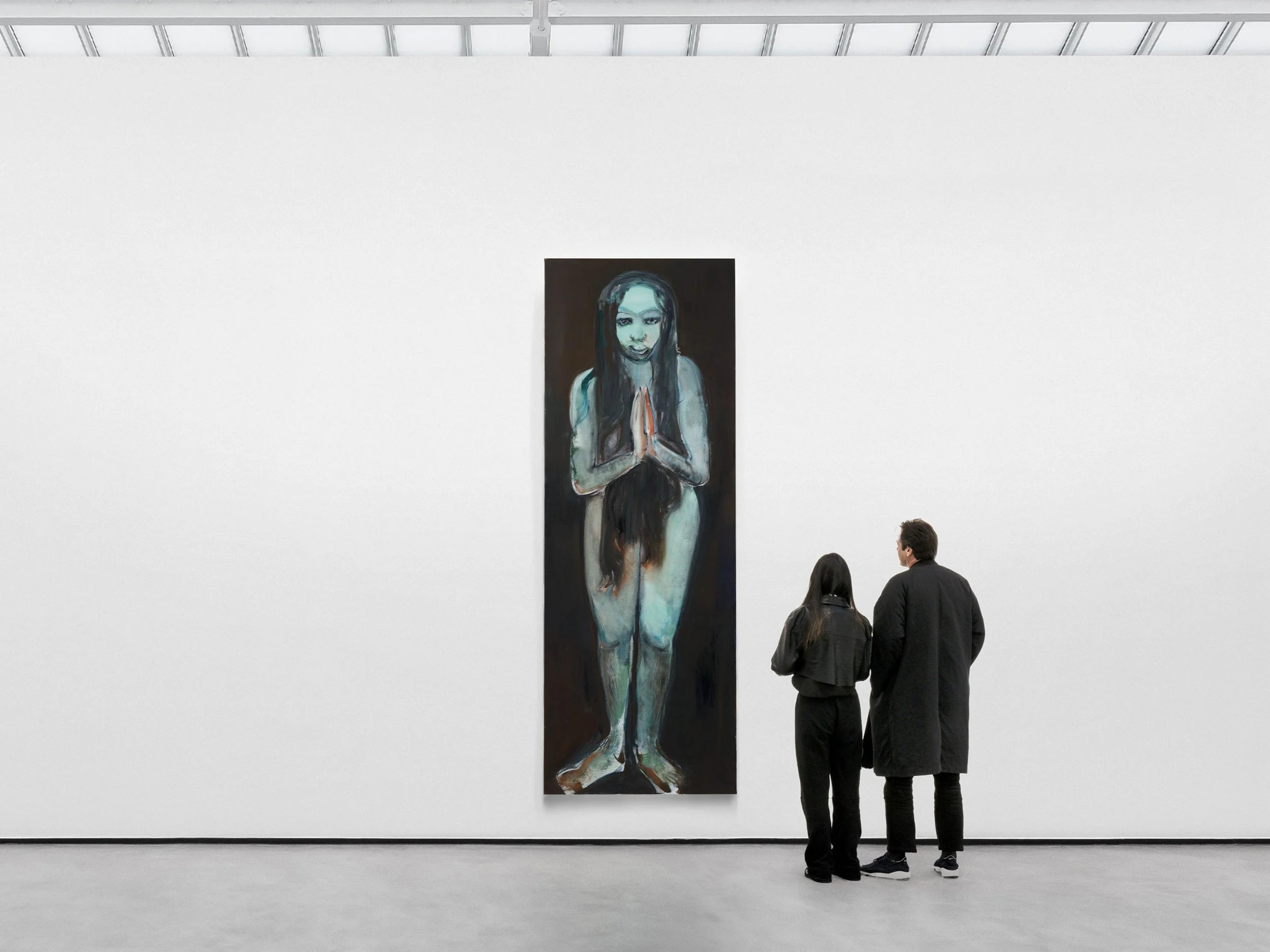
Marlene Dumas, Magdalena, 1995, on view at David Zwirner. Galleries play an important role in establishing artistic context and communicating valuations within the primary and secondary markets.
Regulation, Provenance and the Limits of Disclosure
The debate over transparency increasingly intersects with financial regulation.
Art transactions can involve substantial sums, complex ownership structures and international movements of valuable objects. These characteristics create legitimate concerns about money laundering, sanctions compliance and the identification of beneficial owners.
In the United Kingdom, art market participants conducting qualifying transactions are subject to anti-money-laundering requirements.
From 30 June 2026, relevant amendments changed the transaction threshold from €10,000 to £10,000. Updated HMRC guidance also clarifies customer due diligence requirements and the responsibilities of supervised businesses.
Regulatory scrutiny addresses a different problem from public price transparency.
Knowing the identity of a buyer, verifying the source of funds and conducting appropriate sanctions checks do not necessarily require publishing that person's identity.
Indeed, effective regulation may depend on protecting sensitive information while ensuring that authorised institutions can examine it when necessary.
The provenance of artworks introduces a related challenge.
Ownership history can influence authenticity, legal title and market value. Incomplete or misleading provenance information can create significant financial and reputational risks.
In a case reported in January 2026, collector Sasan Ghandehari brought proceedings against Christie's concerning alleged failures to disclose aspects of the ownership history of a Picasso acquired in 2023. The allegations were contested legal claims, not established findings of wrongdoing.
Such disputes highlight the importance of distinguishing between confidentiality that protects legitimate privacy interests and nondisclosure of information potentially material to a transaction.
For the market, greater accountability may depend on clearer contractual representations, more rigorous provenance research and documented procedures for identifying relevant risks.
Digital Information and the Future of Price Discovery
Digital platforms have improved access to auction records, exhibition histories and artists' commercial biographies, but they have not eliminated the underlying limitations of market information.
A database containing thousands of auction results may appear comprehensive while excluding private transactions, unsuccessful negotiations and artworks never offered for resale.
The distinction between available information and complete information is becoming increasingly important as artificial intelligence enters the collecting process.
The Art Basel and UBS Survey of Global Collecting 2026 found that 72% of respondents conducted moderate or substantial independent research before purchasing, while 22% used applications or artificial intelligence tools for advice.
Such technologies can make research more accessible, but their valuations remain dependent on the quality and representativeness of the underlying data.
An algorithm cannot independently establish a reliable market price when relevant transactions are undisclosed or when comparable artworks differ significantly in provenance, condition and historical significance.
Automated valuations may also reproduce distortions contained in auction records, particularly when unsuccessful sales or privately negotiated discounts are excluded.
The opportunity for 2027 lies in improving the quality of market information rather than simply increasing its quantity.
More consistent disclosure of transaction costs, clearer identification of guaranteed auction lots and stronger verification of provenance could improve confidence without requiring every commercial detail to become public.
Independent advisers and professional associations may also play a greater role in establishing standards for documentation, valuation and conflicts of interest.
However, these developments remain potential directions rather than guaranteed industry-wide reforms.

Art Basel 2025, Switzerland. As collectors gain access to increasingly sophisticated market information, transparency and informed price discovery remain central to confidence in the international art trade.
The Outlook for 2027: Can Trust Become a Competitive Advantage?
The approaching year may mark an important point in the relationship between transparency and commercial competitiveness.
Collectors increasingly have access to information that previous generations could obtain only through specialist intermediaries. They can compare auction results, examine exhibition histories and research professional relationships before committing substantial capital.
This greater independence is likely to raise expectations of accountability.
For galleries, publishing clearer pricing information may strengthen relationships with collectors who are reluctant to participate in opaque negotiations.
For auction houses, explaining guarantees and transaction structures more fully could improve the interpretation of reported results.
For advisers, transparent remuneration and carefully documented responsibilities may become increasingly important indicators of professional credibility.
The commercial case for reform is supported by Deloitte Private and ArtTactic's Art & Finance Report 2025. Among respondents, 51% of wealth managers, 52% of collectors and 59% of art professionals identified complex and insufficiently transparent pricing as a factor constraining market development.
Nevertheless, complete transparency is neither realistic nor necessarily desirable.
Private collecting involves legitimate concerns about security, financial confidentiality and personal privacy. Galleries also require discretion when supporting artists and negotiating complex transactions.
The objective should therefore be greater clarity where information materially affects decisions, rather than indiscriminate disclosure.
A market can protect confidentiality while establishing consistent expectations about fees, conflicts, provenance and contractual obligations.
That distinction may become central to the industry's credibility in 2027.
Conclusion: Trust as a Foundation of Market Value
The art market's transparency problem is not simply the consequence of outdated commercial traditions. It reflects the tension between an industry organised around personal relationships and one increasingly expected to meet the standards of accountability associated with valuable financial assets.
Private transactions, auction guarantees and intermediary commissions perform legitimate economic functions. Yet when their terms are insufficiently understood, they can complicate valuation, distort perceptions of demand and weaken confidence in professional advice.
The solution is unlikely to involve the complete abandonment of confidentiality. Instead, the market requires more consistent distinctions between information that should remain private and information that must be disclosed to the parties whose financial interests are affected.
For galleries, auction houses and advisers, greater accountability could become a meaningful competitive advantage. For collectors, it would provide a stronger basis for evaluating both artworks and the professionals facilitating their acquisition.
As 2027 approaches, the central question is whether the industry can transform transparency from an occasional concession into a dependable commercial standard.
Ultimately, trust cannot be established solely through impressive auction results or the prestige of established institutions. It depends on the integrity of the information surrounding each transaction and the confidence that all participants understand the economic interests involved.