In an art market frequently defined by visibility, record prices and the relentless circulation of images, absence can become an unexpectedly powerful force. An artist whose paintings rarely appear at auction, whose most significant works remain in private collections or whose production has ceased for decades may occupy a distinctive position in the hierarchy of cultural and financial value. The less frequently certain artworks become available, the more consequential their occasional reappearance can seem.
Yet scarcity in the art market is rarely straightforward. A work may disappear because its owner has no intention of selling, because it has entered a permanent museum collection, because questions surrounding its attribution remain unresolved or because it has simply been forgotten. An artist may withdraw from public life, a family may preserve an estate intact, or an entire body of work may remain inaccessible for generations.
These different forms of absence produce profoundly different market consequences. Some generate anticipation, strengthen reputations and contribute to exceptional auction results. Others diminish visibility, restrict scholarly understanding and leave artists commercially marginal.
The relationship between rarity and value is therefore more complicated than conventional supply-and-demand theory might suggest. An artwork's absence can enhance its desirability only when there is sufficient cultural recognition, collector interest and confidence in its significance.
As private collections expand, institutional holdings become more permanent and the supply of historically important artworks remains finite, the economics of disappearance deserves closer examination. What happens when a major artist's work effectively stops circulating? Can prolonged absence increase demand, or does invisibility ultimately threaten an artist's place within art history?
The Economics of Scarcity: When Supply Becomes the Story
Scarcity is fundamental to the pricing of unique artworks, but not all scarcity creates value.
Unlike financial securities or manufactured luxury products, original paintings and sculptures cannot generally be reproduced without changing the nature of the asset being acquired. A particular artwork exists as a specific object, with a particular history, condition and relationship to the artist's wider practice.
For established artists, the availability of important works may be constrained by museum ownership, long-term private collecting and the limited number of surviving examples from significant periods.
This becomes commercially meaningful when buyers distinguish between an artist's total production and the much smaller number of works they consider historically or aesthetically exceptional.
A painting from a defining period may remain unavailable for decades, even while lesser works by the same artist appear regularly at auction.
Consequently, headline measures of market supply can be misleading. An artist may have hundreds of transactions annually yet offer very few opportunities to acquire a museum-quality work.
When one of these exceptional objects becomes available, competition can reflect not only its intrinsic artistic qualities but also uncertainty about when a comparable opportunity might arise again.
The 2018 sale of Kerry James Marshall's Past Times provides a revealing example. The monumental 1997 painting achieved $21.1 million at Sotheby's in New York, more than quadrupling the artist's previous auction record. Its significance was reinforced by its exhibition history, including the Whitney Biennial and Marshall's major institutional retrospective.
Marshall's market demonstrates how limited production, institutional demand and restricted availability of major paintings can reinforce one another. His long-standing gallery relationships and the preference for placing significant works in institutional collections have contributed to an environment in which important secondary-market appearances attract particular attention.
But scarcity did not create the value of Past Times independently. The price reflected years of artistic development, scholarly recognition and growing collector demand.
The distinction is essential: scarcity can intensify competition for an established artistic achievement, but it cannot reliably manufacture that achievement.
When Artists Withdraw from the World
An artist's disappearance from public life is different from the disappearance of individual artworks. The distinction becomes particularly revealing when artistic production stops altogether.
Agnes Martin offers one of the most compelling examples of withdrawal within post-war art.
In 1967, despite growing recognition in New York, Martin left the city and ceased painting. She eventually settled in New Mexico, returning to painting in 1974 after a period of approximately seven years.
Her withdrawal was not conceived as a market strategy. It emerged from personal circumstances and an artistic commitment to solitude, contemplation and disciplined visual expression.
Nevertheless, her absence became an important element in subsequent interpretations of her career.
Martin's return introduced changes in colour, composition and the relationship between her earlier grids and later striped paintings. The interruption consequently became significant to art historians seeking to understand the development of her work.
From a market perspective, the episode also demonstrates the limitations of interpreting an artist's absence through financial outcomes alone.
The importance of Martin's work was consolidated through institutional exhibitions, scholarly engagement and sustained interest in her artistic philosophy. Her temporary withdrawal is part of that history, but it would be misleading to treat it as the primary reason for her subsequent market standing.
Indeed, artists who leave commercial networks face considerable risks. Galleries may redirect resources towards other artists, collectors may lose interest, and younger audiences may encounter the work only through incomplete documentation.
An absence that becomes meaningful in retrospect may have been experienced very differently at the time.
The Artist Who Was Discovered After Disappearing
Few cases demonstrate the relationship between invisibility and historical reassessment more clearly than Hilma af Klint.
The Swedish artist began producing radically abstract paintings in the early twentieth century, developing a visual language that challenged conventional narratives of abstraction's origins.
Much of this work remained outside public view during her lifetime. Af Klint believed that future generations would be better positioned to understand her artistic ideas and stipulated that significant works should not be exhibited until twenty years after her death.
She died in 1944, but wider recognition took considerably longer.
Her abstract paintings became more visible through exhibitions from 1986 onwards, while the Solomon R. Guggenheim Museum's 2018–2019 exhibition, Hilma af Klint: Paintings for the Future, brought her achievement to an international audience.
The consequences were primarily art-historical rather than simply commercial. Her work prompted renewed discussion about the chronology of abstract art, the relationship between spiritual investigation and modernism, and the historical exclusion of women artists from established narratives.
Yet this extraordinary visibility did not translate into a conventional auction market.
A substantial part of af Klint's legacy remains under foundation stewardship, with restrictions surrounding the sale of particular bodies of work.
Her case therefore challenges the assumption that institutional recognition must ultimately culminate in high-value commercial transactions.
An artist can become internationally significant while important works remain effectively unavailable for purchase.
The scarcity of af Klint's paintings is consequently both material and institutional. Their limited commercial circulation reflects custodial arrangements as well as their cultural importance.
This distinction matters because art-market value and art-historical influence do not necessarily develop at the same pace or through the same mechanisms.
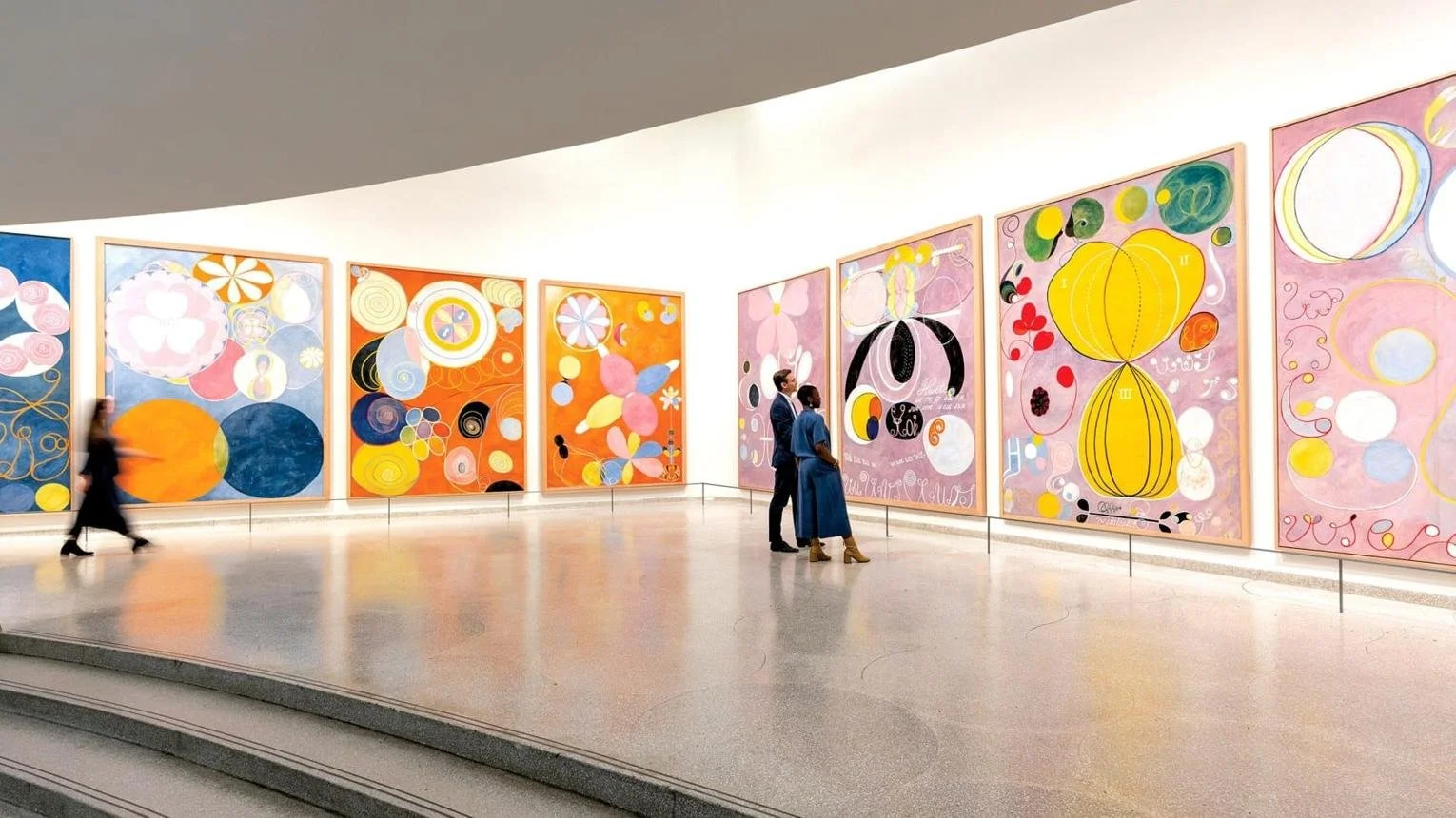
Installation view of Hilma af Klint: Paintings for the Future at the Solomon R. Guggenheim Museum, New York, 2018–2019. Photograph: David Heald.
The Rediscovery Effect: When Lost Art Returns
Where prolonged absence can preserve mystery, rediscovery can transform the context in which an artwork is understood.
One of the most remarkable recent examples emerged in Madrid in 2021, when a painting later identified as Caravaggio's Ecce Homo appeared in an auction catalogue with an attribution to the circle of Jusepe de Ribera.
The work initially carried a starting price of €1,500.
After specialists recognised its possible significance, Spanish authorities intervened and the auction was suspended. Subsequent research, restoration and scholarly investigation supported its attribution to Caravaggio.
The painting, dated to approximately 1605–1609, subsequently entered a private collection and was exhibited at the Museo Nacional del Prado between May 2024 and February 2025.
The transformation was extraordinary, but it would be analytically incorrect to describe it simply as a price increase caused by scarcity.
The initial auction attribution and the later scholarly attribution described fundamentally different propositions.
A work understood to belong to a follower of a major painter occupies a different market category from a painting accepted as an autograph work by that master.
The rediscovery therefore changed the work's identification, historical significance and potential collector universe.
Its prolonged obscurity added to the narrative, but the decisive factor was the reassessment of authorship supported by specialist evidence.
This example exposes a central problem in the economics of rediscovered art: an apparently dramatic valuation change may reflect improved knowledge rather than an increase in demand for an unchanged, fully understood asset.
The Psychology of the Unavailable Masterpiece
Collectors do not respond to scarcity purely through rational economic calculation.
The possibility of acquiring something that others cannot obtain introduces psychological considerations involving exclusivity, status, competitive desire and fear of missing a rare opportunity.
These motivations are particularly visible when celebrated artworks return to auction after decades in private ownership.
A major painting that has not appeared publicly for a generation may be presented as an exceptional acquisition opportunity. Its provenance, historical importance and long absence can become central elements of the auction campaign.
Such narratives can be commercially persuasive because the buyer is purchasing more than an object. The acquisition may represent entry into a distinguished chain of ownership or the opportunity to secure a work unlikely to become available again in the foreseeable future.
The 2024 sale of Leonora Carrington's Les Distractions de Dagobert illustrates how an important work can become the focus of intense competition following a long period outside the auction market.
The painting had sold at Sotheby's in 1995 for $475,500. When it returned to the same auction house in May 2024, it achieved $28.5 million including fees, setting a new auction record for Carrington.
Its purchaser, Eduardo F. Costantini, had reportedly been the underbidder when the work was sold nearly three decades earlier.
The transaction demonstrates the importance of individual collector conviction, historical reassessment and the rarity of comparable opportunities.
Nevertheless, the difference between the two sale prices should not be interpreted as a simple measure of investment performance. It excludes holding costs, transaction expenses and inflation, while also spanning a period in which Carrington's wider reputation and the market for Surrealist women artists changed substantially.
Absence contributed to the artwork's story, but it operated alongside shifting cultural recognition and the financial commitment of specific buyers.
The Hidden Collections That Never Reach Auction
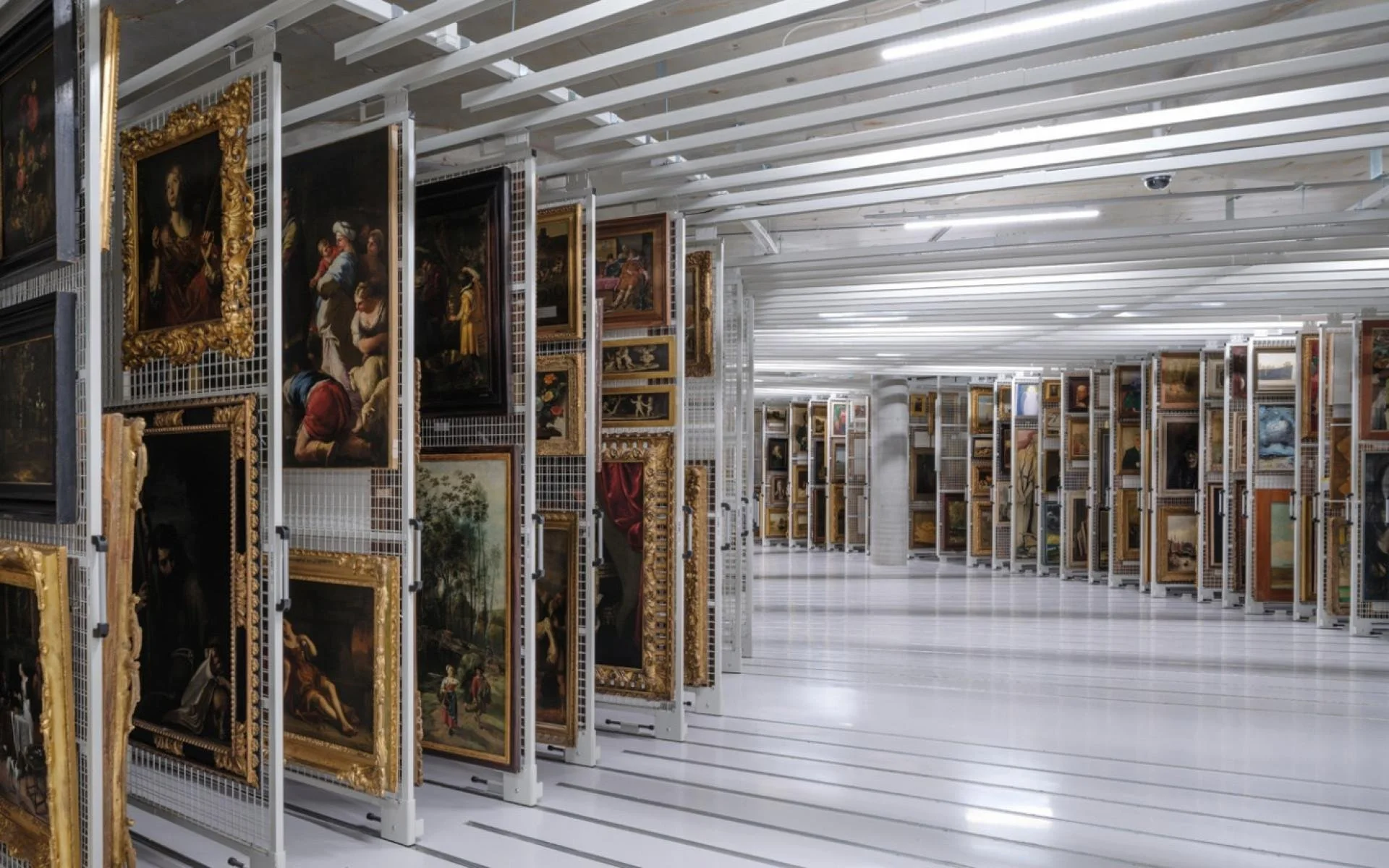
A considerable proportion of historically significant art remains beyond the visible commercial market.
Works held by museums, foundations and long-term private collectors may be effectively unavailable for decades. Other artworks become difficult to trace through inheritance, relocation or inadequate documentation.
This creates a fundamental information problem.
Public auction records capture only artworks that owners choose to offer through that channel. They do not provide a comprehensive account of the works that remain privately held, nor do they reveal every private transaction.
An artist whose paintings rarely appear at auction may therefore have an exceptionally strong collecting base, but the same pattern might also indicate limited demand or weak commercial infrastructure.
Without additional evidence, low transaction volume is ambiguous.
For market analysts, the distinction between available supply and total supply is particularly important.
The number of existing artworks does not necessarily indicate the number of works potentially available to collectors. A museum may own dozens of paintings by an artist without any intention of selling them, while an estate may preserve a large inventory but release only selected pieces.
Conversely, a major private collection entering the market through inheritance or financial necessity can substantially change the supply environment.
This is why individual collection sales can influence short-term price formation, even when the underlying artistic reputation remains unchanged.
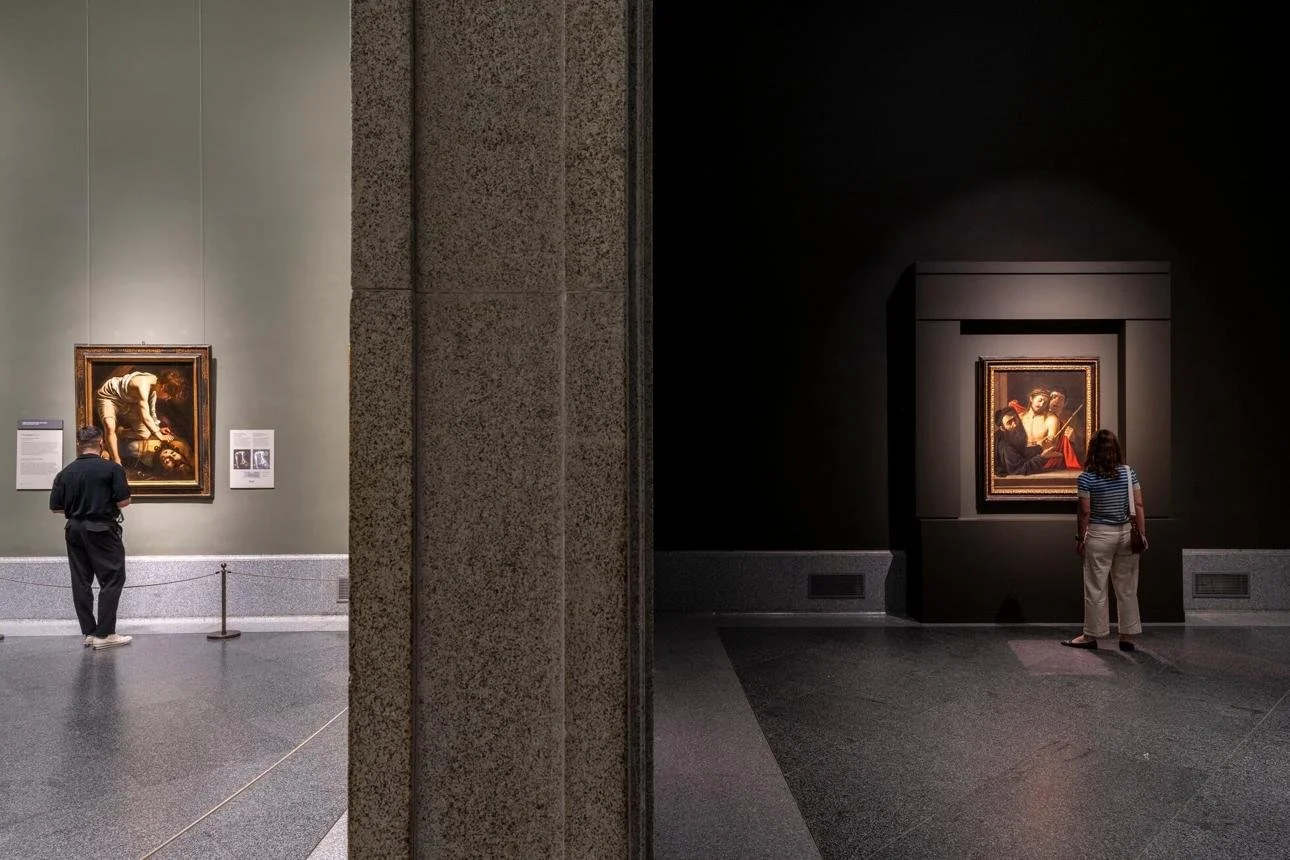
Caravaggio's rediscovered Ecce Homo on display at the Museo Nacional del Prado, Madrid, 2024, following its identification as a significant work by the Italian Baroque master.
Why Auction Houses Sometimes Prefer Absence
Not every disappearance occurs over decades. Some take place immediately before an anticipated auction.
Withdrawal is a familiar, if often insufficiently examined, feature of the secondary art market.
A consignor may remove a work because reserve expectations cannot be met, because a private offer becomes attractive or because legal, provenance or ownership questions arise.
In certain circumstances, the decision reflects a desire to avoid the consequences of an unsuccessful public sale.
Christie's and other major auction houses commonly use confidential reserve prices, establishing the minimum acceptable amount at which an artwork may be sold.
When bidding does not reach that threshold, a work may remain unsold. The outcome can influence perceptions of demand, particularly for artists whose markets depend on relatively few significant transactions.
Removing a work before the sale may prevent the creation of a public record of unsuccessful bidding, although withdrawals can themselves attract scrutiny.
In May 2024, Christie's withdrew Brice Marden's Event (2004–2007), which had carried an estimate of $30 million to $50 million.
The withdrawal attracted attention because of the work's prominence and the substantial expectations attached to it.
Yet the absence of a completed transaction did not establish what the painting was worth.
There was no publicly realised price. The estimate represented an auction expectation, not evidence that a buyer had agreed to pay that amount.
For collectors and analysts, such cases illustrate the difference between an asking valuation and a demonstrated market transaction.
They also reveal a broader asymmetry in auction data. Successful sales create observable price points, while withdrawn works and private negotiations can leave incomplete public records.
Can Scarcity Be Manufactured?
The commercial benefits associated with rarity create an obvious temptation to manage supply strategically.
Galleries may regulate the release of new work to maintain pricing consistency and support long-term relationships with collectors.
Artists may deliberately limit production, refuse certain commissions or retain important works. Estates and foundations may control the pace at which artworks enter the market.
None of these practices is inherently improper. Responsible supply management can protect an artist from speculative overexposure and ensure that significant works enter appropriate collections.
Problems arise when restricted availability is used to imply demand that cannot be independently verified.
A gallery might describe an artist's work as almost impossible to acquire, but this statement alone establishes little about the number of active buyers or the prices they are genuinely prepared to pay.
The crucial distinction is between scarcity supported by sustained demand and scarcity created by withholding supply in an uncertain market.
The latter may maintain the appearance of exclusivity temporarily without establishing a durable secondary market.
When works eventually return to sale, the difference becomes apparent.
If several committed buyers compete, limited supply may support a strong result. If demand has weakened, a rare appearance can instead expose the fragility of earlier valuations.
In this respect, scarcity is not an independent guarantee of value. It is a condition whose financial consequences depend on the strength and depth of demand.
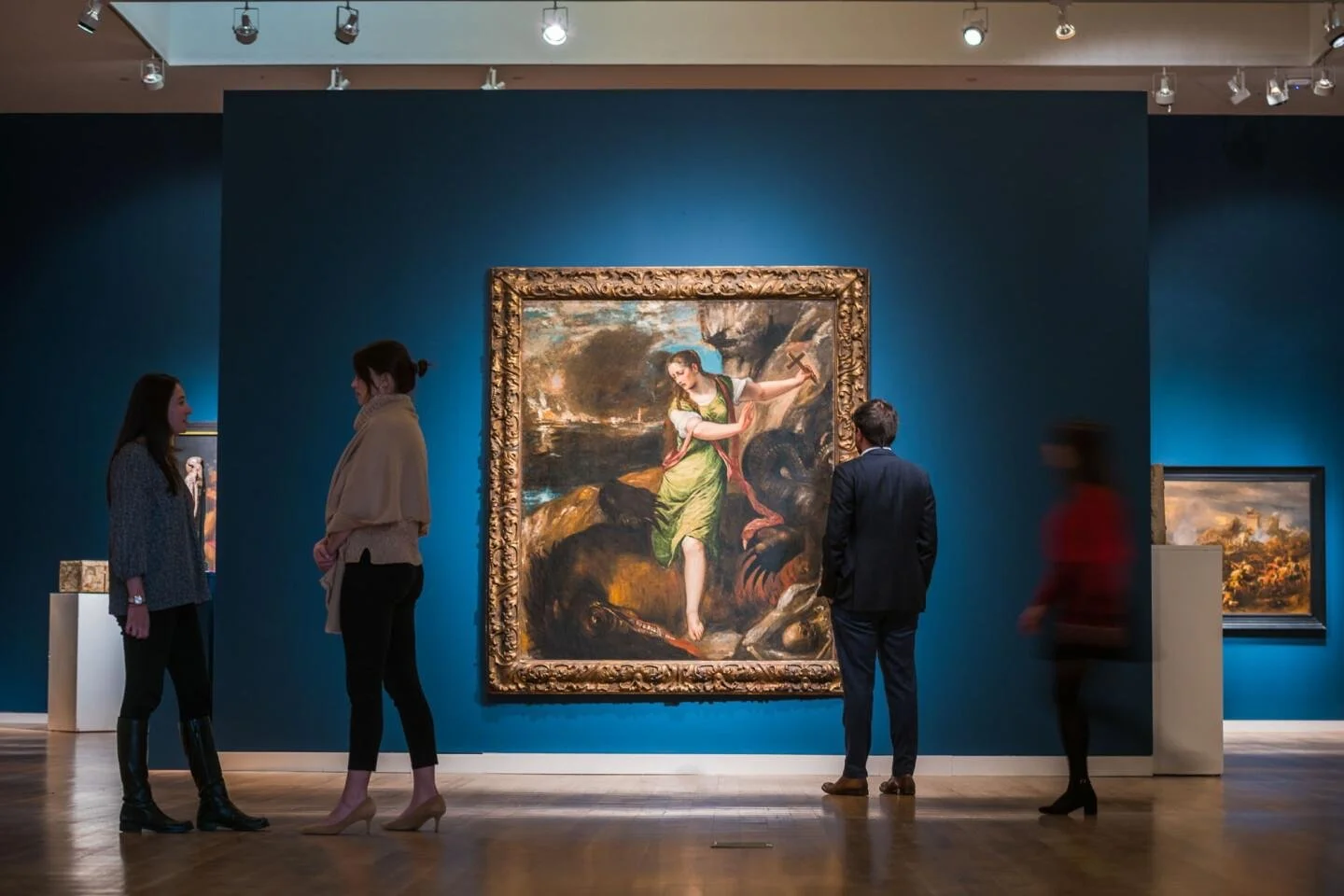
Visitors viewing an Old Master painting during Sotheby's Masters Week exhibition in New York, highlighting the enduring appeal and market significance of rare historical artworks.
When Disappearance Becomes a Liability
The romantic appeal of artistic disappearance can obscure a less attractive reality.
Many artists who withdraw from the market do not subsequently experience rediscovery, institutional recognition or financial appreciation.
Their work may become difficult to authenticate, incomplete archives may complicate provenance research, and the absence of active gallery representation can reduce opportunities for exhibitions and scholarly engagement.
Collectors may hesitate to acquire works when there is little reliable pricing information or no established framework for resale.
For deceased artists, the management of an estate can become decisive.
A well-organised archive, clear authentication procedures, comprehensive cataloguing and responsible institutional relationships may support the preservation of an artistic legacy.
Without them, even significant bodies of work can become fragmented or inaccessible.
Disappearance can therefore weaken the mechanisms through which cultural and commercial value is sustained.
It is particularly important to distinguish genuine scarcity from market illiquidity.
An artist may have a limited number of works available because established collectors refuse to sell. Equally, an artist's works may rarely appear because prospective sellers cannot identify buyers at acceptable prices.
The observable result may look similar, but the economic implications are fundamentally different.
A market with very little supply and substantial unmet demand is not equivalent to a market with little supply and little demand.
The Role of Museums in Bringing Artists Back
Institutional recognition can alter the consequences of market absence.
Retrospectives, scholarly exhibitions and newly published research may reconnect overlooked artists with audiences, curators and collectors.
In some circumstances, such attention produces stronger commercial interest. In others, it generates greater understanding without significant changes in market prices.
The distinction is important because museums do not exist to manufacture investment opportunities.
Their contribution is intellectual and cultural, even when their decisions influence market expectations.
A retrospective can establish new historical relationships, identify previously neglected achievements or introduce a body of work to an international audience.
For artists whose work has remained out of public view, this process may be more important than immediate commercial availability.
Indeed, some of the most consequential rediscoveries involve works that never enter the market.
An exhibition can transform the historical position of an artist while leaving ownership structures unchanged.
The long-term cultural consequences may therefore be substantial even where no auction price exists through which to measure them.
The Future of Rarity in an Increasingly Transparent Market
Digital archives, auction databases and online exhibition records have made the historical circulation of artworks easier to investigate.
Technology can help researchers connect provenance information, compare visual characteristics and identify works that have disappeared from public documentation.
Yet greater access to information does not eliminate the structural opacity of private ownership.
Collectors can continue to acquire and hold artworks without publicly disclosing transactions, while confidential sales remain an important feature of the high-end market.
Digital visibility also creates a paradox.
An artist's work may circulate continuously through photographs, publications and online exhibitions while the original objects remain practically impossible to acquire.
The distinction between the visibility of an image and the availability of the underlying artwork is becoming increasingly important.
At the same time, changing collecting demographics, estate transfers and the financial pressures affecting private owners may bring long-held works back into circulation.
Some rediscoveries will generate intense competition. Others will reveal that historical reputation and present market demand have diverged.
For collectors, the challenge will be to assess rarity in relation to artistic significance, provenance, condition and a realistic understanding of potential resale opportunities.
For artists and estates, the priority should be the preservation of coherent records and meaningful public access rather than the pursuit of scarcity as an end in itself.
The Value of What Cannot Be Bought
The disappearance of an artwork creates a compelling narrative, but it does not establish a universal economic outcome.
An important painting may become more desirable because it has been unavailable for decades. Another may lose relevance because generations of scholars and collectors have had little opportunity to encounter it.
A rediscovered masterpiece may transform an artist's historical standing, while a withdrawn auction lot may simply reveal a disagreement between sellers and buyers.
The market's response depends on the interaction of scarcity, artistic reputation, institutional recognition, documentation and the purchasing intentions of collectors.
These forces operate unevenly and cannot be reduced to a formula in which lower supply automatically produces higher value.
Perhaps the most revealing aspect of disappearance is the distinction it exposes between ownership and significance.
Some artworks achieve extraordinary financial results precisely because they are rarely available. Others remain culturally indispensable despite never entering the commercial market.
The most enduring artistic achievements are not necessarily those that command the greatest auction premiums, but those that retain their capacity to provoke interpretation and sustain relevance across generations.
In a market preoccupied with what has just been sold, it is worth considering what has not been offered, what has been forgotten and what may never become available.
The absence of a work can sometimes heighten its commercial appeal. More profoundly, it can reveal how much of art's historical and cultural value exists beyond the reach of the market itself.