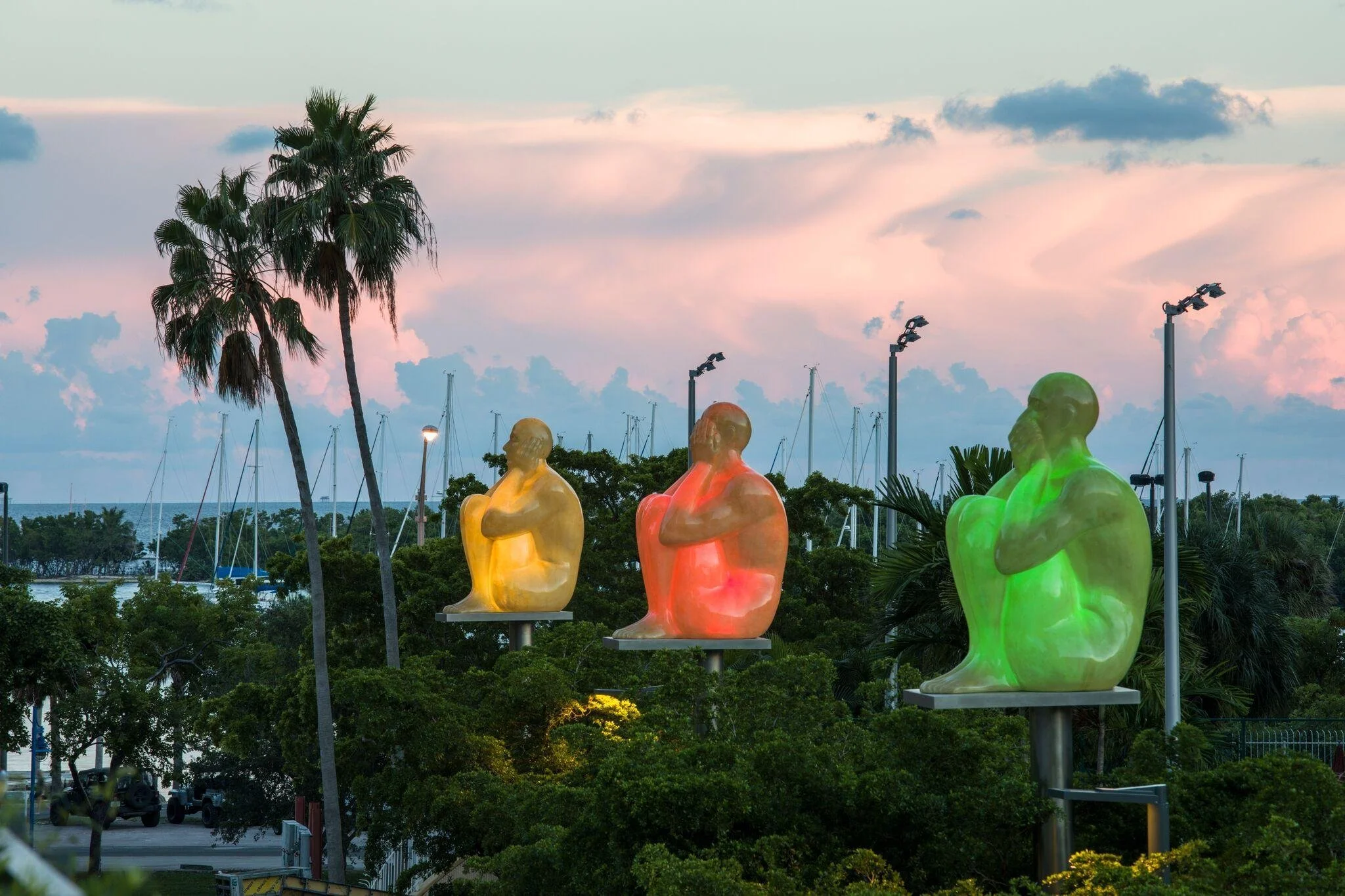
In the upper reaches of the global property market, architecture is no longer expected to communicate exclusivity through design, location and material quality alone. Increasingly, developers of luxury residences, landmark hotels and mixed-use destinations are turning to contemporary art to establish cultural identity, distinguish their properties and create environments that cannot easily be replicated. Monumental sculptures, architectural installations and site-specific commissions are becoming integral to the conception of buildings rather than decorative additions introduced after construction.
The transformation reflects a broader convergence between cultural capital and real estate investment. An artwork commissioned for a residential tower or hotel lobby may function simultaneously as an artistic statement, an architectural intervention and an instrument of commercial differentiation. Its presence can influence how a property is photographed, marketed, experienced and remembered.
For developers, the appeal is considerable. In markets where competing projects offer comparable amenities, international design credentials and premium finishes, an ambitious artistic commission can provide a distinctive identity. For artists, collaboration with developers can introduce opportunities to work at unprecedented scales, engage with architectural environments and reach audiences beyond traditional galleries and museums.
Yet the relationship is not without tension. The financial interests of property owners do not always align with artistic independence, while the use of celebrated artists to enhance commercial prestige raises questions about whether culture is being supported or instrumentalised.
As monumental commissions become more visible across international luxury developments, the distinction between art as an architectural necessity and art as a branding strategy is increasingly important. The most consequential projects suggest that contemporary art is moving beyond its conventional role as a collectible object to become a permanent component of the built environment.
From Decorative Luxury to Architectural Identity
Art has long occupied a place within prestigious architecture. Historic palaces, financial institutions and grand hotels commissioned paintings, sculptures and decorative programmes intended to demonstrate wealth, sophistication and civic authority.
What distinguishes the contemporary model is the extent to which certain artworks are conceived in direct relationship to architectural space.
Rather than selecting completed works to complement an interior, developers increasingly commission artists during the planning and design stages. Sculpture may determine how visitors move through a courtyard, while large-scale installations can influence lighting, circulation and the perception of structural volume.
This represents an important shift in the relationship between artistic production and property development.
A conventional artwork can often be removed, sold or relocated without fundamentally changing the identity of the building in which it is displayed. A successful site-specific commission may become inseparable from its architectural setting.
Its meaning derives partly from scale, location, material and the experience of the surrounding environment.
For developers, this integration creates a commercial proposition that extends beyond conventional amenities. A property associated with a distinctive artistic installation can acquire a recognisable visual identity, particularly when the artwork becomes central to its architectural photography and international publicity.
However, visibility should not be confused with measurable financial return. Although art may strengthen branding and buyer interest, publicly available evidence rarely isolates the contribution of an individual commission to completed property sales or capital appreciation.
The economic case for monumental art therefore remains partly qualitative, involving differentiation, cultural positioning and the creation of lasting identity.
Miami: Where Contemporary Art Meets Property Development
Miami provides one of the clearest examples of the institutionalisation of art within luxury property development.
The city's international art market, architectural experimentation and concentration of affluent property buyers have encouraged developers to integrate contemporary art into residential and mixed-use projects.
Among the most prominent advocates is Jorge M. Pérez, founder of Related Group, whose commitment to collecting and public art has influenced the company's development strategy.
Related Group maintains a dedicated art department responsible for identifying, commissioning and placing artworks across its projects. The programme extends beyond acquiring paintings for residential interiors to encompass exterior sculpture, murals, architectural installations and public-facing commissions.
Its portfolio includes work associated with artists such as Jaume Plensa, Fernando Botero, Pablo Atchugarry, Julio Le Parc and Michele Oka Doner.
These projects demonstrate the variety of ways art can engage with real estate.
At Marea, Markus Linnenbrink created murals for elevator lobbies, while José Bedia designed gates for One Ocean. Michele Oka Doner's mosaic work at Apogee Beach introduces an artistic intervention directly into the building's architectural experience.
Such commissions are particularly significant because they occupy spaces that residents and visitors encounter repeatedly.
Rather than existing as isolated luxury objects, they become part of everyday movement through a building.
In 2026, Patricia García-Vélez Hanna, who oversees Related Group's arts and cultural initiatives, described her involvement in developments from the earliest stages, identifying locations where commissioned artworks could interact with architectural design.
Recent examples discussed in that interview included a site-specific installation at Viceroy Brickell and a ceramic intervention by Miami artist Lauren Shapiro at the Ritz-Carlton Residences in Tampa.
The model demonstrates how art commissioning has become a specialised function within property development, requiring curatorial expertise alongside architectural and commercial planning.
Marina Bay Sands: Art as an Integrated Architectural System
While Miami illustrates the use of art within luxury residential development, Singapore's Marina Bay Sands demonstrates the possibilities of large-scale integration within hospitality architecture.
Designed by Moshe Safdie, the complex incorporates an extensive programme of commissioned artworks developed in relation to the building's distinctive structural and spatial characteristics.
The Marina Bay Sands Art Path encompasses 11 large-scale installations by eight internationally recognised artists.
Among the most striking is Antony Gormley's Drift, completed in 2010.
Suspended within the atrium of Hotel Tower 1, the stainless-steel structure measures approximately 40 metres in length, 23 metres in height and 15 metres in width.
Composed of more than 16,100 steel rods and 8,320 nodes, the sculpture occupies a vast volume of architectural space without functioning as a conventional enclosed object.
Its visual effect depends on the relationship between structural density and openness, allowing viewers to experience the installation differently from multiple levels.
The project also illustrates the technical complexity of monumental commissions. Fabrication, transportation, assembly and structural engineering become essential components of the artistic process.
Elsewhere in the development, Ned Kahn's Wind Arbor extends the relationship between artistic expression and environmental performance. Comprising approximately 260,000 aluminium flaps across 6,800 square metres, the installation responds to air movement while contributing to solar shading.
Here, the distinction between functional architecture and artistic intervention becomes less clearly defined.
The artworks are not simply luxury embellishments. They contribute to the sensory character of the development and, in some cases, perform architectural functions.
This integration represents one of the strongest arguments for commissioning art during the design process rather than treating it as a final decorative expense.
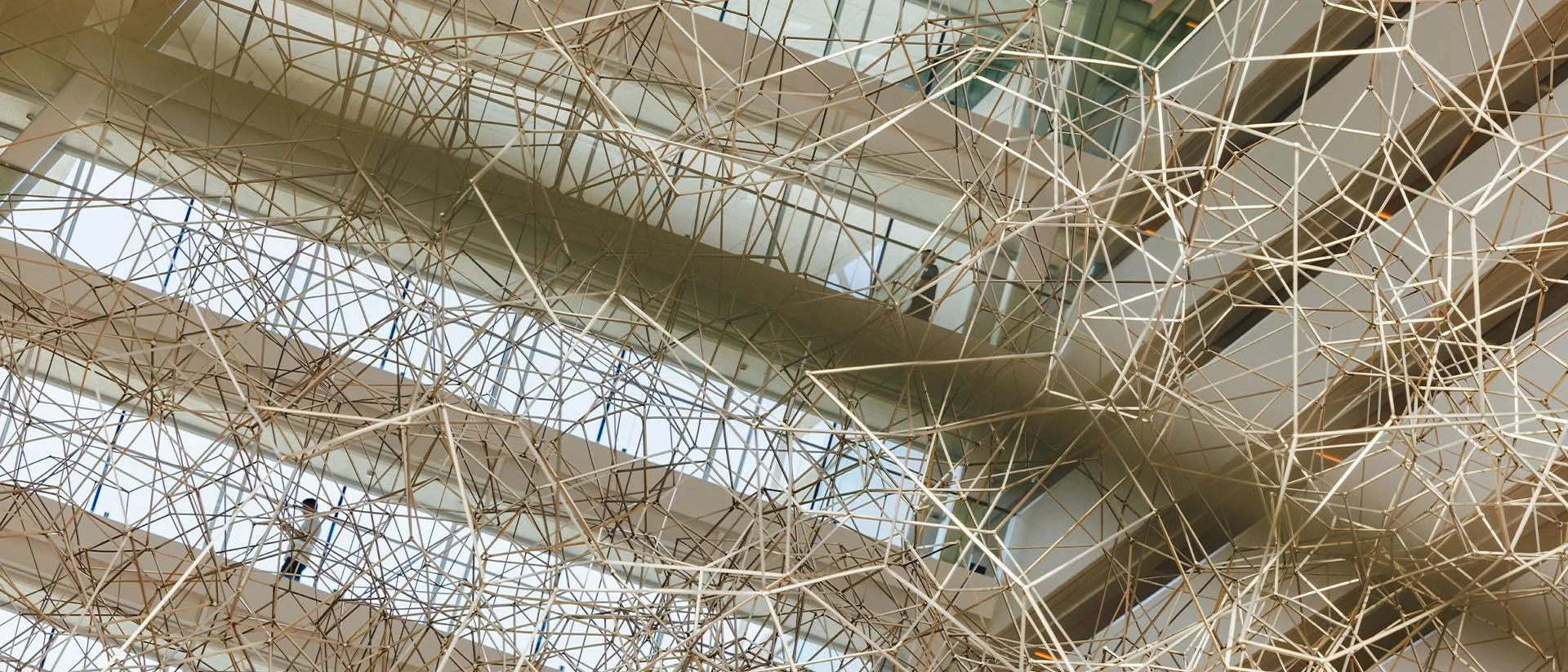
Antony Gormley's Drift, a monumental stainless-steel installation suspended within the atrium of Marina Bay Sands. The work demonstrates how commissioned sculpture becomes an integral part of architectural space.
The Commercial Value of Cultural Distinction
Luxury real estate operates through a combination of tangible characteristics and intangible perceptions.
Location, construction quality, floor area and architectural design remain fundamental to property valuation. Yet at the highest end of the market, emotional appeal, exclusivity and brand identity can also influence purchasing decisions.
A monumental artwork may contribute to these less readily quantifiable attributes.
Its presence can distinguish a development from competing properties and provide a recognisable image for marketing campaigns, editorial coverage and architectural publications.
For hospitality businesses, an ambitious installation may become an attraction in its own right, encouraging visitors to experience a property even when they are not staying there.
For residential developers, site-specific art can communicate an association with artistic patronage and international cultural networks.
Architectural Digest documented this approach in its examination of art as an amenity within luxury development, including the commissioning of a major Jaume Plensa installation at Park Grove in Miami.
The commercial logic is understandable. Where properties already compete through exceptional design and amenities, art can introduce a feature that is difficult to reproduce.
However, the relationship between cultural distinction and financial performance remains challenging to establish.
A development featuring an important artwork may achieve strong sales because of its waterfront location, architectural quality, pricing, broader market conditions or buyer demographics.
Without credible comparative analysis controlling for these factors, claims that a commission directly increases property values by a particular percentage should be treated cautiously.
The most defensible argument is that art can contribute to brand differentiation and the overall experience of a property, rather than guaranteeing an identifiable investment premium.
Luxury Hospitality and the Architecture of Experience
For international hospitality groups, contemporary art has become a means of developing identity across increasingly competitive luxury destinations.
Hotels are environments in which visitors experience architecture over time. They move through entrances, reception areas, restaurants, corridors and landscaped spaces, encountering artworks within a sequence of designed settings.
Site-specific commissions allow hospitality brands to turn these encounters into elements of a wider cultural narrative.
Rosewood Hotels & Resorts offers several examples.
At Rosewood Villa Magna in Madrid, the hotel's renovation incorporated commissioned works and a collection developed in collaboration with art consultancy ArtLink. The programme included a specially commissioned work by Jacky Puzey for the lobby.
More recently, Rosewood Villa Magna presented Jaime Hayon's Love Catcher in its gardens during the 2026 Madrid Design Festival, demonstrating how artistic installations can also support temporary cultural programming.
At The Chancery Rosewood in London, the redevelopment of the former United States Embassy incorporates bespoke artworks commissioned from 22 artists through the consultancy Cramer & Bell.
Such projects reveal how luxury hospitality can combine permanent collections, temporary installations and wider artistic partnerships.
Yet these approaches should not be treated as identical.
A permanent architectural commission is materially different from a rotating exhibition or short-term artist residency. The former involves long-term ownership, maintenance and integration with the property, while the latter can support changing cultural programmes.
Both may strengthen a hotel's identity, but their financial structures and artistic implications differ considerably.
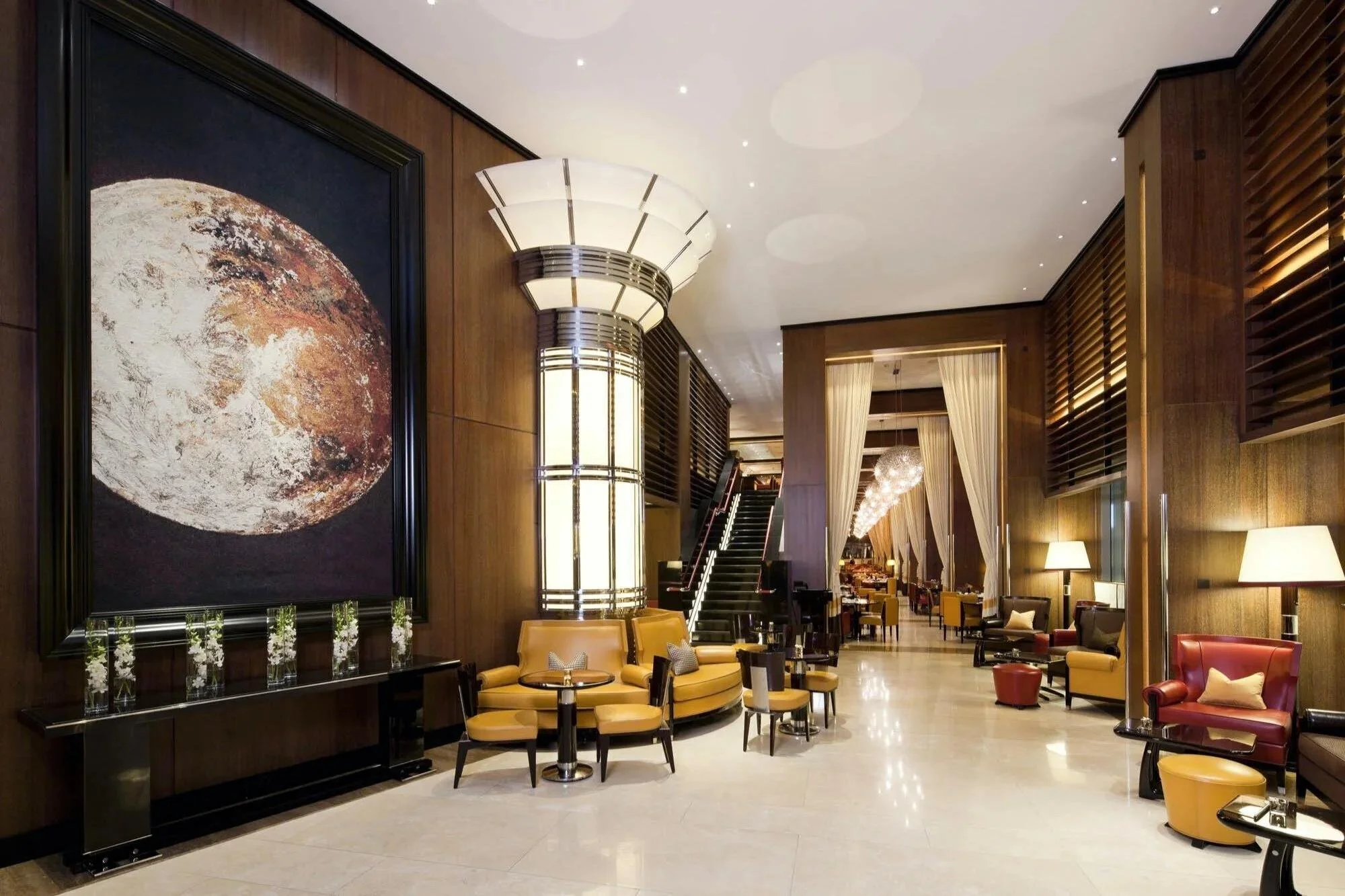
Monumental sculptural lighting installation at 45 Park Lane, London, demonstrating the integration of bespoke art, architectural design and luxury hospitality.
The Artist as an Architectural Collaborator
Monumental commissions also alter the professional responsibilities of artists.
Producing work for a building requires collaboration with architects, engineers, fabricators, lighting specialists, construction managers and regulatory authorities.
An artist accustomed to working independently may encounter technical requirements that substantially shape the final installation.
Structural loads, fire regulations, environmental exposure, visitor safety and accessibility can affect decisions about materials, dimensions and placement.
In this environment, artistic practice becomes increasingly interdisciplinary.
The commission may begin with a conceptual proposal, but its realisation depends on specialised expertise and coordination with the wider construction programme.
This can create opportunities for experimentation that conventional gallery-based production cannot easily support.
Artists may develop new fabrication methods, investigate architectural materials or create works that respond to environmental conditions.
Yet the process can also introduce restrictions.
Developers often work within fixed construction schedules and financial parameters. Design changes may require approval from multiple parties, while commercial requirements can influence the visibility and accessibility of commissioned works.
The central challenge is ensuring that technical and contractual constraints support the artistic concept rather than reducing it to an exercise in decorative branding.
The strongest collaborations emerge when artists retain meaningful creative authority while engaging constructively with architectural realities.
Who Controls the Commission?
The growth of monumental art in luxury development raises questions about ownership, artistic rights and long-term responsibility.
A site-specific installation may become legally and physically connected to a building, creating complications that rarely arise with conventional movable artworks.
Contracts must establish ownership, intellectual property rights, maintenance obligations and the circumstances under which an installation may be altered, removed or relocated.
These considerations become particularly important when properties are sold, redeveloped or transferred to new management.
An artwork designed for a specific environment may lose part of its meaning if the architecture surrounding it changes.
Equally, an owner may face substantial costs associated with preserving a complex installation.
Mechanical components, lighting systems, specialist materials and environmental exposure can create long-term maintenance requirements.
The financial cost of commissioning an artwork therefore extends beyond the initial artist's fee.
Fabrication, engineering, transportation, insurance, installation and conservation should all form part of the development budget.
For buyers of luxury residences, another question concerns the relationship between privately owned art and works located in shared spaces.
An artwork in a residential lobby may be owned by a developer, a management company or a condominium association, depending on the contractual structure.
Its maintenance can consequently become a continuing financial responsibility for residents.
The more thoroughly these arrangements are established during commissioning, the less likely the artwork is to become a source of future legal or financial uncertainty.
Public Art, Private Capital and Urban Identity
The intersection of art and real estate becomes particularly significant when privately funded developments introduce artworks into publicly accessible spaces.
Large sculptures, murals and environmental installations can contribute to the character of streets, plazas and pedestrian routes.
In successful cases, they create opportunities for cultural engagement beyond the immediate occupants of a building.
However, privately commissioned public-facing art raises questions about who determines the visual identity of urban space.
Developers may select artists according to their international reputations, market recognition or suitability for a project's branding.
These priorities do not necessarily coincide with the interests of local communities or the historical context of a neighbourhood.
Public commissioning programmes offer a different framework.
Miami-Dade County's Art in Public Places initiative, established in 1973, allocates 1.5 per cent of eligible county building capital costs to the acquisition or commissioning of art.
Its procedures involve professional advisory structures and public oversight.
Although this public-sector approach differs from private luxury development, it illustrates the importance of incorporating broader civic objectives into commissioning decisions.
Art can enhance a development's market identity while also contributing to public cultural life. Achieving both objectives requires genuine attention to accessibility, artistic quality and local context.
A sculpture positioned in a publicly visible plaza does not automatically constitute a meaningful contribution to the public realm if access remains restricted or the work bears little relationship to its surroundings.
The distinction between public visibility and public benefit deserves careful consideration.
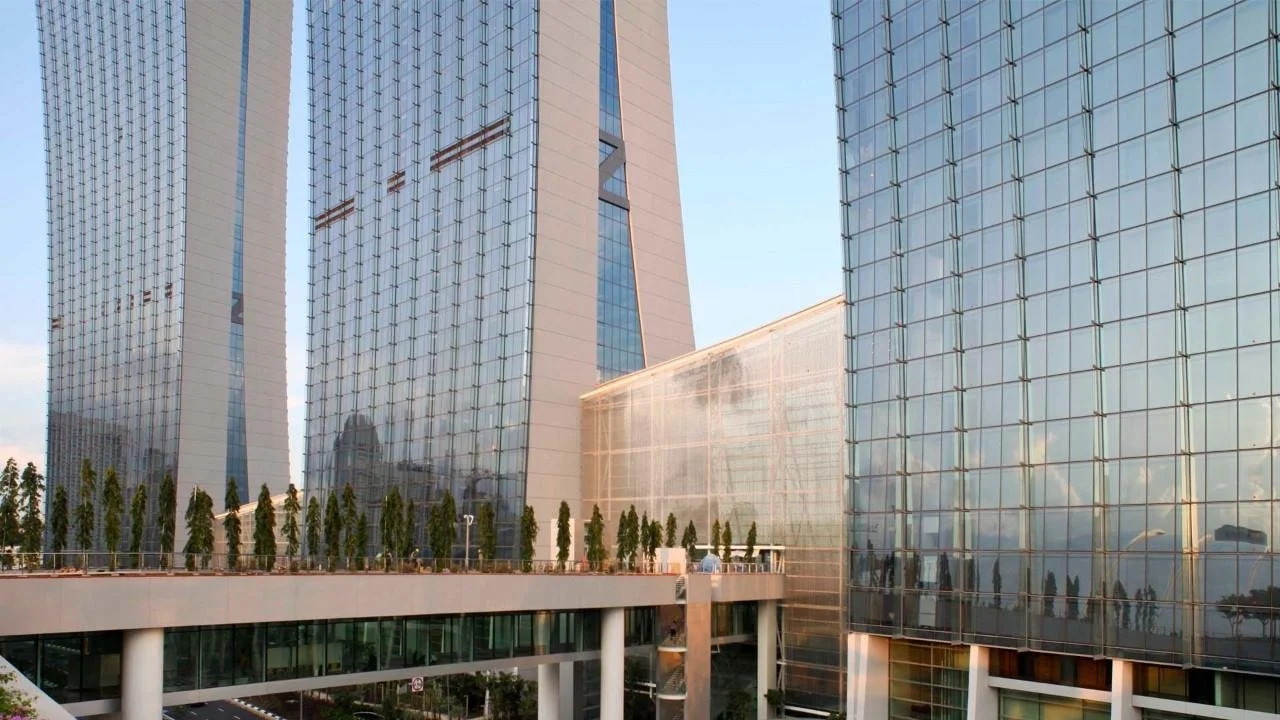
Ned Kahn's Wind Arbor, a monumental kinetic installation integrated into the exterior of Marina Bay Sands. Comprising thousands of moving aluminium elements, the work combines artistic expression with architectural functionality.
The Future of Monumental Art in Real Estate
The convergence of contemporary art and luxury property development is likely to continue, although its direction will depend on economic conditions, construction costs and changing expectations among wealthy buyers and hotel guests.
The Art Basel and UBS Art Market Report 2026 recorded global art market sales of approximately $59.6 billion in 2025, an increase of 4 per cent from the previous year.
The figures describe conventional dealer and auction transactions rather than the full economic value of architectural commissions. They therefore cannot establish the size or growth rate of the market for site-specific art in real estate.
Nevertheless, they provide a reminder that the wider art economy remains sensitive to shifts in wealth, confidence and spending patterns.
For developers, commissioning strategies will need to justify expenditure through architectural quality, long-term brand positioning and the experience of residents and visitors.
Technological advances in fabrication, digital modelling and responsive materials may enable increasingly ambitious collaborations between artists and designers.
At the same time, environmental sustainability is likely to become a more important consideration.
The use of energy-intensive materials, complex transportation and substantial structural resources may invite greater scrutiny as developers and artists assess the environmental implications of monumental work.
Future commissions may consequently place greater emphasis on material efficiency, durability, adaptive reuse and integration with existing architecture.
A further question concerns whether artistic commissions will remain concentrated among internationally established names or create more substantial opportunities for emerging and locally based artists.
Projects that combine global artistic ambition with regional expertise may offer a more credible response to the cultural identity of individual places.
Beyond Prestige: When Art Becomes Part of the Building
The relationship between monumental art and luxury real estate reflects a wider change in the economics of cultural distinction.
Developers increasingly recognise that architecture alone may not provide sufficient differentiation in a market where exceptional design has become an expected attribute of premium property.
Contemporary art offers another means of establishing identity, generating recognition and shaping how buildings are experienced.
Yet its significance cannot be measured exclusively through marketing exposure or property prices.
The most compelling commissions transform the spatial experience of architecture. They influence movement, perception and the relationship between individuals and their surroundings.
Their success depends on the quality of collaboration between artists, architects and developers, as well as the willingness of property owners to accept artistic independence as something more substantial than a commercial asset.
The weakest projects risk reducing art to an expensive symbol of exclusivity, valued primarily for the reputation of the artist associated with them.
The strongest create environments in which artistic and architectural ideas become mutually dependent.
For the international art market, this expanding field represents a commercial opportunity that exists partly outside the traditional mechanisms of galleries, collectors and auctions. For artists, it offers access to new forms of production and public engagement. For developers, it introduces both cultural possibilities and long-term responsibilities.
Ultimately, the enduring value of monumental commissions will depend less on the prestige of their patrons than on their capacity to remain meaningful as buildings change ownership, neighbourhoods evolve and aesthetic fashions shift.
When art becomes genuinely integrated into architecture, it can outlast the commercial circumstances that brought it into existence. At that point, the commission ceases to function merely as a symbol of luxury and begins to contribute to the lasting cultural identity of a place.