

In the international art market, influence is not always exercised by those whose names appear on museum walls, auction catalogues or lists of the world's most prominent collectors. Some of the industry's most consequential decisions are made by professionals who operate largely beyond public scrutiny. Independent art advisors, private consultants and collection managers occupy a distinctive position between cultural authority and financial power, shaping which artworks are acquired, which artists attract attention and how significant private collections develop over time.
Their influence raises a fundamental question about the contemporary art economy: to what extent do wealthy collectors exercise independent aesthetic judgement, and how much of their purchasing behaviour is guided by a relatively small network of trusted intermediaries?
The answer reveals a market in which access, information and personal relationships can be as important as capital. An advisor may identify an emerging artist, secure an acquisition from an oversubscribed gallery, negotiate a private transaction or recommend the placement of a work within an institutional collection. Each decision may appear individual, yet the cumulative effect can influence demand, market confidence and the long-term circulation of culturally significant artworks.
As art collecting becomes increasingly international, financially complex and closely connected to private wealth management, the role of these intermediaries is expanding. Their growing importance also introduces difficult questions about transparency, professional independence and the concentration of influence within an already selective market.
The Rise of an Industry Built on Discretion
Art advising is not a recent invention. For centuries, wealthy patrons relied on connoisseurs, dealers and scholars to guide acquisitions. Joseph Duveen played an influential role in the development of major American collections, while figures such as Bernard Berenson helped establish scholarly frameworks through which collectors evaluated European painting.
The modern advisory profession, however, has developed into a more specialised commercial activity.
Rather than operating solely as dealers or connoisseurs, contemporary advisors may oversee an entire collecting strategy. Their responsibilities can extend from identifying artworks and negotiating purchases to coordinating provenance research, insurance, conservation, storage, taxation advice and estate planning.
The emergence of this broader professional model reflects changes in the scale and complexity of private collections. For clients acquiring artworks across several countries and market categories, the logistical and administrative demands can be considerable.
The financial significance of professional advice is becoming increasingly visible in industry research.
The Art Basel and UBS Survey of Global Collecting 2026, covering 3,100 high-net-worth collectors across ten markets, found that 30 per cent used art advisors as an external source of advice. Auction house experts were consulted by 31 per cent, while artists and dealers were also important sources of information.
The results demonstrate that advisors are influential without being the dominant source of guidance for every collector. Indeed, the survey found that 72 per cent conducted moderate or significant independent research before buying art, suggesting that professional counsel often complements rather than replaces individual judgement.
Among larger collectors, however, the relationship appears more deeply embedded. Bank of America's September 2026 art market update reported that nearly two-thirds of collectors holding at least $1 million in art worked with an advisor.
The distinction is important. Advisory services may be optional for occasional purchasers, but they increasingly form part of the infrastructure through which substantial collections are assembled and managed.
Access as a Form of Market Power
Perhaps the most valuable service an art advisor can provide is not an opinion about artistic quality but access to artworks that are otherwise difficult to acquire.
The primary market for established contemporary artists does not operate as a conventional retail system. Prices may be published selectively, inventory can be limited, and galleries often exercise considerable discretion over prospective buyers.
For artists attracting strong institutional and collector interest, demand may exceed the number of works available. Galleries consequently consider factors beyond a purchaser's willingness to pay, including the intended destination of a work, the collector's reputation and the likelihood that the acquisition will support the artist's long-term career.
An experienced advisor can help navigate this environment.
Relationships developed over years with galleries, auction specialists, artists' studios and other collectors create opportunities that cannot always be replicated through financial resources alone.
An advisor may become aware of an upcoming body of work before it reaches a wider audience or facilitate an introduction between a collector and a gallery representing an artist of particular interest.
These relationships are commercially significant because allocation itself can influence the distribution of cultural and financial opportunity.
When a work enters a respected private collection, it may gain access to exhibitions, scholarly research and institutional networks. Yet ownership by an influential collector should not be confused with independent validation of artistic quality.
The power of advisors is therefore relational rather than absolute. They can facilitate access and establish trust, but galleries retain considerable authority over allocation, artists maintain their own priorities, and collectors ultimately decide whether to proceed.
How Advisors Influence Artistic Reputations
The relationship between art advising and artistic reputation is among the least transparent aspects of the market.
An artist's career develops through multiple, interconnected processes. Gallery representation, critical engagement, institutional exhibitions, curatorial research and collector demand all contribute to public recognition.
Advisors participate in this system by directing the attention of financially influential clients towards particular artists and bodies of work.
A recommendation to a major collector can produce more than an individual sale. It may initiate a relationship with a gallery, support subsequent acquisitions or result in an artwork being lent to a museum.
When several respected collectors independently acquire works by the same artist, their decisions can create the appearance of growing consensus. Advisors who work across overlapping collector networks may accelerate this process.
Such influence does not necessarily involve deliberate market manipulation. It is often the consequence of shared information, professional conviction and confidence in particular artists.
Nevertheless, repeated recommendations can contribute to the concentration of demand around a limited number of names.
This creates a potential feedback mechanism. An artist attracts prominent collectors; their participation increases visibility; greater visibility encourages additional acquisitions; and rising demand strengthens the perception of an established reputation.
The difficulty is distinguishing genuine artistic recognition from market enthusiasm reinforced through closely connected professional relationships.
Institutional validation remains especially important. Museum acquisitions, significant retrospectives and inclusion in historically informed exhibitions can alter how an artist's work is understood. Advisors may facilitate introductions, loans and philanthropic relationships, but institutional decisions involve curators, directors, acquisition committees and other stakeholders.
It would therefore be inaccurate to suggest that advisors independently manufacture artistic reputations. Their influence lies in helping certain artists and artworks enter the networks through which reputations develop.
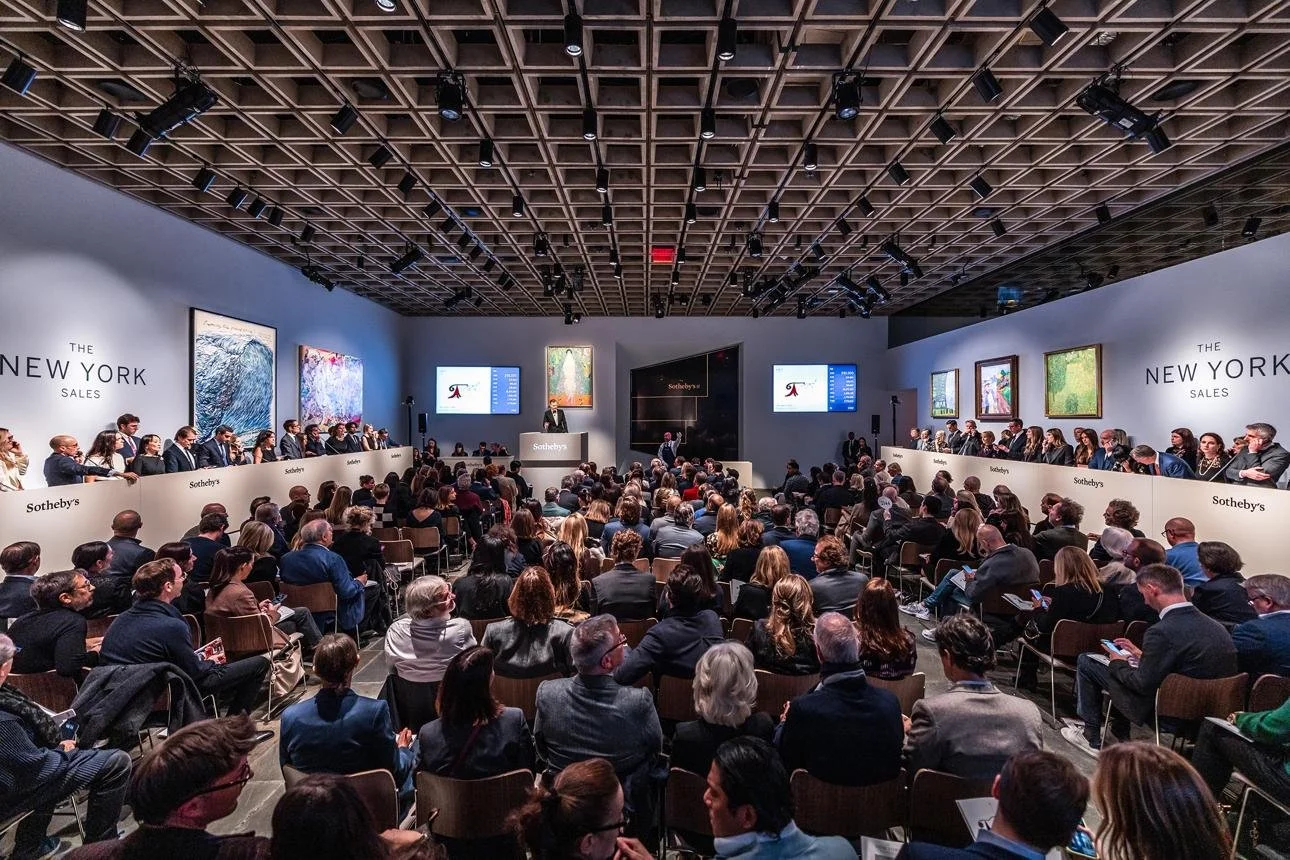
Sotheby's New York auction room, where major artworks enter the global marketplace and collectors compete for works of artistic and financial significance.
The Economics of Private Influence
Unlike public auctions, where winning bids establish observable transaction prices, much of the primary and private secondary art market operates through confidential negotiations.
Advisors occupy an important position within this information structure.
They may know what a collector is prepared to pay, what a seller hopes to receive and whether a particular artwork has attracted interest from other potential buyers.
Such knowledge can help clients avoid unrealistic valuations or obtain works at more favourable terms. It can also create opportunities for informational advantages that are difficult for outsiders to evaluate.
Advisory businesses operate through different compensation structures, including retainers, project fees and transaction-based commissions. The precise arrangements vary according to the services provided and the jurisdiction involved.
Each model creates different incentives.
A fixed advisory fee may reduce the direct relationship between the value of an acquisition and the advisor's remuneration. A percentage-based commission, by contrast, can reward higher transaction values, potentially creating tension between the advisor's commercial interests and the client's objective of obtaining an appropriate price.
Conflicts become particularly significant when an intermediary receives compensation from multiple parties without adequate disclosure.
The distinction between an independent advisor and a dealer is therefore fundamental.
Dealers typically act as sellers or represent artists and inventory. Independent advisors, by contrast, are expected to prioritise the interests of the clients who engage them.
In practice, commercial arrangements can blur these categories, especially where advisors also broker transactions, collaborate with galleries or participate in businesses holding artworks for sale.
The Association of Professional Art Advisors has established ethical standards for its members, including restrictions on maintaining inventory, accepting vendor compensation and participating in arrangements that create conflicts of interest.
Such standards demonstrate an effort towards professional accountability, although adherence to one organisation's code should not be mistaken for universal regulation.
The financial implications extend beyond individual transactions. Where substantial purchases are made through intermediaries, opaque fee structures can affect the real cost of collecting and complicate the assessment of investment performance.
The Private Consultant as Cultural Strategist
A growing number of collectors seek more than assistance with individual acquisitions. They want collections that possess historical coherence, intellectual credibility and a recognisable cultural identity.
This has created a role for advisors as long-term cultural strategists.
Rather than responding exclusively to artworks available for sale, these professionals may help establish a collection's conceptual direction, identify gaps and consider how acquisitions relate to broader developments in art history.
For some clients, the objective is to assemble a focused collection of post-war or contemporary art. Others may pursue overlooked historical movements, particular geographic regions or the work of artists who have received insufficient institutional attention.
An effective collecting strategy requires more than the ability to recognise desirable objects. It involves understanding artistic relationships, the development of critical reputations and the distinction between temporary commercial popularity and sustained cultural relevance.
Collection managers also contribute to this process through cataloguing, documentation, preservation and oversight of loans.
These administrative responsibilities are easily underestimated. In major collections, incomplete provenance records, inconsistent condition reporting or inadequate documentation can create significant future difficulties.
Advisors working within family offices may coordinate with legal, financial and estate-planning specialists, particularly when collections form part of intergenerational wealth transfers.
The Deloitte Private and ArtTactic Art & Finance Report 2025 highlighted the importance of specialist external providers within art-related wealth management. It also found that 67 per cent of wealth managers surveyed identified sourcing suitable third-party partners as a challenge, compared with 39 per cent in 2023.
The findings suggest that professional expertise is becoming more valuable precisely because integrating art into wider wealth-management structures remains complicated.
When Private Collections Become Public Institutions
The influence of advisors can extend considerably beyond the commercial market when private collections enter the public sphere.
Wealthy collectors increasingly support museums through acquisitions, loans, donations and philanthropic funding. Some establish private exhibition spaces or foundations through which their collections become accessible to wider audiences.
Advisors may participate in determining which works are suitable for institutional loans, how collections are documented and whether particular acquisitions contribute to a coherent cultural programme.
These decisions matter because exhibitions and institutional presentations can shape the historical visibility of artists.
An artwork acquired for a private residence may remain largely unseen for decades. The same work, when exhibited or published, can become part of a broader scholarly and curatorial conversation.
However, the relationship between private collecting and public institutions presents an important question of independence.
Museum programmes are expected to reflect curatorial and scholarly priorities rather than the financial interests of individual collectors. Where lenders or donors have commercial exposure to particular artists, institutions must safeguard the independence of their decisions.
Private support can make ambitious exhibitions and acquisitions possible, but it should not become a mechanism for transforming ownership into automatic cultural authority.
The distinction between supporting artistic scholarship and promoting the market value of a collection is essential to maintaining institutional credibility.

A contemporary art collection within a luxury private residence, reflecting the role of art advisors in shaping sophisticated collections and long-term collecting strategies.
The Risks of an Industry Dependent on Trust
The extraordinary discretion afforded to art advisors is both a commercial advantage and a structural vulnerability.
Collectors frequently entrust advisors with sensitive information about their finances, personal preferences and acquisition strategies. Some advisors also coordinate substantial payments or take temporary control of artworks during transactions.
This creates risks that would be familiar in other financial sectors, including conflicts of interest, misappropriation, inadequate documentation and failures of oversight.
The case of New York art advisor Lisa Schiff demonstrated the potential consequences.
In March 2025, Schiff was sentenced to 30 months in prison after defrauding clients and other parties of approximately $6.5 million in connection with the purchase and sale of artworks. According to the United States Department of Justice, the scheme involved diverting funds intended for purchases or proceeds owed to clients.
The case should not be treated as representative of the advisory profession. Nevertheless, it exposed weaknesses that can arise when personal trust substitutes for financial controls.
The wider issue is not whether art advisors should be trusted, but how trust should be supported by verifiable procedures.
Written engagement agreements, explicit compensation terms, independently documented provenance, clear ownership records and appropriate payment arrangements provide protection for both collectors and reputable advisors.
Independent expertise is particularly valuable when the same intermediary participates in sourcing, negotiating, valuing and arranging the resale of an artwork.
Without adequate separation between these functions, clients may struggle to determine whether recommendations reflect independent judgement or commercial incentives.
Professionalism, in this context, requires more than discretion and sophisticated market knowledge. It requires accountability.
A New Generation of Collectors Is Changing the Advisory Relationship
The rise of younger wealthy collectors is beginning to alter the traditional relationship between advisors and clients.
Historically, advisors often served as principal sources of specialist knowledge for collectors with limited familiarity with the art market. Today, buyers can access auction databases, exhibition histories, digital catalogues, artist interviews and market commentary with unprecedented ease.
This does not eliminate the need for professional advice, but it changes the nature of its value.
The Art Basel and UBS Survey of Global Collecting 2026 found that 80 per cent of Gen Z respondents conducted moderate or significant independent research before making purchases.
The same research reported that 58 per cent of high-net-worth collectors used digital resources for advice, while 22 per cent consulted apps or artificial intelligence tools, compared with just 4 per cent in 2024.
These developments suggest that advisors are increasingly working with clients who arrive with established interests and access to substantial information.
The challenge for advisors is no longer simply providing knowledge that clients cannot obtain elsewhere. It is interpreting information, evaluating conflicting evidence, securing access and understanding the commercial context behind publicly available figures.
Younger collectors may also place greater emphasis on artistic identity, personal relevance and direct relationships with artists.
The 2026 survey found that 69 per cent of respondents had purchased directly from artists during the preceding year, indicating that established intermediaries are operating within a more diversified purchasing environment.
The emergence of new channels does not necessarily diminish advisors' influence. It may instead encourage more specialised forms of expertise focused on verification, negotiation, collection management and cultural strategy.
Can Artificial Intelligence Challenge the Art Advisor?
Technological change presents a further challenge to the advisory profession.
Artificial intelligence is increasingly capable of organising information, comparing auction histories and identifying relationships across large volumes of market data.
For collectors, these tools may reduce the cost of preliminary research and make certain forms of analysis more accessible.
They can also help identify inconsistencies in published information or reveal patterns that would be difficult to recognise through manual research alone.
Yet the limitations remain substantial.
Auction records represent only publicly documented transactions and do not capture the full complexity of private market pricing. Provenance information may be incomplete, while questions of authenticity, attribution and condition often require direct examination and specialised expertise.
Nor can an algorithm reliably reproduce the professional relationships through which many important artworks are acquired.
An advisor's value frequently lies in understanding whether a seller is genuinely willing to transact, whether a gallery considers a collector suitable or whether an artwork's historical significance has been adequately recognised.
These forms of contextual judgement depend on experience and relationships rather than data alone.
Technology may therefore reduce the commercial value of routine research while increasing expectations of what highly qualified advisors should provide.
The profession's long-term advantage is likely to rest less on exclusive possession of information than on the quality of its interpretation.
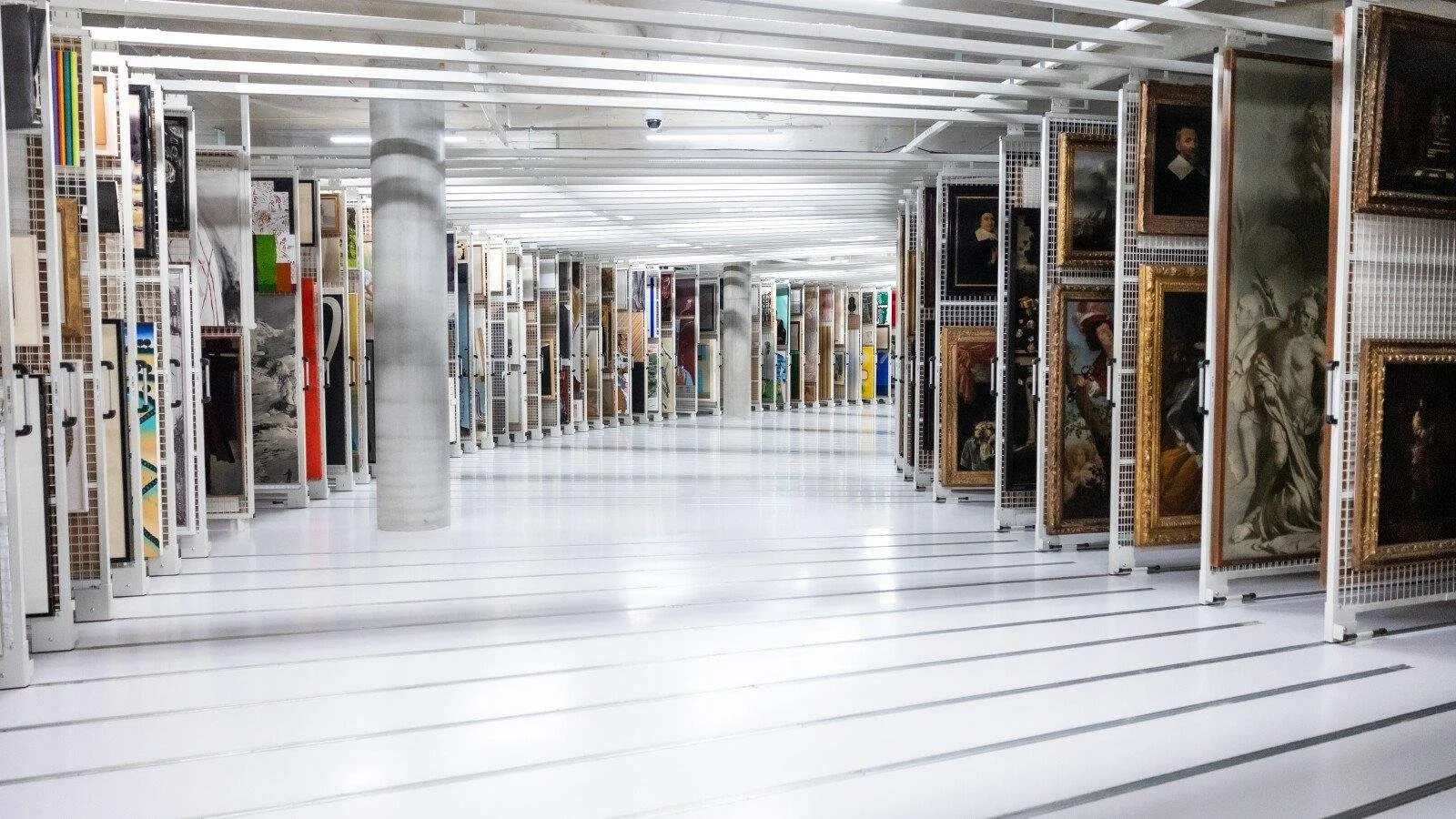
A professional art storage facility, highlighting the importance of conservation, security and specialist collection management in preserving valuable artworks.
The Concentration of Taste and the Limits of Influence
One of the most significant questions surrounding art advising concerns the concentration of cultural authority.
A relatively small number of prominent advisors maintain relationships with influential collectors, galleries and auction specialists. Their recommendations can consequently carry disproportionate weight in transactions involving important works.
This creates potential advantages for established artists who already possess strong institutional and market networks.
It may also create barriers for emerging artists whose work has not yet reached the attention of influential intermediaries.
However, concentrating exclusively on this imbalance overlooks the capacity of advisors to challenge established preferences.
Independent advisors can introduce collectors to unfamiliar artists, overlooked movements and markets that lie outside dominant commercial narratives.
Their contribution depends on whether they reinforce existing demand or exercise the intellectual independence necessary to recognise quality beyond current fashion.
This distinction has wider implications for the art market.
A system in which recommendations merely circulate among familiar names risks becoming increasingly self-referential. Collectors may perceive broad agreement where there is, in reality, a narrow network of overlapping relationships.
Conversely, informed advisors who maintain diverse professional connections can expand the range of artists receiving serious attention and financial support.
The most constructive form of advisory influence therefore involves widening access to artistic knowledge rather than simply concentrating purchasing power.
Who Ultimately Determines What Is Collected?
The influence of art advisors is substantial, but it should not be mistaken for complete control.
Collectors bring their own experiences, ambitions and aesthetic preferences to the acquisition process. Galleries determine how artworks enter the market, artists shape their creative directions, and museums contribute forms of recognition that extend beyond commercial valuation.
Advisors operate between these institutions and individuals, connecting information, capital and opportunity.
Their importance lies in their ability to affect decisions without necessarily appearing as the principal actors behind them.
They can shape the composition of significant collections, influence the circulation of artworks and contribute to the relationships through which artistic reputations evolve.
Yet their authority is strongest when clients retain independent judgement and understand the interests involved in each transaction.
As the international art market becomes more complex, the demand for sophisticated advice is unlikely to disappear. Wealth transfer, global collecting, private transactions and technological change will continue to create circumstances in which specialist knowledge has commercial value.
The central challenge is ensuring that this expertise develops alongside stronger standards of transparency and accountability.
Ultimately, the question is not whether wealthy collectors are influenced by advisors. They plainly are, although to differing degrees. The more consequential issue is whether that influence broadens artistic understanding or merely reproduces the preferences of an interconnected market elite.
In an industry where financial value and cultural significance are continuously negotiated, the individuals who guide private acquisitions can help shape what future generations encounter in museums, collections and art-historical narratives.
Their power may remain largely invisible, but its consequences can extend far beyond the transactions in which they participate.