
How institutional recognition, gallery influence, collector confidence and market scarcity transform artistic achievement into financial value, and why the distinction between lasting reputation and speculative demand is becoming increasingly important.
The most revealing distinction in the international art market is not between expensive and inexpensive artworks, but between prices supported by lasting reputations and those sustained by expectations of further appreciation. Two artists may command comparable sums at auction, yet the foundations of their valuations can be fundamentally different. One may possess decades of institutional recognition, an established critical history and a geographically diverse collector base. The other may depend on a relatively small group of buyers whose confidence developed during a brief period of intense commercial attention.
As the market approaches 2027, that distinction has acquired renewed significance. According to the Art Basel and UBS Global Art Market Report 2026, worldwide art sales increased by 4% in 2025 to approximately $59.6 billion, following two consecutive years of declining values. The recovery, however, was uneven, with renewed strength at the upper end of the auction market contrasting with persistent weakness in more speculative segments.
Understanding how artists attain blue-chip status therefore requires more than analysing auction records. It demands an examination of the institutions, commercial relationships and collective judgements through which artistic reputations are established, reinforced and occasionally dismantled.
The Architecture of Artistic Value
Unlike equities, artworks do not generate predictable earnings against which their prices can be assessed. Their economic value derives from a complex interaction of artistic significance, scarcity, provenance, cultural recognition and purchasing power. Although these factors are interconnected, they are neither interchangeable nor equally durable.
A painting's importance within an artist's career may remain relatively stable while its market price fluctuates considerably. Conversely, commercial demand can accelerate before a convincing critical consensus has developed around the work.
Reputation helps bridge this gap. An artist with a substantial exhibition history, representation in respected collections and sustained scholarly engagement presents buyers with a broader framework for evaluating importance. These credentials do not establish an objectively correct price, but they can reduce uncertainty about the artist's continuing relevance.
The process is cumulative. Gallery exhibitions introduce an artist to collectors and curators. Museum acquisitions extend the work's visibility beyond commercial settings. Critical writing situates it within wider artistic developments, while influential collections provide additional exposure and credibility. Auction results subsequently offer public evidence of what some buyers are prepared to pay.
Each stage can reinforce the others, creating a system in which cultural recognition and economic value develop together.
Yet the system is far from neutral. Access to prestigious galleries, institutional programmes and influential collectors is unevenly distributed. Commercial resources, professional relationships and geographic proximity to established cultural centres can affect which artists receive sustained attention.
Blue-chip status should therefore be understood not simply as recognition of artistic achievement, but as the outcome of an extended process through which multiple market participants develop confidence in an artist's importance.
Galleries and the Management of Reputation
Leading galleries perform a more consequential function than selling artworks. They shape an artist's market by influencing distribution, controlling the release of new work, cultivating relationships with institutions and determining which collectors receive access to important pieces.
In the primary market, where artworks are sold for the first time, galleries commonly seek collectors who demonstrate an interest in maintaining works over extended periods. Placement in a significant institutional collection may be prioritised over an immediately profitable transaction with a buyer considered likely to resell.
This approach reflects a fundamental principle of reputation management: the identity and intentions of collectors can influence the future market for an artist's work.
A painting entering a recognised museum becomes available for scholarly study, exhibition and public interpretation. The same work passing rapidly between speculative buyers may generate higher immediate transaction values but contribute relatively little to the artist's long-term standing.
Gallery pricing strategies are similarly important. Gradual increases supported by sustained demand can establish a credible market trajectory. Aggressive price escalation, particularly when supply is limited and waiting lists are extensive, can encourage buyers to regard acquisition as an opportunity for financial speculation.
Such strategies become vulnerable when artworks reach auction prematurely. A significant secondary-market premium may initially generate publicity, but it can also establish expectations that the gallery cannot sustain.
The distinction matters particularly in a market characterised by unequal access to information. Primary-market prices, collector allocations and private transactions are rarely disclosed comprehensively. Galleries consequently possess considerable influence over the information through which an artist's commercial success is perceived.
The difficulty is that controlled supply cannot independently create durable demand. If collectors lose confidence, withholding artworks from public resale may conceal the weakness of a market without resolving it.

Contemporary artworks presented by Sean Kelly Gallery at Art Basel 2025, illustrating the role of leading galleries in shaping artistic reputations and sustaining collector confidence.
Museums, Curators and Cultural Legitimacy
Museums occupy a distinctive position within the economics of artistic reputation because their institutional purpose differs from that of commercial galleries and auction houses.
A major exhibition, permanent collection acquisition or substantial scholarly publication can introduce an artist's work to audiences whose interest is not principally financial. Such recognition helps establish the critical context within which future generations may evaluate the work.
Curators, historians and museum directors contribute to this process by interpreting an artist's practice and connecting it to broader cultural and historical questions.
Institutional attention can consequently create forms of legitimacy that commercial success alone cannot supply. An artist whose work is studied, exhibited and debated across different institutions possesses a more substantial cultural foundation than one whose reputation rests primarily on auction performance.
Academic research supports the economic relevance of reputation, although it does not imply that every museum exhibition produces a predictable increase in prices. A study published in the Journal of Cultural Economics in 2025 examined the relationship between exhibition-based reputation and auction outcomes, finding that institutional standing was a significant predictor of prices across different groups of artists.
Institutional recognition nevertheless requires careful interpretation. Museums can be influenced by trustees, donors, sponsorship arrangements and collecting networks that also participate in the commercial market. An acquisition is not automatically evidence of independent critical consensus.
Equally, a prestigious exhibition may increase cultural visibility without creating sufficient demand to support higher prices.
The strongest reputations tend to emerge when recognition extends across institutions, countries and generations of curators. Such breadth makes an artist less dependent on the preferences of any single organisation or influential individual.
For collectors, the distinction between concentrated institutional attention and sustained international engagement is an essential component of informed valuation.

Visitors encounter Hiroshi Sugimoto's monumental Mount Fuji installation at Art Basel Unlimited 2024, reflecting the relationship between artistic recognition, institutional influence and cultural significance.
Auction Records and the Difference Between Price and Reputation
Auction houses provide the most visible financial evidence of an artist's commercial standing. Yet their results can be misleading when interpreted without considering the circumstances of each sale.
In November 2025, Gustav Klimt's Portrait of Elisabeth Lederer achieved $236.4 million at Sotheby's in New York, establishing a new auction record for the artist. The painting formed part of the Leonard A. Lauder Collection, whose principal evening sale totalled $527.5 million.
The result reflected several reinforcing factors: Klimt's established historical importance, the exceptional quality and rarity of the painting, its distinguished provenance and the international competition generated by its appearance at auction.
A comparable example emerged with Frida Kahlo's El sueño (La cama), which achieved approximately $54.7 million at Sotheby's in November 2025, setting a record for a work by a female artist at auction. Its significance rested on more than commercial scarcity. Kahlo's international recognition, distinctive artistic identity and importance within twentieth-century cultural history created a substantial foundation for demand.
Neither transaction should be interpreted as evidence that all works by these artists have appreciated proportionately. Prices depend on individual quality, condition, provenance, subject matter and availability.
Such distinctions are especially important when evaluating contemporary artists whose auction histories are relatively short.
Public prices can also be shaped by guarantees, irrevocable bids and carefully negotiated financial arrangements. These mechanisms reduce uncertainty for sellers and auction houses, but they complicate the interpretation of headline results.
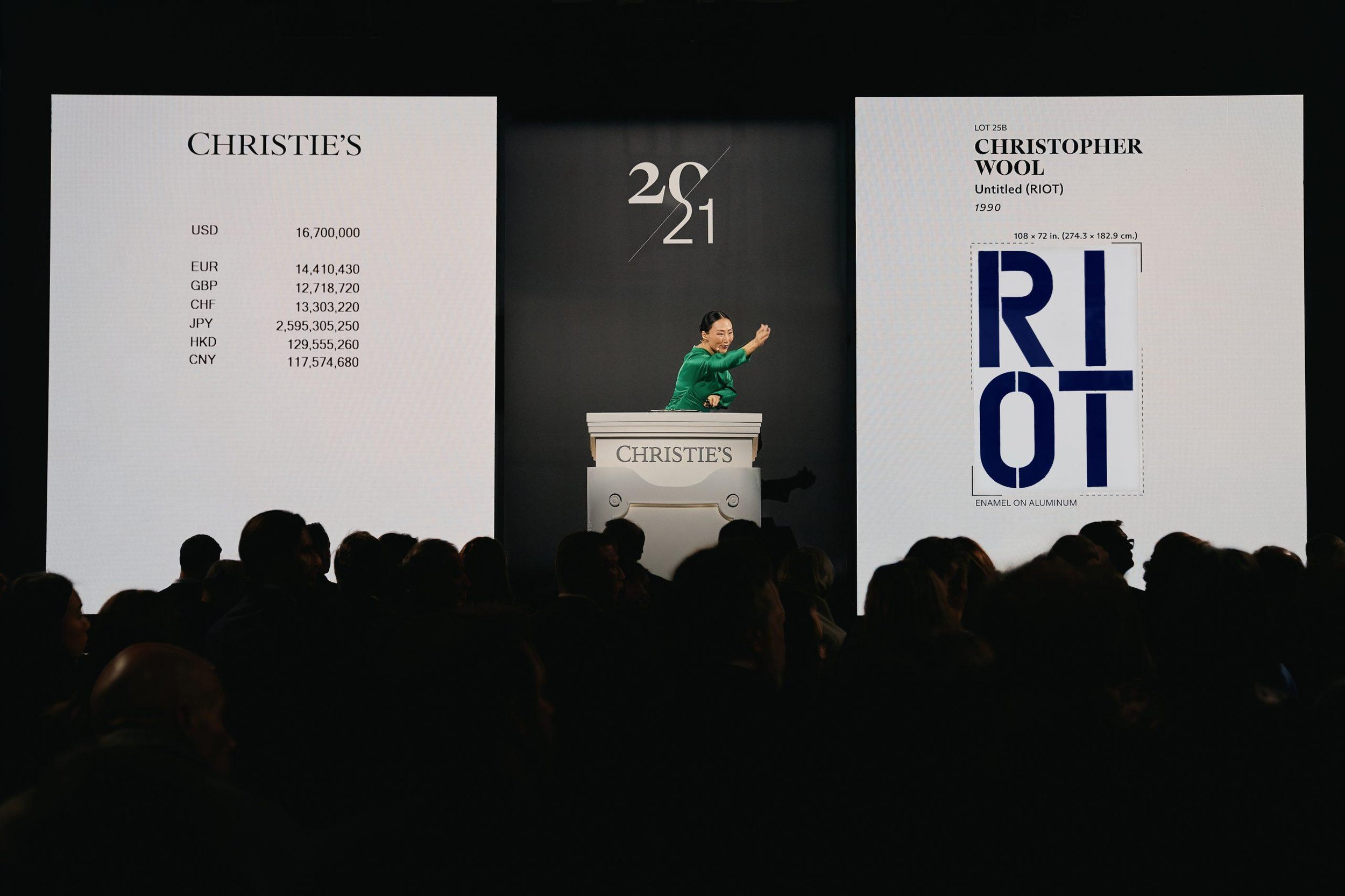
Research reported by The Art Newspaper found that 79% of turnover at the major New York evening auctions in May 2026 came from lots carrying third-party guarantees. This illustrates the extent to which high-value auction outcomes can be supported by financial commitments arranged before public bidding begins.
The relevant question is therefore not simply whether an artwork achieved an impressive price, but how much independent demand supported that outcome.
Why Speculative Reputations Unravel
The correction in ultra-contemporary art provides an important counterpoint to the resilience of established names.
According to Artprice's October 2026 report, contemporary art auction sales increased by 6% in value between July 2025 and June 2026, while sales in the segment covering artists under 40 declined by 26.6%.
The divergence reveals the risks associated with rapid reputation formation.
During periods of abundant liquidity, competitive collecting and aggressive market promotion, emerging artists can experience dramatic price increases before their institutional careers have matured. Auction records become signals of desirability, attracting further buyers whose expectations may depend substantially on continued appreciation.
When sentiment changes, the process can reverse. Collectors become reluctant to acquire works at previous valuations, speculative buyers seek liquidity and auction estimates are reduced to encourage bidding.
Importantly, declining aggregate auction sales do not necessarily indicate an equivalent fall in the value of every artwork. Changes in the number, quality and estimated value of works offered can substantially influence market totals.
Nevertheless, the broader pattern demonstrates that commercial recognition and durable artistic reputation develop at different speeds.
A high auction price may establish visibility almost immediately. Institutional confidence, critical recognition and a diversified collector base generally require years of sustained engagement.
The artists most exposed to corrections are therefore not necessarily those producing less significant work, but those whose prices have advanced considerably faster than the supporting structures of their reputations.
Collectors, Information and the Geography of Confidence
Collector behaviour is central to the formation of blue-chip markets because long-term demand depends on the willingness of successive generations to recognise artistic importance.
The Art Basel and UBS Survey of Global Collecting 2026 found that 72% of surveyed high-net-worth collectors undertook moderate or significant independent research before purchasing art, compared with 62% in the previous survey. At the same time, the proportion reporting purchases by newly discovered artists fell from 66% to 45%.
These findings suggest a market in which information is becoming more accessible while purchasing decisions remain selective. The survey describes a particular affluent collector population, rather than the entire market, but its implications are significant.
Greater access to auction databases, exhibition histories and digital research may make collectors less dependent on individual dealers. Yet the interpretation of information still requires specialist knowledge.
An artist with extensive museum representation and a consistent international market may appear less risky than one whose commercial success depends on a small number of prominent buyers.
Geographic diversification matters equally. Demand concentrated within one city or national market can be vulnerable to changes in local wealth, taxation and collector preferences. Recognition across North America, Europe and Asia can provide additional sources of demand, although international visibility does not guarantee financial stability.
The growing influence of collectors outside historically dominant Western markets may also broaden the criteria through which artistic reputations are established.
This development could benefit artists whose cultural importance has not been fully reflected in traditional auction hierarchies. However, recognition across international markets will depend on more than purchasing power. Museums, curators, galleries and scholars must also develop the interpretative frameworks through which these artists enter a wider historical narrative.

Installation view of Art Basel Unlimited 2025, Basel, Switzerland, highlighting the international exhibition platform through which contemporary artists gain visibility and institutional recognition. Photograph: Vera de Kok.
What Will Define Blue-Chip Status in 2027?
The evidence available in November 2026 suggests that established artistic reputations will continue to command an advantage as collectors reassess risk. That does not mean all established artists will appreciate, nor that emerging artists will struggle uniformly.
The more consequential development may be a change in how market participants distinguish credible long-term demand from temporary commercial momentum.
Artists supported by sustained institutional engagement, independent scholarship, disciplined gallery representation and collectors across several generations are likely to possess stronger foundations for enduring recognition. Yet even these advantages cannot eliminate the effects of changing tastes, economic contraction or excessive valuations.
For galleries, the challenge will be to establish markets capable of surviving beyond the initial excitement surrounding an artist's work. For auction houses, credibility will increasingly depend on the depth of genuine bidding rather than spectacular individual results. For collectors, understanding the relationship between cultural importance and financial value will remain essential.
The central lesson is that artistic reputation and market price are related, but fundamentally different forms of recognition.
A durable blue-chip reputation is not created by a record-breaking sale. It develops when artistic significance continues to be recognised beyond the circumstances that first made an artist commercially desirable.
As 2027 approaches, the market's most important distinction may be between artists whose prices depend on continued attention and those whose work has established sufficient cultural significance to remain relevant when attention moves elsewhere.