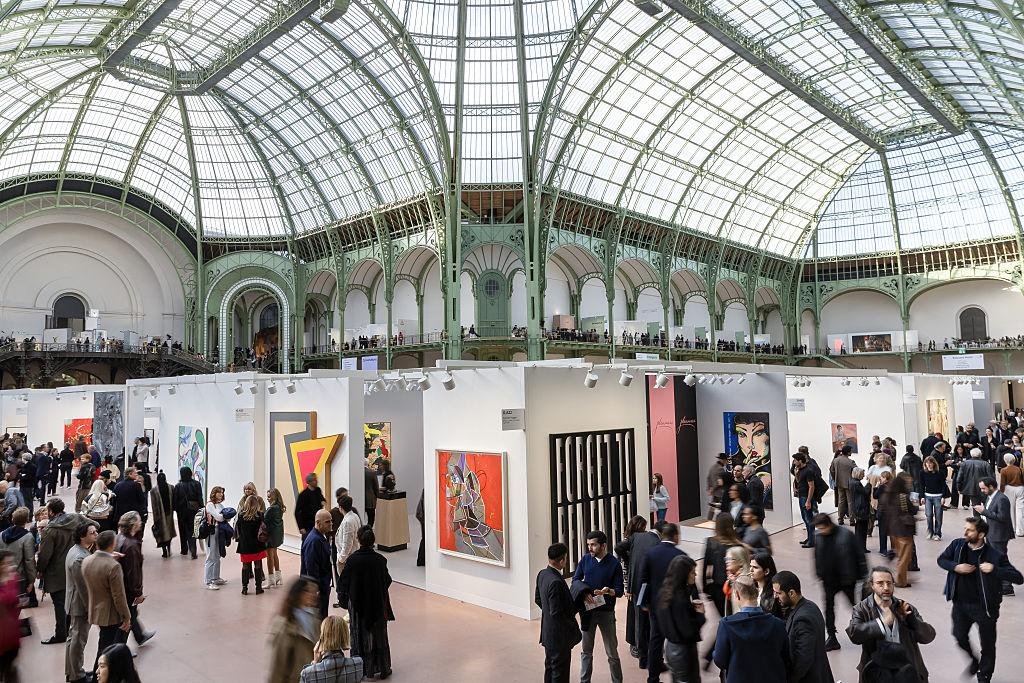
As the international art market emerges from a period of correction, a more selective generation of collectors, changing commercial strategies and shifting concentrations of wealth are redefining how art is valued, acquired and traded. The outlook for 2027 suggests a market in which confidence may recover faster than speculative demand, while long-term success increasingly depends on artistic credibility, financial discipline and the strength of relationships between artists, galleries and collectors.
The international art market enters 2027 facing a question more consequential than whether global sales will rise: what kind of market will emerge from the adjustments of recent years? After a period characterised by declining auction revenues, cautious collectors and growing financial pressure on galleries, the recovery recorded in 2025 provided evidence of renewed activity without establishing a return to the conditions that previously supported exceptional prices.
According to the Art Basel and UBS Art Market Report 2026, global art sales increased by 4% in 2025, reaching an estimated $59.6 billion after two consecutive years of contraction. The improvement was significant, but uneven. Auction results strengthened at the highest price levels, while much of the contemporary market continued to confront selective demand and changing expectations around valuation.
The distinction matters. A market supported by a handful of exceptional transactions behaves differently from one experiencing broad-based growth. For collectors, investors, galleries and artists, the central issue heading into 2027 is therefore not simply the direction of prices, but the durability of demand, the distribution of purchasing power and the commercial structures through which cultural value becomes financial value.
A Recovery That Reveals the Market's Divisions
The figures behind the market's recovery reveal an industry increasingly divided by price, reputation and access to capital. Public auction sales rose by 9% in 2025 to approximately $20.7 billion, while dealer sales increased by a more modest 2% to $34.8 billion. Private sales reported by auction houses declined by approximately 5%, reversing the pattern observed during the previous year.
The recovery was especially concentrated among exceptional works. Auction sales of fine art above $10 million increased by 30% in value, while sales below $50,000 declined by 2%. Meanwhile, the Postwar and Contemporary category recorded approximately $4.5 billion in auction sales, representing a fourth consecutive annual decline.
These contrasting developments challenge the assumption that an improvement in headline turnover necessarily signals healthier trading conditions throughout the industry.
For 2027, the implications are considerable. Collectors may continue paying substantial premiums for artworks distinguished by rarity, provenance and established historical significance, while remaining more cautious towards artists whose prices accelerated during periods of speculative demand.
The market is unlikely to move uniformly. Established blue-chip artists, historically overlooked figures with strengthening institutional recognition and emerging artists supported by credible galleries may experience very different commercial conditions.
Rather than anticipating a comprehensive recovery in prices, a more convincing expectation is continued differentiation between works whose valuations can be supported by sustained demand and those whose commercial appeal depends primarily on market momentum.
This distinction is particularly relevant in contemporary art, where the relationship between primary-market pricing, secondary-market performance and institutional recognition has become an increasingly important consideration for collectors.
The Changing Psychology of Collecting
One of the most consequential developments shaping the outlook for 2027 is the changing composition of the collector base. Wealth transfers, evolving attitudes towards ownership and increasingly sophisticated access to market information are altering both the motivations and behaviour of buyers.
The Art Basel and UBS Survey of Global Collecting 2026, based on 3,100 high-net-worth individuals across ten markets, found that Generation Z respondents reported substantially higher average fine art expenditure than older generations. Their average spending reached $347,460 in 2025, compared with $124,265 across the surveyed sample.
These findings require careful interpretation. The study concerns a selected population of wealthy, active collectors, rather than an entire generation. Nevertheless, it challenges the conventional assumption that serious collecting becomes financially significant only in later life.
Younger wealthy collectors are not necessarily rejecting established artistic categories. Painting and sculpture remain important, but the processes through which purchases are researched, evaluated and negotiated are changing.
The 2026 survey found that 72% of respondents undertook moderate or substantial independent research before purchasing, while the proportion using applications or artificial intelligence tools for advice reached 22%, compared with 4% in 2024.
This points towards a collector who may be digitally informed yet commercially conservative. Access to information does not necessarily produce greater willingness to speculate. Indeed, the proportion reporting purchases of newly discovered artists fell from 66% in the preceding survey to 45% in 2026.
The resulting paradox could become central to the market in 2027: collectors may discover more artists than ever before while concentrating their purchases among a narrower selection of names.
For galleries and artists, visibility will consequently remain necessary but insufficient. Turning recognition into sustained collecting relationships will depend increasingly on context, provenance, consistency and evidence of artistic development.
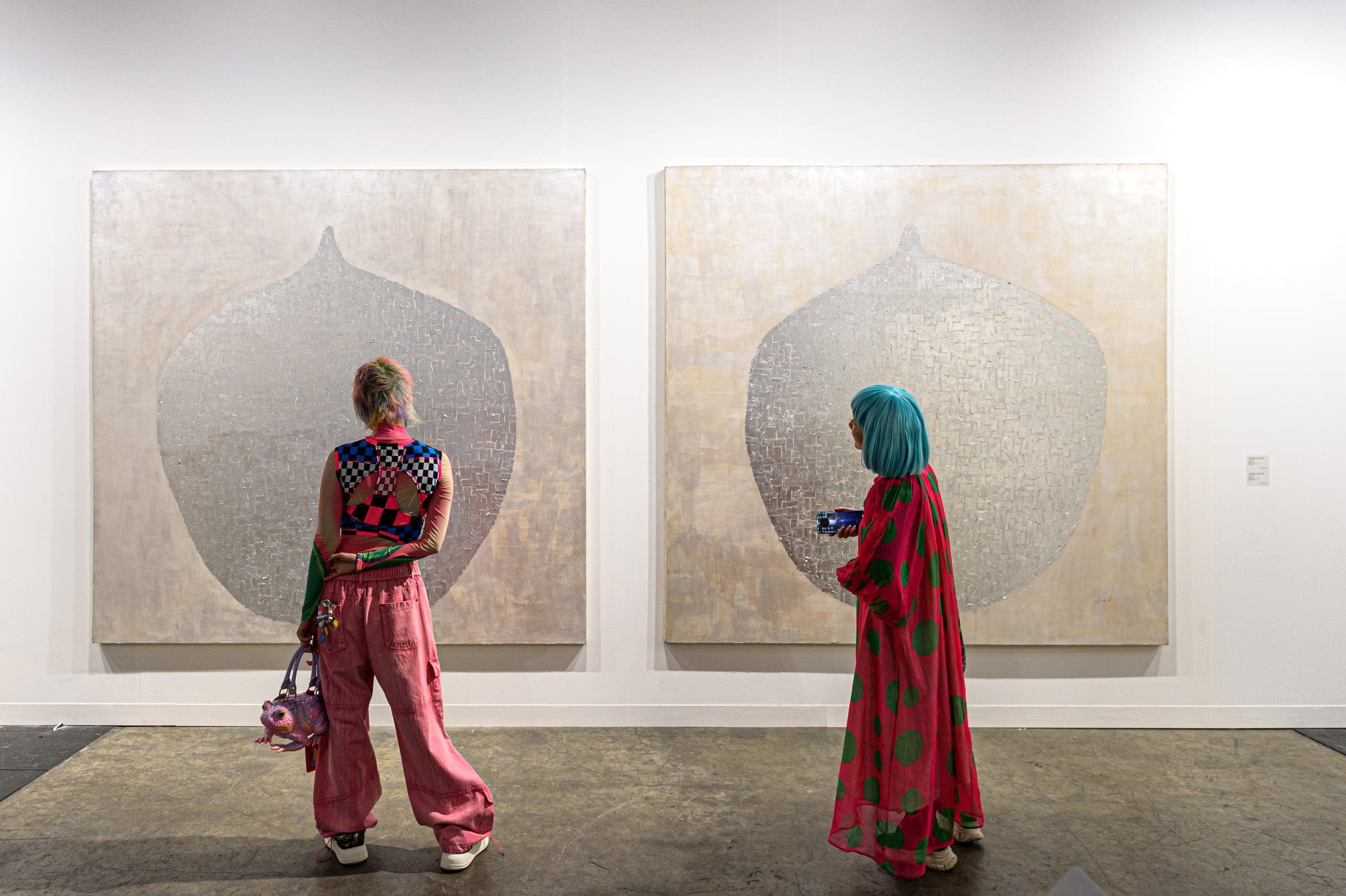
Visitors engage with contemporary artworks at Art Basel Hong Kong 2026, reflecting the continuing importance of direct encounters with art in an increasingly digitally informed collecting market.
Auction Houses and the Economics of Exceptional Art
Auction houses remain powerful indicators of market sentiment, but their headline results can obscure the distribution of demand.
In July 2026, Christie's reported first-half revenue of $4.5 billion, including $3.5 billion in auction sales, representing a 71% increase from the corresponding period in 2025. Its reported private sales exceeded $1 billion, demonstrating the continuing importance of confidential transactions alongside public auctions.
The scale of the improvement was reinforced by exceptional individual results. Jackson Pollock's Number 7A, 1948 achieved $181.2 million at Christie's in May 2026, while Constantin Brancusi's Danaïde realised $107.6 million. Such prices confirmed the capacity of historically significant works to attract substantial capital when rarity and provenance are compelling.
Yet the performance of a major collection cannot be extrapolated across the wider market.
High-value auctions depend on a limited supply of exceptional works and a relatively small population of buyers. Competition for these consignments encourages auction houses to offer financial guarantees, tailored terms and increasingly sophisticated advisory services.
For 2027, this suggests that the largest auction businesses may continue evolving beyond their traditional role as intermediaries towards more integrated platforms combining sales, financing, private transactions and collection management.
The commercial risks are considerable. Guarantees can help secure prestigious consignments but also expose intermediaries to financial losses when bidding fails to meet expectations. Private transactions offer discretion but limit the price transparency available to the wider market.
Successful auction houses will therefore need to balance revenue growth with disciplined risk management. The prestige associated with major sales remains valuable, but profitability ultimately depends on margins, transaction costs and the reliability of demand.
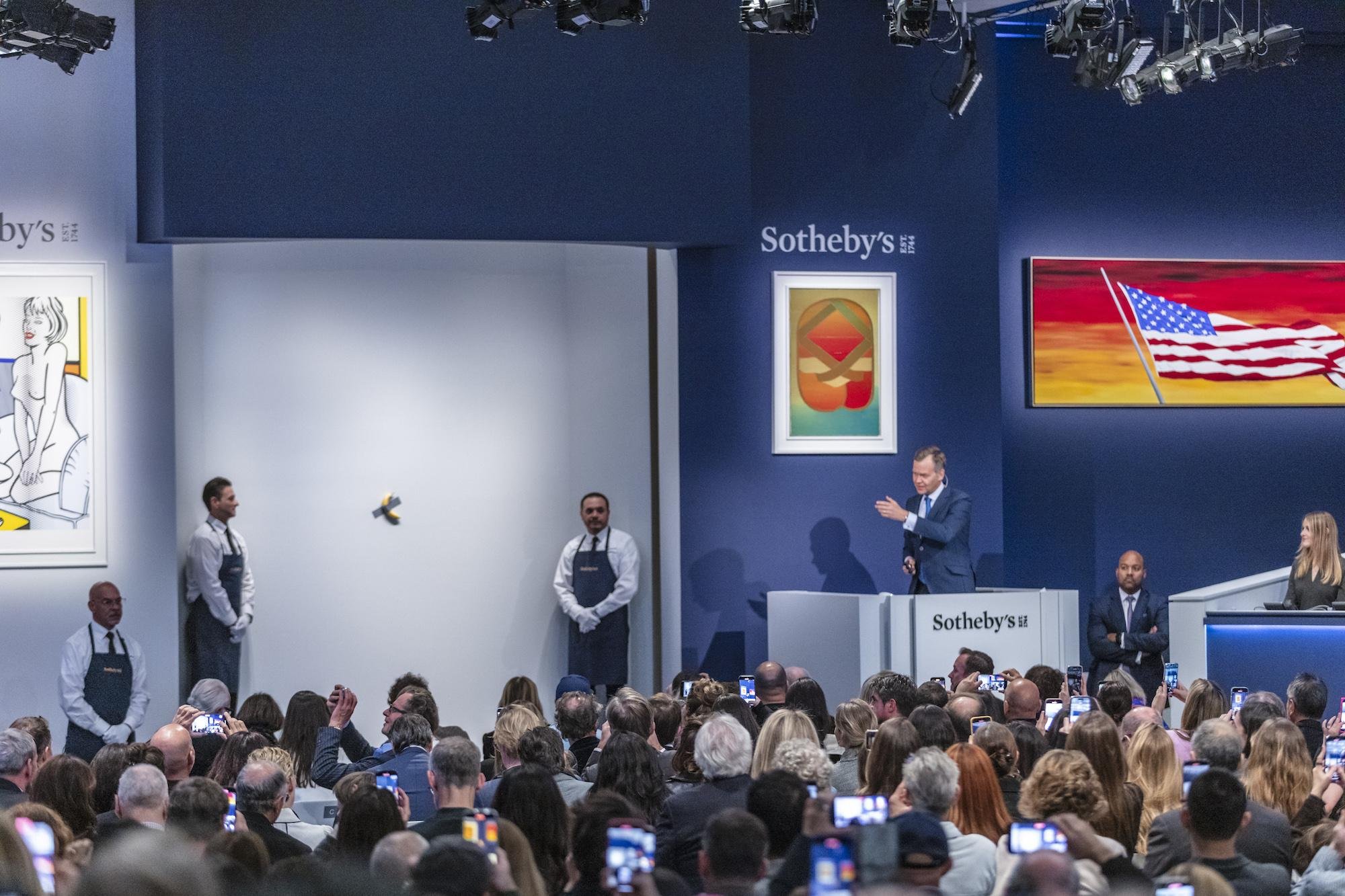
A contemporary art auction at Sotheby's in New York. Major auction houses remain central to price discovery and the international market for exceptional artworks.
Galleries Under Pressure: The Search for Sustainable Growth
While auction headlines often dominate public discussion, galleries remain fundamental to the creation and development of artistic markets. Their activities extend beyond sales into career management, exhibitions, institutional relationships, cultural interpretation and the cultivation of collectors.
Nevertheless, the economics of gallery operations have become increasingly demanding.
The Art Basel and UBS Art Market Report 2026 found that dealer operating costs rose by an estimated 5% in 2025, outpacing the sector's 2% sales growth. Some 38% of dealers reported declining profitability. Art fair participation, international transportation and related logistical expenses were among the principal sources of pressure.
The commercial challenge is particularly acute for mid-sized galleries, which often lack both the financial resources of major international businesses and the flexibility of smaller operations.
Art fairs remain commercially important, accounting for 35% of dealer turnover in 2025, but their benefits must be assessed against participation expenses and the increasingly competitive environment for collector attention.
In 2027, galleries may place greater emphasis on selective fair participation, carefully managed inventories and sustained relationships with collectors rather than indiscriminate geographic expansion.
The growing significance of direct transactions between artists and buyers introduces another dimension. The 2026 collecting survey found that 69% of respondents had purchased directly from artists, a substantial increase from the levels recorded two years earlier.
This does not necessarily indicate the decline of galleries. Instead, it suggests that commercial representation must offer clear additional value.
Galleries capable of developing institutional opportunities, strengthening artistic reputations and providing knowledgeable market guidance will retain an important competitive advantage. Those relying primarily on access to artworks may encounter greater pressure as collectors become more comfortable purchasing through alternative channels.
Geography, Wealth and the Redistribution of Cultural Influence
The global art market continues to exhibit a pronounced geographic concentration. In 2025, the United States represented 44% of worldwide sales by value, followed by the United Kingdom at 18% and China at 14%. Together, these three markets accounted for 76% of global sales.
Their dominance reflects established auction infrastructure, concentrations of wealth, major cultural institutions and longstanding commercial networks.
However, the distribution of market activity is not static.
France recorded art sales growth of 9% in 2025, reaching approximately $4.5 billion, while South Korea experienced a 6% increase. China's overall market stabilised, although conditions differed between mainland auction businesses and internationally oriented sales in Hong Kong.
For 2027, the distinction between established commercial centres and emerging sources of cultural influence will become increasingly important.
Markets in the Gulf, South Asia and other developing collecting regions warrant attention because of expanding cultural infrastructure, investment in museums and the international visibility of regional artists. However, institutional ambition does not automatically translate into deep secondary-market liquidity.
A region may support increasingly influential exhibitions and collections without yet possessing the transaction volumes, specialist expertise or resale infrastructure associated with New York, London or Hong Kong.
The longer-term opportunity lies in developing commercial ecosystems alongside institutional recognition, enabling artists to establish careers supported by local collectors and international audiences.
For investors and collectors, geographic diversification may broaden access to historically underrepresented artistic traditions, but it should not be confused with an assurance of financial appreciation.

Art Basel Hong Kong 2026. Visitors explore contemporary installations, reflecting Hong Kong’s role as a major centre for international art collecting and cultural exchange.
Contemporary Art, Digital Intelligence and the Problem of Valuation
Contemporary art is likely to remain one of the market's most dynamic and difficult-to-assess categories.
Artprice's 2026 Contemporary Art Market Report recorded a 6% increase in contemporary auction turnover over the period from July 2025 to June 2026, accompanied by 9% growth in transaction volume. Yet auction turnover for artists under 40 declined by 26.6%, highlighting the continuing weakness of parts of the ultra-contemporary market.
These results illustrate an important distinction between participation and pricing power.
More transactions do not necessarily indicate stronger valuations. A widening collector base may support sales activity while individual artworks continue to experience downward price adjustments.
The increasing availability of market information will influence this process. Digital databases, online exhibitions, artificial intelligence and more sophisticated research tools are making certain aspects of the art trade easier to examine.
In 2025, however, online-only sales fell to $9.2 billion, representing approximately 15% of the global market, compared with 25% at their pandemic-era peak in 2020.
This suggests that digital technology is transforming how collectors research and discover art more decisively than it is replacing the physical experience of acquiring important works.
By 2027, artificial intelligence may improve catalogue research, comparative analysis and the identification of provenance gaps. Yet algorithmic assessments cannot independently resolve questions of authenticity, artistic significance or future demand.
These limitations are particularly relevant to investment.
Unlike listed securities, artworks do not generate standardised cash flows, trade continuously or possess universally accepted valuation methodologies. Auction records capture completed public transactions, not the complete range of private sales, unsuccessful consignments or works retained outside the market.
Furthermore, acquisition premiums, insurance, conservation, storage, taxation and resale commissions can materially affect realised returns.
The most defensible investment approach therefore remains selective and research-intensive. Artistic quality, provenance, institutional context, market depth and acquisition price should be considered together rather than relying on recent auction appreciation alone.
The Opportunities and Risks of 2027
The outlook for 2027 is best understood through a series of conditional developments rather than a single forecast for global turnover.
If economic conditions become more supportive and significant collections continue entering the market, demand for historically established artists could strengthen further. A more stable financing environment might also encourage collectors to resume acquisitions postponed during periods of uncertainty.
Conversely, persistent geopolitical tensions, trade restrictions, wealth volatility or rising transaction costs could constrain purchasing decisions and weaken the profitability of galleries and auction houses.
Structural opportunities nevertheless remain.
Historically overlooked women artists and artists from regions previously underrepresented in major Western collections may benefit from continuing institutional reassessment. The share of female artists represented by galleries reached 45% in 2025, while their share of dealer sales value rose to 37%, indicating progress alongside persistent commercial disparities.
Such developments may create opportunities for collectors seeking artistic significance beyond already saturated market categories.
For emerging artists, the challenge will be converting exposure into career stability. Museum exhibitions, serious critical engagement and sustained gallery support may become increasingly important forms of validation in a market less willing to reward speculative momentum.
For collectors, opportunities may emerge where strong artistic practices have not yet been fully recognised commercially. Nevertheless, lower prices alone do not establish value, and limited resale demand can remain a substantial constraint.
Above all, the increasing sophistication of the market does not eliminate uncertainty. It raises the importance of understanding where uncertainty originates.
Conclusion: Towards a More Discerning Art Market
The global art market entering 2027 is neither returning straightforwardly to its previous expansionary cycle nor abandoning the structures that have historically sustained it. Instead, the available evidence suggests a more differentiated commercial environment in which exceptional works can command extraordinary prices while less established segments continue to experience financial and institutional scrutiny.
Younger collectors, technological developments and the redistribution of cultural influence will create opportunities, but their significance will depend on how effectively the market translates visibility into lasting demand. Galleries must demonstrate the value of representation, auction houses must manage financial exposure, and collectors must distinguish artistic conviction from speculative expectation.
The principal development to watch in 2027 is therefore not whether global turnover exceeds an earlier peak, but whether the recovery becomes more broadly distributed across artists, galleries, price levels and geographic markets.
A durable art market requires more than celebrated auction records. It depends on informed collecting, credible institutions, sustainable commercial relationships and the continuing recognition that artistic significance cannot be reduced to financial performance. The future of collecting will be shaped by those capable of understanding both the cultural importance of art and the economic realities of owning it.