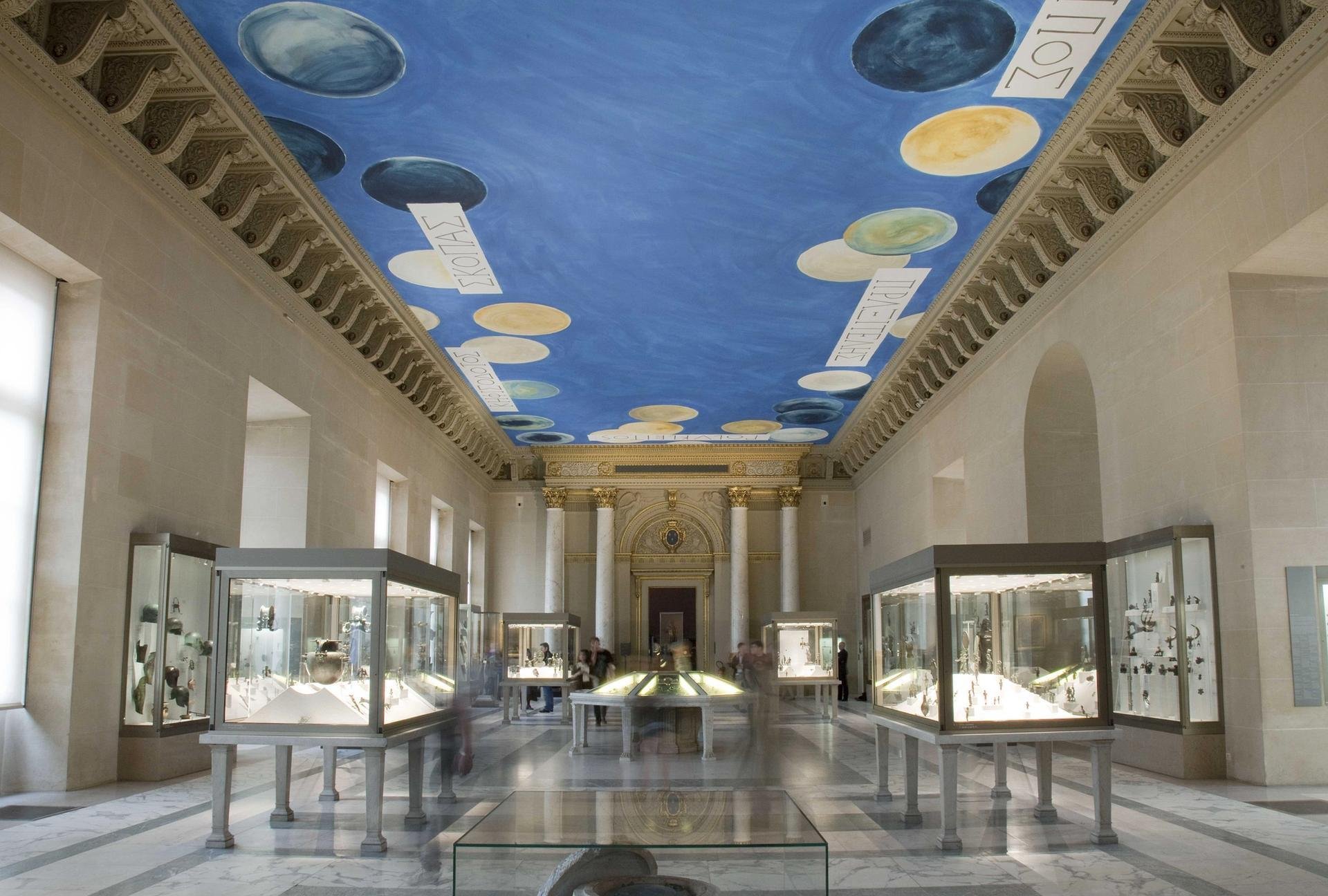
Commercial success can establish an artist's reputation, but it cannot guarantee a place in art history. Beyond auction records, international exhibitions and collector demand, enduring artistic significance emerges through a more complex relationship between originality, cultural influence, institutional recognition and the capacity of a body of work to remain relevant across generations.
The international art market has become exceptionally skilled at recognising commercial success. Auction records are reported within minutes, gallery exhibitions generate global attention, and collectors increasingly monitor the careers of emerging artists with the analytical scrutiny traditionally associated with financial investments.
Yet the question of which artists will matter fifty or one hundred years from now remains fundamentally unresolved.
An artist may achieve extraordinary prices during their lifetime without subsequently occupying a significant position in art history. Another may work in relative obscurity, receiving meaningful recognition only decades after their death. Between these extremes lies a complex process through which artistic achievement is interpreted, preserved, contested and eventually incorporated into the broader cultural record.
The distinction between commercial success and historical significance is particularly relevant in today's international market.
According to the Art Basel and UBS Global Art Market Report 2026, global art sales reached an estimated $59.6 billion in 2025, representing a 4% increase from the previous year. Public auction sales rose by 9%, supported by renewed activity at the upper end of the market.
These figures demonstrate the continuing financial importance of art, but they reveal relatively little about which contemporary artists will ultimately become central to the historical understanding of their period.
Price is an indication of demand under particular market conditions. Historical significance requires a different kind of assessment.
The artists who become enduring cultural figures are generally those whose work continues to influence how art is created, interpreted and understood after the original conditions of its production have changed.
Their importance extends beyond ownership and enters the collective intellectual life of culture.
The Difference Between Market Recognition and Historical Importance
Commercial recognition and art-historical importance frequently reinforce one another, but they are not interchangeable.
The market responds to scarcity, collector preferences, institutional visibility, economic confidence and the availability of significant works. These factors can generate substantial price movements over relatively short periods.
Art history operates across longer and less predictable timeframes.
Its judgements emerge through scholarship, exhibitions, artistic influence, conservation, critical debate and changing cultural perspectives. A body of work may acquire new significance when later generations discover questions or possibilities that were not fully understood when it was produced.
The career of Jean-Michel Basquiat illustrates the coexistence of financial and historical recognition.
In May 2017, his painting Untitled (1982) sold for $110.5 million at Sotheby's in New York, establishing an extraordinary auction benchmark for the artist.
The result confirmed the strength of demand for his work among leading international collectors.
Yet Basquiat's significance cannot be adequately explained by the price.
His paintings transformed the visual language of late twentieth-century art through their combination of expressive figuration, language, historical references, anatomy, music and social commentary. His work brought together cultural influences that challenged established distinctions between street culture and institutional art.
The continued examination of his practice demonstrates why commercial value and historical influence must be evaluated separately.
An auction record measures what a buyer was prepared to pay for a particular work at a particular moment. The historical importance of an artist depends on what that work continues to communicate, provoke and make possible.
The distinction becomes even clearer when considering artists whose ideas have exerted enormous cultural influence without being represented by conventional auction-market measures.
Originality and the Power to Change Artistic Language
Among the strongest indicators of enduring artistic significance is the ability to introduce ideas that alter the direction of artistic practice.
Originality, however, should not be confused with novelty.
An unfamiliar technique or striking visual appearance may attract immediate attention without producing lasting influence. Historical innovation becomes more consequential when subsequent artists can build upon it, challenge it or reinterpret it within new contexts.
Marcel Duchamp provides a defining example.
His readymades questioned the assumption that artistic achievement depended primarily on technical skill or the production of unique handmade objects.
By selecting ordinary manufactured objects and presenting them as artworks, Duchamp transformed the relationship between artistic intention, material objects and institutional context.
His Fountain of 1917 became one of the most consequential provocations in modern art.
The significance of the work does not reside in the material rarity of the original object, which no longer survives, but in the conceptual implications of the gesture.
Duchamp's approach helped establish intellectual foundations for Conceptual art and influenced generations of artists interested in language, systems, institutions and the nature of artistic authorship.
The Metropolitan Museum of Art has described the readymade as one of the most influential developments in twentieth-century artistic practice.
Duchamp demonstrates that enduring influence can arise from a fundamental change in how art is understood rather than from the creation of an immediately desirable commercial object.
His legacy is sustained because the questions his work introduced remain active within contemporary artistic production.
This is an important distinction for evaluating today's most commercially successful artists.
A recognisable visual identity may create a powerful brand. Historical significance depends more substantially on whether that visual language continues to generate meaningful artistic possibilities.

Preparations for Christo and Jeanne-Claude's L'Arc de Triomphe, Wrapped, Paris, September 2021. Photograph: Jean-Pierre Dalbéra.
Institutional Recognition and the Formation of the Canon
Museums, universities, archives and cultural foundations play essential roles in transforming artistic achievements into historical knowledge.
Their significance extends beyond prestige.
Museums preserve artworks, commission research, organise exhibitions and establish contexts through which future audiences encounter artistic practices.
A major retrospective can introduce an artist to new generations, while a permanent collection acquisition may ensure that important works remain available for sustained study.
Nevertheless, institutional recognition is neither entirely independent nor an infallible measure of quality.
A study published in Science in 2018, titled Quantifying Reputation and Success in Art, examined the exhibition histories of approximately half a million artists.
The researchers found that early access to prestigious institutions was associated with sustained access to influential exhibition networks. Artists beginning their careers outside those networks faced significantly greater obstacles.
The findings suggest that artistic reputations are shaped partly by institutional relationships and accumulated visibility.
Such mechanisms can reinforce established hierarchies.
An artist represented by influential galleries and collected by important museums may acquire opportunities that remain inaccessible to equally accomplished practitioners working outside recognised cultural centres.
Institutional validation therefore helps construct artistic reputations, but it cannot be treated as a neutral prediction of future historical importance.
The most valuable role of museums may lie in their capacity to reconsider inherited judgements rather than simply preserve them.
Art history remains open to revision precisely because institutions can recover neglected achievements and introduce alternative interpretations of cultural development.
Rediscovery and the Changing Judgements of History
The career of Hilma af Klint demonstrates how substantially historical reputation can change.
Beginning in 1906, the Swedish artist created radically abstract paintings that anticipated developments more commonly associated with several celebrated pioneers of modern abstraction.
Yet much of her work remained outside public view during her lifetime.
It was only through later research and exhibitions that her achievement became widely recognised.
The Solomon R. Guggenheim Museum's exhibition Hilma af Klint: Paintings for the Future, presented from October 2018 to April 2019, played a major role in bringing her practice to international attention.
The exhibition challenged established accounts of the emergence of abstraction and encouraged renewed consideration of spiritual and philosophical influences within early modernism.
Af Klint's example reveals a fundamental limitation of the traditional relationship between contemporary recognition and historical importance.
An artist's contribution can precede the cultural conditions necessary for its full appreciation.
The absence of immediate commercial success does not establish the absence of artistic significance.
Similar processes of reassessment have shaped the reputation of Artemisia Gentileschi.
Although she achieved considerable recognition during the seventeenth century, her importance was subsequently diminished within dominant narratives of European painting.
Renewed scholarship and exhibitions have restored greater attention to her technical accomplishment, psychological intensity and treatment of women as complex historical and dramatic subjects.
The National Gallery in London presented a major exhibition devoted to Gentileschi from October 2020 to January 2021, following its acquisition of Self Portrait as Saint Catherine of Alexandria.
These developments demonstrate that the historical canon is neither fixed nor complete.
It evolves as researchers examine neglected archives, institutions reconsider collecting priorities and society develops new questions about representation, authorship and cultural authority.
The enduring cultural icon is therefore not simply an artist whose reputation survives unchanged.
It may also be an artist whose work becomes increasingly relevant because the understanding of history itself has evolved.
Artistic Influence Beyond the Original Work
Enduring influence can be particularly difficult to measure because it often operates indirectly.
An artist may change how younger generations approach composition, materials, subject matter or artistic identity without producing easily quantifiable evidence of that influence.
The career of Louise Bourgeois illustrates the importance of long-term creative development.
Although she worked for decades, broader institutional recognition emerged relatively late.
In 1982, at the age of seventy, Bourgeois received a major retrospective at the Museum of Modern Art in New York.
Her subsequent work continued to examine memory, vulnerability, family relationships and psychological experience through sculpture, installation and a diverse range of materials.
The monumental spider sculptures and architectural environments for which she became widely recognised were part of a longer artistic investigation rather than a sudden reinvention designed for commercial visibility.
Her career demonstrates that historical importance can emerge gradually.
It also challenges the market's frequent emphasis on early achievement.
An artist's most influential contributions may appear after decades of experimentation, when the conceptual and formal concerns of a practice have acquired greater depth.
The influence of an artist can ultimately extend into fields beyond fine art, including architecture, literature, film, design and broader cultural discourse.
Such influence may contribute more substantially to enduring significance than the commercial performance of individual works.
The crucial question is not simply how many people recognise an artist's name, but how deeply their work has altered the ideas and practices of others.

Exhibition of Gerhard Richter at Michael Schultz Gallery, Seoul, reflecting the international reach of one of contemporary painting's most influential practitioners.
Scholarship, Preservation and the Architecture of Legacy
Historical recognition depends on the survival of both artworks and knowledge.
An artist's legacy becomes more durable when significant works are carefully documented, preserved and made accessible to scholars.
Catalogues raisonnés, exhibition histories, correspondence, archival photographs and conservation records establish the foundations through which future generations can examine an artistic career.
These materials can clarify chronology, authenticity, creative development and relationships between individual works.
Their importance becomes especially apparent after an artist's death.
Without reliable documentation, historical interpretation becomes more difficult and market confidence may weaken.
Estates and foundations can therefore influence the future understanding of an artist's practice.
Their responsibilities may include preserving archives, facilitating scholarly research, managing copyright and maintaining accurate records of artworks.
However, the administration of an artistic legacy also requires independence and intellectual credibility.
A foundation primarily concerned with protecting market prices may be poorly positioned to encourage the critical reassessment necessary for meaningful scholarship.
Historical significance cannot be sustained through promotion alone.
It depends on the continued availability of evidence and the willingness of researchers to examine an artist's work critically.
Preservation is particularly important for contemporary practices involving performance, temporary installations, digital media and materials that change over time.
For such works, conservation may require documentation of processes and intentions rather than the preservation of a single immutable object.
The endurance of contemporary art increasingly depends on whether institutions can preserve both the physical work and the knowledge necessary to understand it.
Why Auction Records Cannot Predict Cultural Immortality
The financialisation of art has encouraged comparisons between artistic reputations and investment performance.
Collectors may interpret rising prices as evidence of increasing historical importance, while market commentators frequently describe artists through auction records and sales rankings.
These indicators offer useful information about demand, but their predictive value is limited.
The Art Basel and UBS Global Art Market Report 2026 illustrates the concentration of financial activity within particular market segments.
In 2025, the value of fine art lots sold publicly at auction for more than $1 million increased by 21%, while transactions in this segment rose by 15%.
At the same time, sales below $50,000 declined in both value and volume.
The figures demonstrate how market performance can vary substantially across price categories.
They do not establish a corresponding hierarchy of artistic importance.
High auction prices may reflect exceptional scarcity, competitive bidding, provenance or the wealth of individual buyers.
Such factors can produce extraordinary results without necessarily revealing how an artist's work will be interpreted by future generations.
Conversely, artists whose principal achievements exist in performance, socially engaged practice or institutional projects may possess considerable cultural influence without producing substantial auction markets.
Financial valuation also depends on the structure of supply.
An artist whose major works are held in museums or foundations may rarely appear at auction, making market performance an incomplete measure of reputation.
The assumption that enduring cultural importance can be identified through price appreciation therefore misunderstands the relationship between artistic achievement and commercial exchange.
The market records transactions. Art history examines significance.
Although these processes intersect, they answer different questions.
The Role of Cultural Relevance Across Generations
An artist's ability to remain culturally significant depends partly on whether the work continues to support new interpretations.
Historical importance does not require every generation to reach identical conclusions about an artist.
Indeed, enduring works frequently provoke disagreement.
They may be admired, challenged, recontextualised or critically reassessed as cultural attitudes change.
This capacity for reinterpretation is central to the survival of artistic reputations.
The work of an enduring artist often contains questions that extend beyond its immediate historical moment.
Themes involving identity, memory, power, mortality, representation and the relationship between individuals and society can acquire new meanings under changing circumstances.
Yet thematic relevance alone is insufficient.
The formal and conceptual treatment of those subjects must possess enough distinction to sustain close attention.
Artistic achievement is therefore not reducible to either technical mastery or cultural commentary.
It emerges through the particular relationship between ideas, materials and the artist's means of expression.
The artists who become lasting cultural figures often create works that remain identifiable with their own historical circumstances while continuing to communicate beyond them.
Their significance is not preserved because culture stops changing.
It endures because the work remains capable of participating in that change.
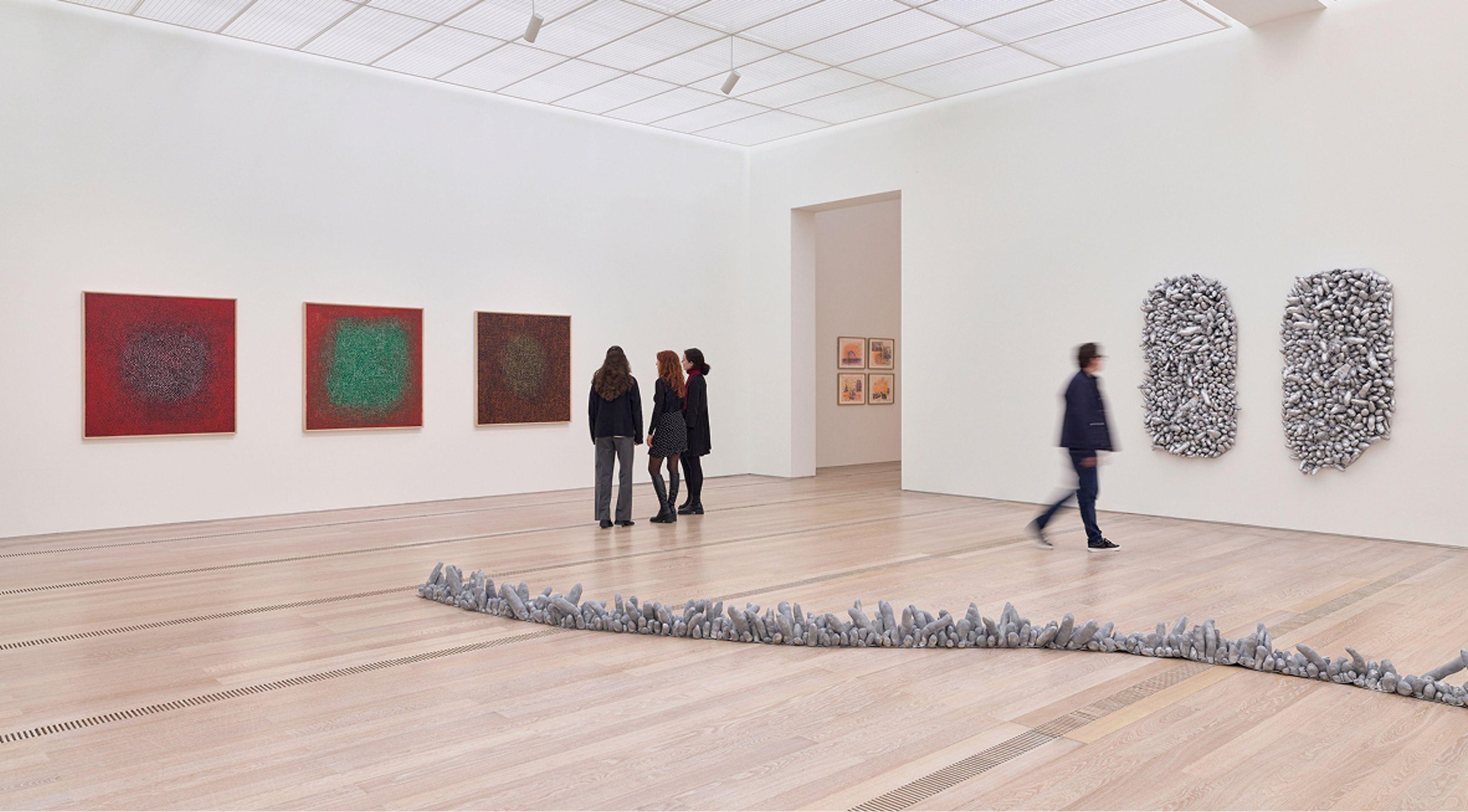
Installation view of Yayoi Kusama's retrospective at the Fondation Beyeler, Riehen/Basel, Switzerland, 2025. Photograph: Mark Niedermann. © YAYOI KUSAMA.
Conclusion: The Long Horizon of Artistic Significance
The distinction between a commercially successful artist and an enduring cultural icon cannot be resolved through a single measure.
Auction records reveal demand. Museums provide recognition and preservation. Scholarship establishes historical context. Artistic influence demonstrates how creative ideas move beyond their original source.
Each contributes to the construction of reputation, but none guarantees permanence.
History is selective, yet its selections are continually reconsidered.
Artists once celebrated may lose prominence, while overlooked practices can acquire extraordinary significance through later scholarship and changing cultural perspectives.
The most enduring artistic careers are often characterised by a combination of formal originality, intellectual substance, sustained creative development and influence extending beyond immediate commercial conditions.
For collectors, this distinction offers an important perspective on long-term value.
Purchasing an expensive artwork is not equivalent to acquiring a permanent place in cultural history.
For institutions, it reinforces the responsibility to examine artistic achievement beyond prevailing market hierarchies.
For artists, it suggests that historical significance is rarely achieved through visibility alone.
It emerges through the cumulative force of a practice capable of introducing new ideas, sustaining critical interpretation and remaining meaningful to audiences who inhabit circumstances very different from those in which the work was created.
Commercial success belongs to the present, even when its financial consequences extend into the future.
Art history operates on a longer horizon.
The artists who ultimately become cultural icons are not necessarily those who commanded the highest prices or attracted the greatest attention during their lifetimes. They are those whose work continues to influence how subsequent generations understand art, culture and the possibilities of human expression.
Their achievement is measured not only by what they created, but by what their work continues to make possible.