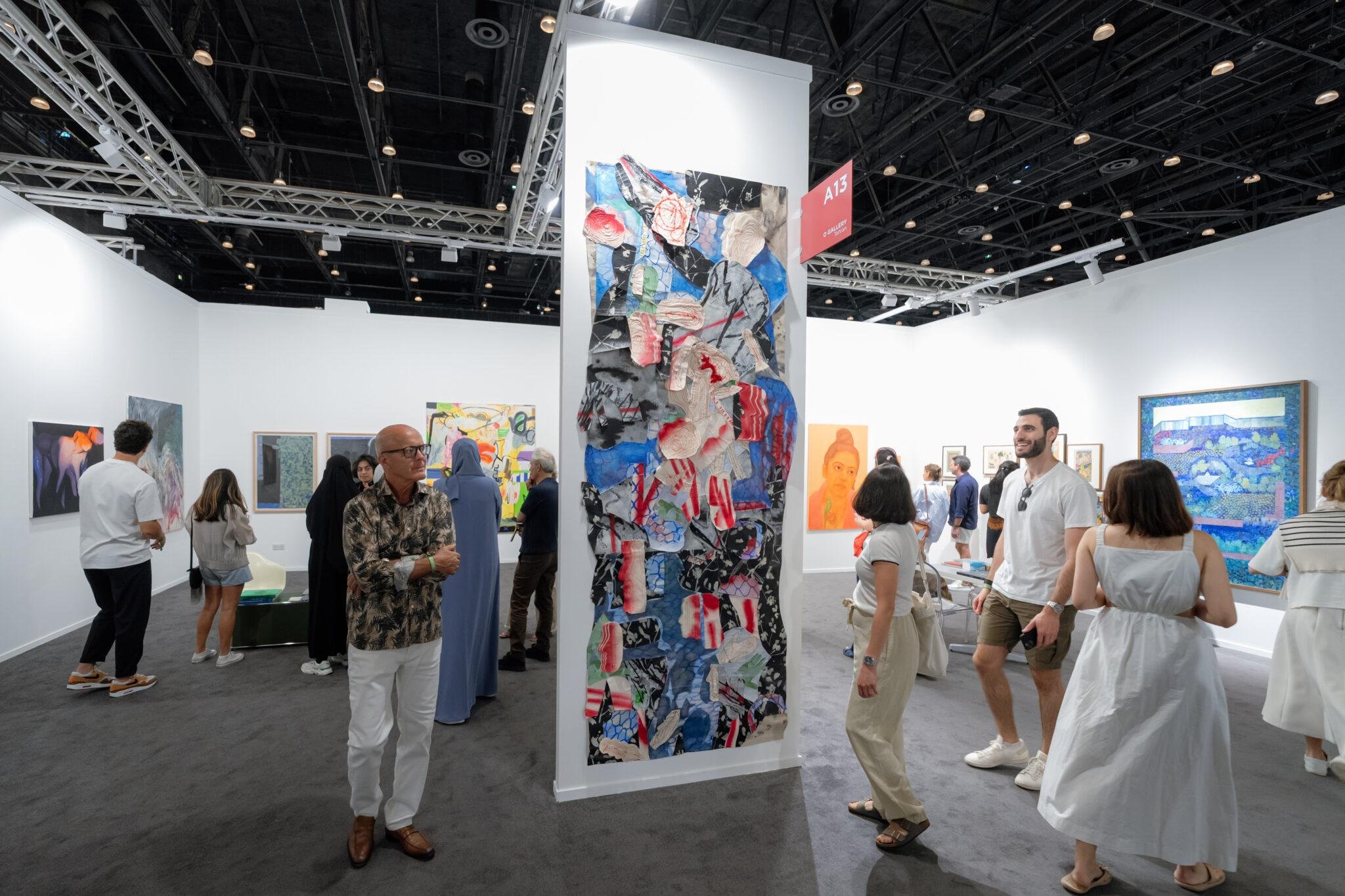
As global wealth becomes more geographically dispersed, Dubai, Riyadh and Singapore are developing distinct roles within the international art market. Their growing cultural influence is challenging established assumptions about where art is collected, traded and exhibited, while raising important questions about the relationship between financial capital and lasting cultural authority.
For much of the twentieth century, the geography of the international art market appeared remarkably stable. New York established its position as the principal centre for high-value transactions, London combined historic auction expertise with an international dealer network, and Paris maintained its influence through museums, galleries and longstanding cultural institutions. These cities did not merely facilitate the exchange of artworks. They helped determine which artists entered the international canon and which collections acquired enduring prestige.
That concentration of influence is increasingly being questioned.
Dubai, Riyadh and Singapore are developing substantial cultural infrastructures supported by private wealth, institutional investment and government strategies. Their ambitions differ, but each is seeking a greater role in connecting collectors, artists and international commercial networks.
The financial foundations of this development are significant. According to the UBS Global Wealth Report 2026, global personal wealth increased by 10.8% in 2025, with Europe, the Middle East and Africa recording the strongest regional growth at 17.5%. Asia-Pacific wealth increased by 5.9%. These figures partly reflect currency movements and cannot be interpreted as direct measures of art purchasing, but they demonstrate the wider redistribution of financial resources.
The critical question is whether the presence of wealth can translate into the institutional depth, collector confidence and independent artistic culture required to establish lasting art-market influence.
Wealth Is Moving, but the Art Market Remains Concentrated
The international art market has become geographically more diverse without experiencing an equivalent redistribution of transaction values.
The Art Basel and UBS Global Art Market Report 2026 estimated worldwide sales at $59.6 billion in 2025, an increase of 4% following two consecutive years of decline.
The United States remained the largest market, accounting for 44% of global sales, followed by the United Kingdom at 18% and China at 14%. Together, these three markets represented 76% of worldwide art sales.
France maintained its position as the fourth-largest market, with an 8% share.
These figures establish an important distinction between the emergence of new cultural centres and the displacement of established commercial markets.
Despite the expansion of wealth across the Gulf and Southeast Asia, the greatest concentration of art transactions continues to occur within longstanding Western and East Asian centres.
New York, London and Paris benefit from advantages that cannot be created through financial investment alone.
They possess extensive networks of collectors, established auction infrastructure, specialist advisers, conservation expertise, internationally recognised museums and generations of accumulated scholarship.
These interconnected systems provide market liquidity and institutional legitimacy.
Emerging centres must therefore develop more than impressive exhibition spaces or attract occasional international auctions. They need sustainable relationships between local artistic production, critical interpretation, collecting and resale activity.
The three cities examined here are pursuing notably different approaches to that challenge.
Dubai: From Regional Marketplace to Cultural Intermediary
Dubai's art-market development reflects its wider position as an international commercial and financial centre.
The city's economic model has historically depended on attracting foreign businesses, skilled professionals, investors and internationally mobile wealth.
Its cultural sector has developed within this environment, with galleries and art organisations serving a diverse audience of residents and collectors from the Middle East, South Asia, Europe and beyond.
Art Dubai has been central to this process.
Established in 2007, the fair helped create a recurring commercial platform for galleries working across regions frequently underrepresented in established Western art-market structures.
Rather than attempting to replicate the historical focus of European art fairs, it developed a programme connecting contemporary art with modern artistic traditions from the Middle East, North Africa and South Asia.
This positioning has given Dubai a distinctive role as an intermediary between different collecting cultures.
The development of Alserkal Avenue has reinforced that identity. Its concentration of galleries, cultural organisations and exhibition spaces in the Al Quoz district provides an infrastructure in which commercial activity and artistic programming operate alongside one another.
The significance of such environments extends beyond individual sales.
Collectors require opportunities to develop knowledge, encounter artists and establish relationships with institutions. A gallery ecosystem can generate the sustained engagement necessary for purchasing decisions to develop beyond occasional luxury expenditure.
Dubai's institutional ambitions are also reflected in the Dubai Collection, established in partnership with Dubai Culture and Art Dubai.
Rather than relying exclusively on the permanent acquisition of artworks, the initiative operates through long-term loans from private collectors.
By 2026, it reported more than 1,200 artworks and over 120 patrons.
This model allows privately owned works to enter public cultural programmes while enabling collectors to retain ownership.
It also illustrates the relationship between cultural policy and private wealth that increasingly characterises emerging art centres.
However, Dubai's position remains sensitive to international economic and geopolitical conditions.
Art Dubai's twentieth-anniversary edition in 2026 was postponed from April to May following regional conflict. Approximately 75 exhibitors withdrew, and the organisers adopted a smaller, more flexible format incorporating around 50 commercial galleries.
The event continued, but the disruption revealed the vulnerability of international cultural activity to regional instability, travel restrictions and logistical uncertainty.
For Dubai, the long-term challenge is not simply maintaining visibility during periods of prosperity. It is building an artistic economy capable of sustaining galleries and collectors through changing economic conditions.
Riyadh: Building Cultural Infrastructure Through Strategic Investment
Saudi Arabia is pursuing a different model.
Where Dubai's art sector has developed through international commerce and a growing private gallery ecosystem, Riyadh's cultural expansion is closely connected to government-led economic diversification and the strategic development of domestic institutions.
Under Vision 2030, cultural investment forms part of a wider effort to expand economic activity beyond hydrocarbons and develop sectors including tourism, entertainment and creative industries.
Contemporary art has become increasingly visible within this framework.
The Diriyah Contemporary Art Biennale, established in 2021, provides an important example.
Its third edition, In Interludes and Transitions, ran from 30 January to 2 May 2026 in the JAX District of Diriyah.
Organised by the Diriyah Biennale Foundation and led by artistic directors Nora Razian and Sabih Ahmed, the exhibition brought together 68 artists from more than 37 countries and included over 25 new commissions.
The programme demonstrates an ambition extending beyond the acquisition of internationally recognised artworks.
Commissioning new work and supporting sustained curatorial programmes can contribute to the development of artistic practices and historical narratives.
Equally significant is the proposed expansion of museum infrastructure.
In April 2026, Diriyah Company awarded a construction contract valued at approximately $490 million for the Saudi Arabia Museum of Contemporary Art, intended to support the research, exhibition and preservation of Saudi modern and contemporary art.
Such investment may create opportunities for artists whose work has historically received limited international institutional attention.
Nevertheless, the establishment of buildings and exhibition programmes does not automatically produce an independently functioning art market.
A mature market also requires knowledgeable collectors, credible valuations, specialist dealers and mechanisms through which artworks can be resold.
The development of these commercial structures is becoming increasingly visible.
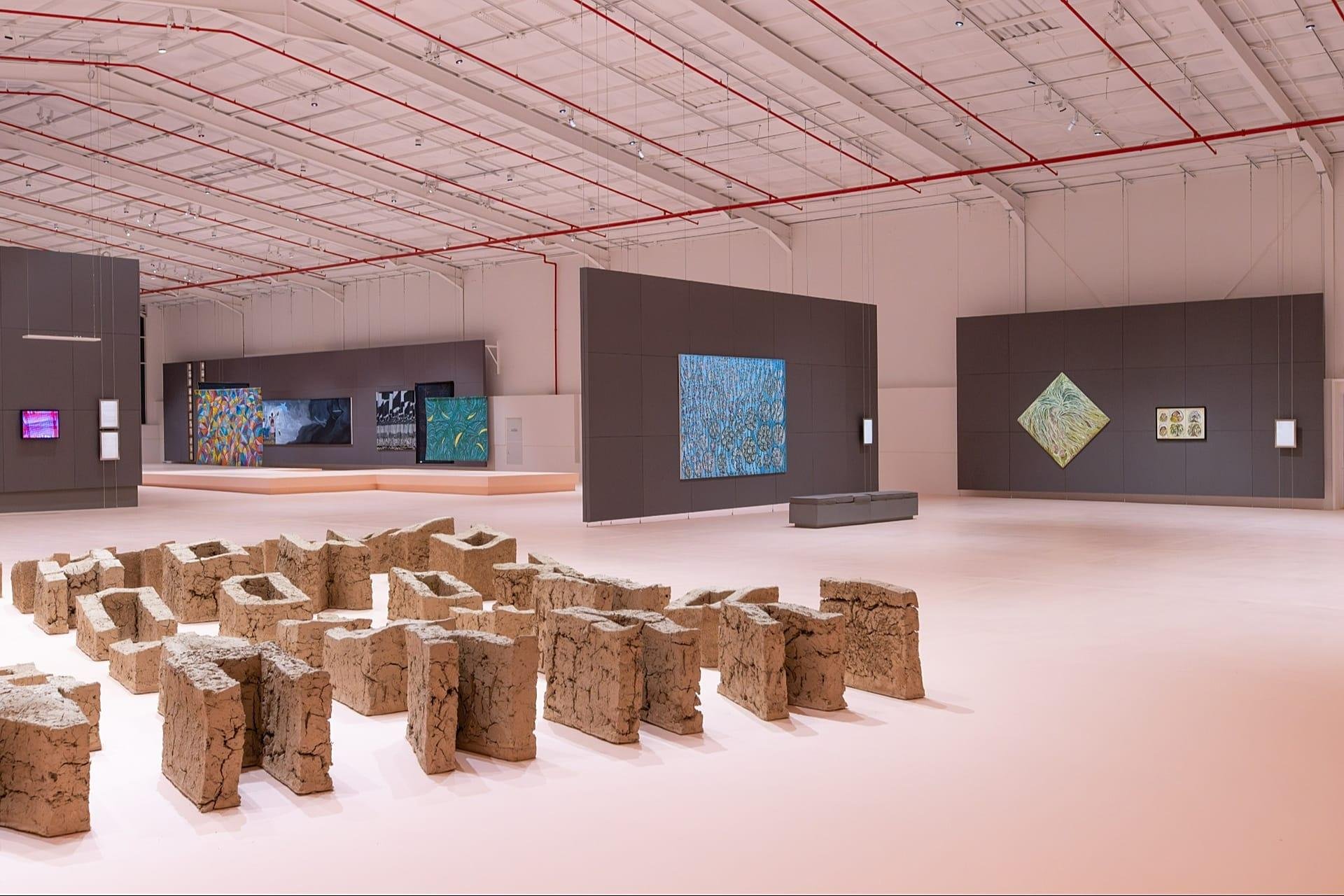
Installation view of the Diriyah Contemporary Art Biennale 2026, featuring works by Daniel Otero Torres and Etel Adnan at JAX District, Diriyah, Saudi Arabia. Photograph: Alessandro Brasile, courtesy of the Diriyah Biennale Foundation.
Sotheby's in Riyadh: Testing the Depth of Collector Demand
Sotheby's entry into the Saudi auction market offers one of the clearest opportunities to evaluate commercial demand.
Its inaugural Origins auction in February 2025 achieved approximately $17.2 million including fees, although the sell-through rate was around 67% by lot.
The result demonstrated interest in an international auction format while also revealing the selective nature of demand.
In January 2026, Sotheby's held its second Origins sale in Diriyah, coinciding with the opening of its Riyadh office.
The auction combined international artists with important figures from Saudi and wider regional art history.
One of its most notable results was Safeya Binzagr's Coffee Shop in Madina Road (1968), which achieved approximately $2.1 million.
The result was particularly significant because demand for a Saudi artist exceeded expectations associated with some internationally established names.
This offers a useful corrective to the assumption that emerging art markets develop primarily through importing Western blue-chip works.
Collectors may demonstrate stronger cultural and financial commitments to artists whose work reflects regional histories and identities.
Such demand can generate new valuations and encourage international institutions to reconsider artists previously overlooked by dominant market structures.
However, individual auction records should not be confused with the establishment of a deep secondary market.
Sustainable commercial activity requires repeated transactions across different price levels, an expanding collector base and sufficient confidence for owners to resell works without depending on exceptional events.
Riyadh's development should therefore be evaluated over a longer period than the opening of an auction office or the achievement of a single record price.
Its most consequential opportunity may lie in establishing an international market for Saudi and regional artistic practices rather than reproducing the existing hierarchy of Western collecting.
Singapore: Financial Sophistication Meets Regional Artistic Identity
Singapore's position within the emerging geography of art wealth differs substantially from that of Dubai and Riyadh.
The city-state already possesses sophisticated financial infrastructure, international legal services, private banking expertise and a concentration of wealthy residents.
According to the UBS Global Wealth Report 2026, average wealth per adult in Singapore reached approximately $527,000 in 2025, placing it among the wealthiest markets covered by the research.
These conditions provide a substantial potential foundation for collecting.
Yet financial wealth does not translate automatically into art-market activity.
Singapore has historically faced competition from Hong Kong, whose longstanding position as an international auction and gallery centre gives it important advantages in access to collectors and secondary-market trading.
Singapore's more recent strategy has involved connecting its financial capabilities with a stronger international cultural programme.
ART SG has become an important part of that effort.
The fair's fourth edition, held from 22 to 25 January 2026 at Marina Bay Sands, welcomed more than 43,000 visitors and brought together over 100 exhibitors from more than 30 countries and territories through its combined presentation with S.E.A. Focus.
The integration of S.E.A. Focus was particularly significant because it positioned contemporary Southeast Asian art within a broader international commercial setting.
The fair also introduced initiatives highlighting South Asian artistic practices, performance and moving-image works.
Reported sales provided evidence of collector participation, although fair organisers' figures cannot substitute for comprehensive independently audited market data.
The wider programme of Singapore Art Week reinforces this development.
With more than 100 cultural events taking place across museums, galleries and public spaces in 2026, the initiative connects international commercial activity with the local artistic ecosystem.
Singapore's competitive advantage may therefore rest less on challenging Hong Kong through auction turnover than on becoming a trusted centre for regional collecting, cultural research and cross-border relationships.
Its future influence will depend on whether financial sophistication can support sustained commitments to artists, galleries and institutions across Southeast Asia.
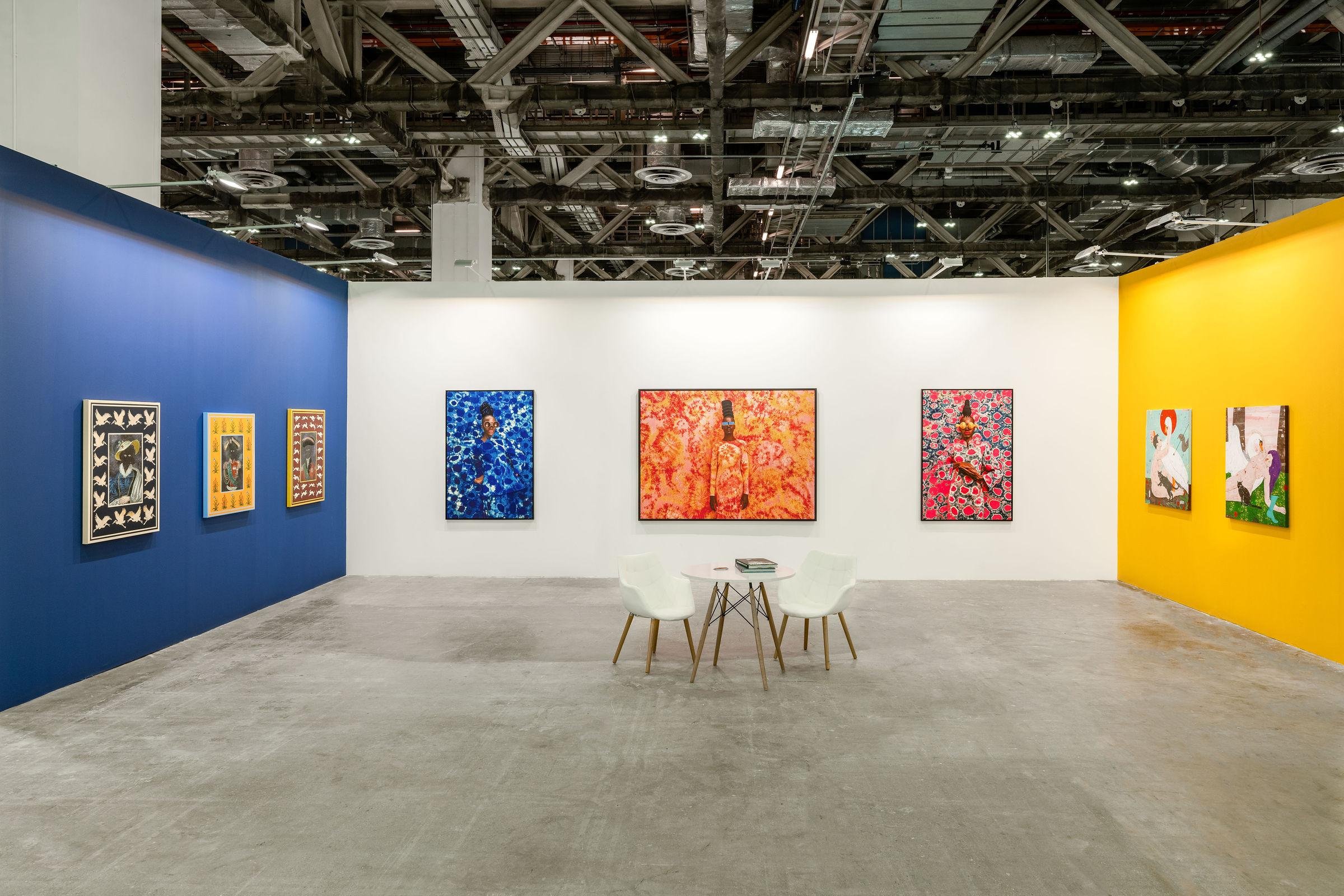
Installation view of 193 Gallery at ART SG 2026, Singapore, reflecting the city-state's growing importance as a centre for international contemporary art and collecting.
The Relationship Between Luxury Wealth and Cultural Authority
The expansion of art markets in Dubai, Riyadh and Singapore raises a wider question about the relationship between luxury consumption and cultural significance.
All three cities have developed environments capable of attracting affluent international audiences.
Luxury property, hospitality, private banking and high-end retail can bring collectors into contact with galleries and cultural events.
These relationships are commercially useful.
However, the ability to attract wealthy visitors is not equivalent to creating a sustainable artistic community.
Collecting requires more than purchasing power.
Museums and independent cultural organisations provide historical interpretation, scholarly research and opportunities for artistic experimentation. Commercial galleries support artists through exhibitions, representation and relationships with collectors.
When cultural investment concentrates excessively on prestigious buildings and highly visible international events, there is a risk that artistic production becomes secondary to broader economic branding.
Conversely, carefully developed cultural infrastructure can provide meaningful opportunities for artists whose work has been underrepresented internationally.
The distinction depends on institutional practice.
A city that supports emerging artists, independent curators and local galleries may establish a more durable cultural position than one that relies primarily on imported masterpieces and exceptional auction events.
This is particularly important for Riyadh, where the scale of state investment creates considerable opportunities alongside questions concerning institutional autonomy and the diversity of artistic expression.
For Dubai and Singapore, the challenge also involves ensuring that increasingly expensive commercial environments remain accessible to younger artists and smaller galleries.
The strength of a cultural centre is ultimately determined not only by the wealth it attracts, but by the artistic activity it enables.
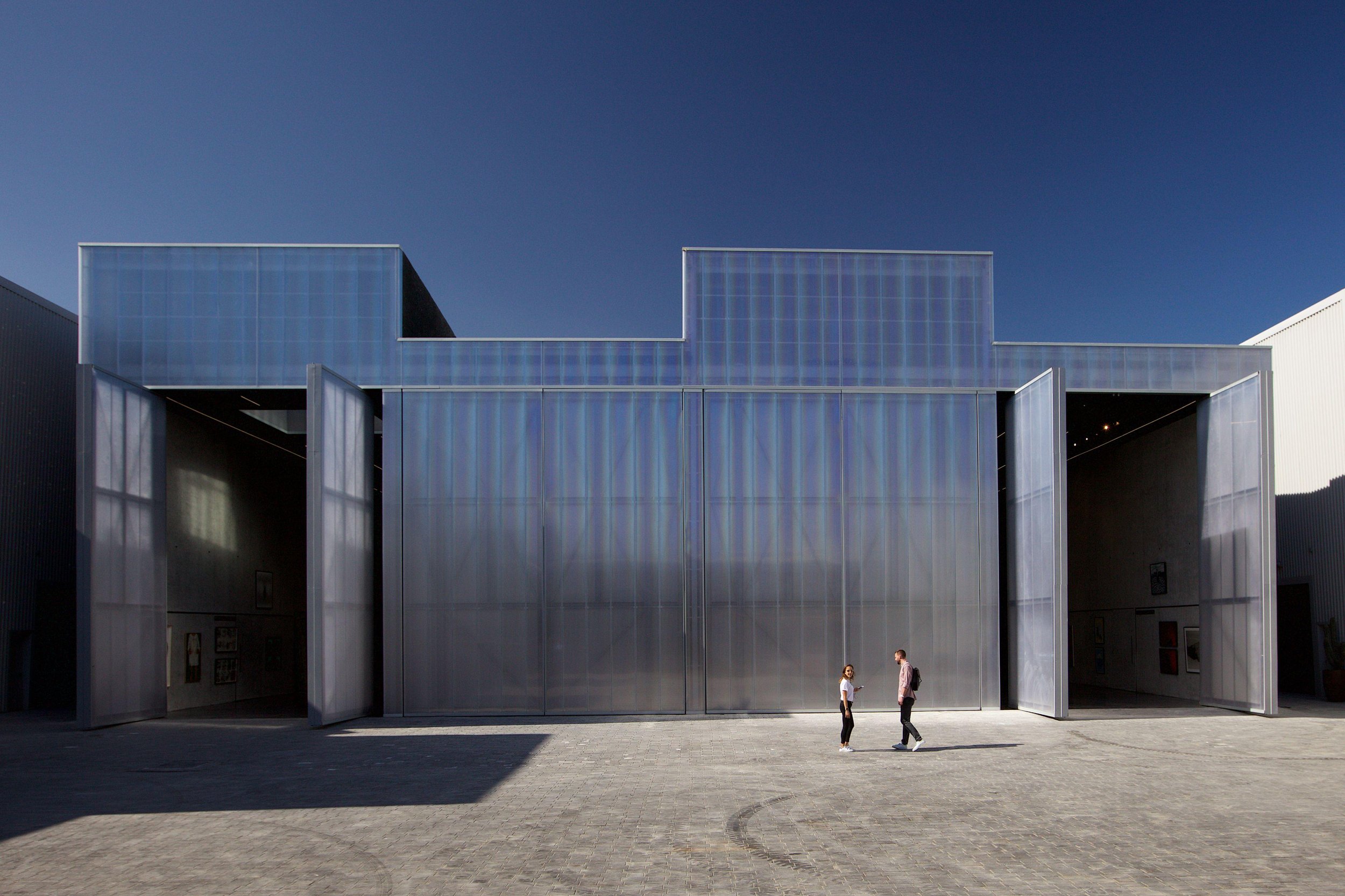
Are Traditional Art Capitals Losing Their Influence?
The rise of these cities does not necessarily imply the decline of New York, London or Paris.
The most recent global sales figures demonstrate that established markets retain overwhelming commercial advantages.
In 2025, all ten of the highest-priced artworks sold at auction were purchased in New York, as were 39 of the top 50.
This concentration reflects the continuing importance of established collector networks and the ability of major auction houses to attract exceptional consignments.
Nevertheless, the geography of cultural influence may change more rapidly than the distribution of auction turnover.
A collector based in Singapore may acquire European contemporary art while supporting artists from Indonesia or Vietnam. A Saudi institution may commission an internationally recognised artist while simultaneously strengthening the historical position of Saudi modernism.
Dubai-based galleries may facilitate transactions involving collectors and artists across several continents without those sales appearing in conventional auction statistics.
These activities create connections that are not always reflected in national market-share figures.
The result may be a more interconnected art economy in which established centres retain their commercial dominance while newer cities exercise increasing influence over artistic discovery, regional scholarship and institutional programming.
The most important development is therefore not the replacement of one capital by another.
It is the multiplication of locations from which international cultural value can be generated.
Conclusion: A More Distributed Art World
Dubai, Riyadh and Singapore are challenging the traditional geography of the art market through different combinations of financial resources, institutional ambition and international connectivity.
Dubai has developed a commercially oriented cultural ecosystem connecting the Middle East with wider collecting networks. Riyadh is using strategic investment to establish new institutions and encourage recognition of Saudi artistic production. Singapore is combining financial sophistication with a growing programme of international and Southeast Asian contemporary art.
None has yet displaced the established dominance of New York, London or Paris in global transaction values.
The more significant change concerns the distribution of cultural opportunity.
As collectors and institutions become active across a wider range of cities, artists may gain access to audiences and forms of recognition that previously depended heavily on Western commercial structures.
Whether these developments produce lasting cultural centres will depend on the strength of local institutions, independent scholarship, sustainable galleries and the development of genuine collector communities.
Wealth can finance architecture, acquire masterpieces and attract international attention. It cannot, by itself, establish artistic credibility.
The future geography of the art world will be determined not simply by where the greatest fortunes are accumulated, but by where those resources are transformed into sustained cultural knowledge, meaningful artistic opportunity and enduring public institutions.