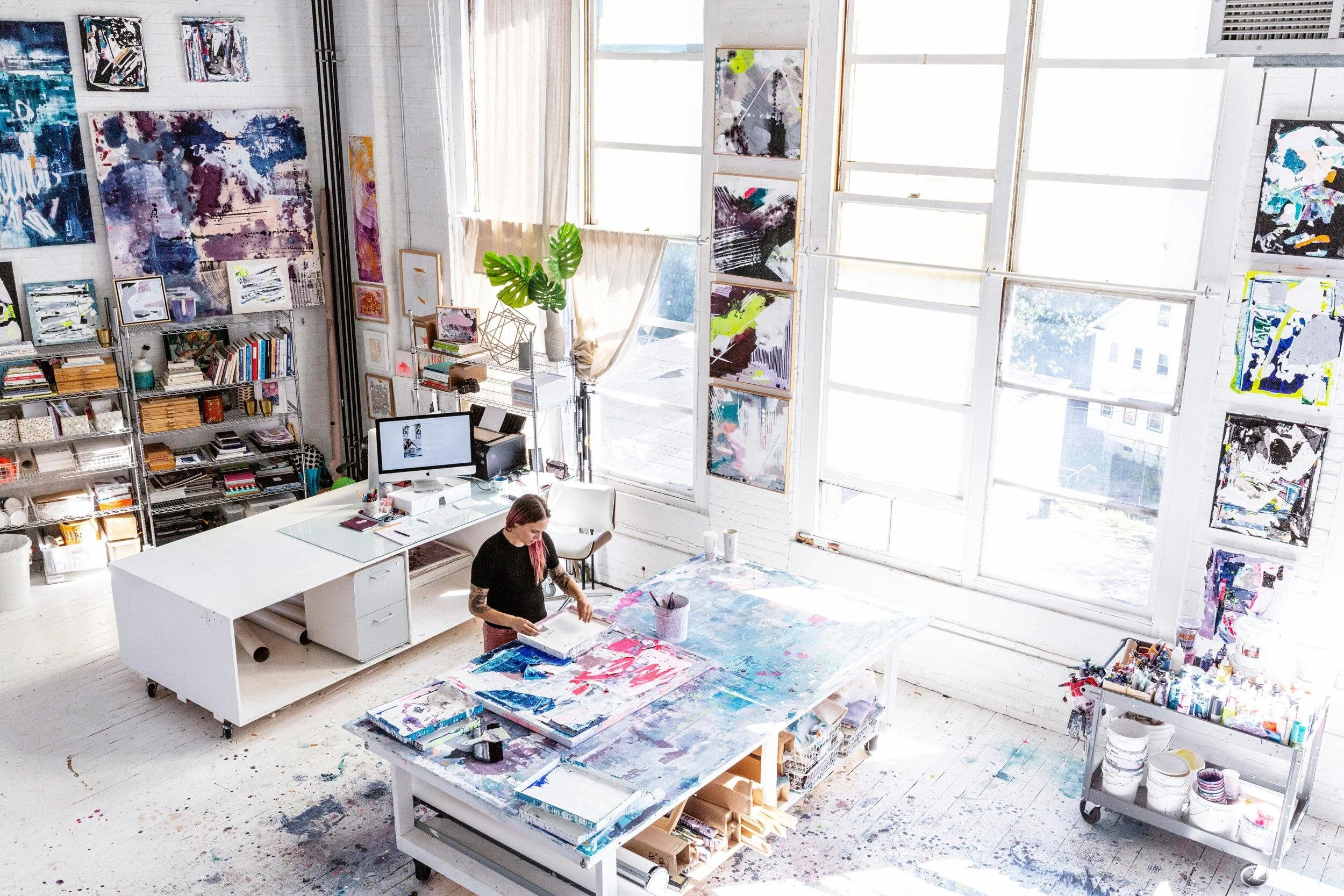
For generations, representation by an established gallery has been regarded as one of the defining milestones of an artist's professional career. The relationship offered access to collectors, curatorial networks, exhibitions and an infrastructure through which artistic reputations could be developed and sustained. Yet an increasing number of contemporary artists are questioning whether participation in this system remains essential to commercial success or artistic recognition.
Some are choosing to operate independently, selling directly to collectors, organising their own exhibitions and establishing prices without the intervention of conventional dealers. Others are developing hybrid business models that combine digital sales, private commissions, institutional collaborations and selective partnerships with galleries or auction houses.
Their decisions reflect more than dissatisfaction with commission structures. They challenge established assumptions about who controls access to the art market, how artistic value is communicated and whether institutional endorsement should remain the principal measure of professional achievement.
The implications extend beyond individual careers. As collectors become increasingly comfortable purchasing directly from artists, traditional intermediaries face competition from business models built around personal relationships, digital visibility and entrepreneurial independence.
Yet rejecting the established art market does not necessarily mean escaping its economic pressures. Independent artists assume responsibilities traditionally carried by galleries, including marketing, financial management, logistics, collector development and the preservation of long-term market confidence.
The central question is therefore not whether artists can succeed without galleries. Some demonstrably can. It is whether the growing diversity of commercial models represents a meaningful redistribution of power or merely transfers the costs and risks of operating within the art economy from dealers to artists themselves.
The Traditional Gallery Model Under Pressure
Commercial galleries have historically provided much of the infrastructure through which contemporary artists establish sustainable careers.
Their responsibilities extend beyond exhibiting and selling artworks. Dealers may finance production, maintain relationships with collectors, coordinate institutional loans, support publications and protect an artist's market from speculative trading.
These services require significant expenditure, typically supported through commissions on sales.
Although commercial arrangements vary, a division of approximately half the sale price between artist and gallery has long been familiar within parts of the primary market.
For artists without the resources to finance exhibitions independently, this relationship can provide valuable financial and professional support.
However, the model also creates dependencies.
An artist's commercial opportunities may be influenced by a gallery's financial position, geographic reach, collector network and decisions about which works to promote.
In a challenging economic environment, these limitations become more apparent.
The Art Basel and UBS Art Market Report 2026, examining 2025 performance, estimated global dealer sales at $34.8 billion, an increase of 2 per cent from the previous year.
Yet operating costs rose by an estimated 5 per cent, outpacing sales growth. Thirty-eight per cent of dealers reported declining profitability, while the average number of buyers per dealer fell to 57, its lowest level since 2021.
These figures reveal the pressures facing galleries themselves. They also help explain why some artists are reconsidering the financial logic of conventional representation.
The ability to retain a larger share of revenue, maintain direct relationships with buyers and establish independent commercial identities may appear increasingly attractive.
Nevertheless, independence should not be confused with the elimination of business costs. Artists leaving the gallery system must either perform these functions themselves or pay others to provide them.
The Direct-to-Collector Revolution
One of the clearest indicators of changing market behaviour is the growing willingness of collectors to acquire work directly from artists.
The Art Basel and UBS Survey of Global Collecting 2026, based on research involving 3,100 high-net-worth collectors across ten markets, found that 69 per cent had purchased directly from artists during the survey's 2025–2026 reference period.
The proportion had increased by six percentage points from the preceding survey and was more than double the level recorded in 2024.
Direct acquisitions included purchases from studios, commissioned works and transactions arranged through Instagram.
Artist-direct sales accounted for 19 per cent of total expenditure among the collectors surveyed, ahead of both art fairs and auctions as individually measured channels.
These figures do not establish that independent artists control 19 per cent of the entire global art market. They describe purchasing behaviour within a particular high-net-worth sample, which includes artists who may also maintain gallery representation.
Nevertheless, they demonstrate that direct transactions are no longer peripheral to collecting activity.
For artists, the implications are substantial.
A collector who discovers an artist through an exhibition, online platform or personal recommendation can increasingly establish contact without relying on a commercial gallery.
Artists can communicate their ideas directly, explain their production processes and develop relationships that continue beyond an individual acquisition.
The resulting exchange may offer greater transparency concerning artistic intention and pricing.
It can also allow artists to understand who acquires their work and how collections develop.
These relationships have commercial value, particularly for practices supported by recurring purchases, commissions and recommendations within collector networks.
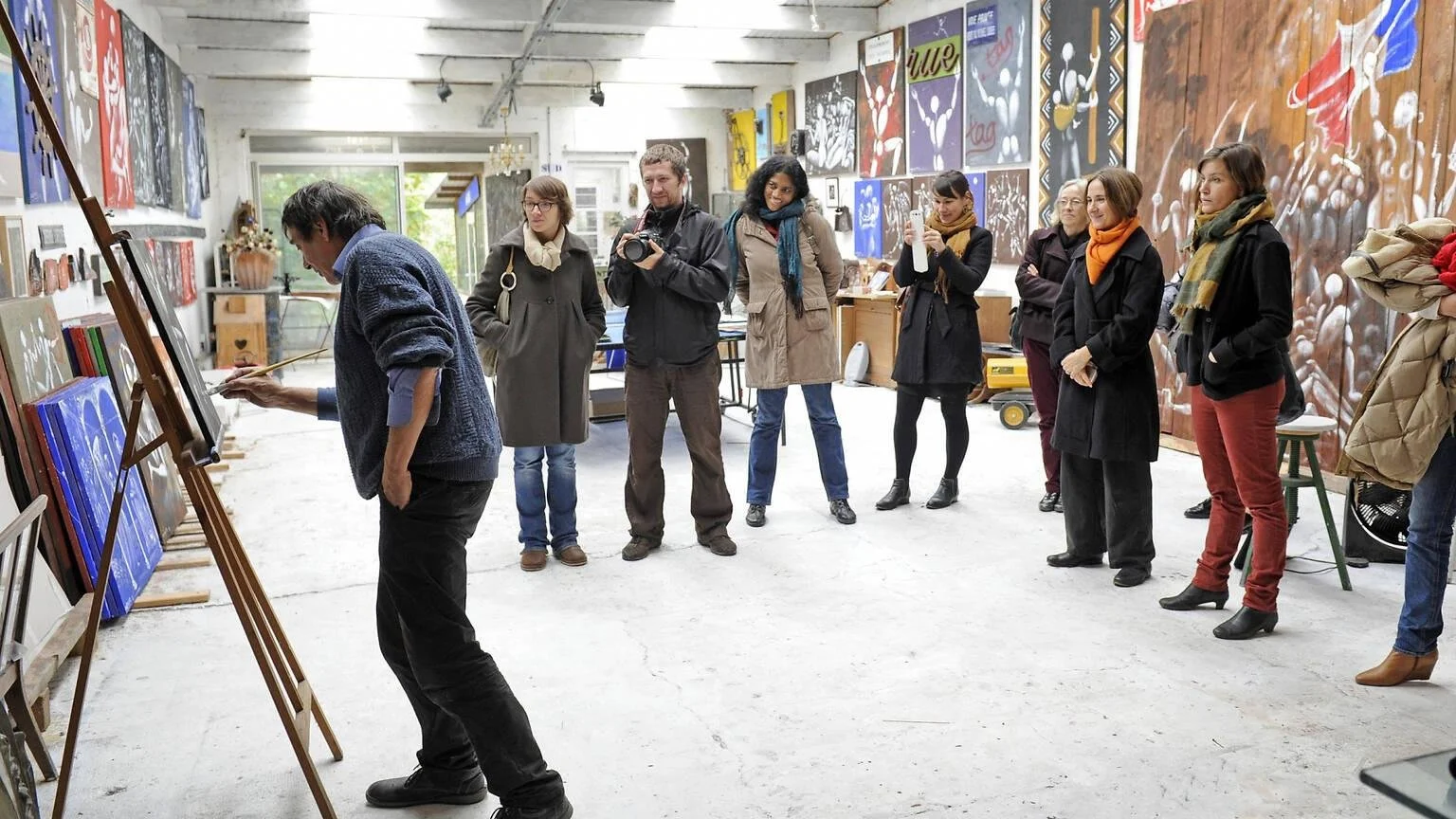
Visitors engaging with artists during an open studio event in Montreuil, France, highlighting the growing importance of direct connections between artists, collectors and audiences.
Cj Hendry and the Independent Artist as Entrepreneur
Australian-born artist Cj Hendry provides one of the most visible examples of how direct engagement can support an ambitious contemporary practice.
Known for technically elaborate drawings and immersive installations, Hendry developed a substantial audience through social media before establishing an independent exhibition model.
Rather than relying exclusively on conventional gallery presentations, she has organised temporary environments designed to engage audiences directly.
Her 2023 exhibition Plaid, staged in Brooklyn, transformed an industrial space into a large-scale interactive installation.
The project combined original artworks, accessible public experiences and merchandise, demonstrating how an artist could create an exhibition with multiple forms of engagement and revenue.
Hendry's model also illustrates the financial demands of independence.
In an August 2026 interview with Observer, she explained that ambitious exhibitions could cost hundreds of thousands of dollars and that revenue was frequently reinvested into subsequent projects and the team responsible for delivering them.
Her career should not, however, be presented as a complete rejection of established institutions.
Hendry has collaborated with Phillips and expressed interest in gallery partnerships.
Her approach is better understood as selective independence: maintaining control over artistic production and audience relationships while working with conventional intermediaries when those arrangements serve a specific purpose.
This distinction is significant.
The emerging alternative to traditional representation may not be permanent isolation from galleries, but the ability to negotiate relationships from a position of greater commercial autonomy.
The Artist Who Refuses the Buyer
Independence does not always involve maximising sales or making work more accessible.
Some artists reject conventional commercial expectations because they want greater control over the future ownership of their work.
The American painter Clyfford Still offers an important historical example.
Still resisted many aspects of the commercial gallery system and retained an unusually large proportion of his artistic production.
He sought to protect the integrity of his work and remained deeply concerned about the conditions under which it would be exhibited and interpreted.
The circumstances surrounding his legacy eventually contributed to the establishment of the Clyfford Still Museum in Denver, which opened in 2011.
His example demonstrates that rejection can operate as a form of artistic governance rather than simply a commercial strategy.
For some artists, deciding where a work belongs is as important as determining its sale price.
This creates a tension between individual ownership rights and an artist's desire to preserve a coherent artistic legacy.
A collector may consider unrestricted resale fundamental to ownership. An artist may prefer works to enter collections with clear commitments to preservation, exhibition or long-term stewardship.
Established galleries frequently mediate these competing interests, but independent artists may attempt to manage them directly.
Such decisions can restrict immediate revenue while supporting longer-term artistic objectives.
They also raise a broader question about whether market success should be defined by the volume of transactions or by the cultural circumstances in which artworks are preserved.
Damien Hirst and the Rejection of Established Distribution
One of the most consequential challenges to the gallery system came from an artist who was already firmly established within it.
In September 2008, Damien Hirst presented Beautiful Inside My Head Forever, a two-day auction at Sotheby's in London featuring more than 200 works consigned directly from his studio.
The sale generated approximately £111 million, demonstrating that a prominent living artist could bypass traditional primary-market distribution and reach buyers through a major auction house.
The timing was extraordinary. The auction coincided with the collapse of Lehman Brothers and the beginning of an acute phase of the global financial crisis.
Hirst's decision challenged a longstanding division between galleries, which traditionally introduce new work to the market, and auction houses, which predominantly facilitate resale.
Yet the experiment also revealed the distinction between commercial innovation and sustainable valuation.
Subsequent resale analysis found that some works purchased during the auction performed poorly when they returned to the market.
The event therefore remains a complicated precedent.
Hirst demonstrated the possibility of negotiating directly with a powerful commercial institution. But he did so from a position of exceptional international recognition, with an established collector base and decades of institutional and gallery exposure.
The example cannot readily be applied to emerging artists without comparable visibility.
It also demonstrates that bypassing one intermediary may simply involve relying on another.
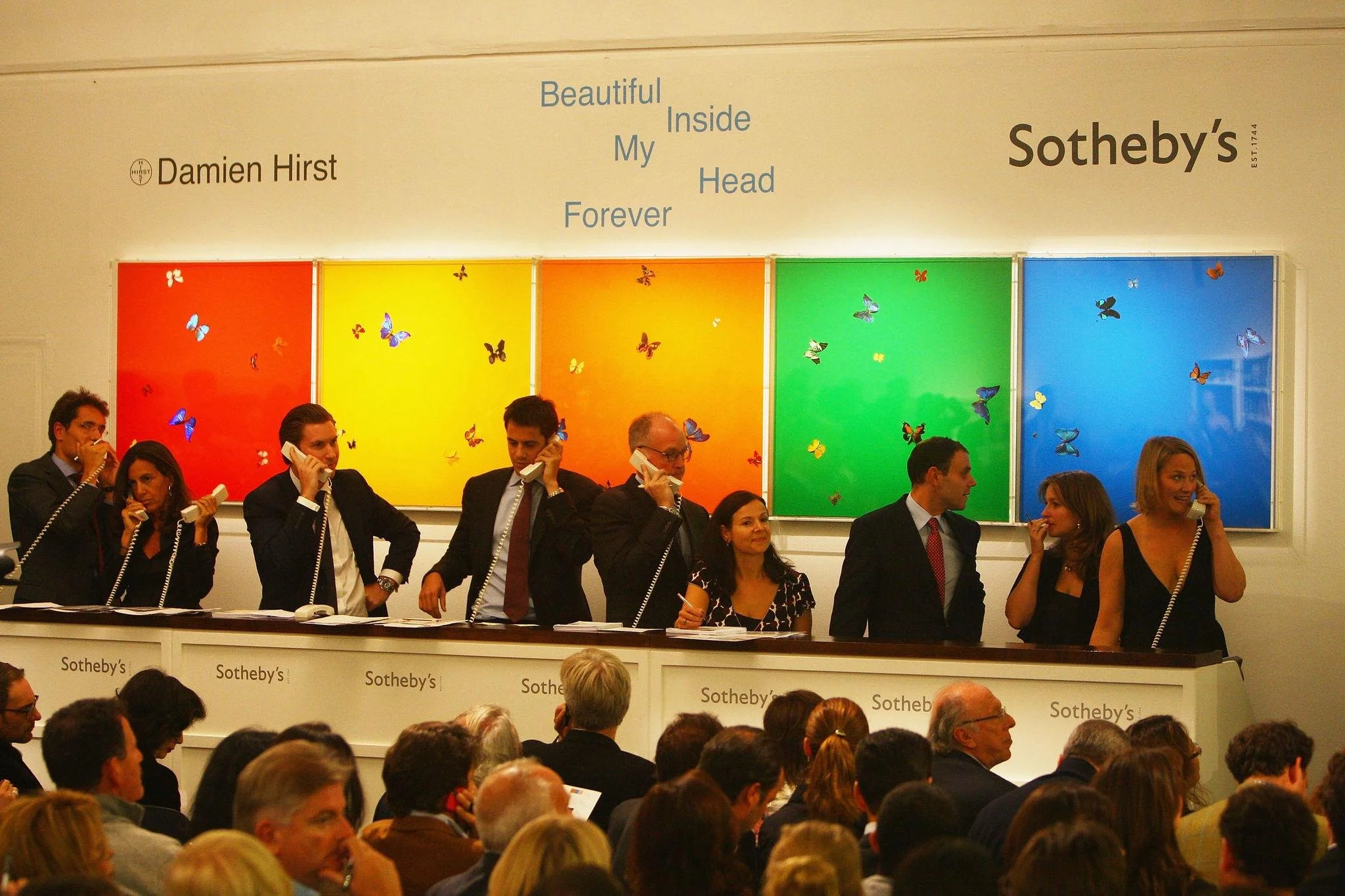
Damien Hirst's Beautiful Inside My Head Forever auction at Sotheby's, London, September 2008, a landmark sale that challenged traditional gallery distribution by offering new artworks directly at auction.
Who Controls the Price?
Pricing is among the most consequential decisions an independent artist must make.
Within conventional gallery representation, dealers often establish price structures based on artistic development, exhibition history, comparable transactions and collector demand.
They may also regulate the availability of works to reduce abrupt fluctuations and maintain confidence among existing buyers.
Independent artists can exercise direct control over these decisions, but autonomy introduces responsibility.
A price set too low may fail to reflect production costs and create difficulties when the artist's practice develops.
A price set too high may discourage acquisitions and produce unsold inventory.
Frequent changes can undermine confidence, particularly where collectors are uncertain whether earlier purchases remain consistent with the artist's wider market.
Digital platforms may increase the visibility of asking prices, but public transparency does not necessarily produce stable valuations.
An artist's website can communicate prices clearly, yet it cannot independently establish the existence of sustained secondary-market demand.
For collectors, the distinction between a primary-market asking price and a verified resale value remains essential.
Independent artists must therefore balance affordability, commercial sustainability and the preservation of long-term price relationships.
The ability to establish prices without gallery intervention is meaningful, but it does not remove the economic consequences of those decisions.
Social Media: Freedom or a New Dependency?
Digital platforms have dramatically expanded the possibilities for artists seeking audiences outside conventional institutions.
Instagram, personal websites and online communities allow artists to present work internationally without first securing gallery representation.
The financial barriers to initial visibility may be lower than those associated with traditional exhibitions and art fairs.
However, digital independence introduces different forms of dependency.
Artists relying heavily on social media become exposed to platform algorithms, changing content formats and the need for continuous public engagement.
Visibility may depend on producing material that performs effectively within digital environments rather than work that develops through slower artistic investigation.
A substantial following also does not necessarily translate into a viable collector base.
The economics of attention differ from the economics of art ownership.
The Art Basel and UBS Survey of Global Collecting 2026 found that 58 per cent of respondents used digital resources for collecting advice, while 32 per cent consulted Instagram or X.
Yet traditional dealers remained the preferred purchasing channel for 29 per cent of respondents, compared with 19 per cent who preferred direct purchases from artists.
These findings suggest that digital discovery is expanding without eliminating the importance of established commercial relationships.
The challenge for independent artists is converting online attention into durable professional infrastructure.
A sustainable practice requires more than visibility. It depends on consistent sales, reliable administration and relationships capable of surviving changes in technology and audience behaviour.
The Hidden Costs of Artistic Independence
The financial appeal of retaining the full proceeds from an artwork sale can be misleading.
Galleries undertake commercial activities that must still be financed when artists operate independently.
Photography, website development, marketing, packaging, shipping, insurance, payment processing, legal documentation and customer service can represent significant expenditure.
Artists who organise their own exhibitions must also consider venue hire, installation, staffing, transportation and publicity.
The resulting business may generate higher gross revenue per sale while producing lower margins than anticipated.
There are also opportunity costs.
Time devoted to administration and collector communication is time unavailable for artistic production.
For artists working with technically demanding materials or requiring lengthy periods of research, these competing responsibilities can be particularly consequential.
Independent success therefore often depends on building a professional team, including studio managers, accountants, fabricators and specialist consultants.
At a certain scale, the independently operated studio begins to resemble a commercial organisation.
The distinction from a gallery-led model becomes one of ownership and control rather than the absence of intermediaries.
Redefining Artistic Success Beyond Auctions
The rejection of traditional market structures raises a fundamental question about how artistic achievement should be measured.
Auction records have become highly visible indicators of market performance, often receiving greater public attention than exhibitions, critical writing or sustained artistic development.
Yet auction activity represents only a portion of the commercial art economy.
Artists may maintain financially viable careers through commissions, direct sales, teaching, public projects, licensing or long-term relationships with private patrons without developing significant auction markets.
For others, independence allows greater freedom to work across disciplines that do not fit easily within conventional gallery categories.
Installation, performance, socially engaged practice and experimental digital work may require economic structures different from those supporting the sale of unique paintings.
In such cases, success may involve artistic continuity, financial stability and meaningful engagement with audiences rather than maximising transaction values.
This broader understanding of achievement does not imply that financial performance is irrelevant.
Artists require resources to sustain production, and market demand can provide important evidence of professional viability.
However, commercial valuation should not be mistaken for a comprehensive assessment of cultural significance.
An artist whose work rarely appears at auction may exert substantial influence through exhibitions, public commissions or artistic education.
Conversely, an artist achieving exceptional prices may experience commercial volatility without corresponding changes in the historical importance of the work.
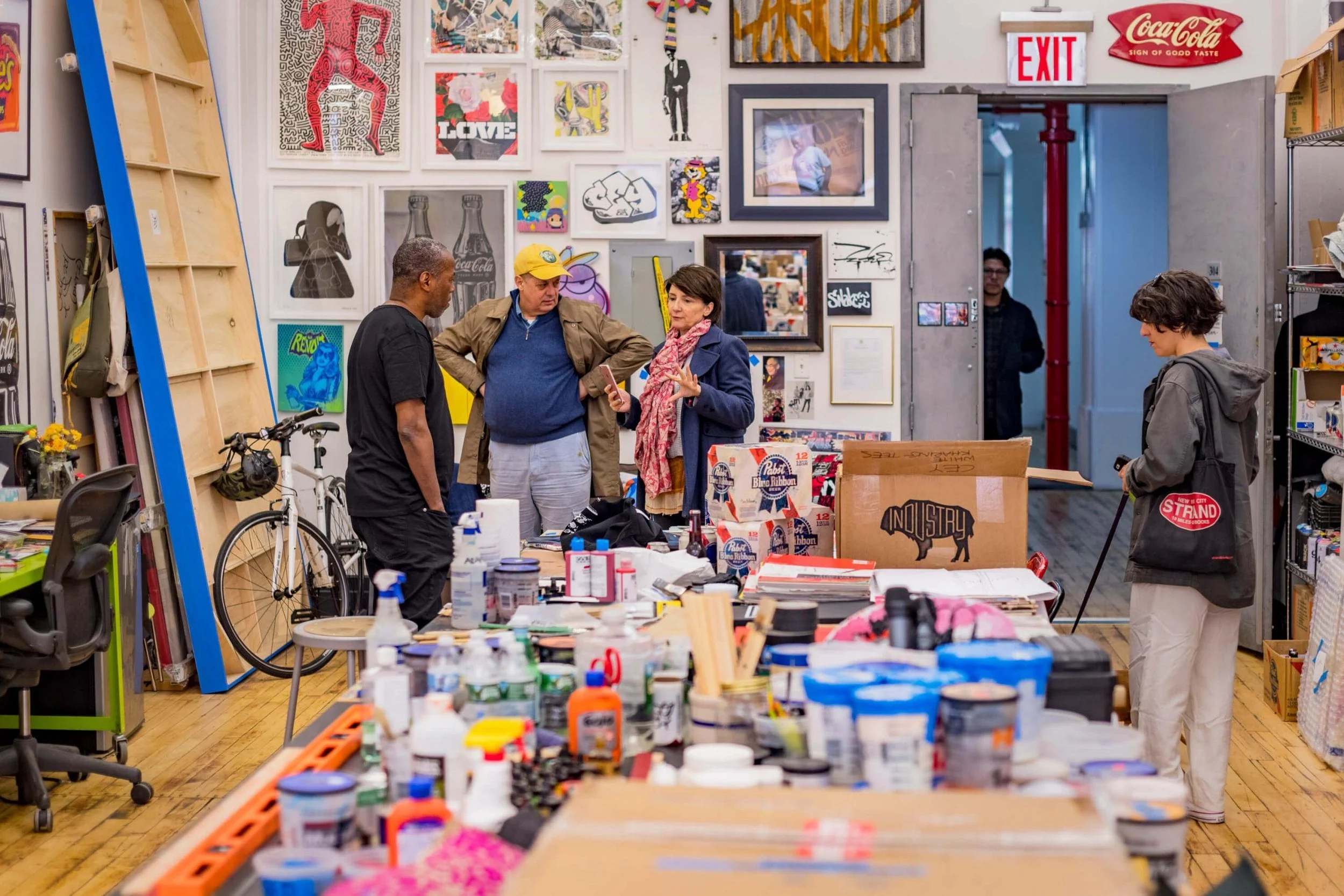
An artist studio event in DUMBO, Brooklyn, illustrating how independent creative spaces provide opportunities for artists to present their work and develop direct relationships with potential collectors.
Will Galleries Become Optional?
The growth of independent models does not necessarily indicate the decline of commercial galleries as cultural institutions.
Galleries continue to provide specialist expertise, collector access, curatorial development and financial support that many artists cannot readily reproduce.
Indeed, market research suggests that their position remains substantial.
Art fairs accounted for 35 per cent of dealer turnover in 2025, according to the Art Basel and UBS Art Market Report 2026, demonstrating the continuing importance of established exhibition and sales networks.
At the same time, evolving relationships between galleries and artists suggest that representation is becoming more flexible.
Co-representation, project-specific collaboration and geographically limited partnerships allow artists to work with multiple organisations or retain direct control over selected activities.
Such arrangements may become increasingly attractive as the boundaries between physical exhibitions, digital commerce and private collecting continue to change.
The most consequential development may therefore be a shift in negotiating power.
Artists capable of building independent audiences and maintaining direct collector relationships may approach galleries as potential partners rather than indispensable gatekeepers.
For galleries, this creates an incentive to demonstrate value through expertise, institutional access and the quality of long-term career development.
The future relationship may become more collaborative, although the balance will continue to favour established artists with substantial resources and recognition.
The Risks of a Market Without Gatekeepers
The removal of traditional intermediaries can expand participation, but it also raises concerns about professional standards.
Galleries often perform functions that are not immediately visible to buyers, including documenting provenance, coordinating condition assessments and managing relationships with museums.
Independent artists may undertake these responsibilities themselves, but the quality of procedures can vary.
Collectors purchasing directly need reliable information concerning authenticity, ownership, edition sizes, conservation requirements and the terms of sale.
The absence of a gallery does not necessarily increase risk, provided these matters are handled professionally.
Equally, direct communication between buyer and artist does not automatically guarantee transparency.
The broader market benefits when independent businesses adopt rigorous documentation and contractual practices.
Artists also face the challenge of developing reputations without relying exclusively on self-promotion.
Critical independence, curatorial evaluation and scholarly engagement remain important mechanisms through which artistic significance can be examined.
A market governed entirely by audience size and direct purchasing activity would risk replacing one hierarchy with another.
The objective should not be to eliminate expertise, but to expand the ways in which artists can access it.
The Future of Artistic Autonomy
The next phase of independent artistic practice is likely to involve a wider range of commercial structures rather than a single alternative to traditional representation.
Some artists will continue to operate entirely through direct sales and private commissions.
Others will combine independent exhibitions with selective gallery partnerships, digital platforms and institutional projects.
The choices available will depend on artistic medium, production costs, geographic location and the financial circumstances of individual practices.
Economic conditions may also shape the attractiveness of independence.
Periods of weak demand can make direct access to collectors especially valuable, but they can also expose artists to financial risks that established galleries might otherwise help absorb.
Technology may reduce certain administrative barriers while creating new requirements for digital expertise and audience management.
The critical issue is whether these developments provide artists with meaningful choices about how their work circulates.
Independence is most valuable when it allows artists to make decisions consistent with their artistic objectives, rather than requiring them to adopt entrepreneurial roles simply to remain financially viable.
The Right to Define Success
The increasing willingness of artists to operate outside conventional market structures represents a significant challenge to established assumptions about professional legitimacy.
Gallery representation remains valuable, but it is no longer the only conceivable route to sustained collector relationships, public visibility or commercial achievement.
Artists can now develop audiences independently, negotiate directly with buyers and establish business models tailored to the nature of their practices.
Yet autonomy does not eliminate the need for expertise, financial discipline or long-term reputation management.
The experience of artists such as Cj Hendry demonstrates the possibilities of self-directed commercial development, while the extraordinary precedent of Damien Hirst's 2008 auction illustrates both the opportunities and the risks associated with challenging established distribution systems.
The most important change may not be the disappearance of intermediaries but the weakening of the assumption that artistic success must be validated through one particular commercial structure.
The capacity to decline representation, refuse an unsuitable transaction or pursue a different relationship with collectors is itself a form of professional power.
For artists, meaningful independence involves the ability to determine how work is produced, presented, priced and preserved.
For collectors, it creates opportunities to engage more directly with artistic ideas while assuming greater responsibility for evaluating the conditions of acquisition.
For galleries, it reinforces the importance of offering services whose value extends beyond access to buyers.
Ultimately, the future art market is unlikely to be defined by a simple contest between independent artists and established institutions.
Its development will depend on whether multiple commercial models can coexist while supporting artistic ambition, professional accountability and sustainable careers.
The power of rejection lies not in refusing the art market altogether, but in challenging the proposition that participation in its traditional institutions is the only legitimate measure of success.