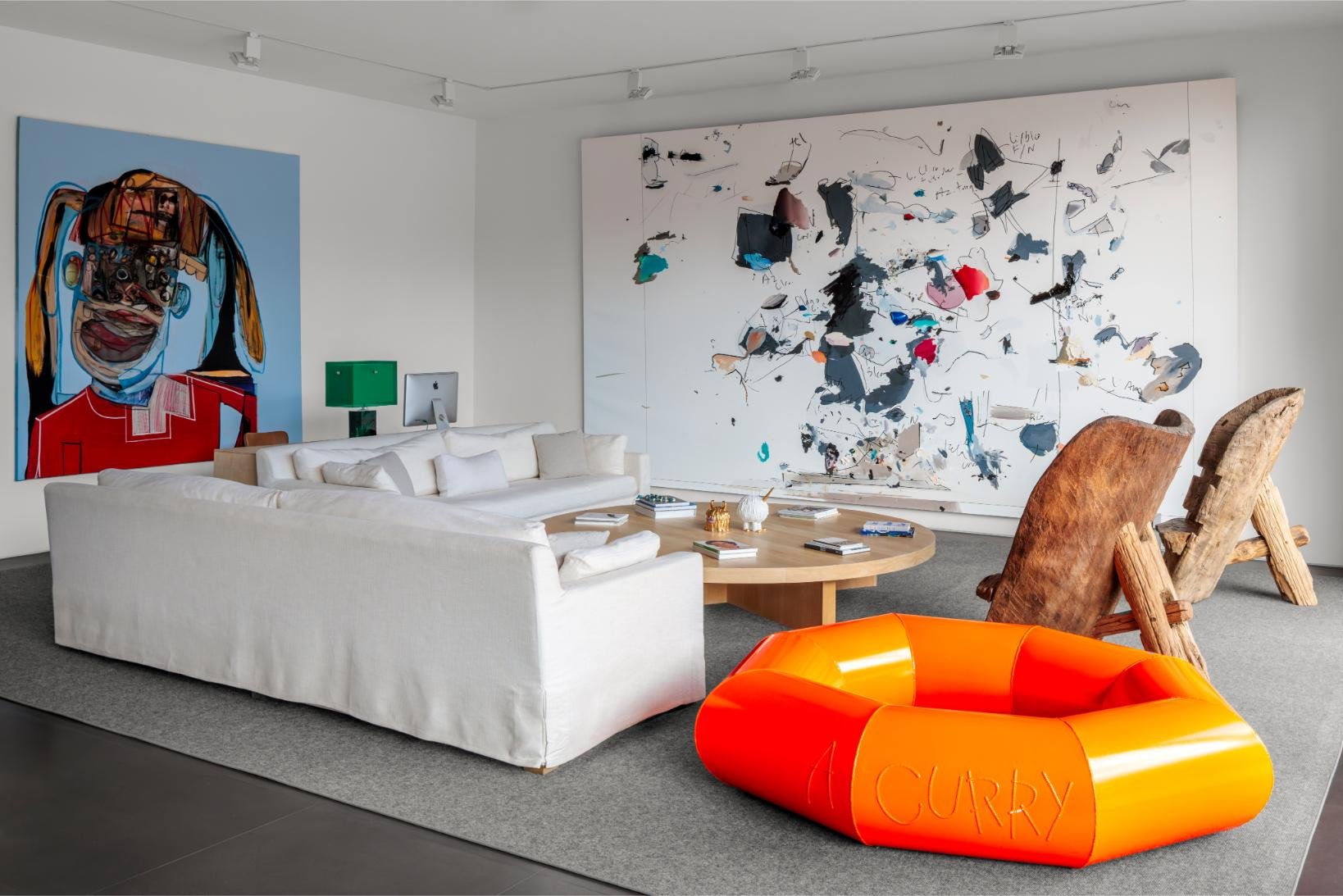
Beyond investment returns and aesthetic appreciation, art collecting is shaped by powerful psychological forces. Scarcity, emotional attachment, social recognition and the pursuit of cultural distinction influence not only what collectors acquire, but why the desire for certain artworks can become more compelling precisely because they remain beyond reach.
The most coveted artwork in a collection is often the one that has not yet been acquired. Its importance may have little to do with the price a collector is prepared to pay. Instead, desire can intensify through uncertainty, restricted availability or the knowledge that another person possesses something that cannot easily be replaced.
This paradox reveals an essential characteristic of the international art market. Although artworks are traded through galleries, auctions and private negotiations, the forces determining their desirability extend well beyond conventional economic calculations.
Art collecting occupies an unusual position between cultural appreciation, personal identity and social distinction. An acquisition can represent an intellectual commitment, an emotional connection, an expression of financial achievement or the fulfilment of an ambition developed over many years. Frequently, these motivations coexist.
Recent research suggests that rarity remains especially influential. The Art Basel and UBS Survey of Global Collecting 2026 found that 43% of surveyed high-net-worth collectors considered uniqueness and rarity the most important aspects of owning art, ahead of expert recognition and admiration within collecting circles.
Understanding the psychology behind these preferences provides insight into one of the art market's central questions: why does ownership sometimes become more desirable than access to the artwork itself?
The Psychological Value of Scarcity
Scarcity has long occupied a central position in economic theory. Objects become more valuable when demand exceeds supply, but scarcity also influences human perception independently of measurable financial worth.
In a widely cited 1975 experiment, psychologists Stephen Worchel, Jerry Lee and Akanbi Adewole investigated how the perceived availability of ordinary products affected their desirability. Participants generally evaluated scarce cookies more favourably than abundant ones, particularly when scarcity appeared to result from strong demand.
Although the experiment concerned commonplace consumer goods, its findings help explain a broader psychological mechanism relevant to collecting: people may interpret limited availability as evidence that an object deserves greater attention.
Art possesses a distinctive relationship with this principle because many works are genuinely irreplaceable. An original painting cannot simply be reproduced without altering its status as an authentic object created by a particular artist.
Yet scarcity alone does not establish artistic or commercial value.
An artwork may be unique while attracting little collector interest. Conversely, an artist producing editions or multiples may command substantial prices when the works possess established cultural importance and sustained demand.
The decisive factor is therefore not scarcity in isolation, but scarcity combined with perceived significance.
This interaction becomes especially visible within the primary market. Established galleries may allocate desirable works to collectors with whom they have longstanding relationships. Waiting lists, restricted availability and selective placements can strengthen the perception that acquiring a particular artwork represents access to something beyond ordinary commercial exchange.
Such arrangements may reflect legitimate efforts to protect an artist's career and place works in suitable collections. Nevertheless, restricted access can also heighten the psychological appeal of ownership.
The inability to purchase an artwork immediately may become part of the reason a collector wants it.

Collectors and art professionals at Art Basel, where exclusivity, cultural recognition and access to sought-after artworks influence purchasing decisions.
The Desire to Possess and the Construction of Identity
The psychological significance of ownership extends beyond the pleasure derived from looking at art.
In his influential 1988 study, Possessions and the Extended Self, consumer researcher Russell W. Belk argued that material possessions contribute to the construction and expression of personal identity.
Within this framework, collecting is not simply the accumulation of desirable objects. It can become a means through which individuals define themselves and communicate their values, memories and aspirations.
Art offers particularly rich possibilities for this process.
A collector devoted to a particular artistic movement may regard the collection as evidence of intellectual commitment. Someone acquiring works by artists from a particular region may be expressing a connection to cultural heritage. Others may collect around themes that reflect their personal histories, philosophical interests or social experiences.
Over time, individual acquisitions can develop into a coherent narrative.
The collection becomes more than the sum of its objects. It represents a set of choices through which the owner constructs a personal relationship with artistic history.
This helps explain why two collectors with comparable financial resources may pursue entirely different works.
A painting that carries profound significance for one individual may have little emotional appeal to another, even when its market valuation is widely recognised.
The relationship between collecting and identity also helps explain resistance to selling.
An artwork acquired during a meaningful period of life may become associated with memories or achievements that have no direct equivalent in the market. Its financial value can consequently diverge from the owner's subjective valuation.
For some collectors, parting with a work may feel less like disposing of an asset than relinquishing something connected to their sense of self.
Why Ownership Changes Perceived Value
Behavioural economics offers another explanation for the intensity of attachment to privately owned artworks.
The endowment effect describes the tendency for individuals to value something more highly once it becomes their possession.
In a landmark 1990 study published in the Journal of Political Economy, Daniel Kahneman, Jack L. Knetsch and Richard H. Thaler demonstrated that participants often demanded considerably more money to surrender objects they owned than they were willing to pay to acquire equivalent objects.
The research suggests that ownership can influence valuation independently of an object's objective characteristics.
This mechanism has particular relevance to the art market.
An artwork may be purchased at a price consistent with prevailing market conditions, yet subsequently acquire greater personal significance through daily familiarity, emotional association or its relationship with other works in a collection.
When the owner considers selling, these subjective attachments may contribute to a valuation that prospective buyers do not share.
This does not mean that collectors are necessarily irrational.
Ownership may generate genuine personal benefits that cannot be captured by market prices. A work displayed in a private home can provide aesthetic pleasure, intellectual stimulation and continuity over many years.
However, the distinction between subjective and market value becomes important when collectors make financial decisions.
An owner's reluctance to sell may partly reflect attachment rather than evidence that the artwork has appreciated.
The art market consequently operates through two overlapping systems of value: the price at which an object can change hands and the personal significance attached to retaining it.
Confusing these systems can produce unrealistic expectations, particularly during periods of declining demand.
Status, Recognition and the Social Meaning of Art
The relationship between collecting and social status has a long intellectual history.
In The Theory of the Leisure Class, published in 1899, economist and sociologist Thorstein Veblen examined how the ownership and display of expensive goods could communicate economic position.
Art collecting can serve such a function because culturally significant artworks combine financial value with symbolic distinction.
An important painting may demonstrate wealth, but it can also signal education, aesthetic judgement and familiarity with influential cultural institutions.
These characteristics make art different from many other luxury purchases.
The prestige associated with ownership may depend not simply on expenditure, but on whether the collector is perceived to possess discernment.
A relatively modest acquisition by an overlooked artist may communicate greater specialist knowledge within certain circles than a far more expensive purchase of an internationally recognised name.
The distinction between financial power and cultural competence is therefore central to the social psychology of collecting.
Recent evidence also challenges the assumption that collectors primarily seek public recognition.
The 2026 Art Basel and UBS survey, based on 3,100 high-net-worth collectors across ten markets, found that 64% preferred to keep their ownership private within their household or a restricted circle. Only 10% sought broad public recognition as collectors.
Among those lending works to museums, 30% preferred complete anonymity, while another 47% favoured discreet acknowledgement.
These findings complicate a conventional interpretation of collecting as conspicuous consumption.
Prestige may be communicated through membership of a highly selective community rather than public visibility.
Private viewings, specialist relationships and access to restricted opportunities can themselves become forms of cultural distinction.
In this environment, being recognised by a small group of knowledgeable collectors may carry greater significance than widespread publicity.
Exclusivity can therefore operate through controlled visibility as much as through conspicuous display.

Collectors and art professionals at Art Basel, where exclusivity, cultural recognition and access to sought-after artworks influence purchasing decisions.
Collecting as a Search for Control and Completion
The psychological appeal of collecting also arises from the structure it gives to personal interests.
A study published in the Journal of Consumer Research in 2025, Seeking Structure in Collections: Desire for Control Motivates Engagement in Collecting, examined how the desire for control encourages collecting behaviour.
Across six studies, researchers found evidence that acquiring objects belonging to an existing collection can provide a sense of structure and coherence.
The implications for art collecting are substantial.
A collection organised around a particular period, movement or artist provides a framework through which acquisitions become interconnected.
Each new work can strengthen the relationships among existing pieces, filling gaps or extending the intellectual scope of the collection.
This process helps explain why collectors sometimes pursue specific artworks with extraordinary determination.
The missing work may possess significance not only as an independent object, but as an essential component of a larger project.
An early painting may illuminate the development of an artist already extensively represented in a collection. A rare drawing may provide a connection between two phases of a career. A work from a previously unrepresented movement may complete a historical narrative.
The psychological reward lies partly in the creation of coherence.
However, the idea of completion can also become elusive.
As collections expand, new relationships emerge, revealing additional gaps and possibilities. What initially appeared to be a finite project may develop into a continuing search.
The desire to complete a collection can consequently become one of the forces ensuring that collecting rarely feels entirely complete.
Emotional Attachment and the Experience of Discovery
The market's emphasis on prices can obscure the emotional significance of discovering an artwork.
For many collectors, the acquisition process begins with an encounter that produces curiosity, recognition or an unexpected personal response.
Such experiences are difficult to quantify, yet they can influence purchasing decisions more powerfully than financial expectations.
A systematic review published in the International Journal of Consumer Studies examined 51 academic articles on collecting behaviour and identified several recurring motivations, including achievement, social belonging, personal memory, legacy and financial value.
The findings demonstrate that collecting cannot be adequately explained through a single psychological model.
Art collecting may provide access to communities of shared interest, but it can also be an intensely private activity.
The pleasure of researching an artist, understanding a body of work and developing specialist knowledge can become as significant as the acquisition itself.
This helps explain why collectors frequently devote substantial time to exhibitions, archives, artist studios and scholarly publications.
The pursuit of knowledge forms part of the experience of collecting.
Yet emotional engagement can also make buyers vulnerable to decisions shaped by urgency or excitement.
The fear of losing an opportunity may encourage a collector to pay more than originally intended. The emotional intensity of bidding can shift attention away from longer-term financial considerations.
Understanding these pressures does not require dismissing emotional responses as irrational. Aesthetic experience is inherently subjective, and emotional connection is a legitimate reason to acquire art.
The challenge is recognising when personal conviction is being reinforced by external pressures that may not reflect lasting artistic significance.
The Commercial Power of Exclusivity
The art market operates through institutions that can both validate and intensify desire.
Galleries, museums, auction houses and influential collectors contribute to an artwork's perceived significance through exhibition, scholarship, acquisition and public recognition.
These mechanisms have genuine cultural functions.
A museum retrospective can deepen understanding of an artist's practice, while scholarly research can establish historical connections that were previously overlooked.
Nevertheless, institutional recognition may also influence commercial demand.
When an artist receives substantial critical attention, collectors may interpret that recognition as evidence of future importance. Limited availability can amplify the response, particularly when works are already held in prestigious collections.
The resulting market dynamic can become self-reinforcing.
Recognition attracts demand, demand raises prices, and higher prices generate further attention.
The problem emerges when price appreciation is mistaken for independent evidence of artistic importance.
During speculative periods, collectors may compete for works partly because other influential buyers appear determined to obtain them.
This produces a distinction between acquiring an artwork because it is personally or culturally meaningful and acquiring it because ownership has become socially desirable.
The two motivations can coexist, but they carry different risks.
An acquisition supported by enduring aesthetic engagement may continue to provide satisfaction even if prices decline.
A purchase motivated primarily by exclusivity or anticipated appreciation may lose much of its attraction when the market's attention moves elsewhere.
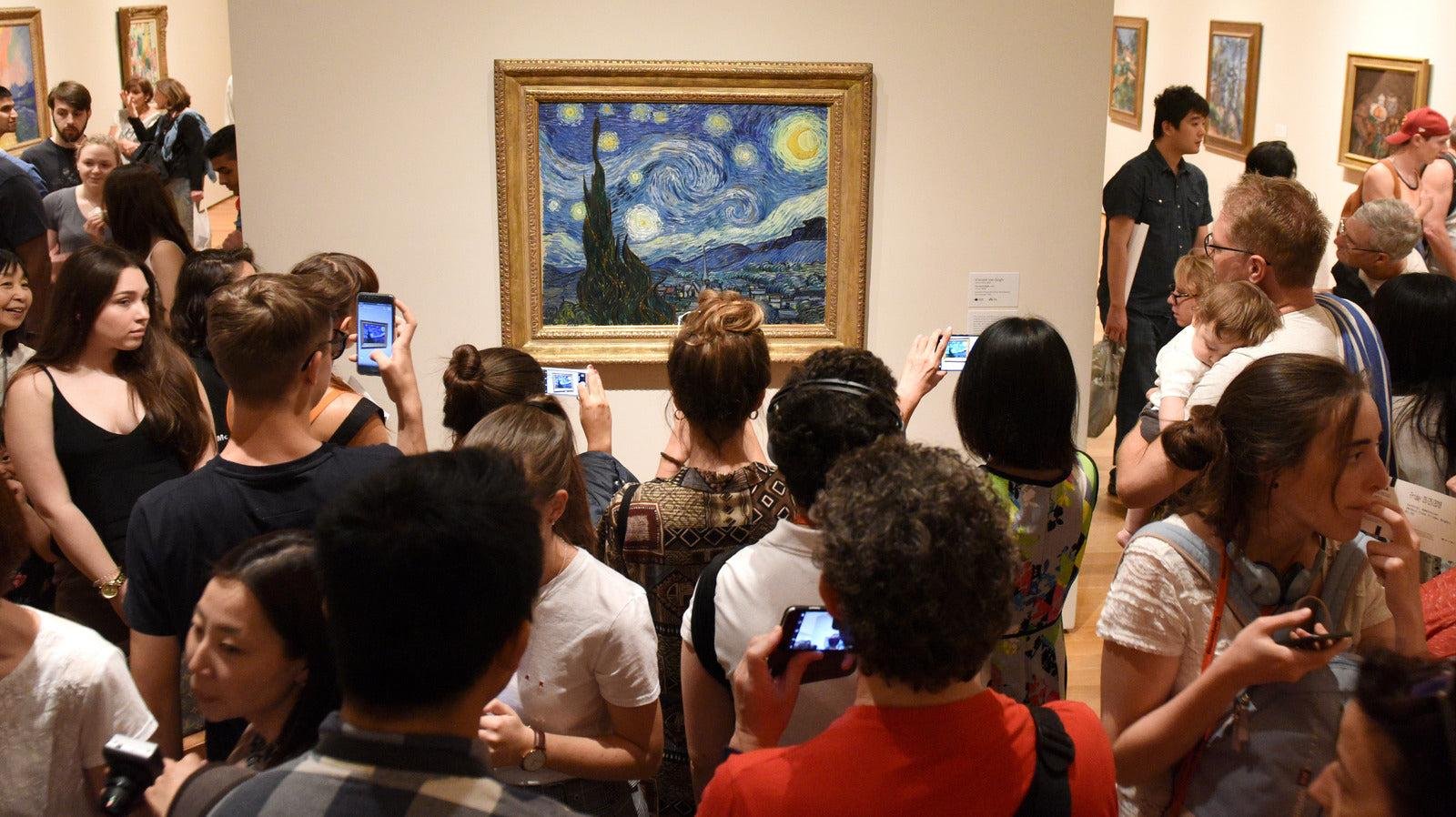
Visitors gather around Vincent van Gogh's The Starry Night at the Museum of Modern Art in New York, illustrating the powerful emotional and cultural appeal of celebrated artworks. Photograph: Joe Mabel.
A More Private, More Selective Collecting Culture
Recent collecting research suggests that psychological motivations are changing alongside the ways collectors obtain information.
The 2026 Art Basel and UBS survey found that 72% of respondents conducted moderate or significant independent research before purchasing art, compared with 62% in the preceding survey.
Among Generation Z collectors, the proportion reached 80%.
At the same time, 58% of respondents reported using digital resources for advice, while 22% used applications or artificial intelligence tools, up from 4% in 2024.
Greater access to information may allow collectors to investigate artistic careers and market histories independently.
Yet the availability of data does not necessarily diminish the emotional or social dimensions of collecting.
Indeed, the same survey found that uniqueness and rarity were particularly important among younger respondents, with 48% of Generation Z collectors identifying these qualities as a leading priority, compared with 38% of baby boomers.
These findings suggest that digital familiarity and the desire for singular objects are not contradictory.
As images become increasingly accessible through screens, the ownership of an authentic, physically distinctive artwork may acquire additional personal significance.
However, the survey describes a selected population of wealthy collectors rather than the entire international market. Its findings should therefore be interpreted as evidence of attitudes within that group, not universal psychological tendencies.
The broader implication is that collecting remains deeply connected to identity and distinction even as purchasing channels and research practices change.
Conclusion: The Value of What Remains Unattainable
The psychology of art collecting reveals a tension between the desire to experience beauty and the desire to possess it.
Artworks can be appreciated without being owned, yet ownership offers something additional: the opportunity to incorporate an object into a personal history, preserve an individual relationship with it and participate in the cultural narratives surrounding its significance.
Scarcity intensifies these possibilities because it places limits on access. Social recognition can reinforce desire, while emotional attachment gives possessions meanings that extend beyond their market prices.
None of these motivations is inherently superficial. Collecting can encourage scholarship, support living artists, preserve cultural heritage and create lasting connections between individuals and artistic ideas.
Nevertheless, the pursuit of ownership can also distort judgement when exclusivity becomes confused with significance or commercial attention is mistaken for artistic achievement.
Understanding these distinctions matters for collectors and for the institutions that shape the market.
The most enduring collections are not necessarily those assembled through the greatest financial expenditure. They are often those guided by intellectual curiosity, independent judgement and a sustained relationship with the works themselves.
Ultimately, the desire for art cannot be separated from the recognition that some objects will always remain beyond possession. The most meaningful expression of collecting may lie not in overcoming that limitation, but in developing the knowledge and sensitivity to appreciate artistic significance regardless of who holds the title of ownership.