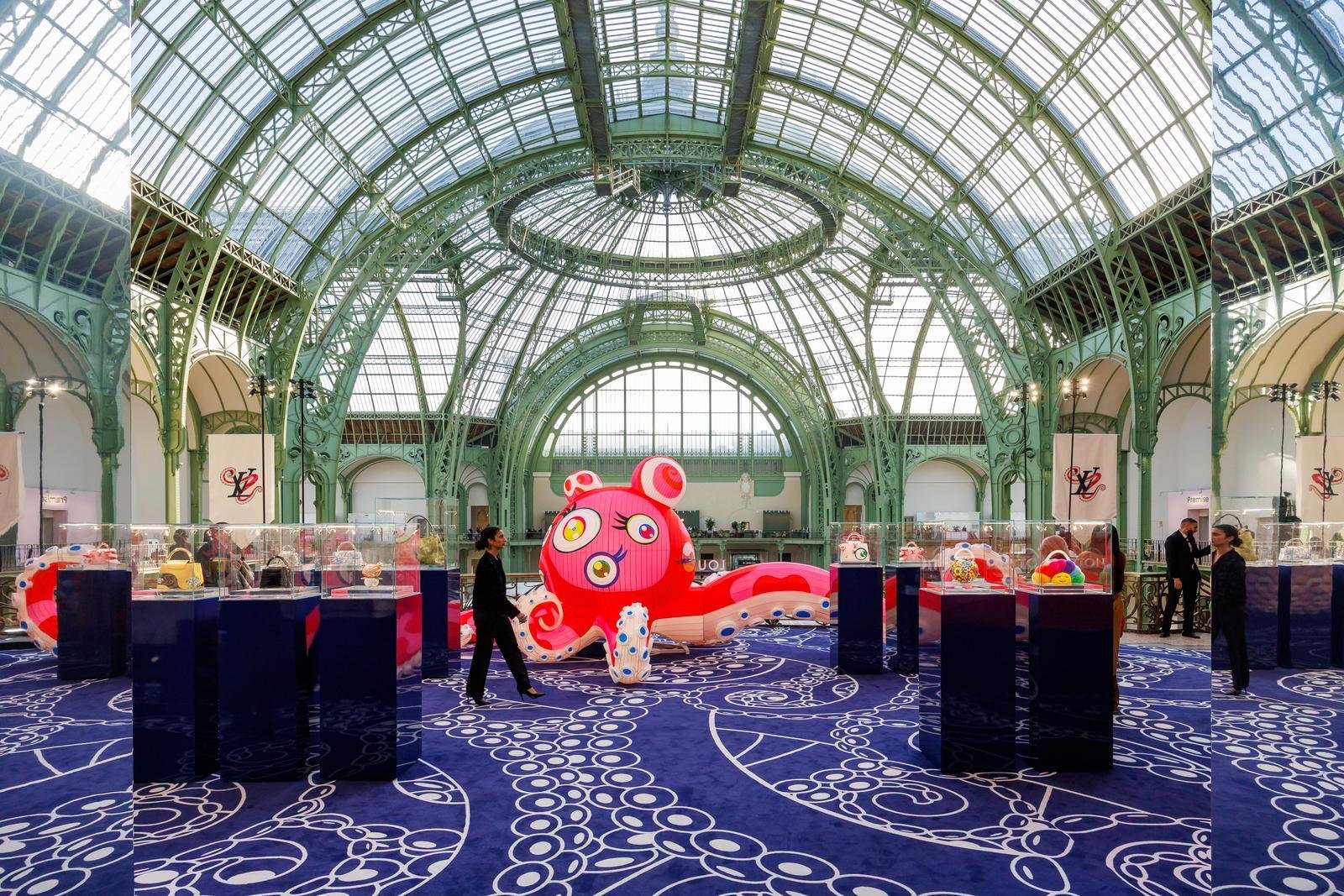
As direct sales, digital audiences and commercial partnerships create alternative routes to international recognition, contemporary artists are acquiring greater influence over how their work is presented, distributed and monetised. Yet the emergence of the artist as entrepreneur raises a fundamental question: can commercial independence strengthen artistic freedom without reducing creativity to the demands of a brand?
The traditional relationship between artist and market has rested on a division of responsibilities. Artists create works; galleries cultivate collectors; museums establish institutional recognition; and auction houses provide a secondary market through which financial value becomes publicly visible. Commercial success has generally depended on access to this network of intermediaries.
That structure remains influential, but it is no longer the only model available.
An increasing number of contemporary artists are developing businesses that extend beyond the production and sale of individual artworks. They manage intellectual property, establish independent distribution channels, collaborate with international brands and cultivate audiences capable of supporting several forms of creative activity.
The change is reflected in collecting behaviour. According to the Art Basel and UBS Survey of Global Collecting 2026, 69% of surveyed high-net-worth collectors had purchased directly from artists during the preceding year, an increase of six percentage points and more than double the proportion recorded in 2024. Artist-direct transactions accounted for 19% of respondents' expenditure, exceeding their spending through art fairs and auctions as separate channels.
These developments suggest a reconsideration of where commercial influence resides within the art economy. Artists increasingly have opportunities to build relationships with audiences and buyers without relying exclusively on conventional representation.
Yet greater commercial autonomy brings additional responsibilities. The artist who becomes an entrepreneur must navigate production, pricing, marketing, copyright, contractual obligations and the increasingly complicated relationship between cultural recognition and consumer demand.
From Artistic Practice to Independent Enterprise
The idea of the entrepreneurial artist is not historically new. Artists have long operated studios, supervised assistants, accepted commissions and maintained relationships with patrons. Successful workshops during the Renaissance functioned as sophisticated enterprises, while twentieth-century artists developed new relationships with publishing, design, advertising and popular culture.
What distinguishes the contemporary model is the range of commercial channels now available to individual practitioners.
Digital platforms allow artists to introduce work to international audiences without securing representation from a prominent gallery. Direct commissions can establish relationships with collectors, while editions, licensing arrangements and collaborative products may provide additional revenue.
The financial rationale is significant.
An artist whose income depends entirely on original works must generate sufficient sales to support studio costs, materials, assistants and living expenses. Production may be time-consuming, while sales can be irregular.
A diversified business can distribute these risks across different activities.
Original artworks might remain the central artistic and commercial proposition, while editions make selected imagery accessible to a broader audience. Licensing can generate income from intellectual property without requiring the artist to produce every object individually.
However, diversification does not automatically create profitability.
The costs of administration, marketing, fulfilment, legal advice and production may absorb a substantial proportion of additional revenue. Licensing agreements can involve lengthy negotiations and impose restrictions on future commercial activity.
The entrepreneurial model therefore requires a distinction between generating turnover and establishing a financially sustainable practice.
For artists, the most consequential change is not necessarily the pursuit of larger audiences. It is the opportunity to determine how different forms of artistic production relate to one another.
Direct Relationships Are Changing the Economics of Collecting
The expansion of artist-direct sales provides some of the clearest evidence of structural change.
The 2026 Art Basel and UBS collecting survey found that 48% of respondents had purchased works from artists' studios, 40% had acquired commissioned works and 38% had bought through Instagram.
These findings were based on a survey of 3,100 high-net-worth collectors across ten markets. They should not be interpreted as representative of the entire art-buying population, but they demonstrate that direct relationships have become an important component of collecting among affluent buyers.
For artists, direct transactions offer several potential advantages.
They provide greater access to information about who is purchasing the work, how collectors respond to new developments and which aspects of the practice generate sustained interest.
A gallery may possess valuable knowledge about collectors, but the artist does not always participate directly in those relationships.
Independent sales can reduce this separation.
They may also enable artists to retain a larger proportion of the transaction price, although any financial advantage depends on the costs they assume.
Selling directly requires managing enquiries, documenting transactions, arranging payments, organising transportation and maintaining relationships after acquisition.
For collectors, direct access can provide opportunities to understand an artist's intentions and working methods.
Studio visits and commissions allow buyers to engage with the practice beyond the context of a commercial exhibition.
Nevertheless, the growth of direct sales should not be mistaken for the disappearance of galleries.
The same survey found that 87% of respondents had purchased through dealers during the preceding year, making them the most widely used sales channel. Dealers also accounted for the largest proportion of expenditure when direct gallery transactions and art fair purchases were combined.
The emerging market is therefore better understood as a hybrid system.
Artists may maintain gallery representation while developing independent audiences, collaborating with commercial partners or undertaking projects outside traditional exhibition structures.
The challenge lies in managing those channels without creating conflicts over pricing, representation or collector access.
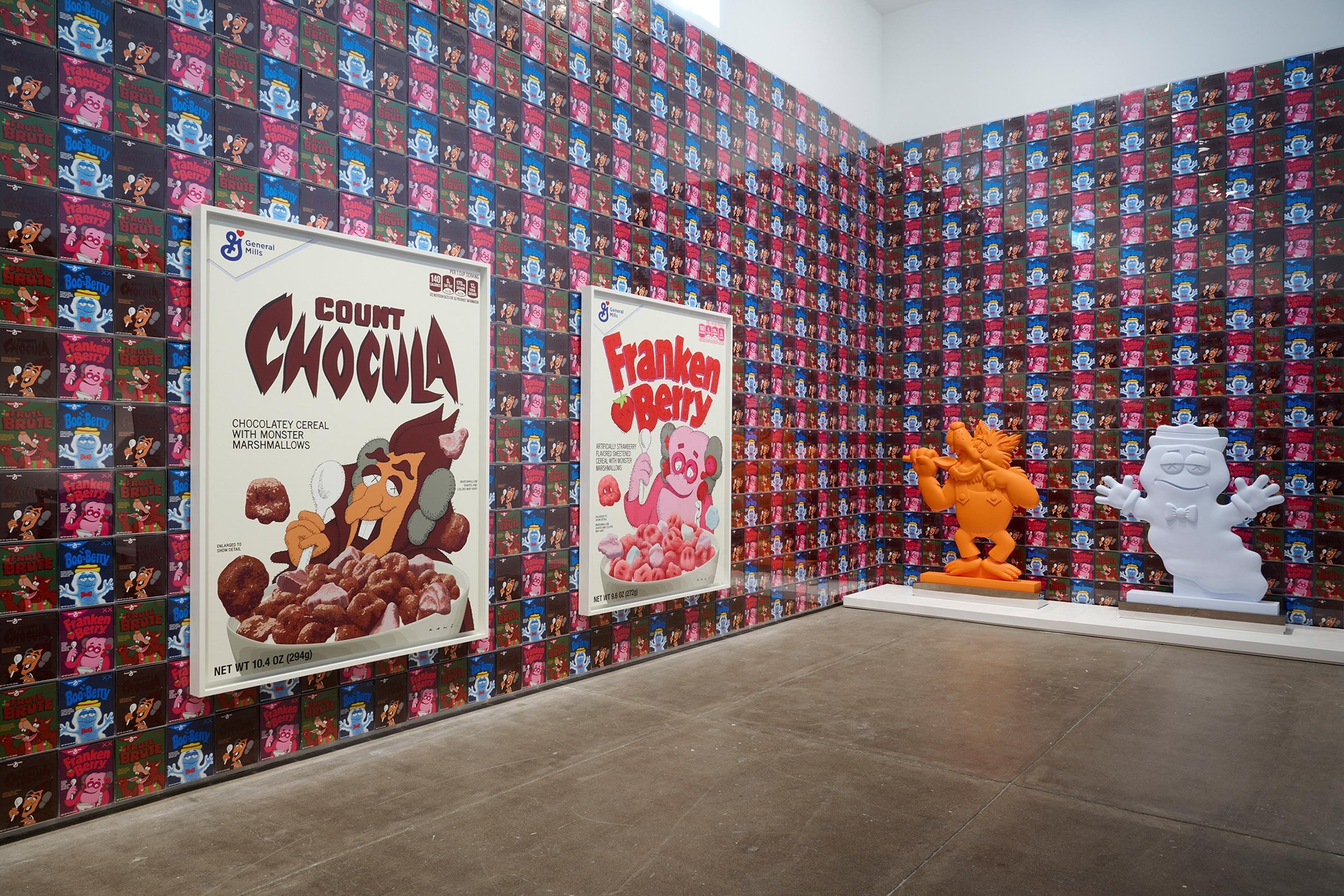
Installation view of KAWS + Warhol at The Andy Warhol Museum, Pittsburgh, 2024, exploring the relationship between artistic identity, popular culture and commercial imagery.
The Artist as a Global Cultural Brand
Few contemporary artists illustrate the commercial possibilities of a recognisable visual identity more clearly than Takashi Murakami.
His work draws on Japanese artistic traditions, popular culture, commercial imagery and the visual language associated with his concept of Superflat.
The recognisability of his flowers and characters has allowed his imagery to circulate across painting, sculpture, fashion and consumer products.
His longstanding collaboration with Louis Vuitton demonstrates how an artistic vocabulary can acquire significance across several markets.
Originally launched in 2003, the relationship was revisited through a substantial re-edition collection in 2025.
The collection included more than 200 products, extending Murakami's imagery across handbags, accessories, footwear and other luxury goods.
Later that year, Louis Vuitton introduced the Artycapucines VII collection at Art Basel Paris, featuring eleven creations developed in collaboration with the artist and presented alongside a monumental installation at the Grand Palais.
The significance of these partnerships extends beyond licensing revenue, whose detailed commercial terms are not publicly disclosed.
They demonstrate how an established artistic identity can operate simultaneously within fine art and luxury consumption.
The collaboration provides a platform through which millions of consumers may encounter Murakami's imagery, while the artist retains a separate presence within galleries, museums and the secondary market.
Yet this model depends on unusually strong visual recognition and substantial commercial infrastructure.
It cannot be assumed that similar partnerships would benefit artists whose practices are less suited to reproduction or whose artistic objectives depend on material experimentation that resists translation into products.
The central economic lesson is not that every artist should become a luxury brand.
It is that intellectual property can acquire commercial value beyond the original object when an artist develops a sufficiently distinctive and recognisable creative language.
KAWS and the Commercial Value of Accessibility
The career of KAWS offers another model in which artistic recognition and consumer engagement develop across overlapping markets.
His practice encompasses painting, sculpture, collectible objects, design and collaborations with commercial companies.
The recognisable visual characteristics of his work have enabled participation in markets that differ substantially in price and accessibility.
In September 2025, UNIQLO announced that KAWS had become its first Artist in Residence, extending a longstanding relationship with the Japanese retailer.
The appointment included involvement in international art initiatives, collaborations with museum partners and the development of clothing collections.
The arrangement illustrates how an artist can become more than an occasional provider of imagery for a commercial product.
It positions creative identity as part of a continuing relationship between a consumer company, cultural institutions and international audiences.
Such collaborations challenge the traditional separation between fine art and mass-market products.
An artwork may possess a high market valuation because it is rare, while a commercially produced object incorporating related imagery can reach a much larger audience.
The two markets do not necessarily compete directly. They may serve different forms of engagement.
However, accessibility introduces a strategic tension.
Extensive commercial distribution can increase recognition, but it may also affect perceptions of exclusivity.
For artists whose original works command substantial prices, maintaining distinctions between unique objects, limited editions and mass-produced merchandise becomes an important aspect of market management.
Clear edition information, transparent production standards and consistent control over imagery can help preserve these distinctions.
The financial effects are not always predictable. Increased public recognition does not necessarily produce corresponding increases in original artwork prices.
Brand visibility and artistic reputation can reinforce one another, but they remain different forms of value.
Editions, Publishing and New Models of Distribution
Commercial entrepreneurship need not depend on partnerships with fashion companies.
For many artists, editions and publishing offer more direct extensions of studio practice.
Prints, photographs, artist books and other reproducible formats can provide opportunities to reach collectors who may be unable to acquire unique works.
The commercial advantages depend on production costs, edition size, pricing and distribution.
An edition can generate additional income from an established image or artistic project, while a carefully managed programme may introduce new audiences to an artist's wider practice.
HENI offers an example of a specialist business operating across publishing, editions and art distribution.
Its editions programme works with artists, estates and institutions to produce artworks in different formats, including prints, tapestries and other technically complex objects.
The organisation has collaborated with artists including Damien Hirst and Shepard Fairey, combining specialist production with direct online distribution.
The model demonstrates how artists can participate in commercial structures that extend beyond conventional gallery exhibitions.
Nevertheless, editions require careful management.
Collectors need reliable information concerning authenticity, production methods, edition sizes and the availability of related works.
An artist who repeatedly releases similar imagery in multiple formats may generate short-term revenue while creating uncertainty about scarcity.
Conversely, excessively restrictive pricing or limited access can prevent a programme from reaching the audiences it was intended to serve.
The most sustainable approach is likely to depend on a coherent relationship between the edition and the artist's broader practice.
Commercial expansion should clarify the different forms through which work can be experienced, rather than obscure their distinctions.
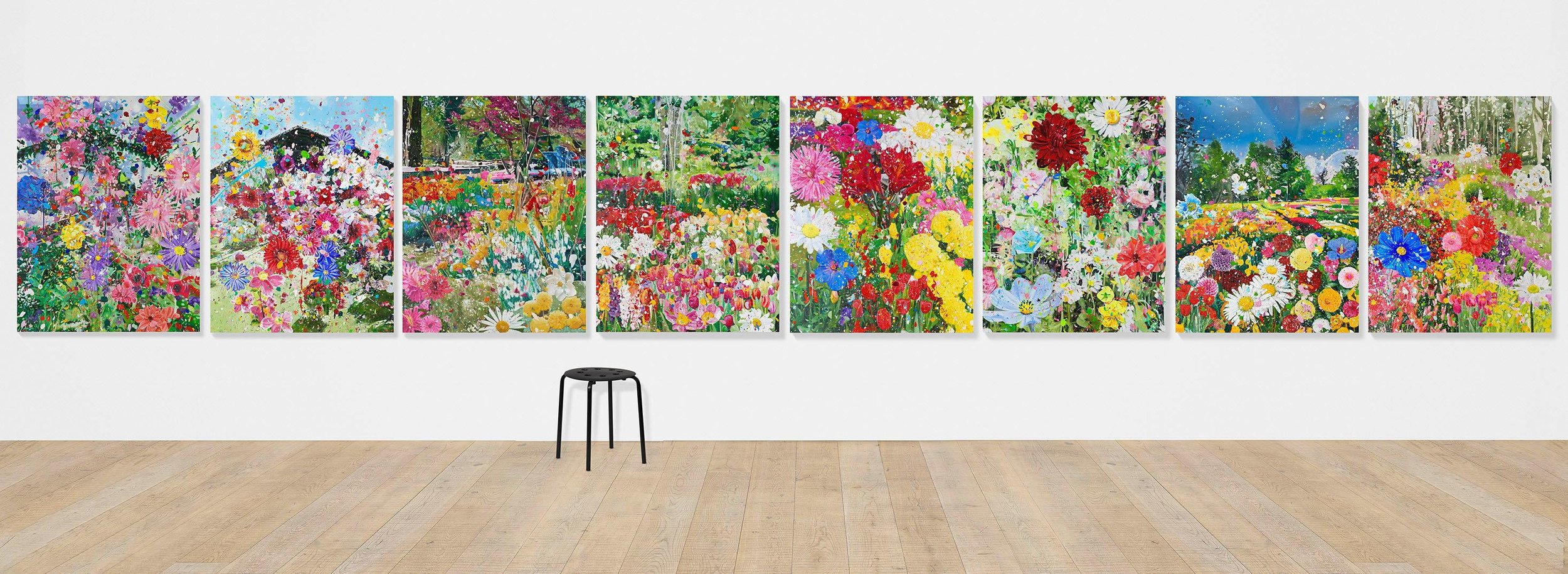
Damien Hirst's The Secrets print series, presented by HENI Editions, illustrates how limited-edition artworks extend artistic production into alternative commercial channels.
Digital Audiences and the Limits of Visibility
Social media has changed the economics of artistic discovery by reducing the cost of reaching potential audiences.
Artists can document works in progress, communicate directly with collectors and present exhibitions to individuals who may never visit their studios.
These platforms offer considerable opportunities, particularly for artists working outside established cultural centres.
A practitioner based far from New York, London or Paris can develop an international audience without first securing access to those cities' gallery networks.
Yet digital visibility creates its own complications.
The number of followers an artist attracts does not necessarily indicate purchasing power, sustained collector interest or institutional recognition.
Engagement statistics may reward immediacy and repetition rather than the qualities that support a substantial artistic career.
An artist can attract considerable attention without developing a commercially sustainable practice.
The wider market also demonstrates that digital activity has not replaced physical encounters.
The Art Basel and UBS Global Art Market Report 2026 found that online art sales declined to approximately $9.2 billion in 2025, representing 15% of the international market and the lowest annual total since 2019.
Within the dealer sector, online sales accounted for 16% of turnover, as higher-value transactions increasingly returned to in-person channels.
These figures do not contradict the expansion of artist-direct sales.
A transaction may begin through Instagram and conclude following a studio visit or private discussion. Online discovery and online-only purchasing are not equivalent.
Indeed, the 2026 collecting survey found that 72% of respondents conducted moderate or significant independent research before buying art, up from 62% in the previous survey.
The growing importance of research suggests that digital platforms can support informed discovery even when final purchasing decisions depend on personal relationships.
For entrepreneurial artists, the strongest digital strategy may therefore involve building meaningful, direct connections rather than maximising public exposure.
An engaged audience of collectors and curators can be more valuable to a long-term career than an extensive following with limited commitment to the work.
Building Audiences Without Reducing Art to Commerce
The expansion of artistic enterprise also includes initiatives in which audience development is connected to participation rather than product sales.
French artist JR provides a distinctive example.
His Inside Out Project, launched in 2011, invites communities to create public installations using large-scale photographic portraits.
According to the project's official documentation, more than 500,000 people across 152 countries and territories have participated, with over 2,500 actions organised internationally.
The initiative is not equivalent to a conventional licensing or merchandise business.
Its significance lies in the way an artistic practice can develop an international organisational structure, engage participants and establish a recognisable identity beyond the gallery system.
JR's activities also extend to exhibitions, installations and other artistic projects.
His career illustrates that an entrepreneurial approach can involve building opportunities for participation and public engagement rather than exclusively developing new products.
This distinction is important.
The term artist-entrepreneur can imply that commercial expansion is the principal measure of success.
In reality, business structures may serve artistic objectives that are not primarily financial.
An independent organisation can provide the resources required to undertake ambitious public projects, manage international collaborations or maintain control over an artist's intellectual property.
The purpose of entrepreneurship is therefore not necessarily to maximise the commercial exploitation of an artistic identity.
It may instead be to secure the resources and autonomy necessary for a particular practice to develop.
The Risks of Becoming a Brand
The entrepreneurial model creates opportunities for independence, but it can also introduce vulnerabilities that are less visible than the advantages.
Commercial partnerships may require artists to make decisions about how their imagery is used, reproduced and associated with other organisations.
Licensing agreements can specify territories, product categories, exclusivity periods and approval rights.
Such terms can affect an artist's freedom to enter future agreements or develop related projects.
There is also a risk of excessive dependence on a particular platform or commercial partner.
An artist whose sales rely heavily on social media may become vulnerable to changes in algorithms, advertising costs or account access.
Those dependent on branded collaborations may face financial uncertainty when partnerships conclude.
Similarly, expanding production requires capital and professional management.
Inventory, employees, insurance, manufacturing, logistics and intellectual property protection can create substantial fixed costs.
These obligations may become particularly burdensome when market demand weakens.
An artistic business that appears successful through revenue growth may nevertheless experience declining profitability.
The recent performance of the wider gallery sector illustrates the importance of financial discipline.
The 2026 Art Basel and UBS report found that dealer operating costs increased by an estimated 5% in 2025, exceeding the sector's 2% sales growth.
The pressure demonstrates that even established commercial intermediaries face difficulties balancing expansion and profitability.
Artists undertaking equivalent commercial responsibilities should not assume that retaining more control necessarily means retaining more profit.
The strongest entrepreneurial structures require realistic financial planning alongside artistic ambition.
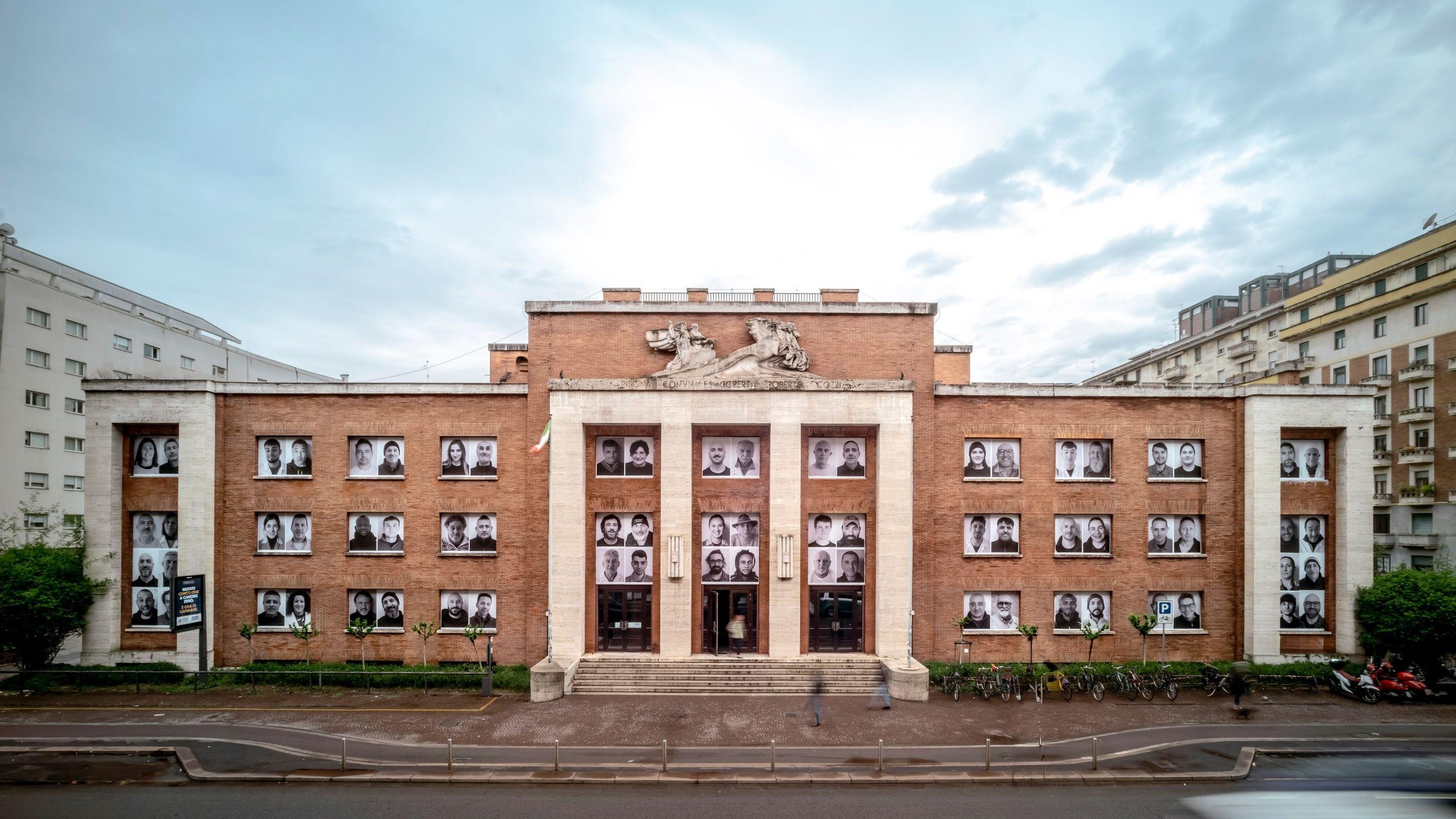
JR's Inside Out project at Piscina Cozzi, Milan, 2026, demonstrating how contemporary artists develop international audiences through public participation and large-scale artistic interventions.
The Future of Artistic Independence
The rise of the artist-entrepreneur is changing the relationship between creative production and commercial authority.
Artists now possess more opportunities to develop audiences, organise independent distribution and participate in international commercial partnerships.
Yet the evidence does not suggest that galleries, museums and specialist advisers are becoming irrelevant.
Institutional recognition continues to influence artistic reputations, while established galleries provide access to collectors, exhibitions and professional expertise that may be difficult to reproduce independently.
The more significant development is the emergence of flexible arrangements in which artists participate in several commercial and cultural systems simultaneously.
A contemporary artist may maintain gallery representation, sell selected works directly, collaborate with a design company and develop an independent publishing programme.
These activities can reinforce one another when they are organised around a coherent artistic practice.
The challenge is ensuring that commercial visibility does not become a substitute for creative development.
A distinctive brand can make an artist recognisable. It cannot independently establish the historical significance of the work.
As collecting habits and distribution channels continue to change, the artists best positioned to benefit may be those who understand the difference between reaching an audience and building an enduring career.
Conclusion: The Artist as Creator and Enterprise
The expanding commercial independence of contemporary artists represents an important change in the organisation of the international art market.
Direct sales, digital communication, licensing and collaborative production provide alternatives to a system in which access to collectors has traditionally depended heavily on established intermediaries.
For some artists, these opportunities can strengthen financial resilience and create greater control over how their work enters the world.
For others, they may introduce additional costs, contractual complications and pressures to maintain a recognisable public identity.
The distinction between artistic independence and commercial expansion is therefore essential.
Entrepreneurship becomes valuable when it supports the continuity and development of creative practice, rather than requiring artistic decisions to serve immediate market demand.
The most successful artistic enterprises are not necessarily those generating the greatest number of products or attracting the largest audiences. They are those capable of sustaining meaningful relationships between artistic integrity, commercial credibility and long-term cultural recognition.
The contemporary artist no longer needs to choose exclusively between the studio and the marketplace. The more difficult task is determining how one can sustain the other without allowing commercial success to define the limits of artistic possibility.