Interview with Fu Wenjun

Biography
Fu Wenjun (b. 1955, China) is a contemporary visual artist whose practice spans painting, mixed media, photography, sculpture, and installation. Trained at the Sichuan Fine Arts Institute, he has developed a distinctive visual language grounded in philosophical inquiry, and perception.
While working across multiple media, Fu’s recent practice focuses on mixed-media painting as a field for exploring time, memory, and inner awareness. His works are built through layered marks, textures, and tonal transitions that register the process of becoming rather than fixed representation. These painterly structures invite slow, contemplative viewing, transforming the act of seeing into a reflective experience.
Rather than depicting external reality, Fu’s paintings visualize states of mind such as stillness, impermanence, and quiet movement, offering a meditative counterpoint to today’s fast-paced, image-saturated culture.
Fu Wenjun has exhibited widely in museums and institutions in China and internationally, including the National Art Museum of China (Beijing), Guangdong Museum of Art (Guangzhou), Today Art Museum (Beijing), Tokyo Metropolitan Art Museum (Tokyo), the University of Hong Kong (Hong Kong), Museu Europeu de Arte Moderno (Barcelona), and the United Nations Headquarters in New York. His work has also been featured in major international exhibitions and biennales across Asia and Europe.
Your practice has moved across photography, digital art, installation, sculpture, and painting. Looking back across this development, which ideas have remained constant, and which have changed most significantly?
Although I have worked with photography, digital art, installation, sculpture, and now mixed-media painting, I have never thought of these as separate practices. For me, they are different languages for exploring the same fundamental questions: how we perceive the world, how memory and time shape experience, and how images can reveal realities beyond what is immediately visible.
From the very beginning, I have been interested less in representing the external world than in investigating the relationship between perception and consciousness. Whether I was working with photography or installation, I was always asking how an image might move beyond documentation to become a space for reflection. This concern has remained constant throughout my career.
What has changed most significantly is my understanding of the image itself. Earlier, I was deeply engaged with photography and digital technologies, exploring how they could expand the possibilities of visual language. Those works often reflected on history, culture, and the dialogue between Eastern and Western traditions. Over time, however, my attention gradually shifted from the construction of images to the experience of painting itself. I became increasingly interested in the material presence of pigment, paper, texture, and gesture—not simply as formal elements, but as traces of time and thought.
My recent mixed-media paintings are the result of this evolution. Rather than beginning with a photographic image, I build each work through successive layers of marks, washes, erasures, and accumulated surfaces. The painting develops through an open process in which intuition and contemplation are equally important. Instead of presenting a fixed image, I hope the work remains in a state of becoming, allowing viewers to experience uncertainty, stillness, and transformation.
In this sense, the change has not been from one medium to another, but from focusing on the image as representation to painting as an event of perception. The medium has evolved, yet the central pursuit has remained the same: to create a space where seeing becomes a way of thinking, and where the viewer can encounter both the world and themselves with renewed awareness.
What prompted your recent shift toward mixed-media painting on paper, and how has this medium altered the way you approach image-making, time, and artistic intuition?
My move toward mixed-media painting on paper was not a sudden change, but the result of a gradual evolution. Every medium offers different possibilities. Photography and digital art allowed me to question the nature of images and to explore history, culture, and perception. Over time, however, I found myself increasingly drawn to the physical process of making—to the dialogue between hand, material, and time.
Paper became especially important because it is both fragile and responsive. It absorbs water, pigment, and gesture in ways that cannot be fully controlled. Every layer leaves a trace, while each new layer partially conceals what came before. This accumulation reflects my understanding of time—not as a linear sequence, but as something sedimented, where memory, experience, and the present continuously interact.
This shift also changed the way I think about image-making. I no longer begin with a preconceived image that I want to realize. Instead, the image gradually emerges through the process itself. Marks, textures, washes, and erasures become conversations rather than decisions. I try to listen to what the material suggests instead of imposing a fixed outcome. In this sense, the painting is not something I execute; it is something I discover.
As a result, artistic intuition has become much more central to my practice. Intuition, however, is not spontaneity alone. It grows from years of observation, reflection, and technical experience. It is a form of awareness that allows me to respond to what is happening on the surface in each moment. I am interested in maintaining a balance between intention and openness, where control and uncertainty coexist.
Ultimately, mixed-media painting has given me a slower and more contemplative way of working. Rather than producing images that represent the world, I hope these works embody the experience of becoming itself—where time, material, and perception remain alive within the surface of the painting.
In works such as Echoes of Distant Mountains, Receding Mountain Light, and The Mountain Remains, landscape appears less as a literal place than as a psychological or philosophical space. What does the mountain represent within your current practice?
For me, the mountain is not a geographical subject but a way of thinking. It provides a space where perception, memory, and inner experience can unfold without being confined to narrative or representation.
Mountains have occupied a central place in Chinese art and philosophy for centuries. But I am less interested in continuing that tradition through recognizable landscapes than in engaging with the spirit behind it. In classical Chinese thought, mountains are places of contemplation, transformation, and dialogue between humanity and nature. I see them as dynamic rather than fixed—as processes rather than objects.
In works such as Echoes of Distant Mountains, Receding Mountain Light, and The Mountain Remains, the mountain gradually dissolves into washes of color, textures, and traces of gesture. Sometimes it seems to emerge; at other times it almost disappears. This instability is important because perception itself is never fixed. What we see is constantly shaped by memory, emotion, and the passing of time.
I am also interested in the mountain as a measure of time. A mountain appears enduring, yet it is continuously changing through weather, erosion, light, and the movement of seasons. Painting operates in a similar way. Every layer records a different moment, and the finished work contains the memory of its own making. The image is therefore less a depiction of a mountain than a sedimentation of time.
Ultimately, the mountain has become an open structure rather than a symbol with a single meaning. It allows viewers to enter the painting through their own experiences and perceptions. I hope the work offers not a destination to be understood, but a space in which looking becomes a quiet act of reflection.
Your recent paintings often balance fluid, atmospheric passages with concentrated areas of color, texture, or form. How do you build these surfaces, and what role do accident, control, layering, and erasure play in the process?
Every painting begins without a fixed image in mind. I usually start with washes of water, ink, or pigment that establish an atmosphere rather than a composition. From there, the surface gradually develops through repeated additions, removals, and revisions. I think of painting less as constructing an image than as allowing a visual field to emerge over time.
Layering is fundamental to this process. Each layer leaves a memory of its own making. Some marks remain visible, while others are partially concealed beneath subsequent washes or textures. Rather than covering the previous image completely, I prefer to let different moments coexist. In this way, the painting records its own history, much like memory itself, where nothing is entirely erased and nothing remains exactly the same.
Accident is also essential, but I do not regard it as something opposed to control. Water spreads unpredictably, pigments settle in unexpected ways, and the paper responds differently each time. These events introduce possibilities that I could never design in advance. My role is not to eliminate chance but to recognize when an unexpected result reveals a deeper visual or emotional resonance.
At the same time, control remains equally important. It is expressed not through rigid planning, but through judgment—knowing when to continue, when to stop, and when to remove something that has become too deliberate. Erasure, therefore, is not simply correction. It is another way of painting. By scraping, washing away, or obscuring certain passages, I create space for the image to breathe and for earlier layers to continue speaking through the surface.
Ultimately, I hope the painting retains a sense of openness. It should not appear completely resolved or closed. I want viewers to feel that the work is still unfolding, as if the image continues to form in the act of looking. For me, the surface is not merely where the painting exists—it is where time, material, intuition, and perception encounter one another.
Titles such as Lucid Illusion, Phantom Blossoms, Dream Illusion, and Life Is but a Dream suggest an interest in the instability of perception. How do dreams and memory influence the visual structure of these works?
Dreams and memory do not function as subjects in my paintings. Rather, they provide a way of understanding how perception itself operates. Neither dreams nor memories are fixed records of reality. They are fragmentary, fluid, and constantly reshaped by time, emotion, and experience. I am interested in bringing this quality into the structure of the painting itself.
Titles such as Lucid Illusion, Phantom Blossoms, Dream Illusion, and Life Is but a Dream draw inspiration from ideas deeply rooted in Eastern philosophy. They suggest that what we regard as stable reality is always changing and that appearance and essence cannot be completely separated. The paintings are not intended to illustrate dreams; instead, they invite viewers into a state of perception where certainty gradually gives way to openness and ambiguity.
Visually, this is reflected through layers of transparent washes, shifting colors, dissolving contours, and forms that seem to emerge only to disappear again. Some passages are clearly articulated, while others remain suspended between presence and absence. I want the image to feel as though it is continuously forming rather than already completed.
Memory plays a similar role. We do not remember the past as a single, intact image. Memories are accumulated, interrupted, forgotten, and reconstructed over time. My painting process mirrors this condition. Each layer preserves traces of earlier decisions, while subsequent gestures partially conceal or transform them. Nothing is completely erased, yet nothing remains exactly as it was.
Ultimately, I hope these paintings do not distinguish too sharply between reality and illusion, or between dreaming and waking. Instead, they suggest that perception itself is always in motion. The image becomes less a representation of the external world than a field of experience, where memory, imagination, and the present moment coexist and continue to unfold before the viewer.
Your work has long examined relationships between Eastern and Western culture. How does this intercultural inquiry manifest in your current paintings, particularly through composition, material, gesture, or approaches to abstraction?
My interest has never been in simply combining Eastern and Western visual elements. Rather, I am interested in creating a dialogue between different ways of thinking about painting. For me, cultural exchange is not achieved through recognizable symbols or stylistic quotations, but through the underlying logic of how an image is constructed and experienced.
Traditional Chinese painting has profoundly influenced my understanding of space. Instead of relying on a single, fixed perspective, I prefer compositions that remain open and fluid, allowing the eye to wander rather than directing it toward one dominant focal point. Empty space is equally important as painted space. It is not an absence, but an active field that invites imagination and contemplation.
At the same time, my engagement with Western modernism has encouraged me to think of painting as a material process. The physical qualities of pigment, texture, gesture, and the painting's surface are not simply vehicles for representation; they possess their own expressive presence. This awareness owes much to twentieth-century abstraction, where the act of painting itself became part of the work's meaning.
In my recent paintings, these two traditions are no longer separate influences but have become inseparable. The freedom of gesture is balanced by the discipline of restraint; expressive color coexists with the quiet atmosphere of ink; the physical surface carries both material weight and poetic resonance. Rather than choosing between representation and abstraction, or between East and West, I try to create paintings that remain open to multiple ways of seeing.
I also believe abstraction has different meanings in different cultural contexts. In much of Western modernism, abstraction often emerged through the reduction or liberation of form. In the Chinese tradition, however, painting has long sought to move beyond literal description toward the expression of qi (vital energy), rhythm, and inner spirit. My paintings are shaped by both perspectives. They are abstract not because they reject reality, but because they seek to reveal dimensions of experience that cannot be fully expressed through representation alone.
Ultimately, I hope these works do not present Eastern and Western culture as opposing identities. Instead, they suggest that painting itself can become a shared language—one in which different histories, philosophies, and visual traditions continue to encounter, challenge, and enrich one another.
Many recent titles evoke transition, including After the Light Passed, Currents at the Threshold, Shifting Boundaries, and The First Awakening. What draws you to moments of transformation, and how do you translate them into visual form?
I have always been more interested in transformation than in fixed states because I do not believe the world exists in a stable form. Everything is constantly becoming—light changes, seasons change, our perceptions change, and even our understanding of ourselves is never complete. I think painting can reveal this continuous process more profoundly than it can describe a static moment.
Titles such as After the Light Passed, Currents at the Threshold, Shifting Boundaries, and The First Awakening all refer to moments that cannot be precisely defined. They exist between one state and another—between appearance and disappearance, movement and stillness, certainty and uncertainty. These thresholds interest me because they are where new possibilities emerge.
Rather than illustrating transformation as a narrative event, I try to let transformation occur within the painting itself. Colors gradually merge and separate, pigments spread unpredictably through water, edges dissolve before becoming visible again, and successive layers leave traces of different moments. The image is never entirely fixed; it remains in a condition of continual emergence.
This approach is closely connected to my understanding of time. Time is not simply something that passes outside the painting—it is embedded within the painting's material structure. Every wash, every stain, every layer records a particular moment, while the interaction between these layers allows different moments to exist simultaneously. The painting therefore becomes a visible accumulation of time rather than a frozen instant.
I am also influenced by Eastern philosophy, particularly the idea that change is the fundamental condition of existence. Transformation is not an exception to stability; it is the natural state of all things. Painting, for me, is not about capturing reality at a single moment, but about making this continuous process of becoming perceptible.
Ultimately, I hope viewers do not encounter these works as finished images with fixed meanings. Instead, I hope they experience them as open spaces in which perception continues to shift. The painting is complete as an object, but never complete as an experience. Every act of looking becomes part of its ongoing transformation.
Your earlier work frequently addressed urbanization, industrialization, cultural loss, and social change more directly. Do these concerns continue beneath the contemplative surfaces of your current paintings, and has your approach to them become more personal or indirect?
The concerns themselves have not disappeared. Questions surrounding urbanization, industrialization, cultural transformation, and the relationship between humanity and its environment continue to shape my thinking. What has changed is not the subject, but the way I approach it.
In many of my earlier works, these issues appeared more directly through recognizable images, cultural symbols, or social narratives. Photography and digital media allowed me to engage critically with historical change and the tensions between tradition and modernity. Over time, however, I became increasingly interested in the deeper conditions that give rise to these transformations. Rather than responding to individual events, I began asking how change affects perception, memory, and our sense of being in the world.
My recent paintings are therefore quieter, but I do not think they are detached from contemporary reality. We live in an age of unprecedented speed, technological acceleration, and visual saturation. Information is constantly produced and consumed, leaving little room for sustained attention or reflection. In this context, creating a contemplative space is not an escape from reality—it is another way of engaging with it.
The landscapes, colors, and abstract forms in these paintings are not illustrations of social issues, yet they carry the emotional and psychological atmosphere of the time in which we live. Their instability, layered surfaces, and shifting spatial relationships reflect a world that is continuously changing, where certainty has become increasingly fragile.
In that sense, my work has become more inward, but not more private. I am less interested in describing external events than in exploring how those events are absorbed into human consciousness. The social remains present, but it is transformed into a question of perception, memory, and inner experience.
Ultimately, I believe that art does not always need to speak loudly to address the world. Sometimes a quiet painting can reveal the complexity of contemporary life more profoundly than an explicit statement. My recent works seek to create precisely that kind of space—where contemplation itself becomes a way of understanding the realities we inhabit.
Paper carries strong associations with Chinese painting and calligraphy, yet your mixed-media process appears distinctly contemporary. How do you engage with this historical material tradition while resisting nostalgia or imitation?
Paper is inseparable from the history of Chinese painting and calligraphy, and I am deeply aware of that cultural legacy. But I do not approach paper as a traditional symbol that carries authority in itself. What interests me is its unique material character—its absorbency, fragility, responsiveness, and capacity to record time. These qualities make paper an active participant in the painting rather than simply a support for an image.
Traditional Chinese painting has taught me to appreciate the expressive relationship between water, ink, emptiness, and rhythm. Yet I do not see tradition as a visual vocabulary to be repeated. If we merely imitate historical forms, tradition becomes a style rather than a living source of thought. For me, the real inheritance lies in its spirit of continuous transformation and its understanding of painting as a process of cultivating perception.
This is why my recent works employ pigments, mineral colors, acrylic, layered washes, erasure, and experimental material processes alongside ink. I allow different materials to interact freely, creating textures and chromatic relationships that belong to the present rather than to any historical model. The painting is not intended to resemble an ancient landscape or calligraphic composition, even though it remains rooted in the same sensitivity to the movement of water, breath, and the energy of the brush.
At the same time, I do not believe that being contemporary requires rejecting tradition. Every tradition has survived because it has continually reinvented itself. I am interested in extending that process rather than preserving a fixed aesthetic language. My dialogue with Chinese painting therefore takes place at the level of philosophy and methodology, not imitation.
Ultimately, I hope paper becomes a place where history and the present coexist without hierarchy. It carries the memory of a long artistic tradition, yet it also remains open to new materials, new forms of perception, and new visual possibilities. For me, tradition is not something behind us; it is something that continues to unfold through contemporary practice.
As your recent works move toward larger formats and increasingly immersive fields of color and atmosphere, what new artistic possibilities are you pursuing, and where do you see this body of painting developing next?
Working on a larger scale has fundamentally changed the way I think about painting. It is not simply a matter of enlarging an image. As the surface expands, the painting becomes an environment rather than an object. The viewer no longer observes it from a distance alone, but enters into a physical and perceptual relationship with it.
This shift has opened new possibilities for me. On a larger surface, color can breathe more freely, gestures can unfold with greater rhythm, and the interaction between water, pigment, and paper becomes more complex and unpredictable. Atmosphere is no longer just something represented within the painting—it begins to surround the viewer. I am increasingly interested in creating works that are experienced through movement, duration, and sustained attention rather than through immediate recognition.
At the same time, I want to continue exploring the expressive potential of materials themselves. Rather than adding complexity for its own sake, I hope to deepen the dialogue between ink, mineral pigments, acrylic, water, and paper, allowing each material to retain its own character while contributing to a unified visual language. I see this not as experimentation for novelty, but as a way of expanding the possibilities of perception.
Looking ahead, I think my paintings will become even more open and immersive. The recognizable landscape references that still appear in some works may gradually dissolve, giving way to spaces where color, light, rhythm, and material carry the experience more directly. I am less interested in producing images than in creating conditions for perception.
Ultimately, I hope this body of work continues to move toward a form of painting that is both physically immediate and philosophically reflective. If my earlier practice often began with the question of what we see, my current work asks a different question: how do we experience being itself through the act of seeing? That is the direction I hope to continue exploring.

Echoes of Distant Mountains, mixed media on paper, 120x120cm, 2026

Where Clear Mists Rise, mixed media on paper, 80x80cm, 2026

Infinite Resonance Beyond the Mountains, mixed media on paper, 58x73cm, 2024
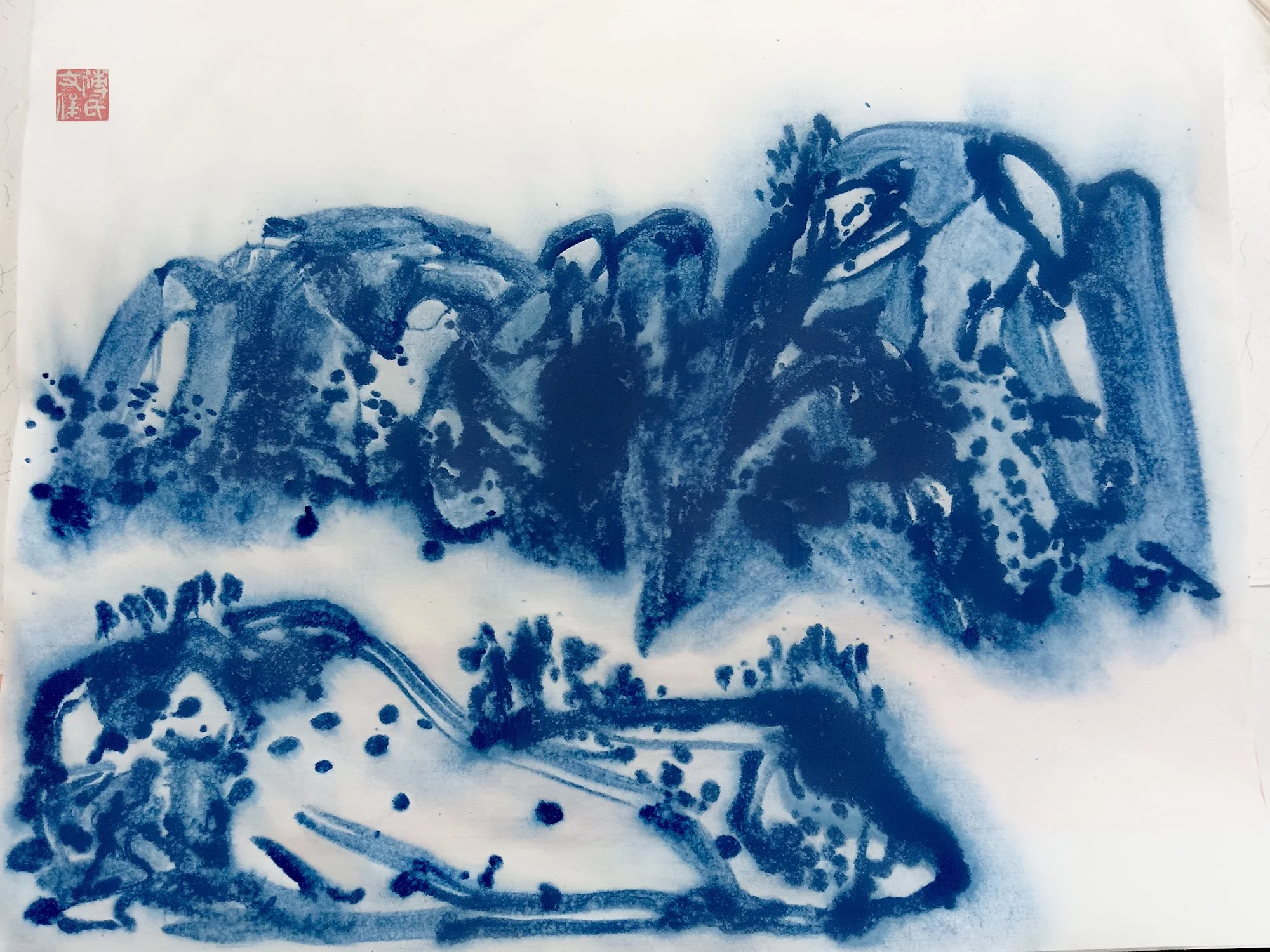
Lucid Illusion, mixed media on paper, 120x95cm, 2026
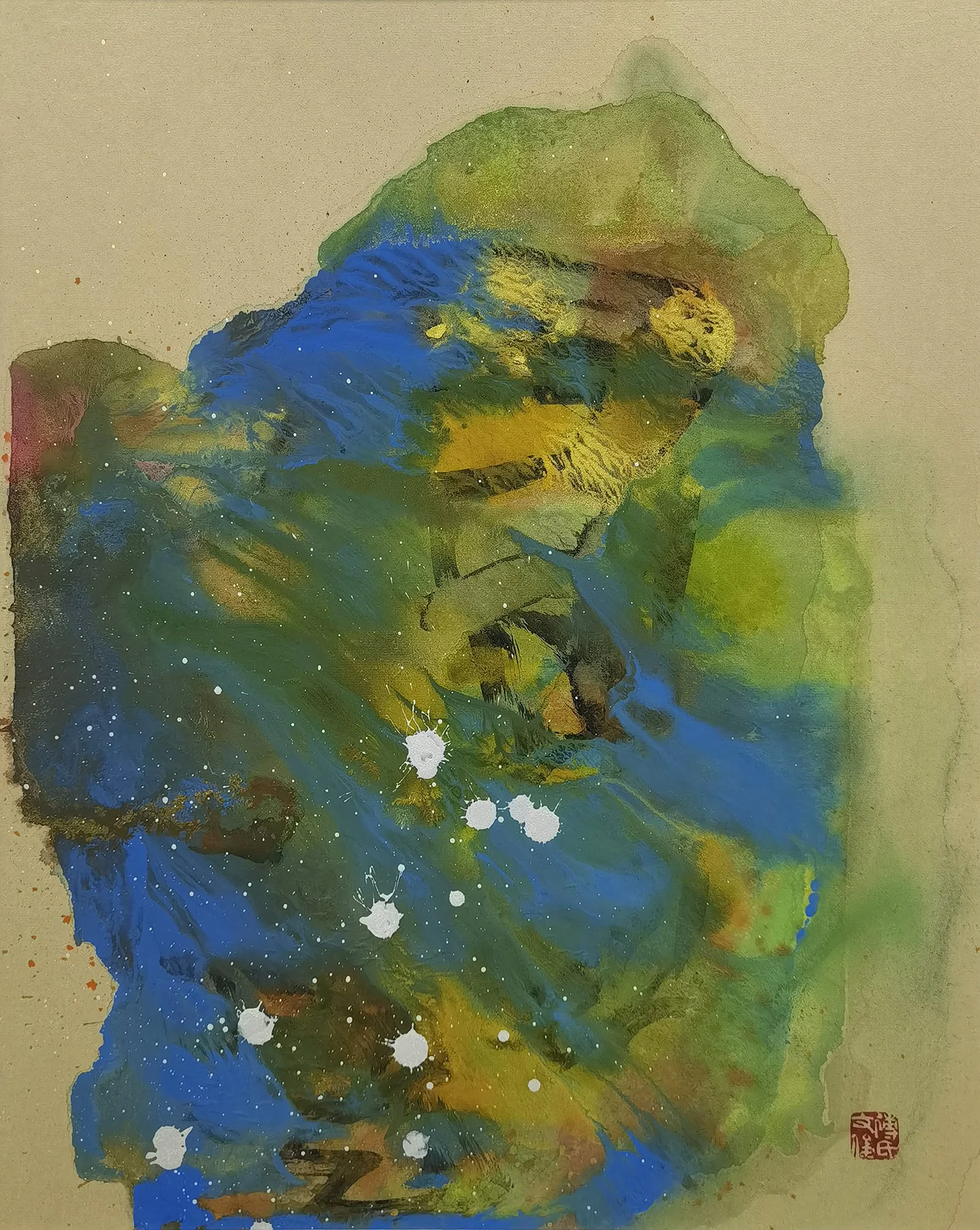
Phantom Blossoms, mixed media on paper, 71x84cm, 2024
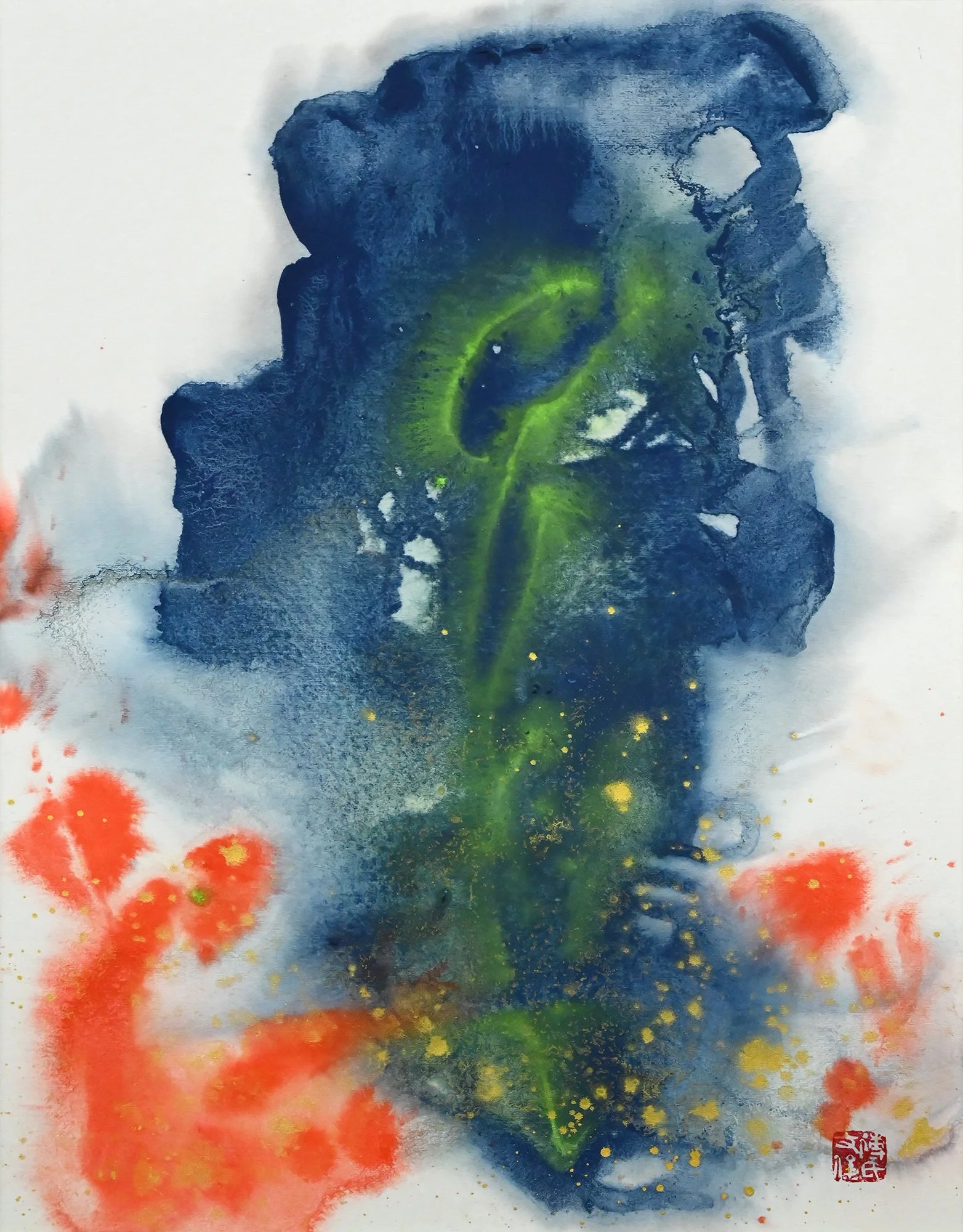
Dream Illusion No.2, mixed media on paper, 63x78cm, 2024

Life Is but a Dream, mixed media on paper, 80x80cm, 2026

After the Light Passed, mixed media on paper, 80x80cm, 2026

Currents at the Threshold, mixed media on paper, 80x80cm, 2026
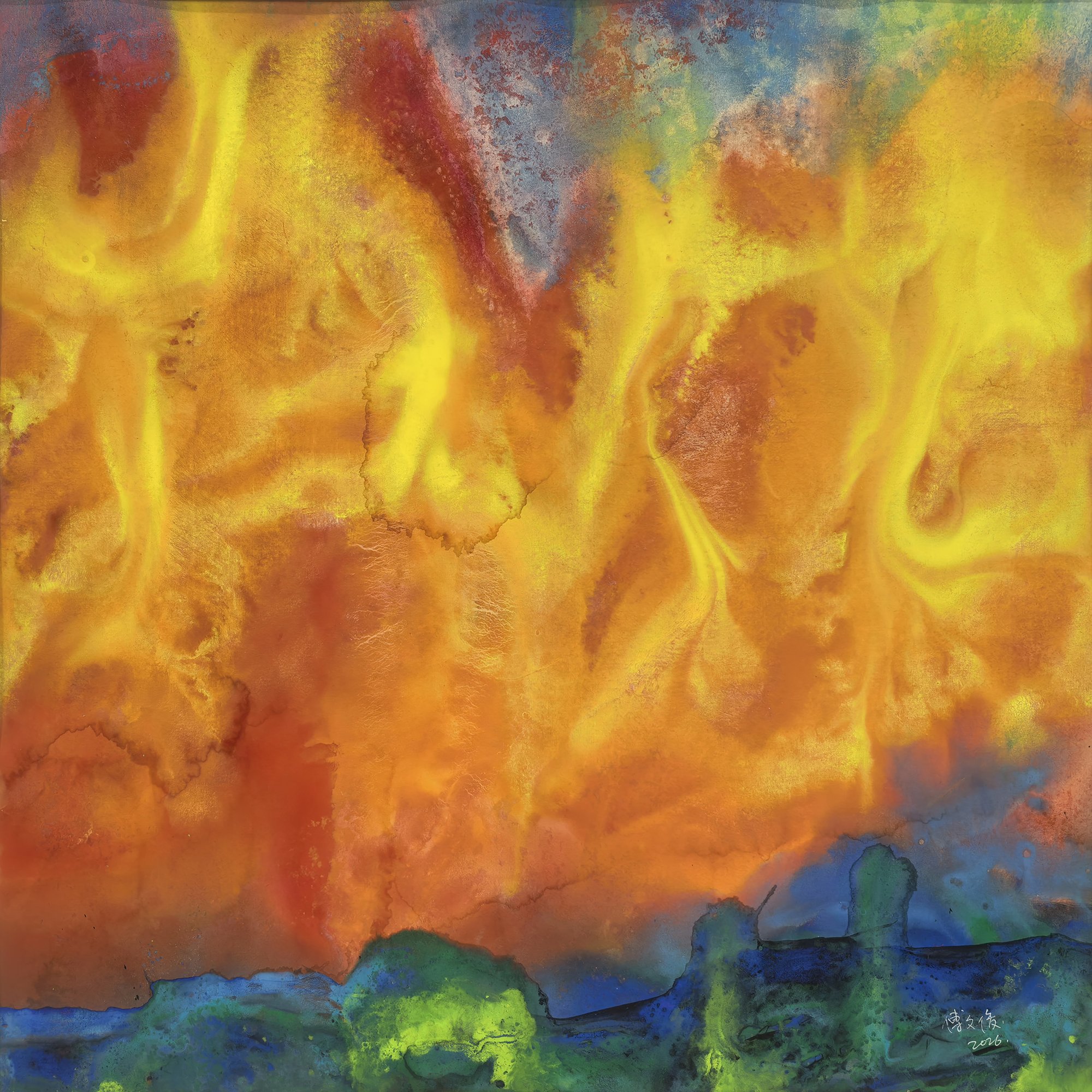
Shifting Boundaries, mixed media on paper, 80x80cm, 2026
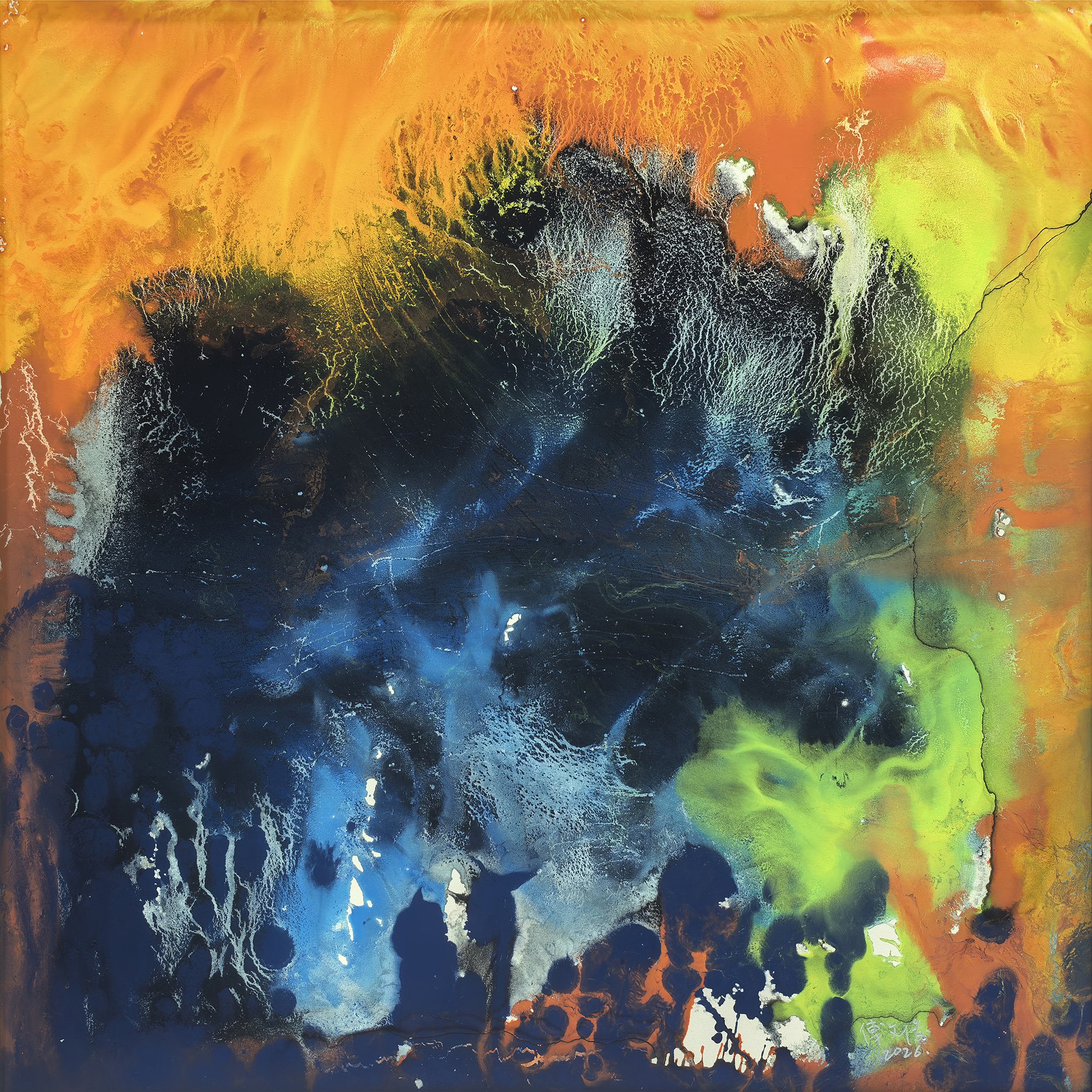
Shifting Boundaries, mixed media on paper, 80x80cm, 2026
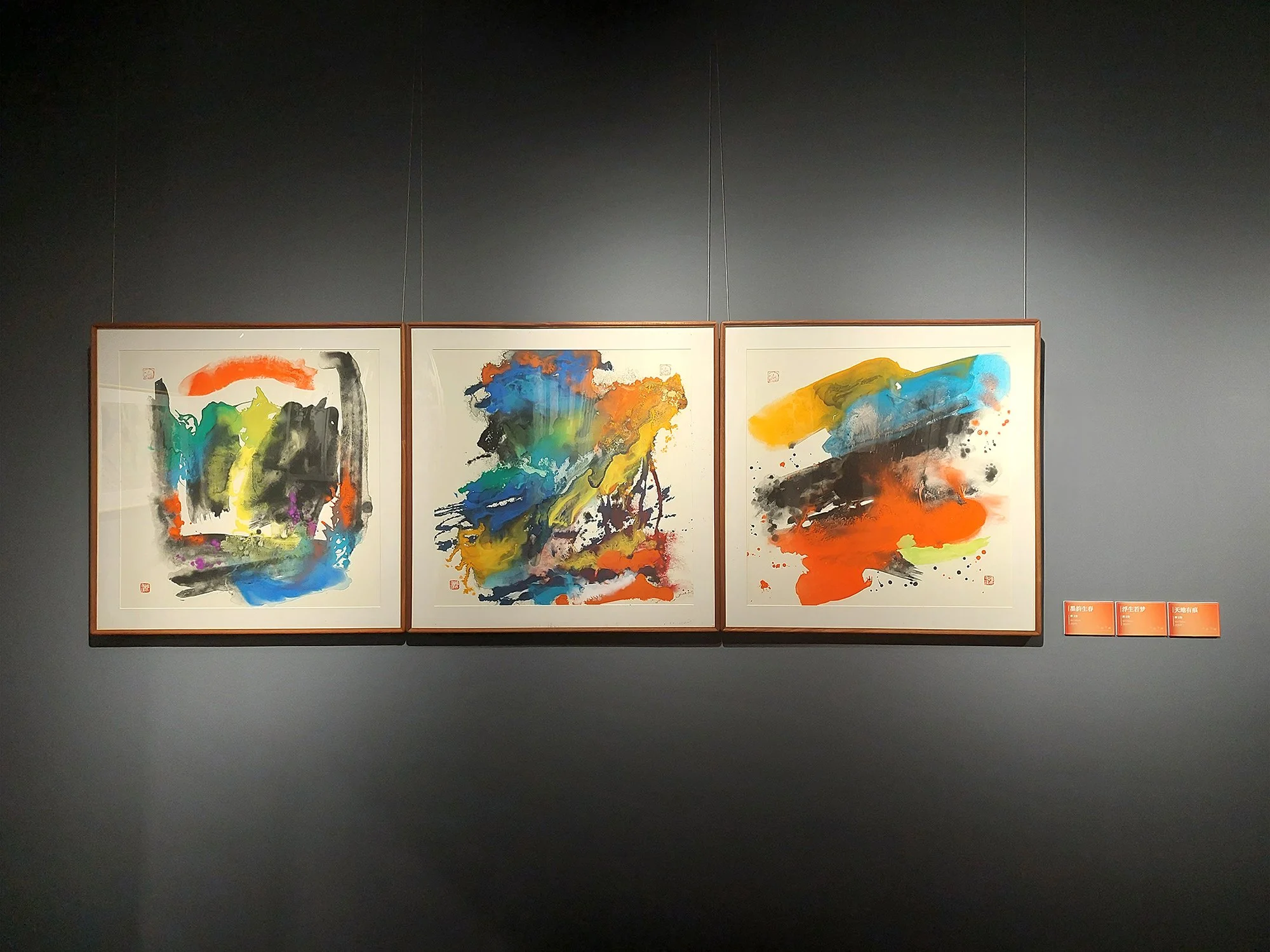
Fu Wenjun's mixed media works exhibited at the National Centre for the Performing Arts(Beijing) in July 2026