Interview with Marie-Ghislaine Beaucé
Biography
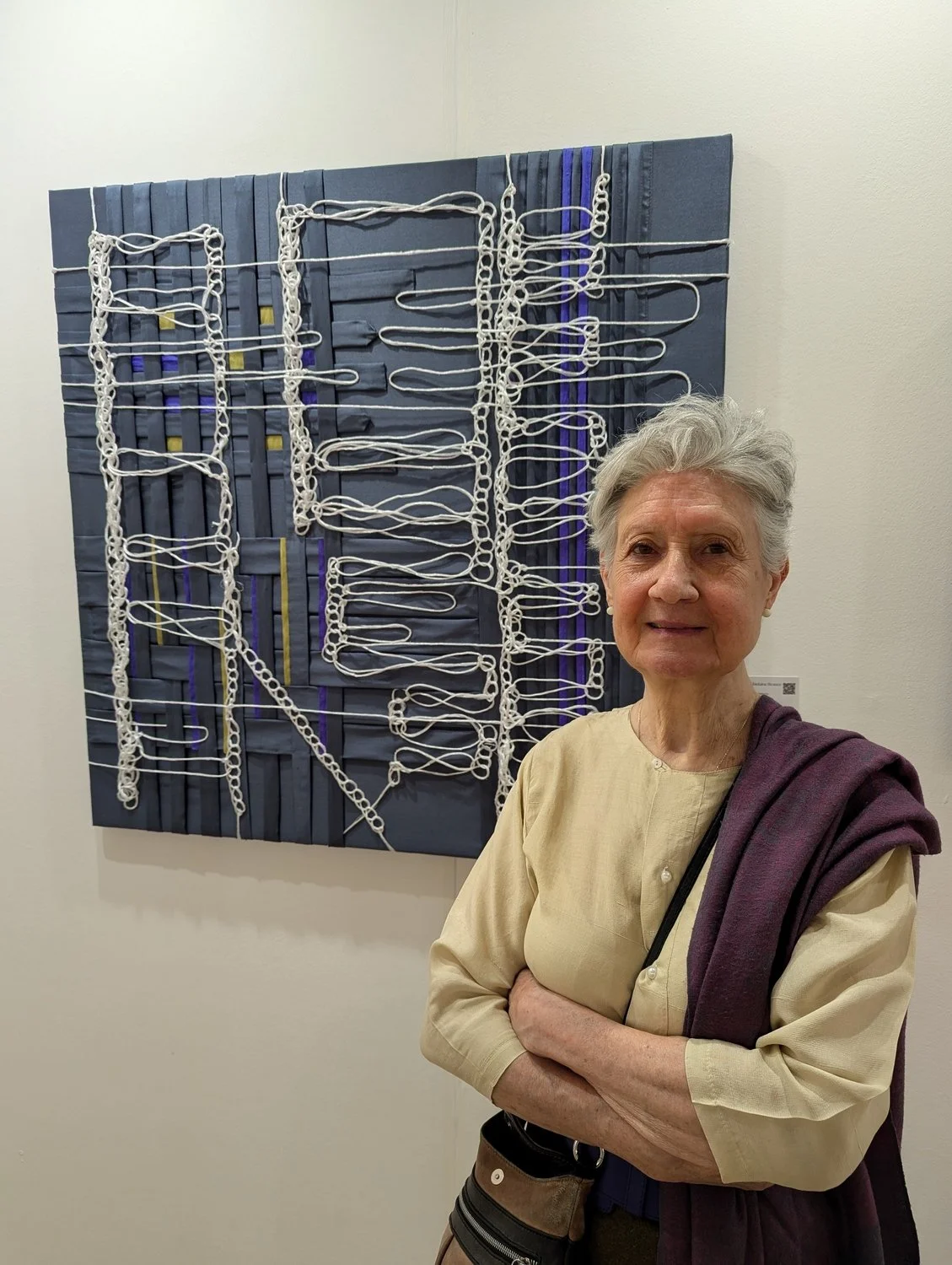
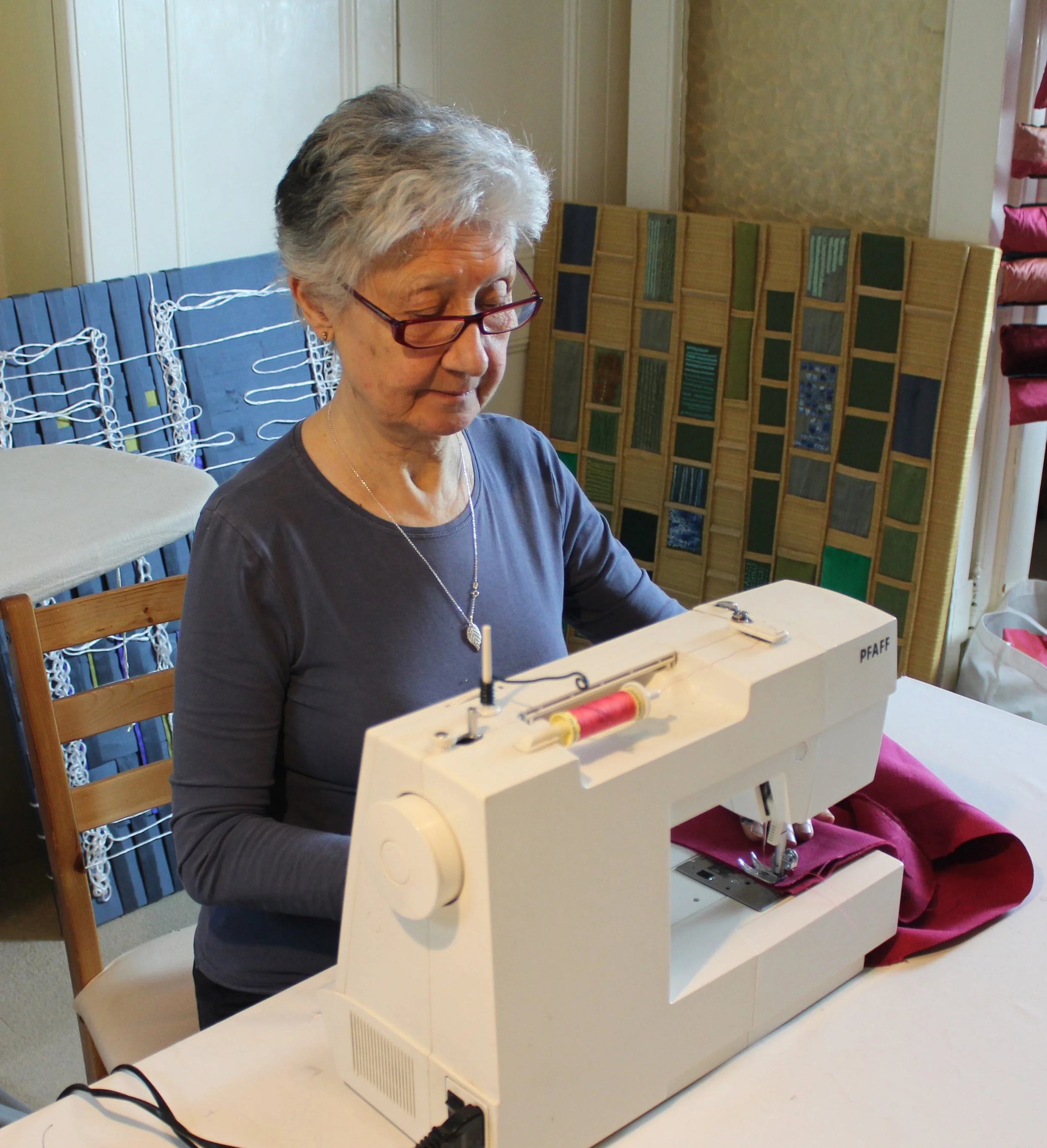
Marie-Ghislaine Beaucé, a French artist currently living in London, United Kingdom, has been passionate about textile fibres since childhood; in her teens, her ambition was to become a fashion designer. At The National School of Fine Arts in Nantes, west of France, she experimented with weaving various materials such as hemp, 8mm film, ribbons cut from fabrics and painted cardboard tubes. She has worked for many years as a seamstress in soft furnishing, advising clients, designing and creating items for apartments, houses and yachts; Marie-Ghislaine has also designed and sewn numerous stage costumes for La Sylvaine Ballet School shows in London. Since 2015, she as been active as a textile artist, showing her work in galleries all over the world and receiving many prestigious awards for innovation and individuality.
Your journey spans textile experimentation at the National School of Fine Arts in Nantes, four decades as an artisan and interior color consultant, and your emergence as a contemporary abstract artist in 2015. Looking back, how do you see these seemingly distinct chapters converging into the language of your woven textile panels?
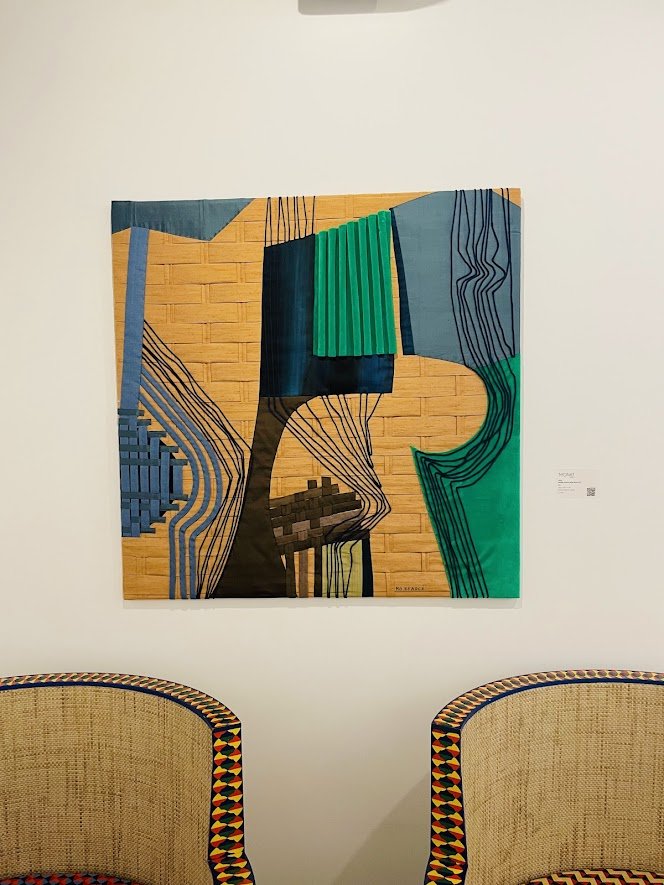
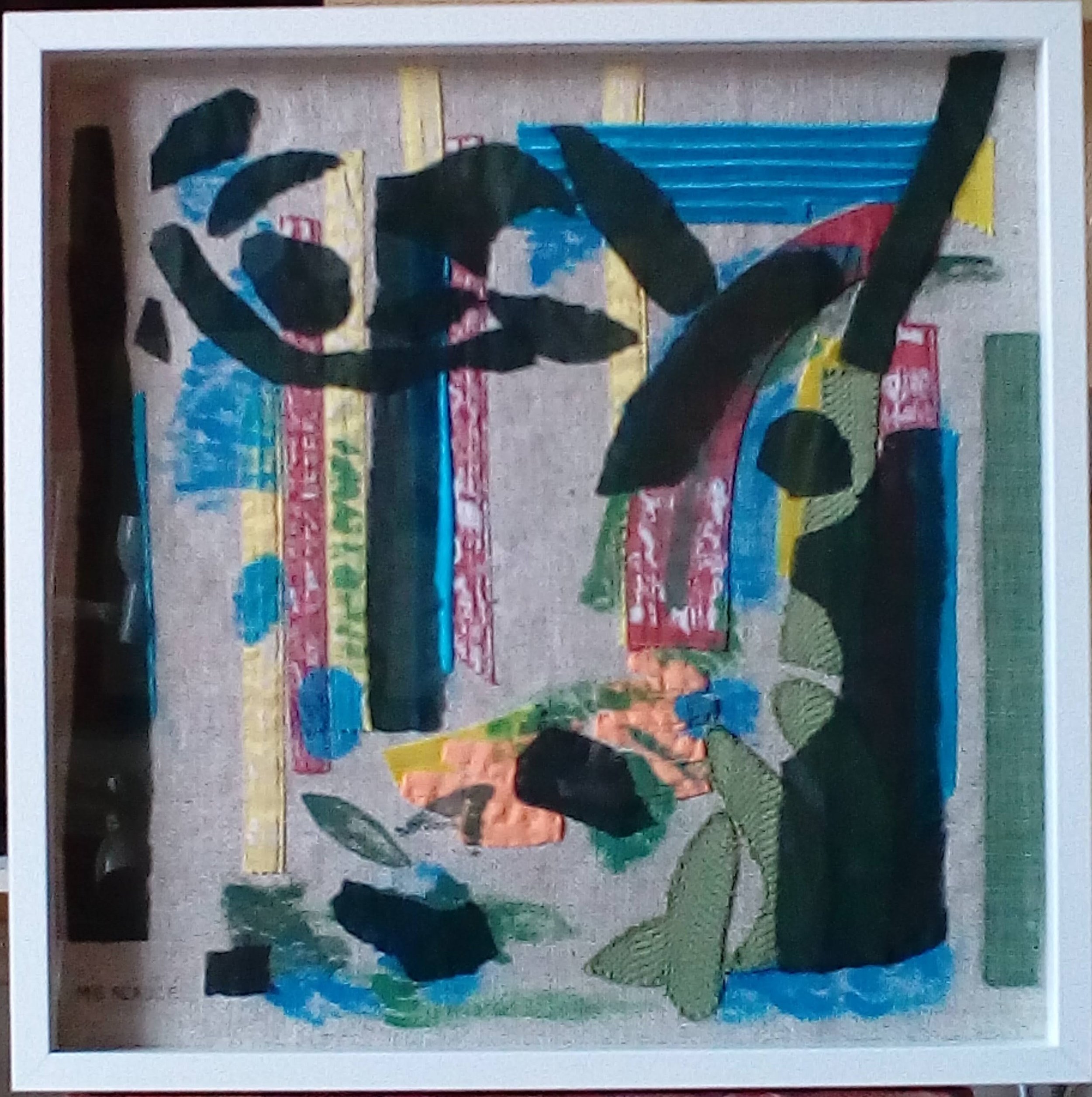
Textile is a wonderful medium to work with, because of its multifaceted structures and versatility. I did start weaving pieces of fabrics – strips of dyed stockings and crochet knitted bands, for example, and other materials – painted cardboard tubes, 8mm films, metallic pieces and twine of all sorts, all in the void left from horizontal removal of threads in a piece of jute, when I was a student in the School of Fine Arts. As an artisan in interior design, my work led me to juxtapose varied fabrics in curtains, Roman blinds, cushions and bed covers. I sometimes use piping or thin cord in my work to delimit a shape or enhance a line, and thin strips of contrasting fabrics for colour vibrancy. My aim is to convey an interesting dialogue between softer and harder materials, to add both tension and visual depth to the artworks.
You transform remnants of luxury furnishing textiles, materials originally designed for domestic and functional environments, into abstract works of art. What interests you about giving these fabrics a second life, and how does their previous existence influence the meanings they acquire within your compositions?
For many years, I have collected and kept pieces of fabrics for their interesting structure, their colour, their patterns or their composition, with a view that I would be able to use them in a different way than soft furnishing – some of my samples being too small for that effect – and to include them in a creative work, where they could be enjoyed and admired, instead of being thrown in a landfill area. I am not really a hoarder, carefully choosing the fabrics I want to keep and work with.
Throughout your practice, weaving, layering, crochet, and padded textile structures become more than techniques - they seem to function as a visual vocabulary. How has your understanding of these processes evolved, and what conceptual possibilities do they offer that traditional painting or sculpture could not?
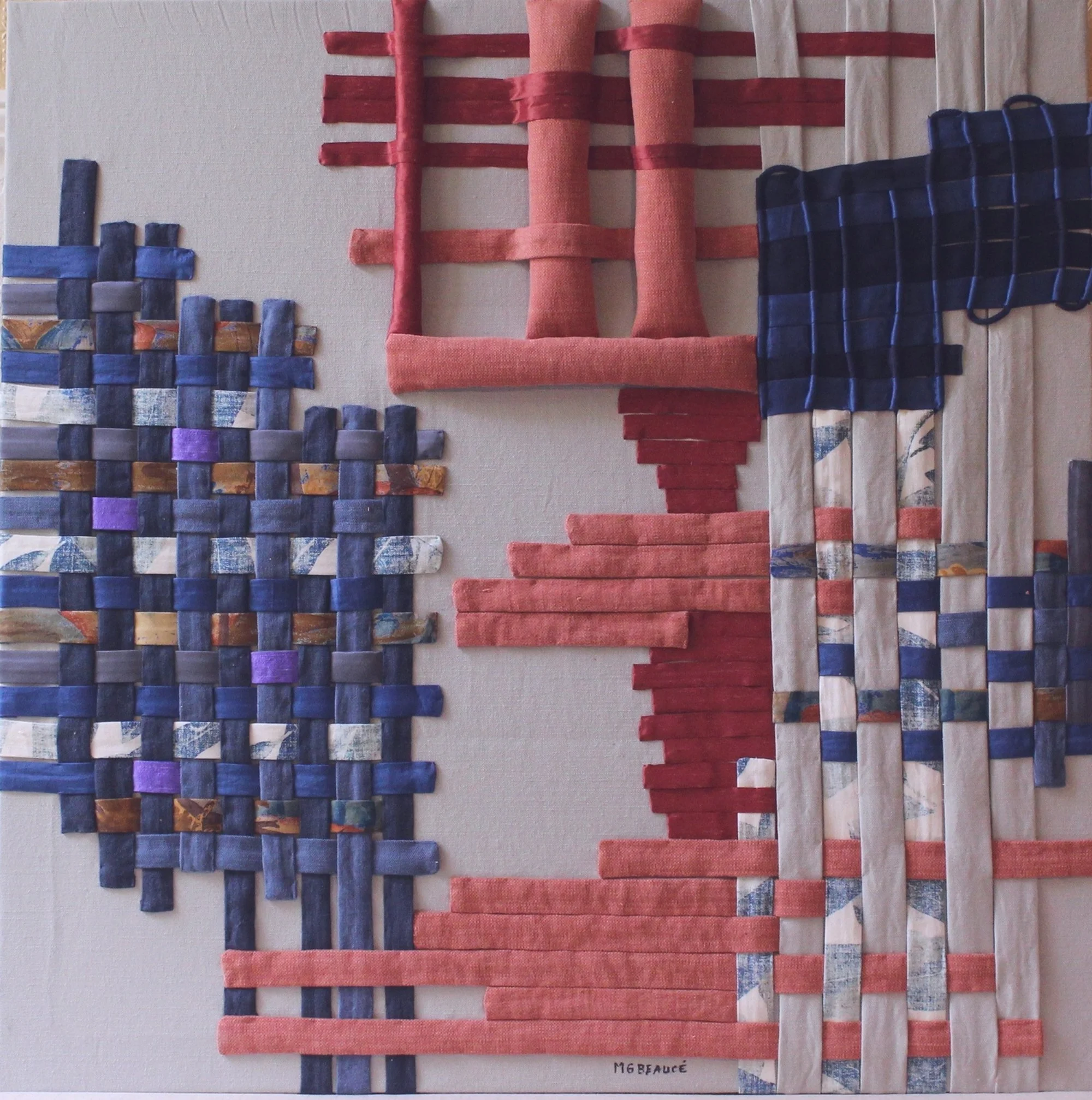
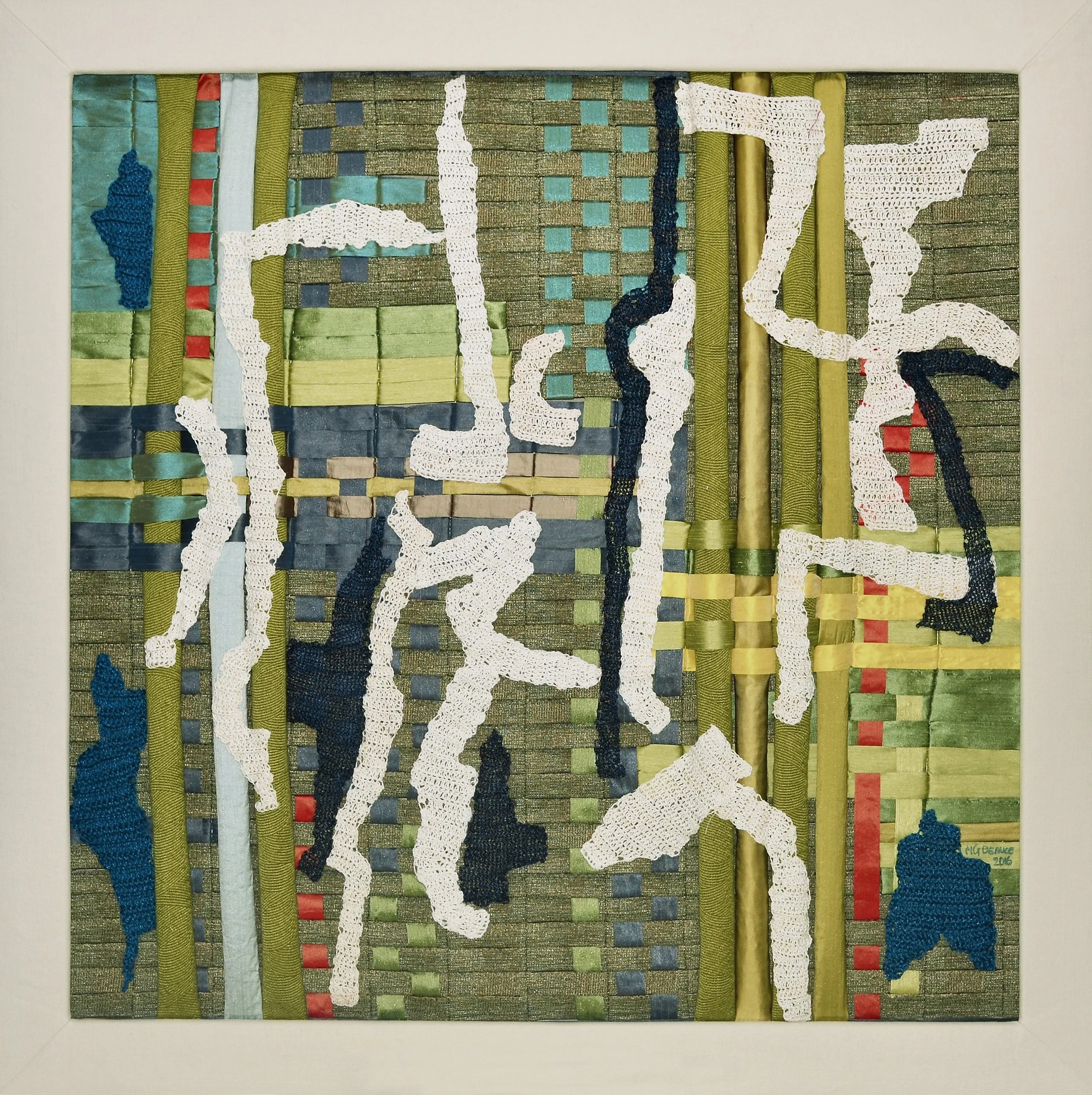
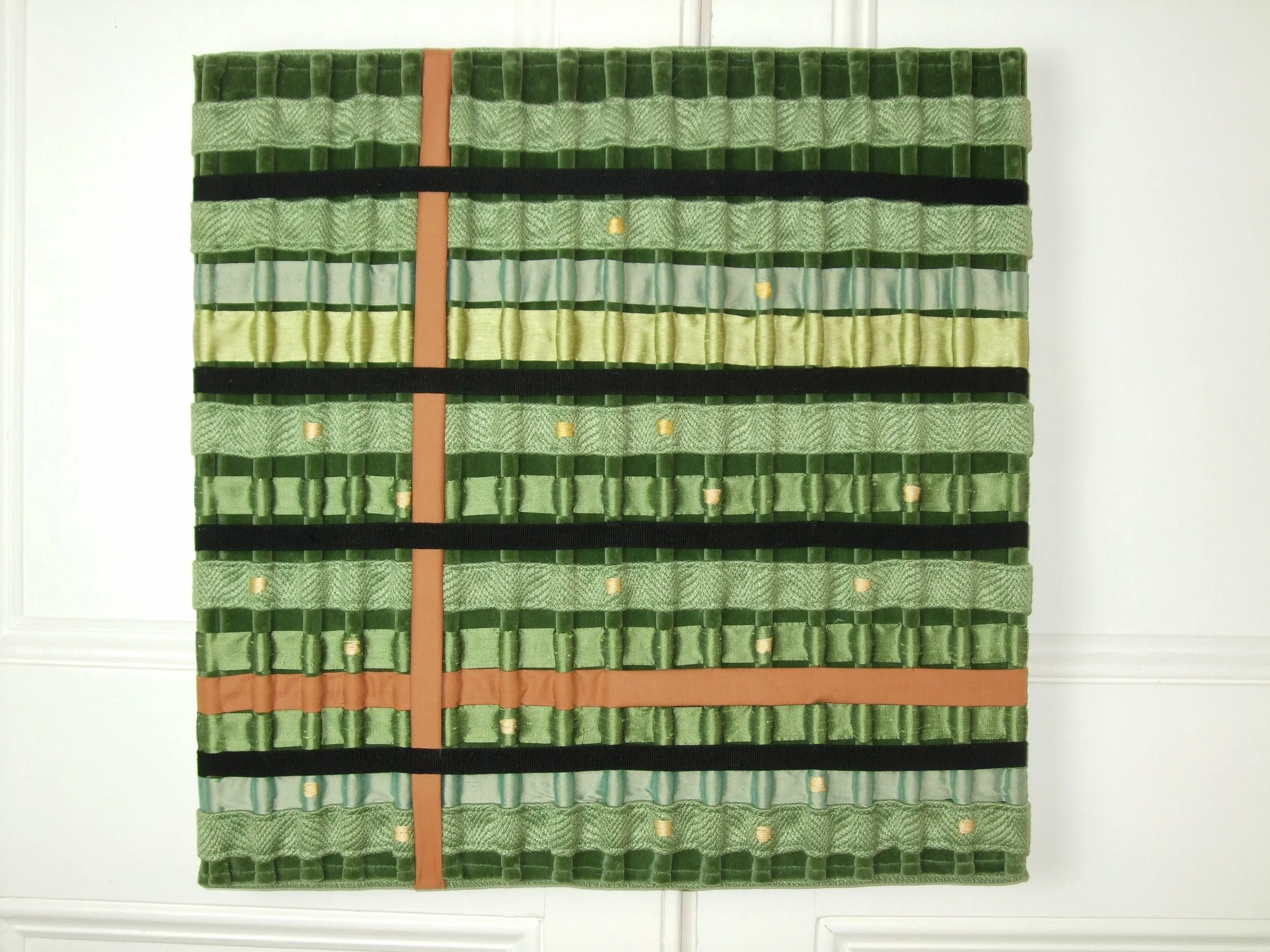
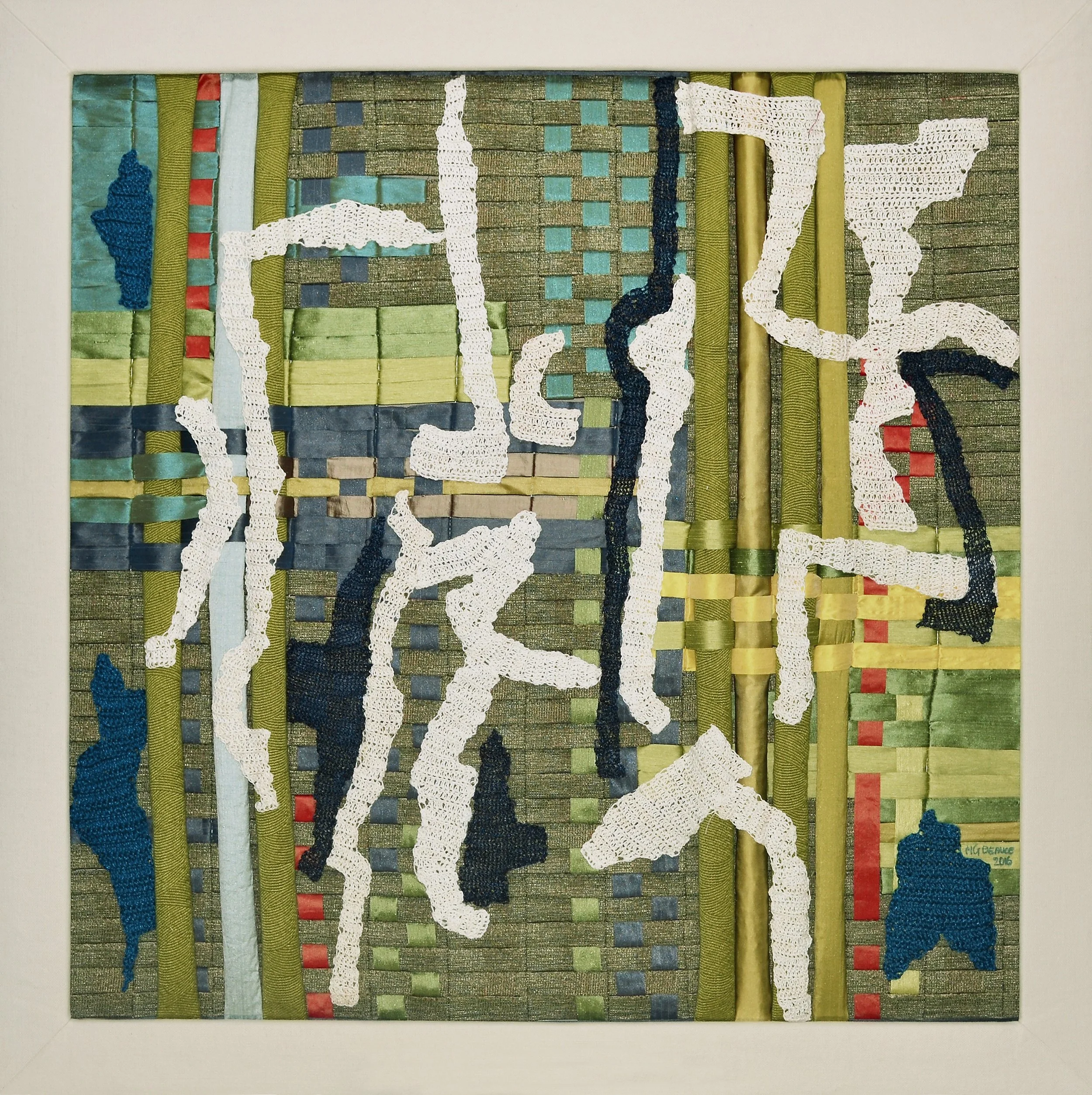
The range of possibilities from those techniques are quite limited compared to painting or sculpture. That is a challenge which I remedy with the use of different processes and different materials that are not normally used in tapestry - like polypropylene twine for example. I also try to work outside the boundaries of the traditional technique of weaving to create variations; I am referring to the woven background of 'Tissage 2' or the rendering of 'Daimyos 2'. Instead of being simply woven, the horizontal strips of fabrics are sown around the vertical cords of the weft.
Your works navigate a compelling tension between geometry and organic inspiration. Carefully constructed lattice-like compositions are informed by nature's colors, light, and rhythms. How do structure and intuition coexist during the making of a piece, and where do you allow spontaneity to enter the process?
In general, each work is a translation from an original design or study made with ink or watercolour on paper: I prefer to work on a piece with a precise vision of the result. This is for technical reasons: it takes quite a lot of time to cut, sew and install the bands of fabrics on the background canvas. Spontaneous adds-on are used when I am not really satisfied with a portion of a work-in-progress. I have been described as a natural colourist artist; by instinct, I am aware of what colour tone to add to complement and enhance another.
Critics have described your work as evoking "a large mysterious space, far from reality," while others emphasise its emotional and spiritual qualities. Do you consciously seek to create spaces of contemplation through abstraction, or do these dimensions emerge organically from your engagement with color and textile?
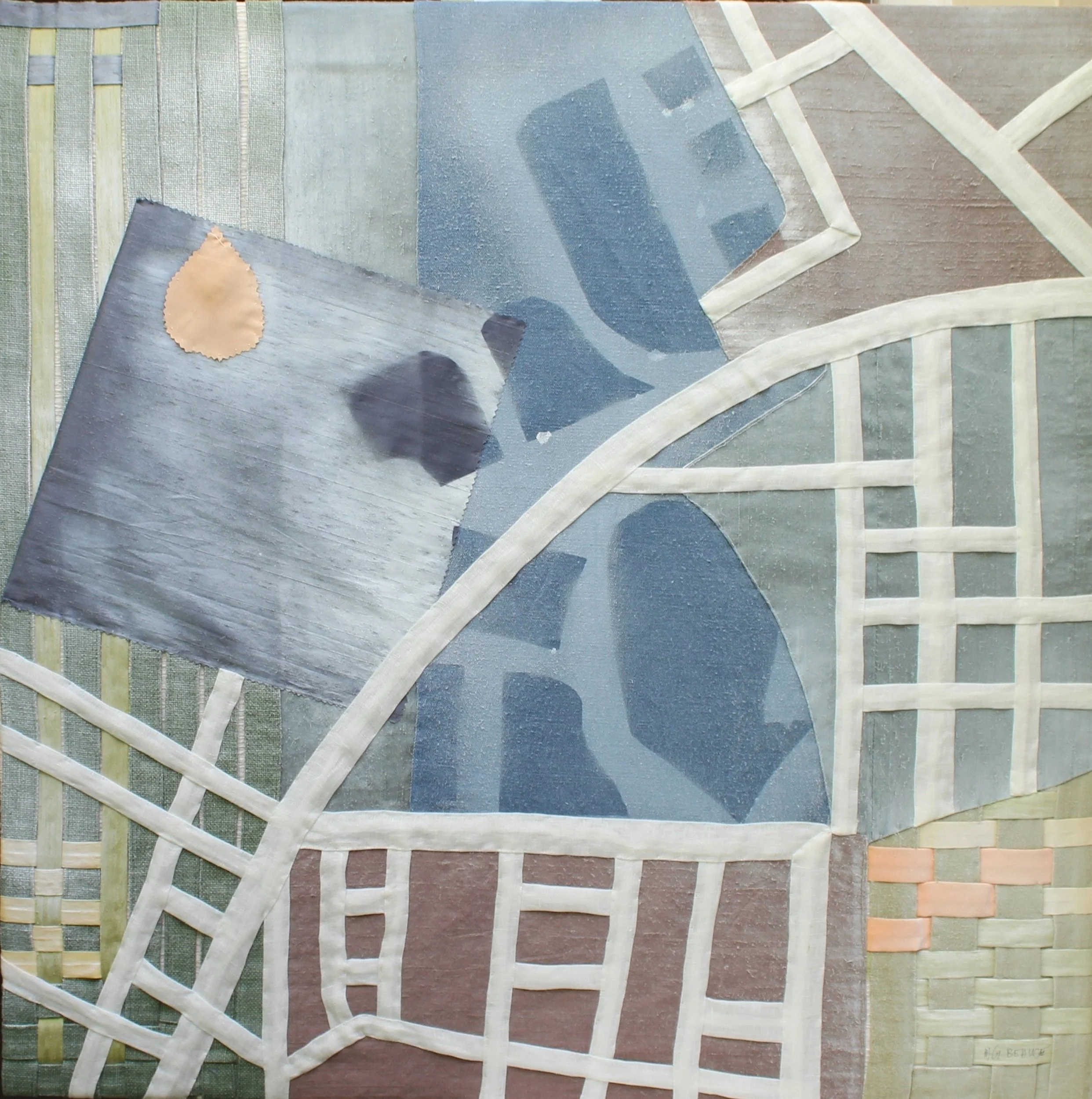
It is very interesting to hear eminent authorities in the Art World describing one's artwork as containing a spiritual dimension; however, not being drawn to spirituality myself, I do not consciously bring it into my work. I think it can be referred to the space created by the physical depth of the constituting elements and the shadows occurring under different lighting as well as the relationship between the classic weaving of the background and the soft vibrancy of the coloured foreground.
Having spent many years designing interiors and stage costumes, you possess an intimate understanding of how textiles shape both physical environments and human experience. In what ways do these earlier practices continue to inform how you think about scale, movement, tactility, and the viewer's relationship to your artworks?
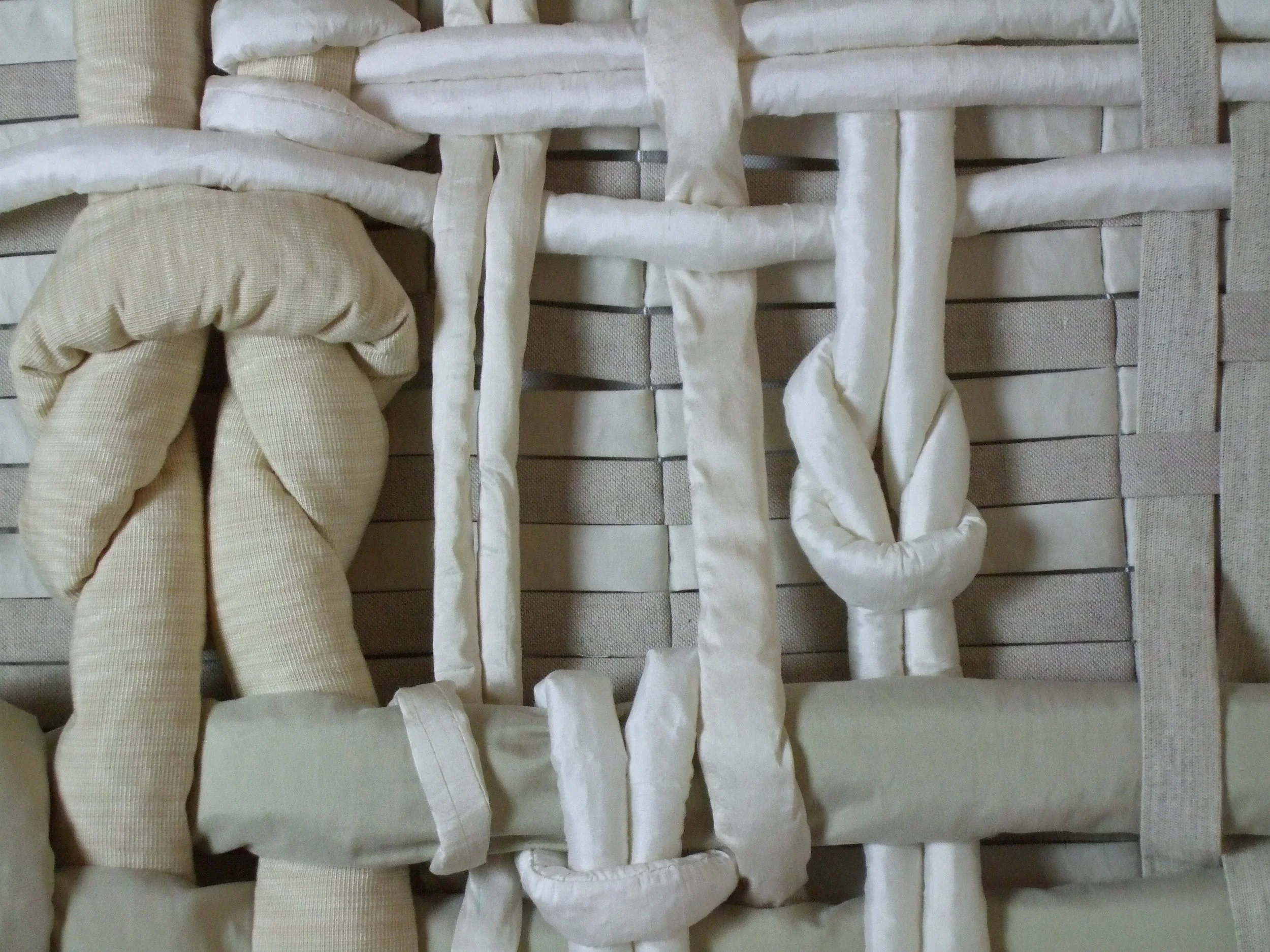
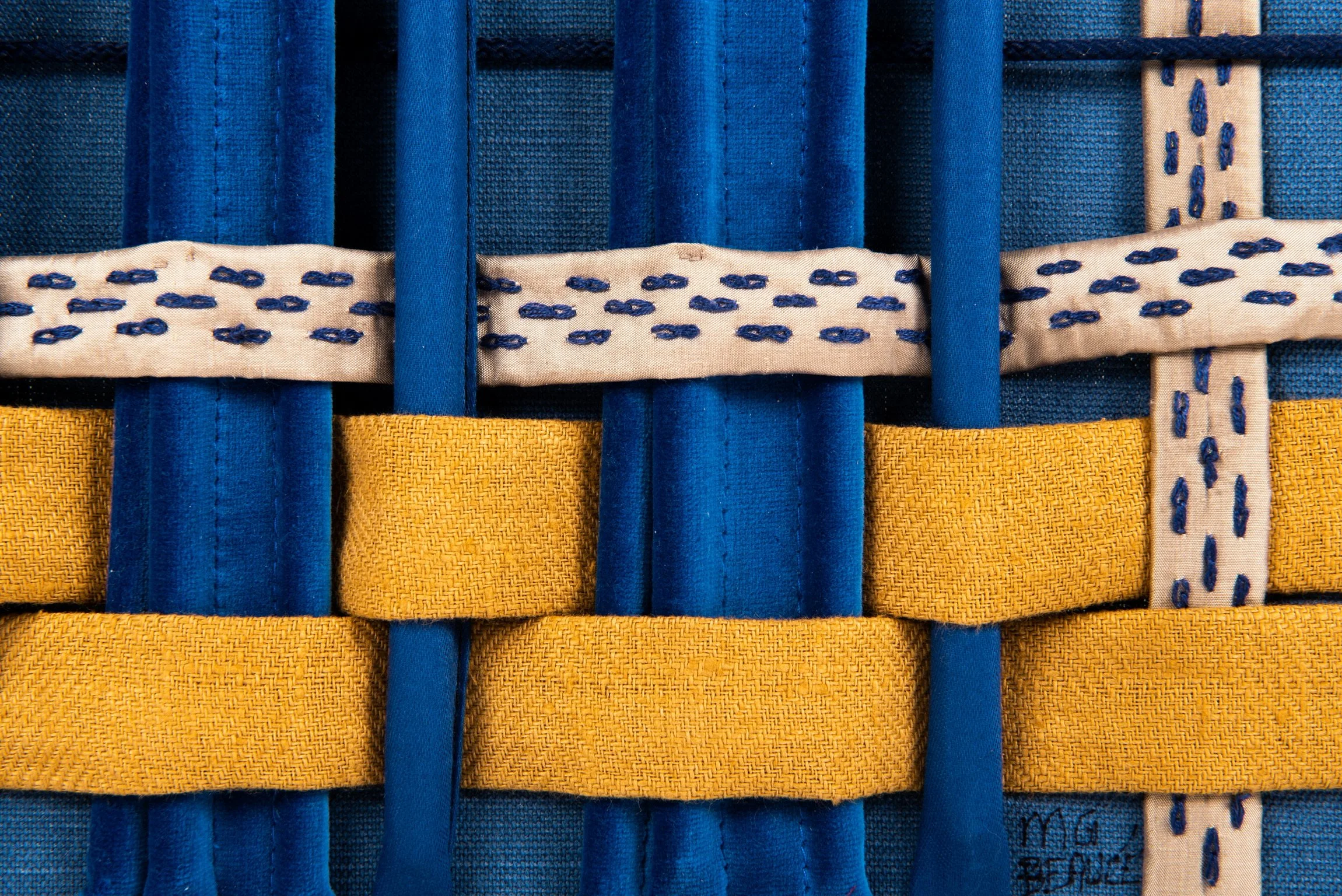
When you work for many years with textiles for different uses, you become aware of their possibilities and limitations, their varied propensity of adaptation to a fold or three-dimensional form. I made my practice to work with textiles in medium sizes, mainly for a technical reason: to avoid the fabrics fraying, most of the strips of fabrics are sewn in a tube shape and turned inside out; this process is impossible to perform with thick materials like velvet (unless a very large band is wanted). The strips of thick fabric are locked stitched and hemmed by machine to form narrow bands. My favourite fabric is silk, for its tactile quality, soft shine, and versatility. It contributes to the richness and varied sheen of fabrics, giving movement by the reflection of different lighting which the viewer could appreciate. In an exhibition where my work is not otherwise known, the interest comes from the discovery of furnishing materials used in a different context.
Your panels occupy an intriguing position between traditional textile craft and contemporary abstraction, between patchwork and sculptural relief, and between two-dimensional surfaces and three-dimensional form. How do you approach this dialogue between craft traditions and fine art, and has this distinction become increasingly irrelevant to your practice?
In my work, classical textile weaving coexists along experimental techniques. I seize and develop my idea for a piece in all its multiple aspects with logic which leaves little place for chance improvisations: the composition is pushed to its position of maximum stability. The variations in the size of the bands and padded tubes of fabrics accentuate the importance given to certain details. In contrast, I include wide monochromatic surfaces which are executed with the care of a classical painter. I think that in my work, there is no boundary between traditional textile craft and fine art.
Living and working in London while maintaining your French artistic heritage, and exhibiting across Europe, North America, and Asia, you engage with multiple cultural contexts. How has this international perspective influenced your artistic identity, and have different audiences responded to your textile language in distinctive ways?
I think the language of my work is universal, that is to say it does not have a cultural identity per say; it is instantly recognised and appreciated anywhere in the world. Woven materials have existed for thousands of years in most cultures around the world.
Although your compositions are non-representational, they are deeply rooted in the material qualities of fiber, texture, and color. What role does touch, or the viewer's imagined sense of touch, play in your work, and how important is the physical presence of the textile in communicating ideas that cannot be expressed through imagery alone?
From the simple structure of woven cloth made of vertical and horizontal strands of wool, linen, silk or cotton, geometry and abstraction have been present for a long time. My work can be truly defined as 'semi-abstract', as the backgrounds tend to represent the structure of cloth through a magnifying glass, with it flaws. Then creativity takes over, playing with a variety of textures achieved with different types of weaving, experimenting with colour combinations and above all, mixing fabrics with little relation to each other.
In recent years, your work has received significant international recognition through exhibitions and awards. As your practice continues to evolve, what questions or material explorations remain unresolved, and where do you envision your textile-based abstraction leading you over the next chapter of your artistic journey?
I am very honoured and grateful to have received - and continue to receive – so much international recognition. I think there is still a lot of space to explore, in relation to a more organic and three-dimensional direction, perhaps moving away from the rigidity of the square frame into a more installation-based approach; this is for the presentation side of my work. On the artistic side, I aim to continue playing with different fabrics and introducing more varied styles of weaving into the work.